
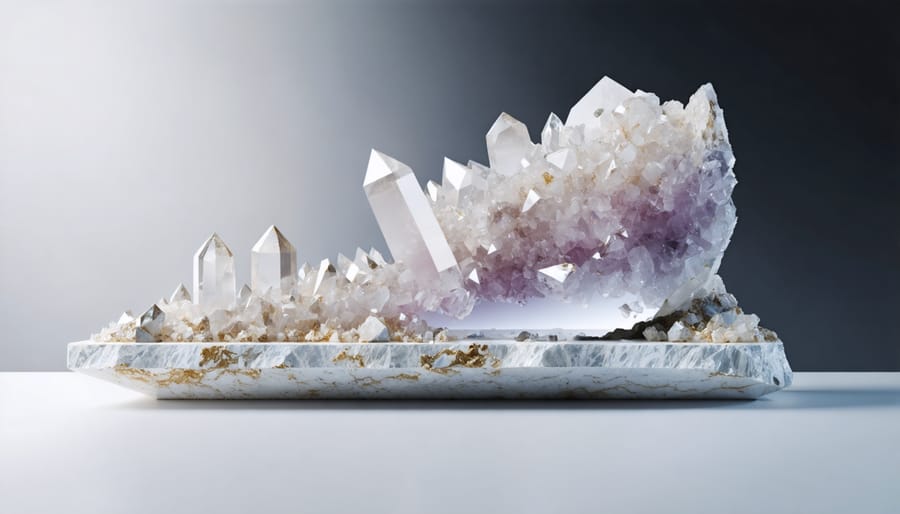
Transforming raw quartz into elegant engineered stone surfaces represents one of modern manufacturing’s most sophisticated achievements. Through a precisely controlled combination of natural quartz crystals, advanced polymer resins, and innovative engineering processes, manufacturers create surfaces that rival natural stone in beauty while exceeding it in durability and consistency.
The quartz fabrication process harnesses cutting-edge technology to deliver what nature takes millions of years to produce. Using specialized Breton technology, manufacturers combine approximately 90% ground quartz with 10% resins and pigments under intense pressure and heat. This revolutionary process creates non-porous, exceptionally durable surfaces that have transformed both residential and commercial design applications.
Unlike traditional stone processing, quartz fabrication allows unprecedented control over the final product’s appearance, strength, and performance characteristics. From selecting the precise particle size of crushed quartz to carefully calibrating the vacuum-vibration compression system, each step is meticulously engineered to ensure superior quality and consistency. This perfect marriage of natural materials and advanced manufacturing techniques has established engineered quartz as a leading choice for discerning designers and architects worldwide.
Raw Materials and Components
Natural Quartz Selection
The foundation of high-quality engineered quartz starts with selecting the right natural quartz minerals. While there are distinct differences between natural vs manufactured stone, both rely on premium raw materials. Manufacturers source pure quartz crystals typically containing 93-95% silicon dioxide (SiO2), carefully screening for color consistency and mineral purity.
The chosen quartz must meet strict quality standards, including proper crystalline structure, minimal impurities, and appropriate particle size distribution. Suppliers typically extract these materials from dedicated quarries where geological conditions have produced high-grade deposits. The crystals undergo preliminary processing to remove contaminating minerals and organic matter before being classified by size and quality grade.
Color variation in natural quartz deposits must be carefully monitored, as this affects the final product’s appearance. Manufacturers often maintain relationships with multiple quarries to ensure consistent supply and quality control. This careful selection process ensures the finished engineered quartz surfaces maintain their superior durability and aesthetic appeal.

Binding Resins and Additives
In quartz fabrication, binding resins and additives play a crucial role in creating the final engineered stone product. The primary binding agent used is polymer resin, typically consisting of unsaturated polyester or hybrid resins, which accounts for approximately 7-10% of the finished material’s composition. These resins serve as the “glue” that holds the quartz particles together while providing flexibility and strength to the final product.
Various additives are incorporated to enhance specific properties of the engineered stone. Pigments and colorants are used to achieve desired aesthetic qualities, while UV stabilizers protect the material from sun damage and discoloration. Anti-bacterial agents may be included to improve hygiene properties, particularly for kitchen applications. Performance enhancers such as hardening catalysts and curing agents ensure optimal mechanical properties and durability.
The quality and proportion of these binding materials significantly impact the final product’s characteristics. Premium manufacturers carefully select and test their resin formulations to achieve optimal strength, stain resistance, and longevity. The mixing process must be precisely controlled to ensure uniform distribution of resins and additives throughout the material.
The Manufacturing Process
Crushing and Mixing
The first critical step in quartz fabrication involves preparing the raw materials through a precise crushing and mixing process. Natural quartz crystals, which make up approximately 90-93% of the final product, are carefully crushed into fine particles of various sizes. These particles undergo thorough screening to ensure consistent sizing, typically ranging from fine powder to small granules.
The crushed quartz is then combined with polymer resins, typically polyester or acrylic-based, which account for about 7-10% of the mixture. During this stage, manufacturers also add specialized pigments, recycled materials, and other additives to achieve desired colors and patterns. Some premium designs may incorporate glass, metallic flakes, or mirror fragments for enhanced aesthetic appeal.
The mixing process occurs in vacuum-sealed chambers under controlled conditions. This environment ensures the complete removal of air bubbles, which could otherwise compromise the final product’s structural integrity. Advanced mixing equipment maintains precise ratios of materials while distributing pigments and additives evenly throughout the mixture.
Temperature control during mixing is crucial, as it affects how well the resins bond with the quartz particles. Modern facilities use computerized systems to monitor and adjust conditions throughout this phase, ensuring consistency across production batches. The resulting mixture, resembling damp sand in texture, is then ready for the compression and curing stages of fabrication.
Compression and Vibration
The Bretonstone process, a groundbreaking technology developed by Breton S.p.A. of Italy, forms the foundation of modern engineered quartz slab production. During this phase, the mixed raw materials undergo intense compression and vibration to create dense, non-porous slabs.
The material mixture is poured into a large mold that travels along a conveyor system. As it moves, powerful vibro-compression machinery applies approximately 100 tons of pressure while simultaneously vibrating the mixture at high frequencies. This dual action serves two crucial purposes: it removes air pockets from the mixture and ensures thorough distribution of the resin binder throughout the aggregate materials.
The compression process typically lasts between 30-45 seconds, during which the pressure and vibration work together to achieve optimal material density. This creates the characteristic strength and durability of engineered quartz. The vibration frequency is carefully controlled to prevent separation of different-sized particles, ensuring consistent distribution throughout the slab.
Modern manufacturing facilities often employ computer-controlled systems to monitor and adjust compression forces and vibration parameters in real-time. These automated systems help maintain precise specifications and ensure consistent quality across production runs. The resulting slabs typically measure approximately 120″ x 55″ with a standard thickness of either 2cm or 3cm.
During this stage, the material remains in a semi-solid state, allowing it to be fully compressed while maintaining the ability to be properly cured in subsequent steps. The exact pressure and vibration settings vary depending on the specific quartz blend and desired final characteristics of the material.
This compression and vibration phase is crucial for achieving the superior mechanical properties that make engineered quartz so popular in commercial and residential applications. The process creates slabs with virtually zero porosity, high flexural strength, and exceptional durability that rival or exceed those of natural stone.

Curing and Finishing
The final stages of quartz fabrication involve meticulous curing and finishing processes that transform the raw slab into a sophisticated surface material. After the initial compression and formation, the slabs undergo a controlled curing period in specialized kilns where temperature and humidity are precisely regulated. This crucial phase typically takes 24-48 hours, allowing the resin to fully bond with the quartz particles and achieve maximum strength.
Once cured, the slabs move to the finishing department where they undergo a series of increasingly fine polishing stages. Modern CNC machines equipped with diamond-tipped tools progressively work the surface through various grits, starting with coarse abrasives and moving to finer ones. This systematic approach creates the desired stone finish options, from high-gloss to honed and matte surfaces.
Quality control technicians carefully inspect each slab throughout the finishing process, checking for consistency, color uniformity, and structural integrity. Advanced stone finishing techniques are applied to achieve specific aesthetic effects while maintaining the material’s durability. These may include texturing, brushing, or leather finishing, depending on the desired final appearance.
The completed slabs undergo final quality assessments using both visual inspection and specialized equipment to measure thickness, flatness, and surface consistency. Any imperfections are addressed through targeted refinishing. Before packaging, each slab receives a protective coating and is labeled with unique identification codes for tracking and warranty purposes. This thorough finishing process ensures that every piece of engineered quartz meets strict quality standards and is ready for installation in residential or commercial applications.
Quality Control and Standards
Physical Properties Testing
Quality control in quartz fabrication involves rigorous physical property testing to ensure each slab meets industry standards and customer expectations. Manufacturers conduct comprehensive strength tests using advanced equipment to measure compression and flexural strength, ensuring the material can withstand significant pressure and weight without cracking or breaking.
Durability testing includes impact resistance assessments, where samples are subjected to controlled impacts to evaluate their ability to resist chipping and cracking under real-world conditions. Abrasion resistance testing simulates years of wear and tear, measuring how well the surface maintains its appearance and integrity over time.
Chemical resistance testing exposes samples to common household substances, acids, and cleaning products to verify the material’s stain resistance and chemical stability. UV stability tests ensure the quartz maintains its color and appearance even after prolonged exposure to sunlight.
Water absorption tests are particularly crucial, as low absorption rates contribute to the material’s resistance to staining and bacterial growth. Samples undergo thermal shock testing to confirm they can withstand sudden temperature changes without damage.
Each test follows strict protocols established by international standards organizations, with results carefully documented and analyzed. Only slabs meeting or exceeding all testing criteria advance to final processing and distribution, ensuring consistent quality across every manufactured piece.

Industry Certifications
Quality assurance in quartz fabrication is maintained through strict industry certifications and standards. Leading manufacturers must obtain NSF/ANSI 51 certification, which ensures materials are safe for food contact surfaces. This certification validates that the quartz surfaces meet rigorous safety requirements for use in kitchen countertops and food preparation areas.
The Greenguard certification is another crucial standard, verifying that quartz products meet strict chemical emissions limits and contribute to healthier indoor air quality. Many manufacturers also pursue Greenguard Gold certification, which maintains even stricter standards for sensitive environments like schools and healthcare facilities.
ISO 9001 certification demonstrates that fabricators follow internationally recognized quality management systems throughout their manufacturing process. This certification ensures consistent product quality and customer satisfaction through standardized procedures and documentation.
Many quartz manufacturers also comply with LEED (Leadership in Energy and Environmental Design) requirements, enabling their products to contribute to green building certifications. These standards focus on sustainable manufacturing practices and recycled content in the final product.
The Natural Stone Institute offers additional certifications specific to fabricators, ensuring proper training and expertise in handling engineered stone materials. These certifications verify that fabricators follow best practices for safety, precision cutting, and installation techniques, ultimately protecting consumer interests and maintaining industry standards.
Environmental Considerations
The quartz fabrication industry has made significant strides in adopting sustainable stone manufacturing practices to minimize its environmental impact. Modern facilities implement closed-loop water systems that recycle up to 95% of water used in the fabrication process, significantly reducing water consumption. Advanced dust collection systems capture and filter particulate matter, protecting both worker health and the surrounding environment.
Many manufacturers now incorporate recycled materials into their quartz slabs, including post-industrial waste glass and mirrors, reducing landfill burden. The durability and longevity of engineered quartz also contribute to its sustainability profile, as products typically last decades without requiring replacement.
However, challenges remain. The mining of raw materials and the energy-intensive manufacturing process still have environmental implications. The use of resins in quartz engineering also raises concerns about VOC emissions during production. Leading manufacturers are addressing these issues by investing in renewable energy sources, developing eco-friendly binding agents, and implementing stringent waste management protocols.
The industry continues to innovate with more environmentally responsible practices, including the development of bio-based resins and the optimization of manufacturing processes to reduce energy consumption. These efforts demonstrate a commitment to balancing product quality with environmental stewardship.
The quartz fabrication process represents a remarkable blend of engineering precision and aesthetic innovation, offering unparalleled benefits for modern surfacing applications. With superior durability, consistency, and customization options, engineered quartz continues to revolutionize interior design and construction industries. As technology advances, manufacturers are developing more sustainable production methods and expanding color options while maintaining the material’s renowned strength and low maintenance characteristics. The future of quartz fabrication looks promising, with emerging trends in antimicrobial properties, enhanced environmental sustainability, and improved manufacturing efficiency. These developments, combined with growing consumer demand for reliable, beautiful surfaces, ensure that engineered quartz will remain a leading choice for both residential and commercial applications in the years to come.