Showing 12 Result(s)
Conservator’s gloved hand examining cracks, flaking, and salt efflorescence on a weathered limestone cathedral facade, with scaffolding and storm clouds softly blurred behind.
Stone in Cultural Heritage

How Climate Change is Cracking Your Stone Heritage (And What You Can Do About It)

Climate change is accelerating the deterioration of stone heritage at unprecedented rates. Historic buildings, monuments, and architectural treasures that have endured centuries now face intensified threats from extreme weather events, increased moisture cycles, freeze-thaw damage, salt crystallization, and biological colonization. For conservation professionals and property owners, the challenge is clear: traditional preservation approaches must evolve to address these rapidly changing environmental conditions.
Stone structures respond differently to climate stressors depending on their geology, porosity, and existing condition. …

Close-up of interlocking polygonal granite stones in a Machu Picchu wall under warm side light, showing seamless mortarless joints, with softly blurred terraces and distant Andean mountains in the background.
Stone in Cultural Heritage

Stone Craftsmanship That Changed Architecture Forever

Stone craftsmanship represents humanity’s oldest and most enduring art form, transforming raw geological material into structures that have survived millennia. From the precision-cut blocks of Egyptian pyramids to the intricate marble sculptures of Renaissance Italy, master stonemasons have consistently pushed the boundaries of what seems possible with chisel, hammer, and vision.
Examine the mortarless joints of Machu Picchu, where Incan builders shaped irregular granite blocks to fit together so precisely that a knife blade cannot slip between them. Study the soaring Gothic cathedrals of Europe, where medieval craftsmen …

Five smooth river stones on a weathered stone surface lit by warm side light, with blurred candles and stained-glass colors from a church interior in the background.
Stone in Cultural Heritage

The Sacred Stone Tradition That Shaped Catholic Faith

When the shepherd boy David faced the giant Goliath, he chose five smooth stones from a brook—a deliberate act that has resonated through centuries of Christian tradition and Catholic spirituality. This seemingly simple detail from 1 Samuel 17:40 carries profound theological meaning that connects ancient biblical wisdom with contemporary Catholic devotional practice.
The five stones represent more than weapons of physical warfare. Catholic scholars and spiritual directors have long interpreted them as symbols of faith’s multifaceted nature: the five wounds of Christ, the five joyful mysteries of the Rosary, or the virtues …

Stacks of marble, granite, and limestone on an old European quayside beside a wooden cargo ship at golden hour, with a softly blurred skyline suggesting Roman columns and a Gothic cathedral spire.
Stone in Cultural Heritage

How Ancient Stone Trade Routes Shaped European Architecture Forever

The marble columns of Rome, the granite churches of Scotland, and the limestone cathedrals of France share a common origin: centuries-old European trade routes that transformed stone from local commodity into international treasure. From the Roman Empire’s systematic quarrying networks to medieval guilds controlling limestone distribution along river passages, these ancient pathways didn’t merely transport material—they carried architectural ambition across continents, establishing standards of quality and aesthetic preference that endure in today’s stone selection.
European stone trade evolved through three …

Close-up of a deteriorating marble gravestone showing lichen growth, black crust from pollution, and fine cracks, photographed in soft overcast light with blurred headstones and trees in the background.
Stone in Cultural Heritage

Why Your Family’s Gravestones Are Crumbling (And How to Save Them)

Gravestones stand as permanent testaments to lives lived, yet weather, pollution, and biological growth conspire to erase these markers within decades. The limestone memorial that honored your great-grandfather in 1920 may now display surface erosion, black crusts from acid rain, or lichen colonies that penetrate deep into the stone matrix. Understanding why different stone types deteriorate—and which preservation methods help versus harm—separates well-meaning family members from those who accidentally accelerate damage.
Before attempting any cleaning or repair, identify your gravestone’s material. Marble, granite, …

A conceptual collage featuring Stone Mountain's granite dome surrounded by images of its historical and cultural significance, including Native American artifacts, architectural icons, and the Confederate Memorial Carving, with diverse visitors enjoying the park in the foreground.
Stone in Cultural Heritage

Stone Mountain: How Georgia’s Granite Giant Shaped American Identity

Rising majestically from the Georgia landscape, Stone Mountain stands as both a geological marvel and a complex symbol of American history. This massive granite monolith, formed over 300 million years ago, has witnessed centuries of human activity, from Native American settlements to its controversial role in Civil War commemoration. At 825 feet tall and covering 583 acres, it represents the largest exposed piece of granite in the world, but its significance extends far beyond its impressive dimensions.
The mountain’s story intertwines with crucial moments in American history, serving as a gathering place for Native American …

Stone in Cultural Heritage

Stone Preservation: Expert Methods That Actually Work

Stone preservation techniques evolved from historic stone preservation methods into sophisticated conservation practices that safeguard our architectural heritage. Modern stone preservation combines traditional craftsmanship with cutting-edge chemical solutions to protect against environmental degradation, structural stress, and biological growth. Professional conservators now employ advanced consolidants, water-repellent treatments, and precise cleaning methods that maintain stone integrity while …

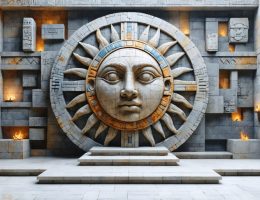
An artistic fusion of the Aztec Sun Stone and modern Aztec-inspired architectural patterns, symbolizing the enduring influence of Aztec stone artistry on contemporary design.
Stone in Cultural Heritage

How Aztec Stone Art Shaped Ancient Architecture (And Still Inspires Today)

Carved into the very soul of Mesoamerican civilization, Aztec stone art stands as one of humanity’s most remarkable achievements in sculptural mastery. From colossal monuments to intricate ceremonial pieces, these masterworks combine raw power with sophisticated artistic vision, reflecting a complex cosmology and unparalleled technical skill. The Aztec sculptors transformed volcanic rock into dynamic representations of gods, rulers, and cosmic forces, using only stone tools and an intimate understanding of their materials. Their works weren’t merely decorative—they served as physical manifestations of Aztec religious beliefs…

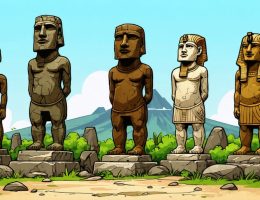
A diverse collection of ancient stone statues representing different civilizations, including a Moai from Easter Island, a classical Greek sculpture, and an Egyptian pharaoh statue, set against a natural backdrop.
Stone in Cultural Heritage

Ancient Stone Statues: How Early Civilizations Mastered Natural Stone Art

Throughout millennia, ancient stone statues have stood as enduring testaments to humanity’s artistic mastery and spiritual devotion. From the towering moai of Easter Island to the delicate marble sculptures of classical Greece, these stone sentinels capture the essence of cultural expression through stone sculpture across civilizations. Master craftsmen transformed raw stone into powerful symbols of divine authority, cultural identity, and human achievement, using techniques so sophisticated …

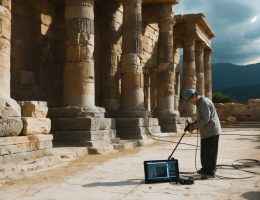
A technician uses a 3D laser scanner to document the detailed surface of an ancient stone monument, highlighting the modern techniques used in preserving cultural heritage.
Stone in Cultural Heritage

How Digital Technology is Preserving Stone Heritage for Future Generations

Digital heritage stands at the intersection of cultural preservation and technological innovation, revolutionizing how we protect and share our collective history. Modern stone preservation techniques now incorporate advanced digital tools, from 3D laser scanning to photogrammetry, creating precise digital replicas of irreplaceable artifacts and monuments.
These digital preservation methods serve dual purposes: safeguarding our cultural heritage for future generations while making it accessible to global audiences through …