
PMI material testing, or Positive Material Identification testing, is a non-destructive analytical method used to verify the elemental composition of natural stone and ensure it matches specifications for a project. In the stone industry, PMI testing employs handheld X-ray fluorescence (XRF) analyzers to identify and quantify the elements present in stone materials within seconds, confirming their authenticity, detecting potential contaminants, and validating consistency across large shipments. This testing has become a crucial quality assurance tool for high-stakes projects where material integrity directly impacts durability, aesthetic consistency, and regulatory compliance.
While traditional stone testing focuses on physical properties like compressive strength and water absorption, PMI analysis addresses a different concern: verifying you’re getting exactly what you ordered. The technology proves particularly valuable when working with imported materials, rare stone varieties, or projects requiring strict material traceability. A luxury hotel project in Dubai, for instance, used PMI testing to confirm that 40,000 square feet of specified Carrara marble wasn’t substituted with visually similar but compositionally different alternatives, a switch that would have compromised both the design intent and long-term performance.
Understanding when PMI testing adds value to your stone project requires knowledge of its capabilities, limitations, and how results integrate with broader material evaluation protocols. The following guide explains the science behind PMI testing, identifies scenarios where it delivers measurable benefits, and provides practical frameworks for interpreting results alongside traditional stone performance data.
What Is PMI Material Testing for Natural Stone?
PMI material testing brings forensic-level precision to natural stone verification. While traditional stone testing evaluates physical properties like absorption rates and compressive strength, PMI (Positive Material Identification) identifies the exact elemental makeup of stone samples down to their chemical composition. Think of it as a fingerprint for stone, a way to confirm precisely what you’re getting matches what you ordered.
The technology behind PMI using XRF (X-ray fluorescence) works by directing X-rays at stone surfaces and analyzing the resulting energy signatures. Each element in the stone emits a unique spectral pattern, creating a detailed chemical profile. Unlike visual inspections or density tests that assess general characteristics, PMI reveals the stone’s molecular truth.
For natural stone projects, this matters because appearance alone can deceive. Two slabs might look identical but contain different mineral compositions that affect weathering, staining susceptibility, and compatibility with sealers or mortars. A limestone facade that tests high in iron content, for instance, will behave dramatically differently than iron-poor limestone when exposed to moisture and oxidation.
- PMI (Positive Material Identification)
- Non-destructive testing that identifies the elemental composition of materials using spectroscopic analysis. In stone applications, it verifies material authenticity and detects compositional variations.
- XRF (X-ray Fluorescence)
- The primary technology used in PMI testing that analyzes how materials respond to X-ray bombardment. Provides rapid, accurate elemental analysis without damaging stone samples.
- Elemental Composition
- The specific chemical elements present in stone and their relative concentrations. This data reveals mineral content, potential contaminants, and material consistency.
- Material Verification
- The process of confirming that supplied stone matches specifications for type, quality, and chemical properties. Essential for projects requiring documented material traceability.
PMI distinguishes itself from standard stone testing by answering the fundamental question: what is this stone actually made of? Standard ASTM tests might tell you a stone’s water absorption rate is 0.2%, but PMI reveals whether that performance comes from a calcium carbonate matrix or a silicate structure. That difference determines everything from cleaning protocols to long-term durability predictions.
This testing method proves particularly valuable when dealing with rare stones, imported materials, or situations where material substitution risks exist. The chemical signature PMI generates creates an objective record that transcends visual assessment or supplier assurances.

The Role of PMI Testing in Advanced Material Testing Protocols
PMI material testing operates as one component within a multi-layered quality assurance framework for natural stone projects. Rather than replacing traditional evaluation methods, PMI complements physical and mechanical tests to create a complete material profile.
protocols typically follow a hierarchical approach. Basic tests, visual inspection, dimensional verification, and surface finish assessment, form the foundation. These confirm obvious quality markers but can’t detect subsurface issues or compositional variations. The next tier includes absorption rate testing, density measurements, and flexural strength evaluations. These quantify how stone will perform under specific conditions like moisture exposure or structural loading.
PMI testing sits at the advanced level, addressing questions the physical tests can’t answer: Is this material what the supplier claims? Does the chemical composition match the quarry specifications? Are there trace elements that might affect long-term performance or create reactions with installation materials?
The strategic integration matters more than the sequence. For residential countertops in moderate climates, absorption and density tests might suffice. But when you’re specifying cladding for a coastal high-rise, you need PMI data alongside salt spray resistance testing and freeze-thaw cycle analysis. The chemical composition PMI reveals helps predict how the stone will react to environmental stressors over decades.
Think of it this way: absorption tests tell you if water enters the stone. PMI testing tells you what’s in that stone that might react when water does enter. Both answers inform different aspects of your material selection and installation approach.
Projects involving multiple stone batches, imported materials, or performance warranties typically warrant the full testing suite. PMI becomes your verification tool, confirming compositional consistency across shipments and validating that premium-grade specifications aren’t marketing language masking standard materials.
When Your Stone Project Needs PMI Testing
High-Stakes Commercial Projects
Large commercial installations, think hotel lobbies, corporate headquarters, airport terminals, or high-rise cladding, operate under strict contractual obligations that residential projects rarely face. When a designer specifies Carrara marble for 5,000 square feet of lobby flooring, the contract typically mandates consistent color, veining, and performance characteristics across every shipment. PMI testing verifies that stone batches match the approved sample’s chemical composition, catching discrepancies before installation begins.
These projects can’t afford mid-construction surprises. If batch three arrives with different mineral content than batches one and two, you’re looking at visible inconsistencies, potential performance gaps, and expensive tear-outs. Performance guarantees written into commercial contracts often require documented material verification, PMI results provide that paper trail.
The financial stakes multiply in commercial work. A material failure discovered post-installation might trigger liquidated damages, contractor disputes, and project delays that cascade through schedules. PMI testing upfront costs a fraction of one day’s delay penalty on a commercial timeline. For architects and general contractors managing million-dollar stone packages, PMI documentation isn’t optional, it’s liability protection that proves due diligence if questions arise during or after construction.
Historical Restoration and Matching
Historical restoration projects demand precision that goes beyond visual matching. When restoring heritage buildings or replacing damaged stonework, you need to match not just color and texture but the actual mineral composition of the original material.
PMI testing solves this challenge by revealing the elemental makeup of existing stone. This data ensures your replacement pieces won’t weather differently or react incompatibly with the original material over time. A limestone that looks identical might contain different trace minerals that affect how it responds to moisture, thermal cycling, or cleaning treatments.
For restoration architects, this matters immensely. Installing compositionally incompatible stone can accelerate deterioration in both old and new sections through differential expansion rates or chemical interactions. PMI provides the chemical fingerprint needed to source or verify matching material from modern quarries.
The technique proves especially valuable when original quarries no longer operate. By analyzing the existing stone’s composition, you can identify current sources with similar mineral profiles, preventing the aesthetic and structural mismatches that compromise restoration integrity and authenticity.
What PMI Testing Reveals About Your Stone
PMI testing delivers four critical categories of information that directly impact your stone project’s outcome.
Elemental Composition Analysis
The test identifies and quantifies the specific elements present in your stone sample. For granite, this means confirming the ratios of quartz, feldspar, and mica. In marble, it verifies calcite content and traces of magnesium, iron, or other minerals that affect color and performance. These elemental fingerprints reveal why one limestone reacts differently to acid rain than another, or why a particular travertine requires specialized sealing. You receive precise percentages, not subjective descriptions, which matters when specifications demand exact material characteristics.
Material Authenticity Verification
PMI confirms whether your specified material matches what arrived on site. The test distinguishes genuine Carrara marble from lookalike alternatives, identifies engineered stone misrepresented as natural, and spots substitutions that compromise your design intent. This verification protects against both intentional fraud and honest supply chain errors. When a project budget allocates premium costs for rare stone varieties, PMI provides objective proof you received what you paid for.
Contamination Detection
The analysis flags unwanted elements that predict future problems. Elevated iron content signals potential rust staining. Sulfide minerals indicate vulnerability to discoloration when exposed to moisture. Clay inclusions suggest reduced structural integrity. Salt contamination in reclaimed stone points to efflorescence risks. Identifying these contaminants before installation allows you to adjust installation methods, apply protective treatments, or reject unsuitable material entirely.
Quality Consistency Across Batches
When your project requires stone from multiple quarry runs or shipping containers, PMI testing confirms compositional consistency. Variations in elemental makeup translate to differences in color stability, weathering resistance, and maintenance needs. Testing samples from each batch ensures the stone installed in your lobby entrance matches the material used six months later when you complete the second phase.
This data transforms vague material descriptions into actionable specifications. You select sealants matched to actual stone chemistry, establish maintenance protocols based on real contamination risks, and write installation contracts with verifiable material requirements rather than hopeful assumptions.
The PMI Testing Process: What to Expect
Understanding the PMI testing process helps you plan accordingly and set realistic expectations for your project timeline. While the specifics vary by testing facility and project scope, the basic workflow follows a consistent pattern that integrates smoothly into your stone procurement process.
The typical PMI testing sequence unfolds as follows:
- Initial consultation with a certified materials testing laboratory to discuss your project requirements, the specific stone types involved, and any particular concerns about composition or authenticity.
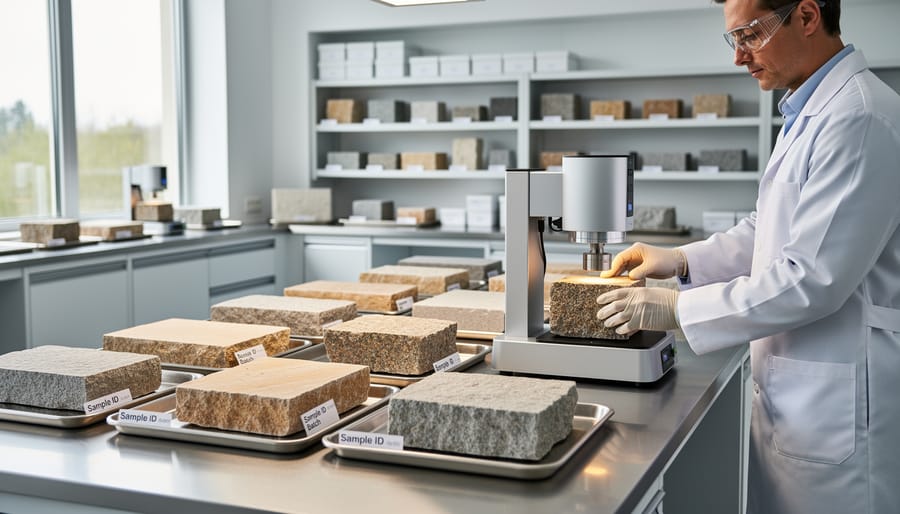
- Sample selection and extraction, where representative pieces are chosen from the stone lot or slab inventory. For large projects, multiple samples from different sections ensure batch consistency.
- Laboratory preparation, during which technicians clean and prepare sample surfaces for accurate XRF (X-ray fluorescence) analysis without contamination from surface treatments or residues.
- XRF scanning and data collection, typically taking 15-30 seconds per test point. Technicians may test multiple locations on each sample to verify compositional uniformity.
- Analysis and interpretation by materials scientists who compare results against known stone compositions, industry standards, and your project specifications.
- Report generation detailing elemental composition, material verification conclusions, and any flags for inconsistencies or quality concerns.
The entire process usually takes three to seven business days from sample submission to receiving your final report, though rush services can deliver results within 24-48 hours for time-sensitive projects.
Cost considerations vary based on project complexity. Basic PMI testing for a single stone type typically runs $150-$400 per sample, while comprehensive testing across multiple slabs or stone varieties in a large commercial installation might total $1,500-$3,000. This investment represents a small fraction of material costs but provides crucial verification that protects far larger expenditures. When evaluating the PMI lifecycle cost remember that catching material inconsistencies before installation prevents expensive replacements and project delays.
Accredited materials testing laboratories perform PMI analysis, often the same facilities that conduct ASTM structural testing for stone. Your stone supplier, architect, or general contractor can recommend qualified labs, or you can directly contact facilities certified by organizations like the American Association for Laboratory Accreditation. Many labs offer both on-site testing with portable XRF equipment and laboratory-based analysis for more detailed compositional profiling.
Real-World Impact: Case Studies
In a 2024 Manhattan office lobby renovation, the project architect specified Italian Statuario marble for 3,000 square feet of high-traffic flooring. Before installation, the contractor ordered PMI testing on samples from three different slabs in the shipment. The analysis revealed that two slabs contained significantly higher iron content than the reference sample initially approved. This discovery prevented a disaster: those iron-rich slabs would have developed rust staining within months when exposed to the building’s moisture levels and cleaning protocols. By identifying the compositional variance before installation, the project team rejected the problematic material and sourced consistent replacement slabs, avoiding roughly $180,000 in removal and reinstallation costs plus the reputational damage of a failed high-profile project.
A residential restoration project in Charleston provides another compelling example. The homeowner wanted to replace deteriorated limestone cladding on a historic 1890s townhouse but needed new stone that matched the original material’s weathering characteristics and appearance. Visual matching alone proved insufficient because similarly colored limestone from different quarries can contain vastly different mineral compositions that weather at different rates. PMI testing on the original stone revealed a specific calcium-to-magnesium ratio and trace element profile. The restoration team then tested samples from four potential quarry sources, ultimately finding one whose composition closely matched the original. Three years after installation, the new stone has aged consistently with the remaining historic sections, maintaining the building’s architectural integrity. Without PMI verification, the homeowner risked spending $65,000 on replacement stone that would have looked progressively mismatched over time, affecting both aesthetics and property value.
In a 2025 hotel chain expansion across coastal Florida, the design team specified granite for exterior cladding on six properties. PMI testing during the specification phase identified that one initially favored granite variety contained elevated levels of pyrite and chlorite, minerals prone to oxidation and degradation in salt-air environments. This early detection redirected the selection toward a compositionally stable alternative, protecting the brand from premature facade deterioration across multiple locations. The testing investment of $4,200 prevented an estimated $1.2 million in premature replacement costs and protected the cost over 20 years by ensuring the specified material would genuinely deliver the expected 30-year service life. The hotel group now requires PMI verification for all coastal installations.
Integrating PMI Results into Your Project Planning
PMI test results aren’t just data points, they’re decision-making tools that directly influence multiple aspects of your project. When you receive your PMI report, start by comparing the elemental composition against the supplier’s specifications. Any significant deviations should trigger a conversation about material sourcing and whether adjustments to your installation or maintenance plans are needed.
For stone selection decisions, PMI results help you verify that you’re getting the exact material you specified, particularly important when matching existing installations or working with rare stone varieties. If the composition shows higher iron content than expected, you’ll know to plan for potential rust staining in wet environments and adjust your sealing strategy accordingly.
Installation method choices depend heavily on what PMI reveals about your stone’s composition. Materials with specific mineral makeups may require modified adhesives, different joint treatments, or specialized fixing systems. Share PMI data with your installation team so they can adapt their methods to match the stone’s actual characteristics rather than assumed properties. Integrating this information into your stone project planning process ensures everyone works from accurate material specifications.
Maintenance protocols should reflect the stone’s verified composition. PMI results showing calcium-rich materials mean avoiding acidic cleaners entirely, while stones with certain mineral inclusions may need more frequent sealing or specialized cleaning products. Build these requirements into your maintenance specifications before project completion.
For warranty considerations, PMI documentation provides objective evidence of material quality and composition. This protects both you and your supplier by establishing baseline material characteristics, making it easier to resolve any performance issues that emerge later. Keep PMI reports as permanent project records alongside other testing documentation.

Common Questions About PMI Testing for Stone
The questions stone professionals and property owners ask about PMI testing typically cluster around practical concerns: investment justification, testing logistics, and result interpretation. Understanding these fundamentals helps you make informed decisions about incorporating PMI into your project workflow.
Understanding PMI Testing Costs and Value
Most clients want to know upfront what PMI testing will cost and whether it’s worth the investment. Testing fees vary based on sample complexity, the number of elements analyzed, and turnaround requirements. For a standard stone composition analysis, expect costs ranging from $150 to $400 per sample. Rush services command premium pricing, while bulk testing may qualify for volume discounts.
The value equation becomes clearer when you compare testing costs against potential failure expenses. Replacing improperly specified stone in a 2,000-square-foot installation can run $50,000 to $150,000 when you factor in material, labor, downtime, and contractual penalties. Against that backdrop, spending $300 to verify material suitability before installation represents prudent risk management.
Is PMI testing required for all stone projects?
No, routine residential applications with standard materials typically don’t require PMI testing. It becomes essential for high-value commercial work, restoration matching, or when material authenticity needs verification.
How accurate is PMI testing for stone materials?
Modern PMI equipment achieves accuracy within 0.1-0.5% for major elements in stone composition. This precision level reliably identifies material types and detects compositional variations that affect performance.
How long does PMI testing take?
Standard turnaround runs 3-5 business days from sample receipt to report delivery. Expedited services can provide preliminary results within 24-48 hours for time-sensitive projects.
What qualifications should I look for in a testing provider?
Choose labs with ASTM International accreditation, certified technicians, and specific experience testing natural stone materials. Request sample reports and reference projects similar to yours.
Can PMI testing damage my stone samples?
Modern non-destructive PMI methods leave no visible marks on polished surfaces. Testing requires only surface contact, preserving sample integrity for additional testing or installation use.
When selecting a testing provider, prioritize those who communicate results in accessible language rather than raw data dumps. The best labs translate elemental composition into practical implications for your specific application, helping you understand what the numbers mean for installation methods, maintenance requirements, and long-term performance expectations. Ask potential providers how they’ve helped clients similar to you make better stone selection decisions based on PMI data.
PMI material testing represents more than just another line item in your project budget, it’s insurance against expensive failures and long-term performance issues. By verifying the chemical composition and authenticity of your stone materials before installation, you’re eliminating guesswork from decisions that affect durability, safety, and aesthetic consistency for decades.
The connection between advanced material testing and project longevity is straightforward: stones with verified compositions behave predictably under real-world conditions. You’ll avoid surprises like unexpected weathering, structural weakness, or color inconsistencies that emerge after installation when remediation costs multiply exponentially. PMI testing shifts potential problems from the construction phase, where they’re manageable, to the planning phase, where they’re preventable.
Request PMI testing whenever material authenticity matters to your project’s success: high-value commercial installations, exterior applications exposed to harsh conditions, historical restorations requiring precise matching, or any project where warranties and performance guarantees carry legal weight. Don’t wait for your contractor to suggest it.
When discussing PMI with stone suppliers or contractors, frame it as a standard quality assurance measure, not an expression of distrust. Ask specific questions: “Can you provide PMI test results for this material lot?” or “What’s your protocol for verifying material consistency across shipments?” Reputable suppliers view testing as a partnership in project success, not an inconvenience. The investment in verification today prevents the regret of remediation tomorrow.