Granite’s chemical properties refer to how this igneous rock responds when exposed to acids, bases, solvents, and other reactive substances. Unlike many building materials, granite demonstrates exceptional chemical stability due to its crystalline structure and mineral composition, primarily quartz (20-60%), feldspar (65-90%), and mica (3-10%). This stability makes granite resistant to most household chemicals, industrial cleaners, and environmental pollutants that would damage limestone, marble, or synthetic surfaces.
Understanding granite’s chemical behavior matters because it directly affects longevity and maintenance costs in both residential and commercial applications. A kitchen countertop faces daily exposure to acidic foods, cleaning products, and heat. A laboratory workbench encounters harsh solvents and corrosive compounds. The financial impact of choosing the right material extends beyond initial installation, particularly when replacement costs for chemically degraded surfaces can exceed $5,000 for a standard kitchen.
The science behind granite’s resistance lies in the inert nature of its primary minerals and the density of its crystalline matrix. Quartz, the hardest component on the Mohs scale at 7, resists acid attack that dissolves calcium-based stones within minutes. Feldspar and mica contribute additional structural integrity while maintaining low reactivity across pH ranges from 1 to 14. This combination creates a natural barrier against chemical degradation that has proven reliable across centuries of use.
This article examines the specific mechanisms that give granite its chemical resilience, identifies which substances pose genuine risks versus marketing myths, and provides evidence-based guidance for selecting and maintaining granite surfaces in environments ranging from residential kitchens to industrial facilities. You’ll find comparative data against alternative materials, real-world performance examples, and maintenance protocols that preserve granite’s chemical resistance for decades.
Understanding Granite’s Chemical Composition
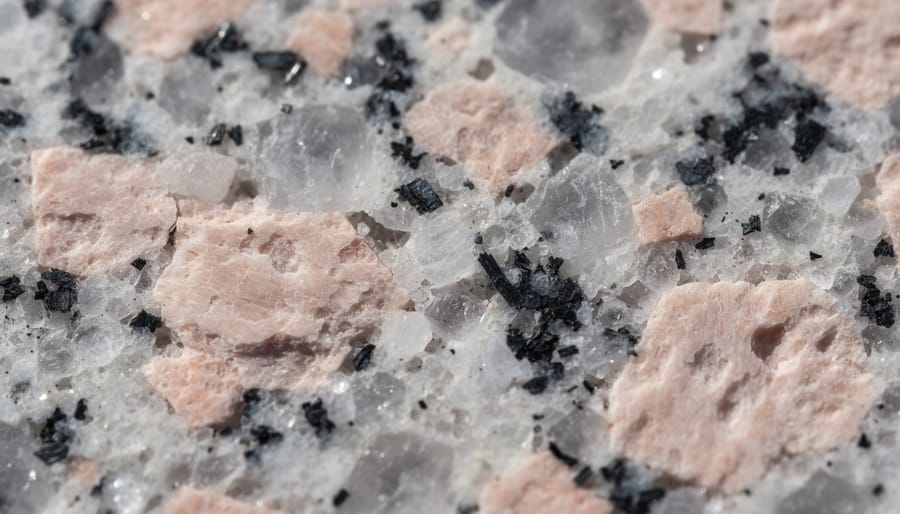
Granite earns its reputation for chemical resistance through a specific mineralogical recipe that has remained unchanged for millions of years. The rock consists of three primary minerals locked in an interlocking crystalline structure: quartz (20-60%), feldspar (50-70%), and mica (3-10%). This granite composition of quartz feldspar, and mica creates a dense matrix where individual crystals fit together like a three-dimensional puzzle, leaving minimal space for liquids or chemicals to penetrate.
Quartz, the hardest component, provides exceptional resistance to acids and scratches. Feldspar contributes structural integrity and moderate chemical stability, though it can react slowly with strong acids over extended exposure. Mica, while the softest mineral present, appears in such small quantities that it rarely compromises overall performance. The way these minerals crystallize together determines how granite behaves when chemicals contact its surface.
Several technical terms define granite’s chemical performance:
- Porosity
- The percentage of void space within the stone where liquids can penetrate. Granite typically ranges from 0.4% to 1.5%, significantly lower than most natural stones.
- pH Scale
- A measurement from 0-14 indicating acidity (below 7) or alkalinity (above 7). Granite resists most substances across this range, with limitations primarily at pH extremes below 2 or above 13.
- Chemical Inertness
- The degree to which a material resists chemical reactions with substances it contacts. Granite’s tightly bonded crystalline structure makes it largely inert to common household and industrial chemicals.
- Absorption Rate
- The speed and volume at which granite absorbs liquids, measured in percentage by weight. Quality granite absorbs less than 0.5% of its weight, meaning spills sit on the surface rather than soaking in.
The crystalline structure acts as granite’s primary defense mechanism. Because the minerals formed under extreme heat and pressure deep underground, they bonded completely with no gaps or weaknesses. This geological history translates directly to kitchen and laboratory performance: chemicals can’t easily break bonds that formed at 1,200°F and thousands of pounds of pressure per square inch.
How Granite Resists Chemical Exposure
The Role of Porosity and Density
Granite’s resistance to chemical damage stems directly from its remarkably low porosity and high density. The stone’s interlocking crystalline structure leaves minimal space between mineral grains, creating an inherently tight matrix that blocks liquid penetration. Most granite varieties measure between 0.2% and 1.5% water absorption by weight, far below the 5% threshold where chemical vulnerability increases significantly.
This dense formation means that when acidic or alkaline substances contact granite’s surface, they encounter a nearly impenetrable barrier. The tightly packed quartz, feldspar, and mica crystals form during slow underground cooling, allowing atoms to align in compact arrangements with few voids. These microscopic gaps, when present, rarely interconnect, preventing liquids from wicking into the stone’s interior.
Contrast this with porous stones like limestone or travertine, where absorption rates exceed 3%, allowing chemicals to seep into interconnected capillaries and react with calcium carbonate throughout the material. Granite’s density, typically 2.63 to 2.75 grams per cubic centimetre, creates a physical shield. Even without sealers, most household chemicals remain on the surface long enough for cleanup before any meaningful absorption occurs.
Sealed vs. Unsealed Performance
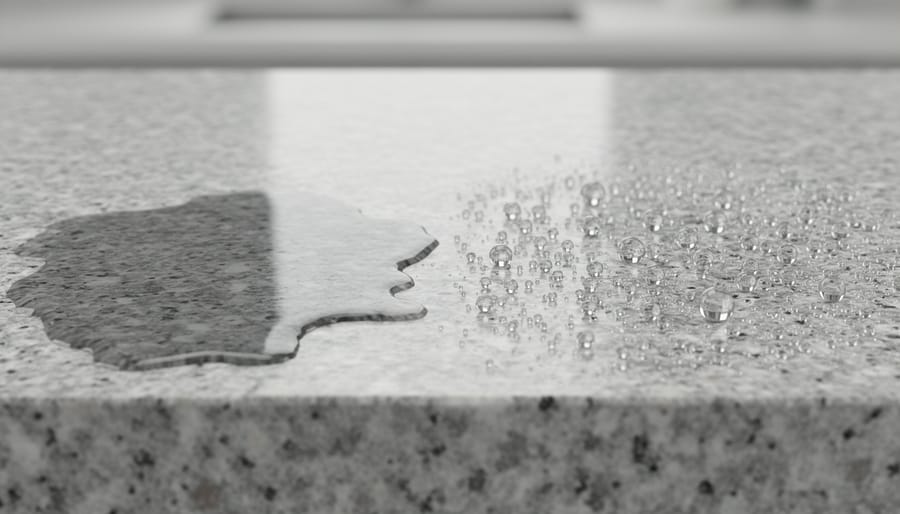
Granite sealers create a protective barrier that enhances already robust chemical resistance, but they don’t fundamentally alter the stone’s inherent properties. An unsealed granite slab still resists most household chemicals effectively due to its dense structure. However, sealing adds a crucial advantage: it extends the reaction time before liquids penetrate surface micro-pores.
When acidic substances contact unsealed granite, absorption begins immediately, though slowly. A quality sealer buys you minutes or even hours to wipe up spills before they reach the stone matrix. This matters most for lighter-colored granites with higher porosity ratings or in high-traffic kitchens where spills happen frequently.
Sealing becomes essential in three scenarios: when working with porous granite varieties (absorption rate above 0.5%), in commercial food prep environments with constant chemical exposure, or on honed finishes where open pores provide easier penetration pathways. Polished granite with naturally low porosity may only need sealing every two to three years, while softer varieties benefit from annual applications.
Test your granite by dropping water on the surface. If it darkens within four minutes, reseal immediately.
Types of Chemical Exposures and Granite’s Response
Acidic Substances
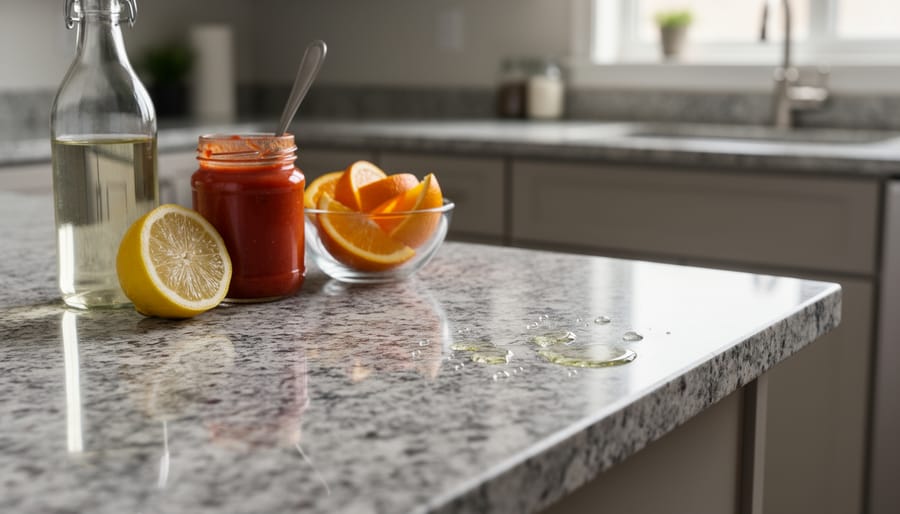
Granite demonstrates excellent resistance to most acidic substances commonly encountered in residential and commercial environments. Citrus juices (pH 2-3), vinegar (pH 2.4), and wine (pH 3-4) typically cause no immediate damage to properly sealed granite surfaces. These weak acids may sit on granite for several minutes without etching or dulling the finish, unlike marble which reacts instantly.
However, prolonged exposure matters. Leaving acidic liquids on unsealed granite overnight can lead to subtle surface changes, particularly on lighter-colored varieties with higher feldspar content. The quartz crystals in granite remain unaffected, but feldspar minerals show slight vulnerability to extended acid contact.
Stronger acids like hydrochloric acid (pH <1) or sulfuric acid can damage granite with sufficient concentration and contact time, though this rarely occurs in normal use. Industrial settings requiring regular exposure to concentrated acids may need specialized stone or alternative materials.
The key distinction: granite resists brief acid exposure that would immediately etch calcareous stones, but it’s not completely impervious. Regular wiping of spills and annual sealing provide adequate protection for typical kitchen acids without special precautions.
Alkaline Cleaners
Granite demonstrates excellent resistance to alkaline cleaners commonly found in households and commercial settings. Unlike marble and limestone, which suffer etching and surface damage from high-pH products, granite’s crystalline structure remains stable when exposed to bleach, ammonia, and other alkaline substances with pH levels between 10 and 13.
Bleach-based cleaners can be safely used on sealed granite surfaces without causing discoloration or structural damage. The stone’s dense composition prevents alkaline solutions from penetrating beyond the surface layer. However, prolonged or repeated exposure to undiluted bleach may gradually degrade certain sealers, reducing their protective effectiveness over time.
Ammonia-based glass cleaners pose minimal risk to granite itself but can break down some topical sealers more quickly than pH-neutral products. While occasional use won’t harm the stone, frequent application of strong ammonia solutions may necessitate more regular resealing.
The practical takeaway: granite tolerates standard household alkaline cleaners far better than most natural stones. For daily maintenance, pH-neutral cleaners extend sealer life, but occasional use of bleach or ammonia for disinfection won’t compromise granite’s structural integrity or appearance.
Oils and Organic Compounds
Granite demonstrates excellent resistance to most oils and organic compounds due to its low porosity and hydrophobic nature. Cooking oils like olive oil, vegetable oil, and butter typically bead on the surface rather than penetrating immediately, though prolonged exposure without wiping can cause darkening or staining, especially on lighter-colored varieties. This superficial staining occurs when oils seep into microscopic fissures rather than reacting chemically with the minerals.
Petroleum-based products, including motor oil and mineral spirits, show minimal reactivity with granite’s silicate structure. However, these substances can leave residual films that attract dirt and require degreasing cleaners to remove. Organic solvents like acetone and paint thinner won’t damage granite’s chemical bonds but may compromise some topical sealers, temporarily reducing water and oil resistance until resealing.
Practical Applications of Granite’s Chemical Resistance
Residential Kitchen Environments
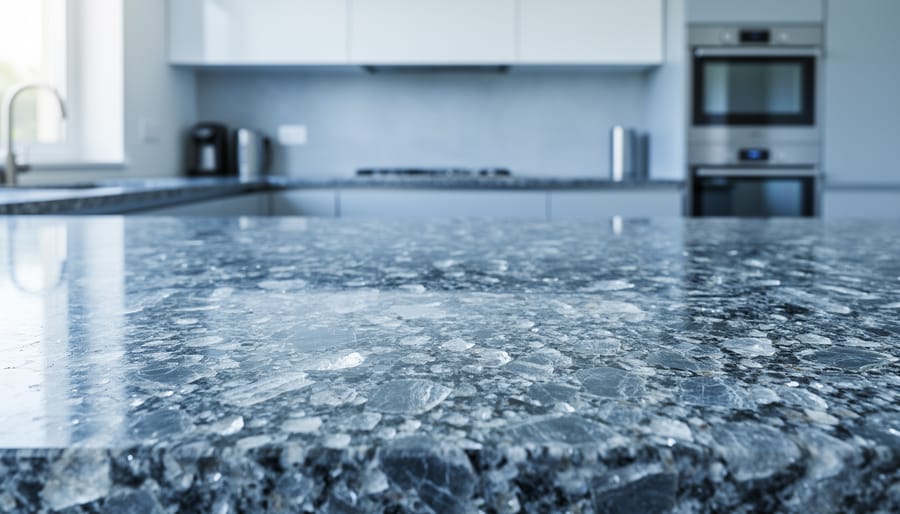
Home kitchens subject countertops to a relentless barrage of chemical challenges that granite handles with exceptional composure. Daily cooking activities introduce acidic ingredients, lemon juice, tomato sauce, vinegar-based dressings, that would etch or discolor more reactive stones like marble. Granite’s low reactivity to these common food acids means you can prepare meals without obsessive worry about immediate cleanup, though prompt wiping remains good practice.
The typical household cleaning routine further demonstrates granite’s suitability. Most homeowners use multipurpose cleaners containing mild alkalis or surfactants that granite tolerates without surface degradation. Even occasional exposure to stronger disinfectants leaves properly sealed granite unaffected, unlike softer stones that show wear patterns over time.
Wine spills, coffee rings, and cooking oil splatters, the inevitable casualties of an active kitchen, rarely penetrate granite’s dense structure when addressed within reasonable timeframes. This forgiving nature makes granite practical for families who cook frequently but can’t monitor every surface constantly, balancing real-world durability with the aesthetic appeal homeowners seek in their primary gathering space.
Commercial and Laboratory Settings
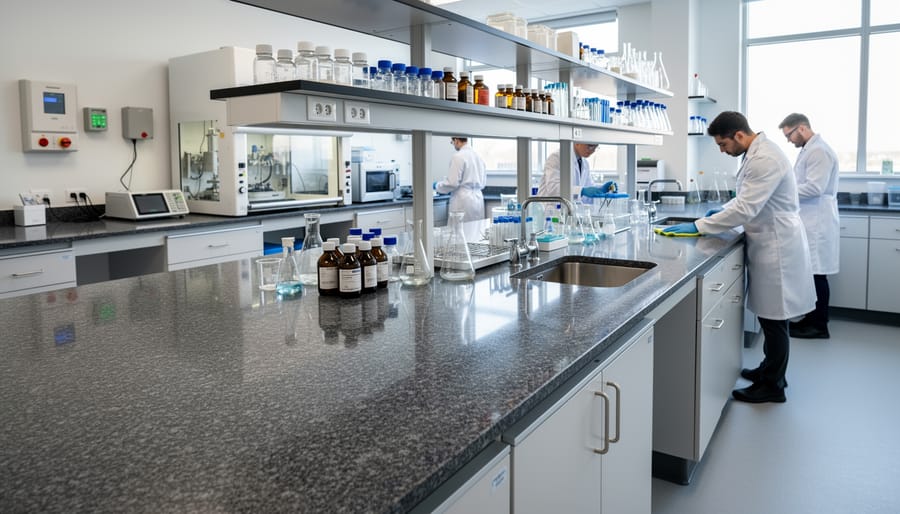
In professional laboratories and commercial facilities, granite serves as the workhorse surface where chemical resistance isn’t just desirable, it’s essential. Research labs routinely expose countertops to acids, bases, and solvents during daily procedures, making granite’s impermeability to these substances invaluable. Unlike porous materials that absorb spills and harbor contaminants, granite’s dense structure prevents chemicals from penetrating the surface, simplifying decontamination protocols.
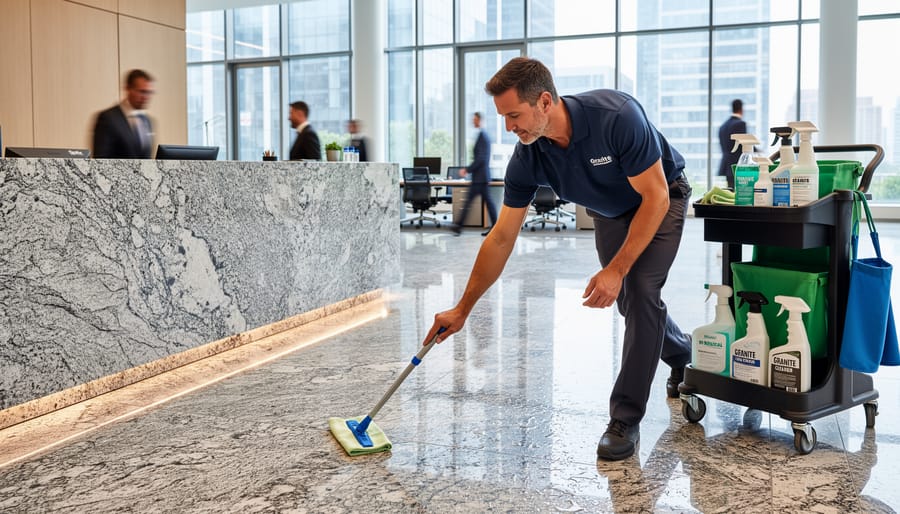
Commercial kitchens in restaurants and hotels exploit granite’s dual resistance to both harsh cleaning agents and food acids. Industrial-strength degreasers and sanitizers that would etch or stain softer stones leave granite unaffected. The material tolerates repeated contact with concentrated cleaning solutions without degrading, which reduces replacement costs over decades of heavy use.
Medical facilities appreciate granite for pathology labs and pharmacy prep areas, where spilled reagents demand surfaces that won’t absorb hazardous materials. Manufacturing plants processing chemicals use granite work surfaces because the stone maintains its integrity despite exposure to industrial compounds, oils, and elevated temperatures that would compromise synthetic alternatives.
Comparing Granite to Other Natural Stones
Granite’s chemical resistance significantly outperforms most natural stones, making side-by-side comparisons essential when selecting materials for chemical-exposed environments. Understanding these differences helps identify when granite’s premium price justifies its superior performance and when alternative stones might suffice.
Marble and limestone occupy the opposite end of the chemical resistance spectrum. Both consist primarily of calcium carbonate, which reacts immediately with acids, even weak ones like lemon juice or vinegar cause visible etching within seconds. A wine spill that granite shrugs off will permanently dull marble’s polish. These stones require constant vigilance in kitchens and completely fail in laboratory settings. The stone durability vs chemicals comparison reveals granite contains no reactive carbonates, giving it fundamental advantages over marble and limestone in any application involving acidic exposure.
Quartzite presents a closer match to granite’s performance. Composed almost entirely of interlocking quartz crystals, quartzite resists acids nearly as effectively as granite. The primary difference lies in porosity, some quartzite varieties absorb liquids more readily than granite, requiring more diligent sealing. High-quality quartzite performs comparably in residential kitchens, though granite maintains slight edges in commercial applications where sealing schedules might lapse.
Soapstone offers interesting contrasts. Its talc-rich composition makes it chemically inert, acids and alkalis cause zero damage. However, soapstone’s softness means physical scratching and wear occur more readily than with granite. In laboratory environments where chemical resistance matters more than scratch resistance, soapstone competes effectively. For kitchen countertops facing both chemical exposure and knife impacts, granite’s hardness combined with excellent chemical resistance creates superior overall performance.
Engineered quartz surfaces match granite’s acid resistance but can discolor when exposed to strong alkalis like oven cleaners or sustained UV exposure. Granite handles both without damage, maintaining its advantage in outdoor applications or areas requiring harsh sanitizing chemicals.
Testing Standards and Certification
When evaluating granite for applications where chemical exposure matters, standardized testing provides the objective data you need. The ASTM C650 test measures how granite responds to specific chemical reagents over controlled time periods. Laboratories apply acids, alkalis, and household chemicals to granite samples, then examine surface changes, weight loss, and structural integrity. ASTM C1026 evaluates stain resistance, complementing chemical resistance data by showing how substances penetrate the surface.
European standards follow similar protocols through EN 14147, which tests chemical resistance using citric acid, household cleaners, and staining agents. These tests grade granite on a scale from zero (no visible effect) to five (severe degradation). Most granite scores between zero and one, showing minimal to no reaction even after extended contact.
Test reports list numerical ratings that translate directly to real performance. A zero rating means the granite showed no detectable change after chemical exposure, the gold standard for kitchen countertops and lab surfaces. A one rating indicates slight surface changes visible only under magnification, still excellent for most residential applications. When comparing granite vs quartz or natural vs manufactured options, these standardized ratings offer objective comparison points beyond marketing claims.
Look for test certificates when purchasing granite for commercial kitchens, laboratories, or any high-exposure environment. Reputable suppliers provide these documents showing their specific granite’s tested performance. The certificate should identify the testing laboratory, specific chemicals used, exposure duration, and resulting scores. This documentation becomes especially valuable when specifying granite for projects with strict performance requirements or when building codes mandate certified chemical resistance.
Maintenance and Protection Best Practices
Maintaining granite’s exceptional chemical resistance requires consistent care and protective measures. While granite naturally resists most household chemicals, proper maintenance extends its lifespan and preserves its appearance.
Sealing Protocol
Apply a penetrating sealer every 12 to 18 months for kitchen countertops, or annually for high-traffic commercial surfaces. Test whether resealing is needed by placing a few drops of water on the surface, if the water beads up, the seal remains effective. If it darkens the stone within minutes, reseal immediately. Choose impregnating sealers specifically formulated for granite rather than topical coatings, which can trap moisture and degrade over time.
Daily Cleaning Routine
Use pH-neutral cleaners designed for natural stone. Mix a few drops of dish soap with warm water for routine cleaning, or select commercial granite cleaners with pH levels between 7 and 10. Avoid acidic cleaners containing vinegar or lemon, alkaline products with ammonia, and abrasive powders that can scratch the surface. Microfiber cloths prevent streaking and won’t scratch the polish.
Immediate Spill Response
Blot spills immediately rather than wiping, which spreads the liquid. For acidic substances like wine, coffee, or citrus juice, flush the area with water and mild soap within five minutes. Oil-based spills require a poultice: mix baking soda with water to form a paste, apply to the stain, cover with plastic wrap, and leave for 24 hours before removing and rinsing.
Protective Measures
Place trivets under hot pans and coasters under acidic beverages. While granite tolerates brief chemical contact, prolonged exposure to strong acids or alkalis can etch even sealed surfaces. Never use granite as a cutting board, knife marks compromise the seal and create pathways for chemical penetration. For commercial kitchens, establish cleanup protocols requiring staff to wipe surfaces every two hours during service.
Common Questions About Granite Chemical Properties
Homeowners and professionals often have specific questions about how granite handles everyday chemicals and what maintenance it truly requires. Understanding granite’s chemical resistance alongside other stone durability properties helps set realistic expectations for long-term performance.
Can granite withstand lemon juice and other food acids?
Yes, granite can withstand brief exposure to lemon juice, vinegar, and wine without etching because its silicate minerals are acid-resistant. However, prolonged contact may allow acids to penetrate unsealed surfaces and potentially stain, so wiping spills promptly remains good practice.
How long does granite sealer last?
Quality granite sealers typically last 1-3 years depending on the stone’s porosity, usage intensity, and the sealer type applied. High-traffic kitchen countertops may need resealing annually, while bathroom vanities often extend to three years between applications.
Will bleach damage my granite countertops?
Diluted household bleach will not damage granite when used occasionally for disinfection, though repeated use of undiluted bleach can degrade sealers over time. Mix bleach with water (1:10 ratio) and rinse thoroughly after cleaning to protect both the stone and its protective coating.
Is all granite equally resistant to chemicals?
No, chemical resistance varies by granite type based on mineral composition and porosity. Dense, low-porosity granites with high quartz content offer superior resistance, while more porous varieties may be vulnerable to staining even if they resist etching.
The variability in granite performance underscores why technical specifications matter more than visual appearance alone when selecting stone for chemically demanding environments. Testing individual slabs or requesting absorption data from suppliers provides concrete evidence of how a specific granite will perform rather than relying on generalizations about the stone type.
how it works
Granite’s chemical resistance operates through a three-layered defense system rooted in its geological formation. When molten magma cooled slowly over millions of years, it crystallized into an interlocking network of quartz, feldspar, and mica minerals. This creates a barrier where individual crystals lock together so tightly that most chemicals cannot penetrate the surface.
The first line of defense is granite’s low porosity, typically 0.4% to 1.5% by volume. This means fewer pathways exist for liquids to seep beneath the surface. When acidic substances like lemon juice contact granite, they encounter quartz crystals that are chemically inert at typical household pH levels. The acid simply pools on top rather than eating into the stone like it would with calcium-based marble.
The second mechanism involves silicate bonding. Granite’s primary minerals contain silicon-oxygen bonds, which remain stable across a wide pH range. Unlike carbonate stones that react with acids through dissolution, granite’s silicate structure doesn’t break down unless exposed to extremely harsh industrial chemicals like hydrofluoric acid.
Finally, professional sealing adds a temporary hydrophobic layer that repels liquids entirely, buying time for cleanup before any potential interaction occurs. This combination of natural density and applied protection explains why granite dominates applications requiring chemical durability, a factor that influences natural stone pricing alongside aesthetics and availability.
Types or components
Granite’s chemical resistance stems from three primary mineral components, each contributing distinct protective properties. Quartz, typically comprising 20-60% of granite’s composition, provides exceptional hardness and chemical inertness. Its crystalline silicon dioxide structure resists most acids and alkalis, forming granite’s defensive backbone. Feldspar minerals (40-70% of composition) offer durability and contribute to the stone’s low porosity, though they’re slightly more reactive to strong acids than quartz. Mica and other accessory minerals (5-15%) fill gaps between larger crystals, creating a dense matrix that limits chemical penetration.
The interplay between these components determines overall performance. Granites with higher quartz content typically show superior acid resistance, while those rich in potassium feldspar excel against alkaline exposure. This mineral diversity explains why granite outperforms single-mineral stones in varied chemical environments. The tight interlocking of these components creates granite’s characteristically low absorption rate (0.1-0.4%), preventing chemicals from penetrating beyond surface contact. Understanding these compositional factors helps explain the real stone benefits that engineered alternatives struggle to replicate through manufactured formulations.
uses
Granite’s exceptional chemical resistance makes it indispensable across residential, commercial, and industrial environments where surfaces face frequent chemical exposure.
Kitchen countertops remain granite’s most common application. The stone withstands daily contact with acidic foods (tomatoes, citrus), wine spills, vinegar-based dressings, and routine cleaning products without etching or discoloration. Even unsealed granite performs well against typical household chemicals, though sealing extends this protection.
Laboratory work surfaces exploit granite’s chemical inertness. Research facilities, medical labs, and educational institutions install granite benchtops because the stone resists most laboratory reagents, acids, and solvents without degrading or contaminating samples. The non-porous surface prevents chemical absorption that could compromise experimental accuracy.
Commercial food preparation areas benefit from granite’s dual resistance to both food acids and industrial-strength sanitizers. Restaurant kitchens, butcher shops, and bakeries rely on granite surfaces that tolerate bleach solutions, degreasers, and constant cleaning without breaking down.
Industrial settings use granite in manufacturing environments where chemical spills occur regularly. Pharmaceutical plants, chemical processing facilities, and electronics manufacturing operations choose granite for workstations and flooring because it maintains structural integrity even when exposed to harsh solvents and corrosive substances that would destroy other materials.
Granite’s chemical resistance stands as one of its most valuable technical properties, setting it apart in environments where durability matters. Its dense crystalline structure, dominated by resilient quartz and feldspar, creates natural barriers against acids, alkalis, and common household chemicals that would compromise softer stones.
This resistance isn’t just theoretical. In kitchens, laboratories, and commercial settings, granite consistently withstands daily chemical exposure that would etch marble or degrade limestone within months. Its low porosity means spills sit on the surface rather than penetrating deep, giving you time to clean without permanent damage.
When sealed properly, granite’s already impressive chemical resistance reaches professional-grade performance. It handles wine spills, citrus juice, cleaning products, and cooking oils without the anxiety that accompanies more reactive stones.
Choosing natural stone shouldn’t be purely aesthetic. Understanding technical properties like chemical resistance ensures your investment performs as beautifully as it looks. Granite delivers both, making it the practical choice when your surface faces real-world chemical challenges. Whether you’re designing a busy family kitchen or specifying materials for commercial use, granite’s proven chemical stability offers peace of mind backed by measurable performance data.