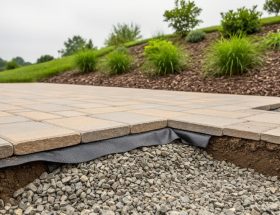
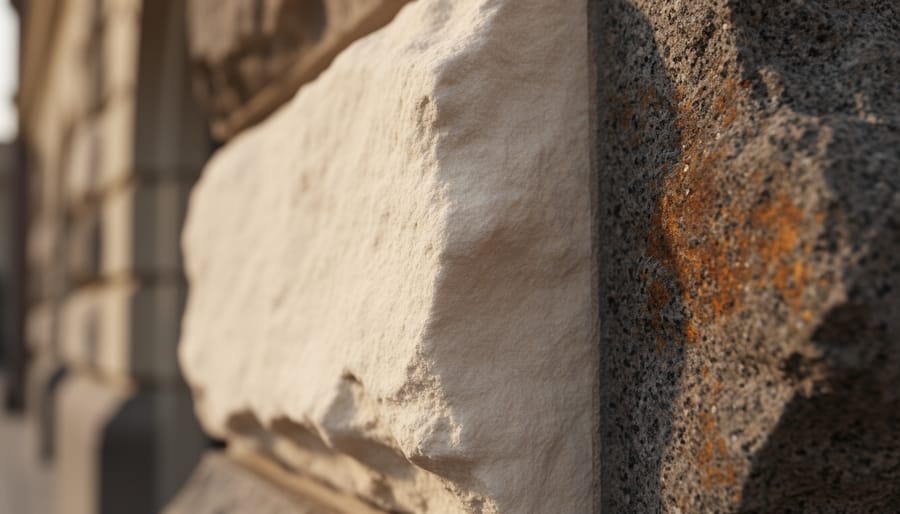
Stone patina is the natural surface alteration that occurs as stone ages, characterized by changes in color, texture, and sheen that develop through exposure to weather, minerals, and biological activity. Unlike damage or deterioration, patina represents a stable transformation that many architects and designers actively seek for its aesthetic depth and authenticity.
The question of whether patina enhances or harms stone depends entirely on the stone type, environment, and intended use. A bronzed patina on limestone can add warmth and character to a historic facade, while the same weathering process might indicate inappropriate material selection for a high-traffic commercial entrance. Understanding this distinction matters for anyone specifying stone in 2026, where authenticity and aging characteristics increasingly drive material selection.
Patina forms through three primary mechanisms: chemical reactions between stone minerals and atmospheric elements, biological colonization by lichens and microorganisms, and physical weathering from water and wind. Each stone variety responds differently. Marble develops a soft, matte surface as calcite crystals slowly dissolve and recrystallize. Granite darkens as iron minerals oxidize. Sandstone weathers unevenly based on its cementing agents. These transformations unfold over years or decades, creating surfaces impossible to replicate through artificial finishing.
This article defines what constitutes genuine patina versus problematic weathering, explains the science behind patina formation on different stone types, and provides practical guidance for preservation decisions. Whether you’re restoring a century-old building or selecting materials that will age gracefully, understanding patina transforms how you approach stone specification and maintenance.
What Is Stone Patina?
Stone patina is the natural surface layer that forms on stone through gradual chemical and physical transformation when exposed to environmental conditions over time. This weathered finish develops as minerals interact with moisture, atmospheric gases, biological organisms, and temperature fluctuations, creating distinctive color shifts, texture changes, and surface characteristics that differ significantly from the stone’s original polished or freshly quarried appearance.
The critical distinction lies between patina and deterioration. Patina represents a stable, often protective transformation that adds character and visual depth without compromising structural integrity. A limestone facade that shifts from cream to warm honey tones, or marble that develops a soft mellow glow, exemplifies beneficial aging. These changes occur primarily at the microscopic surface level, where mineral oxidation, calcite recrystallization, and subtle biological colonization create new visual qualities while the stone beneath remains sound.
Deterioration, by contrast, involves progressive structural damage. Spalling, where stone layers flake away, deep cracking from freeze-thaw cycles, or soft crumbling from salt crystallization all signal actual decay rather than surface patination. While both processes may occur simultaneously on the same building, they require fundamentally different responses. Patina preservation often guides restoration decisions, while deterioration demands intervention.
Historically, architects and designers have valued patina for its ability to anchor structures in their landscape and climate. The silvered surface of weathered granite or the golden glow of aged sandstone provides visual evidence of time and place that new stone cannot replicate. Research into phenomena like trachyte weathering processes reveals how specific mineral compositions interact with environmental factors to produce characteristic aging patterns unique to each stone type and location.
Beyond aesthetics, patina can offer modest protective benefits. The surface layer sometimes acts as a sacrificial barrier, slowing further weathering of underlying material. Desert varnish on sandstone and lichen-covered granite surfaces both demonstrate this protective effect, though the degree of protection varies considerably by stone type and environmental exposure.
How Stone Patina Forms
Environmental Factors
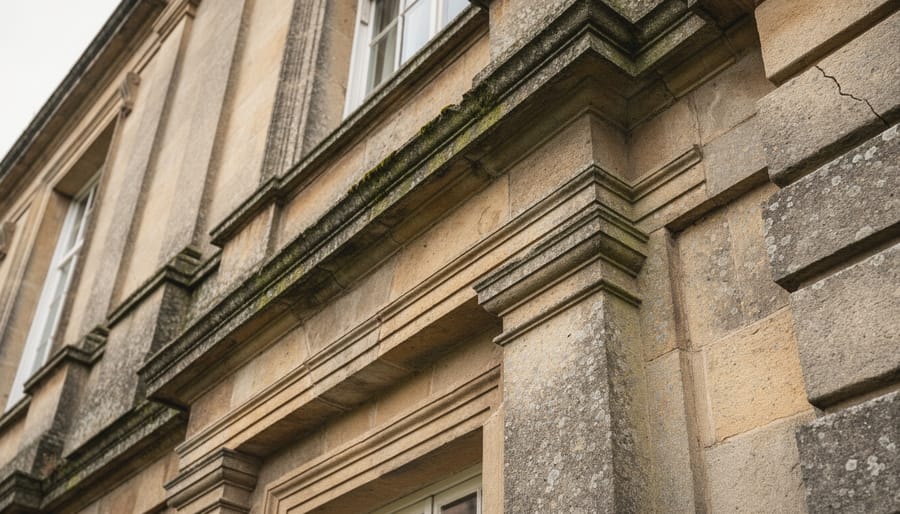
Climate exerts the most fundamental control over patina development. Coastal environments accelerate weathering through salt crystallization cycles, sodium chloride penetrates stone pores, then expands as it dries, creating microscopic surface fractures that trap moisture and organic matter. Mediterranean limestone facades develop honey-gold patinas within 15-20 years, while identical stone in arid Arizona might remain nearly unchanged for a century.
Moisture and temperature swings drive most patina chemistry. Freeze-thaw cycles in northern climates force water into microcracks, breaking surface minerals loose and creating textured, matte finishes. Tropical humidity supports lichen and algae colonization that produces green and black biological staining, particularly on north-facing walls with limited UV exposure. Granite in Scotland’s damp highlands gains moss-covered character far faster than the same stone in Dubai’s desert heat.
Atmospheric pollution fundamentally alters natural weathering patterns. Industrial sulfur dioxide converts calcium carbonate in marble and limestone into friable gypsum crusts, the black patinas on historic European monuments aren’t natural aging but climate and pollution effects from decades of acid rain. Modern air quality improvements have actually slowed certain patina types in urban centers.
UV radiation bleaches mineral pigments and breaks down organic colonizers, which is why southern exposures develop cleaner, lighter patinas while shaded areas accumulate darker biological growth. Regional geology matters too, limestone quarried near iron deposits weathers with rust-toned streaks absent in purer sources.
Chemical and Biological Processes
Stone patina emerges through an intricate dance of chemical reactions and biological colonization. Water acts as the primary catalyst, dissolving soluble minerals near the surface and carrying them outward where they redeposit or wash away entirely. Iron-rich stones oxidize when water introduces oxygen to embedded ferrous compounds, producing rust-brown and ochre stains. Calcium carbonate in marble and limestone reacts with slightly acidic rainwater, made more aggressive by dissolved carbon dioxide or atmospheric pollutants, creating a softened, matte surface as crystals dissolve and reform.
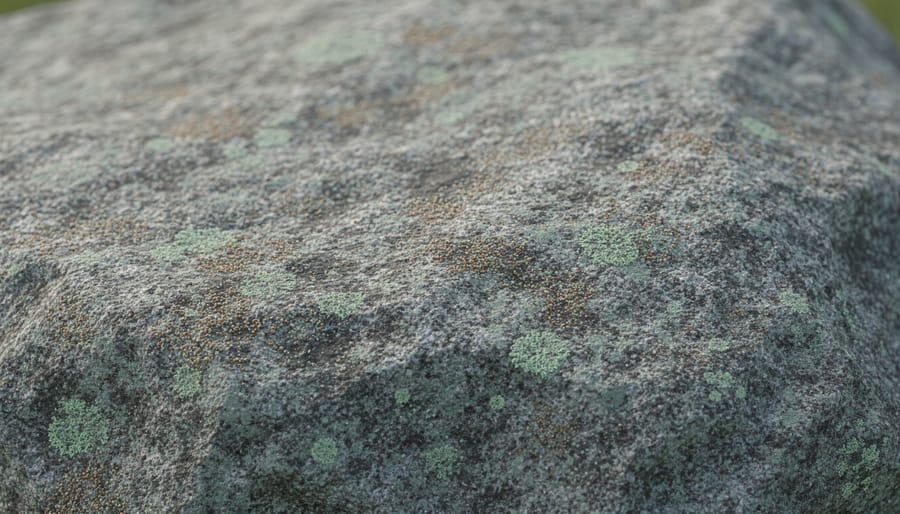
Biological activity adds another dimension. Lichens as weathering agents are particularly influential: their root-like structures penetrate microscopic cracks while secreting acids that break down minerals, creating characteristic circular patches in greys, greens, yellows and oranges. Algae thrive in damp, shaded areas, contributing green or black staining. These organisms don’t just discolor, they physically alter texture by etching the surface and trapping moisture that accelerates mineral transformation.
Atmospheric pollutants, especially sulfur dioxide from industrial emissions, form sulfuric acid on stone surfaces. This aggressive compound attacks carbonates and can create black gypsum crusts in urban settings. The interplay between all these forces, mineral chemistry, moisture cycles, living organisms, and airborne chemicals, determines whether a stone develops a subtle golden glow, dramatic russet streaking, or mottled biological color.
Types of Stone Patina by Material
Marble Patina
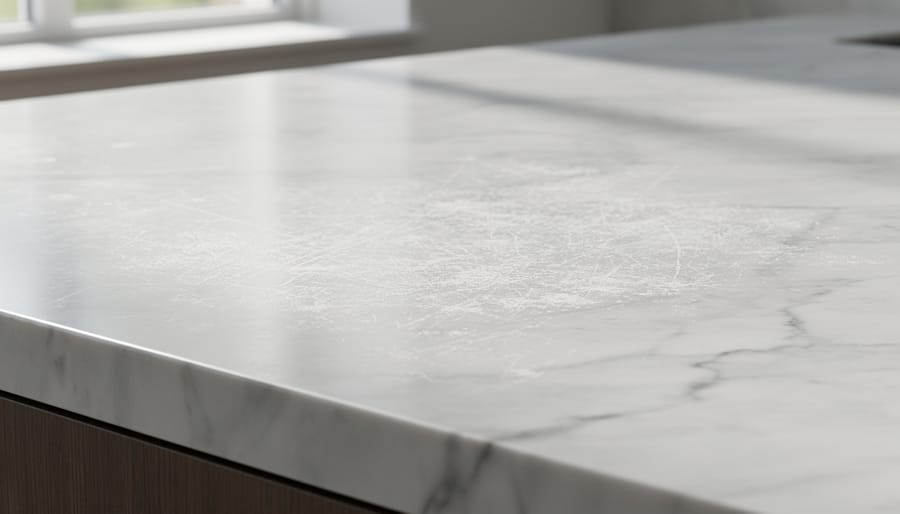
Marble’s patina emerges primarily through the gradual dissolution of its calcium carbonate content when exposed to acidic rain and atmospheric pollutants. This chemical weathering softens the stone’s polished surface, creating a matte texture that reveals the internal crystalline structure. White Carrara marble, for instance, transitions from its original bright white to a softer, cream-toned surface with subtle yellow undertones as minerals migrate and oxidize within the stone matrix.
The Parthenon’s Pentelic marble demonstrates this transformation dramatically. Originally a pure white stone, it has developed its characteristic honey-gold patina over 2,500 years of exposure to Mediterranean air and sunlight. Similarly, Renaissance marble sculptures in European cities display surface etching that enhances their depth and visual interest, with recessed areas often developing darker tones from accumulated organic matter and mineral deposits.
In architectural applications, this aging process typically becomes noticeable within 20 to 50 years for exterior installations, though the rate varies significantly based on climate. Coastal environments with salt-laden air accelerate dissolution, while dry inland conditions slow the process considerably.
Limestone Patina
Limestone develops one of the most visually appealing patinas among common building stones, transforming from pale cream or gray into rich honey, golden, and amber tones as it ages. This warm color shift occurs as iron compounds within the stone oxidize and migrate to the surface, concentrating the yellow-brown hues that give aged limestone its characteristic glow.
The weathering process reveals hidden textures and details that new limestone conceals. Fossilized shells, coral fragments, and marine organisms embedded in the stone become more prominent as softer surrounding material weathers slightly faster than the denser fossils. This differential erosion creates subtle relief patterns that catch light and shadow, adding three-dimensional interest to flat surfaces.
Water interaction enhances limestone patina dramatically. Rain patterns create vertical streaking, while areas protected from direct moisture develop different color intensities. The stone’s porous nature allows minerals to move through it, depositing dissolved material at the surface as water evaporates. This natural staining rarely appears uniform, instead, it creates the mottled, organic patterns that architects prize in historic buildings.
The patina formation typically becomes noticeable within five to ten years of exposure, deepening steadily over decades.
Granite Patina
Granite develops patina at a glacial pace compared to calcareous stones, often requiring centuries rather than decades for visible transformation. Its dense crystalline structure and low porosity make it highly resistant to chemical weathering, but subtle changes do occur.
The most common patina effect in granite is the gradual darkening or lightening of its surface as feldspars weather and iron-bearing minerals oxidize. Pink granites may shift toward salmon or rust tones, while gray varieties can develop a slightly bronzed or silvery cast. These color shifts are typically uniform across the stone face rather than creating dramatic patterns.
Lichen colonization represents the most distinctive patina feature on granite. The symbiotic relationship between fungi and algae etches microscopic patterns into the surface, creating circular growths in white, gray, orange, or chartreuse. Historic granite monuments and mountain outcrops display spectacular lichen colonies that have developed over hundreds of years, adding organic texture without compromising structural integrity.
Exposed granite may also show “desert varnish” in arid climates, a dark manganese and iron oxide coating that takes millennia to form. This glossy patina is prized on natural rock faces but rarely appears on building facades within human timescales.
Sandstone Patina
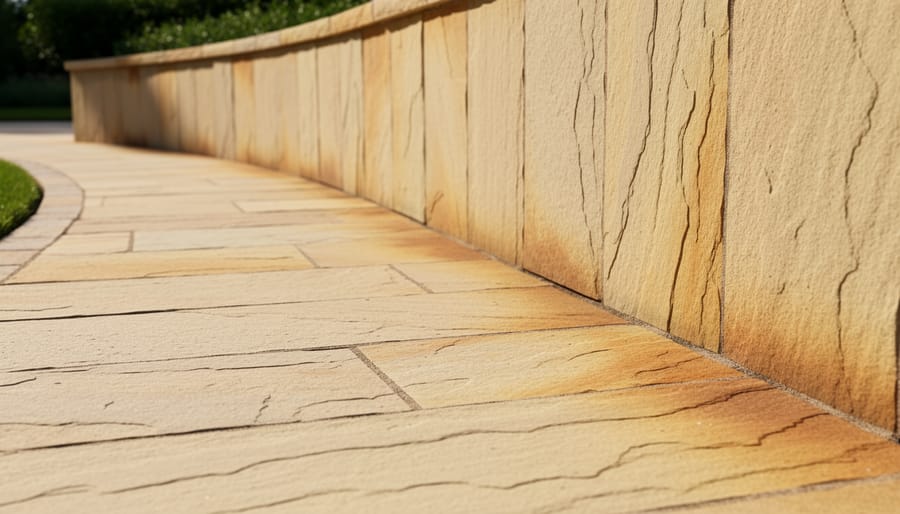
Sandstone develops some of the most visually dramatic patina transformations of any building stone, largely due to its porous structure and iron-rich mineral content. In arid climates, exposed sandstone often acquires desert varnish, a dark, glossy coating formed by windblown clay particles and manganese oxides that adhere to the surface over centuries. This phenomenon creates the characteristic black or brown streaks seen on ancient sandstone formations and historical structures throughout the American Southwest and Middle East.
Iron oxide migration produces another common sandstone patina effect: rust-colored streaking and staining that intensifies the stone’s natural warm tones. As water percolates through the stone, it carries dissolved iron minerals to the surface, where oxidation creates everything from subtle peachy-orange highlights to bold russet bands.
The textural evolution is equally significant. Differential erosion gradually reveals the stone’s layered structure as softer bands recede while harder layers remain proud. This creates a pronounced relief pattern that emphasizes the stone’s sedimentary origins. Wind-driven sand acts as a gentle abrasive, smoothing exposed surfaces while protected recesses retain their original texture, adding three-dimensional depth that new sandstone cannot replicate.
Slate and Other Stone Patinas
Slate develops one of the most distinctive patinas among architectural stones, shifting from its original uniform gray or black toward silvery, bronze, or rust-toned surfaces as iron-rich layers oxidize. The characteristic flaking and surface texture become more pronounced over decades, creating depth that enhances rather than diminishes slate’s appeal on roofs and facades.
Travertine’s open porous structure accelerates patina formation, with mineral deposits filling voids and creating varied coloration within years rather than decades. Exposure darkens its cream tones toward rich golds and tans while biological growth settles into surface pits, producing the mottled appearance prized in Mediterranean architecture.
Bluestone follows a slower trajectory, gradually warming from blue-gray to softer pewter tones as feldspars weather and iron content oxidizes near the surface. Quartzite remains notably resistant to visible patina, maintaining its original appearance for generations with only subtle mineral staining at grain boundaries.
Patina in Design and Architecture
Preserving Existing Patina
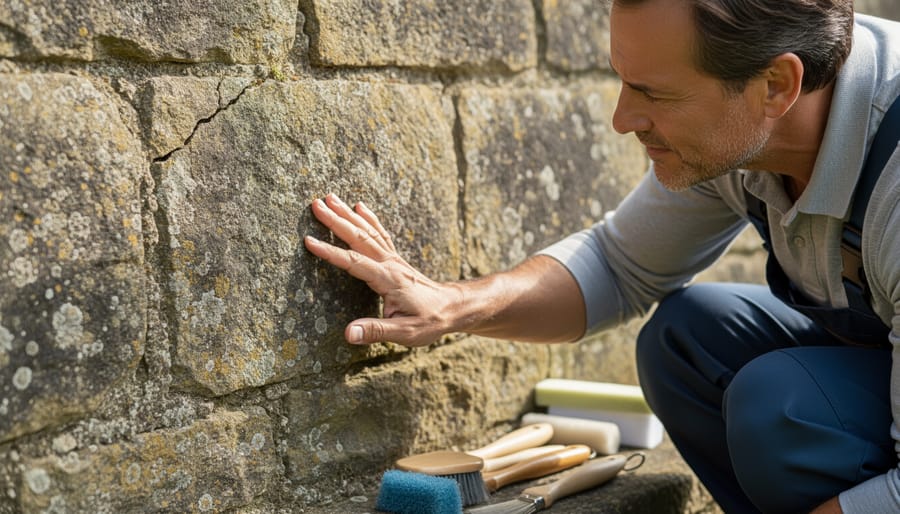
When restoration or renovation projects involve aged stone surfaces, the primary challenge is cleaning away accumulated dirt, biological growth, and pollutants without stripping the valuable patina beneath. Start with the gentlest methods: soft brushes and low-pressure water can remove loose debris while leaving the weathered surface layer intact.
Avoid high-pressure washing, which blasts away both grime and patina indiscriminately. Similarly, skip acidic cleaners on limestone and marble, as these dissolve the calcite-rich patina along with surface soiling. Instead, use pH-neutral stone cleaners applied with soft cloths or natural-bristle brushes, testing on inconspicuous areas first.
For biological growth like lichen or algae that’s part of the stone’s character, consider whether removal is necessary. If cleaning is required, biocides formulated for historic stone work more selectively than bleach or harsh chemicals.
Document the existing patina with photographs before any cleaning begins. This creates a reference for evaluating whether your approach preserves the desired weathered appearance. When unsure, consult a stone conservator who can assess the specific patina type and recommend appropriate preservation techniques for your stone material and environmental conditions.
Accelerating Patina Development
Accelerating patina on new stone requires careful technique to avoid obvious artificiality. Chemical treatments offer the most controlled approach: diluted acid washes (typically 5-10% muriatic acid for limestone and marble) gently etch surfaces to mimic decades of atmospheric exposure, though testing on sample pieces is essential since stone composition varies significantly.
Biological acceleration involves introducing specific lichen species or encouraging moss growth through buttermilk or yogurt applications in shaded, moist areas. This method takes months rather than years but produces authentic-looking results that blend naturally with surroundings.
Physical techniques include wire brushing, sandblasting at low pressure, or thermal aging (heating followed by rapid cooling) to create microcracks and surface texture. These work best on harder stones like granite.
For large-scale projects requiring consistency, professional stone suppliers sometimes pre-weather materials in controlled outdoor yards before installation. The most convincing artificial patina combines multiple techniques applied unevenly, nature doesn’t age uniformly, so patches of varied intensity create believable character rather than a single homogeneous treatment across entire surfaces.
Common Questions About Stone Patina
Homeowners and professionals frequently grapple with questions about whether stone patina represents damage or desirable aging, and whether it can or should be controlled. Understanding the distinction between natural patina and genuine deterioration is essential for making informed decisions about stone maintenance and preservation.
Does patina damage stone?
No, true patina does not damage stone structurally. Patina is a surface transformation that often enhances appearance and can even provide mild protection, whereas damage involves cracks, spalling, or loss of material integrity.
Can you remove patina from stone?
Patina can be partially removed through aggressive cleaning, grinding, or chemical treatments, but complete removal often requires resurfacing the stone. However, removal is rarely advisable as it eliminates the aged character that typically increases aesthetic value.
How long does it take for stone patina to form?
Timeframes vary dramatically by stone type and environment. Limestone and marble may show noticeable patina within 5-15 years in humid climates, while granite might take 50-100 years to develop subtle changes.
Does sealed stone develop patina?
Sealers significantly slow or prevent patina formation by blocking moisture and atmospheric interaction with the stone surface. If patina development is desired, avoid impermeable sealers or plan for periodic reapplication that allows some weathering between treatments.
Another common confusion involves distinguishing patina from staining. Patina is an integral transformation of the stone’s surface minerals through natural weathering processes, creating depth and complexity. Staining, by contrast, involves foreign substances like oil, rust, or organic matter penetrating the stone without chemical transformation of the stone itself. Stains can often be extracted or cleaned, while patina is permanent without resurfacing.
Many architects worry about uneven patina development on new installations. Variations are normal and depend on exposure differences across a facade or floor. South-facing surfaces weather faster than north-facing ones, and areas with concentrated water runoff develop distinct patterns. Rather than fighting these variations, experienced designers anticipate them and incorporate expected weathering patterns into their plans.
The question of whether to specify new stone or reclaimed stone with existing patina often arises in restoration projects. New stone will eventually match aged surroundings, but the wait can span decades. Reclaimed stone offers immediate visual cohesion, though matching the specific patina character of existing work requires careful sourcing. Accelerated aging techniques provide a middle path, though results vary in authenticity depending on the method used and the skill of the craftsperson applying it.
how it works
Stone patina works through a gradual transformation of the surface layer rather than the bulk material beneath. When stone is exposed to the environment, moisture penetrates microscopic pores and reacts with mineral components. In limestone and marble, rainwater containing dissolved carbon dioxide forms weak carbonic acid that slowly dissolves calcium carbonate, creating a softer, more textured surface. Iron-bearing minerals in granite and sandstone oxidize when exposed to oxygen and water, producing rust-colored staining.
Biological activity accelerates the process. Lichen and algae colonies excrete organic acids that etch the stone surface while their root structures create tiny fissures. Atmospheric pollutants, particularly sulfur compounds in urban environments, chemically alter the outer stone layer to form new mineral compounds with different colors and textures.
The transformation occurs in stages. Fresh stone shows sharp edges and uniform color. Early patina appears as slight dulling and minor discoloration. Mature patina develops complex color variations, softened edges, and enhanced texture. The process never truly stops, though it slows dramatically after the first few decades as the stone reaches equilibrium with its environment.
Types or components
Stone patina isn’t a single uniform layer, it’s a composite of distinct components that develop simultaneously or sequentially on the surface. Understanding these elements helps you recognize what you’re seeing on weathered stone and predict how surfaces will age.
The primary components include mineral efflorescence (white crystalline deposits from salts migrating to the surface), biological colonization (lichen, algae, and moss creating green, orange, or black patches), oxide staining (iron and copper compounds producing rust-colored or verdigris streaks), atmospheric soiling (carbon deposits from pollution creating dark crusts), and surface dissolution (micro-etching that softens sharp edges and creates a matte finish).
Each component contributes differently to the overall appearance. On a single limestone facade, you might observe honey-toned mineral staining at the base where water wicks up, black atmospheric crusts in protected areas, and green biological growth where moisture lingers. These layers accumulate at different rates and interact chemically, creating the complex, irreproducible surfaces that give aged stone its distinctive character and depth.
uses
Stone patina serves multiple purposes across residential, commercial, and public architecture. In heritage restoration, preserving original patina maintains historical authenticity and protects underlying stone from accelerated weathering. Museums and historic sites often retain centuries-old patina as documentation of a building’s environmental history.
Contemporary design increasingly values patina for aesthetic impact. Architects specify naturally aged or pre-weathered stone cladding to create instant visual depth and avoid the stark appearance of freshly quarried material. Hospitality and retail projects use patinated stone to convey established character and craft authenticity.
Landscape architecture embraces patina as a functional element. Weathered stone paving develops slip-resistant textures through natural erosion. Garden walls and water features gain improved habitat value as lichen and moss colonize surfaces, supporting biodiversity while softening visual transitions between built and natural environments.
Conservation science relies on patina analysis to assess environmental pollution levels, track climate patterns, and develop protective treatments. The stable chemical layers in mature patina can reveal decades of atmospheric composition changes, making aged stone surfaces valuable environmental records.
Stone patina represents one of nature’s most elegant transformations. Rather than diminishing a stone’s value, the weathering process typically enhances its character, creating visual depth and historical resonance that new material simply cannot replicate. Whether you’re selecting stone for a contemporary building facade, restoring a heritage structure, or designing a residential landscape, understanding how different materials age should inform your decision from the start.
Each stone type follows its own weathering trajectory. Marble mellows and softens, limestone develops warm honey tones, granite acquires subtle lichen patterns, and sandstone gains striking desert varnish. These aren’t flaws to eliminate but natural characteristics to anticipate and, in many cases, celebrate. The key lies in matching stone behavior to your project’s aesthetic goals and maintenance capacity.
The Stone Materials Atlas provides detailed weathering profiles for specific stone varieties, helping you predict how a material will evolve in your particular climate and application. This foresight prevents disappointment when a pristine surface begins its inevitable transformation and allows you to design with the end state in mind rather than against it.
Consider patina potential as seriously as initial color and finish. Will the aged appearance complement your design vision? Can you accommodate the maintenance requirements? Are there elements where accelerated aging makes sense, or where preservation becomes critical? Answering these questions early ensures your stone installation improves with time rather than working against your original intent.