Showing 26 Result(s)
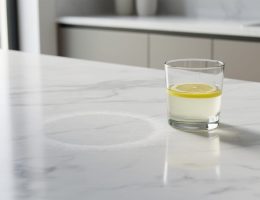
Close-up of a polished white marble countertop with a cloudy dull etch ring near a glass of lemon juice, showing acid damage to the surface polish.
Guides Maintenance and Care Technical Properties

How to Etch Marble: Understanding, Preventing, and Repairing Acid Damage

Marble etching occurs when acidic substances chemically react with the calcium carbonate in the stone, leaving dull, light-colored spots or rings on the surface. Unlike stains that penetrate the stone, etches are surface damage that remove the polish, and the good news is they can often be repaired at home using fine polishing powder, patience, and the right technique. Light etches typically take 10 to 15 minutes to fix, while deeper damage may require professional restoration.
Key Takeaway: Etching is a chemical reaction that dulls the marble’s surface, not a stain that penetrates it. …

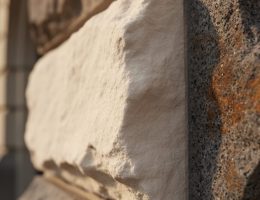
Close-up of weathered limestone and granite surfaces showing natural patina textures, color changes, and subtle sheen under soft daylight.
Blog Guides Maintenance and Care

What Is Stone Patina (and How Does It Work)?

Stone patina is the natural surface alteration that occurs as stone ages, characterized by changes in color, texture, and sheen that develop through exposure to weather, minerals, and biological activity. Unlike damage or deterioration, patina represents a stable transformation that many architects and designers actively seek for its aesthetic depth and authenticity.
The question of whether patina enhances or harms stone depends entirely on the stone type, environment, and intended use. A bronzed patina on limestone can add warmth and character to a historic facade, while the same weathering process might indicate inappropriate …

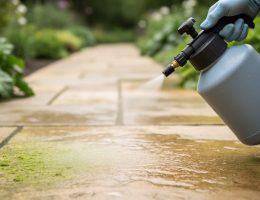
Close-up of a gloved hand spraying a clear biological solution from a pump sprayer onto a lightly green-stained limestone patio under soft overcast light, with blurred garden plants and the stone path receding in the background.
Maintenance and Care

Stop Biological Growth on Natural Stone Before It Starts (The Smart Way)

Biological solutions harness natural organisms and enzymes to break down organic growth on natural stone surfaces, offering a safer alternative to harsh chemical treatments. These products contain beneficial bacteria or natural compounds that digest algae, moss, lichen, and biofilm without damaging the stone’s surface or surrounding environment.
The science is straightforward: biological cleaners work by introducing microorganisms that consume the organic matter causing discoloration and deterioration. Unlike bleach or acidic cleaners that simply kill surface growth while potentially etching stone, biological treatments …

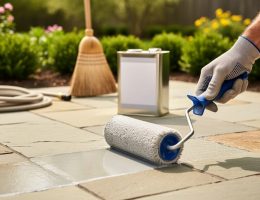
Gloved hand using a pole-mounted roller to apply clear sealer to a flagstone patio, with a blurred background of garden beds, coiled hose, broom, and an unlabeled sealer can in soft spring daylight
Maintenance and Care

Your Natural Stone Landscape Needs Care All Year (Here’s When and How)

Divide your natural stone maintenance into quarterly intervals, scheduling deep cleaning and sealing in spring before weather extremes hit, monthly inspections during summer’s peak heat and traffic, preventive treatments in fall before freeze-thaw cycles begin, and protective measures throughout winter when ice and salt pose the greatest threats. This systematic approach prevents the costly mistake of reactive maintenance—addressing damage only after it occurs—which typically costs three to five times more than preventive care.
Mark your calendar for spring resealing between March and May, when temperatures stabilize above…

Close-up of a gloved hand rolling clear sealer onto weathered natural stone patio pavers with hairline cracks, salt crystals, wet spots, and scattered autumn leaves, with a softly blurred garden and faint melting frost in the background.
Maintenance and Care

Why Your Natural Stone Looks Worse Every Season (And How to Fix It)

Natural stone surfaces face distinct threats each season—winter freeze-thaw cycles crack sealants, spring moisture penetrates unsealed joints, summer heat degrades protective coatings, and autumn debris stains porous surfaces. Without a structured maintenance calendar aligned to these seasonal challenges, your stone investment deteriorates faster, requiring costly repairs or premature replacement.
The evidence is clear: stone maintained on a seasonal schedule lasts 40-60% longer than neglected installations. Yet most property owners follow reactive maintenance, addressing problems only after visible damage appears. This approach …

Hand scrubbing white chalky efflorescence from natural stone tiles and grout lines with a soft-bristle brush in soft daylight; bucket and sponge blurred in the background.
Maintenance and Care

Those White Stains on Your Stone Floor Aren’t Permanent (Here’s How to Fix Them)

Identify efflorescence by examining those white, chalky deposits on your natural stone floors—they’re crystallized mineral salts that have migrated to the surface through moisture. This common issue doesn’t mean your stone is damaged, but it signals an underlying moisture problem that requires both immediate attention and preventive action.
Remove light efflorescence by dry brushing with a soft-bristle brush, then follow with a pH-neutral stone cleaner and clean water. For stubborn deposits, apply a specialized efflorescence remover designed for natural stone, working in small sections and rinsing thoroughly to avoid …

Elegant interior featuring a large custom stone wall mural with intricate design and natural stone textures, set in a well-lit space that emphasizes depth and sophistication.
Design Applications Maintenance and Care Safety and Risk Management

Transform Your Space: Stone Wall Murals That Tell Your Story

Transform ordinary walls into dramatic focal points with custom stone murals that tell your unique story through the timeless medium of natural stone. These architectural masterpieces blend centuries-old craftsmanship with modern design technology, creating bespoke installations that elevate any space from mundane to extraordinary.
Natural stone murals offer unparalleled depth and texture impossible to achieve with conventional wall treatments. Each piece of carefully selected limestone, marble, or slate brings its own character to the composition, while precision cutting and expert installation ensure seamless integration with your…

A polished marble and granite kitchen countertop with a pH-neutral cleaner and microfiber cloth, demonstrating effective and protective cleaning solutions for natural stone surfaces.
Commercial Applications Countertop Materials and Selection Maintenance and Care

Safe Commercial Stone Cleaners That Won’t Damage Your Natural Stone

Preserve your natural stone’s beauty with safe cleaning solutions for natural stone that protect while they clean. Choose a supplier of top quality Cleaning products to ensure you’re using the right materials for your specific stone type. Natural stone surfaces demand specialized care to maintain their elegance and durability without compromising their delicate composition. Professional stone care combines precise pH-balanced formulations with gentle yet …

Aerial view of a stone patio with neatly maintained joints and an inset of deteriorated paving stones showing weeds and cracks; maintenance tools like a rubber mallet and joint knife are subtly displayed.
Maintenance and Care

Fix Your Loose Paving Stones: Expert Joint Repair Made Simple

Repair deteriorating paving stones by identifying the root cause – whether stone paving joints keep failing, stones are cracking, or surfaces are settling unevenly. Remove damaged stones using a flat pry bar and rubber mallet, ensuring surrounding pavers remain undisturbed. Clean the exposed bedding sand thoroughly, replace it if contaminated, and reset stones on a properly compacted base. Restore joint stability by filling gaps with polymeric sand, which forms a flexible bond while allowing necessary movement….

A close-up view of paving stones with joints showcasing traditional sand and polymeric sand. Traditional sand appears loose with minor weeds, while polymeric sand is firm and resilient.
Maintenance and Care

Why Your Stone Paving Joints Keep Failing (And How to Fix Them)

Paving stone joint sand forms the critical backbone of every successful hardscape installation, preventing shifting, reducing weed growth, and maintaining the structural integrity of your outdoor surfaces. This specially-graded material locks pavers together while allowing subtle movement from freeze-thaw cycles and ground settling. Unlike common playground or construction sand, professional-grade joint sand features precise particle sizing and superior angular grain structure that creates maximum interlock between stones. When properly installed and maintained, it transforms loose individual pavers into a unified, stable surface capable …