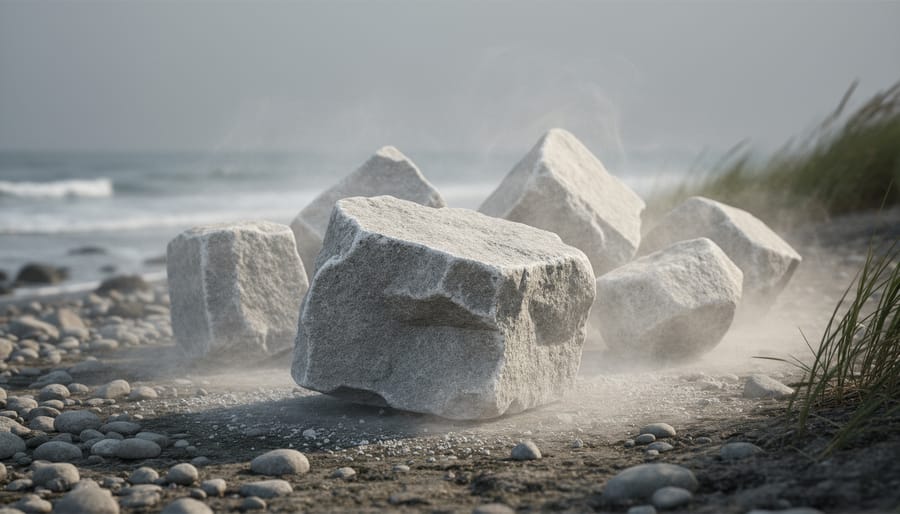
Ephemeral artwork refers to art intentionally created to be temporary, existing for a brief period before disappearing through natural decay, environmental forces, or deliberate removal. When stone becomes the medium for ephemeral work, a fascinating paradox emerges: one of humanity’s most enduring materials is deliberately deployed in pieces designed not to last. This practice challenges the ancient stone carving legacy that prizes permanence, instead emphasizing process, transformation, and the moment of creation over lasting monuments.
For designers, architects, and stone professionals, understanding ephemeral stone art expands the conceptual vocabulary of what natural stone can do. While most commercial and residential applications prioritize durability, ephemeral approaches offer fresh perspectives for temporary installations, event design, experimental architectural models, and site-specific commissions where the impermanence itself becomes meaningful.
This article clarifies how stone functions in temporary art contexts, examines the techniques artists use to create transient work with permanent materials, and explores where these practices intersect with contemporary design. Whether the work involves arrangements meant to be scattered by wind, interventions in natural landscapes that erosion will claim, or installations deliberately dismantled after exhibition, ephemeral stone art reveals that duration is a choice, not an inherent property of the material. The concept matters because it reframes stone not just as substance but as participant in time-based creative processes.
What Ephemeral Artwork Means
Ephemeral artwork is creative work deliberately designed to exist temporarily, then transform, fade, or vanish completely. Unlike traditional art preserved in museums or displayed permanently, ephemeral art treats impermanence as a defining characteristic. The piece exists fully only during its brief lifespan, whether that’s hours, days, or seasons.
The term comes from the Greek word “ephemeros,” meaning lasting only a day. In artistic practice, it describes works that embrace change and eventual disappearance as integral to their meaning. A sand mandala swept away after completion, ice sculptures melting under the sun, or chalk drawings erased by rain all exemplify this approach.
What distinguishes ephemeral art from simply deteriorating work is intentionality. The artist chooses temporary materials or vulnerable locations specifically because the artwork will not last. This philosophical stance challenges Western art traditions that prioritize preservation and permanence. Instead of fighting against time and nature, ephemeral artists collaborate with these forces.
The concept also reframes how we value art. When a work cannot be collected, bought, or preserved, its worth shifts from the physical object to the experience of witnessing it. Viewers who encounter ephemeral art understand they’re seeing something unrepeatable. Tomorrow, weather conditions, natural processes, or the artist’s own dismantling will have altered or erased it entirely.
This acceptance of impermanence connects ephemeral art to Buddhist philosophy, Japanese aesthetics of wabi-sabi, and ecological thinking about natural cycles. The artwork becomes a meditation on time itself.
How Ephemeral Stone Art Works
Natural Processes as Co-Creator
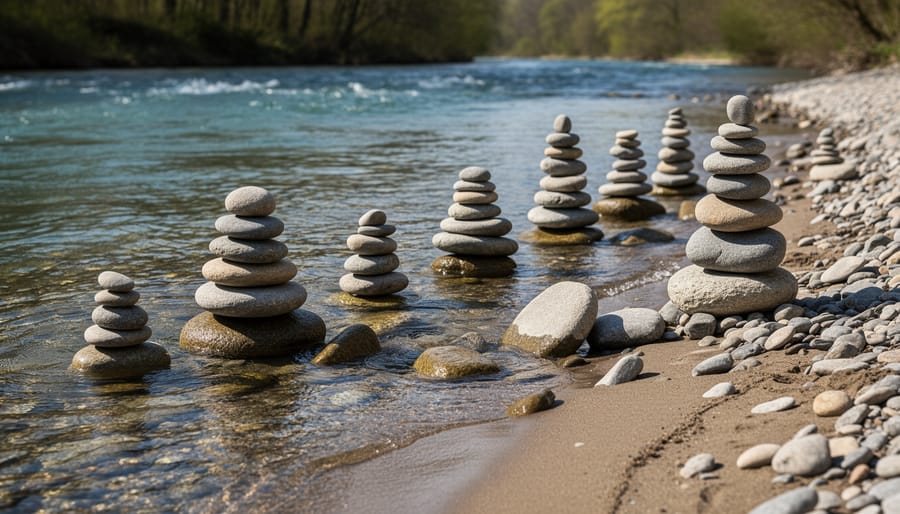
In ephemeral stone art, natural forces aren’t obstacles to overcome, they’re active collaborators shaping the work’s trajectory. Artists deliberately position stone pieces where wind, rain, freeze-thaw cycles, and biological growth will alter their appearance and structure over time. A carefully balanced rock tower placed in a stream doesn’t just sit there; daily water flow gradually shifts its base stones, seasonal weathering etches new surface textures, and eventual collapse becomes the artwork’s natural conclusion rather than a failure.
Tidal artists work with precise calculations of wave patterns and lunar cycles, knowing their beach installations have hours or days before ocean forces reclaim them. Others position works where moss colonization, lichen growth, or oxidation will gradually obscure the original intervention, creating a visible timeline of nature’s reclamation. The artist sets initial conditions, placement, composition, material selection, then steps back, allowing environmental processes to complete the creative act. This partnership transforms stone from inert material into a dynamic record of place, weather, and time’s passage.
Documentation as Secondary Art Form
When an ephemeral stone sculpture vanishes, claimed by tide, wind, or gravity, photography and video become more than documentation. They transform into a secondary artwork that extends the piece’s life and reach far beyond its physical existence.
Artists working in this medium often consider documentation part of their creative practice from the start. The camera angle, lighting conditions, and framing choices shape how viewers experience the work. A stone balance photographed at golden hour tells a different story than the same sculpture captured in harsh midday light.
This visual record serves multiple purposes. It preserves evidence of what existed, yes, but it also introduces new audiences to installations they could never visit in person. A tidal sculpture in Scotland reaches viewers in Tokyo. Documentation democratizes access while creating a contemplative distance, viewers experience the artwork through time and space, adding another layer of impermanence to the concept.
Some artists argue the photograph becomes the true artwork, while the physical stone arrangement functions as performance or process. The debate itself enriches our understanding of both permanence and temporality in art.
Categories of Ephemeral Stone Art
Land Art and Site-Specific Installations
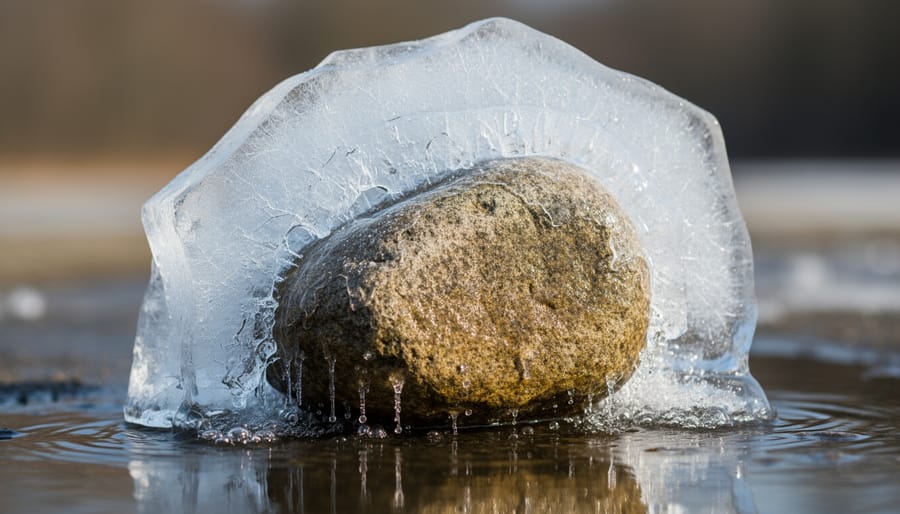
Land art emerged in the 1960s as artists moved beyond gallery walls to create monumental works that engage directly with natural landscapes. In the context of ephemeral stone art, practitioners like Andy Goldsworthy and Richard Long use rocks, boulders, and slate to build cairns, spirals, and lines that exist for days, weeks, or months before environmental forces reclaim them. Goldsworthy’s stone rivers and balanced rock sculptures demonstrate how time and weather transform deliberate arrangements into fragments and memory. Richard Long creates walking-based works where he arranges found stones along mountain paths or riverbeds, knowing rain, wind, and hikers will gradually scatter them. These installations resist preservation, their lifecycle from creation through dissolution becomes the artwork itself, with each stage equally significant to the artist’s vision.
Stone Balancing and Gravity Sculptures
Stone balancing transforms simple rocks into impossible-seeming towers and arches held together solely by gravity and friction. Artists stack stones in configurations that appear to defy physics, sometimes reaching several feet tall, without adhesives, supports, or artificial stabilization. The practice demands intense patience, tactile sensitivity, and an understanding of each stone’s center of gravity.
These sculptures exist in a state of extreme precarity. A gust of wind, curious passerby, or minor ground vibration can collapse hours of work in seconds. That fragility is the point. Stone balancers embrace the inevitability of collapse, creating meditation on concentration and acceptance rather than pursuing permanence. The act of balancing becomes as significant as the resulting structure, which might last minutes or weeks depending on environmental conditions and location.
Tidal and Water-Based Works
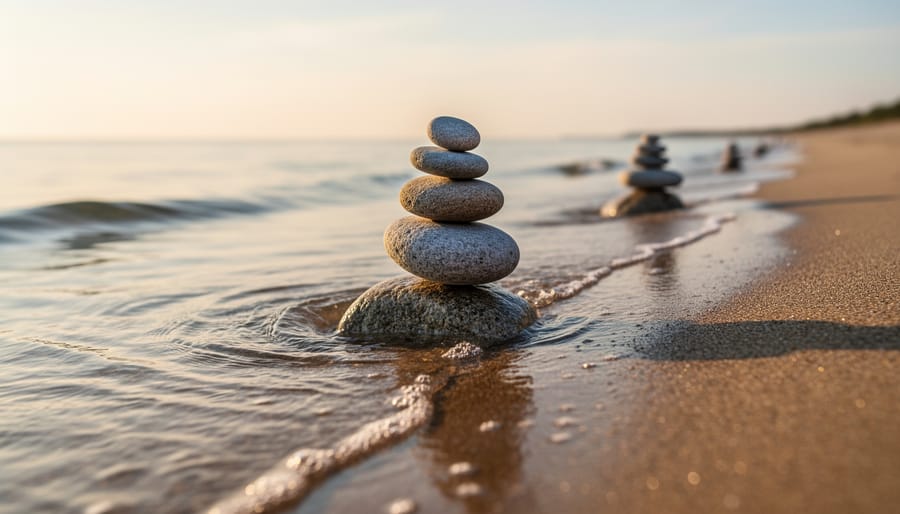
Intertidal zones offer artists a natural stage where the ocean itself determines visibility. Works positioned between high and low tide marks exist in a cycle of appearance and disappearance, revealed during low tide and submerged when water returns. Artists arrange stones in patterns, spirals, or sculptural forms on beaches and rocky shores, knowing each piece will spend hours underwater before emerging again.
The salt water, wave action, and sediment gradually alter these installations. Tides don’t simply hide the work, they reshape it. Stones shift position, patterns blur, and eventually the arrangement dissolves back into the beach. Some artists time their installations to specific tidal patterns, creating works meant to be seen only during the brief window of extreme low tides, adding rarity to the ephemeral nature. The predictable rhythm of tides provides structure, yet each cycle brings unpredictable changes through storms, currents, and seasonal variations in wave intensity.
Event-Specific Installations
Event-specific installations bring ephemeral stone art into cultural programming and commemoration. Artists create temporary works for gallery exhibitions, sculpture festivals, and public events, knowing from the outset that dismantling is part of the plan. A museum might commission a stone installation for a three-month show, with the artist designing for that exact timeframe. Music festivals occasionally feature stone arrangements that exist only for the event’s duration. Memorial occasions sometimes use temporary stone formations to mark anniversaries, creating a poignant link between the weight of remembrance and the lightness of impermanence. These installations offer venues a way to present dramatic stone works without permanent commitment, and artists appreciate the freedom to experiment with ambitious designs that don’t need to withstand decades of weathering.
Where Ephemeral Stone Art Is Used
Commercial and Residential Applications
Designers and architects have adapted ephemeral stone concepts for practical applications where temporary visual impact matters. Model homes and design showrooms frequently feature stone arrangements that demonstrate material possibilities without permanent installation, stacked slabs creating temporary room dividers, or loose stone compositions defining outdoor spaces during sales periods. These installations let potential buyers experience natural stone’s aesthetic qualities before committing to fixed applications.
Event spaces use temporary stone elements for weddings, corporate functions, and trade shows. Designers arrange river rocks, slate tiles, or marble fragments into pathway borders, centerpiece bases, or accent walls that dismantle after the event. Luxury retail environments employ seasonal stone displays that rotate quarterly, showcasing different materials and finishes while maintaining visual freshness.
Garden designers create temporary stone features for home and garden shows, balanced rock sculptures, seasonal water features using movable stone basins, or spring bulb displays framed by temporary stone borders. These applications serve dual purposes: demonstrating stone’s versatility while avoiding the permanence that might intimidate clients hesitant about long-term commitments.
The approach proves particularly valuable for testing spatial concepts before finalizing expensive permanent installations, allowing both designers and clients to evaluate proportions, textures, and visual flow.
The Paradox: Why Use Permanent Materials for Temporary Art?
The deliberate choice to create temporary art with stone, a material humans have relied on for millennia precisely because it outlasts us, isn’t an oversight. It’s a philosophical statement that makes ephemeral stone art uniquely powerful.
This paradox forces viewers to confront their assumptions about both permanence and value. We’re conditioned to associate worth with durability, especially in stone, where a natural patina develops over decades and monuments stand for centuries. When an artist deliberately dismantles a carefully balanced granite sculpture or lets the tide reclaim a meticulously arranged beach cairn, they’re challenging the notion that permanence equals significance.
The contrast amplifies the experience. A sand sculpture disappearing is expected; a stone arrangement that took days to build vanishing overnight creates cognitive dissonance that stays with you. This tension between material permanence and intentional impermanence makes you pay closer attention to the present moment. You can’t plan to see it next year, photograph it later, or bring friends back tomorrow, it exists now, or it doesn’t exist at all.
For artists, this choice also democratizes access to an expensive material. Stone installations that aren’t meant to last don’t require the same structural engineering, permanent foundations, or long-term maintenance as traditional stone sculpture. Artists can work at ambitious scales without the burden of creating something that must endure centuries of weathering and ownership transfers.
The paradox itself becomes the message: nothing lasts forever, not even stone arrangements, and that impermanence is where the beauty lives.
Common Questions About Ephemeral Stone Artwork
People encountering ephemeral stone art for the first time often have practical questions about how these temporary installations work, what they cost, and whether using durable materials for fleeting artwork makes sense. Here are answers to the most common queries from consumers, designers, and artists considering temporary stone projects.
Is ephemeral stone art wasteful or environmentally harmful?
Most ephemeral stone installations use locally sourced materials that return unchanged to their environment, creating minimal ecological impact. Artists typically work with existing stones rather than quarrying new material, and temporary arrangements often enhance environmental awareness rather than damaging natural spaces.
Do you need permits for temporary stone installations?
Public land installations almost always require permissions from landowners or agencies, while private property projects need only owner consent. Coastal and intertidal works may require additional environmental review depending on local regulations and protected area status.
How long do ephemeral stone artworks typically last?
Duration varies dramatically based on design and environment, a balanced stone sculpture might stand for hours or weeks, while a sheltered arrangement could persist for months. The intentional embrace of unpredictability means even the artist cannot guarantee exactly when natural forces will reclaim the work.
Can I commission temporary stone art for an event or space?
Many land artists and stone sculptors accept commissions for temporary installations at weddings, corporate events, gallery exhibitions, or seasonal displays. Costs vary widely based on scale, location, artist reputation, and whether documentation is included, ranging from a few thousand dollars for modest projects to six figures for major installations.
The relationship between ephemeral art and permanent stone sculpture highlights an interesting contrast. Traditional stone carving preserves a fixed form indefinitely, while temporary stone arrangements celebrate transformation and impermanence. Both approaches honor the material’s inherent qualities, but ephemeral work emphasizes the dynamic process of stone aging gracefully within natural cycles rather than resisting change through preservation.
For designers and homeowners curious about experiencing ephemeral stone art firsthand, options include visiting documented installation sites, attending land art festivals, or commissioning temporary pieces for special occasions that want to make a statement without permanent commitment.
Ephemeral stone artwork fundamentally shifts how we think about natural materials in design and art. By embracing temporality rather than fighting it, these practices reveal that stone’s value isn’t limited to its durability, it also lies in its ability to mark moments, capture transitions, and create experiences that resonate precisely because they won’t last forever.
For homeowners and designers, this perspective opens new possibilities beyond traditional permanent installations. Stone can anchor a seasonal garden display, create a meaningful temporary memorial, or transform a space for a special event without requiring lifelong commitment. The material’s weight and presence bring gravitas to temporary moments, while its eventual removal or transformation becomes part of the story rather than a failure of preservation.
The paradox at the heart of ephemeral stone art, using permanence to express impermanence, mirrors our own relationship with the built environment. We seek both stability and change, endurance and renewal. Recognizing stone’s potential in temporary contexts doesn’t diminish its role in lasting architecture; it expands our appreciation for what natural materials can communicate about time, memory, and the beauty of things that pass.