Choosing the right cabinet finish for your natural stone countertops comes down to three critical decisions: matching undertones to create color harmony, selecting a finish durability that complements your stone’s maintenance needs, and balancing the visual weight of your stone’s pattern with the right cabinet texture. Get these wrong, and even premium granite or marble can look cheap or clash with your cabinetry. Get them right, and you’ll create a kitchen that feels cohesive, timeless, and worth every dollar invested.
Key Takeaway: Successful cabinet and stone pairings require attention to color harmony (warm woods with cream-veined stones, cool grays with white marbles), finish durability that matches your stone’s porosity and maintenance cycle, and pattern balance where busy stone patterns pair best with solid, matte cabinet finishes.
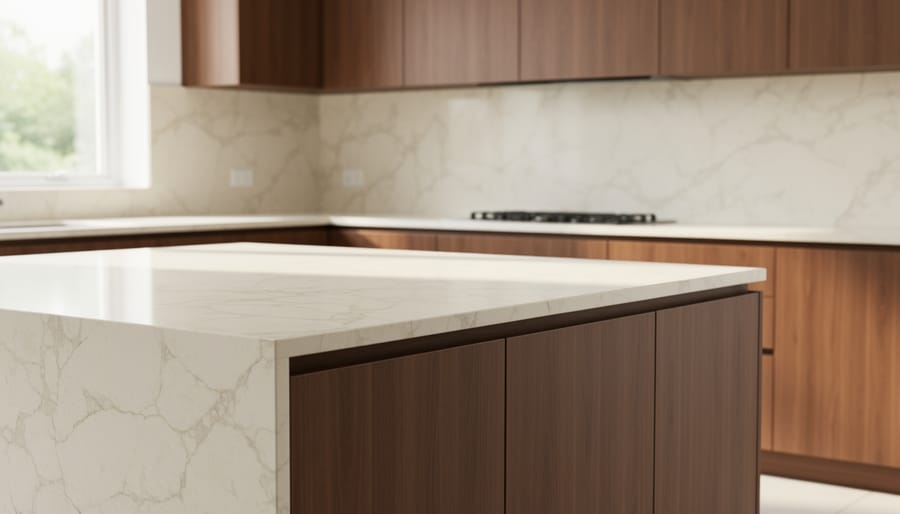
The challenge most homeowners face isn’t a lack of beautiful options. It’s understanding why certain combinations work while others fall flat. A polished absolute black granite countertop paired with high-gloss white cabinets might sound elegant on paper, but in practice, the competing reflective surfaces often create visual chaos. Conversely, honed Carrara marble over warm walnut cabinets in a matte finish delivers instant sophistication because the pairing respects contrast principles without fighting for attention.
This buying guide walks through the selection criteria that professional designers use when specifying cabinet finishes for stone countertops. You’ll learn which finish types perform best with specific stones, how to avoid the most common pairing mistakes, and get concrete recommendations organized by popular countertop materials. Whether you’re working with a fabricator on https://canadiancustomcabinets.ca/custom-kitchen-cabinets-waterloo/ or planning a DIY remodel, understanding these compatibility factors prevents costly redesigns and ensures your investment delivers the visual impact you’re after.
What Makes Cabinet Finishes Compatible with Natural Stone
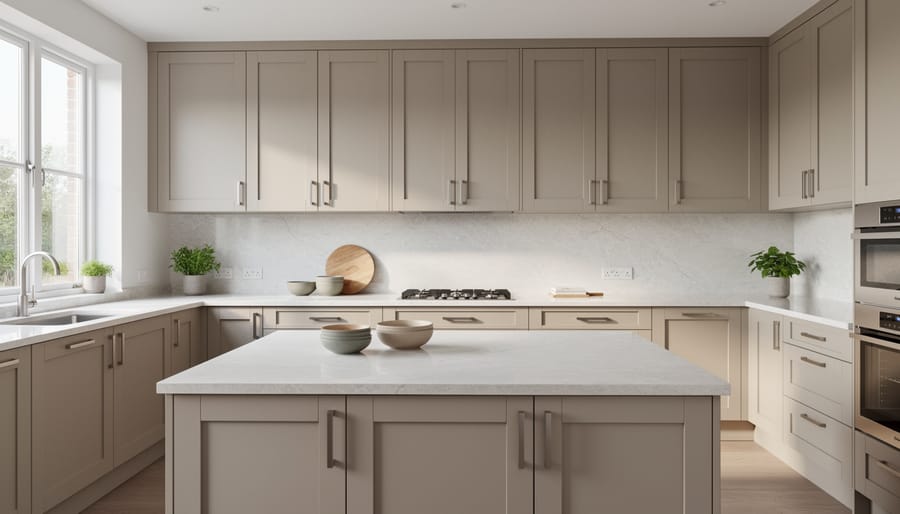
Cabinet finishes and natural stone countertops create a visual dialogue in your kitchen, and understanding their relationship is essential for achieving a cohesive design. The key lies in how these two major surfaces work together to establish balance, rhythm, and harmony within the space.
Natural stone countertops are inherently dynamic. Each slab carries unique characteristics, veining patterns that flow across the surface, color variations that shift from one area to another, and mineral deposits that catch light differently throughout the day. Your cabinet finish acts as either a stage that showcases these natural features or a counterbalance that prevents them from overwhelming the room.
The interaction between cabinet finishes and stone begins with visual weight. A heavily veined marble like Calacatta creates substantial visual complexity and commands attention. Pairing it with an equally busy cabinet finish, such as heavily grained dark wood, can make the kitchen feel chaotic. Conversely, a clean white painted finish provides visual rest, allowing the stone’s drama to shine without competition.
Color undertones drive compatibility more than the obvious surface colors themselves. A white marble might carry warm peachy veins or cool gray ones. When your cabinet finish shares these subtle undertones, the pairing feels intentional and grounded. Mismatched undertones create subtle discord that registers as “something feels off” even when you cannot immediately identify why.
Texture also factors into the equation. Polished stone reflects light sharply, while honed or leathered surfaces absorb it. A high-gloss cabinet finish near polished granite can create excessive shine, whereas matte or satin finishes near honed limestone establish quiet sophistication. The finishes need not match exactly, but they should speak the same visual language.
Essential Factors When Selecting Cabinet Finishes
Color Temperature and Undertone Matching
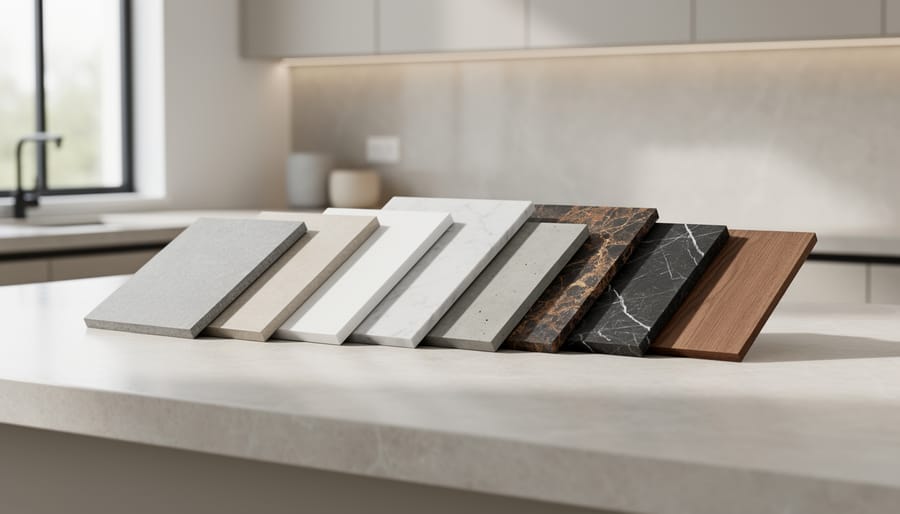
Color temperature creates the foundation for harmonious cabinet and stone pairings. Every natural stone has underlying warm or cool tones that become obvious when you place different cabinet samples beside the slab. Warm stones lean toward yellow, gold, beige, or rust undertones, think honey onyx, travertine, or gold-veined granite. Cool stones pull toward gray, blue, or silver, like Carrara marble, soapstone, or gray quartzite.
To identify undertones in both materials, view them together under natural daylight rather than showroom lighting, which distorts color. Hold a pure white and a cream sample against your stone. If cream looks better, your stone reads warm. If white harmonizes, it’s cool. Apply this same test to cabinet finish samples.
Matching temperatures (warm cabinets with warm stone, cool with cool) produces cohesive, effortless rooms. This approach works especially well in traditional and transitional kitchens where visual calm matters most. Intentional contrasting, pairing warm wood cabinets with cool marble, adds dynamic tension and works in contemporary spaces that benefit from visual interest. Understanding natural stone colors helps you predict which cabinet undertones will enhance rather than fight your countertop choice. The mistake isn’t choosing warm or cool; it’s accidentally mixing them without purpose, creating muddy results.
Stone Pattern Intensity and Visual Balance
Natural stone patterns range from subtle and uniform to dramatically veined with high contrast. This intensity directly influences which cabinet finishes create visual harmony rather than competition.
Busy stone patterns, like Calacatta marble with bold veining or exotic granites with complex movement, need cabinet finishes that provide visual rest. Solid-colored cabinets in white, soft gray, or muted tones anchor these dramatic countertops without adding pattern-on-pattern chaos. The simpler your cabinet finish, the more the stone becomes the focal point.
Conversely, subtle stones with minimal veining or speckled patterns allow more flexibility. You can introduce texture through wood grain, experiment with two-tone cabinet schemes, or select darker finishes without overwhelming the space. A honed limestone or lightly patterned granite pairs beautifully with stained wood cabinets because neither element fights for attention.
The visual weight matters too. Dark, heavily veined stone reads as substantial and grounds a kitchen, so lighter cabinet finishes prevent the room from feeling cave-like. Light stone with delicate veining pairs well with medium to dark cabinets that add necessary contrast and depth.
Durability and Maintenance Requirements
Kitchens with natural stone countertops experience moisture splashes, heat from cooking, and frequent cleaning, conditions that demand cabinet finishes capable of matching stone’s longevity. Your finish choice should withstand the same environment that makes natural stone practical.
Painted cabinets with high-quality, moisture-resistant finishes perform well near stone counters, particularly when properly sealed. They tolerate cleaning products compatible with stone care but may show wear at edges over time. Lacquered or conversion-varnish painted finishes offer superior protection against moisture penetration compared to standard paints.
Stained wood finishes require adequate sealing to resist water damage near sinks and moisture-prone areas. Quality polyurethane or catalyzed finishes create barriers against both moisture and heat, though they need reapplication every few years depending on kitchen use. Natural wood finishes without proper protection risk warping when exposed to steam or spills.
Thermofoil and laminate finishes excel at moisture resistance, making them practical choices for busy kitchens. However, heat can cause thermofoil to peel or delaminate near ranges or dishwashers.
Consider how your stone requires specific cleaners, acidic products damage marble and limestone while being safe for granite, and ensure your cabinet finish tolerates the same maintenance routine. Mismatched care requirements create unnecessary complications in your cleaning routine.
Sheen Level and Light Reflection
The sheen level of your cabinet finish should echo or complement your stone’s surface treatment rather than compete with it. Polished granite or marble already bounces significant light around the kitchen, so pairing it with high-gloss cabinets can create an overly reflective, almost glaring effect that feels cold and sterile. Instead, satin or semi-gloss finishes provide enough refinement without doubling down on shine, allowing the stone’s natural luster to take center stage.
Matte cabinet finishes work beautifully with honed or leathered stones because both surfaces absorb rather than reflect light, creating a sophisticated, cohesive look that feels grounded and contemporary. This pairing particularly suits modern farmhouse or Scandinavian-inspired kitchens where a soft, understated aesthetic is desired. If you’re working with leathered black granite or honed soapstone, matte painted cabinets in charcoal or navy enhance the stone’s texture without visual competition.
Consider how light moves through your space throughout the day. South-facing kitchens with abundant natural light can handle matte-on-matte combinations without feeling dim, while darker kitchens benefit from at least one reflective element. If your stone has a polished finish, satin cabinets strike the right balance. Understanding the various stone finish options helps you select cabinet sheens that harmonize with your countertop’s light-handling properties rather than fighting against them.
Kitchen Size and Natural Lighting
The physical dimensions of your kitchen and the quality of natural lighting directly impact how cabinet finishes and natural stone countertops appear together. In compact kitchens with limited natural light, lighter cabinet finishes, whites, creams, pale grays, reflect available light and prevent the space from feeling closed in, especially when paired with darker stones like black granite or soapstone. Conversely, spacious kitchens with abundant windows can handle deeper cabinet colors without feeling cramped, making rich walnut stains or navy painted finishes viable options even alongside bold veined marbles.
Consider the direction and timing of natural light exposure. North-facing kitchens receive cooler, more diffuse light that can make warm wood tones appear dull, while south-facing spaces with strong sunlight may intensify the warmth in honey-stained oak cabinets paired with beige limestone. Test your cabinet samples in the actual space at different times of day, placing them against your stone selection to observe how morning, afternoon, and evening light conditions alter their appearance and interaction.
Types of Cabinet Finishes and Their Compatibility with Stone
Painted Finishes
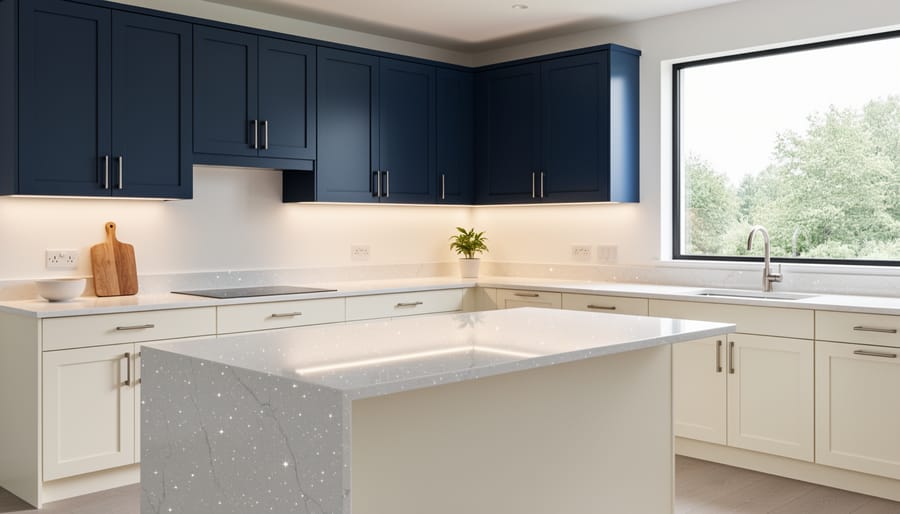
Painted cabinet finishes offer exceptional versatility when pairing with natural stone countertops, creating clean backdrops that allow stone’s inherent beauty to take center stage. These finishes work across traditional and contemporary design styles while providing practical benefits beyond aesthetics.
White and off-white painted cabinets remain the most popular choice for natural stone installations. Crisp white pairs beautifully with nearly any stone type, from dramatic Calacatta marble with bold gray veining to warm beige granites and cool gray quartzites. Off-white shades like cream, ivory, or antique white create softer transitions with warmer stones like travertine and gold-toned granites. These lighter finishes reflect light, making kitchens feel more spacious while letting intricate stone patterns command attention without visual competition.
Gray painted cabinets have surged in popularity for their sophisticated neutrality. Light grays complement white marbles with subtle veining, while charcoal and slate grays create striking contrast with lighter stones. Medium grays work particularly well with busy granite patterns, grounding the space without overwhelming the stone’s movement.
Navy and bold colored cabinets make strong design statements when balanced carefully. Deep navy pairs exceptionally with white Carrara marble or light quartzite, creating classic elegance. Sage green, forest green, and muted blues complement earthy limestones and soapstone beautifully.
Maintenance considerations matter with painted finishes. Quality paint products with durable topcoats resist moisture and kitchen wear better than cheaper alternatives. Matte and satin sheens hide fingerprints more effectively than high-gloss finishes, though gloss reflects more light in smaller spaces.
Stained Wood Finishes
Stained wood cabinets create depth and warmth alongside natural stone countertops, with the interplay between wood grain and stone veining adding layered texture to your kitchen. The stain level you choose, light, medium, or dark, directly affects how the stone’s character reads in the space.
Light stains like natural oak or ash work beautifully with high-contrast stones. A honey-toned oak finish amplifies the drama in heavily veined Calacatta marble without competing for attention, while the wood’s subtle grain provides a grounding element that prevents the white marble from feeling clinical. These lighter stains also pair well with busy granite patterns, letting the stone’s movement take center stage.
Medium stains such as cherry or walnut bring richness without overwhelming. Walnut cabinets create stunning combinations with white and gray marbles, the warm brown undertones draw out any gold or cream veining in stones like Carrara, while the moderate contrast keeps the palette sophisticated. This middle ground works across stone types, from speckled granites to softer limestone.
Dark stains like espresso or ebony demand careful stone selection. They excel with lighter stones that have bold veining, think dramatic black veining in white quartzite against deep brown cabinets. Avoid pairing dark stains with dark stone countertops unless you have abundant natural light and want a moody, intimate atmosphere.
Consider how your stone’s finish affects the relationship. Polished granite reflects light differently than honed marble when placed against the same wood stain, changing the overall visual weight of the pairing.
Natural Wood Finishes
Natural wood finishes showcase the cabinet’s inherent grain patterns and color variations with minimal processing, typically just a clear coat or light oil to protect the surface while preserving the wood’s authentic character. This approach works exceptionally well with earthy natural stones because both materials celebrate organic beauty rather than manufactured uniformity.
The visible wood grain creates a textural conversation with stone’s natural veining and movement. Light woods like maple, birch, or ash pair beautifully with creamy limestones and beige travertines, establishing a Scandinavian-inspired palette that feels open and serene. Medium-toned woods such as white oak or cherry complement warm-toned granites with amber, rust, or gold flecking, creating depth without overwhelming the space.
For darker natural finishes like walnut or teak, consider pairing with soapstone or dark green granites. The wood’s warmth prevents these stone choices from feeling cold or stark.
Natural wood finishes require honest maintenance, they’ll show wear over time, developing a patina that many homeowners prize. In kitchens with polished stone, this lived-in quality creates welcome contrast against the stone’s glossy permanence. The combination suits organic, biophilic, and modern rustic design styles where authenticity matters more than pristine uniformity.
Laminate and Thermofoil Finishes
Laminate and thermofoil offer cost-effective alternatives to painted or wood cabinets while still pairing successfully with natural stone countertops. Modern laminates come in countless colors and woodgrain patterns, including convincing marble and concrete looks that can echo or complement your stone choice. Thermofoil wraps MDF cores in a vinyl coating, creating smooth, seamless surfaces resistant to moisture, an advantage in kitchens where natural stone requires regular sealing.
Both finishes work particularly well with granite and quartzite, where the budget saved on cabinetry balances the investment in premium stone. White or light gray laminate cabinets create clean backdrops for busy granite patterns, while woodgrain laminates in oak or walnut tones warm spaces with darker soapstone or leathered granite.
The limitation comes with heat exposure. Thermofoil can peel or bubble near dishwashers or ovens if installation quality is poor, though this rarely affects areas adjacent to countertops. Laminate edges show seams more visibly than painted finishes, so inspect sample doors carefully under your kitchen lighting.
For durability in high-moisture zones, thermofoil edges seal better than laminate, which can swell if water penetrates seams. Both resist the mild cleaning products safe for natural stone, making maintenance straightforward across both surfaces.
Specialty Finishes
Specialty cabinet finishes, distressed, glazed, metallic, and high-gloss, demand careful consideration with natural stone countertops because they introduce additional visual complexity. These bold choices work best when the stone provides balance rather than competing for attention.
Distressed finishes pair naturally with rustic stones like travertine, tumbled marble, or leathered granite. The aged, textured character of distressed cabinets complements these softer, more organic stone surfaces, creating cohesive farmhouse or Mediterranean aesthetics. Avoid pairing distressed finishes with highly polished marble or granite, which creates a jarring contrast between refined stone and intentionally weathered cabinetry.
Glazed finishes add subtle depth and dimension through layered color applications. They work well with stones that have moderate veining, like certain granites or honed marble, where the glaze picks up undertones in the stone. The key is ensuring the glaze color echoes a secondary tone in your countertop.
Metallic finishes in champagne, bronze, or pewter create dramatic, contemporary statements. These succeed with solid-colored stones or those with minimal veining, think black granite, white quartzite, or neutral limestone, where the metallic sheen becomes the focal point without overwhelming busy stone patterns.
High-gloss lacquered cabinets deliver ultra-modern impact but require restraint. Pair them with honed or matte-finished stones rather than polished surfaces to avoid excessive shine. Solid-colored stones like Nero Marquina or pure white marble provide the clean backdrop high-gloss finishes need to shine without visual chaos.
Recommended Cabinet Finish Pairings by Stone Type
Best Finishes for Marble Countertops
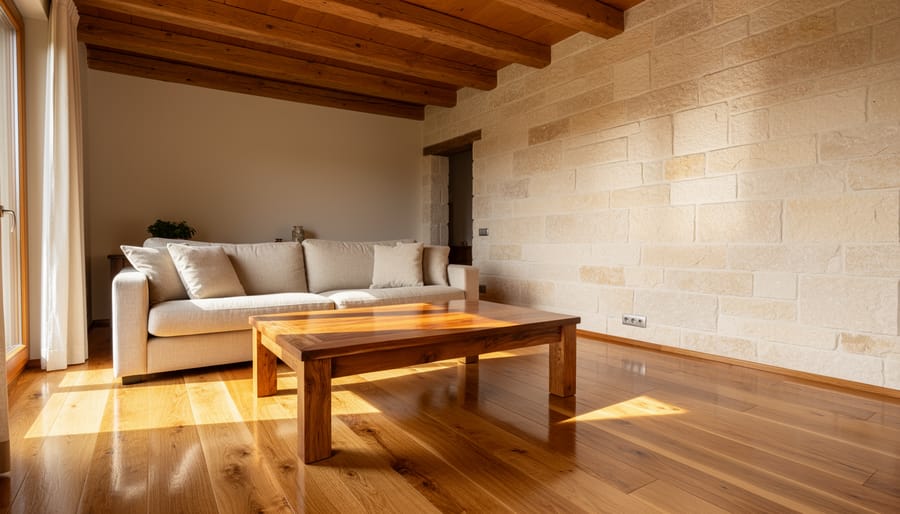
Marble’s luminous surface and distinctive veining create unique pairing opportunities with cabinet finishes. For classic white marbles like Carrara and Statuario, white or off-white painted cabinets deliver timeless elegance, choose warm whites with cream-toned marble, cool whites with gray-veined varieties. The monochromatic palette lets the stone’s veining become the focal point. Navy or charcoal painted cabinets provide dramatic contrast with white marble while maintaining sophistication, particularly effective with Calacatta’s bold gold or gray veining.
Gray marble countertops pair beautifully with medium-toned wood stains like walnut or white oak, which warm the cool stone without competing visually. Light gray painted cabinets create a refined, cohesive look with gray marble but require careful undertone matching to avoid a flat appearance.
For contemporary spaces, matte black cabinets against white marble deliver striking modern contrast. Natural wood finishes work well when marble has warm veining or beige undertones. Since marble requires marble extra care select cabinet finishes that won’t show water spots easily if placed near the sink area.
Best Finishes for Granite Countertops
Granite’s diversity demands a strategic approach to cabinet finishes. Light-colored granites with minimal patterns, like Kashmir White or Colonial White, pair beautifully with darker wood stains such as espresso or walnut, creating contrast without competing with the stone’s subtle movement. These lighter granites also work well with navy or charcoal painted cabinets for a contemporary look.
Busy, heavily speckled granites like Ubatuba or Baltic Brown benefit from simpler cabinet treatments. White or cream painted finishes let the stone be the star, while medium-tone natural woods like oak provide warmth without adding visual clutter. Avoid distressed or heavily grained finishes that fight with the stone’s complexity.
For veined granites that mimic marble, such as Taj Mahal or Fantasy Brown, treat them like marble with classic white or soft gray cabinets. Mid-tone granites in beige and tan families (Santa Cecilia, Giallo Ornamental) harmonize with honey-stained maple or natural cherry, enhancing their warm undertones.
Black and dark granites like Absolute Black or Steel Gray create drama against crisp white cabinets or light wood tones, preventing the kitchen from feeling cave-like. For more guidance on granite selection, consult our granite buying guide before finalizing your cabinet choices.
Best Finishes for Quartzite and Soapstone
Quartzite’s crystalline structure and dramatic veining call for cabinet finishes that either echo its natural intensity or provide calming contrast. For white and light quartzite with bold veining, like Taj Mahal or Sea Pearl, dark stained walnut or espresso cabinets create striking definition without competing with the stone’s movement. Conversely, soft gray or greige painted finishes let the quartzite become the focal point while maintaining visual balance. When working with darker quartzites such as Blue Macaubas, white or light oak cabinets prevent the space from feeling heavy.
Soapstone’s deep charcoal tones and velvety matte finish demand thoughtful pairing to avoid a cave-like effect. Crisp white painted cabinets provide maximum contrast and reflect light beautifully against soapstone’s absorptive surface. Light natural woods like maple or birch with clear finishes offer warmth while keeping the kitchen bright. Medium-toned painted finishes in sage, soft blue, or warm gray complement soapstone’s subtle green undertones. Avoid high-gloss cabinet finishes, they clash with soapstone’s organic, low-sheen character. The stone’s matte quality works best with satin or eggshell cabinet sheens that maintain a cohesive, understated elegance throughout the kitchen.
Best Finishes for Limestone and Travertine
Limestone and travertine countertops bring an earthy, Old World warmth to kitchens that calls for cabinet finishes celebrating their soft, organic character. These stones typically feature beige, cream, and warm gray tones with subtle texture variations.
Cream and off-white painted cabinets create a serene, monochromatic look that lets the stone’s natural pitting and veining take center stage. Light to medium stained woods, particularly oak, maple, or pine with honey or golden tones, echo the stone’s warmth and reinforce a rustic or Mediterranean aesthetic. For contrast, soft sage green or warm taupe painted finishes complement limestone’s neutral palette without overwhelming its understated beauty.
Avoid high-gloss finishes that clash with these stones’ inherently matte, textured surfaces. Instead, choose satin or matte sheens that mirror their organic feel and create visual harmony throughout the space.
Common Mistakes to Avoid When Pairing Cabinets and Stone
The most frequent mistake when pairing cabinet finishes with natural stone countertops is selecting cabinets before carefully analyzing the stone’s undertones and veining patterns. Homeowners often fall in love with a cabinet color in isolation, only to discover it clashes with their stone’s subtle warm or cool hues once installed. A gray-painted cabinet that looks perfect in the showroom might appear dingy next to a warm-toned travertine, while a honey-stained wood can turn a cool marble yellowish under certain lighting.
Another common error is ignoring the intensity balance between stone pattern and cabinet detail. Busy granite with heavy speckling paired with highly figured wood grain or distressed finishes creates visual chaos, with no element getting proper attention. The eye needs a resting place. When your stone has dramatic movement, opt for simpler cabinet finishes that let the stone shine, or conversely, pair subtle honed limestone with more interesting cabinet treatments.
Many designers also miscalculate how sheen levels interact between surfaces. Pairing high-gloss cabinets with polished marble might seem luxurious, but the competing reflections can feel harsh and overwhelming, especially in smaller kitchens. Similarly, all-matte surfaces, flat cabinets with honed or leathered stone, can appear flat and one-dimensional without strategic variation in texture or sheen to create depth.
Failing to account for the kitchen’s natural light is another pitfall. Dark espresso cabinets might look sophisticated with white marble in a showroom, but in a north-facing kitchen with limited windows, the combination can feel cave-like rather than elegant. Light-starved spaces need lighter cabinet finishes to prevent natural stone from appearing muddy or oppressive.
Finally, overlooking long-term maintenance compatibility causes frustration years after installation. Choosing light painted cabinets in a matte finish with porous limestone that requires frequent sealing means more surfaces to maintain carefully, while pairing high-maintenance glazed finishes with equally demanding marble doubles your cleaning burden.
Testing and Visualizing Your Selections
Before making final decisions on cabinet finishes, physically test your selections against your actual stone slab or a large sample. Visit your stone supplier with cabinet door samples or finish swatches in different lighting conditions, ideally both natural daylight and the artificial lighting you’ll have in your kitchen. Stone appearance changes dramatically under different light sources, and what looks perfect in a showroom might feel off in your space.
Request full-size cabinet door samples rather than small chips whenever possible. A 2×2-inch swatch can’t show you how wood grain patterns or paint sheens will interact with the stone’s veining at scale. Place these samples directly on the stone counter and step back at least six feet to see the relationship from a functional distance, not just up close.
Photograph your pairings on your phone throughout the day to capture how natural light shifts the combination. Morning light emphasizes cool tones, while afternoon sun brings out warmth. Review these photos at night under your planned kitchen lighting, recessed LEDs, pendant lights, or under-cabinet fixtures all cast different color temperatures that affect how both materials appear together.
Digital visualization tools offer helpful previews but shouldn’t replace physical samples. Many cabinet manufacturers and home improvement retailers provide online visualizers where you can upload photos of your stone and overlay cabinet colors. These work best for eliminating obvious mismatches rather than confirming perfect pairings.
Live with your samples for at least a week. Prop the cabinet sample against your backsplash area and observe it during meal prep, morning coffee, and evening cleanup. The combination you love at first glance might tire quickly, while a pairing that initially seemed understated often grows more appealing with familiarity.
Main Options Compared
When selecting cabinet finishes for natural stone countertops, most homeowners narrow their decision to three primary categories, each offering distinct advantages.
Painted finishes provide the greatest color flexibility and work universally across all stone types. White and light gray painted cabinets create classic, timeless pairings with virtually any natural stone, from Carrara marble to dark granite. They brighten spaces and let dramatic stone patterns take center stage. However, painted surfaces require more frequent maintenance and show wear more readily than alternatives.
Stained wood finishes deliver warmth and natural character that complements earthy stones like travertine, soapstone, and warm-toned granites. Medium to dark stains create rich, sophisticated kitchens but can feel heavy with dark stones or in poorly lit spaces. Wood grain adds texture that balances veined stone beautifully, though care must be taken with undertone matching.
Natural wood finishes showcase raw grain and organic beauty, ideal for contemporary designs featuring quartzite or honed marble. They require less maintenance than paint but offer limited color control, making stone coordination more critical upfront.
Your choice ultimately depends on your stone’s visual weight, kitchen lighting, and desired maintenance commitment.
Frequently Asked Questions
Should cabinet finishes be lighter or darker than natural stone countertops?
There’s no universal rule, both approaches work depending on your goals. Lighter cabinets with darker stone create contrast and make the countertops the focal point, while darker cabinets with lighter stone ground the space and draw attention upward. The decision should balance your room’s natural light, size, and the visual weight you want to achieve.
Can I mix different cabinet finish types in the same kitchen with natural stone?
Yes, mixing finishes like painted perimeter cabinets with stained wood islands has become increasingly popular and works well with natural stone. The key is maintaining a clear hierarchy, choose one finish as dominant and use the second as an accent, ensuring both complement the stone’s undertones and pattern intensity.
What’s the most budget-friendly cabinet finish to pair with natural stone?
Painted finishes, particularly white or light gray, offer the best value while providing timeless compatibility with most natural stones. They’re less expensive than custom stained wood, easier to touch up or refresh over time, and work across various stone types from marble to granite without requiring perfect grain matching.
Which cabinet and stone combinations are most timeless?
White or off-white painted cabinets with Carrara marble or light gray granite remain classic choices that transcend trends. Natural medium-toned wood stains with speckled granite or honed quartzite also deliver enduring appeal, as these combinations balance warmth and neutrality without committing to a specific design era.
When planning your cabinet and stone pairing, remember that samples viewed in your actual kitchen lighting will look different than showroom displays. Request cabinet door samples and stone remnants to place side by side in both natural daylight and evening artificial light before making final selections. What appears perfectly balanced at noon may shift dramatically under warm LED lighting at night.
If you’re working with existing natural stone and considering refinishing cabinets, you have more flexibility than starting from scratch. Most stones work with multiple finish directions, so focus on the mood you want to create. A kitchen with busy granite can shift from traditional to contemporary simply by changing from medium wood stains to crisp white paint, while the same stone with charcoal gray cabinets creates an entirely different sophisticated atmosphere.
Selecting the right cabinet finish for your natural stone countertops ultimately comes down to balancing proven design principles with your personal vision for the space. While the technical considerations matter, undertone matching, pattern intensity, durability requirements, and light interaction, the most successful kitchen designs emerge when homeowners feel confident in their choices rather than rigidly following prescriptive rules.
The framework presented in this guide gives you a structured approach to decision-making. Understanding how color temperature creates harmony, why sheen levels affect visual weight, and which finish types complement specific stones provides a foundation for smart selections. These principles prevent costly mismatches and ensure your kitchen functions as beautifully as it looks.
However, design is never purely formulaic. If you love the drama of dark cabinets against white marble, or the warmth of honey-toned wood with cool gray granite, trust that instinct. The “rules” exist to inform your choices, not restrict them. Use sampling and visualization tools to test your preferred combinations in your actual space, under your specific lighting conditions.
Your kitchen should reflect how you live and what resonates with you aesthetically. The cabinet finishes and natural stone you choose will set the tone for years to come. Take time with your selections, consider the practical factors we’ve covered, but remember that the best design decisions satisfy both the eye and the soul.