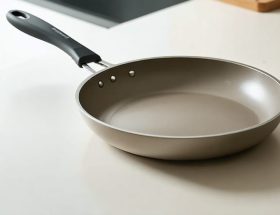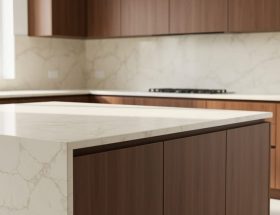
Quartz countertops are not heat resistant. While they can withstand moderate warmth, direct contact with hot pots, pans, or appliances above 300°F can cause permanent discoloration, cracking, or surface damage. This limitation stems from quartz’s composition: approximately 90-95% ground natural quartz bound together with polymer resins and pigments. Those resins, though durable for everyday use, remain vulnerable to high temperatures in ways that natural stone alternatives are not.
Understanding the thermal properties of quartz matters because a single mistake can leave you with an expensive repair or replacement. Unlike granite or marble, which form under extreme heat and pressure deep within the earth, engineered quartz gets its final properties in a factory setting. The resin binders that give quartz its non-porous nature and consistent appearance also create its Achilles heel when exposed to heat.
This doesn’t mean quartz countertops are a poor choice. Millions of homeowners and designers select them for their low maintenance requirements, uniform patterns, and resistance to staining. The key is knowing how to protect your investment. Hot pads and trivets aren’t optional accessories for quartz surfaces, they’re essential tools.
The practical reality is straightforward: if you’re considering quartz for your kitchen or bath, you need a clear picture of both its strengths and its thermal limitations. This article breaks down exactly what temperatures quartz can handle, what happens when you exceed those limits, and how to prevent heat damage while still enjoying the benefits that made you consider quartz in the first place.
What Quartz Countertops Are
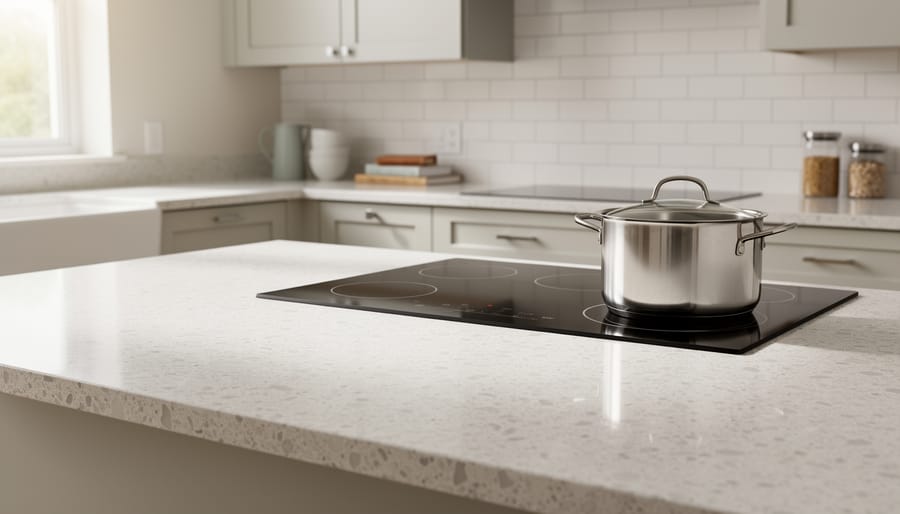
Quartz countertops are engineered stone surfaces manufactured from a combination of approximately 90-95% crushed natural quartz crystals mixed with polymer resins, pigments, and other additives. Unlike granite or marble that are quarried as solid slabs from the earth, quartz is engineered in a controlled factory environment where raw materials are precisely measured, mixed, and then compressed under intense pressure and heat to form dense, uniform slabs.
This manufacturing process creates several defining characteristics. The polymer resins act as a binding agent, holding the quartz particles together while filling microscopic gaps to create a completely non-porous surface. This differs fundamentally from natural stone countertops, which contain natural fissures and pores that can absorb liquids. The addition of pigments during production allows manufacturers to achieve consistent colors and patterns throughout each slab, something impossible with natural stone where every piece is unique.
- Engineered Stone
- A manufactured countertop material created by combining natural minerals with synthetic resins and additives, as opposed to stone cut directly from quarries.
- Polymer Resins
- Synthetic binding agents, typically polyester or epoxy-based, that hold quartz particles together and create the surface’s non-porous quality.
- Non-Porous Surface
- A material without microscopic holes or channels that could absorb liquids, making quartz highly stain-resistant compared to many natural stones.
- Quartz Crystals
- One of the hardest naturally occurring minerals on earth, providing the primary structural strength and durability in engineered quartz slabs.
The controlled production environment means quartz countertops offer predictable performance characteristics and visual consistency across large installations. You won’t find the natural veining variations that make each granite slab unique, nor the softer elegance that might make marble kitchen match preferences for some homeowners. Instead, quartz delivers uniform color and pattern from edge to edge, slab to slab. This engineered composition creates both advantages and limitations, particularly when it comes to heat exposure.
How Quartz Countertops Respond to Heat
The Role of Resin in Heat Sensitivity
The polymer resins that bind quartz crystals together make up roughly 5-10% of a quartz countertop’s composition, but they’re responsible for nearly all of its heat vulnerability. These resins, typically polyester or acrylic-based compounds, serve essential functions. They lock the crushed quartz particles into a solid slab, create the surface’s non-porous barrier that resists staining, and allow manufacturers to introduce consistent colors and patterns.
However, these same resins have a relatively low melting point compared to natural quartz crystals, which can withstand temperatures exceeding 1,000°F. When a hot pan at 400°F makes direct contact with the surface, the heat transfers primarily to the resin binders rather than the quartz particles. The resin can soften, discolor, or burn, leaving permanent marks even when the quartz crystals themselves remain undamaged.
This creates a fundamental trade-off in quartz countertop design. The resin provides durability and uniformity but introduces a thermal weak point that natural stone slabs, composed entirely of heat-tolerant minerals, simply don’t have.
Comparing Heat Resistance to Natural Stone
Granite handles direct heat far better than quartz because it forms naturally under extreme underground temperatures and pressure, no synthetic resins involved. You can place a 500°F pan straight from the stovetop onto granite without immediate damage, though repeated thermal shock can eventually cause minor surface cracks. The stone itself won’t scorch, discolor, or melt.
Marble sits somewhere between granite and quartz for heat tolerance. While it’s 100% natural stone and won’t burn like resin-based surfaces, marble is softer and more porous than granite. Hot pots won’t damage it thermally, but placing very hot items directly on the surface can sometimes leave etched rings if moisture is trapped underneath, especially on polished finishes.
The quartz vs granite debate often centers on maintenance, but heat resistance swings decisively toward granite. Soapstone offers even greater heat tolerance, it’s been used for wood stove surrounds and laboratory counters precisely because it absorbs and distributes heat without cracking. The absence of polymer binders means natural stone surfaces simply don’t share quartz’s 300-350°F vulnerability threshold.
Types of Heat Damage on Quartz Surfaces
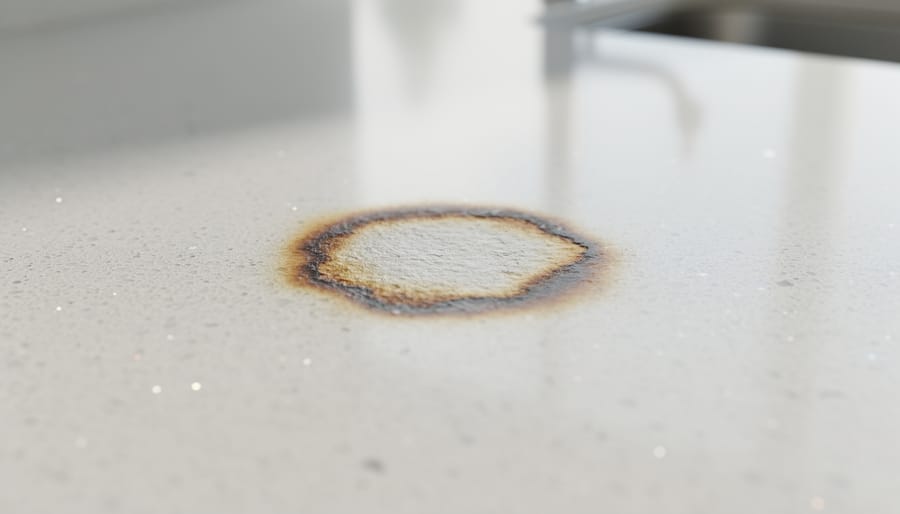
Understanding the specific types of damage helps homeowners recognize problems early and assess severity. Heat exposure on quartz surfaces manifests in distinct ways, each with different implications for the countertop’s appearance and function.
Surface Burns and Scorch Marks
The most immediate and visible damage appears as light-colored rings or patches where hot items have made contact. These marks typically show up as whitish or yellowish discolorations against the countertop’s base color, creating a stark halo effect around the contact point. The resin binder literally scorches, leaving a permanent ghost of the hot object. Surface burns range from faint halos barely visible in certain lighting to prominent marks that immediately draw the eye.
Discoloration and Yellowing
Beyond distinct burn marks, prolonged or repeated heat exposure causes broader discoloration across the affected area. The synthetic resins oxidize and yellow, particularly noticeable on lighter-colored quartz surfaces. This damage spreads beyond the immediate contact zone, creating an unevenly toned patch that cannot be buffed or polished away. White and cream quartz countertops show this yellowing most dramatically, developing a dingy appearance that undermines their pristine aesthetic.
Common heat damage manifestations include:
- Ring-shaped scorch marks from hot pans, appearing as light halos on darker surfaces
- Yellowed patches from repeated heat exposure, most visible on white and cream countertops
- Melted or softened surface texture where resin has begun breaking down
- Hairline cracks radiating from thermal shock impact points
- Dull, cloudy areas where surface polish has degraded from high temperatures
Resin Degradation and Surface Texture Changes
Severe heat exposure causes the resin to actually soften or melt, changing the surface texture. These areas feel slightly rough or uneven to the touch and appear duller than the surrounding polished surface. The countertop loses its characteristic smooth, glass-like finish in the damaged zone, and no amount of cleaning restores the original texture.
Thermal Shock Cracks
Sudden, extreme temperature changes create internal stress that manifests as hairline cracks. These fractures typically radiate outward from the heat source point, looking like spider veins across the surface. Unlike surface burns, thermal shock cracks penetrate deeper into the material and compromise structural integrity, not just appearance. Once formed, these cracks can expand over time with normal use and temperature fluctuations.
Common Heat Sources and Real-World Risks
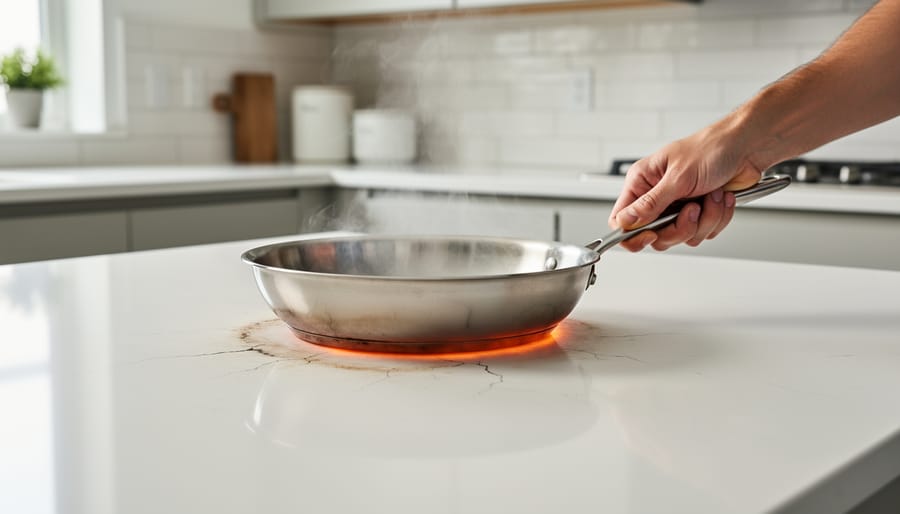
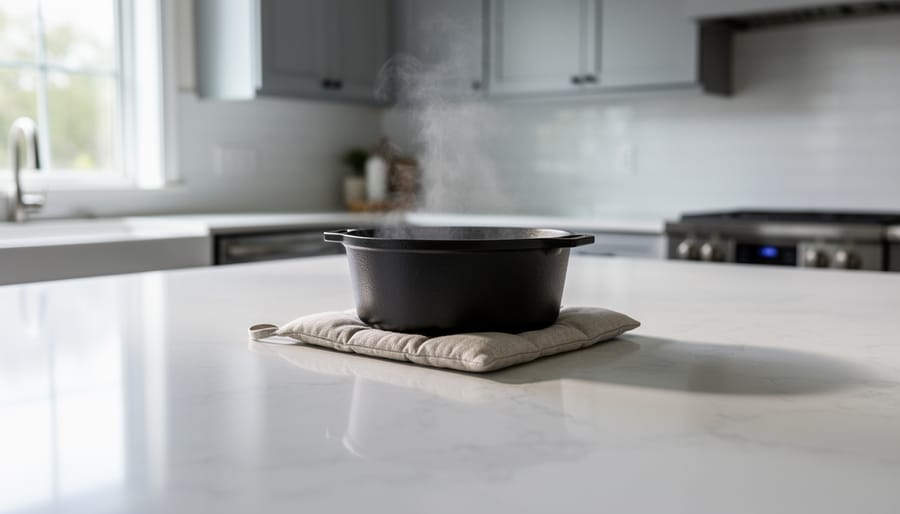
In typical kitchen use, quartz countertops face heat exposure far more often than most homeowners realize. A stockpot of pasta water reaches 212°F at a rolling boil, while cast-iron skillets fresh from the stovetop can exceed 500°F. Setting either directly on quartz creates immediate risk.
The most frequent culprits are everyday cooking vessels. Heavy Dutch ovens moved from oven to counter, sauté pans transferred during multitasking meal prep, and baking sheets pulled straight from a 425°F oven all generate enough heat to damage the resin matrix. One particularly common scenario involves removing a sheet pan of roasted vegetables and placing it down while reaching for a serving platter, a five-second oversight that can leave a permanent rectangular burn mark.
Small appliances present deceptive risks because they sit stationary on the surface for extended periods. Slow cookers, pressure cookers, and rice cookers all generate concentrated heat at their base, typically between 200-300°F during operation. While just below the critical damage threshold, prolonged contact over several hours can cause gradual discoloration. A homeowner in Seattle discovered a yellowed ring beneath her Instant Pot after using it in the same counter spot three times weekly for six months.
Bathrooms introduce their own hazards. Flat irons heat to 400°F, curling wands reach 450°F, and both are frequently set down mid-styling without a heat-resistant mat. The resulting scorch marks on vanity countertops are particularly visible because they contrast sharply against light-colored quartz.
Electric kettles, toaster ovens placed too close to the surface, and even hot serving dishes from the microwave contribute to the cumulative exposure pattern. The damage isn’t always dramatic, sometimes it appears as subtle cloudiness or a slight texture change that becomes permanent.
Case reports from countertop fabricators reveal a pattern: most heat damage occurs during routine tasks rather than obvious misuse. A momentary lapse placing a pizza stone down, forgetting a trivet when serving a casserole, or setting a curling iron aside while answering the phone. The margins are thin enough that normal kitchen rhythm creates regular opportunities for permanent marks.
Protecting Quartz Countertops from Heat Damage
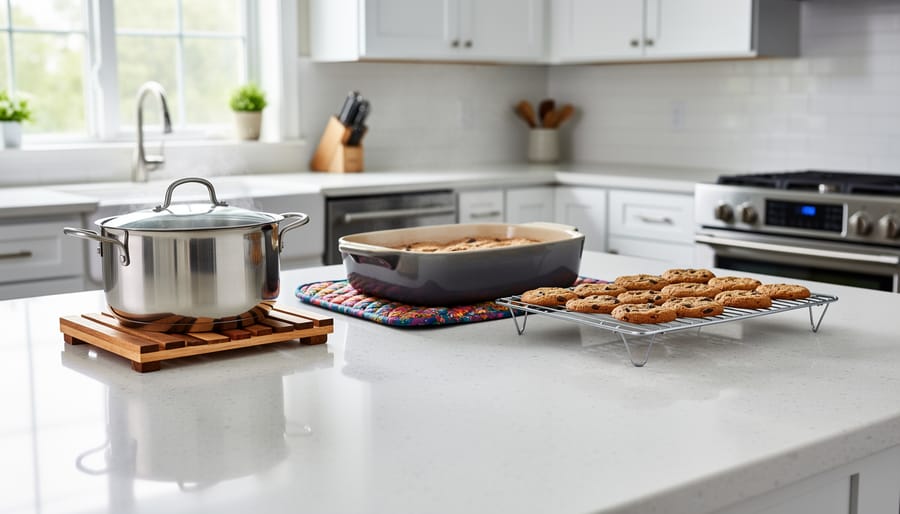
Preventing heat damage on quartz surfaces requires consistent protective habits rather than reactive fixes. The most reliable defense is placing trivets, hot pads, or cooling racks between any hot item and your countertop. Keep several trivets within arm’s reach of your stove and oven so reaching for protection becomes as automatic as turning off a burner.
Material choice matters for protective items. Silicone trivets withstand temperatures up to 450°F and won’t scratch surfaces, while cork offers excellent insulation but degrades faster with repeated high-heat exposure. Stainless steel cooling racks provide stability for larger items like roasting pans, and bamboo trivets add aesthetic appeal while delivering solid protection. Avoid thin pot holders that compress under weight, allowing heat to transfer through to the countertop.
Strategic placement creates safety zones in your kitchen. Position a permanent trivet station near your cooktop where you naturally set down hot pans. Install a pull-out cutting board or heat-resistant mat in high-traffic areas between stove and sink. Consider a designated cooling area for baking sheets and slow cookers rather than assuming any counter space is safe.
Developing protective habits ensures long-term countertop preservation. Never place hot cookware directly on quartz, even for a few seconds while grabbing a trivet. Let baking dishes cool for several minutes before moving them to the counter, and always use a barrier under countertop appliances like air fryers or electric griddles that generate sustained heat. If you use styling tools in the bathroom, invest in a heat-resistant mat for curling irons and straighteners.
Comprehensive quartz countertop care extends beyond heat protection to daily maintenance routines that keep quartz flawless for decades. These simple protective measures become second nature within weeks, safeguarding your investment without disrupting your cooking workflow.
When Quartz Makes Sense Despite Heat Limitations
Quartz countertops remain a compelling choice for many homeowners despite their heat vulnerability, particularly when daily habits and priorities align with their strengths. The key is honest assessment of your cooking patterns and what matters most in your kitchen.
If you rarely cook at high heat, prefer takeout or prepared foods, or simply aren’t in the habit of placing hot cookware directly on surfaces, the heat limitation becomes largely theoretical. Many households never encounter actual heat damage because they naturally use trivets or allow pans to cool briefly. For these users, quartz delivers its considerable advantages without practical downsides.
The stain resistance alone justifies quartz for families with young children or frequent entertainers. Red wine, coffee, tomato sauce, and oils that would require immediate attention on marble or granite simply wipe away from quartz. This non-porous quality also eliminates the need for periodic sealing, cutting long-term maintenance to basic cleaning with soap and water.
Design flexibility represents another significant advantage. Quartz manufacturers can create consistent colors and patterns impossible in natural stone, including solid whites, blacks, and contemporary looks that match specific décor visions. When you’re sourcing eight feet of continuous countertop, quartz guarantees uniform appearance without the natural variation inherent to granite or marble.
For bathroom vanities, laundry rooms, and bar areas where heat exposure is minimal or nonexistent, quartz often outperforms natural stone. These applications benefit from its durability and hygiene while avoiding its primary weakness. The same applies to home offices and craft spaces where appearance and easy maintenance matter more than thermal tolerance.
Budget-conscious buyers also find value in quartz’s mid-tier pricing, which typically falls between laminate and premium natural stone while offering superior performance to the former.
How Are Quartz Countertops Heat Resistant Works
The thermal performance of quartz countertops stems from the interaction between their two primary components under heat exposure. When a hot object contacts the surface, heat transfers into the material at different rates. The natural quartz crystals themselves can withstand high temperatures without issue, as they’re essentially ground-up stone with excellent thermal stability.
However, the polymer resin matrix surrounding these crystals reacts very differently. As temperatures climb past 150°F, the resin begins softening. Between 300-350°F, it reaches a critical threshold where chemical bonds start breaking down. This breakdown is irreversible. The resin can discolor, bubble, or even melt slightly, creating permanent surface damage.
Think of it like chocolate chips in a cookie. The flour (quartz crystals) stays stable when heated, but the chocolate (resin) melts and changes form. Once that happens, cooling doesn’t restore the original state.
The damage mechanism also involves thermal expansion. Quartz and resin expand at different rates when heated. Rapid temperature changes create internal stress at their interface, potentially causing micro-cracks that weaken the surface structure. This explains why even brief contact with extremely hot items can cause lasting harm.
Frequently Asked Questions
Can heat damage on quartz countertops be repaired? In most cases, heat damage to quartz surfaces is permanent and cannot be fully repaired. While professional restoration companies can attempt to sand, polish, or fill damaged areas, the results are often imperfect because the resin matrix underneath has been compromised. Replacement of the affected section is typically the only way to restore the original appearance.
Can heat damage on quartz be repaired?
Heat damage is usually permanent. Professional restoration may improve appearance through sanding and polishing, but often cannot fully restore the surface since the underlying resin has been altered.
Do warranties cover heat damage on quartz countertops?
No, manufacturers explicitly exclude heat damage from warranty coverage because it results from improper use rather than material defects. Warranties typically cover manufacturing flaws, not damage from user negligence.
Are some quartz brands more heat resistant than others?
Heat tolerance varies slightly between manufacturers based on resin formulation, but all quartz countertops share similar heat thresholds around 300-350°F. No brand offers significantly superior heat resistance that would eliminate the need for protective measures.
How does quartz compare to granite for heat resistance?
Granite handles heat substantially better than quartz because it’s 100% natural stone without resin binders. You can place hot pots directly on granite without damage, while quartz requires trivets or hot pads to prevent scorch marks and discoloration.
The key to living successfully with quartz countertops is accepting their heat limitations upfront and building protective habits into your daily routine. Keep trivets within arm’s reach of the stove, establish designated cooling zones on your counters, and treat the surface as you would a fine piece of furniture rather than an indestructible workhorse. Many homeowners find these precautions become second nature within weeks of installation.
If heat resistance ranks high on your priority list because you’re an avid cook who frequently handles hot cookware, consider whether natural stone alternatives like granite or soapstone might better suit your needs. These materials offer genuine heat tolerance without requiring constant vigilance, though they come with their own maintenance considerations that may or may not align with your lifestyle.
Quartz countertops deliver exceptional durability, stunning aesthetics, and remarkably low maintenance, but they aren’t heat resistant in the way many homeowners assume. The polymer resins that give quartz its non-porous strength also create a vulnerability to temperatures above 300°F. A momentary lapse, setting down a hot pan without a trivet, can leave permanent scorch marks that no amount of cleaning will remove.
This limitation doesn’t disqualify quartz from consideration. It simply requires honest assessment of how you cook and live. If you frequently work with high-heat cookware, natural stone like granite offers superior thermal tolerance without the protective rituals quartz demands. For those who prioritize stain resistance and uniform color over heat freedom, quartz remains an excellent choice with mindful habits.
The right countertop material depends on your specific kitchen patterns, not marketing promises. Consult with experienced stone professionals who can walk you through both engineered and natural options, discussing real-world performance beyond the showroom. They’ll help you weigh trade-offs, maintenance versus heat tolerance, aesthetic consistency versus natural variation, so you choose a surface that genuinely fits your lifestyle rather than one that looks perfect until the first thermal mishap.