Showing 11 Result(s)
Architect’s drafting table with natural stone slabs, reclaimed offcuts, crushed aggregate, and a terrazzo tile arranged under soft daylight, with blurred shelves of tools and stacked stone in the background.
Retail and Sourcing Networks

How Circular Economy Graphics Transform Natural Stone Sourcing (And Why You Should Care)

Examine lifecycle flow diagrams that track natural stone from quarry extraction through fabrication, installation, and eventual reclamation to identify waste reduction opportunities at each stage. These visual tools reveal where materials can be recovered, repurposed, or returned to production cycles rather than ending up in landfills.
Request material passport graphics from your stone supplier that document the complete journey of specific slabs, including quarry location, processing methods, transportation routes, and carbon footprint calculations. This transparency allows you to compare the environmental performance of different …


Pallet of strapped marble and granite slabs at a seaport with blurred cranes and containers under moody skies, conveying supply chain disruption
Retail and Sourcing Networks

Why Your Stone Project Just Got More Expensive (And What You Can Do About It)

Global stone supply chains face unprecedented disruption as trade tensions, sanctions, and territorial disputes ripple through quarries from Turkey to India. The marble countertop delayed by three months, the travertine project quote that doubled overnight, or the sudden unavailability of a specific granite—these aren’t isolated incidents but symptoms of geopolitical shifts fundamentally reshaping how natural stone moves across borders.
Transportation routes that have carried stone for decades now face blockades, tariffs, and rerouting through costlier corridors. Quarries in conflict zones shut down without warning. …

Engineer in safety gear examining stacked natural stone slabs at a clean quarry in golden hour side light, with reforested benches, rolling hills, and a compact wheel loader in the background.
Retail and Sourcing Networks

How Sustainable Stone Sourcing Protects Your Project and the Planet

Strategic sourcing of sustainable stone requires a systematic approach that balances environmental responsibility with project requirements and budget constraints. The global natural stone industry faces increasing scrutiny over quarrying practices, carbon emissions from transportation, and labor conditions—making informed procurement decisions more critical than ever.
Define your project’s sustainability criteria before engaging suppliers. Establish clear benchmarks for environmental impact, including acceptable quarry rehabilitation standards, maximum transportation distances, and required third-party certifications such …

Illustration of a split landscape showing a quarry transforming into terraced farmland with diverse crops and water management systems representing sustainable agricultural innovation.
Retail and Sourcing Networks

How Stone Quarries Are Leading Sustainable Agriculture Innovation

Sustainable agriculture stands at the intersection of environmental stewardship and food security, offering solutions that parallel environmental responsibility in quarrying practices. As global populations surge and climate challenges intensify, these seven time-tested agricultural practices demonstrate how modern farming can nurture both land and yield. From water conservation techniques that reduce consumption by up to 30% to soil management strategies that enhance carbon sequestration, …

Conceptual illustration comparing linear economy's direct extraction-to-landfill line versus circular economy's regenerative loop in natural stone production, featuring reuse and recycling stages.
Retail and Sourcing Networks

Why Natural Stone’s Circular Economy Beats Traditional Linear Waste

In today’s global economy, the stark contrast between linear “take-make-dispose” systems and circular “reduce-reuse-recycle” models has never been more relevant. While traditional linear economies deplete finite resources and generate mounting waste, circular economies offer a regenerative approach that’s revolutionizing industries worldwide, including sustainable stone sourcing practices and manufacturing.
The linear economy’s extractive …

An aerial view showcasing a sustainable quarry operations site, featuring well-organized extraction zones alongside preserved natural areas, symbolizing the integration of responsible procurement practices and environmental conservation.
Retail and Sourcing Networks

Sustainable Stone Sourcing: How Nature’s Beauty Meets Environmental Responsibility

Revolutionizing the natural stone industry demands a fundamental shift in how we approach sustainable stone sourcing practices. The four principles of sustainability—environmental stewardship, economic viability, social responsibility, and cultural preservation—form the cornerstone of modern stone procurement. These interconnected principles guide quarry operations, processing methods, and distribution networks while ensuring the industry’s long-term viability.
Environmental consciousness in …

A technologically advanced stone warehouse with digital overlays showing AI-driven analytics and inventory forecasting for different stone varieties like marble, granite, and quartzite.
Retail and Sourcing Networks

AI Transforms Natural Stone Sales: Smart Forecasting That Actually Works

Transform your inventory management with AI-powered demand forecasting that predicts natural stone purchasing patterns with up to 95% accuracy. Today’s stone retailers face unprecedented challenges in managing diverse inventories of marble, granite, and quartzite while meeting fluctuating customer demands. Advanced machine learning algorithms now analyze historical sales data, seasonal trends, and market indicators to optimize stock levels and reduce carrying costs across showrooms and warehouses.
Artificial intelligence has revolutionized how stone businesses forecast demand by processing complex variables unique to our …

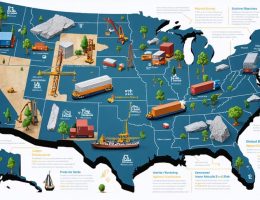
Illustration of the United States map, highlighting key Foreign-Trade Zone locations with pathways for natural stone imports, including visual elements like shipping containers and stone slabs.
Retail and Sourcing Networks

Foreign-Trade Zones: Your Secret Weapon for Natural Stone Import Savings

Foreign-Trade Zones (FTZs) transform how natural stone importers operate in today’s competitive global market, offering strategic advantages that directly impact bottom-line profitability. These specialized geographic areas, treated as outside U.S. Customs territory, enable stone industry professionals to defer, reduce, or eliminate duties while streamlining their supply chain operations. Located strategically near major ports and transportation hubs across the United States, FTZs create powerful opportunities for businesses to enhance their international trade capabilities and maintain competitive pricing in the domestic market. …

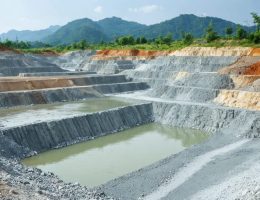
Aerial view of a modern, sustainable stone quarry featuring terraced excavations with visible environmental measures such as green buffer zones and water recycling systems, illustrating sustainable stone sourcing in action.
Retail and Sourcing Networks

How Sustainable Stone Sourcing Transforms Modern Construction

Sustainable sourcing in the natural stone industry represents a transformative approach to extracting, processing, and distributing stone materials while safeguarding environmental resources for future generations. This comprehensive practice integrates three fundamental pillars: environmental stewardship, social responsibility, and economic viability. From the quarry to the final installation, sustainable stone sourcing demands careful consideration of extraction methods, worker conditions, transportation efficiency, and waste reduction protocols.
Modern sustainable sourcing extends beyond mere environmental compliance, …

A tablet displaying an interactive digital marketplace for natural stone against a backdrop of various stone slabs, symbolizing the transformation of stone sales through global e-commerce.
Retail and Sourcing Networks

How Global E-commerce Is Revolutionizing Natural Stone Sales

Cross-border e-commerce has revolutionized the natural stone industry, transforming local quarries and suppliers into global market players. Today, architectural firms in New York can source Italian marble with a few clicks, while Chinese importers directly connect with Brazilian granite producers through digital platforms. This borderless marketplace, projected to reach $1.4 trillion in value by 2025, represents both unprecedented opportunity and unique challenges for stone industry professionals.
The convergence of digital technology with traditional stone trade has created a dynamic ecosystem where authentication tools, real-time…