

Examine lifecycle flow diagrams that track natural stone from quarry extraction through fabrication, installation, and eventual reclamation to identify waste reduction opportunities at each stage. These visual tools reveal where materials can be recovered, repurposed, or returned to production cycles rather than ending up in landfills.
Request material passport graphics from your stone supplier that document the complete journey of specific slabs, including quarry location, processing methods, transportation routes, and carbon footprint calculations. This transparency allows you to compare the environmental performance of different stone options and make data-driven sourcing decisions that align with your sustainability goals.
Study circular flow charts that illustrate how stone remnants, offcuts, and end-of-life materials re-enter manufacturing streams as aggregates, terrazzo components, or landscape materials. Understanding these pathways helps you specify projects that generate valuable byproducts rather than waste, transforming what traditional models consider disposal into resource recovery.
Natural stone inherently embodies circular economy principles through its durability, recyclability, and minimal processing requirements, but graphics make these abstract concepts tangible and actionable. When architects, designers, and procurement professionals can visualize material flows, they gain the confidence to specify stone with full understanding of its environmental implications.
The most effective circular economy graphics combine quantitative data with clear visual hierarchies, showing not just that stone can be recycled, but exactly how much energy, water, and raw material extraction each circular pathway saves compared to linear alternatives. These tools transform sustainability from marketing language into measurable, verifiable outcomes that influence real-world material selection and project planning decisions.
What Circular Economy Graphics Actually Show in Stone Sourcing
Material Flow Visualizations
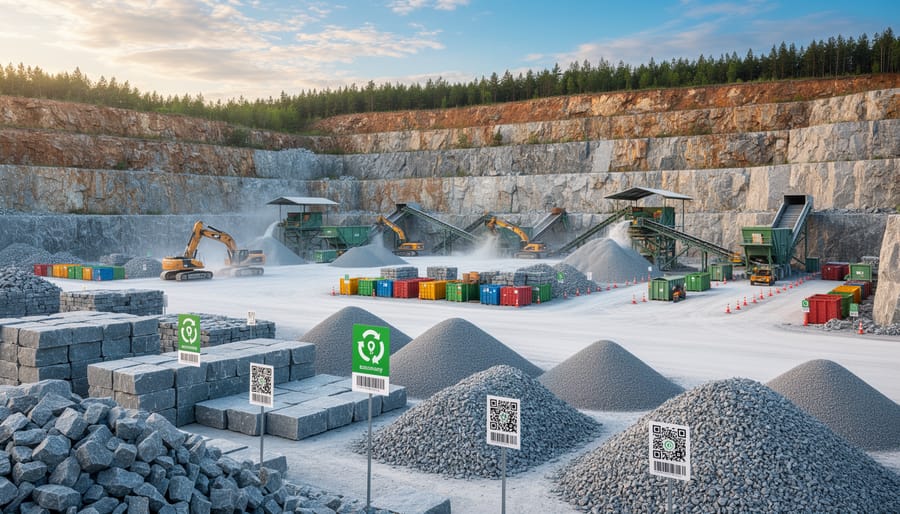
Material flow visualizations serve as roadmaps that trace natural stone’s journey through every stage of its lifecycle. These graphics begin at the quarry, where extraction methods and initial waste materials are documented, then follow the stone through fabrication facilities where cutting, polishing, and shaping occur. The diagrams illustrate transportation routes to distributors and installers, track the product’s useful life in residential or commercial applications, and finally map end-of-life scenarios including demolition recovery and repurposing.
Effective flow diagrams use color-coding and symbols to highlight critical decision points where waste reduction is possible. For example, a typical visualization might show that offcuts from fabrication—often 30-40% of extracted material—can be diverted to aggregate production, landscaping materials, or decorative chips rather than landfills. Similarly, these graphics reveal opportunities to reclaim stone from demolished buildings for new projects, closing the loop in the circular economy.
Advanced visualizations incorporate data layers showing carbon emissions at each stage, water usage during processing, and energy consumption in transportation. This comprehensive view enables stakeholders to identify improvement opportunities and make informed decisions about sourcing and handling practices. When combined with supply chain transparency tools, material flow diagrams become powerful instruments for demonstrating environmental stewardship and optimizing resource efficiency throughout the stone industry’s value chain.
Lifecycle Impact Maps
Lifecycle impact maps provide a comprehensive visual breakdown of environmental effects throughout a stone product’s journey—from quarry extraction to final installation and eventual reuse or disposal. These graphics typically display quantifiable metrics for carbon emissions, water consumption, and energy use at each production stage, offering transparency that helps stakeholders make informed sourcing decisions.
For natural stone, these maps reveal surprising insights. Extraction and processing typically account for the majority of environmental impact, with quarrying operations consuming substantial diesel fuel and electricity. Transportation often represents the second-largest carbon contributor, particularly when stone travels internationally. However, stone’s longevity advantage becomes apparent when viewed across decades—a granite countertop lasting 50 years has a significantly lower annual environmental cost than materials requiring replacement every 10-15 years.
Effective lifecycle graphics use color-coded scales to highlight impact intensity at different stages. Water usage charts might show that cutting and polishing operations consume 50-200 gallons per square meter, while carbon footprint visualizations could display emissions ranging from 50-150 kg CO2 equivalent per ton of finished product, depending on extraction methods and transportation distances.
Stone-specific metrics also include waste generation rates, with modern quarries achieving 60-80% material utilization through innovative cutting techniques and byproduct repurposing. Leading suppliers now provide digital impact maps specific to individual quarries, allowing architects and designers to compare environmental profiles between different stone sources and make data-driven material selections that align with project sustainability goals.
The Four Critical Areas Where Graphics Drive Circular Stone Practices
Quarry Waste Reduction and Byproduct Utilization
Modern quarries generate substantial byproducts during extraction and processing, but circular economy graphics reveal how these materials can transition from waste to valuable resources. Visual flow diagrams track waste streams from their origin points to new applications, showing percentages of material diverted from landfills and quantifying environmental benefits.
Effective graphics illustrate how stone dust, once considered waste, now serves as an ingredient in concrete production, agricultural soil amendments, and specialized construction materials. Aggregate byproducts appear in roadbed construction and landscaping projects, while dimensional off-cuts become mosaic tiles, decorative accents, or crushed stone products. Material flow diagrams typically display these pathways with color-coded streams, showing volume percentages and potential revenue generation.
Sankey diagrams prove particularly effective for visualizing quarry waste reduction, with wide bands representing material flows that narrow as processing efficiency improves. These graphics often include before-and-after comparisons, demonstrating how operational changes reduced waste by specific percentages over time periods.
Industry-leading quarries now publish annual waste utilization reports featuring infographics that break down byproduct categories, destination markets, and carbon savings achieved through local reuse. These visualizations help architects and designers specify stone from operations demonstrating measurable waste reduction, while also providing transparency about the full lifecycle of extracted materials and their environmental impact.
Transportation and Carbon Mapping
Transportation graphics provide detailed visual analysis of stone movement from quarry to project site, revealing the true environmental cost of sourcing decisions. These visualizations map supply chains, showing distances traveled, transportation modes used, and resulting carbon emissions. A project might compare locally quarried limestone requiring 50 miles of ground transport against imported Italian marble involving 6,000 miles of shipping, with graphics displaying the dramatic difference in environmental impact.
Modern circular economy tools incorporate mapping software that calculates carbon footprints for different sourcing scenarios. These graphics help architects and designers evaluate trade-offs between material preferences and sustainability goals. For example, choosing a regional quarry might reduce transportation emissions by 70% compared to overseas options, while still meeting aesthetic requirements through sustainable sourcing practices.
Interactive transportation dashboards allow users to adjust variables like quarry location, shipping methods, and order quantities to see real-time carbon impact changes. Some platforms layer multiple data points, showing not just emissions but also transit times, costs, and reliability factors. This comprehensive view enables informed decisions that balance environmental responsibility with project constraints, making sustainability measurable rather than aspirational.

Fabrication Efficiency and Scrap Management
For fabricators, circular economy graphics serve as essential planning tools that minimize waste and maximize material value. Digital nesting software creates visual layouts showing how multiple pieces can be cut from a single slab, optimizing yields that can reach 85-95% for experienced shops. These graphics identify every usable section, ensuring nothing is wasted unnecessarily.
Color-coded visualization systems help fabricators instantly categorize offcuts by size and quality. A visual inventory might show green-tagged pieces suitable for backsplashes, yellow pieces for mosaic projects, and orange pieces for edge trim applications. This systematic tracking transforms what would be scrap into revenue-generating products.
Modern fabrication software also generates real-time graphics displaying material utilization across projects. When a shop consistently sees 15-20% remnants from certain slab sizes, these visuals prompt strategic changes like sourcing different dimensions or developing product lines specifically for smaller applications. One commercial fabricator used these graphics to launch a successful mosaic tile line, converting former waste into a premium product.
Pattern-matching graphics additionally help shops pair remnants with future projects, showing which offcuts could complete pending jobs. This reduces new material purchases while maintaining profitability. By making material flows visible, these tools turn fabrication efficiency from guesswork into strategic decision-making, benefiting both business operations and environmental outcomes.
End-of-Life Recovery and Reclamation
Natural stone’s longevity makes it an ideal candidate for recovery and reuse at the end of its initial lifecycle. Circular economy graphics illustrating end-of-life pathways demonstrate how stone can avoid landfills through strategic reclamation programs. These visual tools typically map three distinct routes: direct reuse in new construction projects, reprocessing into aggregate materials, or restoration for heritage applications.
Effective graphics track salvage value throughout the recovery process, showing how reclaimed stone retains significant economic worth compared to disposal costs. For example, dimensional stone from demolished buildings can be cleaned, cut, and repurposed for new facades or interior features, often commanding premium prices due to its patina and character. Visual comparisons between landfill disposal rates and reclamation revenue help stakeholders understand the financial incentive for recovery programs.
Case studies from European heritage projects showcase successful stone reclamation initiatives where centuries-old materials find new life in contemporary designs. Graphics depicting these pathways often include decision trees that help architects and contractors identify suitable recovery options based on stone type, condition, and available processing infrastructure. Some suppliers now provide digital platforms with visual dashboards tracking reclaimed inventory, making it easier to source salvaged stone and close the material loop effectively.
How Architects and Designers Use These Graphics for Better Projects
Design professionals increasingly rely on circular economy graphics to strengthen project proposals, meet environmental standards, and communicate value to clients. These visualizations transform complex sustainability data into compelling evidence that supports better decision-making throughout the design process.
When specifying natural stone materials, architects and designers should proactively request circular economy documentation from suppliers and quarry operators. Start by asking for material flow diagrams that show waste reduction strategies, water recycling rates, and by-product utilization. Request lifecycle assessment graphics that quantify embodied carbon, energy consumption, and end-of-life recyclability. Leading stone suppliers now provide these visualizations as standard documentation, making it easier to compare options based on environmental performance rather than aesthetics alone.
Client presentations benefit enormously from incorporating circular economy graphics. Instead of simply stating that a stone choice is “sustainable,” present material passport visualizations that detail the complete journey from quarry to installation. Show clients side-by-side comparisons of traditional versus circular economy sourcing approaches. These visual tools help non-technical stakeholders understand the tangible environmental benefits of their material selections, often justifying premium pricing for responsibly sourced stone.
For projects pursuing sustainability certifications like LEED, BREEAM, or Living Building Challenge, circular economy graphics serve as essential documentation. LEED Material Ingredient Reporting credits specifically reward transparency about material composition and sourcing. Graphics showing closed-loop water systems, quarry restoration plans, and local sourcing distances directly support multiple credit categories. Keep a digital library of supplier-provided circular economy visualizations organized by material type and environmental metric for efficient credential submission.
Designers can also use these graphics during value engineering phases to demonstrate why maintaining specified sustainable stone options protects project environmental goals. When budget pressures emerge, visualizations showing the long-term performance and recyclability of quality natural stone help justify initial investment costs against lifecycle value.
The most effective approach combines multiple graphic types: material flow diagrams for technical teams, simplified infographics for client meetings, and detailed LCA charts for certification documentation. This layered strategy ensures every project stakeholder understands the circular economy benefits driving material selection decisions.
Real-World Case Study: Circular Graphics in Action
Italian marble supplier Henraux provides a compelling example of circular economy graphics transforming industry practices. When the company implemented comprehensive lifecycle visualization tools in 2021, they created detailed material flow diagrams for their Carrara marble operations that tracked every stage from quarry extraction through processing, distribution, and eventual reuse or disposal.
The results were remarkable. By mapping waste streams visually, Henraux identified that 43% of quarry offcuts previously designated for landfill could be redirected to terrazzo manufacturers and aggregate producers. Their circular economy graphics revealed specific bottlenecks in the processing chain where material recovery was feasible but overlooked. Within 18 months, the company reduced landfill waste by 68% and generated additional revenue streams worth approximately 2.3 million euros annually from materials once considered unusable.
The graphics themselves employed Sankey diagrams showing material flows with proportional arrows, making it immediately clear where losses occurred. Color-coding distinguished between virgin materials, recycled content, and waste destinations. Transportation impacts were visualized through geographic maps showing sourcing radius and carbon footprint per shipment route.
Henraux shared these graphics with architect partners bidding on LEED and BREEAM certified projects. The transparency proved decisive in securing contracts for three major sustainable building projects, including a corporate headquarters in Amsterdam that required detailed material provenance documentation. Project specifications now routinely reference these visual tools, with clients requesting similar documentation from competing suppliers.
The company reports that architects spend an average of 12 minutes reviewing their circular economy graphics during procurement discussions, compared to mere seconds scanning traditional specification sheets. This engagement translates to informed decision-making, with 87% of clients who reviewed the graphics choosing recycled-content options or committing to return offcuts for future processing. The visual approach transformed sustainability from abstract concept to concrete competitive advantage.

Creating or Requesting Circular Economy Graphics for Your Stone Project
When requesting circular economy graphics from stone suppliers, start by asking for comprehensive documentation that tracks the material’s journey from quarry to installation. Request visual representations that clearly show extraction methods, transportation routes, processing locations, and waste recovery rates. Good circular economy graphics should include quantifiable metrics such as percentage of material utilized from each block, water recycling rates at processing facilities, and carbon footprint calculations based on transportation distances.
Essential elements to look for in quality graphics include data verification sources, time-stamped information, and third-party certifications where applicable. The visualization should present waste streams and byproduct usage clearly, showing how remnants become aggregate, landscaping materials, or inputs for other industries. Ask suppliers whether their graphics distinguish between downcycling and true circular processes, as this distinction matters for long-term sustainability goals.
For professionals integrating this information into modern procurement decisions, create a standardized checklist of required data points. Include questions about quarry rehabilitation plans, energy sources used in processing, and end-of-life reclamation options. Request digital formats that can be easily shared with project stakeholders and included in sustainability reporting documentation.
When evaluating suppliers, compare their circular economy graphics side by side. Look for transparency in reporting limitations or challenges rather than perfection. Suppliers willing to show areas for improvement often demonstrate more authentic commitment to sustainability practices. Consider requesting case studies from completed projects that used similar materials, including post-installation performance data.
Use these graphics during client presentations to demonstrate environmental stewardship and differentiate your project approach. Incorporate the visual data into LEED documentation, sustainability reports, and project portfolios. By making circular economy graphics a standard requirement in your specification process, you drive industry-wide improvement while making informed material selections that align with environmental goals and project values.
Circular economy graphics represent more than visualization tools—they’re essential instruments for driving meaningful change in natural stone sourcing. By making complex supply chains transparent and quantifying environmental impacts in accessible formats, these graphics empower everyone from individual consumers to large architectural firms to make informed, sustainable decisions. The natural stone industry stands at a pivotal moment where demand for accountability and environmental responsibility is reshaping traditional practices, and circular economy graphics provide the clarity needed to distinguish genuine sustainability efforts from superficial claims.
As you plan your next project involving natural stone, consider the power you hold as a specifier or consumer. Request circular economy data from your suppliers. Ask to see material flow diagrams, carbon footprint visualizations, and closed-loop process documentation. Suppliers who have invested in sustainable practices will welcome these inquiries and readily share their circular economy graphics. Those who cannot provide this information may need encouragement to evolve their operations toward greater transparency and environmental stewardship.
Incorporating circular economy principles into your material selection process isn’t just environmentally responsible—it’s increasingly becoming an industry standard that protects your reputation and meets growing regulatory requirements. Start by reviewing the graphics provided by suppliers, comparing metrics across different sources, and prioritizing partners who demonstrate measurable commitments to circularity. The future of natural stone sourcing depends on collective action, and demanding this level of information creates market pressure that drives the entire industry toward more sustainable practices.