In today’s global economy, the stark contrast between linear “take-make-dispose” systems and circular “reduce-reuse-recycle” models has never been more relevant. While traditional linear economies deplete finite resources and generate mounting waste, circular economies offer a regenerative approach that’s revolutionizing industries worldwide, including sustainable stone sourcing practices and manufacturing.
The linear economy’s extractive nature has fueled environmental degradation, resource scarcity, and waste management challenges for decades. In contrast, circular economies mimic natural ecosystems, where waste becomes a valuable resource, products are designed for longevity and reuse, and economic growth is decoupled from finite resource consumption.
As businesses and governments worldwide confront climate change and resource depletion, the transition from linear to circular models isn’t just environmentally conscious—it’s economically imperative. This paradigm shift represents a $4.5 trillion economic opportunity by 2030, driving innovation across supply chains, manufacturing processes, and business models while fostering sustainable development for future generations.
This transformative approach challenges us to rethink how we design, produce, and consume—creating a world where waste is eliminated, resources are maximized, and prosperity is sustained within planetary boundaries.

The Traditional Linear Economy in Stone Production
Environmental Impact of Linear Stone Production
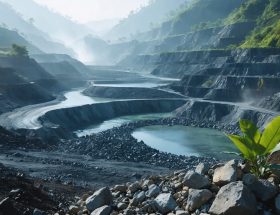
The environmental impact of stone production in a linear economy presents significant challenges for sustainability. Traditional stone quarrying and processing methods often result in substantial waste, with up to 70% of extracted material potentially ending up as unused fragments or dust. This wasteful approach not only depletes finite natural resources but also leaves permanent alterations to landscapes and local ecosystems.
The energy-intensive nature of stone extraction and processing contributes significantly to carbon emissions. Heavy machinery used in quarrying, cutting, and transportation relies heavily on fossil fuels, while processing facilities consume considerable electricity for sawing, polishing, and finishing operations.
Water pollution is another critical concern, as stone cutting and finishing processes generate slurry containing fine particles and chemical residues. Without proper treatment and disposal systems, these byproducts can contaminate local water sources and harm aquatic ecosystems.
Furthermore, the linear approach to stone production often ignores the potential for material recovery and reuse. Discarded stone pieces typically end up in landfills, representing not only wasted resources but also contributing to land use issues and habitat destruction. This single-use mindset perpetuates a cycle of continuous resource extraction, making the industry increasingly unsustainable in the long term.
Economic Limitations of Linear Models
Traditional linear economic models operate on a “take-make-dispose” principle that creates significant inefficiencies and value loss throughout the supply chain. In the natural stone industry, this approach results in substantial material waste during extraction and processing, with valuable offcuts often discarded rather than repurposed. Studies indicate that up to 40% of extracted stone material may end up as waste under linear models.
The financial implications extend beyond simple material waste. Companies operating in linear systems face increasing raw material costs, rising disposal fees, and growing regulatory pressures. These challenges are particularly evident in the stone industry, where quarrying permits become more restricted and landfill costs continue to rise.
Linear models also fail to capture the potential value of stone materials at the end of their primary use. Demolished buildings and renovated spaces often send perfectly reusable stone to landfills, missing opportunities for reclamation and repurposing. This approach not only wastes valuable resources but also increases operational costs through new material procurement and waste management.
Furthermore, linear economies struggle with market volatility, as they remain vulnerable to resource scarcity and price fluctuations. This economic model’s inherent limitations become more apparent as global resource demands increase and environmental regulations tighten.
Circular Economy Solutions in Natural Stone
Resource Optimization and Waste Reduction
Resource optimization in stone processing has become increasingly critical as the industry shifts from traditional linear practices to more sustainable circular approaches. Modern quarries and fabrication facilities now employ advanced cutting technologies and computer-aided design to maximize material yield from each block. These systems can analyze stone patterns and defects to determine optimal cutting patterns, reducing waste by up to 30%.
Waste reduction strategies include repurposing smaller stone pieces for mosaic work, architectural details, or landscaping elements. Stone remnants that were once discarded can be crushed and used as aggregate in concrete production or for road base materials. Some innovative manufacturers are even developing new composite materials using stone waste combined with recycled resins.
Digital templating and precision cutting tools have revolutionized fabrication processes, allowing for more accurate measurements and fewer cutting errors. This technology not only minimizes waste but also reduces production time and labor costs. Additionally, water recycling systems in fabrication facilities can reclaim up to 98% of process water, while capturing stone slurry for potential reuse in other industries.
Leading stone producers are implementing closed-loop systems where waste materials are continuously reintegrated into the production cycle. This approach not only conserves valuable natural resources but also creates new revenue streams from previously discarded materials, demonstrating that environmental responsibility and economic efficiency can work hand in hand.
Recycling and Repurposing Practices
Natural stone recycling presents numerous opportunities for sustainable resource management in construction and design. Salvaged stone materials can be processed into various sizes for new applications, from aggregate and gravel to decorative elements. Construction waste stone is commonly crushed and repurposed for road base materials, landscape features, or concrete production.
Creative reuse applications extend beyond basic recycling. Historical buildings undergoing renovation often yield high-quality stone that can be carefully extracted and repurposed in new construction projects, preserving both material value and architectural heritage. Damaged stone slabs can be cut into smaller tiles or mosaic pieces, finding new life in decorative applications.
Innovative manufacturers are developing technologies to process stone waste into engineered products. Stone dust and small particles are being incorporated into new composite materials, while larger pieces are reimagined as architectural elements or furniture components. Some companies are even experimenting with stone wool production from waste materials, creating sustainable insulation products.
Local stone yards and fabricators often maintain repositories of leftover materials, making them available for smaller projects or artistic endeavors. This practice not only reduces waste but also provides cost-effective solutions for designers and homeowners. Additionally, many municipalities now include stone in their construction waste recycling programs, facilitating easier access to recycled materials for various applications.

Sustainable Quarrying Techniques
Sustainable quarrying has evolved significantly in recent years, incorporating modern quarrying technologies that minimize environmental impact while maximizing resource efficiency. Today’s responsible quarries employ precision cutting techniques that reduce waste and optimize block extraction, ensuring each stone piece is utilized to its fullest potential.
Water management systems play a crucial role in sustainable quarrying, with closed-loop recycling systems that capture and filter process water for reuse. This approach significantly reduces water consumption and prevents contamination of local water sources. Additionally, advanced surveying tools and 3D modeling help operators plan extractions more efficiently, reducing unnecessary excavation and preserving surrounding landscapes.
Many quarries now implement progressive rehabilitation programs, restoring worked-out sections while operations continue in other areas. This concurrent approach maintains biodiversity and helps reestablish native ecosystems. Dust suppression systems and noise reduction measures protect both workers and nearby communities, while electric-powered equipment is increasingly replacing diesel machinery to reduce carbon emissions.
Smart logistics planning minimizes transportation impact, with optimized routes and full-load policies reducing the carbon footprint of stone delivery. These sustainable practices not only benefit the environment but also enhance operational efficiency and product quality, making them essential components of modern stone sourcing strategies.

Benefits of Circular Stone Economy
Environmental Benefits
The shift from linear to circular economy models in natural stone production yields significant environmental advantages. By implementing sustainable construction practices, the industry dramatically reduces waste and carbon emissions. Circular systems minimize quarry waste through innovative reprocessing techniques, turning what was once considered debris into valuable building materials.
Studies show that circular stone production can reduce carbon emissions by up to 40% compared to traditional linear methods. This improvement stems from optimized transportation routes, efficient processing techniques, and the elimination of unnecessary waste disposal. Water conservation is another crucial benefit, with circular systems typically recycling up to 98% of process water.
The preservation of natural landscapes also improves significantly under circular models. By maximizing the use of extracted materials and implementing restoration practices, quarries maintain better ecological balance. This approach supports local biodiversity and ensures the long-term viability of stone resources for future generations. The reduced need for new quarry sites further protects untouched natural areas from development impacts.
Economic Advantages
The economic advantages of transitioning from a linear to a circular economy extend far beyond simple cost reduction. Companies implementing circular principles typically see a 15-25% reduction in material costs through efficient resource utilization and waste minimization. In the natural stone industry, businesses have reported significant savings by implementing stone recycling programs and utilizing cutting waste for smaller products or aggregate materials.
Revenue opportunities emerge through new business models such as product-as-service offerings, refurbishment services, and the creation of secondary markets for reclaimed materials. For example, some stone manufacturers now offer leasing options for temporary installations, while others have developed profitable sidelines in architectural salvage and restoration.
The circular approach also provides protection against resource scarcity and price volatility. As natural resources become increasingly constrained, businesses operating in a circular model maintain better control over their supply chains and costs. Additionally, companies embracing circular practices often gain competitive advantages through enhanced brand reputation and access to environmentally conscious market segments, leading to increased market share and customer loyalty.
Social Impact
The transition from a linear to circular economy has profound social implications, particularly in communities where natural stone industries operate. Local economies benefit from sustained employment opportunities as circular practices create new roles in recycling, refurbishment, and material innovation. Workers develop diverse skill sets through training in sustainable practices, enhancing their career prospects and adaptability.
Communities near quarries experience improved environmental conditions through reduced waste and more efficient resource management. The circular approach promotes better air quality, less noise pollution, and preserved natural landscapes. This transformation also strengthens relationships between industry stakeholders, fostering collaboration between quarries, processors, designers, and end-users.
Small businesses and artisans find new opportunities in the circular economy, particularly in stone restoration and repurposing. This creates a more resilient economic ecosystem that supports local craftsmanship and innovation. Educational institutions benefit through partnerships with industry leaders, developing programs that prepare future professionals for sustainable practices.
The circular economy also enhances social responsibility in the stone industry, promoting fair labor practices and ethical sourcing while preserving cultural heritage through sustainable stone use.
Implementation Strategies
Transitioning from a linear to a circular economy requires strategic planning and systematic implementation. Companies can begin by conducting a thorough audit of their current material flows, identifying areas where waste can be minimized or eliminated. This initial assessment forms the foundation for developing targeted circular initiatives.
Key implementation strategies include designing products for longevity and recyclability, establishing take-back programs for used materials, and developing partnerships with recycling facilities. For instance, stone fabricators can implement water recycling systems in their cutting processes and create programs to repurpose stone offcuts into smaller products or architectural elements.
Businesses should also focus on establishing reverse logistics networks to facilitate the return and recycling of materials. This includes setting up collection points, developing sorting facilities, and creating efficient transportation systems for recovered materials.
Employee training and stakeholder education are crucial components of successful implementation. Staff members need to understand circular economy principles and their role in the new system. Similarly, customers should be educated about product lifecycle management and proper disposal methods.
Digital technology plays a vital role in tracking material flows and optimizing circular processes. Implementation of resource management software, inventory tracking systems, and waste monitoring tools can help businesses measure and improve their circular economy initiatives.
Start with pilot programs in specific departments or product lines before scaling up successful initiatives company-wide. This approach allows for testing and refinement of circular strategies while minimizing risk and resource investment.
The transition from a linear to a circular economy in the natural stone industry represents a crucial shift in how we approach resource management and sustainability. Throughout this exploration, we’ve seen how the traditional take-make-dispose model falls short in meeting modern environmental challenges, while the circular economy offers a regenerative approach that benefits both business and the environment.
By embracing circular principles, the stone industry can significantly reduce waste, minimize environmental impact, and create new value streams through innovative reuse and recycling practices. The evidence is clear: companies that have adopted circular practices report improved operational efficiency, reduced costs, and enhanced market positioning.
However, this transformation requires collective action from all stakeholders. Manufacturers must redesign their processes to prioritize recyclability and waste reduction. Architects and designers should specify recycled and recyclable stone materials in their projects. Contractors need to implement better waste management practices on job sites, while consumers can drive change through informed purchasing decisions.
The time to act is now. We encourage industry professionals to:
– Assess current practices and identify opportunities for circularity
– Invest in sustainable technologies and processes
– Collaborate with partners across the supply chain
– Educate teams about circular principles
– Start with small, achievable changes that can scale over time
By working together, we can create a more sustainable future for the natural stone industry while preserving our planet’s precious resources for generations to come.