Operating a stone quarry, fabrication facility, or installation business in Kern County means navigating one of California’s most stringent air quality regulatory environments. The Kern County Air Pollution Control District (KCAPCD) enforces comprehensive rules targeting particulate matter emissions from stone operations, with penalties for non-compliance reaching thousands of dollars per violation and potential operational shutdowns.
Stone industry professionals face specific challenges in this jurisdiction. Kern County’s geographic position in the San Joaquin Valley creates a natural bowl effect that traps pollutants, resulting in some of the nation’s worst air quality readings. This environmental reality drives the KCAPCD to impose rigorous permitting requirements, mandatory dust control measures, and continuous monitoring obligations that exceed baseline state standards.
Understanding your obligations begins with classification. Quarrying operations require Authority to Construct permits before breaking ground. Fabrication shops using cutting, grinding, or polishing equipment must obtain operating permits and implement approved dust collection systems. Even mobile stone installation crews working on construction sites fall under KCAPCD jurisdiction for certain activities.
The district’s enforcement approach combines scheduled inspections, complaint-driven investigations, and satellite monitoring of quarry sites. Violations trigger escalating consequences: initial notices of violation, administrative civil penalties averaging $5,000 to $25,000 per incident, and cease-and-desist orders for repeat offenders. Recent enforcement actions have targeted inadequate watering schedules, improperly maintained dust collectors, and failure to update permits after equipment modifications.
This regulatory framework demands proactive compliance strategies rather than reactive responses. Stone operators who integrate KCAPCD requirements into their operational planning avoid costly disruptions while contributing to regional air quality improvements that benefit the entire San Joaquin Valley community.
Understanding the Kern County Air Pollution Control District
What Makes Kern County Unique
Kern County occupies a unique position in California that makes it particularly vulnerable to air quality challenges, directly impacting how stone operations and other industries must manage emissions. Located in the southern portion of the San Joaquin Valley, the county sits in a natural bowl-shaped basin surrounded by mountain ranges, including the Sierra Nevada to the east and the Tehachapi Mountains to the south. This geographic configuration creates a natural trap for airborne particles and pollutants, preventing their dispersal and leading to concentrated air quality issues.
The valley’s topography contributes to temperature inversions, where warm air layers above trap cooler air and pollutants near the ground. This meteorological phenomenon can persist for days or even weeks, particularly during summer and winter months, exacerbating pollution levels. For stone quarries, fabrication facilities, and construction operations, this means dust and particulate matter don’t simply blow away—they accumulate.
Agriculture dominates Kern County’s economy, and while productive, it generates significant amounts of fugitive dust from farming operations, unpaved roads, and exposed soil. The region also hosts extensive oil and gas extraction activities, adding industrial emissions to the air quality equation. These existing challenges place Kern County in nonattainment status for federal air quality standards, triggering stricter dust regulations than many other California counties.
For stone industry professionals, understanding these environmental factors is essential. The combination of unfavorable geography, existing pollution sources, and regulatory nonattainment status means Kern County Air Pollution Control District enforces rigorous controls on all dust-generating activities, making compliance planning a critical operational consideration.
The District’s Enforcement Authority
The Kern County Air Pollution Control District maintains comprehensive enforcement authority to ensure stone operations comply with air quality regulations. Understanding this enforcement structure helps operators avoid violations and maintain smooth business operations.
The District conducts both scheduled and unscheduled inspections of stone facilities, including quarries, processing plants, and fabrication shops. Inspectors examine equipment performance, review operational records, verify permit conditions, and assess visible emissions. They may also conduct opacity readings and take particulate matter measurements to verify compliance with established thresholds. Operators should maintain detailed logs of all dust control activities, equipment maintenance, and emission monitoring to demonstrate their commitment to controlling air pollutants.
When violations occur, the District employs a tiered enforcement approach. Minor infractions typically result in Notice of Violations requiring corrective action within specified timeframes. More serious or repeated violations trigger formal enforcement actions, including Administrative Civil Penalties and Notices to Comply. The penalty structure considers violation severity, duration, operator compliance history, and good faith efforts to correct issues.
Civil penalties can range from hundreds to thousands of dollars per violation per day. The District calculates penalties based on California Health and Safety Code provisions, with factors including economic benefit gained from noncompliance and potential environmental harm. Stone operators facing enforcement actions have appeal rights through established administrative processes. Maintaining proactive compliance programs, responding promptly to inspection findings, and documenting all corrective measures significantly reduces enforcement risk and demonstrates operational responsibility.
Air Quality Regulations That Affect Stone Operations
Permitting Requirements for Stone Facilities
Stone operations in Kern County must navigate specific permitting requirements administered by the Kern County Air Pollution Control District (KCAPCD). Understanding which facilities need permits and how to obtain them is essential for maintaining compliance and avoiding operational disruptions.
Generally, stone quarries, crushing operations, screening facilities, and fabrication shops require air quality permits if they have the potential to emit regulated air pollutants. The district evaluates factors including production capacity, equipment type, and operational scale to determine permit necessity. Even smaller operations may need permits if they use certain types of equipment or processes that generate particulate matter.
The KCAPCD issues several permit types depending on operational characteristics. An Authority to Construct (ATC) is required before establishing new equipment or modifying existing operations. Once construction is complete and the district verifies compliance, operators receive a Permit to Operate (PTO). Some smaller facilities may qualify for permit exemptions, but operators should consult with the district to confirm eligibility rather than self-determining exempt status.
The application process begins with submitting detailed information about equipment specifications, operational parameters, and emission control methods. Applications must include engineering drawings, throughput estimates, and descriptions of dust suppression measures. Processing times vary based on project complexity, but applicants should anticipate several weeks to months for approval.
Permit renewals occur annually, requiring operators to submit updated information and pay applicable fees. The district may conduct inspections during the renewal process to verify ongoing compliance with permit conditions. Maintaining accurate operational records throughout the year simplifies renewal submissions and demonstrates good faith compliance efforts.
Working proactively with KCAPCD staff during the application process helps identify potential issues early and streamlines approval. Many operators benefit from pre-application consultations to clarify requirements before submitting formal documentation.
Emission Standards and Limits
The Kern County Air Pollution Control District establishes stringent emission standards specifically designed to minimize air quality impacts from stone quarrying, processing, and fabrication operations. Understanding these limits is essential for maintaining compliance and avoiding costly penalties.
For particulate matter, the district enforces strict concentration limits. PM10 (particles 10 micrometers or smaller) emissions from stone cutting, grinding, and crushing operations must not exceed 150 micrograms per cubic meter as a 24-hour average. The more concerning PM2.5 (particles 2.5 micrometers or smaller) faces even tighter restrictions at 35 micrograms per cubic meter over the same period. These fine particles pose significant health risks and receive heightened regulatory scrutiny.
Opacity standards regulate the visual density of emissions from stack sources and fugitive dust. Stone operations must maintain opacity levels below 20 percent for most processes, measured using EPA Method 9. During initial startup periods or equipment malfunctions, temporary exceedances may occur, but operators must document these incidents and demonstrate corrective action.
Process-specific thresholds apply depending on your operation’s scale. Facilities with potential emissions exceeding 10 tons per year of PM10 or PM2.5 typically require permits and enhanced monitoring protocols. Smaller operations may qualify for streamlined permitting but must still demonstrate compliance through regular inspections and recordkeeping.
The district periodically updates these standards to reflect current air quality conditions and federal requirements. Stone operation managers should regularly consult the district’s website and attend stakeholder meetings to stay informed about regulatory changes that might affect their facilities.
Dust Control Requirements for Stone Operations
Quarry and Extraction Site Controls
Kern County Air Pollution Control District enforces comprehensive dust control measures at quarry and extraction sites to minimize particulate matter emissions during stone operations. These regulations apply to all phases of quarrying, from initial excavation through material processing and transportation.
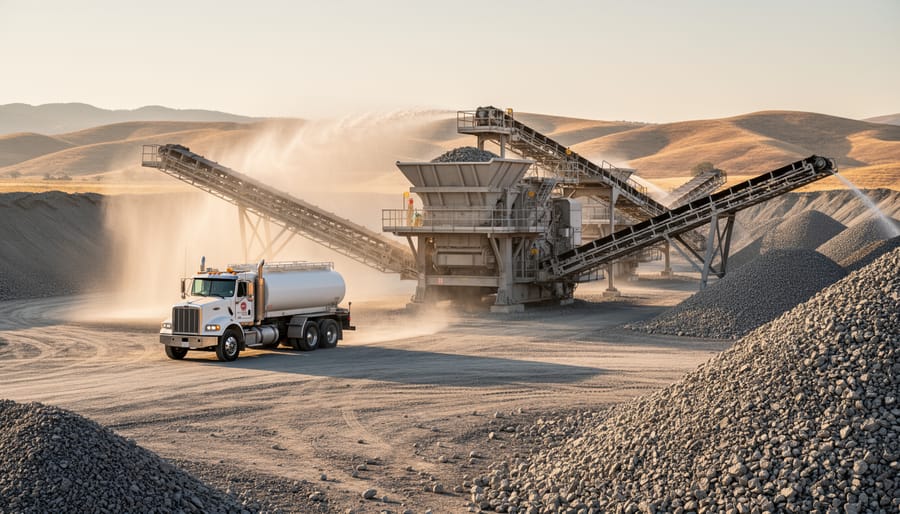
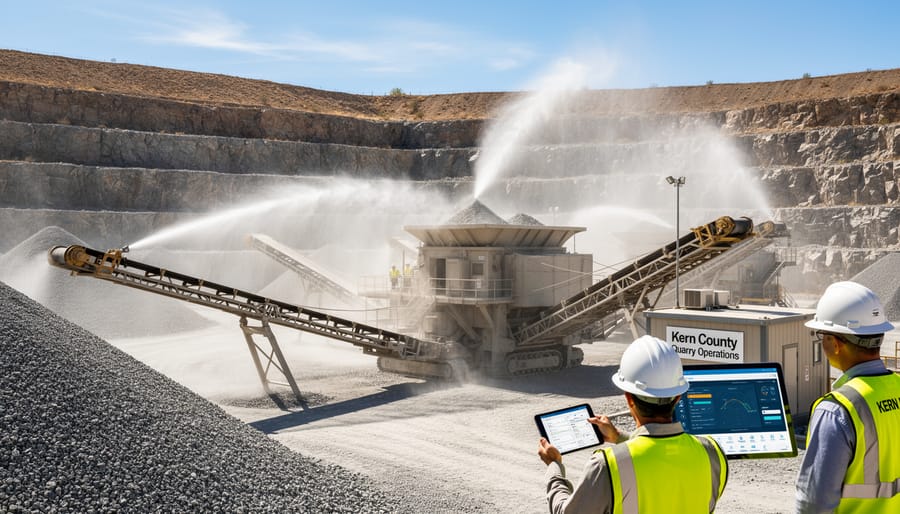
Water application represents the primary dust suppression method required at active extraction sites. Operators must maintain water suppression systems capable of treating unpaved haul roads, work areas, and material stockpiles. The District typically requires water application before visible dust crosses property boundaries, with frequency adjusted based on weather conditions, wind speed, and operational intensity.
Road treatment protocols mandate specific practices for both on-site haul roads and public road access points. Quarry operators must pave, chemically stabilize, or water unpaved roads at least twice daily during dry conditions. Track-out prevention measures, including wheel washing stations or gravel pads at site exits, prevent material from transferring to public roadways.
Operational best practices include limiting vehicle speeds on unpaved surfaces to 15 miles per hour, covering loaded trucks during transport, and scheduling high-dust activities during favorable meteorological conditions when possible. Equipment idling restrictions help reduce both particulate and exhaust emissions.
The District requires operators to maintain detailed records of water application, chemical treatments, and maintenance activities. Regular inspections verify compliance, with penalties imposed for violations. Many successful quarries implement automated watering systems and real-time dust monitoring to ensure consistent compliance while optimizing operational efficiency.
Fabrication Shop Requirements
The Kern County Air Pollution Control District enforces specific regulations for stone fabrication shops to minimize particulate matter emissions and protect air quality. These requirements apply to businesses engaged in cutting, grinding, polishing, or finishing natural and engineered stone products.
All stone cutting and grinding operations must utilize wet cutting systems or approved dust collection equipment. Wet methods involve applying water directly to cutting surfaces during operation, which suppresses silica dust at the source. The district mandates that water flow rates be sufficient to prevent visible dust emissions during all fabrication activities.
Indoor fabrication facilities require properly designed ventilation systems that capture airborne particles before they escape the workspace. Exhaust systems must direct filtered air away from adjacent properties and public areas. Outdoor fabrication activities face stricter scrutiny, as open-air operations can disperse particulate matter over larger areas. Operators conducting outdoor work must demonstrate effective dust suppression measures or obtain special permits.
Equipment specifications include requirements for tool guards, water delivery systems, and collection hoods on major cutting and polishing machinery. Shops must maintain equipment in working order and document regular maintenance schedules. The district may conduct inspections to verify compliance with these standards.
Fabricators should establish standard operating procedures that prioritize wet methods over dry cutting whenever feasible. Even with proper equipment, facilities must implement housekeeping practices that prevent dust accumulation and resuspension. This includes regular cleaning using vacuum systems rather than dry sweeping, which can redistribute settled particles into the air. By adhering to these fabrication shop requirements, businesses protect worker health while meeting regulatory obligations and maintaining good standing with the Kern County Air Pollution Control District.

Transportation and Material Handling
Moving stone materials in Kern County requires strict adherence to dust control protocols designed to minimize airborne particulate matter. The district mandates that all loading and unloading operations implement effective suppression measures to prevent fugitive dust emissions.
During transport, vehicles carrying aggregate stone, crushed rock, or other materials must ensure loads are adequately covered or wetted to prevent material loss. Open haul trucks should maintain at least six inches of freeboard from the top of the container, and tarps or chemical dust suppressants must secure loose materials. The district requires that spillage on paved surfaces be cleaned promptly using vacuum sweepers or wet methods rather than dry sweeping, which can worsen air quality.
Loading operations at quarries and processing facilities must incorporate water sprays or misting systems at transfer points where materials move between conveyors, hoppers, and trucks. Operators should adjust drop heights to minimize dust generation and consider installing wind barriers around active loading zones during high-wind conditions.
Material handling equipment, including front-end loaders and conveyor systems, must receive regular maintenance to prevent excessive dust creation. The district recommends implementing traffic speed limits on unpaved haul roads and applying water or approved chemical stabilizers to reduce dust from vehicle movement. Maintaining detailed records of all dust suppression activities helps demonstrate compliance during inspections.
Practical Compliance Strategies for Stone Businesses
Cost-Effective Dust Suppression Technologies
Stone operations in Kern County have several proven dust suppression technologies available that effectively control particulate emissions while remaining budget-conscious. Understanding these systems helps operators select solutions that meet regulatory requirements without unnecessary capital expenditure.
Water suppression systems represent the most widely adopted approach for controlling fugitive dust in quarries and processing facilities. Fixed spray systems with automated controls typically cost between $5,000 and $25,000 depending on coverage area and sophistication. These systems use strategically placed nozzles to apply water at crushing, screening, and transfer points where dust generation is highest. Mobile water trucks equipped with spray bars provide flexible supplemental suppression for haul roads and stockpiles, with equipment costs ranging from $15,000 to $50,000 for used vehicles with tanks and distribution systems.
Misting technologies offer enhanced dust control through atomized water droplets that capture smaller particles more effectively than conventional sprays. High-pressure misting systems designed for stone operations range from $10,000 to $40,000 for installation at critical control points. These systems use less water than traditional methods while achieving superior particulate capture, making them particularly valuable in water-scarce regions.
Vacuum collection systems provide enclosed dust control for cutting and fabrication operations. Portable industrial vacuum units suitable for smaller fabrication shops start around $2,000, while centralized systems for larger facilities can exceed $100,000. These closed-loop systems offer the advantage of zero fugitive emissions at point sources.
Many operators combine multiple technologies to create comprehensive dust management programs that support both sustainable stone production practices and regulatory compliance. Starting with basic water suppression and adding targeted technologies based on specific emission sources typically provides the most cost-effective pathway to meeting Kern County requirements.

Record-Keeping and Reporting Best Practices
Maintaining comprehensive documentation is essential for demonstrating compliance with Kern County Air Pollution Control District regulations. Stone industry operators should establish a systematic record-keeping protocol that captures all emission-related activities and control measures.
Inspection logs form the foundation of compliance documentation. Create daily checklists that document water application systems, dust suppression equipment functionality, and visible emissions. Record specific details including equipment inspection times, weather conditions, and any issues identified. These logs should be dated, signed by responsible personnel, and maintained for a minimum of five years.
Maintenance records prove that emission control equipment operates as designed. Document all preventive maintenance, repairs, and calibrations for water sprayers, baghouses, and other control devices. Include dates, technician names, parts replaced, and performance verification results. Regular maintenance schedules should align with manufacturer recommendations and district requirements.
Equipment operating records track actual usage versus permitted levels. Monitor and document production volumes, operating hours, and fuel consumption for crushing equipment, conveyors, and vehicles. This data helps verify compliance with permit conditions and establishes operational baselines.
Reporting procedures require timely submission of required documents to district inspectors. Annual emissions reports typically include production data, control equipment performance, and compliance certifications. Keep copies of all submitted reports, correspondence with district staff, and permit modifications. Digital backup systems provide additional security for critical compliance documentation.
Organize records in both physical and electronic formats for quick retrieval during inspections. Consider implementing cloud-based management systems that allow multiple team members to access and update compliance documentation in real-time.
Common Violations and How to Avoid Them
Stone operations in Kern County face several common compliance pitfalls that can result in significant fines and operational disruptions. Understanding these violations and implementing preventive measures is essential for maintaining good standing with the district.
Fugitive dust emissions represent the most frequently cited violation in stone fabrication and quarrying operations. The district regularly issues notices of violation to facilities that fail to adequately control dust during cutting, grinding, and material handling processes. A typical case involved a fabrication shop that received a $15,000 penalty for not properly maintaining water suppression systems during outdoor cutting operations. The facility’s spray nozzles had become clogged, reducing water flow below required levels, yet operations continued without inspection or repair.
Equipment permits constitute another common violation area. Many operators mistakenly believe that purchasing used equipment from another facility means the permit transfers automatically. In reality, each operator must obtain their own authority to construct permit before installation. One quarry operation faced a cease-and-desist order after installing a crusher without proper permitting, resulting in a three-month shutdown and $25,000 in combined penalties and lost revenue.
Recordkeeping failures also trigger citations. The district requires detailed documentation of maintenance activities, emissions monitoring, and control equipment inspections. Operations that cannot produce these records during inspections face presumptions of non-compliance. A recent enforcement action cited a stone yard $8,000 for inadequate documentation of their dust control practices, even though the facility claimed they were performing the required activities.
To avoid these costly violations, implement a robust compliance calendar tracking permit renewals, inspection deadlines, and reporting requirements. Conduct monthly internal audits of dust control equipment, ensuring water systems maintain proper pressure and coverage. Designate a compliance officer responsible for maintaining organized records and staying current with district rule updates. Additionally, establish relationships with the district’s compliance assistance staff, who can provide guidance before problems escalate to enforcement actions. Proactive communication and systematic compliance procedures significantly reduce violation risks while protecting your operation’s reputation and bottom line.
Working With the District: Resources and Support
The Kern County Air Pollution Control District offers comprehensive support services designed to help stone operators achieve and maintain regulatory compliance. Understanding how to effectively utilize these resources can significantly streamline your operations and reduce the complexity of meeting air quality standards.
The District’s Compliance Assistance Program provides personalized guidance for stone industry businesses. Operators can schedule one-on-one consultations with district staff to review their specific operations, discuss applicable regulations, and develop customized compliance strategies. This proactive approach helps identify potential issues before they become violations, saving both time and money.
Regular educational workshops and training sessions cover topics including permit requirements, dust control best practices, emission monitoring, and recent regulatory updates. These sessions provide valuable networking opportunities with other industry professionals while keeping you informed about evolving standards. Check the District’s website or contact their office directly for the current workshop schedule.
For permitting questions, the District’s Engineering Division handles new permit applications, permit modifications, and renewals. They can guide you through the Authority to Construct and Permit to Operate processes, helping you understand documentation requirements and timelines. Early engagement with permitting staff during project planning phases can prevent costly delays and design modifications.
The District maintains a robust online resource library featuring guidance documents, compliance checklists, and frequently asked questions specific to various industry sectors. These materials provide clear explanations of technical requirements in accessible language.
Contact the Kern County Air Pollution Control District at (661) 392-5500 or visit their office at 2700 M Street, Suite 275, Bakersfield, CA 93301. Their staff is available Monday through Friday during business hours to answer questions and provide technical assistance tailored to your stone operation’s specific needs.
Proactive air quality compliance represents far more than regulatory obligation for stone operations in Kern County—it’s a strategic business advantage that protects your investment while preserving the region’s environmental quality. By implementing comprehensive dust control measures, maintaining accurate emissions records, and staying current with permit requirements, stone industry professionals demonstrate their commitment to ethical stone operations that benefit both community health and long-term operational sustainability.
The Kern County Air Pollution Control District’s regulations, while detailed, provide clear pathways for compliance when approached systematically. Operations that integrate emissions control into daily workflows rather than treating it as an afterthought experience fewer disruptions, reduced enforcement risks, and enhanced relationships with regulators and neighboring communities. Modern dust suppression technologies and monitoring systems have made compliance more achievable than ever, often delivering operational efficiencies that offset implementation costs.
As environmental standards continue to evolve, positioning your stone operation as a compliance leader creates competitive differentiation in an increasingly environmentally conscious marketplace. Architects, designers, and consumers increasingly prioritize materials sourced from operations demonstrating environmental responsibility. By viewing air quality compliance as integral to operational excellence rather than a regulatory burden, Kern County stone operations secure their future while contributing to the region’s air quality goals. The investment in proper emissions control today ensures the viability and reputation of your operation for years to come.