Showing 11 Result(s)
Gloved installer spreading thin-set mortar in a Z-shaped pattern on the back of a large-format porcelain slab with a notched trowel, workshop tools softly blurred behind.
Technical Aspects

The Z-Technique: How Professional Installers Prevent Stone Failure

Large-format porcelain panels and natural stone slabs have transformed modern architecture, but their impressive size creates a critical installation challenge: warping, lippage, and uneven surfaces that compromise both aesthetics and structural integrity. The Z-technique solves this problem through a methodical back-buttering approach that ensures complete mortar coverage and eliminates voids beneath heavy stone tiles.
This installation method gets its name from the distinctive Z-shaped pattern installers create when applying thin-set mortar to the back of each stone piece. Unlike traditional methods that rely solely on mortar …

Contemporary living room with a honed limestone feature wall and stone floor, complemented by neutral fabric acoustic panels, suspended ceiling baffles, a thick area rug, upholstered seating, and lined drapery under soft natural daylight.
Technical Aspects

How Natural Stone Surfaces Can Transform Room Acoustics (Without Ruining the Sound)

Natural stone delivers unmatched visual elegance but presents significant acoustic challenges—hard surfaces reflect sound waves rather than absorbing them, creating echo, reverberation, and noise amplification that compromise comfort in residential and commercial spaces.
Balance stone’s reflective properties by integrating acoustic panels on adjacent walls, positioning fabric-wrapped fiberglass boards at primary reflection points to absorb mid and high frequencies while preserving stone’s aesthetic dominance. Install acoustic ceiling treatments in rooms with extensive stone flooring or wall cladding, using micro-…

Close-up of a technician applying a clear penetrating sealer with a white microfiber pad to a honed marble countertop, with gentle water beading visible and a modern kitchen softly blurred in the background.
Technical Aspects

Why Penetrating Sealers Outperform Surface Coatings on Natural Stone

Natural stone surfaces represent a significant investment in any residential or commercial space, yet most traditional sealers merely coat the surface, creating a barrier destined to wear, peel, or yellow over time. Penetrating sealers work differently. They migrate below the stone’s surface, bonding chemically with the material to create protection from within while maintaining the stone’s natural appearance and breathability.
This technology addresses the fundamental challenge in stone preservation: protecting against stains, moisture, and deterioration without compromising the aesthetic qualities that made natural …

"Facade of a modern building with natural stone panels under soft daylight, set against a blurred urban skyline in the background for a sustainable design focus."
Technical Aspects

How Natural Stone Thermal Performance Impacts Your Building’s Energy Efficiency

Thermal performance shapes every aspect of modern building design, fundamentally impacting energy efficiency, occupant comfort, and sustainability goals. Natural stone, with its inherent thermal mass properties, has emerged as a cornerstone material in modern architectural applications, offering exceptional heat retention and temperature regulation capabilities.
Understanding stone’s thermal behavior unlocks significant advantages in building performance. Dense materials like granite and marble absorb heat …

A split-screen illustration depicting the transformation of a traditional marble countertop into a modern interactive smart surface with touch controls and LED lighting.
Technical Aspects

Smart Stone: How Modern Tech Transforms Natural Stone Surfaces

Technology integration transforms business operations from siloed systems into interconnected powerhouses of efficiency and innovation. In today’s digital landscape, a well-crafted technology integration strategy serves as the backbone of successful digital transformation, enabling organizations to harness the full potential of their tech investments while minimizing disruption and maximizing ROI.
The convergence of cloud computing, artificial intelligence, and automation has created unprecedented opportunities for businesses to revolutionize their operations. However, implementing these technologies requires more than just …

Scene showing a traditional stonemason using hand chisels contrasted with a modern robotic arm working on stone, symbolizing the evolution of stone fabrication technology.
Technical Aspects

Digital Stone Mastery: How Modern Fabrication is Revolutionizing Natural Stone Architecture

Digital fabrication is revolutionizing architectural design, merging cutting-edge computational technology with traditional construction methods to create previously unimaginable structures. By harnessing advanced manufacturing processes, architects can now transform complex digital models into precise physical components, showcasing the transformative power of natural stone and other materials with unprecedented accuracy and efficiency.
This convergence of digital innovation and architectural craftsmanship enables …

A set of perfectly aligned natural stone steps surrounded by lush greenery, showcasing elegant craftsmanship and seamless integration into the landscape.
Technical Aspects

Natural Stone Steps: Pro Techniques That Ensure Long-Lasting Beauty

Transform your outdoor space by installing natural stone steps that combine timeless elegance with rugged durability. These architectural elements do more than provide safe passage – they create striking focal points in natural stone landscaping while seamlessly connecting different elevation levels.
Professional stone step installation demands precise planning and execution. Start with a thorough site evaluation, measuring both the total rise and run to determine optimal step dimensions. …

An artistic representation showing the transformation of raw quartz crystals into a polished engineered stone slab, illustrating the blending of natural and engineered elements.
Technical Aspects

How Engineered Quartz Transforms Raw Stone into Premium Surfaces

Transforming raw quartz into elegant engineered stone surfaces represents one of modern manufacturing’s most sophisticated achievements. Through a precisely controlled combination of natural quartz crystals, advanced polymer resins, and innovative engineering processes, manufacturers create surfaces that rival natural stone in beauty while exceeding it in durability and consistency.
The quartz fabrication process harnesses cutting-edge technology to deliver what nature takes millions of years to produce. Using specialized Breton technology, manufacturers combine approximately 90% ground quartz with 10% resins and pigments …

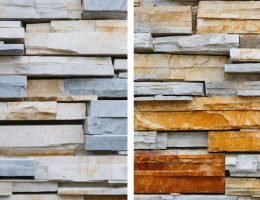
Split image showing a comparison between sealed and unsealed stone veneer surfaces, highlighting water beading on the sealed side and visible color variations.
Technical Aspects

Professional Stone Sealing: The Secret to Long-Lasting Stone Veneer

Protect your investment and enhance the longevity of your stone veneer installation through proper sealing techniques. Natural stone veneer remains vulnerable to moisture damage, staining, and weathering without adequate protection. Professional-grade penetrating sealers create an invisible barrier that preserves the stone’s natural beauty while preventing water infiltration and freeze-thaw damage. Apply sealer only after thoroughly cleaning the surface and allowing it to dry …

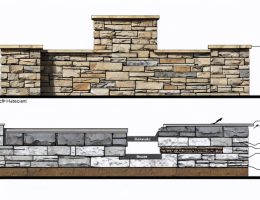
Split-level illustration displaying a completed natural stone veneer wall above and detailed installation layers including weather-resistant barrier and metal lath below.
Technical Aspects

Master Natural Stone Veneer Installation Like a Pro: Advanced Methods Revealed

Transform your exterior or interior spaces with professional-grade natural stone walls through precise installation techniques that ensure lasting beauty and structural integrity. Master the art of stone veneer installation by starting with a properly prepared substrate, including a weather-resistant barrier and galvanized metal lath secured at 16-inch intervals. Create a scratch coat using Type S mortar mixed to optimal consistency, allowing proper curing time before stone application. Strategic placement of larger …