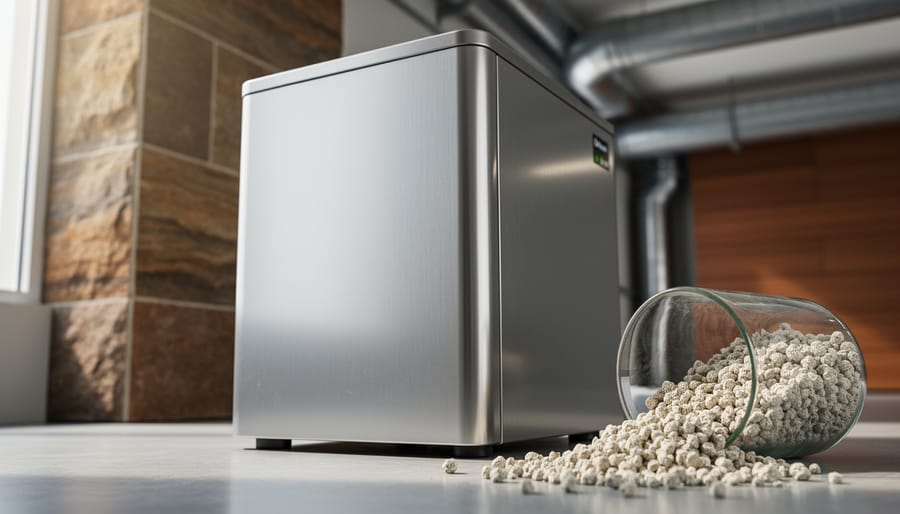
Zeolite thermal storage uses natural or synthetic microporous minerals to absorb, hold, and release heat through reversible chemical reactions, offering one of the highest energy densities of any solid-state thermal storage material available in 2026. Unlike conventional thermal mass that relies solely on temperature differences, zeolites store heat through adsorption and desorption cycles, a process that can retain energy for months without loss and release it on demand when moisture is introduced.
For architects, designers, and homeowners exploring sustainable climate control, zeolite systems represent a proven technology that addresses the limitations of traditional thermal mass. While natural stone materials like marble and granite excel at moderating temperature swings through their inherent thermal properties, they require continuous temperature differential to function. Zeolite storage complements stone’s passive regulation by providing compact, long-term heat banking that activates only when needed.
The technology works on a simple principle: dry zeolite crystals bond with water molecules in an exothermic reaction, releasing heat. When you reverse the process by applying heat to drive off the moisture, the material recharges and stores that energy until the next cycle. This makes zeolite particularly valuable in buildings where space constraints limit traditional thermal mass or where seasonal heat transfer, such as storing summer warmth for winter use, offers economic advantages.
This article examines how zeolite thermal storage functions at a technical level, the different systems available for residential and commercial applications, and how these solutions integrate with natural stone surfaces to create high-performance thermal comfort strategies. You’ll find practical guidance on system selection, case studies demonstrating real-world performance, and design considerations for combining stone’s passive thermal benefits with zeolite’s active storage capabilities.
What Zeolite Thermal Storage Means for Buildings
Zeolite thermal storage functions as a heat battery for buildings, using microporous minerals to capture and hold thermal energy until it’s needed. Unlike conventional water tanks that store heat as sensible warmth, zeolite systems rely on an adsorption heat storage mechanism a reversible chemical process where zeolite minerals absorb water vapor and release concentrated heat energy on demand.
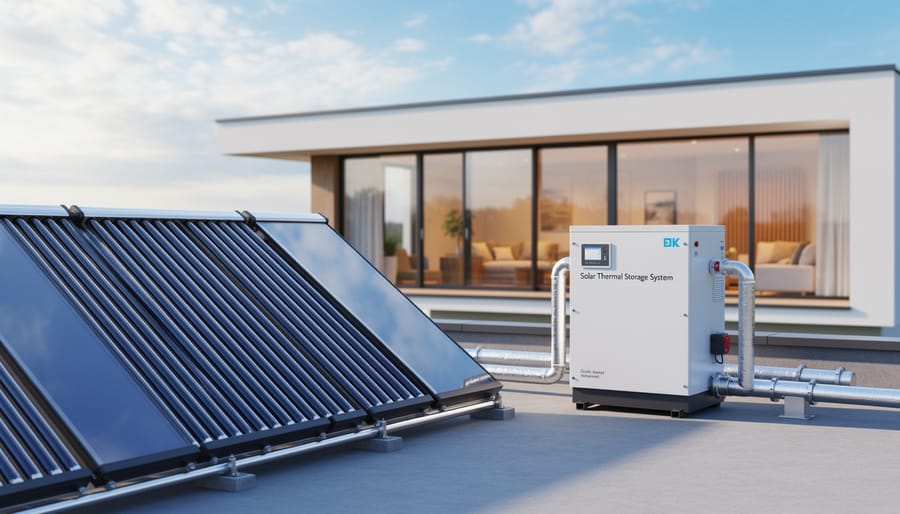
The technology works through a charging and discharging cycle. During the charging phase, heat from solar thermal collectors or waste heat sources dries the zeolite material, removing moisture and storing energy within its crystalline structure. When heating is needed, moisture is reintroduced to the zeolite, triggering an exothermic reaction that releases the stored heat at useful temperatures for space heating or domestic hot water.
- Zeolite
- A microporous aluminosilicate mineral with a crystalline structure containing millions of tiny pores that trap and release water molecules.
- Adsorption
- The process where gas or liquid molecules adhere to the surface of a solid material, distinct from absorption which involves penetration into the material itself.
- Thermal storage density
- The amount of heat energy that can be stored per unit volume or mass of material, measured in kilowatt-hours per cubic meter or kilogram.
- Charge/discharge cycle
- The repeating process of loading thermal energy into the storage medium (charging) and extracting it for use (discharging).
- Coefficient of performance
- A measure of storage system efficiency, calculated as the ratio of useful heat output to energy input required for operation.
Zeolites excel at this application because their porous crystalline structure creates vast internal surface area, a single gram can contain 1,000 square meters of reactive surface. These zeolite microporosity benefits allow the material to store three to five times more heat per unit volume than water, without heat loss during storage periods ranging from days to months. In buildings that combine zeolite systems with zeolite stone surfaces and other thermal mass elements, this chemistry-based storage complements the physical heat capacity of materials like marble and granite, creating a layered approach to thermal comfort.
How Zeolite Thermal Storage Systems Work
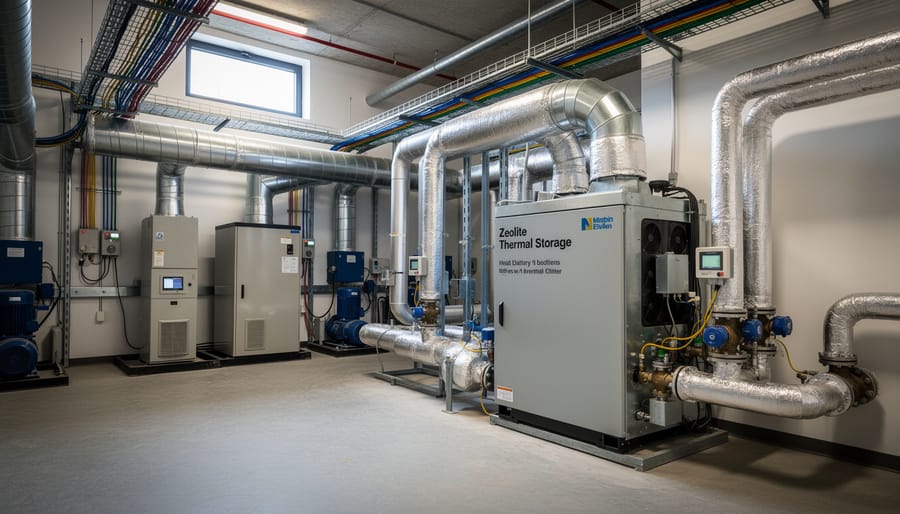
Zeolite thermal storage operates through a two-phase cycle that converts moisture into usable heat energy. During the charging phase, heat from solar thermal collectors or industrial waste heat sources drives water molecules out of the zeolite’s microscopic pores. This desorption process typically occurs at temperatures between 100°C and 180°C, depending on the zeolite type and system design. The dried zeolite material stores this energy chemically within its crystalline structure, ready to release it when needed.
When heating is required, the system enters its discharge phase. Humid air passes through the dried zeolite bed, triggering an exothermic adsorption reaction. Water molecules rush back into the porous channels, releasing the stored thermal energy. This process generates outlet temperatures of 40°C to 60°C, suitable for radiant floor heating or domestic hot water preheating. The beauty of this mechanism lies in its reversibility: zeolite materials can complete thousands of charge-discharge cycles without degradation.
The heart of the system is the zeolite bed itself, usually housed in insulated containers that minimize heat loss during storage periods. A typical residential installation might hold 200 to 500 kilograms of zeolite material, capable of storing 50 to 150 kilowatt-hours of thermal energy. Control systems monitor temperature and humidity levels, automatically switching between charging and discharging modes based on available heat sources and building demand.
Solar thermal integration represents the most common configuration in 2026 installations. Evacuated tube collectors or flat-plate panels capture solar energy during summer months, when heating demand is low but sunshine is abundant. The zeolite bed charges slowly over weeks, storing this seasonal surplus. Come winter, the stored energy supplements conventional heating systems, reducing fuel consumption by 30 to 50 percent in well-designed installations.
For cooling applications, the process reverses its thermal effect. Night-time air or evaporative cooling chills the zeolite bed. During the day, warm humid air passes through, and the zeolite absorbs moisture while releasing the coolness it stored overnight. This dehumidification also improves comfort in humid climates.
Types of Zeolite Materials and System Configurations
Zeolite thermal storage systems use either natural or synthetic zeolite materials, each with distinct performance characteristics. Natural zeolites like clinoptilolite are mined directly from volcanic deposits and offer good storage capacity at a lower cost, but their pore structures vary depending on the source. Synthetic zeolites such as 13X and 4A are manufactured under controlled conditions, delivering consistent performance with precisely engineered pore sizes. Zeolite 13X provides high water adsorption capacity and works effectively at moderate temperatures (50-80°C charging range), making it popular for residential solar thermal applications. Zeolite 4A excels in low-temperature applications and offers rapid heat release, though with slightly lower overall storage density. Clinoptilolite, while less efficient than synthetic types, remains cost-effective for larger commercial installations where volume isn’t constrained.
System configurations fall into three main categories based on how air and moisture move through the zeolite bed. Closed-loop systems circulate air within a sealed container, cycling between the zeolite storage unit and a condenser/evaporator. This configuration protects the zeolite from contamination and maintains consistent performance over many cycles, though it requires more complex equipment. Open-loop systems draw ambient air directly through the zeolite bed, releasing moisture outdoors during charging and pulling in humid air during discharge. These simpler setups work well in moderate climates but depend on outdoor humidity levels. Hybrid systems combine elements of both approaches, using closed loops during peak performance periods and switching to open-loop operation when conditions favor it.
Integration with building systems typically connects zeolite storage to solar thermal collectors, which provide the 80-120°C heat needed to dry the zeolite during charging cycles. The stored heat later feeds into radiant floor systems, baseboard heaters, or forced-air HVAC units. Heat pump integration is emerging in 2026 installations, where the zeolite system handles seasonal storage while the heat pump manages daily heating and cooling loads. Commercial buildings often link zeolite storage to building management systems that optimize charging schedules based on energy prices, weather forecasts, and occupancy patterns, shifting thermal loads to off-peak hours when electricity costs less.
Zeolite Storage Applications in Residential and Commercial Buildings
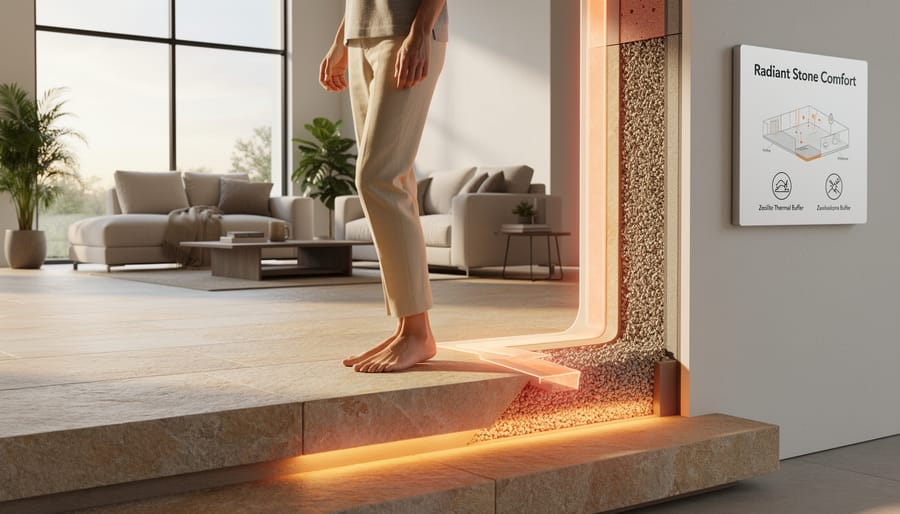
Zeolite thermal storage systems are moving from laboratory demonstrations into practical building applications across residential and commercial sectors. The technology addresses real operational challenges: storing abundant summer solar energy for winter heating demand, reducing peak electrical loads during high-cost periods, and providing year-round thermal comfort without constant energy input.
In residential settings, zeolite storage typically integrates with solar thermal collectors to capture and bank heat during sunny months. A typical installation uses 1-3 cubic meters of zeolite material housed in an insulated container, often located in a basement or garage. During summer charging cycles, solar collectors dehydrate the zeolite at 150-180°C, locking thermal energy into the mineral structure. When winter arrives, controlled moisture introduction releases this stored heat at 40-60°C, warm enough for radiant floor systems or domestic hot water preheating. Several pilot projects in Northern Europe have demonstrated seasonal storage efficiency of 75-85%, maintaining stored energy across months with minimal loss.
Primary building applications extend beyond seasonal storage:
– Seasonal solar heat storage for winter space heating
– Domestic hot water preheating to reduce boiler operation
– Space heating assistance during morning and evening peaks
– Humidity control through moisture adsorption/desorption cycles
– Peak load reduction by shifting heating demand to off-peak electricity hours
– Waste heat recovery from industrial processes or data centers
Commercial buildings benefit from load-shifting capabilities. Office buildings can charge zeolite systems during low-cost nighttime electricity periods, then discharge stored heat during expensive daytime peaks. This strategy cuts energy costs by 20-40% in buildings with time-of-use electricity rates. Data centers and industrial facilities with continuous waste heat streams increasingly pair zeolite storage with their thermal management systems, capturing otherwise-discarded energy for space heating or process applications.
As of 2026, the technology remains in early commercial deployment. Approximately 200 zeolite thermal storage systems operate worldwide, concentrated in Germany, Netherlands, and Japan. Costs currently range from $150-250 per kWh of storage capacity, higher than conventional water tanks but competitive when seasonal storage or space constraints matter. New construction projects integrate zeolite systems more readily than retrofits due to space planning and piping requirements, though modular retrofit units are entering the market for multi-family buildings.
Natural Stone Surfaces and Thermal Mass in Zeolite-Equipped Buildings
Stone Selection for Thermal Performance
When specifying natural stone for buildings with zeolite thermal storage, focus on three physical properties that determine how effectively stone surfaces complement the system’s heat cycles.
Density drives storage capacity. Denser stones like granite (2,650-2,750 kg/m³) and basalt (2,800-3,000 kg/m³) hold more thermal energy per cubic meter than lighter limestone (2,300-2,600 kg/m³) or travertine (2,400-2,500 kg/m³). In zeolite-equipped spaces, high-density flooring absorbs daytime solar gains and releases heat gradually overnight, smoothing temperature swings between zeolite discharge cycles.
Specific heat capacity determines how much energy each kilogram absorbs before warming. Marble and limestone (0.8-0.9 kJ/kg·K) slightly outperform granite (0.75-0.8 kJ/kg·K), though real-world differences are modest. Combined with thickness, this property dictates thermal lag, the delay between surface heating and heat release that buffers indoor temperatures.
Thermal conductivity affects response speed. Higher-conductivity stones like marble (2.5-3.5 W/m·K) transfer heat faster than lower-conductivity limestone (1.3-1.7 W/m·K). For radiant floor systems paired with zeolite storage, moderate conductivity balances quick heat distribution with sustained release. Slate (1.5-2.5 W/m·K) offers a practical middle ground for floors and accent walls.
Specify stone slabs 30-50 mm thick for floors to maximize thermal mass without excessive structural load. Match stone placement to zeolite discharge zones for coordinated comfort delivery.
Case Study: Zeolite Storage with Stone Interiors
A 2025 retrofit of a 3,200-square-foot residence in Bavaria demonstrates how zeolite thermal storage and natural stone surfaces create measurable comfort improvements. The homeowners installed a 2.5 kW zeolite system connected to rooftop solar thermal collectors alongside new limestone flooring (18mm Jura Gelb) in the main living areas and slate accent walls in the entryway.
Performance monitoring over the first heating season showed the limestone floors maintained surface temperatures between 20-22°C throughout the day, dampening indoor temperature swings by 3.2°C compared to pre-retrofit conditions. The zeolite unit charged during sunny winter days, then released stored heat during evening hours when the stone thermal mass alone would have cooled below comfortable levels. Combined, the systems reduced auxiliary heating demand by 41% versus the previous gas boiler setup.
The design team selected Jura limestone specifically for its moderate thermal conductivity (2.5 W/mK) and density (2,550 kg/m³), allowing the 60m² floor area to store approximately 18 kWh of sensible heat. This passive storage complemented the zeolite’s 8 kWh chemical storage capacity, creating a layered thermal buffer that supports indoor wellness through stable conditions. Installation required coordination between the zeolite technicians and stone installers to route underfloor air distribution channels without compromising the limestone’s structural integrity, a detail resolved through careful planning during the design phase.
Installation Considerations and System Requirements
Installing a zeolite thermal storage system requires careful planning and professional expertise. Space needs vary by system size, but most residential units need 1-3 cubic meters for the zeolite reactor and associated heat exchangers, roughly equivalent to a small closet or utility space. The system connects to your existing HVAC infrastructure through insulated ductwork or hydronic piping, though older forced-air systems may require upgrades to handle the bidirectional heat transfer during charging and discharging cycles.
Moisture management proves critical since zeolite storage relies on controlled water vapor exchange. The system needs proper sealing to prevent ambient humidity from interfering with the charging process, and buildings in humid climates require dehumidification support. When you’re combining zeolite storage with natural stone thermal mass, coordinate the two systems so that stone temperature swings align with the zeolite discharge schedule, stone floors and walls naturally lag behind air temperature changes, so the zeolite system should anticipate this thermal inertia rather than work against it.
Professional installation typically costs $8,000-$15,000 for residential systems in 2026, with commercial installations scaling up proportionally. Payback periods range from 8-15 years depending on local energy costs and system sizing. Maintenance is minimal, zeolites don’t degrade chemically, but annual inspections should verify proper sealing, check valve operation, and confirm that performance monitoring sensors are calibrated correctly.
The building envelope matters significantly: poor insulation undermines both zeolite storage efficiency and stone thermal mass effectiveness. Air leakage allows unwanted moisture exchange and heat loss, so weatherization upgrades often make sense before installing advanced thermal storage. Systems perform best in well-insulated buildings where the zeolite reactor’s stored energy and the stone surfaces’ thermal buffering can work together without fighting excessive heat gain or loss through the envelope.
Common Questions About Zeolite Thermal Storage
How long do zeolite materials last before needing replacement?
Zeolite materials maintain their adsorption properties through thousands of charge-discharge cycles, typically lasting 20 to 30 years with minimal performance degradation. Unlike batteries or phase-change materials that degrade over time, zeolite’s crystalline structure remains stable as long as the system avoids contamination and operates within design parameters.
Can zeolite thermal storage work effectively in humid climates?
Yes, though system design must account for higher ambient moisture levels that can affect the charging process. In humid climates closed-loop configurations prevent atmospheric moisture from interfering with the controlled adsorption cycle, and proper ventilation helps manage indoor humidity alongside reducing indoor allergens. Stone floors with high thermal mass help buffer humidity swings while the zeolite system handles heat storage.
How does zeolite storage efficiency compare to conventional water tank systems?
Zeolite systems achieve energy densities three to four times higher than water tanks for the same volume, making them far more space-efficient for seasonal storage. While water tanks lose heat continuously through standby losses, zeolite stores energy without thermal loss until deliberately discharged, resulting in better long-term retention for interseasonal applications.
Does a zeolite system require special ventilation or create noise issues?
Closed-loop systems require minimal ventilation beyond standard HVAC requirements, while open-loop configurations need controlled air exchange for the adsorption process. Operating noise is typically minimal, comparable to a standard heat pump compressor during charging and discharging cycles, and most residential systems operate quietly enough for living spaces.
Can zeolite storage integrate with existing natural stone floors and thermal mass features?
Absolutely. The combination works particularly well because stone provides passive sensible heat storage for daily temperature fluctuations while zeolite handles longer-term latent heat storage. Underfloor heating loops can connect to the zeolite discharge system, using stone’s thermal mass to distribute warmth evenly and extend comfort periods between system operation cycles.
What maintenance does a zeolite thermal storage system require?
Maintenance demands are modest: annual inspection of moisture sensors and control systems, periodic checks of heat exchanger connections, and filter replacement if the system uses forced air circulation. The zeolite material itself requires no maintenance or replacement under normal operating conditions, making these systems far less demanding than conventional mechanical heating equipment.
Cost-effectiveness deserves consideration beyond the FAQ format. Initial installation costs for zeolite systems run higher than standard storage tanks, but the payback period shortens considerably when factoring in space savings, eliminated standby losses, and reduced mechanical system wear. Buildings that already feature substantial stone thermal mass see faster returns because the passive and active storage systems amplify each other’s benefits, reducing peak heating and cooling loads. Professional installation is essential, as proper system sizing, moisture control integration, and connection to existing HVAC equipment require specialized knowledge that goes beyond conventional heating system experience.
Zeolite thermal storage represents a sophisticated evolution in building climate control, storing and releasing heat energy through reversible chemical processes that operate independently of immediate weather conditions. When paired with natural stone surfaces like marble floors, granite countertops, or limestone walls, these systems create a comprehensive thermal comfort strategy that addresses both immediate and long-term energy needs.
Stone surfaces provide passive thermal mass, absorbing excess heat during the day and releasing it gradually as temperatures drop. Zeolite systems add active, high-density storage that can hold energy for weeks or months, then release it on demand. Together, they smooth temperature fluctuations, reduce HVAC loads, and maintain comfortable indoor environments with minimal energy input.
For architects and designers prioritizing sustainable building practices, this combination offers measurable performance advantages. The thermal inertia of stone complements zeolite’s compact, seasonal storage capacity, creating resilient buildings that stay comfortable year-round. Homeowners considering renovations should evaluate how stone flooring contributes to thermal comfort, particularly when integrated with advanced storage technologies. As zeolite systems become more accessible, their role in passive and active thermal design strategies will expand, making them essential components of high-performance, naturally comfortable buildings.