Showing 13 Result(s)
Conservation professional scanning a weathered stone cathedral facade with a tripod laser scanner, semi-transparent 3D mesh overlay showing the digital twin, golden hour side lighting, blurred scaffolding in the background
Stone Restoration and Preservation

How Digital 3D Models Are Saving Historic Stone Buildings From Permanent Loss

Three-dimensional geological modeling software transforms how restoration professionals document, analyze, and preserve historic stone structures by creating precise digital twins of deteriorating facades, ornamental details, and structural elements. These specialized tools capture millimeter-level accuracy across entire building surfaces, generating comprehensive spatial databases that track cracks, spalling, material loss, and weathering patterns invisible to traditional assessment methods.
The technology bridges the gap between fieldwork and restoration planning by converting laser scans, photogrammetry data, and ground-…

Conservation architect operating a tripod-mounted laser scanner before a weathered Gothic stone cathedral portal at golden hour, carved details glowing in side light with scaffolding and stone blocks softly blurred behind.
Stone Restoration and Preservation

How Digital 3D Modeling is Saving Historic Stone Buildings

Stone modeling revolutionizes how we document, analyze, and restore historic buildings and architectural elements through precision 3D digital scanning technology. This advanced process captures every surface detail, texture, and dimension of stone structures—from weathered cathedral facades to ornate fireplace surrounds—creating exact digital replicas that serve as permanent records and practical restoration blueprints.
The technology addresses a critical challenge facing architects, conservators, and property owners: how to preserve aging stonework accurately while planning interventions that respect original craftsmanship. …

Conceptual illustration of a historic stone monument showing one half in its original state and the other half deteriorating, symbolizing the impact of climate change with elements like storm clouds and acid rain.
Stone Restoration and Preservation

How Climate Change Is Silently Destroying Your Stone Surfaces

The accelerating pace of climate change poses an unprecedented threat to our stone buildings and monuments, transforming centuries-old weathering patterns into aggressive decay cycles. As global temperatures rise and extreme weather events intensify, traditional stone preservation methods no longer suffice. Natural stone surfaces now face amplified chemical reactions from acid rain, increased freeze-thaw cycles, and unprecedented biological growth – all directly linked to our changing climate.
This evolving challenge demands a fundamental shift in how we approach stone conservation. While historic buildings have weathered …

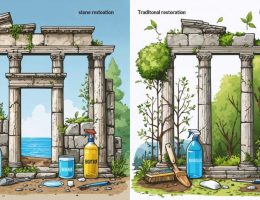
An illustrated split-screen comparison showing traditional vs. sustainable stone restoration methods on a historic building facade, emphasizing the contrast between chemical-heavy approaches and eco-friendly techniques, with environmental impact visualized in the backdrop.
Stone Restoration and Preservation

Stone Restoration That Protects Both Heritage and Environment

Stone restoration stands at the intersection of architectural preservation and environmental stewardship, demanding a delicate balance between honoring historical integrity and embracing sustainable practices. Through smart stone restoration practices, craftsmen now combine centuries-old techniques with cutting-edge conservation methods to breathe new life into weathered monuments, facades, and architectural elements.
Modern stone restoration transcends simple repairs, encompassing comprehensive …

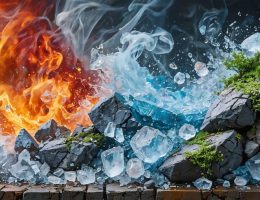
Conceptual illustration showing the various forces that contribute to granite weathering, including chemical reactions, freeze-thaw cycles, and biological growth like lichens.
Stone Restoration and Preservation

Why Your Granite Isn’t Invincible: Hidden Forces Breaking Down Your Stone

Granite, revered for its durability and timeless beauty, faces continuous challenges from both natural and human-induced weathering and erosion processes. Chemical reactions triggered by acid rain dissolve feldspar crystals within granite’s structure, while freeze-thaw cycles exploit existing fissures to gradually break down even the most robust stone formations. Physical weathering from temperature fluctuations causes thermal expansion and contraction, creating microscopic …

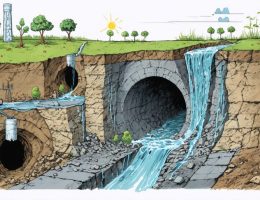
Conceptual illustration depicting the environmental impact of subsurface mining, including fractured rock formations, disrupted groundwater systems, and representations of sustainable mining practices.
Stone Restoration and Preservation

How Mining Below Ground Damages Stone Formations (And What We Can Do)

Beneath the Earth’s surface lies a complex relationship between mining operations and environmental stability. Subsurface mining, while essential for accessing valuable mineral resources, creates lasting impacts that ripple through underground ecosystems and surface landscapes alike. From groundwater disruption and soil subsidence to the alteration of natural cave formations, these operations leave an indelible mark on our planet’s geological framework. Modern mining practices now grapple with the dual challenge of resource extraction and environmental preservation, as the industry seeks sustainable solutions to minimize …

A conservation specialist and traditional artisan collaboratively working on a historic stone monument, representing the blend of ancient techniques and modern technology in stone preservation.
Stone Restoration and Preservation

How Material Culture Shapes Modern Stone Preservation Ethics

Material culture studies revolutionizes our understanding of human societies by examining the profound relationship between people and their physical objects. This interdisciplinary field reveals how everyday items – from ancient artifacts to modern consumer goods – shape and reflect cultural values, social structures, and human behavior. Through the lens of material culture, scholars decode the complex web of meanings embedded in objects, including crucial aspects of stone …

A robotic cleaning system meticulously maintaining a marble floor, with digital data interface and nano-technology cleaning representation, symbolizing the intersection of advanced technology and traditional stone care.
Stone Restoration and Preservation

Smart Stone Care: How New Tech Keeps Natural Stone Looking Perfect

Natural stone care has undergone a dramatic transformation in the past decade, blending cutting-edge technology with environmentally conscious practices. Today’s stone conservation techniques utilize advanced nanotechnology, precision-controlled cleaning systems, and biodegradable solutions that protect both the stone and the environment.
Modern stone maintenance no longer relies on harsh chemicals and abrasive cleaning methods. Instead, sophisticated surface analysis tools …

Conceptual illustration showing how plant roots, lichens, and fungi contribute to the gradual degradation and weathering of a stone monument.
Stone Restoration and Preservation

How Living Organisms Slowly Destroy Stone (And What You Can Do About It)

Biological weathering silently transforms our stone surfaces as living organisms – from microscopic bacteria to persistent plant roots – break down even the most resilient rocks through natural weathering and erosion processes. This often-overlooked form of deterioration costs property owners millions annually in repairs and replacement, yet remains one of the most preventable forms of stone damage. Understanding how organisms interact with stone surfaces isn’t just …

An illustration showing the effects of weathering and erosion on stone. On the left, a stone surface displaying chemical reactions like discoloration and pitting due to weathering. On the right, environmental forces such as wind and water actively eroding and transporting stone particles away.
Stone Restoration and Preservation

Why Your Stone Is Crumbling: The Critical Difference Between Weathering and Erosion

Weathering and erosion wage a constant battle against stone surfaces, yet understanding their distinct mechanisms empowers property owners to protect their investments effectively. While weathering breaks down materials through chemical and physical processes like freeze-thaw cycles and acid rain, erosion actively transports these degraded particles away through wind, water, and mechanical forces. Implementing modern stone conservation techniques can significantly extend the life of stone…