Showing 14 Result(s)
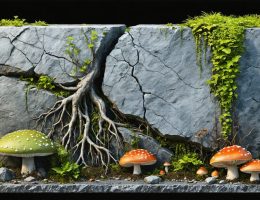
Conceptual illustration showing how plant roots, lichens, and fungi contribute to the gradual degradation and weathering of a stone monument.
Stone Restoration and Preservation

How Living Organisms Slowly Destroy Stone (And What You Can Do About It)

Biological weathering silently transforms our stone surfaces as living organisms – from microscopic bacteria to persistent plant roots – break down even the most resilient rocks through natural weathering and erosion processes. This often-overlooked form of deterioration costs property owners millions annually in repairs and replacement, yet remains one of the most preventable forms of stone damage. Understanding how organisms interact with stone surfaces isn’t just …
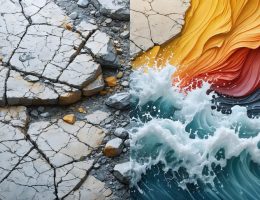
An illustration showing the effects of weathering and erosion on stone. On the left, a stone surface displaying chemical reactions like discoloration and pitting due to weathering. On the right, environmental forces such as wind and water actively eroding and transporting stone particles away.
Stone Restoration and Preservation

Why Your Stone Is Crumbling: The Critical Difference Between Weathering and Erosion

Weathering and erosion wage a constant battle against stone surfaces, yet understanding their distinct mechanisms empowers property owners to protect their investments effectively. While weathering breaks down materials through chemical and physical processes like freeze-thaw cycles and acid rain, erosion actively transports these degraded particles away through wind, water, and mechanical forces. Implementing modern stone conservation techniques can significantly extend the life of stone…

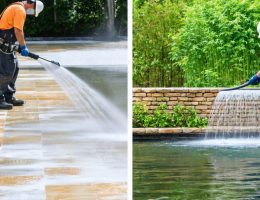
A comparative depiction of traditional stone restoration using pressure washing alongside a sustainable method using eco-friendly tools, illustrating the transition to greener conservation practices.
Stone Restoration and Preservation

Save History and the Planet: Smart Stone Restoration That Works

At the intersection of environmental stewardship and architectural legacy, historic preservation emerges as a crucial cornerstone of sustainable development. Through modern stone conservation techniques, we’re discovering that the greenest building is often the one already standing. Historic structures embody decades, even centuries, of embodied energy and irreplaceable craftsmanship, while their preservation eliminates the environmental impact of demolition and new construction….

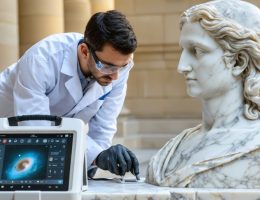
A conservator carefully uses a 3D laser scanner on an ancient marble statue, demonstrating the integration of advanced digital tools and traditional methods in stone conservation.
Stone Restoration and Preservation

Modern Stone Conservation: Breakthrough Techniques That Protect Historic Marble

Modern stone conservation demands a precise balance of scientific analysis and hands-on intervention. Advanced documentation technologies, including 3D laser scanning and photogrammetry, now capture microscopic surface details and structural conditions with unprecedented accuracy. These digital tools, combined with traditional marble preservation techniques, enable conservators to develop targeted treatment strategies that address both immediate deterioration and long-term preservation needs.
Professional conservation methods have evolved significantly, incorporating innovative materials like …