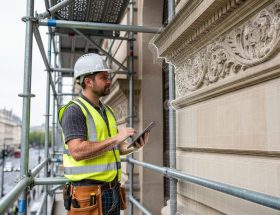
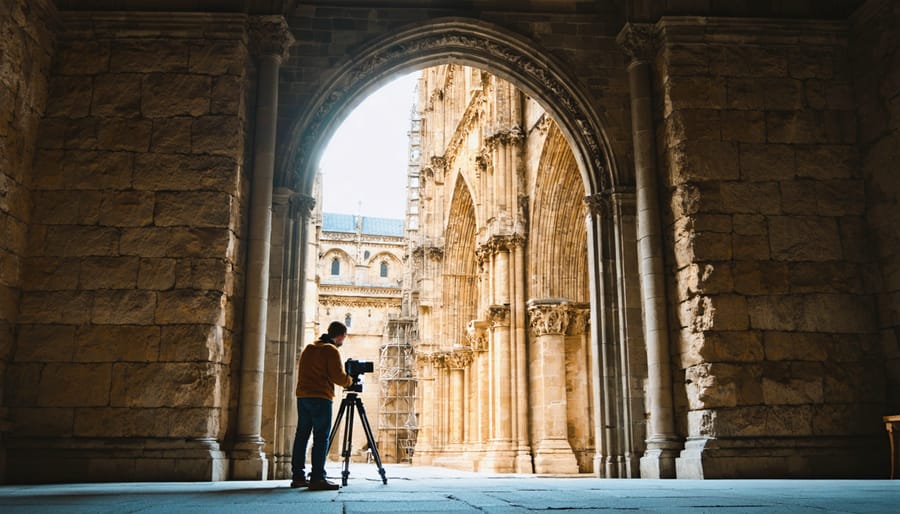
Stone modeling revolutionizes how we document, analyze, and restore historic buildings and architectural elements through precision 3D digital scanning technology. This advanced process captures every surface detail, texture, and dimension of stone structures—from weathered cathedral facades to ornate fireplace surrounds—creating exact digital replicas that serve as permanent records and practical restoration blueprints.
The technology addresses a critical challenge facing architects, conservators, and property owners: how to preserve aging stonework accurately while planning interventions that respect original craftsmanship. Traditional measurement methods, reliant on manual tools and photographs, often miss crucial details that become apparent only during restoration work. Stone modeling eliminates this uncertainty by producing millimeter-accurate digital twins that reveal structural issues, document deterioration patterns, and enable precise fabrication of replacement components.
Applications span heritage conservation, where models inform careful restoration of listed buildings, to modern architectural projects requiring custom stone elements that integrate seamlessly with existing structures. Property owners benefit from detailed condition assessments before purchasing historic homes, while restoration specialists use these models to calculate material quantities, plan interventions, and communicate proposals clearly to stakeholders.
The process combines laser scanning, photogrammetry, and specialized software to transform physical stone into manipulable digital data. This shift from physical to digital documentation represents more than technological advancement—it fundamentally changes how we approach stone preservation, enabling analysis, collaboration, and planning impossible with conventional methods. Understanding stone modeling’s capabilities empowers informed decisions about protecting architectural heritage and executing complex stone projects with unprecedented accuracy.
What is Stone Modeling in Digital Restoration?
Stone modeling in digital restoration represents a revolutionary approach to documenting and preserving architectural heritage. This advanced process uses 3D scanning technology and photogrammetry to create highly accurate digital replicas of stone structures, elements, and decorative features. Unlike traditional measurement methods that rely on manual tools like tape measures, calipers, and hand-drawn sketches, stone modeling captures millions of data points to generate precise three-dimensional representations of historic stonework.
The fundamental difference between conventional documentation and stone modeling lies in accuracy and completeness. Traditional methods might record basic dimensions and create two-dimensional drawings, but they often miss intricate details, surface textures, and the subtle irregularities that characterize aged stone. Digital modeling captures every carved detail, weathering pattern, and structural nuance with millimeter-level precision, creating a comprehensive digital archive that serves multiple purposes throughout the restoration process.
In heritage preservation, stone modeling serves three critical phases. Before restoration begins, it establishes a detailed baseline record of the structure’s current condition, documenting existing damage, erosion patterns, and structural issues. During restoration, these digital models guide craftspeople in recreating missing or damaged elements with historical accuracy, ensuring new work seamlessly integrates with original materials. After completion, the models provide verification that restoration work meets preservation standards and create permanent records for future conservation efforts.
This technology has become increasingly vital as stone conservation techniques evolve to meet modern preservation standards. Digital replicas enable conservators to study deterioration patterns, test restoration approaches virtually before physical intervention, and share precise documentation with stakeholders worldwide. For historic buildings, monuments, and decorative stonework, these models become invaluable insurance against future damage, natural disasters, or loss, ensuring cultural heritage can be accurately reconstructed if necessary.
The Digital Documentation Process
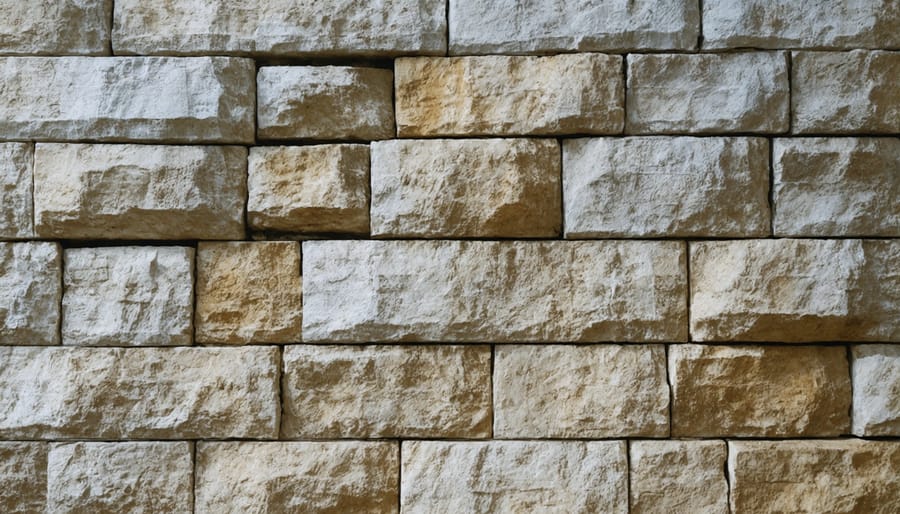
3D Laser Scanning and Photogrammetry
Two primary technologies dominate the field of stone surface capture: 3D laser scanning and photogrammetry. Each offers distinct advantages depending on project requirements, budget constraints, and the specific characteristics of the stone being documented.
3D laser scanning, also known as LiDAR (Light Detection and Ranging), works by emitting millions of laser pulses per second that bounce off stone surfaces and return to the scanner. The system calculates distances based on the time each pulse takes to return, creating a dense point cloud that represents the exact geometry of the stone. This technology excels in accuracy, typically achieving precision levels within 1-2 millimeters, making it ideal for heritage conservation projects where exact measurements are critical. Laser scanning performs exceptionally well in low-light conditions and on uniform or featureless surfaces where texture alone may not provide sufficient detail.
Photogrammetry takes a different approach by capturing multiple overlapping photographs of the stone from various angles. Specialized software then analyzes these images, identifying common points across photographs to calculate three-dimensional coordinates and reconstruct the surface geometry. While typically less expensive than laser scanning, photogrammetry can achieve comparable accuracy levels of 2-5 millimeters when executed properly with high-resolution cameras and adequate lighting. This method particularly shines when capturing textured stone surfaces with rich color variations, as it simultaneously records both geometry and high-fidelity color information.
The choice between these technologies often depends on project scale and objectives. Laser scanning suits large-scale architectural documentation and projects requiring maximum precision, while photogrammetry offers cost-effectiveness for smaller objects and situations where color capture is equally important as geometric accuracy. Many professionals now employ hybrid approaches, combining both technologies to leverage their complementary strengths.
Creating the Digital Twin
Transforming raw scan data into a usable digital twin involves several precise technical stages that work together to create an accurate virtual representation of stone surfaces and structures.
The process begins with point cloud processing, where millions of individual data points captured during scanning are cleaned and organized. Technicians remove noise, outliers, and redundant information while ensuring critical surface details remain intact. This is particularly important for stone surfaces, where texture variations, weathering patterns, and subtle imperfections carry historical and structural significance.
Next comes mesh generation, which converts the point cloud into a continuous 3D surface model. Advanced algorithms connect individual points to form triangular faces, creating a cohesive mesh that accurately represents the stone’s geometry. For heritage stone structures, this stage requires balancing model resolution with file manageability—preserving fine details like carved ornamental features while maintaining workable data sizes.
Texture mapping adds the final layer of realism by draping high-resolution photographic data onto the 3D mesh. For stone surfaces, this captures essential visual information including color variations, veining patterns, surface weathering, and patina development. Specialized software aligns these textures precisely with the geometric model, ensuring that every crack, discoloration, and material characteristic appears in its exact location.
The resulting digital twin serves multiple purposes: documentation for conservation records, analysis for restoration planning, and visualization for stakeholder presentations. Modern processing software has made these workflows increasingly accessible, allowing professionals to generate detailed stone models within days rather than weeks.
Documentation Standards and Archiving
Proper documentation standards are essential for maximizing the long-term value of digital stone models. All scan data should be saved in multiple file formats, including native proprietary formats and universal standards like PLY, OBJ, or E57 point clouds, ensuring accessibility regardless of future software changes. Metadata is equally critical—record scanning parameters, equipment specifications, environmental conditions, date stamps, and project identifiers with each dataset.
Establish a clear folder hierarchy that separates raw scan data from processed models, photographic references, and analytical reports. Implement version control protocols that track modifications while preserving original captures. For institutional projects, consider adopting standards like the London Charter for digital cultural heritage or guidelines from organizations such as Historic England.
Cloud-based storage with automatic backups provides redundancy, but maintain local copies on enterprise-grade hard drives stored in separate physical locations. Plan for data migration every 5-7 years as storage media degrades and technology evolves. Include comprehensive documentation explaining the scanning methodology, processing workflow, and any restoration interventions—this context proves invaluable when future conservators reference your models decades later. Remember that today’s digital record may become tomorrow’s baseline for monitoring deterioration or guiding sensitive restoration work.
Applications in Stone Restoration
Damage Assessment and Analysis
Advanced 3D stone modeling technology has revolutionized how restoration professionals assess and document damage in historic structures and natural stone installations. By creating highly detailed digital representations of stone surfaces, conservators can detect deterioration that remains invisible during standard visual inspections.
High-resolution 3D scanning captures minute surface variations measured in fractions of millimeters, revealing early-stage damage before it becomes critical. These models help identify specific weathering patterns, including salt crystallization, biological growth, and thermal stress fractures. When scans are repeated over time, the technology provides precise measurements of deterioration rates, enabling data-driven maintenance scheduling rather than guesswork.
The analysis extends beyond surface damage. Color mapping and depth analysis tools highlight structural concerns like subsurface cracking, delamination, and material loss. Conservators can virtually remove layers of grime or coatings to examine underlying stone conditions without physical intervention. This non-invasive approach proves particularly valuable for fragile historic monuments where traditional probing methods could cause additional harm.
Digital models also facilitate collaborative assessment. Multiple stakeholders can examine the same virtual representation remotely, annotating areas of concern and comparing findings. This shared visual reference eliminates communication gaps between architects, engineers, and conservation specialists. The documented baseline becomes an invaluable reference point for monitoring long-term structural health and validating the effectiveness of preservation treatments.
Precision Replication and Replacement
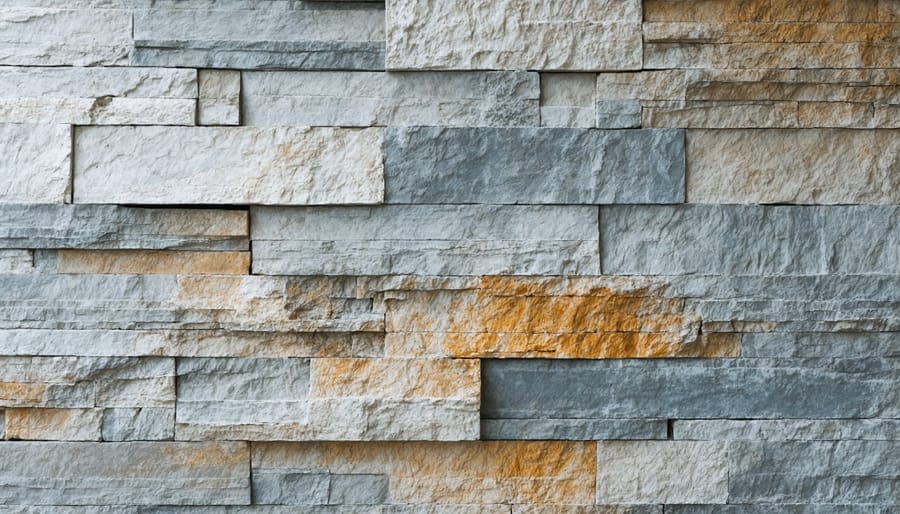
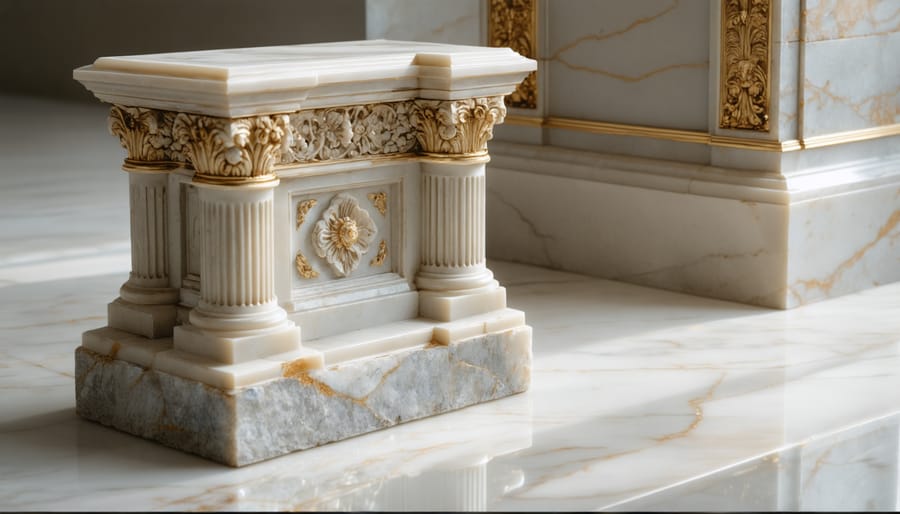
Once a detailed digital model is captured, it becomes a powerful blueprint for recreating damaged, deteriorated, or missing stone elements with remarkable accuracy. This precision replication capability has transformed restoration work, allowing craftspeople to reproduce intricate details that would be nearly impossible to recreate through traditional measurement methods alone.
Computer Numerical Control (CNC) milling represents one of the most direct applications of digital stone models. The 3D data guides automated cutting tools that carve replacement pieces from stone blocks with submillimeter precision. This technology excels at reproducing complex architectural details like cornices, capitals, and ornamental moldings. CNC milling significantly reduces production time while maintaining consistency across multiple identical elements, making it particularly valuable for buildings requiring several matching components.
For more complex or delicate forms, digital models can generate molds for casting. High-resolution 3D printers create precise mold patterns, which are then used to cast replacement pieces in appropriate stone composite materials or to guide the creation of traditional molds. This approach proves especially useful for sculptural elements or pieces with deep undercuts that would be challenging to mill directly.
Perhaps most importantly, digital models serve as invaluable guides for skilled stone carvers. Rather than replacing traditional craftsmanship, the technology enhances it. Carvers can reference the digital model throughout their work, projecting templates onto stone surfaces or using dimensional data to verify progress. This collaboration between digital precision and human artistry ensures that replacement elements maintain the character and subtle variations of hand-carved originals while achieving dimensional accuracy.
The result is seamless integration of new elements with historic fabric, preserving architectural integrity while extending the lifespan of irreplaceable stone structures. Whether restoring a Gothic cathedral or replacing damaged components in a historic courthouse, precision replication ensures that interventions remain faithful to original designs.
Pre-Restoration Planning and Visualization
Before any physical restoration work begins, 3D stone models serve as powerful planning and communication tools that save time, reduce costs, and minimize risks. Architects and conservation specialists use these digital replicas to evaluate structural conditions, identify problem areas, and develop targeted intervention strategies without disturbing the original stonework.
Virtual testing represents one of the most valuable applications of pre-restoration modeling. Professionals can digitally simulate various restoration approaches—from stone replacement patterns to cleaning methods—and assess their visual and structural impact before committing resources. This capability is particularly crucial when working with historic buildings where irreversible mistakes could damage irreplaceable heritage.
The visualization aspect transforms stakeholder communication. Instead of relying on technical drawings or verbal descriptions, restoration teams can show clients, regulatory bodies, and community members photorealistic renderings of proposed changes. Property owners gain clear understanding of what the finished restoration will look like, while heritage committees can evaluate whether interventions align with preservation standards. This transparency builds consensus and streamlines approval processes that might otherwise take months.
Budget planning becomes more accurate when based on detailed 3D models. Precise measurements enable contractors to calculate exact material quantities and labor requirements, reducing the contingencies typically built into restoration estimates. Teams can also identify potential complications—hidden damage, structural weaknesses, or access challenges—during the digital planning phase rather than discovering them mid-project when changes become expensive.
Case studies demonstrate that projects utilizing pre-restoration modeling typically experience fewer change orders, shorter timelines, and better alignment between stakeholder expectations and final outcomes.
Real-World Case Studies
Digital modeling has proven invaluable in several high-profile stone restoration projects, demonstrating its practical applications and problem-solving capabilities. These examples illustrate how the technology addresses real challenges faced by restoration professionals and property owners.
The Notre-Dame Cathedral in Paris presents perhaps the most prominent recent example. Following the devastating 2019 fire, restoration teams relied heavily on digital scans created by art historian Andrew Tallon years before the disaster. These precise 3D models provided crucial data about the cathedral’s original stone dimensions, carved details, and structural elements. The challenge was immense: restoring damaged limestone and recreating destroyed Gothic stonework with historical accuracy. The digital models enabled stonemasons to reproduce intricate carved elements and ensure new stones matched original specifications exactly. This technology accelerated the restoration timeline while maintaining authenticity, allowing craftspeople to work from verified digital references rather than relying solely on photographs or drawings.
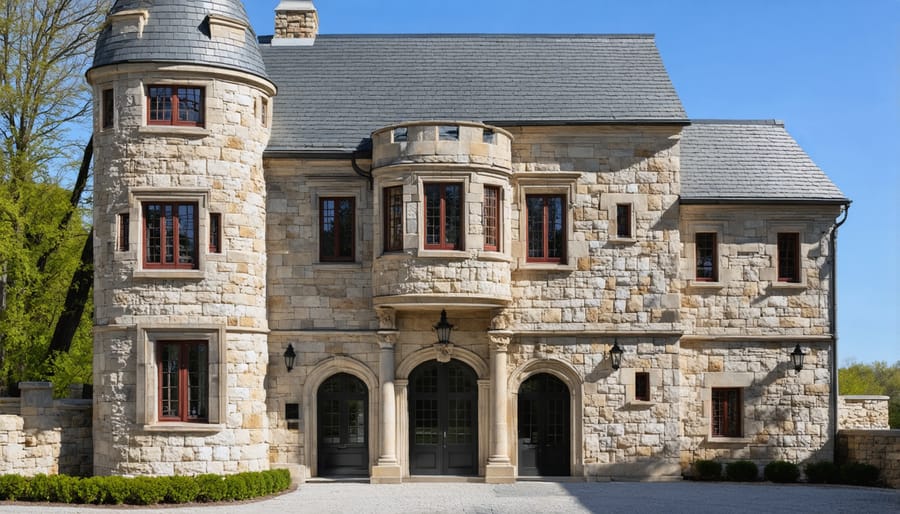
At the historic Lincoln’s Inn in London, conservators faced a different challenge when restoring weathered Portland stone facades. The 17th-century buildings showed significant erosion, making it difficult to determine original surface profiles and decorative details. Using photogrammetry and laser scanning, the team created detailed digital models of both damaged and better-preserved sections. By comparing these scans, they identified original carving patterns and molding profiles that had become barely visible. The digital models guided stonemasons in recreating eroded elements, ensuring consistency across the restoration. The project demonstrated how modeling technology can recover lost details and inform repair decisions, resulting in a restoration that respects historical integrity while addressing structural concerns.
A residential project in Charleston, South Carolina, showcased the technology’s accessibility for smaller-scale work. The homeowner needed to replace several damaged marble elements on a historic property but lacked original drawings or templates. A local restoration specialist used affordable photogrammetry software and a standard camera to create digital models of undamaged matching elements. These models guided the fabrication of replacement pieces, ensuring perfect dimensional accuracy and style consistency. The approach proved cost-effective compared to traditional hand-measuring methods and reduced material waste by enabling precise cutting specifications. This case demonstrates that stone modeling technology has become practical and economically viable even for residential restoration projects, not just institutional or monumental work.
Benefits for Different Stakeholders
For Architects and Restoration Specialists
For architects and restoration specialists, stone modeling delivers measurable improvements across multiple project phases. Digital documentation creates accurate spatial records with millimeter-level precision, eliminating the guesswork that often complicates historical restoration work. Teams can measure architectural elements, assess structural conditions, and plan interventions without repeated site visits, saving both time and project costs.
The technology transforms project planning by enabling virtual analysis of existing conditions before physical work begins. You can test different restoration approaches digitally, identify potential challenges, and refine strategies with stakeholders before committing resources. This proactive approach reduces costly surprises during construction and helps justify design decisions to clients and regulatory bodies.
Collaboration becomes significantly more effective when all parties work from the same detailed 3D model. Contractors, engineers, and preservation consultants can simultaneously access accurate measurements and visual references, reducing miscommunication and coordination errors. The models serve as living project documentation that evolves throughout restoration phases, creating valuable archival records for future maintenance and research purposes.
For Property Owners and Facility Managers
Stone modeling delivers significant value for property owners and facility managers through enhanced planning capabilities and cost control. Accurate 3D documentation enables precise long-term maintenance scheduling by identifying current conditions and predicting future deterioration patterns. This proactive approach prevents minor issues from escalating into expensive emergency repairs, substantially reducing overall maintenance costs over the building’s lifecycle.
The detailed condition assessments generated through stone modeling provide comprehensive documentation for insurance purposes, establishing verifiable baseline conditions and supporting claims when damage occurs. These digital records prove invaluable during property transactions, offering prospective buyers or tenants transparent documentation of structural integrity and maintenance history.
Budget forecasting becomes more reliable when based on precise measurements and condition data rather than visual estimates. Property managers can prioritize interventions based on actual need, allocating resources where they’ll have maximum impact. The technology also facilitates accurate bid comparisons from contractors, as all parties work from identical specifications derived from the digital model, eliminating discrepancies and unexpected costs during project execution.
For Heritage Preservation
Stone modeling creates invaluable digital archives of historic structures, monuments, and architectural details that might otherwise be lost to time, natural disasters, or conflict. These highly accurate 3D scans capture every texture, dimension, and weathering pattern, serving as permanent references for future restoration work. When Notre-Dame Cathedral suffered devastating fire damage in 2019, existing laser scans proved instrumental in guiding reconstruction efforts. Heritage professionals now routinely document endangered sites, from ancient temples to historic facades, ensuring that precise restoration remains possible even after catastrophic events. This technology also supports preservation ethics by enabling researchers to study fragile artifacts without physical contact, reducing wear from handling. Museums and conservation organizations increasingly rely on these digital twins to monitor structural changes over time, detect deterioration early, and plan interventions that maintain authenticity while extending the lifespan of irreplaceable cultural treasures.
Costs and Accessibility Considerations
Understanding the financial investment required for stone modeling technology helps project stakeholders make informed decisions about when these tools provide genuine value versus traditional documentation methods.
Equipment costs vary significantly based on project complexity and required precision. Entry-level terrestrial laser scanners suitable for basic architectural documentation start around $15,000 to $25,000, while high-precision scanners capable of capturing fine stone details range from $50,000 to over $100,000. Photogrammetry presents a more accessible option, with professional-grade cameras and software totaling $5,000 to $15,000, though processing powerful computers add another $3,000 to $8,000. For occasional needs, many restoration firms opt for service providers who charge between $2,000 and $10,000 per site, depending on area coverage and detail requirements.
Beyond equipment, specialized expertise represents a significant consideration. Effective stone modeling requires professionals trained in both scanning technology and heritage documentation principles. Training programs typically cost $2,000 to $5,000 per technician, with proficiency developing over multiple projects. Processing and analysis software subscriptions add $1,500 to $5,000 annually.
Financial viability depends heavily on project scale and objectives. For single residential restoration projects, outsourcing to specialized firms usually proves most cost-effective. Historic properties with ongoing maintenance needs find that in-house capabilities pay dividends within two to three years. Large institutional projects involving multiple heritage buildings, complex facades, or legally required documentation justify substantial equipment investments, particularly when models serve multiple purposes including conservation planning, public engagement, and archival records.
Projects requiring precise stone replication, structural analysis, or comprehensive condition monitoring benefit most from detailed 3D modeling. Conversely, simple repair work on well-documented standard elements may not warrant the investment. Grant funding increasingly covers digital documentation costs for historically significant properties, making advanced modeling accessible to projects that otherwise couldn’t justify the expense. Many heritage organizations now consider detailed digital records essential insurance against future deterioration or damage, shifting the cost-benefit calculation toward proactive documentation.
The Future of Stone Restoration Technology
The landscape of stone restoration is rapidly evolving as emerging restoration technology makes digital modeling more accessible and precise than ever before. Several breakthrough developments are transforming how professionals approach historic stone preservation and modern restoration projects.
Artificial intelligence is revolutionizing damage assessment by automatically identifying cracks, erosion patterns, and structural weaknesses in 3D models. These AI systems can analyze vast amounts of scan data in minutes, highlighting areas requiring immediate attention and predicting future deterioration patterns. This capability allows restoration teams to prioritize interventions and allocate resources more effectively, potentially saving both time and significant costs on large-scale projects.
Augmented reality applications are bringing digital models directly to job sites, enabling technicians to overlay 3D scans onto physical structures using tablets or AR glasses. This real-time visualization helps workers precisely locate damaged areas, verify measurements, and ensure accurate placement of replacement stones without constantly referencing paper plans or computer screens. The technology reduces errors and improves communication between team members during complex restoration work.
Perhaps most significantly, scanning equipment is becoming more affordable and user-friendly. Portable scanners that once cost hundreds of thousands of dollars are now available at price points accessible to smaller restoration firms and individual craftspeople. Smartphone-based photogrammetry apps offer entry-level solutions for documenting residential projects, while mid-range laser scanners provide professional-grade results without requiring extensive technical training.
These advances are democratizing stone modeling technology, expanding its use beyond major institutional projects to include boutique restoration work, residential applications, and educational programs training the next generation of stone conservation specialists.
Digital documentation and 3D modeling have fundamentally transformed how we approach stone architectural heritage preservation. These technologies have evolved from specialized tools used by select institutions into essential resources that make restoration projects more accurate, cost-effective, and environmentally responsible. By creating precise digital records of historic stonework, professionals can plan interventions with unprecedented precision, reducing material waste and ensuring that repairs honor the original craftsmanship.
The integration of photogrammetry, laser scanning, and modeling software has democratized access to preservation expertise, enabling smaller projects and remote consultations that were previously impractical. These sustainable restoration approaches not only protect physical structures but also create permanent digital archives that safeguard cultural knowledge for future generations.
As technology continues to advance, the possibilities for conservation expand. Virtual reality walkthroughs, predictive deterioration modeling, and AI-assisted analysis promise even greater capabilities ahead. For anyone involved in stone preservation, whether managing a historic property or specifying materials for restoration, understanding these digital tools is no longer optional but fundamental to responsible stewardship of our architectural legacy.