
Examine the stone’s natural veining patterns before purchasing—authentic artisanal pieces showcase irregular color variations and unique mineral deposits that machine-made alternatives cannot replicate. Run your fingers across the surface to feel for subtle texture differences that indicate hand-finishing, and verify the maker’s process includes individual stone selection rather than bulk manufacturing.
Evaluate thickness and weight distribution as primary quality indicators. Premium stone-embedded serving dishes feature properly balanced weight that prevents tipping when food is placed on one side, with stone elements securely embedded at least one-quarter inch deep into the base material. Check edges for smooth, hand-polished finishes rather than sharp industrial cuts.
Consider functional benefits beyond aesthetics when selecting pieces. Stone-embedded dinnerware naturally regulates temperature, keeping cold dishes chilled longer and providing heat-resistant surfaces for warm presentations—similar to how natural stone in kitchens enhances food preparation. These thermal properties make artisanal pieces particularly valuable for entertaining and multi-course meals.
Verify the maker’s finishing techniques protect both stone and surrounding materials. Quality craftspeople apply food-safe sealants specifically formulated for culinary use, preventing staining while maintaining the stone’s natural breathability. Request documentation about sealant types and reapplication schedules, as proper maintenance determines whether your investment lasts decades or deteriorates within years. Authentic artisans provide detailed care instructions specific to their stone selections and construction methods.
What Makes Stone-Embedded Serving Dishes Truly Artisanal
The Craftsmanship Behind Each Piece
Creating artisanal stone-embedded dinnerware requires exceptional skill and patience, with each piece undergoing multiple stages of careful handwork. The process begins with stone selection, where artisans evaluate natural materials for color consistency, structural integrity, and visual appeal. They typically choose stones like marble, granite, or slate that can withstand food contact and repeated use while maintaining their aesthetic qualities.
The embedding technique is where true craftsmanship shines. Artisans carefully cut and shape stone fragments or tiles to fit the desired design, then secure them to a ceramic or porcelain base using food-safe adhesives and grouts. This step demands precision—each stone piece must be level with adjacent materials to create a smooth, functional surface. The artisan must also consider weight distribution to ensure the finished piece remains balanced and practical for everyday use.
Finishing methods distinguish quality pieces from mass-produced alternatives. After the stone is secured, artisans apply specialized sealants that protect against staining and moisture penetration without compromising the stone’s natural beauty. They then hand-polish surfaces to achieve the right texture—smooth enough for comfortable dining yet maintaining enough character to showcase the stone’s inherent patterns. Edge work receives particular attention, with careful beveling or smoothing to prevent chipping and ensure safe handling.
Throughout the process, makers test durability by subjecting pieces to temperature variations and moisture exposure, guaranteeing that these functional art pieces will withstand daily use while retaining their distinctive appearance for years to come.
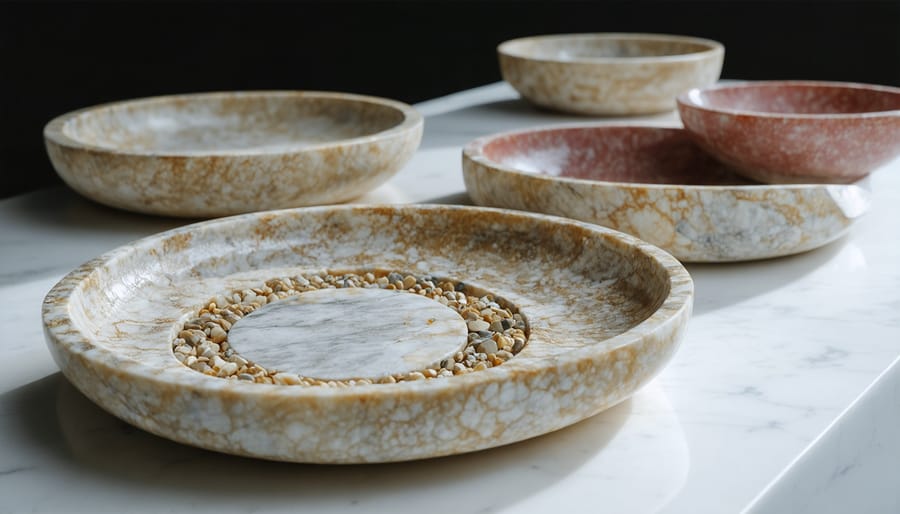
Natural Stone Varieties Used in Fine Dinnerware
Artisanal dinnerware has evolved beyond traditional ceramics, with natural stone emerging as a sophisticated choice for fine serving pieces. Just as stone-infused cooking tools have revolutionized kitchen functionality, stone varieties are now transforming the presentation of culinary creations.
Marble stands as the most popular choice for elegant serving platters and cheese boards. Its naturally cool surface temperature makes it ideal for serving chilled appetizers, desserts, and fresh seafood. Available in whites with gray veining, rich blacks, and warmer beiges, marble offers diverse aesthetic options. When properly sealed with food-safe treatments, marble resists staining and maintains its lustrous finish through repeated use.
Granite brings exceptional durability and heat resistance to serving applications. Its densely crystalline structure withstands temperature fluctuations better than most stones, allowing for versatile use from chilled presentations to warm bread service. The speckled patterns found in granite—ranging from subtle salt-and-pepper effects to bold movement—create visual interest that complements both rustic and contemporary table settings. Its non-porous nature when sealed makes it highly resistant to bacteria and odors.
Slate offers a dramatic, modern aesthetic with its fine-grained texture and dark gray to black coloration. This metamorphic stone provides a striking backdrop for colorful foods and artistic plating. Its naturally matte surface creates an appealing contrast to glossy glazed dishes, while its ability to retain temperature makes it practical for both hot and cold service.
Quartzite combines marble’s elegance with granite’s durability. This metamorphosed sandstone features flowing patterns and comes in colors from pristine whites to soft golds. Its hardness and low porosity make it exceptionally practical for frequent use, while its translucent quality adds subtle depth to table presentations.
The Functional Benefits Beyond Beauty
Temperature Control for Perfect Presentation
One of the most practical advantages of artisanal stone dinnerware lies in its exceptional thermal properties. Natural stone’s temperature retention capabilities make these pieces remarkably versatile for entertaining. Chill marble or granite plates in the refrigerator for 30 minutes before serving, and they’ll keep salads, seafood, and chilled appetizers refreshingly cool throughout your meal. The dense composition of natural stone absorbs and maintains cold temperatures far longer than ceramic or porcelain alternatives.
Conversely, these same thermal properties work beautifully for hot dishes. Warm stone platters in a low oven before plating warm bread, roasted vegetables, or grilled meats. The pre-heated surface helps maintain optimal serving temperatures, ensuring your carefully prepared dishes arrive at the table as intended and stay warm through conversation and multiple servings.
This temperature flexibility makes stone dinnerware particularly valuable for outdoor entertaining, buffet presentations, and formal dinner parties where timing matters. The stone acts as a natural temperature regulator, reducing the need for chafing dishes or constant trips to the kitchen, allowing hosts to focus on their guests rather than food logistics.
Longevity and Sustainability
Stone-embedded artisanal dinnerware represents a significant investment in longevity that challenges our throwaway culture. Unlike conventional ceramic or porcelain pieces that chip and crack with regular use, these handcrafted serving dishes incorporate natural stone’s inherent durability, offering exceptional resistance to thermal shock, scratching, and everyday wear. The dense composition of materials creates pieces that can withstand decades of daily use without degradation in appearance or function.
This extended lifespan translates directly into sustainable consumption. When a single serving platter can serve your family for generations rather than requiring replacement every few years, the environmental impact diminishes substantially. The reduction in manufacturing demand, transportation emissions, and landfill waste becomes significant when multiplied across households. Similar to natural stone cookware, these pieces embody the principle of buying once and buying well.
The investment cost per use decreases dramatically over time, making artisanal stone-embedded dinnerware economically sensible despite higher upfront prices. Many collectors find these pieces appreciate in value, particularly limited-edition works from recognized artisans, adding another dimension to their sustainability profile by maintaining worth beyond mere functionality.
Design Styles and Applications in Modern Dining
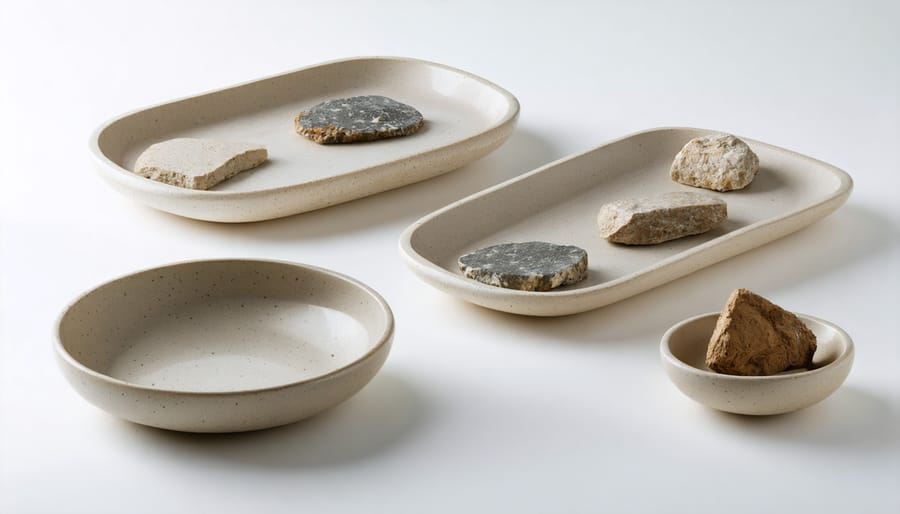
From Rustic to Contemporary: Matching Your Aesthetic
Artisanal dinnerware with stone elements adapts beautifully across diverse interior styles, allowing you to match your existing aesthetic while introducing natural elegance to your table settings.
For contemporary minimalist spaces, seek pieces featuring clean geometric lines with subtle stone inlays. Matte black or white ceramic plates embedded with polished slate or granite create sophisticated contrast without overwhelming modern sensibilities. These designs typically showcase restraint, with stone accents positioned strategically along rims or as centered focal points. The smooth, honed finish of the stone complements the understated nature of contemporary design while adding tactile interest.
Rustic farmhouse enthusiasts will appreciate serving pieces that celebrate raw, organic beauty. Look for handcrafted platters featuring rough-hewn limestone, sandstone, or fieldstone integrated into earth-toned ceramics. These pieces often display visible tool marks and irregular edges that enhance their artisanal character. The natural variations in stone texture and coloring complement weathered wood tables and vintage linens, creating an authentic farm-to-table atmosphere.
Elegant formal dining calls for refined pieces incorporating polished marble or travertine accents. Creamy marble inlays on fine porcelain serving dishes elevate special occasions, while gold or silver metallic glazes alongside white Carrara marble details add luxurious touches. These sophisticated designs work beautifully in traditional dining rooms or upscale entertaining spaces.
When selecting pieces, consider how the stone’s color palette, finish, and integration style harmonize with your existing dinnerware, table linens, and overall interior design. Quality artisanal pieces transcend trends, offering timeless appeal that adapts as your style evolves.
Ideal Uses for Stone-Embedded Serveware
Stone-embedded serveware excels in applications where visual impact meets functional performance. These pieces naturally shine as cheese and charcuterie boards, where the stone’s cool surface helps maintain optimal serving temperatures for dairy and cured meats while providing an artful backdrop for arranging accompaniments. The inherent variations in stone patterns create natural visual divisions for different selections without requiring formal compartments.
For appetizer presentations, smaller stone pieces offer individual serving platforms that elevate simple offerings into memorable first impressions. The substantial weight and texture signal quality to guests before they’ve tasted a single bite. Stone’s thermal properties make these pieces particularly effective for cold appetizers like oysters, ceviche, or fresh vegetables with dip.
Dessert presentations benefit from the dramatic contrast between delicate pastries and robust stone surfaces. A slice of chocolate torte or panna cotta gains visual gravitas when plated on marble or slate, while the cool surface helps temperature-sensitive desserts maintain their structure during service.
Beyond individual courses, larger stone platters function as striking centerpieces for special occasions. Whether displaying seasonal fruits, artisan breads, or simply serving as sculptural focal points, these pieces anchor table settings with natural elegance that conventional serveware cannot replicate.
Selecting Quality Stone-Embedded Dinnerware
What to Look for in Craftsmanship
When evaluating artisanal dinnerware with embedded stone elements, the quality of craftsmanship becomes immediately apparent through several key indicators. Start by examining how securely the stones are set into the base material. Quality pieces feature stones that are firmly embedded without any movement or gaps around the edges. Run your fingers along the transition points between stone and ceramic or wood—there should be no sharp edges or rough spots that could catch on linens or scratch surfaces.
The finish is equally critical. Food-safe glazes and sealants are non-negotiable for any piece that will contact consumables. Ask makers about their finishing materials and look for certifications indicating food-grade safety standards. The surface should feel smooth to the touch, with no sticky residue or chemical odor that might indicate improper curing.
Weight distribution reveals much about construction quality. Well-crafted pieces feel balanced in your hand, with stones positioned thoughtfully to maintain stability when the dish is loaded with food. Heavier stones should be strategically placed to prevent tipping, while lighter accent stones can be positioned more decoratively.
Finally, examine the overall integration of materials. Superior craftsmanship shows intentionality in how stones complement the form and function of each piece. Color combinations should feel cohesive rather than random, and stone placement should enhance rather than hinder the vessel’s practical use. Look for consistency across multiple pieces if purchasing a set, as this demonstrates the maker’s ability to replicate their work with precision.
Understanding Pricing and Investment Value
Artisanal dinnerware pricing reflects several key factors that discerning collectors should understand. The type of natural stone significantly impacts cost—rare materials like lapis lazuli or premium marble command higher prices than more common stones. Craftsmanship level plays an equally important role, as pieces requiring extensive hand-finishing, intricate stone inlay work, or specialized techniques justify premium pricing.
Size and complexity matter considerably. Larger serving platters with elaborate stone arrangements require more materials, time, and skill than simple appetizer plates. Artist reputation also influences value, particularly when purchasing from established artisans with proven track records of quality and innovation.
These pieces represent worthwhile investments for several compelling reasons. Unlike mass-produced tableware, artisanal stone-embedded dinnerware typically appreciates in value, especially limited editions or works by recognized craftspeople. The durability of natural stone ensures decades of use, making the cost-per-use remarkably economical over time. For design-conscious consumers, these pieces serve dual purposes as functional dinnerware and display-worthy art that elevates interior aesthetics.
Additionally, the unique character of each handcrafted piece means you’re acquiring something truly one-of-a-kind—an increasingly rare quality in today’s market. The investment extends beyond monetary value to encompass the preservation of traditional craftsmanship and the daily enjoyment of exceptional materials.
Caring for Your Stone-Embedded Serving Dishes
Daily Cleaning and Maintenance
Proper daily care preserves the beauty and integrity of your artisanal stone-embedded dinnerware for generations. After each use, hand wash pieces with warm water and a pH-neutral dish soap specifically formulated for natural materials. These gentle cleaners maintain the stone’s natural finish without stripping protective sealants or causing surface erosion.
Use soft sponges or microfiber cloths during cleaning, avoiding abrasive scrubbers, steel wool, or harsh brushes that can scratch both the stone elements and any glazed ceramic components. Pay special attention to the junction points where stone meets other materials, gently removing food particles without excessive scrubbing.
Immediately after washing, dry pieces thoroughly with a clean, lint-free cloth rather than allowing them to air dry. This prevents water spots on stone surfaces and reduces mineral deposit buildup that can dull the natural luster over time.
Never place artisanal stone dinnerware in the dishwasher. The combination of high heat, harsh detergents, and powerful water jets can damage sealants, loosen embedded stones, and compromise the craftsmanship that makes these pieces unique. Similarly, avoid bleach, ammonia-based cleaners, acidic substances like lemon juice or vinegar, and any products containing alkaline compounds, as these can etch or discolor natural stone surfaces permanently.

Protecting and Preserving Stone Surfaces
Stone-embedded dinnerware requires thoughtful maintenance to preserve its beauty and functionality for years to come. The sealing requirements vary significantly by stone type—dense materials like granite and soapstone naturally resist staining, while porous stones such as marble and limestone benefit from food-safe sealants applied annually. Many artisans pre-seal their pieces, but confirming this detail at purchase ensures proper protection from day one.
Stain prevention begins with prompt cleanup. Acidic foods like citrus, vinegar, and tomato-based sauces can etch marble and limestone surfaces if left to sit. Blot spills immediately rather than wiping, which can spread the stain. For oil-based residues, use warm water and mild dish soap, avoiding harsh chemicals that may degrade sealants or damage the stone’s natural finish.
Long-term care mirrors principles for caring for natural stone in other applications. Store pieces with protective padding between them to prevent chipping. Avoid thermal shock by not transferring items directly from refrigerator to oven. Periodically assess the sealant by placing water droplets on the surface—if they bead up, protection remains intact; if absorbed, resealing is needed. This proactive approach maintains the original luster while honoring the craftsmanship invested in each piece.
Artisanal stone-embedded serving dishes represent a meaningful convergence of practical utility and artistic craftsmanship. These pieces transcend their functional purpose, transforming everyday dining into an elevated sensory experience. When you invest in handcrafted dinnerware that incorporates natural stone elements, you’re not simply purchasing tableware—you’re acquiring functional art that reflects millions of years of geological history and the skilled vision of contemporary artisans.
The enduring appeal of these serving pieces lies in their duality. They perform beautifully in practical terms, offering excellent heat retention, durability, and food-safe surfaces that enhance meal presentation. Simultaneously, they serve as conversation catalysts, drawing guests’ attention to the unique patterns, textures, and stories embedded within each stone inclusion. Every meal becomes an opportunity to appreciate the intersection of nature’s artistry and human creativity.
As contemporary dining culture increasingly values authenticity and connection to natural materials, artisanal stone-embedded dinnerware occupies a distinctive position. These pieces satisfy our growing desire for objects with substance and meaning—items that resist the disposable mentality of mass production. Looking ahead, the appeal of natural stone in residential settings will only strengthen as consumers seek tangible connections to the earth’s materials within their living spaces. Choosing artisanal dinnerware embedded with stone represents both a practical investment in quality that lasts generations and an aesthetic commitment to bringing nature’s timeless beauty into your home. These pieces will continue enriching your dining experiences while maintaining their visual and functional integrity for years to come.