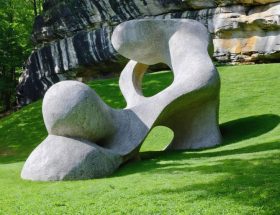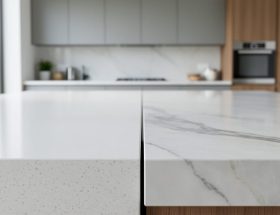
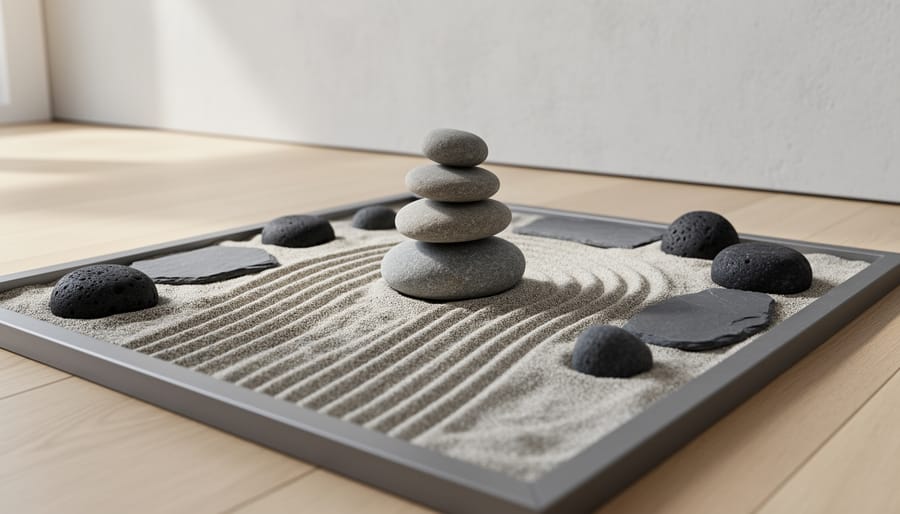
Zen stone artwork is the deliberate arrangement of natural stones, whether stacked, set in raked gravel, or mounted as sculpture, to create a quiet focal point that invites calm and close attention. Rooted in Japanese garden design and Buddhist contemplative practice, it relies on restraint: a few well-chosen stones, placed with care, do the work that a crowded room of decor can’t.
That simplicity is why it has moved indoors. Designers now specify balanced cairns, river-stone wall panels, and tabletop stone gardens in living rooms, spas, offices, and entryways, where they add texture and a sense of stillness without competing with the architecture. Each piece also carries the character of its material, from the smooth, water-worn curves of basalt cobbles to the layered banding of slate.
This guide explains what zen stone artwork means, how its calming effect works, which forms and stones are most common, and how to select, place, and care for it at home. Real-world case studies and photography throughout show how natural stone translates from a traditional garden idea into modern interior design.
What Zen Stone Artwork Means
Why the Style Fits Modern Interiors
Minimalism, organic modern, and Japandi all start from the same idea: fewer objects, chosen with care. Zen stone artwork fits that approach almost naturally. A single balanced cairn or a honed slab on a console table gives a room a point of focus without adding clutter, which is exactly what a restrained interior needs.
Texture is the other draw. Modern spaces often lean on smooth drywall, glass, and pale wood, and those surfaces can read flat. Stone supplies depth. Its veining, grain, and subtle color shifts add visual interest that doesn’t compete with the rest of the palette, so it sits comfortably beside linen, oak, and plaster.
Japandi design, which blends Japanese calm with Scandinavian warmth, treats stone as a natural bridge between the two. Organic modern goes a step further and prizes materials that look like they came from the earth, not a factory.
That’s where natural stone pulls ahead of synthetic decor. A resin sculpture or printed canvas is identical from one piece to the next. Every stone is unique, and it ages gracefully, so its character grows with the room instead of fading.
How Zen Stone Artwork Works: Balance, Texture, and Calm

Zen stone artwork works because it follows a few simple visual rules that the eye reads instantly, even if you never learn their names.
The first is visual weight. Stones carry heavy, solid presence, so placement matters more than quantity. A larger stone set off-center and balanced by a smaller one nearby feels settled, while a symmetrical pair can look stiff. Designers also favor odd-number groupings, usually three or five, because they feel natural and avoid the formal “matched set” look.
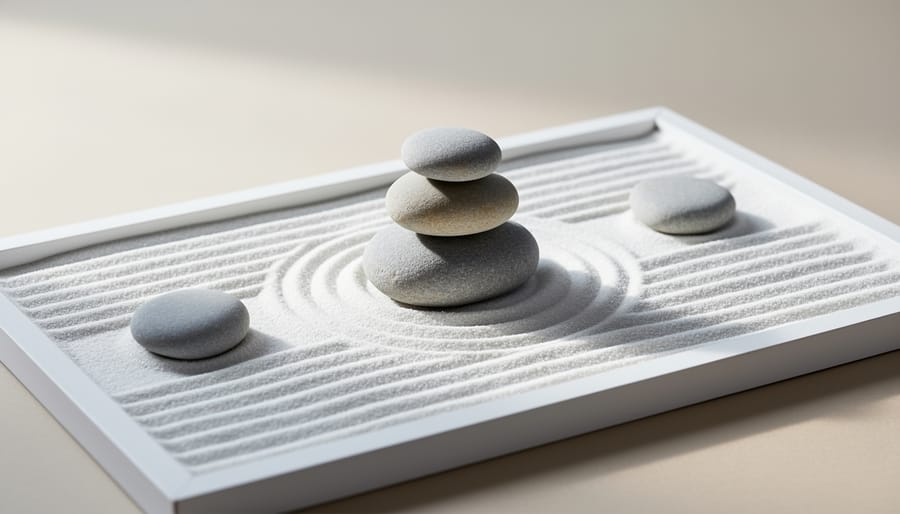
The second is negative space. The empty area around a stone is part of the piece. A single boulder on a clean shelf or a few pebbles in a wide tray gives the eye somewhere to rest, which is where the calm comes from.
Texture does the rest. Pairing a rough, split face with a polished or honed one creates quiet contrast, and the stone’s own veining and color shifts give the eye a slow path to follow. Marble swirls, slate layers, and the speckle of granite all do this without any added decoration.
Making a piece starts with selection. Makers choose stones for their shape, grain, and natural balance points, then cut slabs or trim bases where needed. Honing smooths a surface to a soft matte, and polishing brings out depth and color. For stacked cairns, stones are often fitted so their contact points lock together, and a discreet pin or adhesive adds stability.
Safety deserves as much attention as looks. Tall stacks, heavy slabs, and wall-mounted panels should be anchored to the surface or wall rather than simply balanced, especially in homes with children, pets, or busy walkways. The same engineering thinking behind safe stone installation applies at home: know the weight, check the support, and secure the piece so it stays put.
Types of Zen Stone Artwork and the Stones Behind Them
Common Forms: Cairns, Sculptures, Wall Panels, and Tabletop Gardens
Zen stone artwork comes in four main forms, and each one suits a different kind of space. Choosing by form first makes it much easier to narrow down the right piece.
- Cairns: balanced stacks of three to five stones, best on a console, entry table, or windowsill where they can sit undisturbed.
- Sculptures: carved or naturally shaped monoliths with a single strong silhouette, ideal as floor or pedestal focal points in living rooms and lobbies.
- Wall panels: framed or mounted stone slabs that show off veining and color, well suited to feature walls, hallways, and spa-style bathrooms.
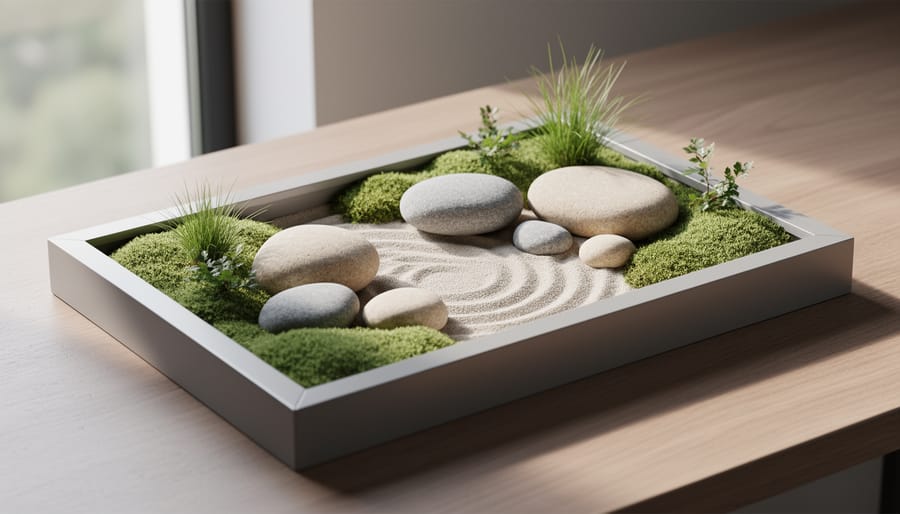
- Tabletop gardens: miniature trays of sand or pebbles with a few placed stones, a natural fit for coffee tables and home office desks.
Scale matters as much as form. A tall carved monolith can overwhelm a small entryway, while a tiny tabletop tray gets lost in a large open-plan room. Match the size of the piece to the visual weight of the surrounding furniture, and leave plenty of empty space around it so the stones can do their quiet work.
Wall panels are the most space-efficient option because they use vertical surface instead of floor or table area. Cairns and sculptures, by contrast, ask for a clear surface and a stable base. Think about where people will walk, reach, and gather before you commit to a spot.
Choosing the Right Stone: Marble, Slate, Basalt, Granite, and River Rock
Each stone brings a different personality to a piece, so the right choice depends on the mood you want and the room it will live in.
Marble is the most refined option, with soft veining and a luminous, polished finish. It is also more porous than the others, so acidic spills like wine or citrus can etch the surface. A sealer and a quick wipe-up keep it looking crisp, which makes it better suited to a console or shelf than a kitchen counter.
Slate is a fine-grained rock that splits into thin, layered sheets. It offers a matte, textured look in charcoal, green, or rust tones, and it works well for wall panels and tabletop trays. It is dense and low in porosity, so it resists stains with little effort.
Basalt is a dark volcanic rock with a quiet, even grain. It can be honed smooth or left rough, and it pairs well with pale walls and wood. It is heavy and tough, which suits carved monoliths and stable cairns.
Granite is a durable, crystalline stone with a speckled pattern. Polished granite resists scratches and heat, so it holds up in busy entryways and offices. It is the most forgiving choice for anyone worried about wear.
River rock is shaped by water into smooth, rounded forms with natural color variation. Because the surface is already worn, small nicks hardly show, and a damp cloth is usually all the care it needs.
A common belief is that natural stone is too delicate for indoor decor. In practice, most of these stones are harder than many everyday materials and need only light dusting and occasional gentle cleaning. Sealing matters mainly for marble and other porous stones, and even that takes just minutes a year.
How Zen Stone Artwork Is Used in Modern Spaces
Living Rooms, Entryways, Bathrooms, and Home Offices
The easiest way to bring zen stone artwork home is to match the piece to the way each room is actually used. Calm spaces need restraint, so one well-chosen piece usually works better than several competing ones.
- Living room: set a balanced cairn or low stone tray on a coffee table or console, and leave generous empty space around it so the stones read as a focal point.
- Entryway: place a carved monolith or framed stone slab at eye level on a narrow table, where it greets guests and sets a quiet tone before they step further in.
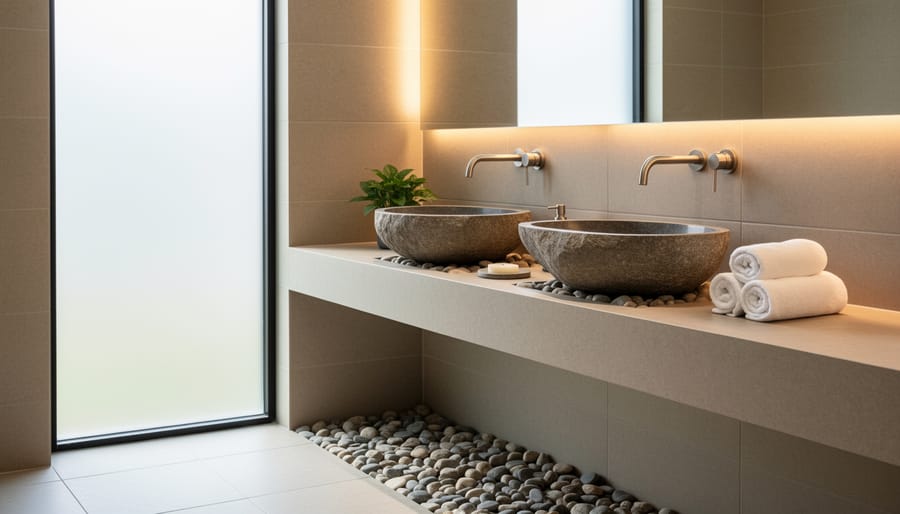
- Bathroom: arrange smooth river pebbles in a shallow stone tray beside the tub or vanity, and pair them with a candle for a spa-style feel.
- Home office: keep a small tabletop stone garden or a single polished rock on the desk as a screen-free pause for the eyes.
Bathrooms deserve a little extra thought because moisture is part of the setting. Dense stones such as basalt or polished granite handle humidity well, while porous types like some marbles may need sealing. If you are planning a full renovation, a modern stone bathroom can tie these accents into surfaces and fixtures for a more cohesive look.
Whichever room you choose, vary the textures. A rough, unpolished stone beside a honed one adds depth without adding clutter.
Case Studies: Zen Stone Art in Residential and Commercial Projects
Real projects show how zen stone art behaves once it leaves the showroom and meets actual rooms, light, and foot traffic. The three scenarios below are composites drawn from common installation patterns rather than named commissions, so treat them as illustrations of the approach, not citations of specific buildings.
Spa and wellness space. The design goal was a quiet threshold between the changing area and treatment rooms. The designers chose honed black basalt, set as a low cairn of three stones on a recessed plinth, with a shallow basin of river rock beside it. Basalt’s dark, matte surface absorbs glare under warm lighting, which keeps the eye resting rather than scanning. The result is a focal point guests slow down for, with almost no maintenance beyond dusting.
[Image: Basalt cairn on a recessed plinth in a spa corridor. Caption: Honed basalt and river rock create a calm pause point between zones.]
Hotel lobby. Here the goal was a memorable first impression without the clutter of traditional decor. A large framed slab of veined marble was mounted as a wall panel behind the reception desk, paired with a single carved monolith on the floor. Because lobbies need pieces that suit the building, the team commissioned site-specific stone sculptures sized to the double-height space. The scale and natural veining gave the entrance a sense of permanence that guests remembered.
[Image: Marble wall panel and carved monolith in a hotel lobby. Caption: Scale and veining give the entrance a grounded, unhurried character.]
Residential living area. The homeowners wanted serenity without a full redesign. A polished slate tabletop garden and a three-stone river rock arrangement sat on the coffee table and a nearby console, echoing the room’s neutral palette. Odd-numbered groupings and plenty of negative space kept the look restrained. The result was a living room that felt calmer immediately, using pieces light enough to rearrange seasonally.
[Image: Slate tabletop garden and river rock grouping on a coffee table. Caption: Small stone groupings add texture without crowding the room.]
Choosing, Placing, and Caring for Your Piece
Start with scale. A good rule is that a piece should fill roughly two-thirds of the surface it sits on, leaving open space around it. Tiny stones on a long console look lost, while a heavy monolith can crowd a small side table. Match the color palette to your room: warm greige limestone suits cream and oak interiors, while dark basalt or slate gives crisp contrast against pale walls. Lighting matters just as much. A side-lit surface shows off veining and rough texture, and a soft downlight makes polished stone glow.
Ask your supplier where the stone came from. Reputable dealers can tell you the quarry or region, and reclaimed or offcut stone from larger projects is a sustainable choice that often costs less. Local stone also cuts transport emissions.
Weight and stability come next. Place heavier pieces on solid furniture rated for the load, never on the edge of a shelf. In homes with children or pets, keep stacked cairns low and wide at the base, or glue the stones together with a stone-safe adhesive. Felt pads under each piece protect furniture and reduce slipping.
Care is simple. Dust weekly with a soft dry cloth, and wipe with a damp cloth and a drop of pH-neutral soap when needed. Skip vinegar and citrus cleaners, which can etch marble and limestone. Porous stones like these benefit from a penetrating sealer every year or two. If a piece has dulled with age, there are options for resurfacing worn stone. And if a hard-surfaced room feels noisy, a few simple steps can fix stone echo without hiding the stone.
Zen Stone Artwork: Common Questions
Readers tend to ask the same handful of things before they bring a piece home. Here are the clearest answers.
Is zen stone art only for minimalist homes?
No. The restraint of a few well-chosen stones suits minimalist rooms, but the natural texture also softens traditional, rustic, and eclectic spaces. A single piece can give a busy room one quiet place for the eye to rest.
Do the stones need sealing?
It depends on the stone. Dense, low-porosity options like granite and basalt usually need little or no sealing, while marble and other porous stones benefit from a sealer, especially near water or food.
Can I use it both indoors and outdoors?
Yes, though the stone matters. Granite, basalt, and river rock handle weather well, while polished marble can etch or stain outside, so keep delicate finishes under cover.
Is it heavy or hard to install?
Stone is dense, so even small pieces carry real weight. Tabletop trays and cairns just need a stable, level surface, but large wall panels should be anchored by a professional.
If your question isn’t here, a stone supplier or interior designer can usually answer it quickly. They can also tell you how a specific stone will behave in your home, which is often the deciding factor.
Zen stone artwork comes down to a simple idea: let a few well-chosen stones do the work. Whether it’s a balanced cairn on a console table, a honed slab framed on a wall, or a small raked tray on a desk, the effect rests on the same ingredients. Careful balance, generous negative space, and the natural texture and veining that only real stone offers.
That restraint is why it sits so comfortably within Stone Art in Modern Interior Design. It adds warmth and quiet focus to minimalist, organic-modern, and Japandi rooms without competing with them, and it brings a durable, naturally sourced material into spaces full of synthetic finishes.
If you’re ready to try it, start small. Handle a few stones in person, compare marble, slate, basalt, and river rock, and notice how each reads in your own light. For a custom piece, or a larger installation, talk with a stone professional or interior designer who can match scale, finish, and weight to your space.