
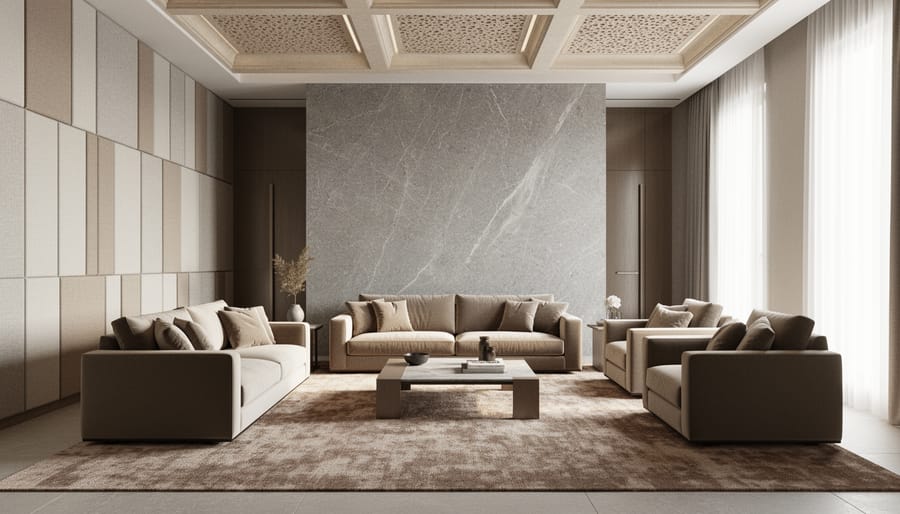
Position sound-absorbing materials strategically in stone-heavy interiors by installing fabric-wrapped acoustic panels on walls perpendicular to major stone surfaces, incorporating upholstered furniture to break up hard reflective planes, and selecting area rugs sized to cover at least 60% of stone flooring in primary gathering spaces. These interventions allow you to preserve the visual drama of natural stone while reducing reverberation times to comfortable levels between 0.4 and 0.8 seconds.
Layer different stone finishes within the same space to naturally control sound reflection. Honed or leathered surfaces absorb approximately 15-20% more sound than polished stone, making them ideal for upper wall sections and ceiling applications, while reserving high-gloss finishes for accent walls or lower sections where their reflective properties enhance spatial depth without overwhelming the acoustic environment.
Integrate sustainable stone design with acoustic solutions during the planning phase rather than as afterthoughts. Specify perforated stone panels backed with sound-absorbing materials for feature walls, design coffered ceilings that combine stone elements with acoustic insulation, or incorporate three-dimensional stone textures that diffuse sound waves while adding sculptural interest.
Balance stone’s hardness by introducing complementary soft materials in proportions that match your space’s function. Restaurants require approximately 40% sound-absorbing surfaces, while residential kitchens perform well with 25-30% coverage. This calculated approach maintains stone’s aesthetic prominence while ensuring conversations remain intelligible and ambient noise stays controlled.
The Acoustic Nature of Stone: Understanding Sound Behavior
How Stone Reflects Sound
To understand why stone creates unique acoustic challenges, we need to examine its fundamental physical properties. Stone is an inherently hard, dense material with a smooth, non-porous surface structure. These characteristics make it an excellent reflector of sound waves rather than an absorber.
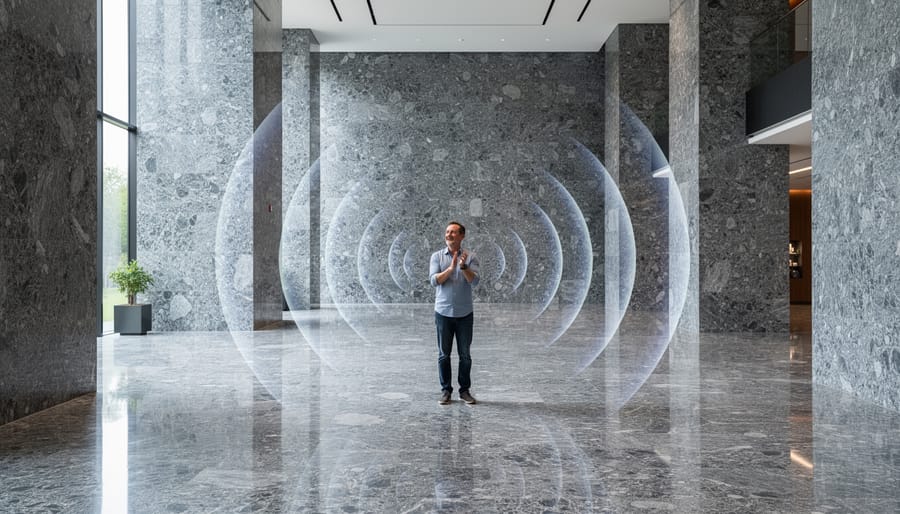
When sound waves encounter a stone surface—whether marble, granite, limestone, or travertite—they bounce off rather than penetrating into the material. This reflection occurs because stone’s molecular density prevents sound energy from being absorbed or dissipated. Instead, the sound waves ricochet back into the space, often striking other hard surfaces multiple times before finally losing energy.
This reflective quality becomes particularly problematic in spaces with multiple stone surfaces. A room clad in marble floors, stone walls, or granite countertops essentially creates a series of mirrors for sound. As sound waves bounce repeatedly between these hard surfaces, they generate two common acoustic issues: echo and reverberation.
Echo occurs when reflected sound waves return to the listener distinctly separated from the original sound, creating a repetitive effect. Reverberation, meanwhile, happens when multiple reflections blend together, causing sounds to linger and overlap. In stone-heavy environments like cathedral halls, museum galleries, or contemporary homes with extensive natural stone installations, these effects can significantly impact speech intelligibility and overall acoustic comfort.
The same properties that make stone visually stunning and durable—its hardness and density—are precisely what create acoustic challenges that require thoughtful design solutions.
Acoustic Differences Between Stone Types
Not all natural stones perform equally when it comes to acoustics. Understanding the distinct acoustic properties of different stone types helps architects and designers make informed choices for sound-sensitive spaces.
Marble stands out as one of the most reflective stones due to its dense, crystalline structure and minimal porosity. When polished, marble creates a nearly mirror-like surface that bounces sound waves with remarkable efficiency. This characteristic makes marble stunning for grand lobbies and concert halls where controlled reverberation enhances the experience, but it requires careful acoustic planning in conversational spaces.
Granite shares marble’s density but with subtle differences. Its coarser crystalline structure and slightly higher porosity can marginally reduce sound reflection compared to polished marble. The difference becomes more noticeable when granite receives a honed or flamed finish, which increases surface texture and creates microscopic irregularities that scatter sound waves rather than reflecting them uniformly.
Limestone offers notably different acoustic behavior. With higher porosity than marble or granite, limestone naturally absorbs more sound energy, particularly in its more porous varieties. The stone’s sedimentary structure contains tiny air pockets that dampen sound transmission, making it a gentler choice for residential applications where excessive echo poses concerns.
Travertine presents the most acoustically forgiving option among popular architectural stones. Its distinctive porous structure, characterized by natural holes and cavities, disrupts sound wave patterns effectively. Even when filled and polished, travertine retains enough texture to reduce harsh reflections. The unfilled versions provide even greater sound absorption, though they require appropriate sealing for practical applications.
The finish applied to any stone dramatically impacts its acoustic performance. Polished surfaces maximize reflection, while honed, brushed, or textured finishes introduce sound-scattering properties that soften acoustic harshness regardless of stone type.
Common Acoustic Problems in Stone-Clad Spaces
Excessive Echo and Reverberation
When sound waves encounter hard, reflective surfaces like natural stone, they bounce back rather than being absorbed, creating echoes and reverberation that can transform a stunning architectural space into an acoustically challenging environment. In rooms clad with marble, granite, or limestone, sound energy reflects repeatedly between parallel walls, floors, and ceilings, causing voices to overlap and blend into an unintelligible wash of noise.
The acoustic phenomenon becomes particularly problematic in large spaces with extensive stone installations. Cathedral-like lobbies, expansive dining halls, and open-plan offices featuring stone surfaces can experience reverberation times exceeding several seconds, making normal conversation frustrating and exhausting. Participants in meetings must strain to understand speech, while restaurants with stone-heavy interiors often become uncomfortably noisy as diners raise their voices to compensate, creating a self-perpetuating cycle of increasing sound levels.
The severity of these acoustic issues depends on several factors: the room’s dimensions, the percentage of stone coverage, ceiling height, and the presence or absence of sound-absorbing materials. Smooth, polished stone finishes reflect sound more efficiently than honed or textured surfaces, intensifying the echo effect. Without proper acoustic planning, these beautiful natural materials can inadvertently compromise the functional comfort of interior spaces, underscoring the importance of integrating acoustic solutions early in the design process.
Sound Amplification in Stone Bathrooms and Kitchens
Stone bathrooms and kitchens present unique acoustic challenges that homeowners should address during the design phase. Hard surfaces like granite countertops, marble floors, and tile walls reflect sound waves rather than absorbing them, creating an environment where running water, dishwashers, and garbage disposals can become surprisingly loud and disruptive.
The combination of multiple reflective surfaces in these compact spaces creates a reverberant echo chamber effect. A simple task like washing dishes or running the shower can generate noise levels that carry throughout adjacent living areas, particularly in open-concept floor plans where kitchens connect directly to dining and living spaces.
Strategic interventions can dramatically improve comfort without compromising the beauty of natural stone. Installing sound-dampening underlayment beneath stone flooring reduces impact noise transmission. Adding fabric window treatments, upholstered seating, or decorative acoustic panels on non-stone walls helps balance the hard surfaces. In kitchens, cabinet interiors lined with sound-absorbing materials minimize the clattering of dishes and cookware.
For bathrooms, consider incorporating textured stone finishes rather than highly polished surfaces, as subtle texture can diffuse sound reflections. Thick bath mats, fabric shower curtains, and wooden vanity elements introduce sound-absorbing materials that complement rather than detract from stone’s aesthetic appeal. These practical adjustments ensure your stone surfaces remain stunning focal points while maintaining peaceful, comfortable living environments.
Noise Issues in Commercial Stone Applications
Commercial spaces featuring extensive stone installations often face significant acoustic challenges that can compromise user comfort and functionality. Hotel lobbies clad in polished marble, restaurants with granite walls, and museums with travertine floors frequently amplify ambient noise to uncomfortable levels. When multiple conversations occur simultaneously in these hard-surfaced environments, sound waves reflect repeatedly between stone surfaces, creating a cacophony that forces people to raise their voices, which further intensifies the problem.
The issue becomes particularly acute during peak hours. A restaurant that seats 100 guests can experience sound levels exceeding 80 decibels when every stone surface—floors, walls, bar tops, and columns—reflects rather than absorbs sound energy. Similarly, office building lobbies with stone feature walls often struggle with intelligibility problems at reception desks, where reverberated sound masks clear communication.
The impact extends beyond mere discomfort. Studies show that excessive reverberation in dining establishments reduces patron satisfaction and decreases average visit duration. Retail spaces with poor acoustics see similar effects, as shoppers tend to leave environments where noise becomes overwhelming. Understanding these challenges allows designers to implement strategic acoustic solutions without sacrificing the timeless elegance and durability that natural stone provides.
Acoustic Design Strategies for Stone Spaces
Strategic Placement of Stone Surfaces
Strategic placement of stone surfaces requires thoughtful consideration of how sound behaves in your space. The key principle is creating acoustic balance by alternating reflective and absorptive surfaces rather than surrounding yourself with hard materials on all sides.
One of the most critical rules in acoustic design is avoiding parallel reflective surfaces facing each other. When two hard surfaces like stone walls or a stone floor and ceiling sit directly opposite, they create a phenomenon called flutter echo, where sound bounces back and forth rapidly, producing a harsh, metallic quality. To prevent this, ensure that if you have a stone floor, your ceiling incorporates sound-absorbing materials like acoustic panels, textured plaster, or fabric treatments.
Stone performs exceptionally well on floors and feature walls where you want durability and visual impact. However, reserve at least one or two surfaces in each room for softer materials. In kitchens with stone countertops and backsplashes, fabric window treatments and upholstered seating can provide necessary absorption. In bathrooms with stone tile, consider textured wallpaper or wood cabinetry on non-wet walls.
For large open spaces, break up expansive stone surfaces with strategic interruptions. A stone feature wall gains acoustic balance when flanked by drywall sections, artwork, or wooden panels. Vertical gardens, decorative screens, and furniture placement against stone surfaces all contribute to reducing excessive reflection.
The ceiling often provides the best opportunity for acoustic treatment. While stone floors deliver beauty and practicality, pairing them with sound-absorbing ceiling materials creates the vertical balance necessary for comfortable acoustics without sacrificing the natural stone aesthetic you desire.
Combining Stone with Sound-Absorbing Materials
Stone’s acoustic reflectivity doesn’t mean you must sacrifice its timeless beauty. The key to successful acoustic design lies in strategically combining stone with complementary sound-absorbing materials that enhance both aesthetics and performance.
Textiles offer one of the most effective and versatile solutions. Upholstered furniture, area rugs, and curtains introduce soft surfaces that absorb sound waves before they bounce off stone floors and walls. In a marble-clad dining room, for example, heavy drapes and cushioned seating can dramatically reduce reverberation while adding warmth and visual contrast to the cool stone surfaces.
Wood elements create a natural partnership with stone, providing both acoustic benefits and visual harmony. Acoustic wood panels with perforated or slatted designs absorb sound while maintaining an organic aesthetic that complements stone’s natural character. Wood ceiling treatments are particularly effective in spaces with stone flooring, capturing sound energy before it creates echoing problems.
Purpose-designed acoustic panels have evolved far beyond utilitarian appearance. Modern options include fabric-wrapped panels in custom colors, three-dimensional textured designs, and even panels that incorporate natural materials. These can be strategically placed on walls opposite stone features or in areas where sound reflection is most problematic.
Ceiling treatments deserve special attention in stone-heavy spaces. Acoustic ceiling tiles, suspended baffles, or clouds can intercept sound traveling upward from reflective stone floors. In open-plan spaces with stone columns or accent walls, suspended acoustic elements add architectural interest while controlling reverberation time.
The most successful designs layer these materials thoughtfully. A limestone-floored lobby might combine acoustic ceiling panels, upholstered seating areas, and strategically placed textile wall hangings to achieve optimal sound control without diminishing stone’s visual impact.
Textured and Carved Stone for Acoustic Control
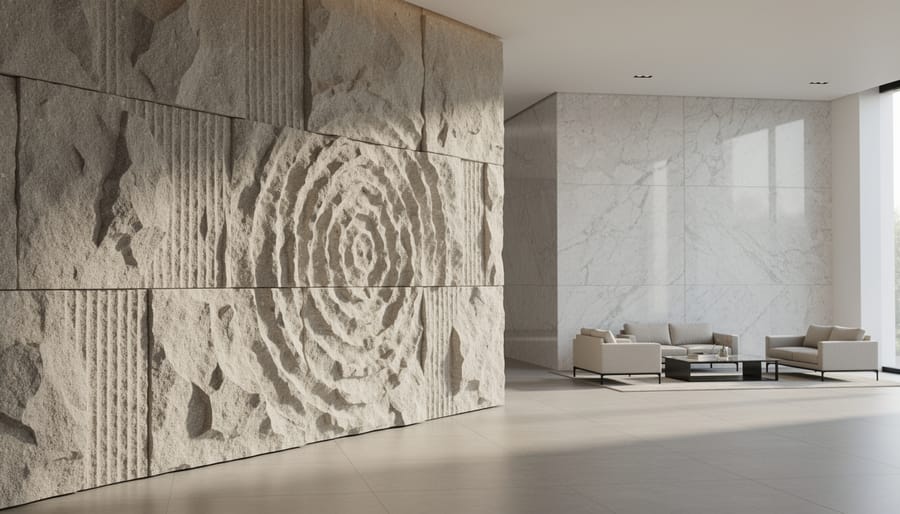
Stone’s acoustic performance transforms dramatically based on surface treatment. While polished stone creates sound reflections that can amplify echo, textured stone finishes work as effective sound diffusers by scattering sound waves in multiple directions rather than bouncing them directly back into the room.
Relief patterns, including fluted columns, carved geometric designs, and three-dimensional stone panels, break up flat surfaces that would otherwise reflect sound uniformly. These carved details create varying depths and angles that disperse acoustic energy across different frequencies, reducing problematic echoes while maintaining the natural beauty of stone. Bush-hammered, flamed, and split-face finishes provide similar benefits on wall applications, creating microscopic irregularities that disrupt sound wave patterns.
Contemporary architects increasingly specify textured stone wall treatments in high-traffic areas like hotel lobbies, office atriums, and residential great rooms where acoustic comfort is essential. Modern stone design technology enables precise customization of texture depth and pattern density, allowing designers to calibrate acoustic performance while achieving specific aesthetic goals. Combining textured stone with strategic placement creates spaces that celebrate natural materials without sacrificing sound quality.
Architectural Features That Improve Acoustics
Strategic architectural elements work alongside architectural stone features to create balanced acoustic environments. Coffered ceilings break up large reflective surfaces, scattering sound waves and reducing harsh echoes that often plague stone-clad spaces. Varying ceiling heights create natural sound zones, preventing sound from traveling uniformly throughout a room. Alcoves and recessed areas trap and diffuse sound energy, minimizing problematic reflections.
The key lies in combining hard and soft materials strategically. Stone panels paired with integrated acoustic fabrics, wood elements, or specialized sound-absorbing materials create visual interest while managing reverberation. Textured stone surfaces naturally diffuse sound better than polished finishes. Designers can incorporate perforated stone panels backed with acoustic insulation, maintaining stone’s aesthetic appeal while dramatically improving sound quality. These architectural interventions allow natural stone to remain the focal point without compromising acoustic comfort.
Real-World Solutions: Stone Projects with Excellent Acoustics
Residential Case Study: Open-Plan Kitchen with Stone Surfaces
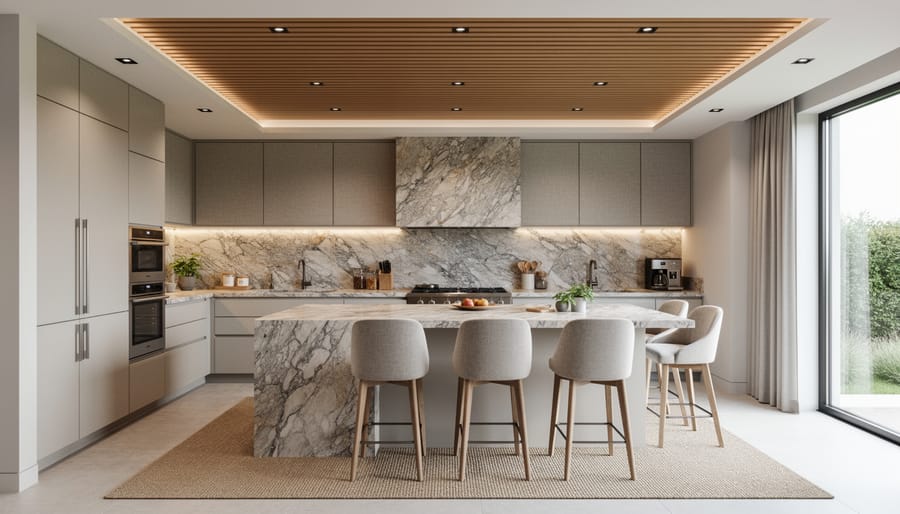
A contemporary Boston townhouse kitchen demonstrates how thoughtful acoustic design preserves the beauty of stone while creating a livable space. The homeowners selected honed marble countertops and a full-height limestone backsplash but were concerned about noise amplification during meal preparation and family gatherings.
The design team addressed these concerns by incorporating several complementary solutions. They installed custom fabric-wrapped acoustic panels on the ceiling, painted to blend seamlessly with the home’s color palette. Wood cabinetry with soft-close mechanisms reduced impact noise, while a thick wool area rug in the adjacent dining space absorbed sound reflections. The designers also specified sound-dampening underlayment beneath the stone flooring.
Strategic placement of open shelving with ceramic dishware and glass containers added textured surfaces that helped scatter sound waves. A hanging pot rack with copper cookware provided additional acoustic diffusion without compromising the kitchen’s aesthetic.
The result is a sophisticated space where conversation flows naturally without raised voices, and the clatter of cooking doesn’t overwhelm the home. This project proves that stone-rich kitchens can achieve both visual impact and acoustic comfort through integrated design thinking.
Commercial Case Study: Restaurant with Stone Feature Walls
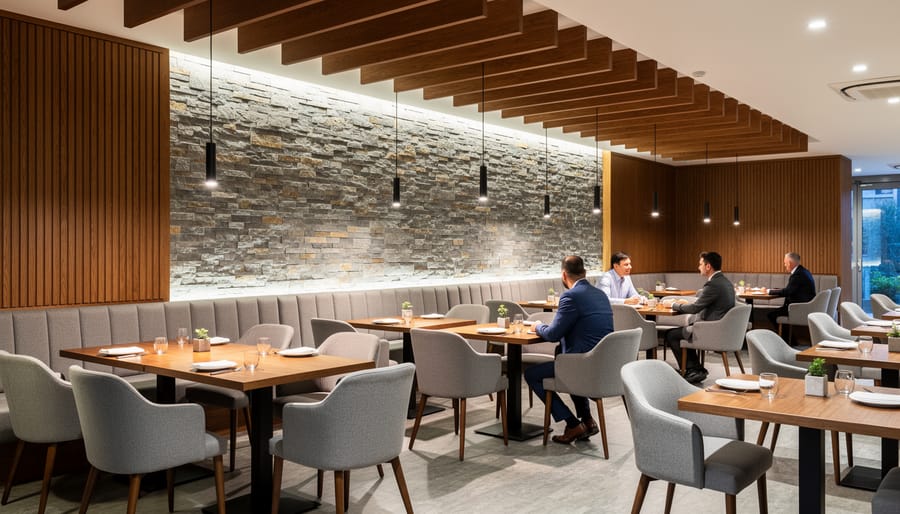
A contemporary urban restaurant in Chicago demonstrates how dramatic stone feature walls can coexist with excellent acoustics in a bustling dining environment. The establishment features floor-to-ceiling limestone walls that create a striking visual centerpiece, yet maintains comfortable sound levels that allow for easy conversation even during peak hours.
The design team addressed acoustic challenges through a multi-layered approach. While the limestone walls remained exposed to showcase their natural texture and variation, the ceiling incorporated perforated acoustic panels disguised within decorative coffers. These panels absorb mid to high-frequency sounds that typically bounce off hard stone surfaces.
Strategic placement of upholstered seating along the stone walls creates sound-absorbing zones at critical reflection points. The designers also integrated fabric acoustic panels behind select areas of decorative millwork, invisible to diners but effective at dampening excessive reverberation.
Custom area rugs anchor each dining section, while carefully selected light fixtures with fabric elements provide additional sound absorption overhead. The result is a space where the stone walls command attention without creating the harsh acoustics typical of hard-surfaced environments. Sound level measurements consistently remain between 65-70 decibels during service, well within the comfortable range for dining establishments. This project proves that thoughtful acoustic planning allows restaurants to embrace natural stone’s aesthetic impact without sacrificing guest comfort.
Public Space Case Study: Marble Lobby Design
A prestigious corporate headquarters in Chicago transformed 4,000 square feet of Calacatta marble into a welcoming lobby without the harsh acoustics typically associated with hard stone surfaces. The design team anticipated acoustic challenges early, integrating solutions that preserved the marble’s visual impact while ensuring conversation comfort.
The architects specified acoustic ceiling clouds suspended above the marble floor and walls, absorbing sound reflections before they could create echo. Strategic placement of upholstered seating zones broke up sound pathways, while custom fabric wall panels in the reception area complemented rather than competed with the marble’s elegance.
A critical decision involved varying surface textures throughout the space. While polished marble adorned feature walls, honed and brushed finishes on columns reduced sound reflection. The result measured at 0.8 seconds reverberation time, well within comfortable speech intelligibility range.
This project demonstrates that extensive marble installation need not sacrifice acoustic comfort when designers address sound behavior from project inception rather than as an afterthought.
Working with Professionals: Acoustic Consultants and Stone Designers
Engaging acoustic specialists early in the design process—ideally during the conceptual phase—yields the best results for stone-intensive spaces. While many projects proceed successfully with standard architectural practices, consider bringing in an acoustic consultant when designing performance venues, restaurants, galleries, or open-plan offices where stone features prominently. Buildings with high ceilings, extensive stone cladding, or hard flooring benefit significantly from professional acoustic analysis.
The collaboration between architects and stone designers alongside acoustic consultants creates a framework where aesthetic vision and functional performance align. Stone fabricators understand material properties that affect sound—surface textures, thicknesses, and installation methods—while acoustic experts quantify reverberation times and recommend targeted interventions. This partnership prevents costly retrofits and ensures design integrity remains intact.
When assembling your professional team, ask acoustic consultants about baseline reverberation measurements for your specific space type and how different stone finishes will impact sound behavior. Request computer modeling that visualizes acoustic performance before construction begins. Inquire about where sound-absorbing elements can integrate seamlessly without compromising stone’s visual impact.
Stone fabricators should be asked about textured finishing options, perforation possibilities for hidden acoustic backing, and installation techniques that accommodate acoustic underlayments. Discuss whether certain stone types in your palette offer better acoustic properties than others.
Effective professional collaboration involves regular communication throughout design development. Share acoustic reports with stone suppliers early, and invite fabricators to review acoustic requirements before finalizing details. This integrated approach ensures everyone works toward the same goal: spaces where natural stone’s beauty enhances rather than compromises acoustic comfort.
The notion that stunning natural stone design must come at the cost of acoustic comfort is outdated and simply untrue. As we’ve explored throughout this article, beautiful stone installations and excellent sound quality can absolutely coexist when acoustic principles are integrated thoughtfully into the design process. The key lies in early planning and collaboration between architects, acoustic consultants, and stone specialists.
Natural stone remains one of architecture’s most timeless and versatile materials, offering unmatched aesthetic appeal, durability, and value. Rather than avoiding stone in your projects due to acoustic concerns, embrace it as part of a holistic design strategy. By incorporating sound-absorbing materials in complementary areas, selecting appropriate stone finishes for different applications, and considering room geometry during initial planning stages, you can achieve spaces that are both visually striking and acoustically comfortable.
The successful projects highlighted in this article demonstrate that acoustic challenges are solvable design problems, not insurmountable obstacles. Whether you’re designing a grand hotel lobby, an intimate restaurant, or a residential great room, the strategic placement of acoustic panels, thoughtful furniture selection, and careful attention to surface treatments will ensure your stone features enhance rather than compromise the space.
As you embark on your next stone project, make acoustic design a priority from day one. Consult with professionals early, test materials and configurations, and remember that with proper planning, you never have to choose between beauty and function.