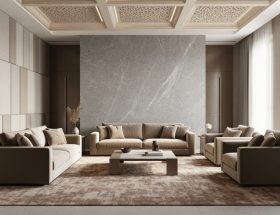
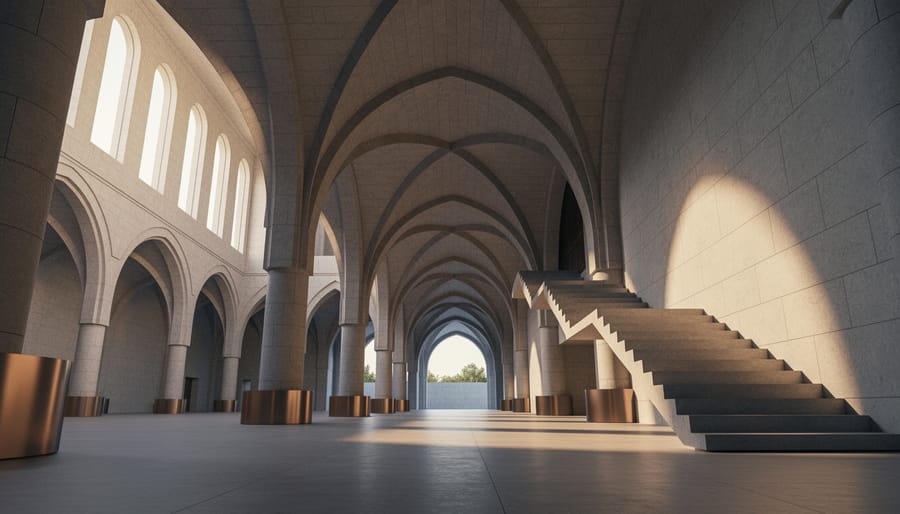
Stone structures become art when their load-bearing elements express rather than conceal the forces they resist. The soaring vaults of Gothic cathedrals, the graceful arches of Roman aqueducts, and the cantilevered stone staircases of Renaissance palazzos demonstrate how understanding compression, tension, and gravity transforms engineering into aesthetic experience. This principle—what engineer David Billington termed “structural art”—remains profoundly relevant for contemporary stone construction.
Structural art emerges at the intersection of three imperatives: efficiency in material use, economy of means, and elegance of form. Unlike sculpture, which serves no structural purpose, or conventional engineering, which prioritizes function alone, structural art reveals the logic of forces through visible design choices. A stone arch that expresses its thrust lines, a column that celebrates rather than disguises its compression role, or a dry-stacked wall that articulates the friction between stones—each transforms structural necessity into visual poetry.
Modern stone applications increasingly embrace this philosophy. Thin stone cladding systems now incorporate structural ribs that become facade patterns. Load-bearing stone walls feature deliberately expressed joinery that maps stress distribution. Interior stone columns employ contrasting materials at capitals and bases to highlight load transfer points. These approaches reject the notion that structure and ornament occupy separate realms, instead recognizing that how a building stands can be inseparable from how it moves us. Understanding structural art principles allows designers to specify stone installations where every technical decision serves dual purposes: holding up the building and elevating the human spirit.
What Makes Structure Into Art
The Three Pillars of Structural Art
Swiss engineer Robert Maillart pioneered the concept of structural art in the early 20th century, establishing three fundamental principles that continue to guide designers working with natural stone today. These pillars—efficiency, economy, and elegance—transform functional structures into works of art while maintaining practical integrity.
Efficiency centers on achieving maximum structural performance with minimum material use. In stone construction, this means selecting the right stone type and dimensions to carry loads effectively without excess weight or bulk. A properly designed stone column or arch distributes forces along natural compression paths, allowing the material’s inherent strength to shine while reducing unnecessary mass. This approach honors both the stone’s geological properties and environmental responsibility through sustainable stone design practices.
Economy extends beyond initial construction costs to encompass the entire lifecycle of a stone structure. While natural stone may require higher upfront investment than some alternatives, its durability, minimal maintenance requirements, and timeless appeal deliver exceptional long-term value. Economic considerations also include fabrication complexity and installation efficiency, factors that influence both budget and project feasibility.
Elegance represents the aesthetic dimension where structural necessity meets visual refinement. Unlike applied decoration, true elegance in structural art emerges from the honest expression of how forces flow through stone elements. A limestone vault that gracefully spans space while revealing its structural logic exemplifies this principle. The visual language speaks to both structural integrity and artistic sensitivity—clean lines, proportional relationships, and thoughtful detailing create beauty inherent to the structure itself rather than superficial ornamentation.
When these three pillars work in harmony, stone structures transcend their functional purpose to become meaningful architectural statements that inspire and endure.
Stone as the Original Structural Art Medium
Stone has served as humanity’s premier medium for structural art for millennia, a dominance rooted in its unique combination of physical properties and aesthetic qualities. Unlike other construction materials, stone possesses extraordinary compressive strength—the ability to bear tremendous loads without crushing—making it ideally suited for the grand arches, columns, and vaulted spaces that define architectural history. The Pantheon’s massive dome and the Gothic cathedrals’ soaring naves stand as testament to stone’s structural capabilities.
Beyond its engineering advantages, stone offers unparalleled permanence. Structures built in stone endure for centuries, even thousands of years, allowing architectural achievements to transcend generations. This longevity transforms functional structures into lasting monuments, where the boundary between engineering necessity and artistic expression dissolves completely.
Stone’s inherent beauty further elevates its status as a structural art medium. Each variety brings distinct colors, veining patterns, and textures that cannot be replicated by manufactured materials. When stone functions as structure rather than mere cladding, its natural character becomes integral to the architectural experience. The material itself tells a story—of geological formation, of skilled craftsmanship, of cultural values.
Contemporary architects continue to embrace stone for structural art precisely because it integrates function and beauty so seamlessly. When a marble column supports a building while simultaneously creating visual rhythm and reflecting light across a space, it exemplifies structural art’s fundamental principle: that the most elegant solution serves both practical and aesthetic purposes without compromise.
Structural Systems That Showcase Stone’s Beauty
Arches and Vaults
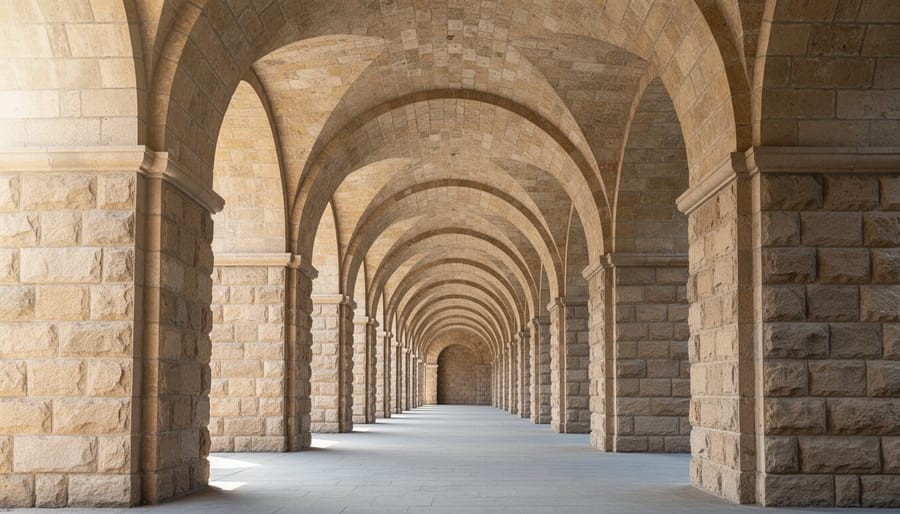
Arches and vaults represent one of humanity’s most elegant structural solutions, transforming the fundamental challenge of spanning space into architectural poetry. The genius of the arch lies in its ability to redirect vertical loads laterally through compression forces, converting downward weight into outward thrust that travels through each voussoir—the wedge-shaped stones that form the arch—to supporting piers or abutments. This compression-only load path makes stone an ideal material, as it excels under compressive stress.
The Romans perfected this principle over two millennia ago, as evidenced by the Pont du Gard aqueduct in France, where stacked stone arches still stand after 2,000 years without mortar. Medieval builders extended these principles vertically, creating soaring Gothic vaults that shaped cathedral spaces while efficiently channeling tremendous loads to exterior buttresses. The pointed arch reduced lateral thrust compared to semicircular forms, enabling unprecedented heights and the integration of large stained-glass windows.
Contemporary architects continue exploring these timeless principles with fresh perspectives. The Chapel of Valleacerón in Spain uses precisely cut limestone voussoirs in a contemporary interpretation of vault construction, proving that ancient structural logic remains relevant in modern design. Similarly, the stone shell structures at the Mapungubwe Interpretation Centre in South Africa demonstrate how compression-based vaulted forms create dramatic interior volumes while maintaining thermal comfort in extreme climates. These examples illustrate how understanding fundamental structural behavior allows designers to achieve both technical performance and aesthetic impact, embodying the essence of structural art.
Columns and Post-and-Lintel Systems
The post-and-lintel system represents one of the oldest and most visually compelling structural approaches in stone architecture. This elemental configuration pairs vertical columns with horizontal spanning elements to create openings and define space, establishing a rhythm that has captivated observers for millennia.
The elegance of this system lies in its honest expression of structural forces. Vertical columns transfer loads efficiently through compression, while horizontal lintels span between supports, creating a visual dialogue between upright and horizontal elements. When executed in natural stone, these components showcase the material’s inherent compressive strength while acknowledging its limitations in tension.
Proportion becomes paramount in column design. The relationship between a column’s height and diameter, known as its aspect ratio, determines both structural stability and aesthetic impact. Classical orders developed precise ratios that remain instructive today: slender columns create vertical emphasis and lightness, while more robust proportions convey permanence and strength.
The spacing between columns establishes architectural rhythm and influences how occupants experience a space. Closely spaced columns create intimacy and visual density, while wider spacing produces grandeur and openness. This modulation of intervals generates what architects call the intercolumniation, a design decision that fundamentally shapes spatial character.
Contemporary applications of post-and-lintel systems in stone often simplify classical precedents, emphasizing clean lines and material authenticity. Modern fabrication techniques allow for precision joinery and minimal visual connections, letting the stone’s natural beauty take center stage while maintaining structural integrity.
Cantilevers and Thin-Shell Stone Structures
Contemporary stone engineering has evolved to create structures that appear to defy gravity and material limitations. Cantilevered stone elements—supported at only one end—project dramatically from walls or floors, creating floating staircases, overhanging countertops, and suspended architectural features. These installations require precise load calculations and often incorporate hidden steel reinforcement or specialized anchoring systems to distribute weight safely while maintaining the illusion of weightlessness.
Thin-shell stone construction represents another frontier in structural innovation. Using modern stone fabrication techniques, including CNC machining and water-jet cutting, engineers can create stone panels as thin as 10-20 millimeters. These ultra-thin elements achieve remarkable spans when properly supported, making them ideal for feature walls, curved surfaces, and translucent applications when backlit.
The Apple Store locations worldwide showcase these principles effectively, featuring cantilevered stone stairs that appear to float without visible support. Similarly, Tadao Ando’s architectural projects demonstrate how thin stone shells can wrap entire facades while maintaining structural integrity. These applications require collaboration between architects, engineers, and stone fabricators to balance aesthetic ambition with safety requirements, transforming traditional masonry into contemporary sculptural statements that merge art with engineering precision.
Dry-Stacked and Mortarless Construction
Dry-stacked and mortarless construction represents one of the purest expressions of structural art in stone masonry. This ancient technique relies entirely on precise stone cutting, careful weight distribution, and the inherent friction between stones to create stable structures without adhesives or binding agents. The method demands exceptional craftsmanship, as each stone must be shaped to fit its neighbors with minimal gaps, creating compression joints that distribute loads effectively throughout the assembly.
The aesthetic appeal of dry-stacked construction lies in its honest expression of material and method. Without mortar to conceal imperfections, the mason’s skill becomes immediately visible in the tightness of joints and the rhythm of stone placement. Contemporary applications include gravity retaining walls, decorative facades, and feature walls where the natural stone texture takes center stage. This approach also offers practical advantages: the construction breathes naturally, allows for thermal expansion, and can flex slightly without cracking, making it particularly suitable for landscape applications and seismic regions where rigid mortared joints might fail.
Joining Strategies as Artistic Expression
Visible vs. Concealed Joints
In structural art with natural stone, the treatment of joints represents a fundamental design philosophy that shapes the overall aesthetic and conceptual approach. The decision to showcase or conceal connection points profoundly impacts how viewers perceive and experience the structure.
Visible joints celebrate the assembly process, making the construction logic transparent and honest. This approach reveals how individual stone elements work together, creating rhythm and pattern through repetition. Exposed mortarless joints in dry-stack walls or prominent metal connections in post-and-beam systems demonstrate structural integrity while adding visual texture. This transparency often resonates with contemporary design values of authenticity and craftsmanship, allowing the engineering to become ornamental. Architects favor this method when emphasizing modularity, materiality, or the human scale of individual components.
Concealed joints, conversely, create seamless surfaces where stone appears continuous and monolithic. Through precise cutting, book-matching, and careful installation, joints become nearly invisible, emphasizing the stone’s natural veining and color rather than its assembly. This approach suits projects seeking timeless elegance or where the stone’s inherent beauty should dominate without distraction.
Both philosophies serve structural art when applied intentionally. Visible joints excel in expressing structural systems and celebrating construction craft, while concealed joints focus attention on material qualities and spatial continuity. The choice should align with the project’s conceptual goals, whether highlighting human intervention or natural stone magnificence.
Traditional Joinery Techniques with Modern Impact
Traditional joinery methods translate beautifully into stone, creating connections that are both structurally sound and visually compelling. These time-honored techniques celebrate craftsmanship while adding authentic character to contemporary projects.
Mortise and tenon joints represent one of the oldest connection methods, where a projecting tenon fits precisely into a carved mortise. In stone construction, these joints create clean, elegant transitions between elements like columns and beams, with the visible connection becoming an architectural feature rather than something to hide. The precision required for proper fit showcases the mason’s skill and adds subtle shadow lines that enhance dimensionality.
Dowel connections use cylindrical stone or metal pins to join separate pieces, offering flexibility in design while maintaining structural integrity. These connections work particularly well for cladding systems and decorative elements, allowing larger compositions to be built from manageable stone sections.
Dovetail joints, with their distinctive wedge-shaped interlocking design, provide exceptional strength while creating geometric visual interest. Originally developed for woodworking, stone dovetails appear in applications ranging from stair treads to wall panels, where the exposed joint pattern becomes a decorative element that tells the story of construction.
Each technique demonstrates how structural necessity can drive aesthetic decisions, transforming functional connections into design opportunities that honor both material and craft.
Metal Fasteners and Contemporary Connection Systems
Modern connection systems have revolutionized how stone elements come together, enabling architects to create seemingly impossible structural configurations. Stainless steel pin systems now anchor stone panels with precision-engineered connections that remain invisible from the exterior, allowing the material’s natural beauty to take center stage. These mechanical fasteners distribute loads evenly while accommodating natural stone movement, preventing cracking and ensuring long-term stability.
Kerf-mounted anchors represent another breakthrough, where narrow slots cut into stone edges house metal clips that secure panels without visible hardware. This approach proves particularly effective for vertical cladding systems where clean lines define the aesthetic vision. High-performance structural adhesives complement mechanical systems, creating hybrid connections that enhance both strength and flexibility. Epoxy-based bonding agents now achieve remarkable tensile strength while maintaining elasticity to absorb thermal expansion.
Contemporary stone fabrication facilities employ computer-controlled machinery to create precise anchor points and connection details, ensuring each piece fits perfectly within the structural assembly. These technological advances allow designers to push boundaries, creating cantilevered stone staircases, thin-profile wall systems, and gravity-defying installations that showcase stone as both engineering marvel and sculptural medium.
The Aesthetics of the Joint Line
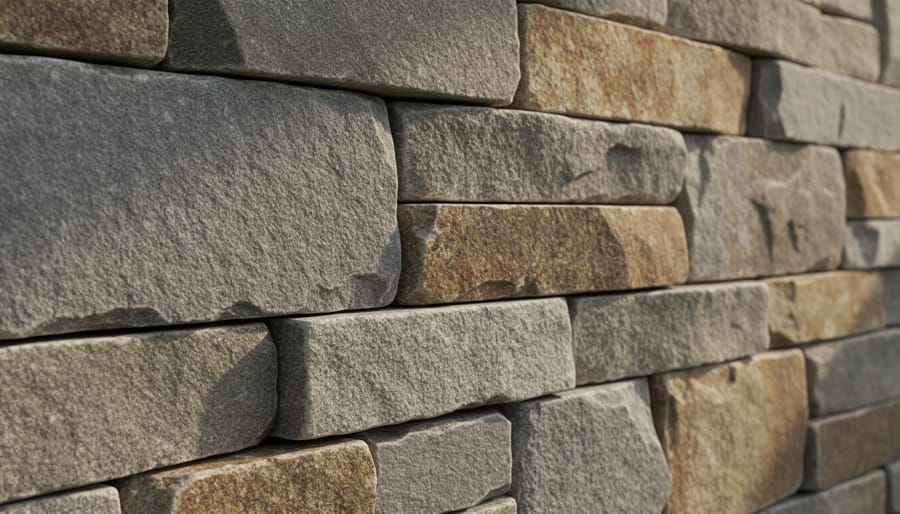
In structural stone art, joints are never afterthoughts—they’re integral design elements that define the visual character of a composition. Joint width establishes rhythm and scale; narrow joints create seamless, monolithic appearances, while wider joints emphasize individual stone units and geometric patterns. Alignment choices—whether consistently straight, staggered, or deliberately irregular—dramatically affect how the eye reads a surface.
The contrast between stone color and joint material amplifies or softens these effects. Dark mortar against light stone creates bold definition, while matching tones allow the stone itself to dominate. Modern precision cutting technology enables incredibly tight tolerances, allowing designers to achieve hairline joints that were previously impossible, transforming technical capability into aesthetic opportunity. Pattern creation through strategic joint placement—radiating lines, offset courses, or custom geometries—turns functional connections into expressive design statements that guide movement and frame architectural experiences.
Contemporary Applications in Residential and Commercial Design
Feature Walls and Dividers
Structural stone walls have evolved beyond simple partitions to become defining architectural features that simultaneously bear loads and create visual drama. These elements demonstrate how engineering requirements can inform aesthetic expression, transforming necessary support structures into sculptural focal points that organize and energize interior spaces.
Contemporary applications showcase remarkable innovation in balancing structural integrity with artistic vision. Cantilever stone walls, for instance, project horizontally from supporting structures without visible external bracing, creating the illusion of floating planes that define spatial boundaries while maintaining open sight lines. This technique is particularly effective in commercial lobbies and residential great rooms where dramatic space division is desired without complete enclosure.
Transparency effects represent another frontier in structural stone design. By incorporating carefully engineered voids, perforations, or translucent stone varieties like onyx or alabaster with backlighting, designers create walls that function as load-bearing elements while allowing light penetration and visual connectivity between spaces. The strategic placement of these openings requires precise structural calculations to maintain load paths while achieving the desired aesthetic.
Material selection plays a crucial role in these applications. Dense stones like granite and basalt offer superior compressive strength for thinner profiles, while the natural veining in marble can be oriented to emphasize vertical or horizontal movement. When structural walls become sculptural statements, every technical decision carries aesthetic weight.
Stone Staircases as Structural Sculpture
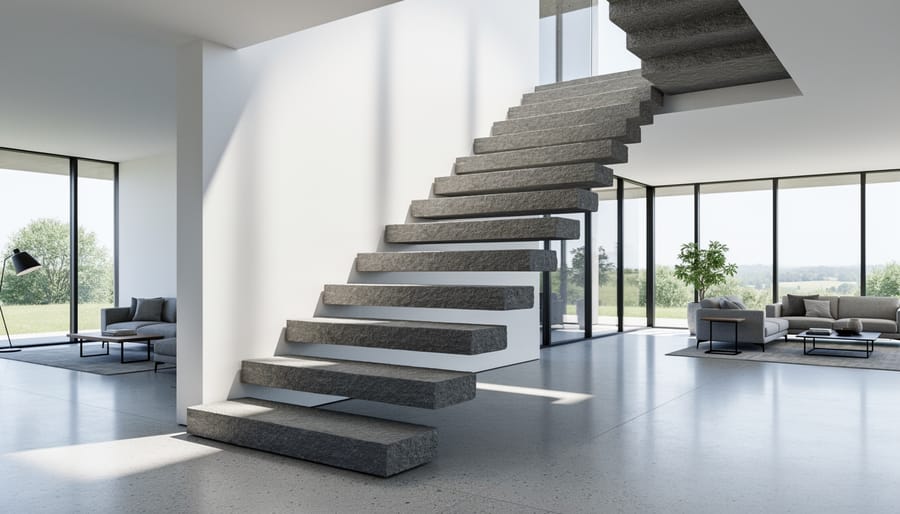
Stone staircases represent some of the most compelling examples of structural art, where engineering necessity transforms into sculptural form. Unlike conventional staircases hidden behind walls or decorative cladding, these designs expose and celebrate the structural logic of their construction.
Floating staircases exemplify this principle by eliminating visible supports beneath the treads, creating an illusion of stone defying gravity. Each tread cantilevers from a concealed steel spine or embeds directly into a structural wall, with the stone’s weight and thickness carefully calculated to resist bending forces. The visual lightness achieved contradicts our expectations of stone as a heavy material, generating dramatic tension in the space.
Helical designs showcase stone’s ability to follow complex three-dimensional curves while maintaining structural integrity. These spiral staircases often feature tapered treads that radiate from a central column or float independently, with each piece cut to precise angles that distribute loads efficiently through compression. The geometry itself becomes ornamental, revealing the mathematics underlying the form.
Cantilevered treads push engineering limits furthest, projecting boldly from their support points with minimal visual connection. The structural challenge—preventing rotation and supporting dynamic loads at the farthest extension—becomes the design’s defining characteristic. Whether executed in granite, limestone, or marble, these staircases demonstrate how exposing structural forces creates inherent beauty.
Exterior Facades and Cladding Systems
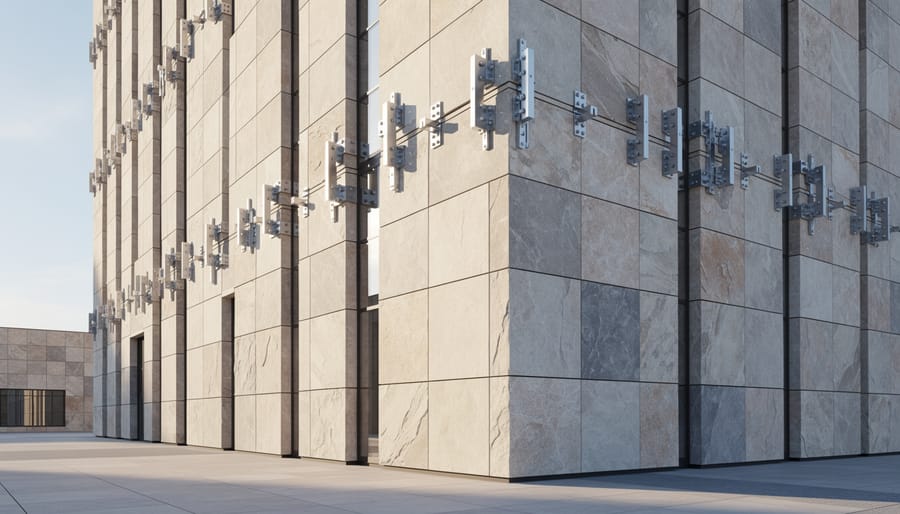
Modern stone facade systems represent a sophisticated marriage of engineering precision and artistic vision, transforming building exteriors into three-dimensional canvases. These systems typically employ ventilated rainscreen technology, where stone panels are mechanically anchored to structural frameworks, creating an air cavity that manages moisture while supporting the stone’s weight. This approach allows architects to experiment with varied panel sizes, surface finishes, and installation patterns without compromising weather protection or structural integrity.
The artistry emerges through deliberate choices in stone selection, joint spacing, and module arrangement. Book-matched panels create mirror-image patterns that emphasize natural veining, while staggered layouts introduce dynamic rhythm across large surfaces. Contemporary designers often mix stone types or finishes within a single facade, contrasting honed and flamed textures or combining different geological materials to achieve distinctive visual effects.
Advanced anchoring systems enable innovative installations previously impossible with traditional masonry. Concealed fasteners maintain clean sightlines, while adjustable clips accommodate building movement and simplify maintenance. These contemporary architectural stone applications demonstrate how technical sophistication empowers artistic expression, allowing buildings to showcase stone’s natural beauty while meeting rigorous performance standards for durability, energy efficiency, and longevity.
Working With Professionals to Achieve Structural Art
The Collaborative Team: Architect, Engineer, and Stone Fabricator
Successful structural art in stone requires seamless collaboration between architects and stone artists, along with structural engineers and fabricators. The architect envisions the overall design concept, balancing aesthetic goals with functional requirements. They define how stone will express the building’s identity while serving its structural purpose.
The structural engineer ensures safety and stability, calculating load paths, stress distributions, and connection requirements specific to stone’s unique properties. Their expertise transforms artistic vision into buildable reality, determining appropriate stone thicknesses, reinforcement strategies, and support systems.
The stone fabricator brings technical knowledge of material behavior, quarrying limitations, and fabrication capabilities. They advise on achievable tolerances, recommend suitable stone varieties, and execute precision cutting and finishing. Their craftsmanship directly impacts the final visual and structural quality.
This tripartite relationship demands early collaboration and ongoing dialogue throughout the project. When these professionals engage from concept through completion, sharing expertise and constraints openly, they achieve structures where engineering and artistry become inseparable.
Stone Selection for Structural Art Projects
Selecting the right stone for structural art requires balancing engineering performance with visual expression. Granite and limestone stand as popular choices due to their excellent compression strength, typically ranging from 15,000 to 35,000 psi, making them ideal for load-bearing applications. Marble, while softer, offers unmatched translucency and veining patterns that create dramatic aesthetic effects when backlit or featured prominently.
Grain direction significantly impacts structural integrity. Stone performs best when loads align perpendicular to bedding planes, minimizing splitting risks. For cantilevers and spans, denser stones with minimal porosity provide greater tensile strength and durability.
Visual impact depends on finish options and inherent characteristics. Honed surfaces emphasize color uniformity, while flamed or split-face finishes add texture and shadow play. Consider how natural veining patterns can accentuate structural lines or create movement within static forms.
Fabrication possibilities vary by stone type. Harder materials like granite accommodate precise CNC machining for complex geometries, whereas sedimentary stones offer easier hand-carving for organic shapes. Modern waterjet cutting and wire-sawing expand design possibilities across all stone types, enabling architects to push boundaries in structural art expression.
Structural art in stone represents the pinnacle of achievement in natural stone applications, where engineering precision and aesthetic vision converge to create structures that inspire and endure. Throughout this exploration, we’ve seen how stone’s inherent properties—its compressive strength, durability, and timeless beauty—enable it to transcend purely functional roles and become a medium for artistic expression. From the elegant curves of compression vaults to the precise joinery of post-and-lintel systems, each structural solution offers opportunities to celebrate both material and design.
As you approach your next stone project, challenge yourself to view structural elements not merely as necessary components but as canvases for creative exploration. Consider how the arrangement of stones, the rhythm of joints, the interplay of light and shadow, and the dialogue between load and support can elevate your design from the ordinary to the extraordinary. Whether you’re selecting cladding for a façade, designing a feature staircase, or planning an architectural element, ask how structural principles might inform and enhance the aesthetic outcome.
The principles of structural art—efficiency, economy, and elegance—remain as relevant today as when pioneering engineers first articulated them. By embracing these concepts and collaborating with skilled fabricators and installers who understand stone’s structural capabilities, you can create works that honor both the material’s ancient heritage and contemporary design aspirations. Let your next stone project be an opportunity to contribute to the continuing legacy of structural art.