
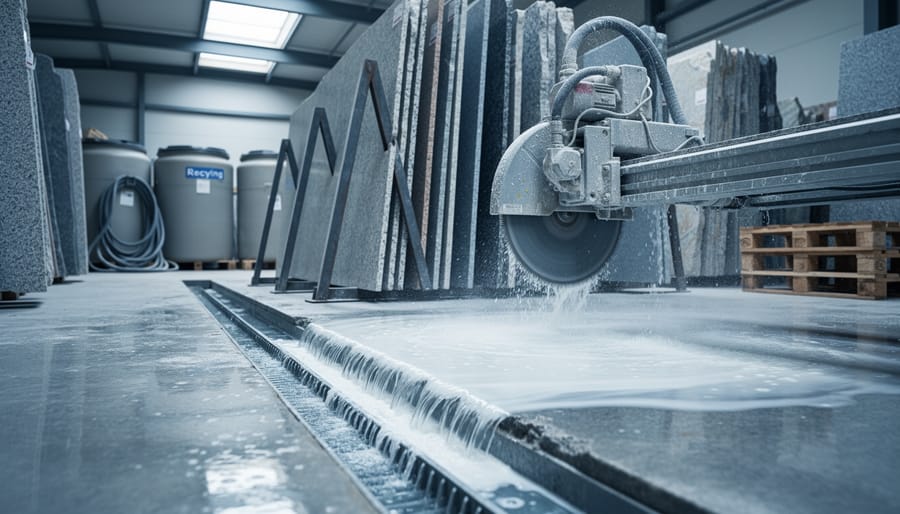
Stone fabrication generates millions of tons of waste annually, yet most consumers and design professionals remain unaware of this environmental challenge lurking behind every countertop, floor tile, and architectural feature. Stone slurry—the fine particle mixture of water, stone dust, and abrasives produced during cutting, grinding, and polishing—represents both a significant pollution threat and an untapped opportunity for sustainable innovation.
Every square foot of finished stone generates approximately 20-30% waste material. When improperly managed, this slurry contaminates waterways, clogs municipal treatment systems, and fills landfills with material that could serve valuable secondary purposes. The fabrication industry processes over 2 billion square feet of stone annually in North America alone, creating an waste management crisis that demands immediate attention.
The challenge extends beyond environmental impact. Fabricators face mounting regulatory pressure, disposal costs averaging $50-150 per ton, and growing consumer expectations for sustainable practices. Meanwhile, architects and designers increasingly seek transparency about the environmental footprint of materials they specify, making stone slurry management a critical consideration in project planning.
Understanding how stone slurry forms, the problems it creates, and the proven solutions available empowers all stakeholders to make informed decisions. From filtration systems that reclaim 95% of waste water to innovative recycling programs transforming slurry into new products, responsible management practices exist today. The question is no longer whether sustainable stone fabrication is possible, but rather how quickly the industry will adopt these essential practices.
What Is Stone Slurry and Why Does It Matter?
The Hidden Scale of Stone Fabrication Waste
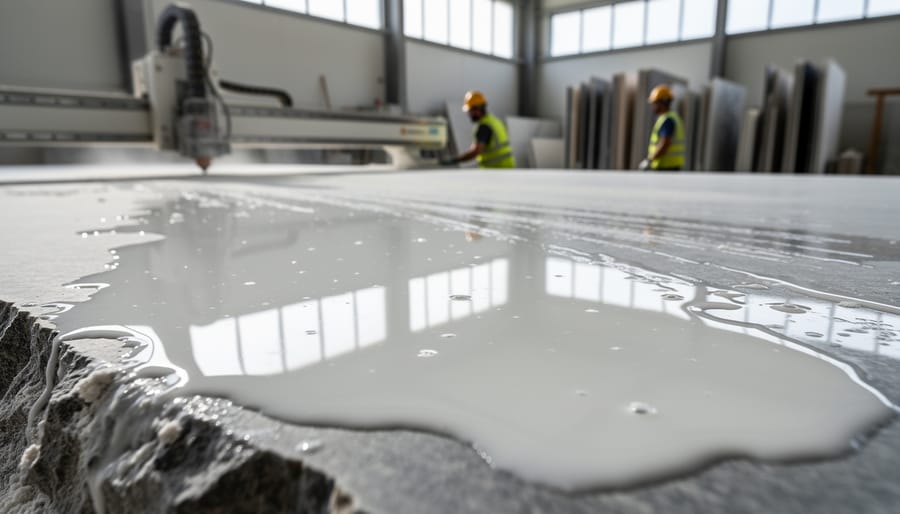
The stone fabrication industry generates enormous quantities of slurry as an unavoidable byproduct of cutting, shaping, and polishing natural stone. For every square foot of finished countertop, fabricators produce approximately 20-30% of the original stone block as waste slurry. This translates to millions of gallons annually across the United States alone.
Industry data reveals that a typical fabrication shop processing 50 slabs weekly generates between 500 and 1,000 gallons of wet slurry each month. When you consider that the Marble Institute of America estimates over 2,000 active fabrication facilities nationwide, the cumulative environmental impact becomes staggering. Each gallon of slurry contains fine stone particles suspended in water, often mixed with cutting lubricants and chemical residues from polishing compounds.
Water consumption compounds the challenge. Stone cutting and polishing operations require continuous water flow for cooling and dust suppression, with shops using 15-30 gallons per minute during active fabrication. Much of this water becomes contaminated with stone particles and must be managed as slurry waste.
Traditionally, disposal methods have been problematic. Many facilities once relied on municipal sewer systems, which weren’t designed to handle mineral-laden wastewater. Others transported slurry to landfills, where settling ponds and storage presented their own environmental concerns. As the natural stone market has grown by approximately 4-5% annually over the past decade, driven by increased demand for luxury residential and commercial applications, the urgency for sustainable slurry management has intensified considerably.
The Environmental Cost of Traditional Slurry Disposal
Water Pollution and Ecosystem Damage
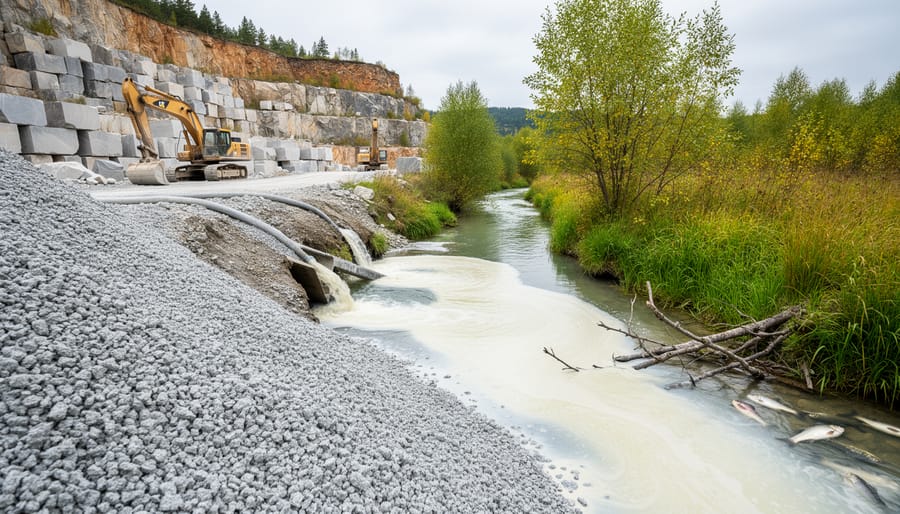
When stone slurry enters waterways without proper treatment, it creates serious environmental consequences that extend far beyond the fabrication site. The fine particles suspended in slurry dramatically increase water turbidity, blocking sunlight penetration essential for aquatic plant photosynthesis. This disruption cascades through the food chain, affecting fish populations and other wildlife dependent on healthy water systems.
The alkaline nature of stone slurry, with pH levels often exceeding 11, poses another significant threat. When discharged into streams or rivers, this highly basic wastewater can alter the natural pH balance, making conditions inhospitable for sensitive aquatic species. In 2019, a granite fabrication facility in North Carolina faced substantial fines after untreated slurry discharge killed fish populations in a nearby creek and contaminated local drinking water sources.
Soil contamination presents equally concerning challenges. Slurry infiltration increases soil alkalinity, reducing fertility and harming beneficial microorganisms essential for plant growth. The accumulated stone particles can also create an impermeable layer, preventing proper water drainage and root development. Agricultural lands adjacent to improper disposal sites have documented crop yield reductions of up to 40 percent, demonstrating the far-reaching economic and ecological impacts of inadequate slurry management practices.
The Landfill Crisis
Stone fabrication generates approximately 20-30% waste from each slab, creating a significant disposal challenge. In the United States alone, the natural stone industry produces millions of tons of slurry waste annually. This material occupies substantial landfill space because stone particles don’t decompose or compress over time like organic waste. Once deposited, stone slurry remains virtually unchanged for centuries, permanently consuming valuable landfill capacity. The fine particles can also create environmental concerns when water percolates through landfills, potentially carrying suspended stone dust and any chemical additives used during fabrication into surrounding soil and groundwater systems. As landfill space becomes increasingly scarce and tipping fees rise, the stone industry faces mounting pressure to find alternative solutions for managing this persistent waste stream.
Proven Methods for Sustainable Stone Slurry Management
Water Recycling and Filtration Systems
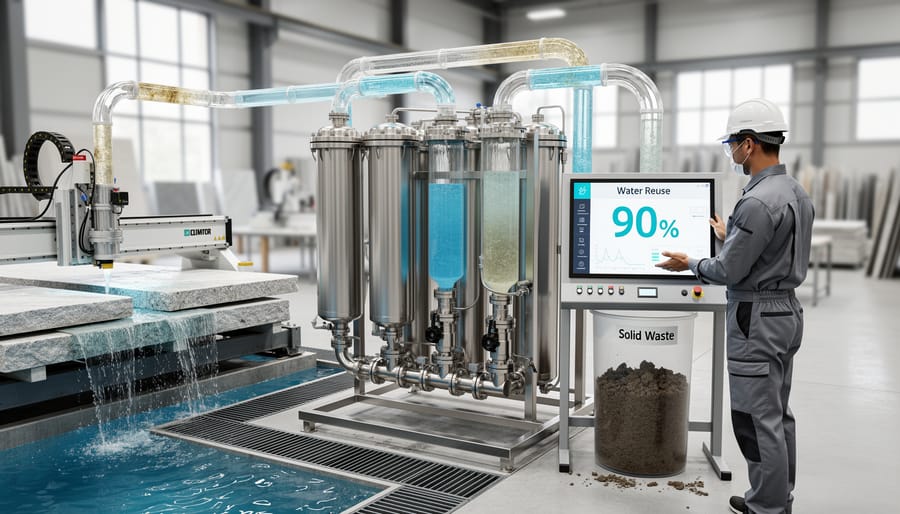
Modern stone fabricators are transforming their operations through advanced water recycling systems that dramatically reduce consumption and environmental impact. Closed-loop water systems capture, treat, and reuse water throughout the cutting and polishing process, creating a sustainable cycle that can reduce fresh water intake by up to 90%. This represents a significant improvement over traditional methods that discharge contaminated water after a single use.
At the heart of these systems lies filter press technology, which separates solid stone particles from water through pressure filtration. The process works by pumping slurry into chambers lined with filter cloths, where pressure forces clean water through while trapping solids into compact cakes. This recovered water, now free of stone particles, returns to cutting equipment for immediate reuse. The dried stone cakes can then be repurposed rather than disposed of as waste.
Leading fabrication facilities have integrated sophisticated water management practices that include settling tanks, clarifiers, and automated monitoring systems. These components work together to maintain water quality standards while minimizing discharge. Some operations report recycling the same water dozens of times before requiring replacement, achieving water savings that translate into reduced utility costs and decreased environmental footprint.
The investment in closed-loop systems typically pays for itself within two to three years through lower water bills and reduced wastewater treatment fees, making it both an economically sound and environmentally responsible choice for stone fabricators committed to sustainable operations.
Slurry Dewatering and Solidification
Converting liquid stone slurry into manageable solid waste requires a two-step approach that combines mechanical and chemical processes. Understanding these dewatering methods helps fabricators reduce disposal costs while minimizing environmental impact.
Mechanical dewatering begins with filter presses, which force water through filter cloths under high pressure, leaving behind compressed slurry cakes with 50-70% solid content. Belt filter presses offer continuous operation for high-volume facilities, while chamber filter presses work well for smaller operations. Centrifuges provide another option, using rotational force to separate water from solids, though they typically require higher initial investment.
Chemical treatment enhances dewatering efficiency by using flocculants and coagulants that bind fine particles together. Polymers like polyacrylamide cause suspended particles to clump, creating larger masses that separate more easily from water. This process can reduce moisture content by an additional 10-20%, producing drier, more stable material.
The resulting solidified slurry transforms from a disposal liability into a handleable material. Dried slurry cakes stack easily for transport, occupy less landfill space, and may qualify for beneficial reuse applications. Some fabricators achieve 80-90% water recovery, which returns to the cutting process, creating a closed-loop system that conserves resources while reducing waste volume and disposal expenses.
On-Site Management Best Practices
Effective on-site management begins with proper storage systems. Fabrication shops should maintain dedicated containment areas with impermeable flooring and secondary containment barriers to prevent ground contamination. Store slurry in covered tanks or sealed containers, clearly labeled with contents and collection dates. This prevents evaporation, reduces odor issues, and maintains consistency for recycling processes.
Daily handling procedures are equally important. Train all staff on spill prevention and response protocols. Keep cleanup materials readily accessible, including absorbent pads and neutralizing agents. Implement regular equipment maintenance schedules for saw blades, pumps, and filtration systems to minimize waste generation and ensure optimal performance. Clean tools and work areas systematically to prevent slurry buildup, which can harden and create disposal challenges.
Regulatory compliance requires maintaining detailed records of slurry generation, storage, and disposal methods. Familiarize yourself with local environmental regulations, as requirements vary by jurisdiction. Many areas classify stone slurry as industrial waste, necessitating specific permits and documentation. Schedule periodic facility inspections to identify potential compliance gaps before they become violations. Partner with certified waste management companies that provide proper documentation and tracking systems. This proactive approach protects your business from regulatory penalties while demonstrating environmental responsibility to clients and community stakeholders.
Turning Waste Into Value: Innovative Slurry Recycling Applications
Construction Materials and Concrete Production
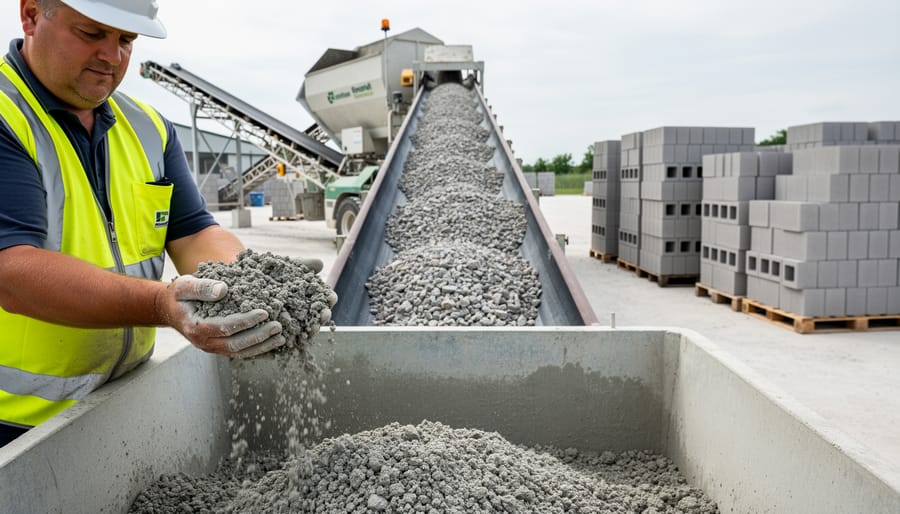
Processed stone slurry has emerged as a valuable resource in construction materials, demonstrating how stone recycling can reduce environmental impact while enhancing product quality. After filtering and processing, the fine stone particles become ideal aggregate for concrete production, pavers, and building blocks.
When incorporated into concrete mixes, stone slurry improves workability and reduces water absorption, resulting in stronger, more durable finished products. The fine particle size fills microscopic voids in the concrete matrix, creating denser material with enhanced compressive strength. Manufacturers report that concrete containing processed slurry shows improved resistance to freeze-thaw cycles and chemical weathering compared to conventional mixes.
In paver and building block production, stone slurry adds aesthetic value alongside structural benefits. The natural stone content provides subtle color variations and texture that enhance visual appeal while maintaining consistent performance standards. These products meet or exceed industry specifications for load-bearing capacity and longevity.
The economic advantages are equally compelling. Substituting processed slurry for virgin aggregates reduces material costs while diverting waste from landfills, creating a circular economy within the stone fabrication industry.
Agricultural and Soil Amendment Uses
Stone slurry offers significant agricultural benefits as a natural soil amendment, transforming industrial waste into a valuable farming resource. The calcium carbonate-rich composition makes it particularly effective for neutralizing acidic soils, gradually raising pH levels to optimize nutrient availability for crops. Many fabricators now partner with local farms to distribute stone slurry as a sustainable alternative to traditional agricultural lime.
Beyond pH correction, stone slurry provides essential minerals including calcium and magnesium that support plant growth and improve soil structure. When properly applied, it enhances water retention in sandy soils and increases drainage in clay-heavy areas. The fine particle size allows for relatively quick soil integration compared to crushed limestone products.
Agricultural applications have proven successful across various farming operations, from vineyards to row crops. However, proper testing remains essential before application. Farmers should analyze both the slurry composition and existing soil conditions to determine appropriate application rates, ensuring the material matches their specific agricultural needs while supporting responsible waste management in the stone industry.
Industrial Applications and Emerging Technologies
Stone slurry’s unique properties make it valuable across numerous industrial sectors beyond construction applications. The ceramics industry has long recognized slurry as a crucial ingredient, using finely ground stone particles to enhance the strength, texture, and thermal properties of ceramic products. The calcium carbonate content in marble and limestone slurry serves as a flux agent, reducing firing temperatures and energy consumption during ceramic production.
In glass manufacturing, stone slurry contributes essential calcium oxide, improving glass stability and workability. Manufacturers incorporate processed slurry as a cost-effective alternative to virgin limestone, reducing both material costs and environmental impact. Paper production represents another significant application, where processed stone slurry functions as a filler and coating pigment, improving paper brightness, opacity, and printability while reducing reliance on wood pulp.
Emerging applications demonstrate growing innovation in slurry utilization. Researchers are developing bio-composite materials that combine stone slurry with agricultural waste, creating sustainable building panels and insulation products. The agricultural sector experiments with pH-neutral slurry as a soil amendment, improving drainage and providing mineral nutrients. Advanced filtration systems now extract ultrafine particles for pharmaceutical and cosmetic applications, while pilot programs test slurry-based carbon capture materials. These innovative applications align with broader eco-friendly construction trends, transforming what was once considered waste into valuable resources that support circular economy principles and reduce industrial environmental footprints.
Real-World Success Stories: Case Studies in Action
Several forward-thinking companies have transformed stone slurry from an environmental liability into a valuable resource, demonstrating that sustainable management delivers both ecological and economic benefits.
Polycor, one of North America’s largest natural stone quarriers, implemented a comprehensive slurry management system across their facilities that has diverted over 95% of their waste from landfills. Their approach combines filtration technology with strategic partnerships. The filtered solids are processed into aggregate for construction applications, while the reclaimed water cycles back into cutting operations. Since launching this program in 2018, Polycor has reduced water consumption by 40% and generated an additional revenue stream from selling processed aggregate to local concrete manufacturers. Their Charlotte, Vermont facility alone now recycles approximately 2,000 tons of slurry annually.
In Italy’s Carrara region, historically known for marble production, a consortium of fabricators established a shared slurry processing facility that serves over 50 small and medium-sized operations. This collaborative model allows smaller businesses to access advanced filtration and recycling technology that would be cost-prohibitive individually. The facility processes roughly 15,000 cubic meters of slurry monthly, converting it into certified fill material for regional infrastructure projects. Within three years, participating fabricators reduced disposal costs by an average of 60% while eliminating violations for improper discharge.
Closer to home, Arizona Tile pioneered an innovative closed-loop system at their California distribution centers. Their investment in high-efficiency filter presses and settling tanks enables them to recycle 85% of process water and transform slurry into usable products. The calcium carbonate extracted from marble and limestone slurry is supplied to agricultural operations as a soil amendment, while granite-based slurry becomes decorative landscape stone. This initiative has prevented over 500,000 gallons of contaminated water from entering municipal treatment systems annually.
These success stories share common elements: leadership commitment, appropriate technology investment, and creative thinking about waste as opportunity. They prove that sustainable slurry management is achievable at any scale, delivering measurable environmental improvements alongside operational savings. For architects and designers, partnering with fabricators who follow these examples ensures your projects support responsible resource stewardship from quarry to installation.
What Consumers and Designers Can Do
Questions to Ask Your Stone Fabricator
Before selecting a stone fabricator, ask these essential questions to ensure responsible waste management practices. Start by inquiring, “How do you manage stone slurry waste from your operations?” Look for answers that mention recycling, water reclamation, or partnerships with material recovery facilities.
Request information about environmental certifications by asking, “Do you hold any sustainability certifications or environmental compliance standards?” Reputable fabricators should provide documentation of permits and adherence to local water quality regulations.
Understand their water usage: “What percentage of your process water is recycled?” Responsible operations typically recycle 80-95% of water used in cutting and polishing.
Ask about waste destination: “Where does your stone slurry go after collection?” This reveals whether they’re landfilling, recycling into concrete aggregate, or supplying material to agricultural applications.
Inquire about sourcing practices: “Do you prioritize working with ethically sourced stone?” This demonstrates their commitment to sustainability beyond just waste management.
Finally, request transparency: “Can I see documentation of your waste management practices?” Professional fabricators should readily provide waste disposal receipts, recycling contracts, or processing reports demonstrating their environmental responsibility.
Stone slurry management represents one of the most tangible opportunities for the natural stone industry to demonstrate environmental leadership while capturing significant economic value. The solutions exist today—from advanced filtration systems and water recycling technologies to innovative repurposing applications that transform waste into valuable products. What’s needed now is industry-wide commitment and consumer awareness to drive meaningful change.
For fabricators and quarry operators, investing in proper slurry management systems offers immediate returns through reduced water costs, compliance with environmental regulations, and new revenue streams from reclaimed materials. The case studies presented demonstrate that sustainable practices aren’t just environmentally responsible—they’re financially smart.
As consumers, architects, and designers, you hold considerable influence in this transformation. When selecting stone suppliers and fabricators, ask about their slurry management practices. Prioritize companies that demonstrate commitment to water conservation, waste reduction, and circular economy principles. Request documentation of their environmental certifications and recycling programs.
The path forward requires collective action. Industry professionals should share best practices and invest in modern treatment systems. Consumers should demand transparency and reward responsible fabricators with their business. Together, we can ensure that natural stone—one of humanity’s oldest building materials—becomes a model for sustainable manufacturing in the modern era.