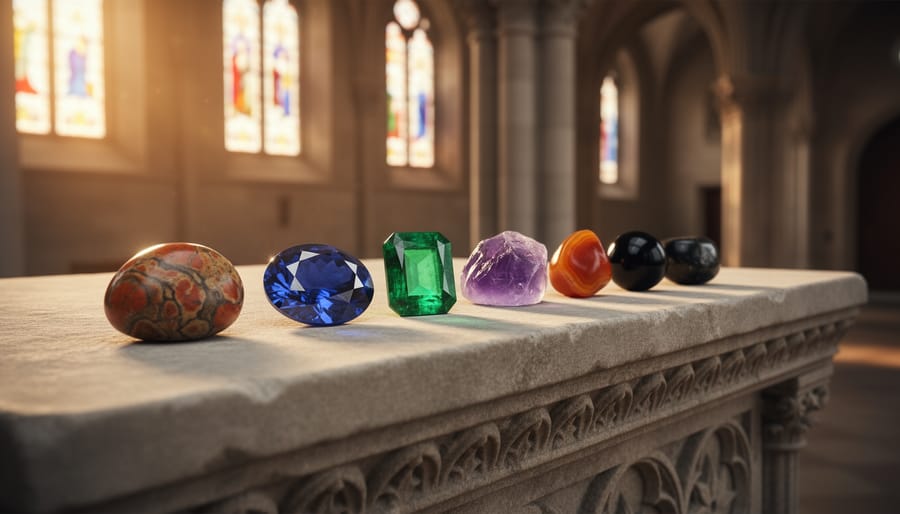
From the foundation stones of the New Jerusalem to the gems adorning the high priest’s breastplate, stones in Scripture carry profound meaning that transcends their physical beauty. Seven specific stones appear repeatedly throughout biblical texts, each chosen deliberately to convey spiritual truths while serving practical purposes in sacred architecture and ceremonial objects.
These seven stones—jasper, sapphire, emerald, agate, amethyst, onyx, and carnelian—weren’t selected randomly. Ancient civilizations valued them for durability, workability, and symbolic resonance. The same properties that made them suitable for temple construction and priestly garments make them exceptional choices for modern sacred spaces, monuments, and architectural projects requiring both aesthetic impact and lasting integrity.
Understanding the biblical context of these stones reveals why they remain relevant today. When the book of Exodus describes the tabernacle’s construction or Revelation depicts heaven’s walls, these references provide a framework for architects and designers creating spaces meant to inspire reverence. The stones’ scriptural significance adds layers of meaning to contemporary applications, whether in churches, memorials, or public buildings seeking to evoke permanence and dignity.
This exploration connects ancient wisdom with modern stone selection. By examining each stone’s biblical role, physical characteristics, and practical applications, you’ll discover how these materials bridge spiritual symbolism and architectural function. Whether you’re designing a sacred space, restoring historical structures, or simply seeking deeper understanding of these timeless materials, the intersection of biblical tradition and natural stone craftsmanship offers valuable insights for informed decision-making.
The Enduring Power of Stone in Sacred Architecture
For thousands of years, stone has served as humanity’s preferred material for constructing sacred spaces. From the ziggurats of ancient Mesopotamia to medieval cathedrals and modern houses of worship, stone’s unique properties have made it indispensable for religious architecture. This enduring relationship stems from practical considerations as much as symbolic ones.
Stone’s durability offers an unmistakable appeal for structures meant to honor the eternal. Unlike wood that decays or metals that corrode, properly set stone can withstand centuries of weathering, fire, and human conflict. The enduring stone structures of antiquity stand as testament to this permanence, many functioning as active religious sites millennia after their construction.
Beyond practicality, stone carries profound symbolic weight across cultures. Its immovability represents steadfast faith, while its formation deep within the earth suggests divine origins. Stone’s transformation from rough quarry block to polished architectural element mirrors spiritual refinement and human devotion. These qualities made stone the natural choice for ancient temple architecture, where physical permanence reflected theological concepts of unchanging truth.
In biblical tradition, stone takes on additional layers of meaning. The Hebrew scriptures repeatedly reference specific stones, each carrying distinct spiritual significance while serving practical architectural purposes. Understanding these seven biblical stones reveals how ancient builders intentionally selected materials not merely for structural integrity, but to create spaces that embodied religious teaching through their very substance. This integration of material symbolism with functional construction continues to influence sacred architecture today, informing contemporary designers who seek to honor tradition while meeting modern building requirements.
The Seven Stones of Biblical Significance
Jasper: The Foundation Stone
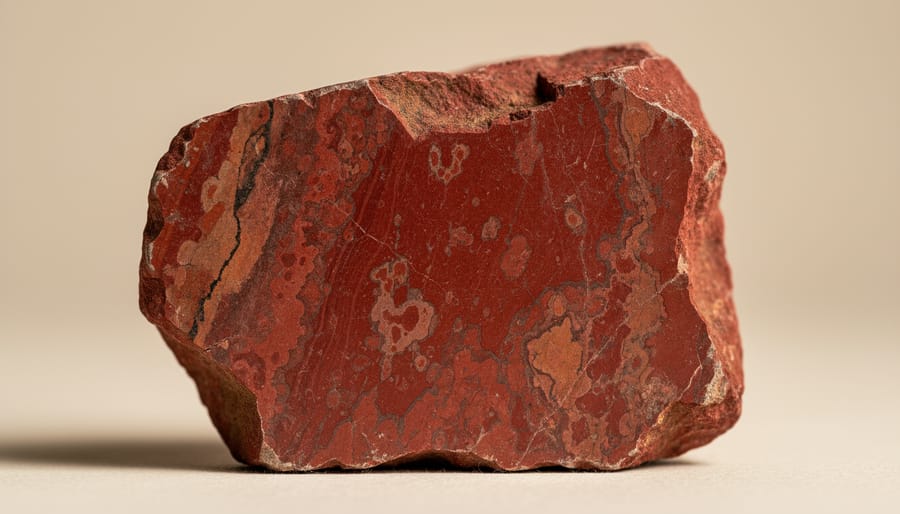
Jasper holds profound biblical significance, appearing prominently in the Book of Revelation as part of God’s throne and as the first foundation stone of the New Jerusalem. In Revelation 21:11, the holy city’s brilliance is compared to jasper, “clear as crystal,” emphasizing its association with divine purity and eternal glory.
This opaque variety of chalcedony occurs naturally in diverse colors, including red, brown, yellow, and green, though the biblical references likely describe a transparent or translucent form. The stone’s durability and rich pigmentation have made it valuable throughout history, connecting cultural stone symbolism with practical architectural applications.
Ancient builders incorporated jasper into sacred structures, temples, and monuments, recognizing both its spiritual meaning and physical resilience. The stone’s hardness, rating 6.5-7 on the Mohs scale, makes it suitable for flooring, decorative inlays, and exterior cladding in religious buildings.
Modern architects designing worship spaces continue this tradition, selecting jasper for its symbolic resonance and aesthetic versatility. The stone’s natural variation creates unique patterns in each piece, offering designers distinctive options for altar surrounds, baptismal fonts, and commemorative installations. Contemporary quarrying techniques now provide consistent supply and precision cutting, making jasper accessible for projects ranging from intimate chapels to grand cathedrals, preserving its biblical legacy in functional, enduring architecture.
Sapphire: The Heavenly Stone
Sapphire holds a profound place in biblical narrative, most notably appearing in Exodus 24:10, where Moses and the elders of Israel beheld a vision of God standing upon “a paved work of sapphire stone, and as it were the body of heaven in his clearness.” This celestial blue gemstone became synonymous with divine presence and heavenly glory throughout Scripture.
The stone’s most significant biblical association connects to the tablets containing the Ten Commandments. According to Jewish tradition, these sacred tablets were carved from sapphire, establishing an eternal link between this deep blue stone and divine law. In Ezekiel’s visions, sapphire appears again as the material of God’s throne, reinforcing its representation of heavenly authority and judgment.
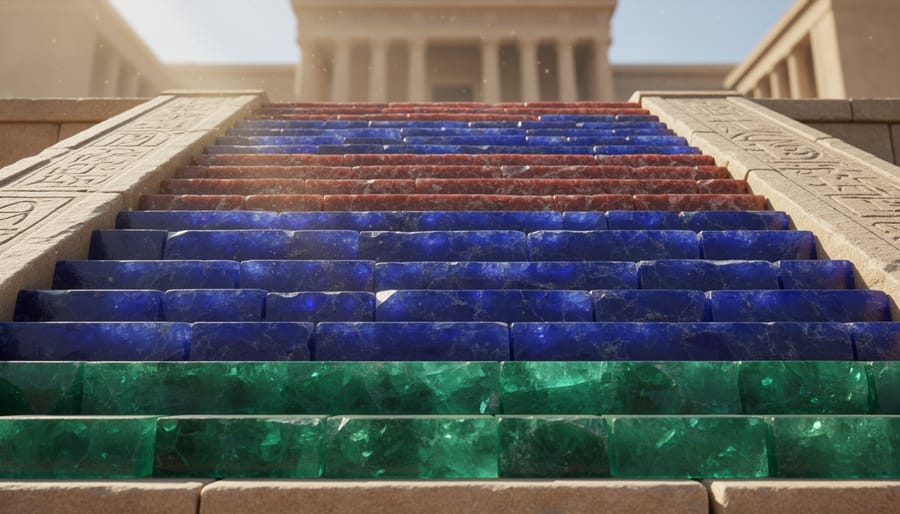
Sapphire’s rich blue coloration historically symbolized truth, wisdom, and spiritual devotion. In ancient construction, lapis lazuli often served as the practical equivalent of biblical sapphire, as the terminology encompassed various blue stones. Today, architects and designers draw upon this symbolism when incorporating blue stone elements into sacred spaces, using materials like sodalite or azurite to evoke that heavenly connection.
The stone’s enduring significance extends beyond religious contexts into modern design, where deep blue natural stones create contemplative atmospheres in meditation rooms, chapels, and spiritual retreat centers, maintaining that ancient association with the divine.
Emerald: The Stone of Eternal Life
Emerald’s luminous green hue symbolizes renewal and eternal life throughout biblical scripture. Most notably, Revelation 4:3 describes a rainbow resembling emerald encircling God’s throne, representing divine promise and covenant. This vivid imagery connects the stone to paradise itself, as emerald’s verdant color evokes the Garden of Eden and God’s life-giving presence.
In Exodus 28:18, emerald appears as one of the twelve stones adorning the High Priest’s breastplate, signifying the tribe of Judah. Its placement among these sacred gems reinforced its spiritual importance in ancient Israelite worship. The stone’s association with growth and restoration made it particularly meaningful in religious contexts, symbolizing the perpetual renewal of God’s covenant with humanity.
Throughout history, emerald has maintained its sacred status in religious architecture and art. Medieval cathedrals incorporated emerald-toned green marble and serpentine stone to represent paradise and divine grace. These natural stones created atmospheric spaces that directed worshippers’ thoughts toward eternal life and spiritual renewal.
Today, architects and designers continue this tradition by incorporating green natural stones in sacred spaces. From altar accents to decorative columns, emerald-toned materials create contemplative environments that honor biblical symbolism while providing lasting beauty. The stone’s durability mirrors its scriptural association with eternal life, making it both symbolically and practically suited for houses of worship.
Onyx: The Stone of Remembrance
Onyx holds a position of profound significance in biblical scripture, most notably as one of the twelve stones adorning the high priest’s breastplate in Exodus 28:20. This distinctive stone also appears in Genesis 2:12, where it describes the precious materials found in the land of Havilah. The stone’s layered bands of contrasting colors, typically black and white, made it instantly recognizable and highly valued in ancient times.
In biblical tradition, onyx symbolized memory, honor, and remembrance. Its placement on the high priest’s shoulders served as a memorial before God, bearing the names of Israel’s tribes as a perpetual reminder of the covenant between God and His people. This association with remembrance has transcended centuries, making onyx a meaningful choice for memorial spaces today.
The stone’s striking visual appeal comes from its parallel bands of color, created through natural mineral layering. This unique appearance has made it a sought-after material for both religious and secular applications. Modern architects and designers frequently incorporate onyx into memorial walls, prayer spaces, and commemorative installations where its symbolic weight enhances the reflective atmosphere.
Contemporary applications extend beyond religious settings. Onyx appears in museum installations, cemetery monuments, and meditation gardens, where its biblical heritage adds depth to spaces designed for contemplation and remembrance. Its durability ensures these memorial applications remain meaningful for generations.
Marble (White Stone): Purity and Refinement
White marble has served as a cornerstone material in sacred architecture for millennia, representing divine purity and celestial perfection. In Revelation 2:17, the promise of a “white stone” symbolizes spiritual victory and acceptance into God’s kingdom, reflecting the unblemished nature of the redeemed. This biblical imagery directly influenced architectural choices throughout history, making white marble the preferred material for temples, churches, and synagogues worldwide.
The practical advantages of marble in sacred construction extend beyond symbolism. Its luminous surface naturally reflects light, creating an atmosphere of transcendence within worship spaces. The material’s workability allows for intricate carvings and detailed ornamentation, enabling artisans to express religious narratives through sculpture and decorative elements. From the ancient Temple of Artemis to modern cathedrals, marble’s durability ensures these sacred spaces endure for generations.
Historic examples include the gleaming marble floors of the Basilica of St. Peter in Rome and the ornate marble columns in Jerusalem’s ancient synagogues. The stone’s cool, smooth surface evokes feelings of peace and contemplation, enhancing the spiritual experience of worshippers. Contemporary sacred architecture continues this tradition, with marble remaining a top choice for altars, baptismal fonts, and sanctuary floors where purity and permanence matter most.
Cornerstone: The Foundation of Faith
The cornerstone holds profound significance throughout biblical scripture, appearing in both literal construction contexts and powerful metaphorical teachings. In ancient building practices, the cornerstone was the first stone set in a foundation, carefully selected for its strength and precision. This crucial stone determined the alignment and stability of the entire structure, making its placement a ceremonial moment of great importance.
Biblical references to cornerstones appear prominently in both Old and New Testaments. Psalm 118:22 declares, “The stone the builders rejected has become the cornerstone,” a passage later referenced in the New Testament to describe Christ’s role in the church. Isaiah 28:16 speaks of God laying “a stone in Zion, a tested stone, a precious cornerstone for a sure foundation.” These verses established the cornerstone as a symbol of foundation, reliability, and divine purpose.
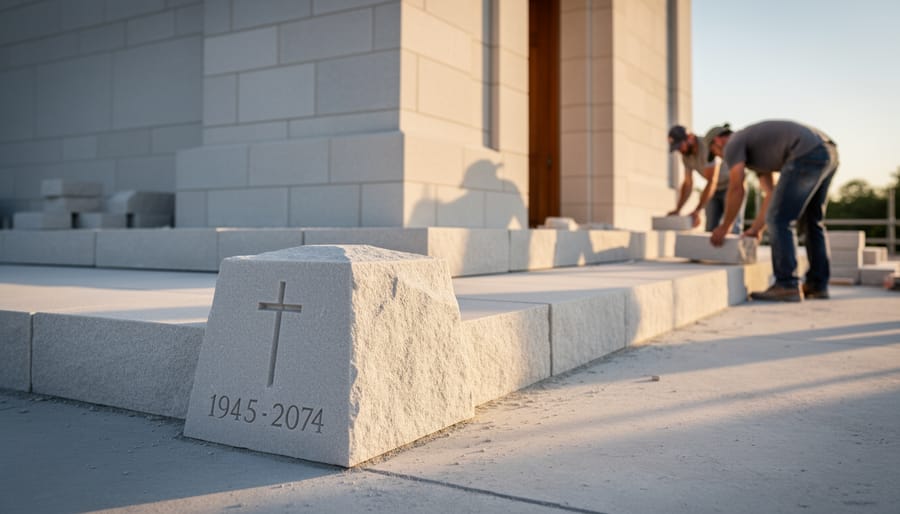
This biblical concept profoundly influenced religious architecture worldwide. Medieval cathedral builders selected cornerstones with exceptional care, often incorporating consecration ceremonies that echoed scriptural traditions. Even today, cornerstone-laying ceremonies remain significant in church construction, with stones frequently inscribed with dates and dedication texts. The practice demonstrates how ancient biblical building principles continue shaping modern sacred spaces, connecting spiritual symbolism with practical construction wisdom that has endured for millennia.
Limestone (Building Stone): The Everyday Sacred
While precious stones adorned sacred vessels, limestone formed the very foundation of biblical worship spaces. This sedimentary rock, composed primarily of calcium carbonate, served as the principal building material for Solomon’s Temple and much of ancient Jerusalem’s architecture. The choice wasn’t merely practical—limestone’s abundance in the region made it accessible, yet its workability and durability elevated ordinary construction into lasting sacred monuments.
First Kings 5:17 describes how Solomon commanded workers to quarry “large stones, costly stones, and hewn stones” for the Temple’s foundation. These massive limestone blocks, some weighing several tons, were cut and dressed at the quarry site to preserve the sanctity of the Temple mount. Archaeological evidence confirms that Jerusalem’s limestone, known as Meleke stone, featured a warm golden hue that transformed under sunlight, creating an ethereal quality perfect for houses of worship.
Limestone’s significance extends beyond biblical times. Its thermal properties, acoustic qualities, and natural beauty continue making it the preferred choice for religious architecture worldwide. Modern sacred spaces—from cathedrals to synagogues—still specify limestone for its timeless connection to spiritual heritage. This everyday stone reminds us that the sacred isn’t always about rarity, but about purposeful selection and craftsmanship that honors both material and meaning.
From Ancient Temples to Modern Churches: Biblical Stone Symbolism in Practice
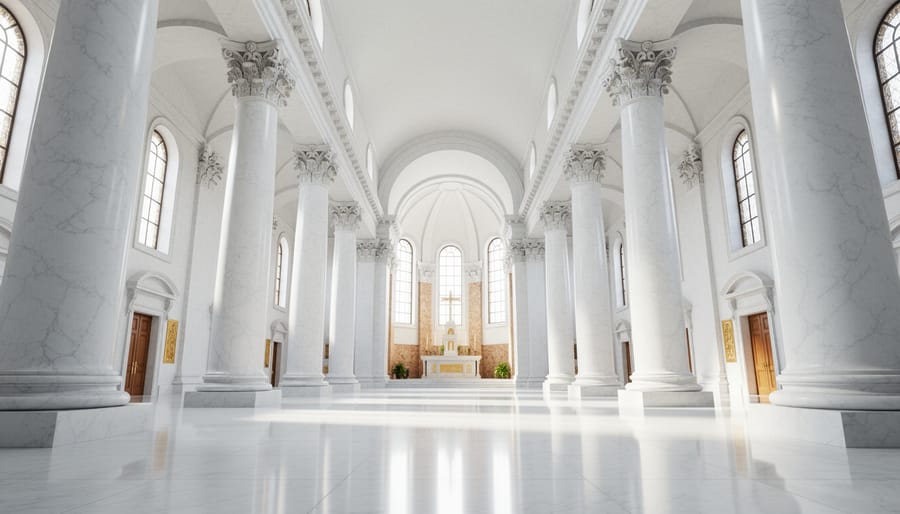
Throughout history, biblical stones have moved from scriptural symbolism into tangible architectural reality, shaping how sacred spaces are designed and experienced. From Solomon’s Temple to contemporary worship centers, these materials continue to influence construction choices in profound ways.
The original Temple of Solomon exemplifies this practice. Historical accounts describe massive limestone foundations, with jasper and sapphire among the precious stones adorning the high priest’s breastplate and temple furnishings. Archaeological evidence from Jerusalem’s Temple Mount reveals the sophisticated stonework that defined ancient Israelite worship spaces, establishing a tradition that would influence religious architecture for millennia.
Medieval European cathedrals provide striking examples of biblical stone integration. Notre-Dame de Paris features limestone construction throughout, while its treasury historically displayed sapphires and other precious stones in liturgical vessels, directly referencing Exodus 28. Canterbury Cathedral incorporates marble columns reminiscent of the pillared halls described in 1 Kings, demonstrating how builders translated scripture into structural design.
Modern churches continue this legacy with renewed intentionality. The Cathedral of Our Lady of the Angels in Los Angeles features massive alabaster windows that flood the sanctuary with natural light, creating an ethereal atmosphere that enhances stone in sacred interiors. The architect specifically chose alabaster for its biblical associations and light-diffusing properties, proving that ancient symbolism remains relevant in contemporary design.
Several contemporary projects showcase intentional biblical stone selection. The Christ Cathedral in California underwent renovation that incorporated various marbles and granites, with designers explicitly considering scriptural references when selecting materials for altars and architectural features. Similarly, numerous megachurches now specify granite for baptismal fonts and communion tables, drawing connections to references of stone as a symbol of God’s unchanging nature.
Architects working on sacred spaces increasingly consult biblical texts during material selection. This practice extends beyond Christian contexts, as synagogues and interfaith centers also reference Old Testament descriptions when choosing limestone for exterior cladding or incorporating decorative stone elements that echo ancient temple descriptions.
The practical implications are significant. These stones offer not only symbolic weight but also durability, beauty, and timeless appeal that align with the permanence sacred architecture seeks to convey. By understanding both scriptural context and material properties, designers create spaces that resonate spiritually while meeting modern performance standards.
Practical Considerations for Using Natural Stone in Sacred Spaces
When incorporating biblically significant stones into sacred architecture, balancing symbolic reverence with practical requirements ensures both spiritual authenticity and structural longevity. Understanding the physical properties of these materials is essential for successful implementation.
Durability stands as a primary consideration. Marble, representing biblical purity, offers excellent longevity when properly sealed and maintained, making it ideal for interior applications like altars and flooring. However, its susceptibility to acid etching requires careful cleaning protocols in high-traffic worship spaces. Granite and basalt provide superior weather resistance for exterior elements, with hardness ratings that withstand environmental stress while honoring their biblical associations with strength and divine foundation.
Maintenance requirements vary significantly across stone types. Limestone and alabaster, both referenced in scripture, demand more frequent care due to their porous nature. Regular sealing protects against moisture infiltration and staining, particularly important in spaces using water in ceremonial practices. Establishing maintenance schedules during the design phase prevents deterioration and preserves the stone’s symbolic beauty.
Sourcing decisions should align with both authenticity and ethics. While obtaining stones from biblical regions adds historical resonance, sustainable stone sourcing practices ensure environmental stewardship—itself a spiritual consideration. Domestic alternatives often match the appearance and properties of Middle Eastern varieties while reducing carbon footprint and supporting local economies.
Cost factors depend on rarity, origin, and processing requirements. Onyx and jasper command premium prices due to their distinctive patterns and limited availability, while more abundant options like granite offer budget-friendly alternatives without compromising symbolic significance. Designers should present clients with stone selections that honor intended meanings across various price points, ensuring accessibility for congregations of different sizes. Custom fabrication, including specialized finishes that enhance natural beauty, adds value while respecting the stone’s sacred narrative within the space.
The seven stones of the Bible represent far more than historical artifacts—they embody enduring principles of strength, beauty, and spiritual significance that continue to shape sacred architecture today. From jasper’s representation of divine glory to sapphire’s heavenly purity, these stones remind us that the materials we choose for religious and spiritual spaces carry profound meaning beyond their physical properties.
For architects and designers planning worship spaces, synagogues, or meditation centers, natural stone offers both symbolic depth and practical advantages. These materials provide unmatched durability, timeless aesthetic appeal, and a tangible connection to centuries of sacred tradition. Consider how incorporating stones with biblical significance can enhance the spiritual atmosphere of your project while delivering the structural integrity modern buildings demand.
Whether you’re a homeowner seeking meaningful materials for a prayer room, an architect designing a community worship center, or a designer specifying finishes for sacred spaces, let biblical stone symbolism inform your choices. Research the historical and spiritual context of different stone types, consult with knowledgeable suppliers about sourcing authentic materials, and explore how these ancient stones can be integrated into contemporary designs. By bridging scriptural heritage with modern craftsmanship, you create spaces that honor tradition while serving present and future generations.