Phoenix tap water regularly tests above 200 ppm hardness, well past the EPA’s “hard” threshold of 120 ppm. That mineral load does not just clog showerheads and leave spots on dishes. Over the years, it quietly attacks the pipes running through your walls and under your slab. By the time most homeowners notice warning signs, the damage is already widespread. Penguin Air, Plumbing & Electrical, a BBB A+ rated plumbing company serving the Phoenix Valley since 2011, helps homeowners determine when patching pipes stops making sense and a full repipe becomes the smarter call.
Phoenix Hard Water Is Rough on Pipes: Here’s When Enough Is Enough
Fading water pressure or rust-colored water at the morning tap are signs a home’s plumbing is failing. Homes from central Phoenix zip codes like 85034 and 85040 to East Valley cities like Gilbert and Chandler deal with this daily. Hard water damage to pipes is one of the most common and most overlooked plumbing problems in the region, precisely because it happens out of sight. Older neighborhoods like Maryvale, Sunnyslope, and South Mountain are especially exposed; many homes built before the 1970s still have original galvanized steel supply lines that hard water minerals eat from the inside out.
Warning Signs Phoenix Homeowners Shouldn’t Ignore
These five signs indicate a Phoenix home may need a full repipe:
- Discolored or rust-tinted water at the tap, often the worst first thing in the morning after water has sat in corroded galvanized lines overnight.
- Noticeably low water pressure throughout the home, a classic symptom of mineral scale narrowing the inside diameter of aging pipe.
- Recurring leaks even after repairs, especially common in slab-on-grade homes built before 1985 across central Phoenix.
- Visible corrosion or white mineral crust on exposed pipe fittings in the garage, under sinks, or at water heater connections.
- Unexplained spikes in the water bill, which in Valley slab construction often point to a hidden under-slab pinhole leak.
When Repairs Stop Making Sense
A water softener can slow future buildup, and a single repair can fix one leak, but neither addresses pipes that are already heavily scaled or corroded throughout. Phoenix’s slab-on-grade construction makes this especially costly; copper supply lines run under or through concrete, and pitting corrosion turns slab leaks into a recurring problem. At some point, patching individual leaks costs more than replacing the whole system. Repiping installation from Penguin Air, Plumbing & Electrical addresses the root cause instead of chasing symptoms one repair at a time.
Why Phoenix’s Water Is So Hard on Plumbing
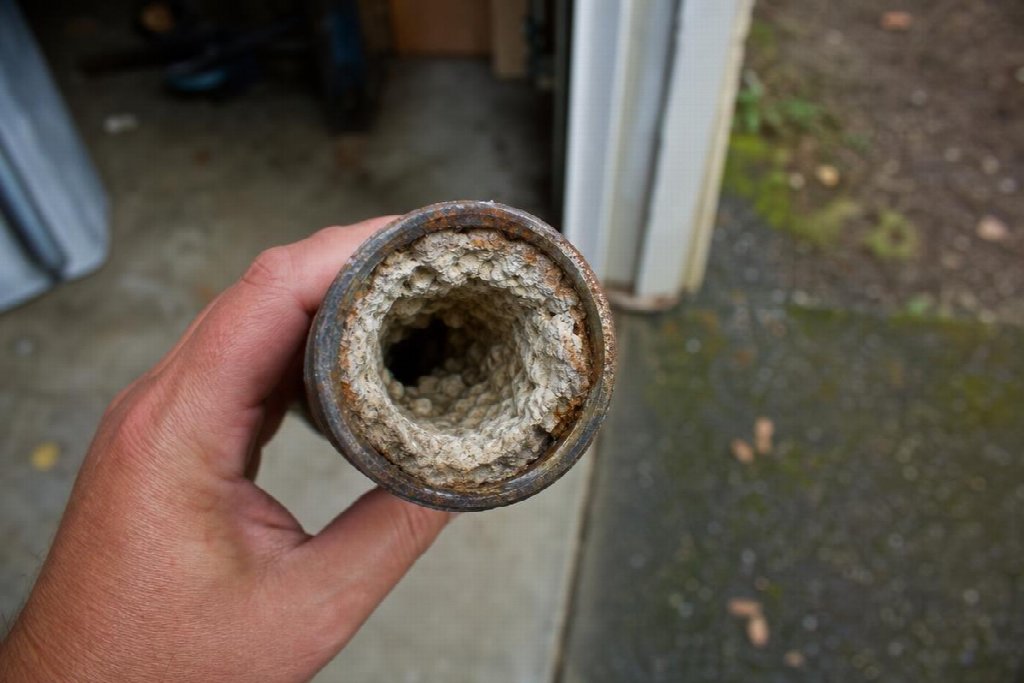
Phoenix Valley tap water comes primarily from the Colorado River and the Salt River Project canal system. By the time that water reaches a home, it carries significant dissolved calcium carbonate and magnesium absorbed from limestone and mineral-rich desert soils, putting much of the Valley well into the “very hard” category, with East Valley cities like Tempe and Mesa often testing even higher.
What Mineral Scale Does Inside Pipes Over Time
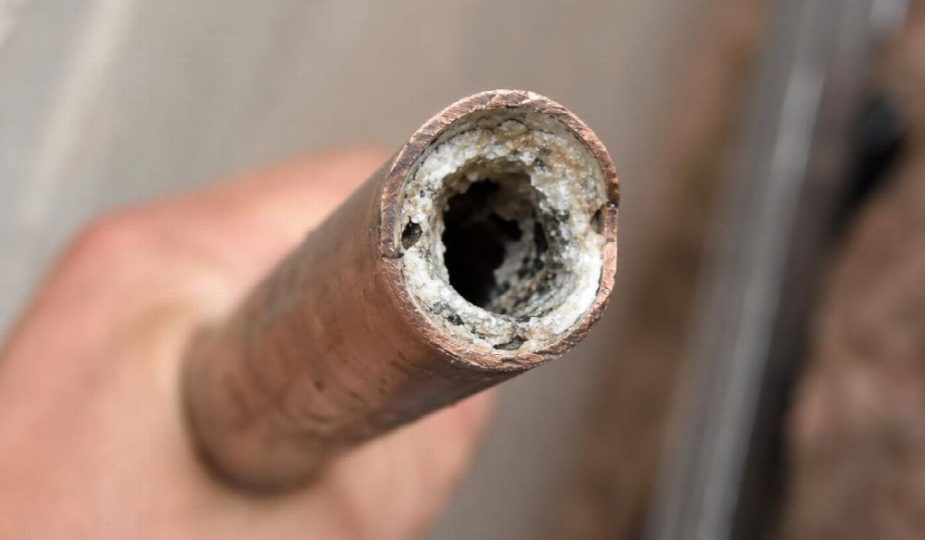
Mineral scale coats interior pipe walls, narrowing the diameter, restricting flow, and creating rough surfaces where corrosion accelerates. In copper pipes, the mineral load triggers localized electrochemical reactions called pitting corrosion, where tiny spots on the pipe wall are eaten through from the inside out, often first noticed as a water stain on drywall or a spike in the water bill.
Because slab-on-grade construction dominates the Valley, accessing a pinhole slab leak for a spot repair means cutting through concrete, then patching and re-finishing the floor. That is why a whole-home repipe that reroutes lines overhead through the attic often makes more financial sense than a third or fourth slab repair. Homes built before the 1970s in neighborhoods like Encanto and Arcadia face an additional problem: original galvanized steel supply lines corrode even faster than copper under high-mineral conditions. Modern repipes replace galvanized steel with PEX or new copper that resists scaling far better.
Confirming How Far the Damage Has Progressed
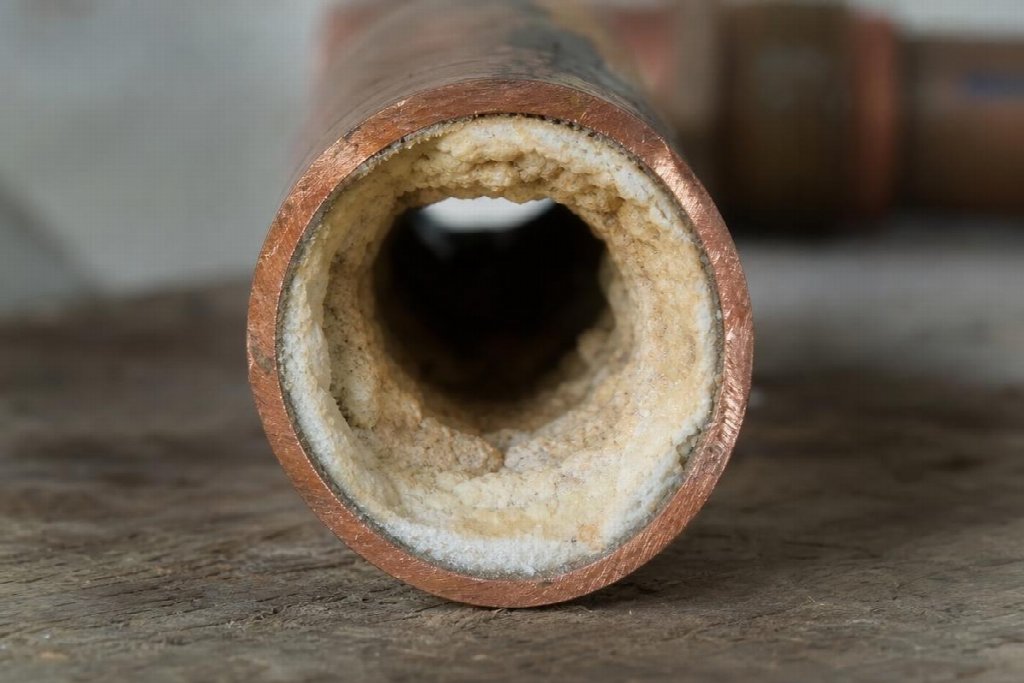
Discolored water, low pressure, and frequent leaks are warning signs, but the only way to confirm how far pipe damage has progressed is a professional inspection. A licensed technician can use pressure testing and camera diagnostics to assess what is happening inside the walls and under the slab. Homeowners across the Greater Phoenix Valley, from Buckeye and Goodyear in the West Valley to Gilbert and Chandler in the East Valley, deal with the same heavy mineral load year-round, and knowing when to repipe requires local knowledge of slab construction and the region’s water chemistry.
Frequently Asked Questions
Can a water softener reverse pipe damage that has already happened?
No. A water softener prevents new mineral scale from forming going forward, but it cannot dissolve or repair scale and corrosion that has already built up inside existing pipes. Once pipes are heavily scaled or corroded, a softener is a prevention tool for new plumbing, not a fix for old plumbing.
How much does a full home repipe typically cost?
Cost varies widely based on home size and pipe material. Getting multiple estimates and confirming what materials and warranty are included helps homeowners compare bids accurately.
How long does a whole-house repipe usually take?
For an average single-story home, a repipe typically takes two to five days, while larger or multi-level homes can take a week or more. Water service is usually staggered rather than completely shut off for the entire duration, though short interruptions during active work are normal.
How many repairs is too many before a repipe makes more sense?
There is no fixed number, but a pattern of recurring leaks across different parts of the home within a short period is the clearest signal that the underlying pipe material has deteriorated broadly rather than failing at one isolated spot. At that point, the cumulative cost of repeated repairs, plus the water damage risk between visits, typically exceeds the cost of a full repipe.