
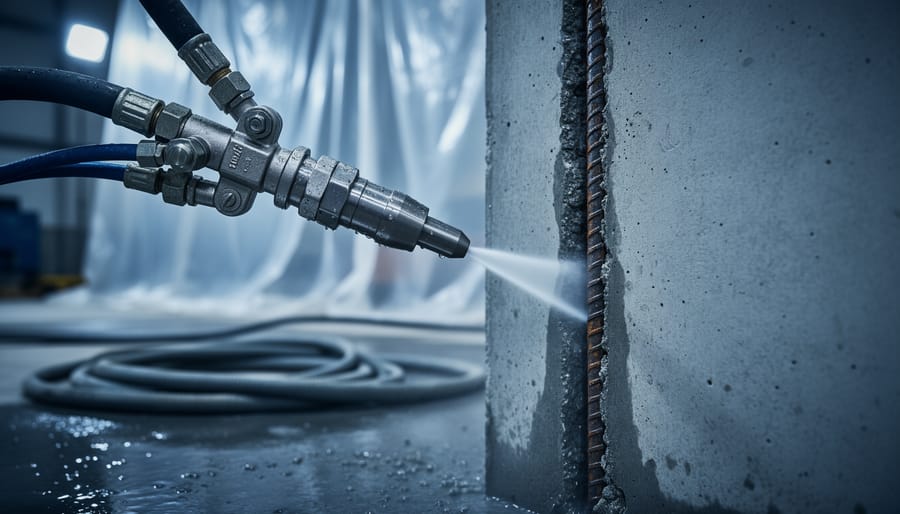
Hydro cutting concrete harnesses pressurized water streams—often exceeding 60,000 PSI—to slice through concrete with surgical precision, eliminating the dust clouds, structural vibration, and heat damage that plague traditional diamond sawing and jackhammering. This cold-cutting process works by forcing water through a narrow nozzle at speeds approaching three times the speed of sound, creating a cutting jet that erodes concrete layer by microscopic layer while leaving surrounding material structurally intact.
The technology mirrors waterjet cutting for stone, but concrete applications demand higher pressure ranges and often incorporate abrasive garnet particles to accelerate cutting through reinforced sections containing rebar or wire mesh. Where diamond blades generate friction heat that can compromise concrete integrity and create microfractures extending several inches from the cut line, hydrodemolition maintains ambient temperatures throughout the process.
Contractors value hydro cutting for projects requiring millimeter-level accuracy—opening doorways in load-bearing walls, creating utility penetrations without damaging embedded conduits, or removing deteriorated concrete surfaces while preserving sound substrate beneath. The method proves particularly effective in occupied buildings where dust containment would otherwise require extensive preparation, and in historic renovations where traditional methods risk structural damage.
Understanding when hydro cutting justifies its premium cost over conventional methods, how to evaluate contractor qualifications, and what realistic project timelines look like determines whether this technology suits your specific concrete cutting needs.
What Is Hydro Cutting and How Does It Work?
Hydro cutting, also known as waterjet cutting, is a precision cutting method that uses high-pressure water jets to slice through concrete, stone, and various other materials with remarkable accuracy. This innovative technique has become increasingly popular alongside other modern stone fabrication technologies, offering contractors and designers a cleaner, more controlled alternative to traditional cutting methods.
The process begins with water being pressurized to extreme levels, typically ranging from 30,000 to 90,000 pounds per square inch (PSI). This intense pressure forces water through a small orifice, usually a jewel or diamond nozzle measuring just 0.010 to 0.015 inches in diameter. The result is a concentrated stream moving at speeds up to three times the speed of sound, capable of eroding and cutting through dense materials.
For cutting concrete and stone, pure water alone often isn’t sufficient. That’s where abrasive waterjet cutting comes into play. Fine abrasive particles, commonly garnet sand, are mixed into the water stream just after it exits the orifice. These particles act as tiny cutting tools, dramatically increasing the jet’s ability to penetrate and slice through tough materials like reinforced concrete, granite, and marble. The abrasive mixture travels through a secondary mixing tube before exiting at the cutting head.
The fundamental mechanics behind hydro cutting rely on erosion rather than heat or mechanical force. As the high-velocity water and abrasive particles strike the material surface, they progressively wear away the concrete or stone along the cutting path. This erosion process happens so quickly and precisely that it creates clean, smooth cuts without generating heat, dust, or structural stress.
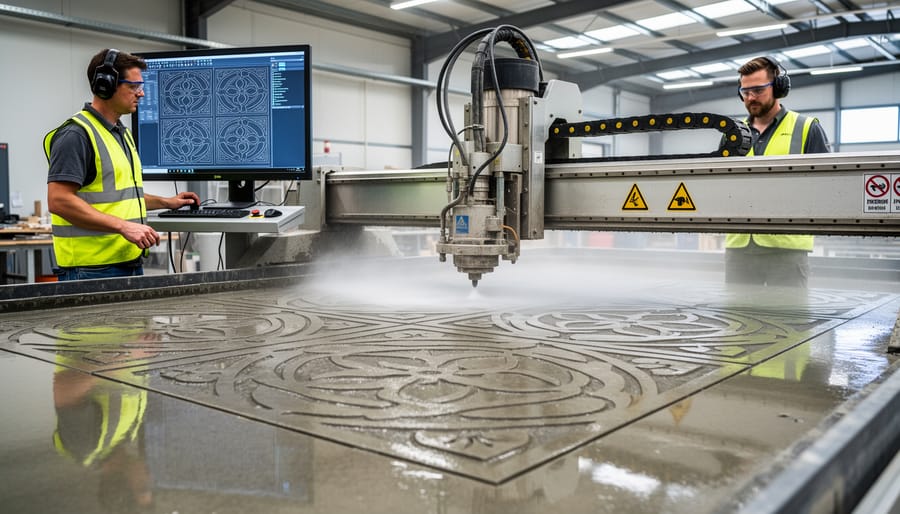
The cutting head is typically mounted on a computer-controlled gantry system, allowing for intricate patterns, curves, and straight cuts with tolerances as tight as 0.005 inches. Operators can adjust water pressure, abrasive flow rate, and cutting speed based on the material thickness and desired finish quality, making hydro cutting exceptionally versatile for both demolition work and detailed architectural applications.
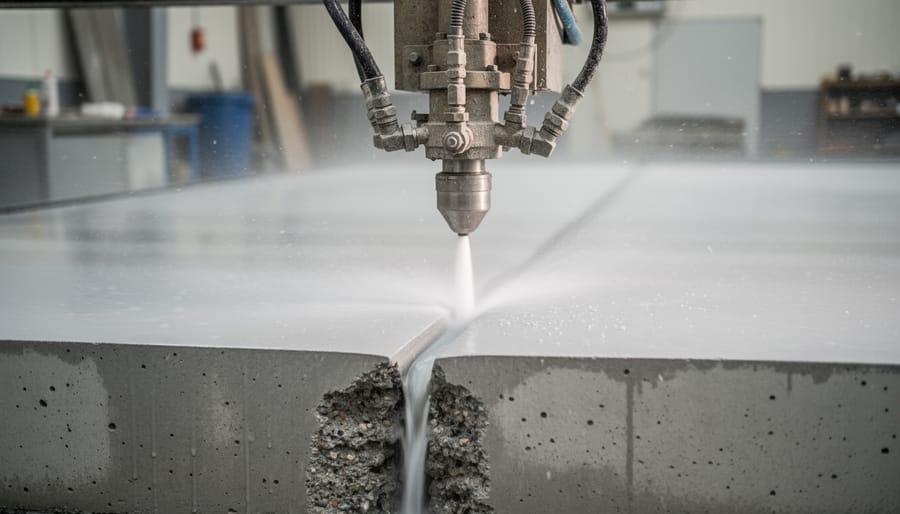
Why Hydro Cutting Outperforms Traditional Methods
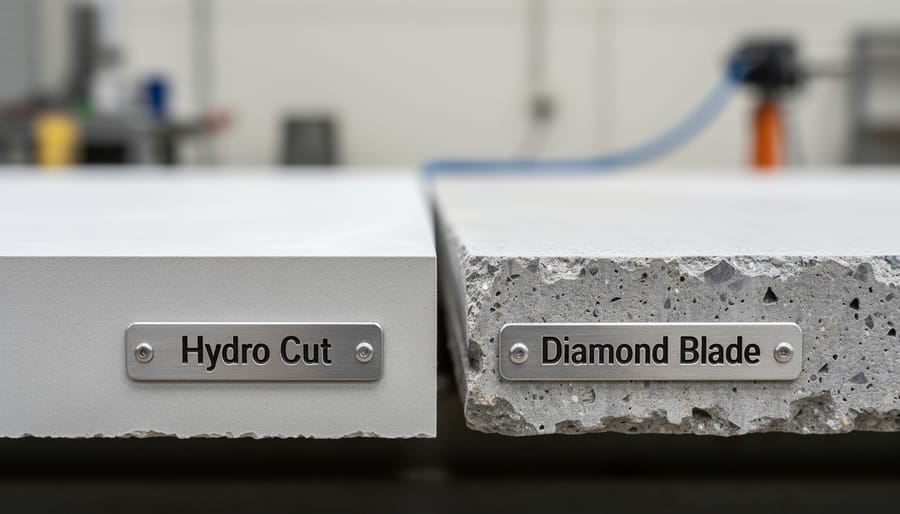
No Heat, No Cracks
One of hydro cutting’s most significant advantages is its cold-cutting process, which eliminates the heat-related damage common with traditional cutting methods. When concrete or natural stone is cut using diamond blades or other mechanical tools, friction generates intense heat at the cutting surface. This thermal stress can cause microscopic cracks to form within the material’s structure, compromising its long-term integrity and potentially leading to premature failure.
Hydro cutting uses pressurized water instead of heat-generating tools, maintaining the concrete or stone at ambient temperature throughout the cutting process. This prevents thermal expansion and contraction that would otherwise create stress points within the material. For decorative concrete and natural stone applications, this preservation of structural integrity is essential, as even hairline cracks can become visible over time or allow moisture penetration.
The cold-cutting process is particularly valuable when working with materials that contain multiple components with different thermal expansion rates, such as reinforced concrete or composite stone materials. By avoiding heat altogether, hydro cutting maintains the original properties of the material, ensuring cuts remain clean and stable without the risk of delayed cracking that might appear weeks or months after conventional cutting methods are used.
Precision Without Vibration
Traditional cutting methods like sawing and drilling generate significant mechanical vibration that transfers stress throughout concrete and stone structures. These vibrations can create microfractures in delicate materials, compromise surrounding structures, and potentially weaken the integrity of the concrete itself. Waterjet cutting eliminates this concern entirely through its non-contact cutting approach.
The high-pressure water stream cuts through material without any physical force or impact, meaning zero vibration is transmitted to the surrounding areas. This makes hydro cutting ideal for renovation projects in occupied buildings, work near sensitive equipment, or cutting decorative concrete elements where even minor cracking would be unacceptable. The same principle applies to other precision stone cutting methods that prioritize material preservation.
For architects and designers specifying concrete work adjacent to finished surfaces or in historic structures, this vibration-free operation provides peace of mind. The absence of mechanical stress also allows contractors to work closer to edges and corners without risk of chipping or structural damage, expanding design possibilities for complex concrete installations.
Dust-Free Cutting for Healthier Worksites
One of the most significant advantages of hydro cutting concrete is the dramatic reduction of hazardous airborne particles. Traditional dry cutting methods generate substantial amounts of respirable crystalline silica, a known health hazard that can cause serious respiratory conditions including silicosis, lung cancer, and chronic obstructive pulmonary disease. Water-based cutting effectively suppresses dust at the source, capturing particles before they become airborne.
The constant water flow during hydro cutting operations creates a slurry that encapsulates silica particles, preventing them from dispersing into the work environment. This protection extends beyond the immediate operator to everyone on the jobsite, reducing silica dust exposure that would otherwise require extensive respiratory protection and air monitoring systems.
Beyond worker safety, dust-free cutting minimizes environmental impact and improves worksite conditions. Projects in occupied buildings, healthcare facilities, schools, and residential areas particularly benefit from this cleaner approach. There’s no dust settling on nearby surfaces, equipment, or ventilation systems, reducing cleanup time and costs while maintaining better air quality throughout the entire work zone. For contractors and property owners alike, this translates to safer, more efficient projects with fewer health-related complications and regulatory concerns.
Applications in Natural Stone and Concrete Projects
Architectural Stone Elements
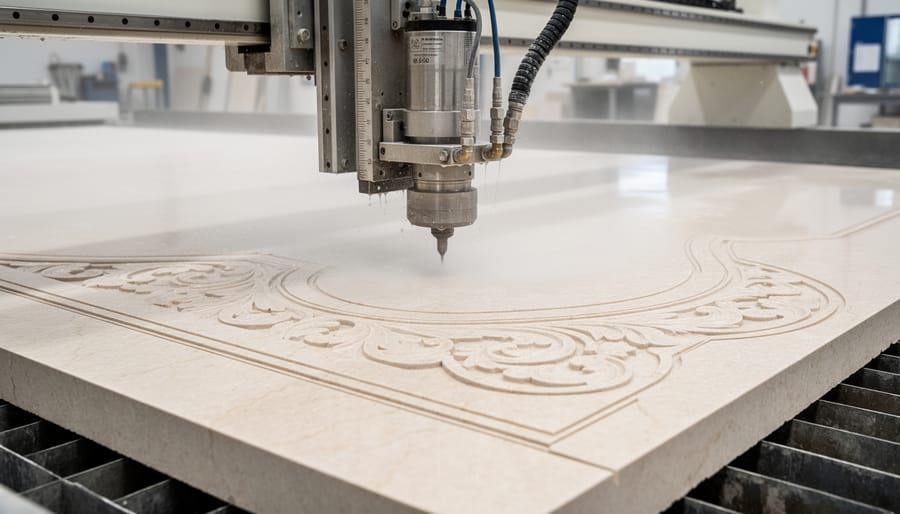
Hydro jet cutting technology has revolutionized how architectural stone elements are created, offering unprecedented precision for natural stone materials. This cutting method uses ultra-high-pressure water streams, often mixed with abrasive garnet, to slice through marble, granite, and limestone with remarkable accuracy, enabling intricate designs that were previously impossible or prohibitively expensive with traditional sawing methods.
For building facades, waterjet cutting produces seamless curves and geometric patterns that transform ordinary stone panels into architectural statements. Columns can be shaped with elaborate fluting, tapered profiles, and ornamental capitals that match historical designs or contemporary visions. Decorative features like balustrades, cornices, and medallions benefit from the technology’s ability to execute tight radiuses and detailed relief work without cracking or chipping the stone.
The precision of hydro cutting pairs exceptionally well with modern 3D design visualization software, allowing architects to create complex digital models that translate directly to cutting parameters. This integration ensures that even the most ambitious stone designs materialize exactly as envisioned, with tolerances measured in millimeters rather than centimeters, making it ideal for both restoration projects requiring historical accuracy and contemporary installations demanding innovative forms.
Concrete Renovation and Repair
Hydro cutting excels in renovation projects where precision and minimal disruption are paramount. Unlike jackhammers or saws that generate destructive force, water jetting allows contractors to selectively remove concrete while preserving structural integrity. This makes it ideal for opening doorways in existing walls, creating window expansions, or cutting access panels without compromising the surrounding structure.
The technique proves particularly valuable when working around embedded rebar or post-tensioned cables. The high-pressure water stream removes concrete material while leaving steel reinforcement intact and undamaged, enabling contractors to assess and work with existing structural elements safely. This selective removal capability reduces repair costs and maintains the building’s structural soundness.
Creating utility trenches for plumbing, electrical, or HVAC installations becomes considerably cleaner with hydro cutting. The process produces minimal dust and vibration, allowing work to proceed in occupied buildings without significant disruption to tenants or operations. The precision depth control ensures utilities are installed at exact specifications without over-excavation.
For historic building renovations, hydro cutting offers a non-destructive approach that preserves architectural details while allowing necessary modifications. The method’s ability to cut precise patterns and controlled depths makes it suitable for projects requiring both technical accuracy and respect for existing materials.
Decorative and Custom Work
Hydrodemolition technology has evolved beyond utilitarian applications to become a valuable tool for decorative and artistic concrete work. The precise, controlled water stream allows contractors and designers to create intricate custom floor patterns, company logos, and decorative inlays that would be difficult or impossible with traditional cutting methods. By adjusting water pressure and nozzle configurations, operators can achieve varying depths and textures, revealing aggregate layers or creating relief designs that add visual interest to otherwise plain surfaces.
This advanced cutting precision makes hydro cutting ideal for personalized residential projects, such as custom patio designs, decorative driveway borders, or interior floor medallions. Architects increasingly specify hydrodemolition for commercial spaces where branded flooring elements or wayfinding patterns enhance the overall design aesthetic. The method also excels at preparing concrete surfaces for stone inlays, creating perfectly shaped recesses that accept marble, granite, or terrazzo inserts with minimal edge damage.
Unlike mechanical cutting that can cause micro-cracking around design edges, water cutting preserves the structural integrity of decorative elements while delivering clean, professional results that showcase both craftsmanship and creativity.
The Process: What to Expect During Hydro Cutting
Understanding what happens during a hydro cutting project helps you prepare effectively and communicate clearly with contractors. While specific approaches may vary depending on project complexity, most hydro cutting operations follow a similar workflow designed to maximize precision while minimizing disruption to your property or job site.
The process begins well before any cutting equipment arrives on-site. During the initial consultation, contractors evaluate your project requirements, existing concrete conditions, and access constraints. This assessment determines equipment specifications, water management needs, and realistic timelines. Experienced operators will discuss potential challenges specific to your project, such as embedded rebar, post-tensioned cables, or proximity to sensitive areas that require additional protective measures.
Once planning is complete, the actual hydro cutting process unfolds systematically:
- Site assessment and preparation: The crew establishes work zones, identifies utility locations, and sets up protective barriers to contain water and debris. They verify access points for equipment and establish drainage systems to manage wastewater effectively.
- Material analysis and marking: Technicians examine the concrete thickness, composition, and any embedded materials. They mark precise cutting lines according to project specifications and blueprints, often using laser guides for complex geometries.
- Equipment setup and calibration: The hydro cutting system is positioned and secured. Operators calibrate water pressure settings based on concrete characteristics, typically ranging from 20,000 to 40,000 PSI for most applications. They test equipment functionality and verify all safety systems.
- Cutting execution: The actual cutting begins with careful monitoring of depth, speed, and water flow. Operators make adjustments as needed when encountering reinforcement or varying concrete densities. For deep cuts or large openings, multiple passes may be necessary to achieve the desired depth.
- Quality inspection: Upon completing each cut, technicians verify dimensions meet specifications, check edge quality, and ensure no unintended damage occurred to surrounding areas. This quality control step prevents costly corrections later.
- Cleanup and site restoration: The crew removes cut concrete sections, manages wastewater according to environmental regulations, and restores the work area to agreed-upon conditions.
Throughout the process, professional contractors maintain open communication about progress and any unexpected conditions discovered during cutting. They document their work photographically, which proves valuable for project records and future reference.
Most residential projects, such as creating doorways or small openings, complete within one to two days. Commercial projects with extensive cutting requirements may span several days or weeks, depending on scope and complexity. The relatively quick execution compared to traditional methods means less disruption to ongoing operations or daily routines, making hydro cutting particularly attractive for occupied buildings or time-sensitive projects.
Cost Considerations and Project Planning
Hydro cutting concrete typically costs more upfront than traditional sawing methods, with hourly rates ranging from $150 to $300 depending on project complexity, location, and equipment requirements. Standard concrete saws may run $75 to $150 per hour, making the price differential significant for straightforward demolition work.
However, this initial cost comparison doesn’t tell the complete story. Hydro cutting eliminates several hidden expenses associated with conventional methods. There’s no dust containment equipment to rent, minimal cleanup costs, and reduced labor time since operators don’t need extensive prep work or protective measures. Projects in occupied buildings particularly benefit, as businesses rarely need to shut down operations during hydro cutting work.
Several factors influence final pricing. Concrete thickness and reinforcement density directly impact cutting time and abrasive usage. Accessibility matters too—tight spaces requiring specialized equipment configurations increase costs. The precision required also plays a role; intricate cuts around plumbing, electrical systems, or architectural features demand more time and expertise than simple straight cuts. Project volume can work in your favor, as contractors often offer better rates for larger jobs that justify mobilization costs.
The investment makes strong economic sense for specific scenarios. Renovation projects in historic buildings or occupied commercial spaces benefit tremendously from dust-free, vibration-free cutting that preserves structural integrity. When working near sensitive equipment, utilities, or finished surfaces, avoiding collateral damage justifies the premium. For projects requiring curved cuts, controlled depth cutting, or work on stressed concrete, hydro cutting often proves more economical than alternatives once you factor in reduced repair costs and project delays.
Smaller residential projects with simple cutting requirements may find traditional methods more budget-friendly. However, as environmental regulations tighten and workplace safety standards evolve, hydro cutting’s comprehensive advantages increasingly outweigh the cost difference, even for modest projects. Request detailed quotes comparing both methods, including all associated costs, to make informed decisions for your specific situation.
Limitations and When to Choose Alternative Methods
While hydro cutting offers numerous advantages for concrete projects, understanding its limitations helps you make informed decisions about the most appropriate method for your specific needs.
- Produces zero dust and minimal noise during operation.
- Creates precise cuts with smooth edges requiring little finishing work.
- Eliminates vibration and heat that can damage surrounding structures.
- Works effectively on heavily reinforced concrete with embedded rebar.
- Higher upfront costs compared to traditional sawing methods.
- Requires specialized equipment and trained operators.
- Limited cutting depth depending on water pressure capabilities.
- Not cost-effective for small, straightforward projects.
Depth limitations present one of the primary considerations when evaluating hydro cutting. Most commercial hydro cutting equipment can effectively cut through concrete up to 24 inches thick, though specialized systems can handle greater depths. Projects requiring cuts deeper than this threshold may necessitate alternative methods or multiple passes, increasing time and costs.
Accessibility challenges can also restrict hydro cutting applications. The equipment requires adequate space for positioning, water supply access, and proper drainage systems to manage the substantial water volume produced during cutting. Confined spaces, upper floors without water management infrastructure, or remote locations without reliable water sources may make traditional methods more practical.
Budget considerations play a significant role in method selection. For small residential projects like cutting a single doorway or window opening, the setup costs and minimum service fees associated with hydro cutting may outweigh its benefits. Standard concrete saws or core drilling equipment often provide more economical solutions for straightforward, low-complexity work.
Simple demolition projects where precision is less critical also favor conventional methods. When rough cuts suffice and dust control is not a primary concern, traditional sawing or breaking techniques deliver adequate results at lower costs, making them the sensible choice for budget-conscious projects.
Finding Qualified Hydro Cutting Professionals
Selecting the right hydro cutting contractor ensures your project achieves the precision and quality this advanced technology promises. Start by verifying the company’s experience specifically with hydrodemolition and concrete cutting, as expertise with conventional cutting methods doesn’t automatically translate to proficiency with high-pressure water systems.
Ask potential contractors how long they’ve been performing hydro cutting services and request examples of similar projects. A qualified professional should readily provide references, photos of completed work, and detailed explanations of their process. Inquire about their equipment specifications, including maximum pressure capabilities and whether they maintain their machinery regularly.
Important certifications to look for include OSHA safety training, EPA compliance for wastewater management, and manufacturer certifications for their hydrodemolition equipment. Contractors should carry comprehensive liability insurance and workers’ compensation coverage, as hydro cutting involves specialized equipment and safety considerations.
Request a detailed written estimate that breaks down labor, equipment, disposal fees, and site preparation costs. Reputable contractors will conduct an on-site assessment before providing quotes rather than offering instant prices over the phone.
Red flags include reluctance to provide references, inability to explain their water recycling and debris containment methods, or pressure to sign contracts immediately. Be wary of contractors who can’t articulate how they’ll protect surrounding areas from water damage or who dismiss noise and vibration concerns without offering mitigation strategies.
Finally, ensure the contract specifies project timelines, cleanup responsibilities, and warranty terms. A professional hydro cutting service will address all these elements transparently, demonstrating their commitment to quality workmanship and customer satisfaction throughout your concrete cutting project.
Hydro cutting technology has fundamentally transformed how professionals approach concrete and natural stone work, delivering unprecedented precision while safeguarding the inherent beauty and structural integrity of these materials. Unlike traditional cutting methods that generate excessive heat, vibration, and dust, water jet technology offers a clean, controlled alternative that minimizes waste and maximizes accuracy. This advancement benefits everyone from contractors managing large-scale demolition projects to artisans crafting intricate stone features for high-end architectural applications.
The ability to cut through reinforced concrete without damaging surrounding structures, or to shape delicate natural stone without introducing microfractures, represents a significant leap forward in construction and fabrication capabilities. As environmental regulations become more stringent and project specifications demand tighter tolerances, hydro cutting positions itself as an increasingly essential tool in the industry’s arsenal.
Looking ahead, continued technological refinements promise even greater efficiency and versatility. Emerging robotic systems and advanced nozzle designs are expanding the possibilities for complex three-dimensional cutting, while improved pump technology reduces operational costs. For architects and designers seeking to push creative boundaries with concrete and stone, hydro cutting opens new avenues for innovation that were simply impractical with conventional methods.
Whether you’re planning a renovation, designing a custom stone installation, or managing a commercial construction project, understanding hydro cutting’s capabilities ensures you can make informed decisions that balance precision, protection, and performance. This technology isn’t just changing how we cut materials—it’s redefining what’s possible in modern construction and stone fabrication.