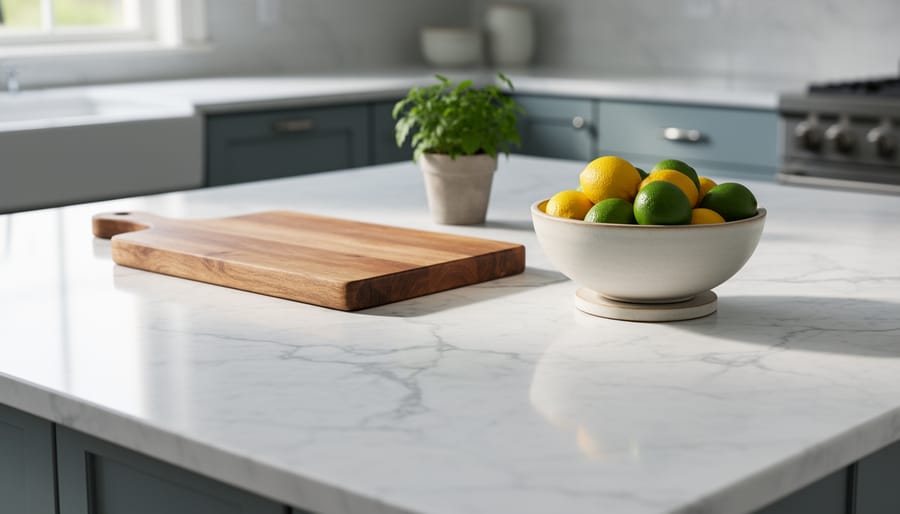
Marble countertops have graced prestigious buildings, palaces, and homes for thousands of years, yet homeowners today hesitate, wondering if this classic stone can survive modern kitchens. The answer requires distinguishing between two often-confused concepts: structural durability and surface sensitivity. Structurally, marble ranks among the most enduring countertop materials available, with properly installed slabs easily lasting 50 to 100 years or more without cracking, chipping, or deteriorating. The Pantheon in Rome still showcases marble floors after nearly 2,000 years, demonstrating the stone’s fundamental longevity.
The confusion stems from marble’s chemical composition. As a calcium carbonate-based stone, marble reacts with acidic substances like lemon juice, wine, and tomato sauce, creating dull spots called etching. These surface marks don’t compromise the countertop’s integrity but do alter its appearance. Similarly, marble’s relatively soft nature compared to granite or quartzite makes it susceptible to scratches from knives and abrasive cleaners.
Understanding this distinction changes the conversation from “Will marble last?” to “Can I accept how marble ages?” The patina that develops over years reflects authentic use and appeals to those who value natural material character over pristine uniformity. This introduction examines marble’s true durability metrics, separates cosmetic changes from structural concerns, and provides evidence-based maintenance protocols that allow homeowners and designers to make informed decisions based on realistic expectations rather than misconceptions.
Understanding Marble’s Physical Durability
How Marble Withstands Daily Wear
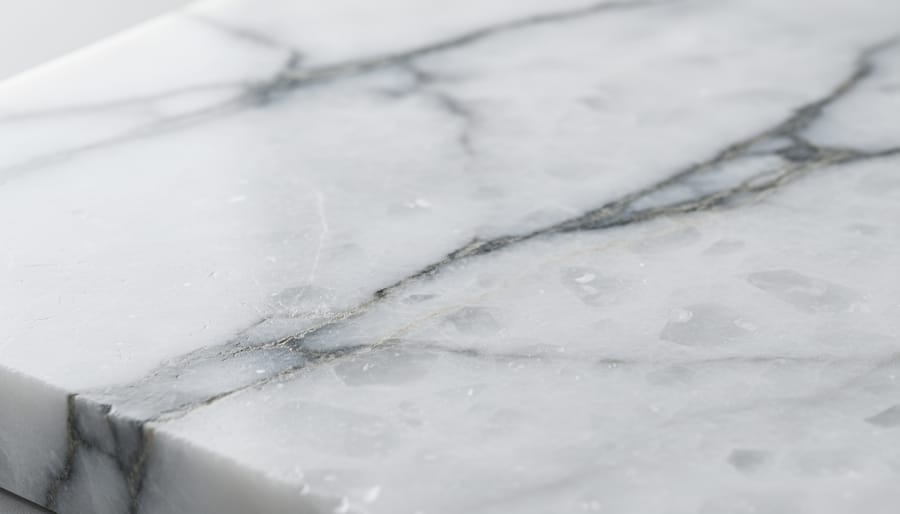
Marble performs remarkably well under everyday kitchen conditions, though it behaves differently than some of the most durable countertop materials like granite or quartzite. Understanding its characteristics helps set realistic expectations.
When it comes to impact resistance, marble’s crystalline structure provides moderate durability. While it won’t shatter from typical kitchen activities like setting down pots or placing cutting boards, direct impacts from heavy objects dropped from height can cause chips or cracks, particularly along edges and corners. This vulnerability is similar to any natural stone surface.
Scratch resistance presents marble’s most notable limitation for daily use. With a Mohs hardness rating of 3 to 4, marble scratches more easily than harder stones. Knives dragged across the surface, abrasive cleaners, and even some dishware can leave visible marks over time. However, these surface scratches often add to marble’s patina rather than compromising its structural integrity. Many homeowners embrace this evolving character as part of marble’s natural beauty.
Regarding thermal shock, marble handles heat better than many expect. The stone can withstand brief contact with hot pans without cracking or scorching, though extreme temperature changes may cause stress fractures in rare cases. Using trivets remains the recommended practice to preserve the surface finish, as heat can sometimes cause discoloration or dull polished areas. Overall, marble proves sufficiently resilient for typical kitchen use when owners understand and accommodate its softer nature.
The Lifespan Reality: Decades of Service
With proper care, marble countertops routinely provide 25 to 50 years of service in residential kitchens, and many examples extend well beyond this timeframe. The Parthenon’s marble columns have stood for over 2,400 years, while countless European palaces feature marble flooring that has endured centuries of foot traffic. These historical applications demonstrate marble’s fundamental structural integrity.
In modern residential settings, marble countertops installed in the 1970s and 1980s continue functioning today, though they often display the patina of decades of use. The key distinction is that marble’s longevity relates to its physical durability rather than its pristine appearance. While etching and minor surface wear develop over time, the stone itself remains structurally sound and fully functional.
High-quality marble slabs with minimal veining and consistent density typically outlast those with extensive natural fissures. Regular sealing, prompt cleanup of acidic spills, and use of cutting boards significantly extend the aesthetic lifespan. Homeowners who embrace marble’s evolving character often find their countertops become more beautiful with age, developing a soft, lived-in appearance that synthetic materials cannot replicate. When professionally maintained, marble countertops can easily become multi-generational kitchen features.
The Real Vulnerabilities: What Actually Damages Marble
Etching vs. Damage: A Critical Distinction
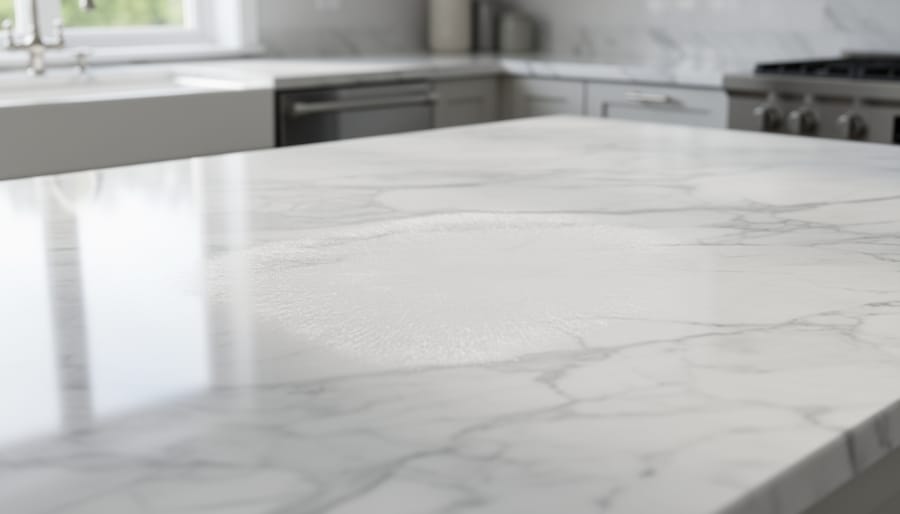
Understanding the difference between etching and damage is essential when evaluating marble’s true durability. Etching occurs when acidic substances like lemon juice, vinegar, or wine come into contact with marble’s calcium carbonate composition, causing a chemical reaction with acids that dissolves a microscopic layer of the polished surface. This leaves behind a dull spot or watermark, but it’s fundamentally different from structural damage like cracks, chips, or deep scratches that compromise the stone’s integrity.
The marble beneath remains as strong and solid as before. In contrast, actual damage involves physical harm to the stone’s structure. A chip from dropping a heavy pot creates a permanent defect, while an etch mark from spilled orange juice can often be polished out by a professional or minimized with specialized products.
This distinction matters because many consumers reject marble based on etching concerns, mistakenly believing these marks indicate fragility. While etching does require more attentive care to prevent visible marks, it doesn’t mean your countertop is deteriorating. Historic marble installations in centuries-old buildings demonstrate that the stone itself remains structurally sound despite surface wear. When assessing marble’s suitability for your kitchen, consider whether you’re more concerned with maintaining a pristine appearance or long-term structural performance—these are two separate considerations.
Staining Susceptibility and Prevention
Marble’s reputation for staining stems from its natural porosity, a characteristic inherent to this calcium carbonate-based stone. Unlike denser materials such as granite or quartzite, marble contains microscopic pores that can absorb liquids, making it vulnerable to discoloration when exposed to certain substances.
The greatest staining threats come from acidic liquids like wine, coffee, citrus juices, and vinegar, which not only penetrate the surface but can also etch the stone simultaneously. Oil-based substances, including cooking oils and cosmetics, pose another significant risk because they penetrate deeply and create dark, stubborn stains. Highly pigmented liquids such as beets, berries, and food dyes can leave persistent marks if not wiped immediately.
Professional sealing significantly improves marble’s stain resistance by filling these pores with a protective barrier. A quality penetrating sealer can reduce absorption rates from seconds to several minutes, providing crucial time to clean up spills before they penetrate. However, sealing is not a permanent solution—most sealers require reapplication every 6 to 12 months depending on usage and the specific product used.
It’s important to understand that sealing does not make marble stain-proof or etch-proof. Even well-sealed marble requires prompt attention to spills, particularly acidic substances. Regular resealing, combined with immediate cleanup habits and the use of cutting boards and trivets, provides the best defense against staining. Some darker marble varieties and honed finishes naturally show stains less prominently than lighter, polished stones, offering a practical consideration for high-use kitchen environments.
Protective Measures That Extend Marble’s Life
The Role of Sealing in Longevity
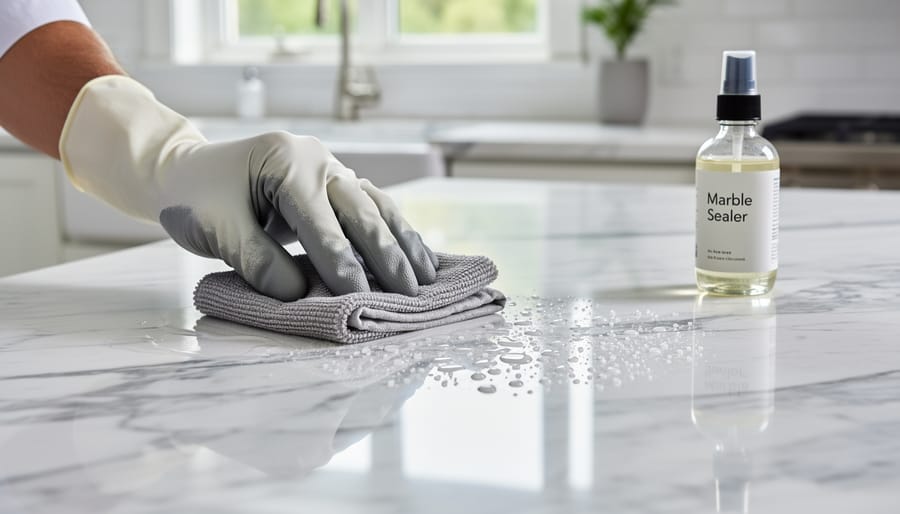
Sealing represents the single most effective strategy for extending the functional lifespan of marble countertops. Unlike some natural stones that are virtually impervious to liquids, marble’s porous calcium carbonate structure readily absorbs moisture and staining substances. Quality sealers work by filling these microscopic pores with protective compounds that create a barrier against penetration while still allowing the stone to breathe naturally.
Two primary sealer categories dominate the market: topical and penetrating. Topical sealers form a protective coating on the marble surface, offering excellent stain resistance but potentially altering the stone’s natural appearance and requiring more frequent reapplication. Penetrating sealers, more commonly recommended for marble, absorb into the stone’s pores without changing its look or feel. These impregnating sealers typically contain silicone, siloxane, or fluoropolymer compounds that repel water and oil-based substances.
Application frequency depends on usage patterns and sealer quality. Kitchen countertops experiencing daily use generally require resealing every 6 to 12 months, while bathroom vanities or low-traffic surfaces may extend to 12 to 18 months between applications. A simple water test provides guidance: if water droplets bead on the surface, the seal remains effective; if water darkens the stone within minutes, resealing is necessary.
The impact on longevity is substantial. Properly sealed marble resists the penetration of acidic liquids long enough for cleanup, dramatically reducing etching opportunities. Sealers also prevent organic staining from coffee, wine, and oils that would otherwise require professional restoration. While sealing cannot eliminate marble’s fundamental acid sensitivity, it transforms the stone from vulnerable to manageable, enabling decades of reliable service when combined with appropriate maintenance practices.
Daily Protection Habits
The longevity of marble countertops depends less on the stone itself and more on the daily habits you establish from day one. While marble has proven its structural durability over centuries, preventing the gradual accumulation of surface wear requires consistent, simple practices that quickly become second nature.
Always use cutting boards when preparing food. Direct knife contact won’t crack your marble, but it will leave fine scratches that accumulate over time, dulling the surface’s polish and creating microscopic channels where stains can penetrate more easily. Similarly, place trivets or heat pads under hot cookware. Although marble is heat-resistant and won’t burn like laminate, rapid temperature changes can cause thermal shock, and hot pots can sometimes leave discoloration rings.
Coasters should be standard practice for all beverages, particularly coffee, wine, citrus juices, and soft drinks. These liquids contain acids or tannins that etch marble’s calcium-based surface within minutes, leaving dull spots that remain visible even after cleaning. The same principle applies to common kitchen ingredients like tomato sauce, vinegar, and lemon juice—wipe spills immediately rather than letting them sit.
For daily cleaning, use only pH-neutral cleaners specifically formulated for natural stone. Common household cleaners, even those marketed as “all-purpose,” often contain acids or alkalines that gradually deteriorate marble’s finish. A simple mixture of warm water and stone-safe soap handles most cleaning needs effectively.
These protective measures don’t require significant effort, but their cumulative effect over years makes the difference between marble that maintains its beauty for decades and marble that shows premature aging.
Maintenance Requirements for Long-Term Durability
Daily and Weekly Care Routines
Establishing consistent care routines is essential for maintaining marble’s durability over decades. Daily maintenance requires just minutes but prevents the accumulation of acidic substances and grime that gradually degrade the surface. After meal preparation, wipe countertops with a soft cloth or sponge and warm water, or use a pH-neutral stone cleaner specifically formulated for marble. This simple habit removes food residues, oils, and liquids before they penetrate the stone or cause etching.
For spills, immediate action makes the difference between a quick cleanup and permanent staining. Blot rather than wipe to avoid spreading liquids across the surface. Even water left standing for extended periods can leave marks on some marble varieties, so keeping the surface dry between uses helps preserve its appearance.
Weekly deep cleaning involves a more thorough wash with stone-safe cleaner, paying attention to areas around the sink and stove where buildup occurs most frequently. Avoid vinegar, lemon juice, ammonia, or general household cleaners, as their acidity damages marble’s calcium carbonate composition. Every few months, check your sealer’s effectiveness by placing water droplets on the surface—if they bead up, protection remains adequate; if they absorb within minutes, resealing is necessary to maintain the stone’s defensive barrier against stains and moisture infiltration.
Professional Restoration and Refinishing
One of marble’s most remarkable qualities is its ability to be completely restored to like-new condition, even after decades of use. Unlike synthetic materials that show permanent wear, marble can be professionally refinished multiple times throughout its life, effectively resetting the clock on its appearance and performance.
Professional restoration involves several processes depending on the marble’s condition. Honing removes surface-level etching, scratches, and dullness by grinding away a thin layer of stone—typically just a few millimeters. This process eliminates years of accumulated wear marks and creates a smooth, uniform surface. Following honing, polishing brings back the stone’s natural luster and depth of color using progressively finer abrasives and specialized compounds.
For more severely damaged surfaces, restoration specialists can address deeper issues like chips, cracks, and significant etching. They use color-matched epoxy fills, professional-grade grinding equipment, and crystallization treatments that chemically harden the surface. The result is often indistinguishable from a newly installed countertop.
The timing for restoration varies based on use and maintenance habits. Light honing and polishing might be beneficial every 5-10 years for heavily used kitchen countertops, while bathroom vanities or less-trafficked surfaces may go decades without needing intervention. Some homeowners schedule maintenance when selling a home or during kitchen renovations to maximize property value.
This renewability fundamentally changes the durability equation for marble. Rather than viewing surface wear as permanent damage, it’s more accurate to consider it temporary aesthetic change that professional restoration services can reverse. This capability means well-maintained marble countertops can literally last indefinitely, outliving multiple generations of homeowners while maintaining their beauty and functionality. The initial investment in marble includes this long-term renewability, making it a truly sustainable choice for countertop applications.
Marble Durability Compared to Other Countertop Materials
Understanding how marble stacks up against other countertop materials helps you make an informed decision based on your lifestyle and priorities. While marble has endured for centuries in some of the world’s most notable buildings, its performance characteristics differ significantly from modern alternatives.
| Material | Scratch Resistance | Etching/Staining Risk | Heat Tolerance | Expected Lifespan |
|---|---|---|---|---|
| Marble | Moderate (3 Mohs) | High susceptibility | Excellent (up to 480°F) | 100+ years |
| Granite | High (6-7 Mohs) | Low with sealing | Excellent (up to 480°F) | 100+ years |
| Quartzite | Very High (7 Mohs) | Very low | Excellent (up to 480°F) | 100+ years |
| Quartz (Engineered) | High (7 Mohs) | Very low | Moderate (300°F max) | 25-50 years |
| Soapstone | Low (1-2 Mohs) | None (non-porous) | Excellent (up to 480°F) | 100+ years |
The comparison reveals marble’s strengths and vulnerabilities. When measured against granite and quartzite, marble ranks lower in scratch resistance and significantly higher in susceptibility to acid etching. Lemon juice, wine, and tomato-based products will etch marble within minutes, while these materials leave granite and quartzite largely unaffected.
However, marble matches or exceeds these materials in heat tolerance, making it ideal for baking enthusiasts who work with hot pans and rolling dough. Unlike quartz countertops, which can discolor or crack under high heat, marble naturally withstands thermal stress.
Where marble truly distinguishes itself is in longevity and repairability. While quartz surfaces cannot be restored once damaged, marble can be professionally honed and repolished multiple times throughout its lifetime. The patina that develops on marble tells a story, whereas damage to engineered materials simply looks like deterioration.
Soapstone offers comparable longevity with lower maintenance demands but lacks marble’s luminous aesthetic and color variety. The trade-off is clear: materials that outperform marble in stain and etch resistance either sacrifice natural beauty, heat tolerance, or the centuries-long lifespan that only genuine stone provides. Your choice ultimately depends on whether you prioritize convenience or the timeless character that develops through use.
Choosing the Right Marble for Maximum Durability
Not all marble is created equal when it comes to durability. Choosing the right countertop variety can significantly impact how well your surface withstands daily kitchen use.
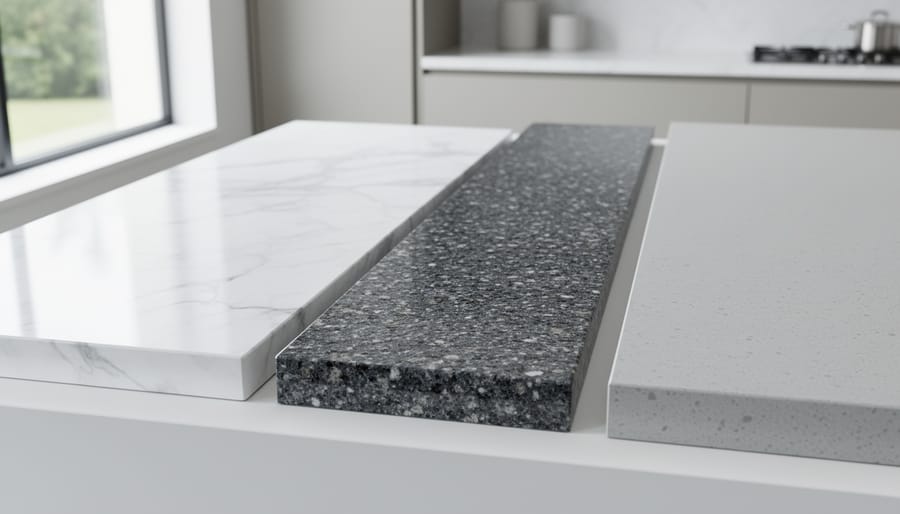
Density is your first consideration. Harder, denser marbles like Carrara, Calacatta, and Danby offer superior resistance to scratching and etching compared to softer varieties. These marbles typically have a more compact crystalline structure that makes them less porous and more resistant to staining. Your fabricator can provide specific density measurements, but generally, marbles quarried from deeper deposits tend to be denser and more durable.
Color selection plays a surprisingly important role in perceived durability. While all marble will develop a patina over time, lighter colors with subtle veining patterns hide minor etching and wear far better than dark or heavily veined varieties. White and cream marbles show fewer scratches and fingerprints, while dramatic black or dark green marbles make every water spot visible. If you’re concerned about maintaining a pristine appearance, stick with lighter shades that naturally camouflage the everyday wear patterns common in busy kitchens.
Finish choice matters more than many homeowners realize. While polished marble remains the most popular option, honed finishes actually conceal etching and scratches more effectively. A honed surface has a matte appearance that won’t show the dull spots caused by acidic substances as dramatically as polished marble. For high-traffic kitchen areas, consider a honed or leathered finish that naturally disguises minor imperfections while maintaining marble’s elegant aesthetic.
Finally, discuss thickness with your fabricator. Standard 3-centimeter slabs offer greater structural integrity than thinner 2-centimeter options, particularly for large islands or overhangs. The additional thickness provides better resistance to cracking and chipping, especially around vulnerable edges and cutouts. While thicker slabs cost more upfront, they deliver measurably better long-term performance in demanding kitchen environments.
Marble countertops have graced homes for centuries, and their continued presence in modern kitchens speaks to a durability that extends far beyond common misconceptions. The key distinction lies in understanding that marble’s longevity operates on two planes: structural integrity and aesthetic evolution. Structurally, properly installed marble can last generations, withstanding the physical demands of daily use without cracking, chipping, or failing. Aesthetically, marble develops character through patina, etching, and subtle wear patterns that many homeowners come to appreciate as part of the material’s natural beauty.
The decision to install marble shouldn’t be driven by myths about fragility or unrealistic expectations of maintenance-free perfection. Instead, informed consumers recognize that marble requires routine care—sealing, prompt cleanup of acidic spills, and gentle cleaning practices—but rewards this attention with unmatched elegance and genuine permanence. Whether marble suits your lifestyle depends not on outdated warnings, but on honest assessment of your household’s needs, your willingness to embrace natural aging, and your appreciation for a material whose beauty deepens over time. When these factors align, marble proves itself as both a practical and enduring choice.