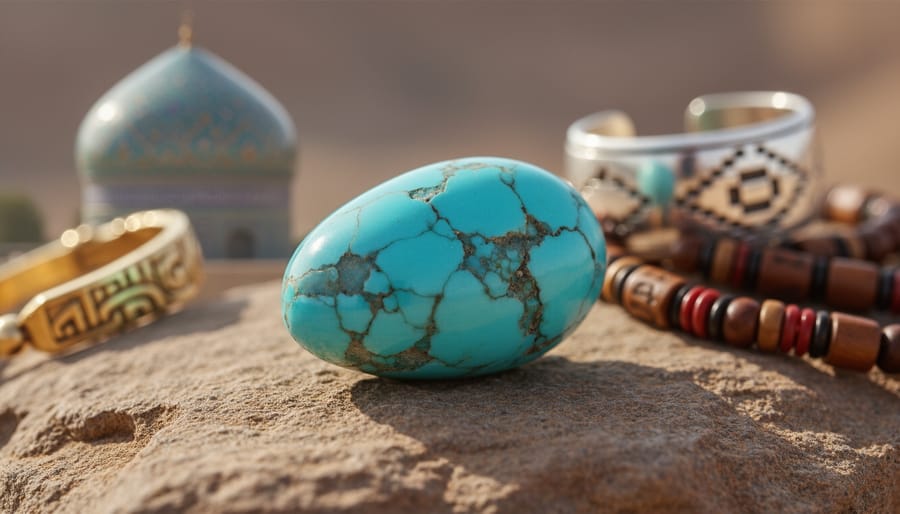
Turquoise has captivated civilizations for over 7,000 years, transcending its status as merely a decorative stone to become one of humanity’s most powerful spiritual and cultural symbols. From the burial masks of Egyptian pharaohs to the sacred ornaments of Native American tribes, this distinctive blue-green mineral has represented protection, healing, and divine connection across continents and centuries.
The stone’s symbolism emerges from its unique formation process, where copper, aluminum, and phosphorus combine under specific geological conditions to create its signature sky-blue and ocean-green hues. Ancient peoples interpreted these colors as bridges between earth and heaven, attributing supernatural properties to turquoise that persist in modern metaphysical practices. Persian architects adorned palace domes with turquoise tiles believing the stone deflected evil, while Tibetan cultures considered it a living entity that changed color to warn its wearer of danger.
Today, turquoise symbolism influences contemporary design decisions in residential and commercial spaces. Architects incorporate turquoise accents in wellness centers and meditation spaces, drawing on its historical associations with tranquility and emotional balance. Designers specify turquoise stone elements in hospitality projects to evoke the calming properties that made it precious to ancient traders along the Silk Road.
Understanding turquoise symbolism provides essential context for anyone considering this stone for architectural applications, jewelry collections, or interior design projects, connecting modern aesthetics with thousands of years of cultural significance.
The Ancient Origins of Turquoise Symbolism
Turquoise in Egyptian Royal Tombs
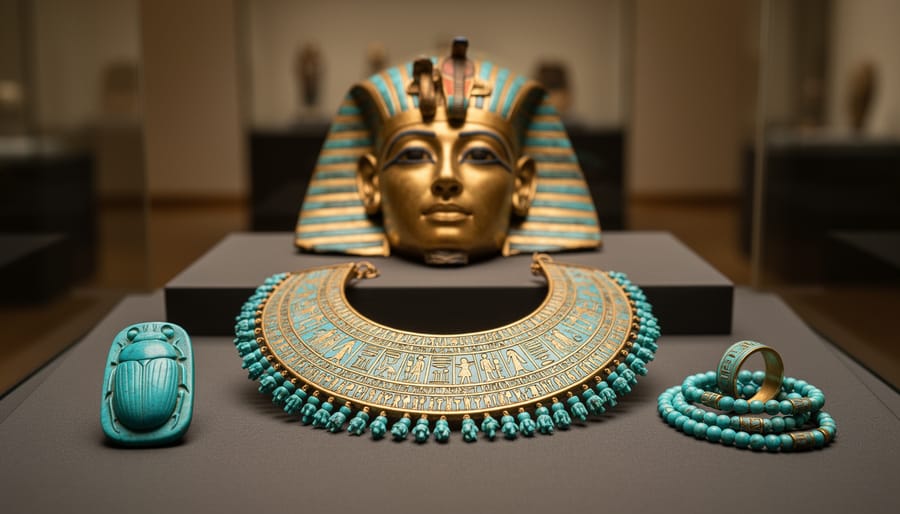
Ancient Egyptians revered turquoise as the stone of eternal life, incorporating it extensively into pharaonic burial practices and royal regalia. The vibrant blue-green mineral, primarily sourced from the Sinai Peninsula mines, adorned death masks, pectorals, and amulets placed within tomb chambers to protect the deceased during their journey to the afterlife.
The iconic funeral mask of Tutankhamun features intricate turquoise inlays alongside lapis lazuli and carnelian, demonstrating the stone’s elevated status in royal burial traditions. Egyptian craftsmen believed turquoise possessed divine protective properties, associating its color with regeneration and the life-giving waters of the Nile. Scarab amulets carved from turquoise were positioned over the heart of mummies, serving as safeguards against evil forces in the underworld.
Pharaohs and high-ranking officials wore turquoise jewelry not merely for adornment but as spiritual armor. Bracelet cuffs, rings, and ceremonial collars featured polished turquoise cabochons set in gold, symbolizing power and divine favor. The stone’s presence in burial chambers reflected the belief that its protective energy would remain potent beyond death, ensuring safe passage into eternity. This ancient understanding of turquoise as a guardian stone continues to influence contemporary design applications, where the mineral represents both timeless beauty and symbolic protection.
The Stone of Heaven in Persian Culture
In ancient Persia, turquoise held unparalleled sacred status, earning its poetic title as the “stone of heaven.” Persian artisans considered turquoise a divine gift, believing it offered protection from evil and misfortune while connecting the earthly realm to celestial powers. This reverence elevated turquoise beyond mere decoration to a spiritual emblem of Persian identity.
The architectural legacy of Persian turquoise remains visible in magnificent mosques and palaces throughout Iran. Skilled craftsmen employed advanced stone craftsmanship techniques to create stunning domed ceilings and minarets adorned with turquoise tiles, their vibrant blue hues symbolizing heaven’s vault. The iconic turquoise domes of Isfahan’s mosques exemplify how this stone transformed sacred spaces into visual prayers.
Persian rulers adorned palace walls with intricate turquoise mosaics, demonstrating wealth and divine favor. These applications showcased turquoise’s dual role as both protective talisman and artistic medium. The stone’s prominence in Persian architecture influenced regional design traditions for centuries, establishing enduring standards for incorporating natural stone in religious and royal structures that continue inspiring contemporary architects and designers seeking meaningful material choices.
Native American Turquoise Traditions
Protection and Healing Properties
Turquoise holds profound significance in Native American cultures as a powerful protective and healing stone, with belief systems dating back thousands of years. These communities view turquoise not merely as decorative material but as a living entity imbued with spiritual power capable of safeguarding against harm and promoting physical wellness.
Among Navajo, Zuni, and Apache peoples, turquoise serves as a primary protective talisman against negative energies, accidents, and injury. Warriors traditionally carried turquoise stones into battle, believing the gem would shield them from danger and ensure safe return. This protective quality extends to modern interpretations, where turquoise remains a cherished guardian stone in jewelry and ceremonial objects.
The healing properties attributed to turquoise span both physical and spiritual realms. Native American medicine practitioners have historically used turquoise in healing ceremonies to treat ailments ranging from respiratory issues to emotional imbalances. The stone’s blue-green coloration connects symbolically to sky and water elements, representing life-giving forces that restore balance and vitality to the body.
Cultural traditions emphasize turquoise’s ability to strengthen the connection between mind, body, and spirit. Many believe the stone enhances communication, promotes honest expression, and dispels negative thoughts. When incorporated into architectural spaces or design elements, turquoise continues to evoke these protective and restorative qualities, creating environments that feel both grounded and spiritually uplifting. This ancient wisdom informs contemporary design choices, where turquoise stone applications honor traditional beliefs while serving practical aesthetic functions.
Sacred Architectural Applications
Throughout history, turquoise has adorned some of the world’s most significant ceremonial structures and sacred dwellings. These sacred stone traditions demonstrate how ancient civilizations integrated this revered material into their most important architectural spaces.
The Tomb of Tutankhamun in Egypt’s Valley of the Kings features extensive turquoise inlay work throughout burial chambers, where the stone was believed to guide the pharaoh safely into the afterlife. The vibrant blue adorned ceremonial masks, sarcophagi, and wall decorations, creating a celestial atmosphere meant to connect earthly realms with the divine.
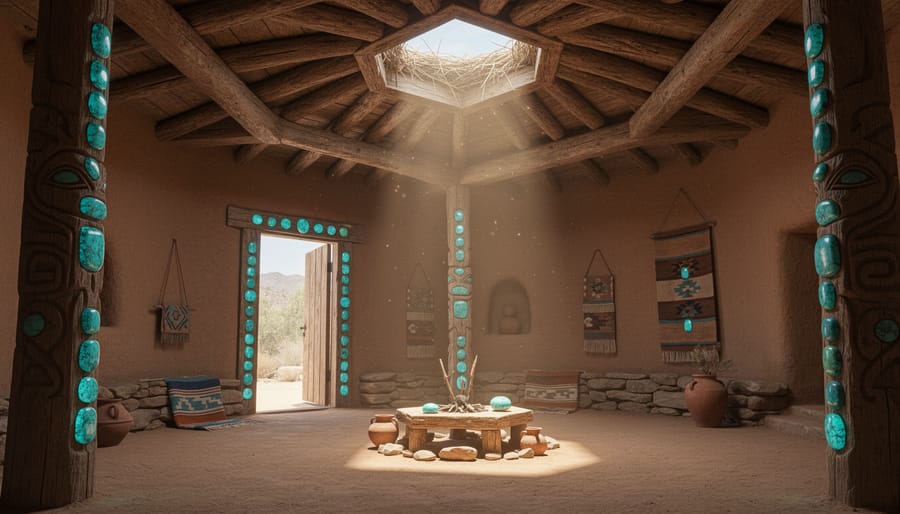
In the Americas, turquoise played a central role in Pueblo architecture. At Chaco Canyon in New Mexico, archaeologists discovered turquoise fragments embedded in ceremonial kiva walls. These underground chambers served as spiritual gathering spaces where the stone’s presence enhanced ritual significance and connected participants to sky deities.
The Forbidden City in Beijing incorporated turquoise tiles in temple roofs, symbolizing heaven’s protection over sacred imperial spaces. This architectural choice followed feng shui principles, positioning the protective blue stone above areas designated for spiritual practices and important ceremonies.
Persian mosques throughout Iran and Central Asia showcase stunning turquoise-glazed tilework on domes and minarets. The Sheikh Lotfollah Mosque in Isfahan exemplifies this tradition, where thousands of turquoise tiles create mesmerizing geometric patterns that represent divine order and celestial beauty. These architectural applications transformed religious structures into physical manifestations of spiritual beliefs, demonstrating turquoise’s enduring role in sacred design.
What Turquoise Symbolizes Across Cultures
Protection and Spiritual Guardianship
Throughout history, turquoise has been revered as one of the most powerful protective talismans in human civilization. Ancient Persians adorned their horses and weapons with turquoise, believing it would prevent injury and provide warning of danger by changing color. Native American tribes considered the stone a bridge between earth and sky, wearing it as protection against negative energy and physical harm. Turkish cultures attached turquoise to bridles and swords, trusting in its ability to safeguard travelers and warriors alike.
The stone’s protective reputation extends to architectural applications, where ancient Egyptians inlaid turquoise in temple doorways and burial chambers to guard sacred spaces. Medieval Europeans wore turquoise rings believing the stone would crack or fade when danger approached, serving as an early warning system. In traditional Islamic architecture, turquoise tiles adorned mosque domes and minarets, symbolizing divine protection and heavenly connection.
Today, designers and architects draw inspiration from these protective associations, incorporating turquoise elements in spaces intended for healing, meditation, and sanctuary. This enduring belief in turquoise as a spiritual guardian reflects humanity’s deep connection to natural stone’s inherent beauty and perceived metaphysical properties.
Communication and Wisdom
Turquoise has long been revered as a stone of authentic expression and spiritual clarity. Ancient Egyptian priests wore turquoise amulets believing the stone enhanced their ability to speak divine truths, while Tibetan monks incorporated it into prayer beads to deepen meditation and access higher wisdom. The stone’s soothing blue-green hues were thought to open the throat chakra in Eastern traditions, facilitating honest dialogue and meaningful communication.
Native American shamans considered turquoise a bridge between earth and sky, using it in ceremonies to receive guidance from spiritual realms. The stone’s reputation as a truth-teller extended to medieval Europe, where it was believed to change color when exposed to lies or danger, serving as a protective talisman for travelers and merchants.
In contemporary design applications, incorporating turquoise elements into spaces can symbolically foster open communication and creative thinking. Architects and designers increasingly select turquoise accents for collaborative work environments, meditation spaces, and wellness centers, drawing on centuries of cultural associations. Whether used as decorative inlays, accent walls, or sculptural elements, turquoise continues to represent the timeless human pursuit of wisdom and authentic self-expression across diverse cultures and design philosophies.
Healing and Physical Well-being
Throughout history, turquoise has been revered not only for its beauty but also for its purported healing properties. Ancient civilizations believed the stone possessed protective powers against illness and injury. Persian physicians prescribed turquoise for treating ailments ranging from vision problems to heart conditions, while Native American healers incorporated it into traditional medicine practices for spiritual cleansing and physical wellness.
Contemporary crystal healing practitioners attribute various benefits to turquoise, including anti-inflammatory properties, immune system support, and pain relief. Many believe the stone aids in detoxification, respiratory health, and stress reduction. While these claims lack scientific validation, turquoise’s historical significance in wellness traditions remains culturally important across many societies.
In modern design applications, architects and designers incorporate turquoise stone into wellness spaces, spa environments, and healthcare facilities, drawing on its calming visual properties and historical associations with healing. The stone’s soothing blue-green tones create tranquil atmospheres that promote relaxation and mental well-being, making it a popular choice for spaces dedicated to health and rejuvenation. Whether valued for traditional beliefs or aesthetic qualities, turquoise continues to maintain its connection to physical and emotional wellness in both historical context and contemporary applications.
The Color Psychology Behind Turquoise’s Power
The distinctive blue-green hue of turquoise sits at a unique intersection on the color spectrum, and this positioning explains much of its psychological impact. Unlike pure blue or green, turquoise combines the calming, stabilizing properties of blue with the renewing, balancing qualities of green, creating a color that simultaneously soothes and energizes viewers.
Modern color psychology research confirms what ancient cultures intuitively understood: turquoise triggers specific neurological responses. The color activates areas of the brain associated with emotional balance and clear communication. This explains why turquoise has been valued across civilizations as a stone of wisdom and peaceful expression. When we view this particular shade, our nervous system registers it as non-threatening, which is why turquoise commonly appears in healthcare and wellness environments.
The cyan undertones in quality turquoise mirror the colors of tropical waters and clear skies, tapping into universal human associations with purity, openness, and protection. These natural connections run deep in our collective consciousness, dating back to when clean water and clear skies literally meant survival. This biological programming makes turquoise inherently appealing across cultures and time periods.
For designers and architects, understanding this color psychology offers practical applications. Turquoise stone installations can transform spaces by creating atmospheres that feel both serene and invigorating. The color works particularly well in areas where clear thinking and calm decision-making matter, such as office environments, meditation spaces, or residential bathrooms.
The intensity of turquoise’s blue-green balance also affects its psychological impact. Lighter, more blue-leaning specimens evoke tranquility and sky associations, while greener varieties connect more strongly with growth and renewal. This versatility allows designers to fine-tune the emotional atmosphere of their projects through careful stone selection.
Turquoise in Modern Architecture and Design
Residential Applications That Honor Tradition
Homeowners and designers are increasingly incorporating turquoise stone into residential spaces with intentional symbolic meaning, moving beyond aesthetics to create environments that reflect personal values and cultural connections.
A Santa Fe residence demonstrates this approach through a custom turquoise stone mosaic in the entryway, designed to serve as a protective threshold element. The homeowners, drawing from Southwestern Native American traditions, selected Arizona turquoise specifically for its association with safe passage and spiritual guardianship. The installation welcomes visitors while honoring the region’s indigenous heritage.
In a coastal California home, designers integrated turquoise stone accents throughout bathroom and meditation spaces. The selection honored the stone’s historical association with healing and tranquility, creating designated wellness areas where the calming blue-green hues reinforce the rooms’ intended purpose. The homeowner reports that the stone’s presence contributes meaningfully to the space’s restorative atmosphere.
A Texas family commissioned turquoise stone inlays for their kitchen backsplash, symbolizing prosperity and abundance in the heart of their home. This application reflects ancient Persian traditions where turquoise adorned palaces as a symbol of wealth and good fortune.
These case studies illustrate how thoughtful material selection can layer symbolic meaning into functional design, creating spaces that resonate on both practical and spiritual levels while celebrating turquoise’s rich cultural legacy.
Commercial Spaces Using Turquoise Stone
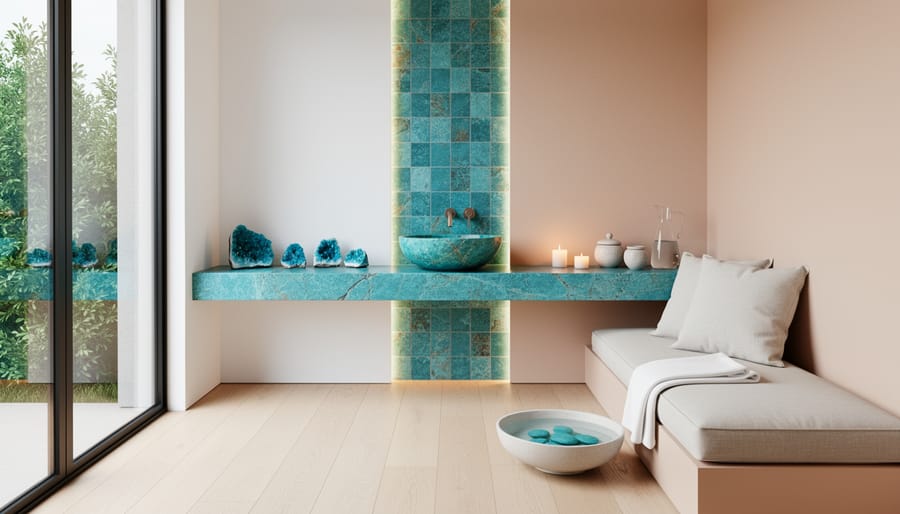
Modern commercial spaces increasingly incorporate turquoise stone to create environments that reflect its ancient associations with tranquility and protection. High-end spas and wellness centers have embraced turquoise in feature walls, water features, and decorative accents, drawing on its historical reputation for promoting emotional balance and spiritual well-being.
Several luxury resort properties have installed turquoise stone in their spa reception areas and treatment rooms, where the stone’s distinctive blue-green hues complement water-themed healing spaces. The color psychology behind turquoise—combining the calming properties of blue with the renewal qualities of green—makes it particularly effective in environments designed for relaxation and rejuvenation.
Boutique hotels in desert regions often feature turquoise stone as a nod to Native American traditions, where the gem symbolized protection for travelers. These installations serve both aesthetic and symbolic purposes, creating memorable spaces that resonate with guests seeking meaningful design experiences.
Yoga studios and meditation centers have also adopted turquoise accents, positioning the stone as a focal point that reinforces their commitment to holistic wellness. The stone’s durability makes it practical for high-traffic commercial applications, while its rich cultural symbolism adds depth to the overall design narrative, connecting contemporary spaces with centuries of spiritual tradition.
How to Incorporate Turquoise Stone in Your Space
Selecting Authentic Turquoise Stone
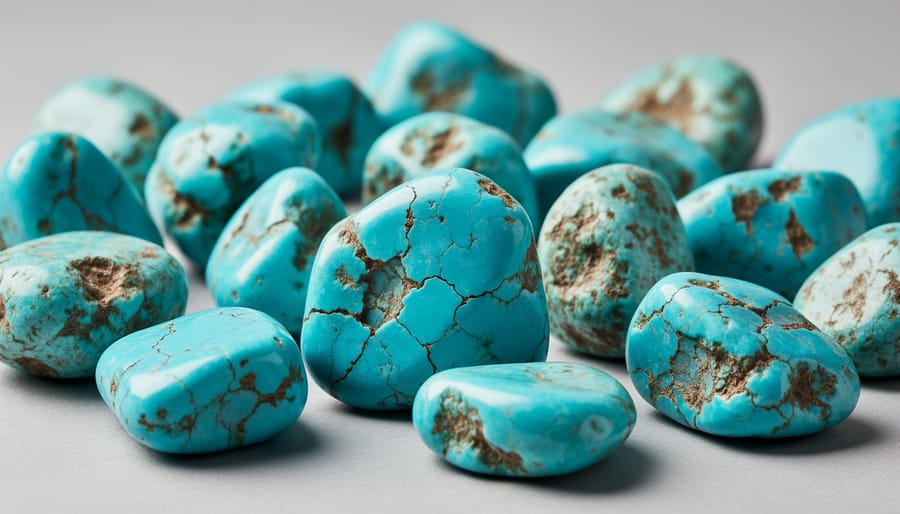
Authenticating turquoise requires understanding its distinctive characteristics and common treatments. Genuine turquoise displays natural color variations ranging from sky blue to greenish-blue, often featuring matrix patterns—the webbing or veining from host rock that creates unique signatures in each stone. High-quality turquoise exhibits consistent color saturation and minimal porosity.
When evaluating turquoise for design projects, examine the stone’s origin and treatment history. Stabilized turquoise, treated with resin to enhance durability, remains authentic but differs from natural, untreated specimens. This treatment makes the stone more suitable for construction applications where durability matters. Request certification from suppliers documenting the stone’s source and any enhancement processes.
Quality grades depend on color intensity, matrix presence, and hardness. Persian-grade turquoise represents the highest quality with deep, uniform blue coloring, while lower grades may show more green tones or matrix. For architectural installations, consider how the stone’s porosity affects maintenance requirements. Proper care using appropriate stone preservation methods ensures turquoise maintains its symbolic beauty and structural integrity throughout its lifespan in commercial or residential spaces.
Design Considerations and Placement
When incorporating turquoise stone into architectural and interior design projects, thoughtful placement enhances both its visual impact and symbolic resonance. Position turquoise in entryways and thresholds to honor its traditional role as a protective talisman, creating welcoming spaces that acknowledge ancient beliefs while serving modern functional needs. Consider backsplash applications in kitchens and bathrooms where the stone’s distinctive blue-green veining becomes a focal point that connects inhabitants to nature.
For commercial spaces, turquoise works exceptionally well in hospitality and wellness environments where its calming associations support the intended atmosphere. Accent walls, reception counters, and meditation areas benefit from turquoise’s serene presence. When selecting slabs, examine the matrix patterns carefully, as variations in color intensity and webbing create unique character that references the stone’s geological journey.
Proper sealing is essential to preserve turquoise’s vibrant color and protect against moisture damage, particularly in high-traffic areas. Pair turquoise with neutral backgrounds to prevent visual overwhelm while allowing its symbolic richness to shine. Consider lighting carefully, as natural light enhances the stone’s inherent luminosity, connecting contemporary spaces to turquoise’s centuries-old spiritual significance across cultures.
For seven millennia, turquoise has captivated human imagination, serving as a bridge between the earthly and the divine across countless cultures. From ancient Egyptian pharaohs to Native American spiritual leaders, from Persian palaces to contemporary architectural masterpieces, this remarkable stone has maintained its symbolic power through changing civilizations and evolving design philosophies. Its enduring significance demonstrates that natural stone carries meaning far beyond its physical properties.
Today’s architects, designers, and homeowners continue to draw upon turquoise’s rich symbolic heritage when selecting materials for meaningful spaces. Whether incorporated into residential interiors seeking to evoke tranquility, commercial spaces aiming to project protection and prosperity, or public installations celebrating cultural connections, turquoise offers both aesthetic beauty and profound depth of meaning. Understanding this symbolism enhances our appreciation for natural stone applications and informs more thoughtful material choices.
As we advance in preserving stone heritage and documenting traditional uses, the lessons embedded in turquoise’s symbolic journey remain remarkably relevant. When considering natural stone for your next project, look beyond color and texture to explore the cultural narratives and spiritual associations that have given these materials significance throughout human history. This holistic approach to material selection creates spaces that resonate on multiple levels, connecting contemporary design with timeless human values and the enduring appeal of earth’s most beautiful natural resources.