
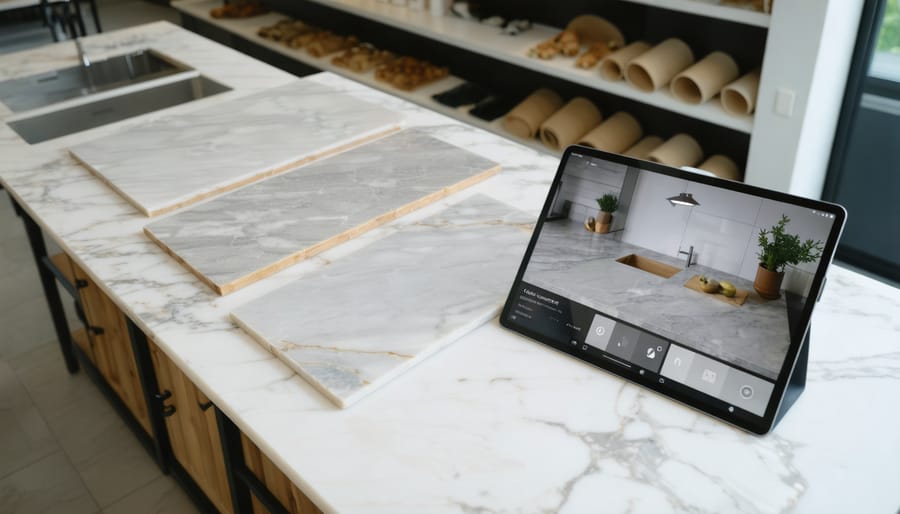
Artificial intelligence is fundamentally transforming how professionals and homeowners select natural stone, moving beyond subjective visual assessment to data-driven precision that matches stone characteristics with specific project requirements in seconds rather than hours.
AI-powered platforms now analyze thousands of slab images simultaneously, identifying patterns in veining, color distribution, and structural consistency that human eyes might overlook. These systems evaluate durability ratings, maintenance requirements, and aesthetic compatibility with uploaded design plans, generating shortlists that align with both functional specifications and budget parameters. For architects specifying materials across multiple projects, this technology reduces selection time by 60-70% while improving outcome consistency.
The technology works through machine learning algorithms trained on extensive databases of stone properties, installation outcomes, and design applications. When you upload project parameters—room dimensions, lighting conditions, intended use, style preferences—the system cross-references these against its knowledge base to recommend optimal materials. Advanced platforms incorporate augmented reality visualization, allowing you to see how specific slabs will appear in your actual space before purchase.
This shift addresses longstanding industry challenges: the overwhelming variety of available materials, difficulty comparing similar options, and the disconnect between showroom appearance and installed results. Rather than replacing traditional expertise, AI serves as a powerful preliminary filter that narrows vast inventories to genuinely suitable candidates, allowing stone specialists and designers to focus their expertise where it matters most—final selection and creative application.
The Traditional Stone Selection Problem
For decades, selecting natural stone for residential or commercial projects has been fraught with challenges that create stress and uncertainty for designers, architects, and homeowners alike. The traditional process requires clients to visit stone yards or showrooms, where they examine small samples or view massive slabs under warehouse lighting conditions that bear little resemblance to their actual installation environment.
The fundamental problem lies in visualization. A small hand sample of granite or marble provides minimal insight into how an entire countertop, floor, or wall will appear once installed. Natural stone’s inherent beauty stems from its unique veining patterns, color variations, and mineral deposits, but these same characteristics make every slab unpredictable. What looks elegant in a 4-inch sample might overwhelm a kitchen island, while subtle veining that seems disappointing in a showroom could create the perfect understated elegance in context.
Color accuracy presents another persistent challenge. Stone samples viewed under fluorescent warehouse lighting often look dramatically different once installed under a home’s natural window light or LED fixtures. This disconnect between expectation and reality has led to countless disappointed clients and costly do-overs.
The stakes compound these difficulties considerably. Natural stone represents a significant investment, often accounting for a substantial portion of renovation budgets. Unlike paint or wallpaper, stone installations are effectively permanent decisions. This combination of high cost, visual unpredictability, and irreversibility creates profound decision-making anxiety.
Furthermore, the traditional selection process is time-intensive. Clients must coordinate showroom visits, often traveling to multiple locations to compare inventory. Even experienced designers struggle to help clients confidently envision how specific slabs will transform their spaces, relying heavily on professional intuition rather than concrete visualization tools. This inefficiency extends project timelines and creates friction throughout the design process.

What AI-Driven Stone Selection Actually Means
Virtual Visualization Technology
AI-driven visualization technology has revolutionized how consumers and designers preview natural stone in their actual spaces before making purchasing decisions. By uploading photos of existing rooms or providing basic measurements, users can digitally place exact stone slabs onto countertops, floors, or walls with remarkable accuracy. AI-powered 3D visualization tools account for natural lighting conditions throughout the day, accurately render scale and proportion, and show how veining patterns and color variations will interact with existing cabinetry, fixtures, and design elements. This technology eliminates the guesswork traditionally associated with selecting stone from small samples, allowing clients to see exactly how a specific slab will appear in their unique environment. The visualization adjusts for perspective, shadows, and reflections, creating photorealistic renderings that help both homeowners and design professionals make confident decisions. This capability significantly reduces the risk of costly mistakes and buyer’s remorse while streamlining the design approval process for architects and contractors working on residential or commercial projects.
Pattern Recognition and Matching
Artificial intelligence excels at identifying and analyzing the complex visual characteristics that define natural stone. Advanced computer vision algorithms scan high-resolution slab images to map veining patterns, color gradients, texture variations, and unique geological features with remarkable precision. This capability transforms how stone fabricators and designers approach projects requiring visual continuity or deliberate contrast.
For book-matching applications, AI systems analyze mirror-image potential by evaluating vein symmetry, color balance, and pattern density across adjacent slabs. The technology identifies pairs that will create harmonious reflections when opened like book pages, a task that traditionally required extensive manual sorting and expert judgment.
In large-scale installations such as feature walls or expansive countertops, AI evaluates how veining flows across multiple slabs, predicting visual transitions and recommending arrangements that maintain natural movement without jarring interruptions. The system considers factors like vein direction, color temperature shifts, and pattern intensity to ensure seamless visual progression.
When projects call for complementary contrast designs, AI identifies slabs with compatible yet distinct characteristics—perhaps pairing dramatic veining with subtle backgrounds or coordinating warm and cool tones. This pattern recognition capability accelerates the selection process while expanding creative possibilities, giving designers confidence that their vision will translate successfully from concept to installation.
Real-World Applications That Are Changing the Industry
For Homeowners: Making Confident Design Decisions
For homeowners embarking on kitchen or bathroom renovations, selecting the right stone surfaces represents a significant investment and a source of anxiety. AI-powered design tools are revolutionizing this experience by enabling confident decision-making before purchase. These platforms allow you to upload photographs of your actual space and virtually test different granite, marble, or quartzite options on your countertops, backsplashes, and flooring.
Through augmented reality stone visualization, you can see how a dramatic Calacatta marble backsplash complements your cabinet colors or whether a busy granite pattern overwhelms your small bathroom. The technology accounts for lighting conditions, existing fixtures, and spatial proportions, delivering realistic previews that traditional samples cannot match.
This visualization capability effectively eliminates buyer’s remorse. Instead of relying on imagination or small swatches that fail to represent the full slab variation, homeowners gain complete visual certainty. You can compare multiple stone options side-by-side, share visualizations with family members for consensus, and make selections aligned with your aesthetic vision and budget. The result is increased satisfaction, reduced returns, and renovation projects that proceed with confidence from concept through installation.

For Designers and Architects: Streamlining Client Presentations
For design professionals, AI-driven tools are revolutionizing the client presentation process by dramatically reducing preparation time while elevating visual impact. These platforms enable architects and designers to generate multiple design variations in minutes rather than days, allowing clients to explore diverse aesthetic directions during initial consultations. Instead of relying on static samples or imagination, professionals can now present photorealistic renderings that accurately depict how specific stone selections will appear in the completed space, including lighting effects, adjacent materials, and spatial context.
The technology proves particularly valuable when coordinating stone selections with comprehensive project palettes. AI systems can analyze proposed flooring, countertops, and accent walls simultaneously, ensuring color harmony and visual balance across the entire design scheme. This capability helps prevent costly mistakes and reduces the back-and-forth typically required to finalize material selections.
Many design firms report that AI-enhanced presentations significantly improve client decision-making confidence. When clients can visualize exact stone placements within their future spaces, approval rates accelerate and revision requests decrease. The technology also streamlines communication with stone suppliers and fabricators by providing precise specifications and visual references, minimizing misunderstandings during procurement and installation phases. This efficiency allows designers to manage more projects simultaneously while maintaining higher service quality standards.
For Fabricators and Suppliers: Optimizing Inventory and Reducing Waste
AI-driven design tools are transforming how stone fabricators and suppliers manage their businesses, delivering measurable improvements in efficiency and profitability. By analyzing customer design preferences and project specifications, AI systems can intelligently match orders with existing inventory, reducing storage costs and minimizing material waste. This technology revolutionizing stone fabrication extends to slab yield optimization, where algorithms calculate the most efficient cutting layouts to maximize usable material from each slab while accommodating veining patterns and structural considerations.
Predictive analytics powered by AI also help suppliers anticipate market trends by analyzing aggregated design data from architects, designers, and homeowners. These systems identify emerging preferences for specific stone types, colors, and finishes, enabling suppliers to adjust their inventory strategies proactively rather than reactively. For example, if AI detects increasing requests for specific quartzite varieties or exotic marble types across multiple projects, suppliers can source accordingly, reducing the risk of overstocking unpopular materials while ensuring popular selections remain available. This data-driven approach transforms inventory management from guesswork into strategic planning.
The Technologies Behind the Transformation
Computer Vision for Stone Analysis
Modern artificial intelligence has revolutionized how natural stone is cataloged and searched. Using advanced stone imaging technology, computer vision systems analyze thousands of stone slabs in minutes, identifying subtle characteristics that would take humans hours to catalog manually. These AI algorithms evaluate veining intensity on graduated scales, map color variations across each slab, and classify movement patterns—whether linear, circular, or dramatic dramatic swirls.
The technology creates searchable digital databases where designers can filter by specific attributes. Looking for white marble with moderate gray veining and minimal movement? The system instantly presents matching options from inventory. Need quartzite with bold, dramatic patterns in warm tones? AI retrieves relevant candidates in seconds.
This visual intelligence goes beyond simple keyword tags. The systems understand pattern density, directional flow, and color saturation levels, enabling nuanced searches impossible with traditional catalogs. For fabricators managing thousands of slabs across multiple warehouses, this means clients can preview suitable options before visiting showrooms, streamlining selection and improving satisfaction. The result is faster project timelines and better stone-to-design matching.
Augmented Reality for In-Space Visualization
Augmented reality has revolutionized how consumers and designers preview natural stone selections in their actual spaces before making purchase decisions. Modern AR visualization tools use smartphone or tablet cameras to overlay digital representations of stone materials onto real-world environments in real-time. This technology accounts for critical factors like room dimensions, lighting conditions, and surrounding design elements to create accurate visualizations.
Users simply point their device’s camera at the intended installation area—whether a kitchen countertop, bathroom vanity, or exterior façade—and select from a digital catalog of stone options. The AR application instantly displays how each material will appear in that specific space, maintaining proper scale and reflecting actual lighting conditions throughout the day. This capability eliminates guesswork and reduces the risk of costly selection errors.
The technology proves particularly valuable for complex projects involving multiple stone applications or large-format installations. Designers can quickly compare dozens of options with clients present, facilitating faster decision-making while ensuring alignment between expectations and final results. This immediate visual feedback creates confidence in stone selections that traditional samples alone cannot provide.
Predictive Design Algorithms
Machine learning algorithms transform stone selection by analyzing thousands of successful design projects to identify patterns that resonate with specific aesthetics. These systems evaluate how different stone types, colors, and textures perform together, learning which granite pairs naturally with certain cabinet finishes or which marble veining complements particular architectural styles. When you input your room dimensions, existing materials, and style preferences, the AI cross-references this data against its training to suggest combinations proven effective in similar settings.
The technology considers multiple variables simultaneously—lighting conditions, color temperature, spatial proportions, and material durability requirements—to recommend not just stone selections but also optimal edge profiles and surface finishes. A contemporary kitchen might receive suggestions for honed quartz with waterfall edges, while a traditional bathroom could be paired with polished marble and ogee detailing. The system learns from user feedback, continuously refining its recommendations as designers approve or modify suggestions, creating an evolving database of what works in real-world applications across different regions and design trends.

Measuring the Impact: Why This Matters
The integration of AI into stone selection processes delivers measurable benefits that extend across the entire supply chain, from quarry to installation. Industry data reveals that AI-driven design tools reduce material selection errors by up to 40%, translating directly into cost savings and project efficiency.
Time savings represent one of the most significant advantages. Traditional stone selection often requires multiple site visits, physical samples, and extensive back-and-forth communication. AI platforms compress this timeline dramatically. Interior design firms report reducing their material selection phase from an average of three weeks to just five days when using AI visualization tools. For architects managing multiple projects simultaneously, this efficiency gain allows them to serve more clients without compromising quality.
Waste reduction delivers both environmental and financial returns. A mid-sized fabrication company in Colorado implemented AI-driven templating and selection tools, resulting in a 28% decrease in material waste within the first year. By accurately predicting vein patterns and optimizing slab usage before cutting, the company saved approximately $120,000 annually while reducing their environmental footprint.
Customer satisfaction metrics show equally impressive improvements. A luxury home builder in California tracked project satisfaction scores before and after adopting AI visualization technology. Post-implementation surveys revealed a 35% increase in customer confidence during the selection process and a 50% reduction in change orders after installation began. Clients appreciated seeing realistic renderings of their exact stone in their actual space before making final decisions.
From an industry perspective, stone suppliers embracing AI technology report stronger client relationships and repeat business. One importer noted that providing AI-powered visualization tools to their designer clients positioned them as innovation leaders, resulting in a 22% increase in specification rate compared to competitors offering only traditional samples.
These concrete outcomes demonstrate that AI-driven design tools deliver quantifiable value beyond technological novelty, creating efficiencies that benefit every stakeholder in the natural stone industry.
What AI Can’t Replace (And Shouldn’t)
While AI brings remarkable capabilities to stone selection, it cannot replace the fundamental human experience of engaging with natural stone. The technology serves as a powerful guide, but the final decision should always involve direct interaction with the material itself.
No digital rendering can fully capture the tactile quality of stone—its texture, weight, temperature, and the subtle variations that emerge under different lighting conditions. Running your hand across a polished granite surface or examining the depth of veining in marble under natural light provides information that pixels on a screen simply cannot convey. These sensory experiences often prove decisive in final material selection, particularly for high-visibility applications.
Human expertise remains indispensable in understanding contextual factors that AI systems may overlook. Experienced stone professionals bring decades of knowledge about how specific stones perform in particular environments, understanding nuances like how certain granites weather in coastal climates or how traffic patterns affect wear on specific marbles. This accumulated wisdom, gained from observing installations over time, provides insights that data alone cannot replicate.
The relationship between client and stone consultant also carries irreplaceable value. Skilled professionals interpret unspoken preferences, understand lifestyle considerations, and ask questions that reveal priorities the client may not have initially articulated. They can sense hesitation, recognize enthusiasm, and guide decision-making in ways that honor both practical requirements and emotional connection to the material.
AI should enhance, not replace, this human dimension of stone selection. The ideal approach combines technological efficiency with traditional expertise—using AI to narrow possibilities intelligently while preserving the essential human elements of touch, experience, and relationship that have always defined successful stone projects.
Getting Started With AI Stone Selection Tools
Adopting AI-driven stone selection tools doesn’t require advanced technical knowledge, but it does help to approach the technology strategically. Whether you’re a homeowner planning a renovation or a design professional managing multiple projects, understanding what to look for in these platforms will help you make informed decisions.
Start by identifying tools that offer visual search capabilities and image recognition features. The most effective platforms allow you to upload photos of spaces or stones you admire and receive similar recommendations from available inventory. Look for systems that provide detailed specifications alongside visual results, including origin information, technical properties, and availability data.
When evaluating AI selection tools, ask suppliers specific questions about their technology. How frequently is their stone inventory updated in the system? What data sources inform their recommendations? Can the tool account for your specific project requirements, such as slip resistance for wet areas or durability for high-traffic zones? Understanding these capabilities helps you assess whether a platform will genuinely serve your needs.
Integration into your workflow should be gradual. Begin by using AI tools for initial exploration and inspiration gathering, then narrow selections using traditional methods like physical samples and professional consultation. Many successful designers use AI to expand their consideration set beyond familiar options, discovering stones they might have otherwise overlooked.
For professionals, consider platforms that offer collaboration features, allowing you to share curated selections with clients or team members. Export capabilities and integration with design software can streamline presentations and documentation.
Remember that AI tools work best as complements to human expertise, not replacements. Use technology to handle time-consuming tasks like initial screening and inventory searching, freeing your time for nuanced decisions about aesthetics, functionality, and design intent that still benefit from experienced judgment.
AI-driven design tools are fundamentally changing how we approach stone selection, removing uncertainty while preserving what makes natural stone irreplaceable. These technologies don’t diminish the inherent beauty and uniqueness of stone—they enhance our ability to recognize and leverage these qualities effectively. By providing data-driven insights into performance characteristics, visualizing installations before commitment, and matching aesthetic preferences with functional requirements, AI empowers better decision-making at every project stage.
The future of stone selection lies in the seamless integration of artificial intelligence with human expertise and craftsmanship. As machine learning algorithms become more sophisticated and datasets expand, we can expect even more accurate predictions, refined recommendations, and intuitive design interfaces. Rather than replacing the artistry and knowledge that stone professionals bring to projects, AI serves as a powerful tool that amplifies their capabilities.
For anyone involved in stone selection—from homeowners planning renovations to architects designing commercial spaces—embracing these AI-driven tools represents an opportunity for superior outcomes. The technology reduces costly mistakes, accelerates decision timelines, and opens creative possibilities that traditional methods might overlook. As the industry continues evolving, those who integrate these innovations alongside traditional expertise will deliver the most successful, satisfying projects.