Marble flooring commands premium prices and delivers undeniable elegance, but this luxury material comes with substantial drawbacks that catch many homeowners off guard. Beyond the initial investment of $10-40 per square foot installed, marble demands ongoing financial commitment, meticulous care, and lifestyle adjustments that can overshadow its aesthetic appeal.
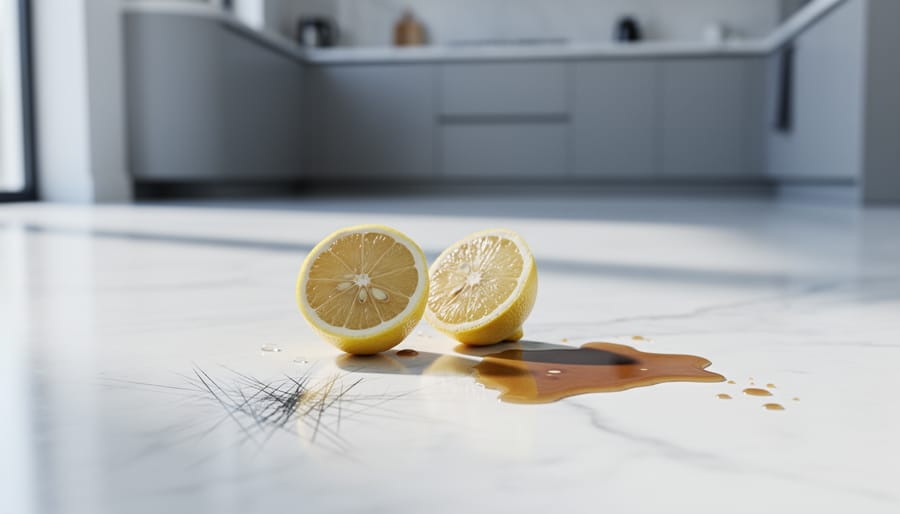
The calcium carbonate composition that gives marble its distinctive veining also makes it exceptionally vulnerable to etching from acidic substances like wine, citrus, coffee, and common household cleaners. A single spill can permanently dull the polished surface within seconds, creating dull spots that require professional restoration costing hundreds to thousands of dollars. This chemical sensitivity extends to everyday exposures most people don’t anticipate until damage occurs.
Scratch susceptibility presents another persistent challenge. High heels, pet claws, furniture legs, and tracked-in grit all leave visible marks on marble’s relatively soft surface, rated only 3-4 on the Mohs hardness scale. Maintaining the pristine appearance requires constant vigilance, regular professional sealing every 6-12 months, and immediate attention to spills and debris.
The practical concerns multiply in households with children, pets, or high traffic. Marble’s porous nature absorbs stains readily, its smooth surface becomes dangerously slippery when wet, and temperature fluctuations can cause cracking in certain climates. Understanding these limitations before installation helps determine whether marble’s beauty justifies its demanding nature.
The True Cost of Marble Flooring
Initial Investment and Installation
Marble flooring represents one of the most substantial upfront investments in home finishes. Material costs alone range from $10 to $50 per square foot for standard marble varieties, with exotic or rare types reaching $100 per square foot or more. However, the material price tells only part of the story.
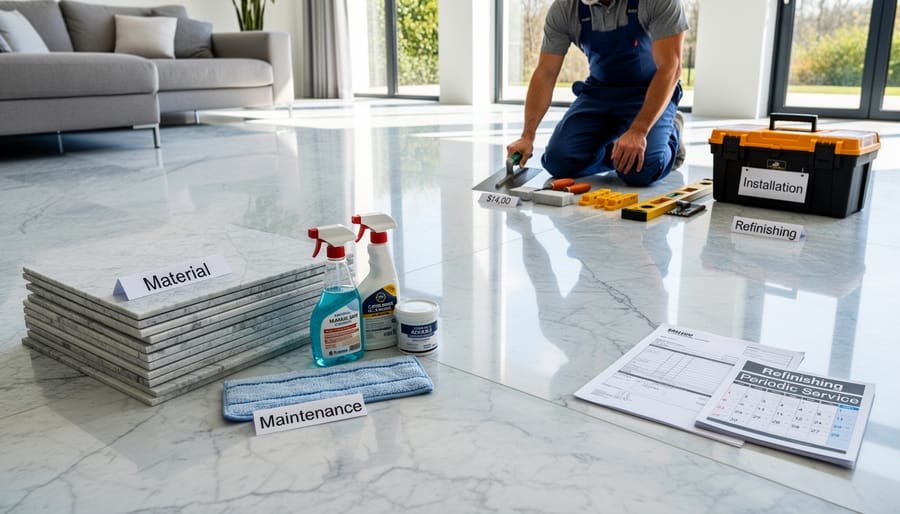
The professional installation requirements for marble add significantly to total project costs. Installation typically runs $8 to $15 per square foot, bringing total expenses to $18 to $65 per square foot for most projects. Unlike vinyl or laminate, marble installation is not a DIY-friendly option due to the stone’s weight, fragility, and precision requirements.
Hidden costs further inflate initial budgets. Substrate preparation is essential, as marble demands a perfectly level, stable foundation. This often requires removing existing flooring and installing cement board or self-leveling compound, adding $3 to $8 per square foot. Large format tiles necessitate expert seam matching and alignment, particularly crucial for book-matched or veined patterns. Additional expenses include specialized underlayment, premium thin-set mortar, and sealing treatments applied immediately after installation.
Ongoing Maintenance Expenses
Beyond the initial installation investment, marble flooring demands ongoing financial commitment that many homeowners underestimate. Specialized pH-neutral cleaners are essential, as standard household products can damage the stone’s surface—expect to spend $15-30 per bottle compared to generic cleaners at $3-5. Marble requires professional sealing every 6-12 months depending on traffic levels, costing $200-500 per application for average-sized rooms.
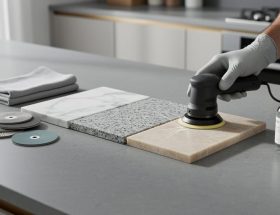
The polished finish that makes marble so attractive gradually dulls over time, necessitating professional restoration every 3-5 years. This process, which involves grinding and re-polishing the surface, typically costs $3-10 per square foot. For a 300-square-foot space, you’re looking at $900-3,000 per refinishing session.
Damage repair adds another expense layer. Etching from acidic spills, chips from dropped objects, and cracks from structural settling often require professional stone restoration specialists charging $100-150 per hour. When calculating marble’s true cost, factor in these recurring expenses—over a 20-year period, maintenance can equal or exceed your original installation costs, making marble one of the most expensive flooring options to maintain long-term.
Marble’s Vulnerability to Damage
Scratching and Etching
Marble’s reputation for elegance comes with a significant vulnerability: its susceptibility to surface damage through both physical scratching and chemical etching. Understanding these risks is essential for anyone considering this flooring material.
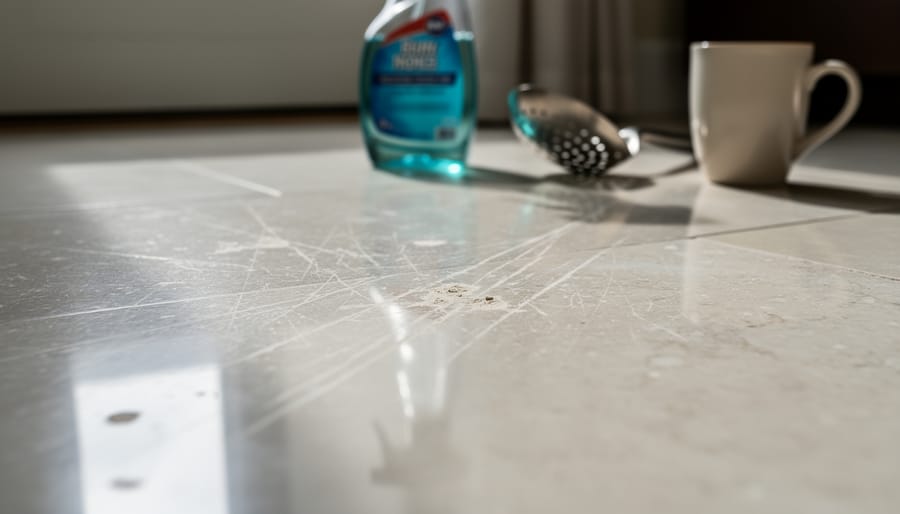
Physical scratching occurs more easily than many homeowners anticipate. The calcium carbonate composition that gives marble its beauty also makes it relatively soft compared to other flooring options, rating only 3-4 on the Mohs hardness scale. Pet claws, particularly from larger dogs, create visible scratch patterns over time as animals traverse the floor. Furniture movement poses another constant threat—dragging chairs, tables, or even repositioning decorative pieces can leave permanent marks. The metal or plastic glides on furniture legs act like etching tools against the marble surface.
Perhaps most insidious is the daily accumulation of dirt and grit tracked in from outdoors. These tiny particles of sand, gravel, and debris act as abrasives underfoot, gradually dulling the polished finish and creating a network of fine scratches that become increasingly visible. High-traffic areas near entryways deteriorate noticeably faster than protected zones.
Chemical etching presents an equally serious concern. Marble reacts adversely to acidic substances, resulting in dull spots where the acid dissolves the calcium carbonate. Common culprits include citrus juices, wine, vinegar-based cleaners, tomato sauce, and even carbonated beverages. A single spill left unattended for minutes can permanently mar the surface. Many household cleaning products marketed as general-purpose contain acids that damage marble, making proper product selection critical but often overlooked by homeowners unfamiliar with natural stone care requirements.
Staining and Discoloration
Marble’s porous nature represents one of its most significant vulnerabilities as a flooring material. Unlike denser stones such as granite, marble contains microscopic spaces within its structure that readily absorb liquids. This porosity makes marble highly susceptible to staining from everyday household substances.
Common culprits include wine, coffee, tea, fruit juices, and cooking oils, all of which can penetrate the surface and leave permanent discoloration if not addressed immediately. Acidic substances pose an even greater threat, as they not only stain but also etch the surface simultaneously. Lemon juice, vinegar, tomato-based products, and even certain cleaning solutions can create lasting damage within seconds of contact.
The severity of staining depends largely on the marble variety. Lighter-colored marbles, particularly white Carrara, show stains more dramatically than darker varieties, though no marble is immune. Without proper sealing, even water can leave marks or create dull spots on the surface over time.
Professional sealing provides crucial protection by filling the stone’s pores, creating a barrier against liquid absorption. However, sealers wear down with foot traffic and require reapplication every six to twelve months, depending on usage levels. Even with diligent sealing, immediate cleanup remains essential. Spills left unattended for more than a few minutes can still penetrate the protective barrier.
For households with children, pets, or frequent entertaining, this constant vigilance can become exhausting. The anxiety of potential staining may outweigh marble’s aesthetic benefits for many homeowners seeking low-maintenance flooring solutions.
High-Maintenance Requirements
Daily and Weekly Care Demands
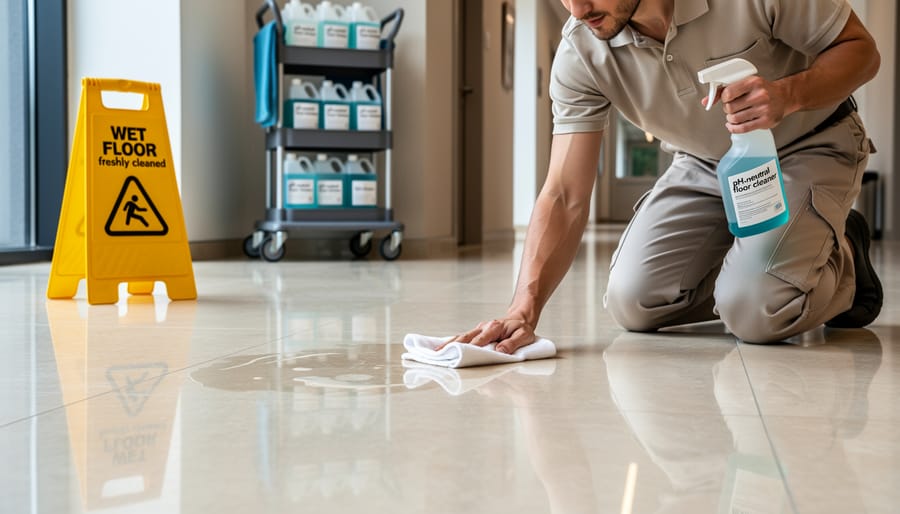
Marble flooring demands a rigorous daily maintenance routine that exceeds what most other flooring materials require. Unlike ceramic tile or hardwood that tolerates standard cleaning products, marble restricts you to pH-neutral cleaners specifically formulated for natural stone. Using common household cleaners containing acids, ammonia, or vinegar will etch the surface and dull the finish, often causing permanent damage that requires professional restoration.
Daily dust mopping becomes essential rather than optional. Sand, dirt, and grit particles act as abrasives underfoot, gradually scratching the marble’s polished surface. A single day without dust mopping in high-traffic areas can allow enough debris accumulation to create visible wear patterns over time. This requirement proves particularly challenging for busy households or commercial spaces.
Spill response must be immediate. Coffee, wine, juice, or any acidic substance left on the surface for even a few minutes can penetrate the stone and create staining or etching. This constant vigilance transforms routine activities like breakfast or entertaining into potential flooring emergencies, requiring cleaning supplies always at hand.
Weekly maintenance extends beyond basic cleaning to include thorough inspections for wear, proper sealing schedules, and addressing any developing issues before they worsen. This ongoing commitment significantly impacts the total cost of ownership and lifestyle compatibility for marble flooring installations.
Periodic Sealing and Professional Care
Marble floors require periodic sealing to maintain stain resistance, typically every 6 to 12 months depending on traffic levels and the specific type of marble. High-traffic areas may need more frequent attention, while less-used spaces can extend the interval. This recurring maintenance represents both a time commitment and ongoing expense that some homeowners find burdensome.
To determine when resealing is necessary, perform a simple water test by placing a few drops of water on the surface. If the water beads up, the seal remains effective. If it absorbs within 5 to 10 minutes, leaving a dark spot, it’s time to reseal. This test should be conducted in multiple locations since wear patterns vary across the floor.
Eventually, even properly maintained marble may require professional restoration. Deep scratches, widespread etching, or loss of shine indicate the need for professional honing or polishing. These services involve specialized equipment and expertise, representing a significant expense beyond routine sealing. Professional restoration can cost several dollars per square foot and may require moving furniture and vacating rooms for extended periods. Understanding these long-term care requirements is essential for realistic budgeting and ensuring your marble floors retain their beauty throughout their lifespan.
Safety Concerns in Wet Conditions
Slip Hazards
Polished marble’s luxurious shine comes with a significant safety concern: it becomes extremely slippery when wet. The smooth, reflective surface that makes marble so attractive offers minimal traction, creating genuine fall hazards in moisture-prone environments. Even small amounts of water from wet shoes, spills, or humidity can transform marble floors into skating rinks, posing particular risks for children, elderly family members, and anyone with mobility challenges.
High-risk areas include entryways where rain and snow are tracked inside, bathrooms where water splashes are inevitable, and kitchens prone to spills. Many homeowners discover this drawback too late, after experiencing a frightening slip or near-fall. While honed finishes as alternatives provide better traction by eliminating the high-gloss surface, they sacrifice some of marble’s signature elegance and still require caution when wet. Anti-slip treatments and area rugs offer additional protection but add maintenance complexity and may alter the floor’s appearance. For households with active families or frequent moisture exposure, this slip hazard often outweighs marble’s aesthetic benefits, making it an impractical choice despite its beauty.
Cold Surface Temperature
Marble’s high thermal conductivity means it absorbs and retains cold temperatures, making floors uncomfortably chilly during winter months and in air-conditioned spaces. Unlike wood or carpet that provide natural insulation, marble feels significantly colder underfoot, which can be particularly unpleasant in bedrooms, bathrooms, and other areas where you typically walk barefoot. In cooler climates, this characteristic forces homeowners to rely more heavily on radiant floor heating or area rugs to maintain comfort, directly impacting heating costs. The constant need for supplemental warming solutions can add hundreds of dollars annually to energy bills. Many homeowners find themselves wearing slippers indoors year-round or avoiding marble-floored areas during colder seasons, which defeats the purpose of investing in such premium materials for spaces meant to be enjoyed daily.
Installation Challenges and Limitations
Weight and Structural Requirements
Marble’s substantial weight presents significant structural challenges that homeowners often underestimate during the planning phase. A typical marble tile weighs approximately 13-15 pounds per square foot, considerably heavier than ceramic tile (5-7 pounds) or luxury vinyl (2-3 pounds). This weight difference demands careful evaluation of your subfloor’s load-bearing capacity before installation proceeds.
Older homes, buildings with wooden joist systems, and upper-level floors frequently require subfloor reinforcement to safely support marble flooring. This reinforcement may involve adding additional joists, installing thicker plywood underlayment, or strengthening existing structural supports—modifications that substantially increase project costs and complexity. In some cases, structural engineers must assess whether reinforcement is even feasible, particularly in historic buildings or apartments where modifying load-bearing elements isn’t permitted.
Multi-story residences face additional complications, as installing marble on upper floors may exceed weight limits specified in building codes or homeowner association regulations. Condominiums and co-ops often have strict weight restrictions that make marble installation impossible without expensive structural upgrades or special approval processes. Before committing to marble flooring, consult with a structural engineer to determine whether your existing structure can accommodate this heavyweight material and budget accordingly for any necessary reinforcements.
Complex Installation Process
Installing marble flooring demands significantly more expertise and time than most alternative flooring materials. Unlike ceramic tile or vinyl planks that homeowners can sometimes install themselves, marble requires professional installers with specialized training in handling natural stone. These skilled craftspeople command premium rates, adding substantially to your project costs.
The installation complexity stems from several factors. Marble’s weight requires proper subfloor preparation and support to prevent cracking or shifting over time. Each slab must be carefully inspected for natural veining patterns, then strategically placed to create visually appealing transitions between tiles. This pattern-matching process becomes particularly challenging with book-matched or sequence-matched installations where maintaining design continuity is essential.
The extended installation timeline also presents scheduling challenges. Where standard tile might be laid in a few days, marble projects often take considerably longer due to precise cutting requirements, careful handling to prevent chipping, and extended curing times for specialized adhesives and sealants designed for natural stone applications.
Lifestyle Incompatibility Issues
Homes with Pets and Children
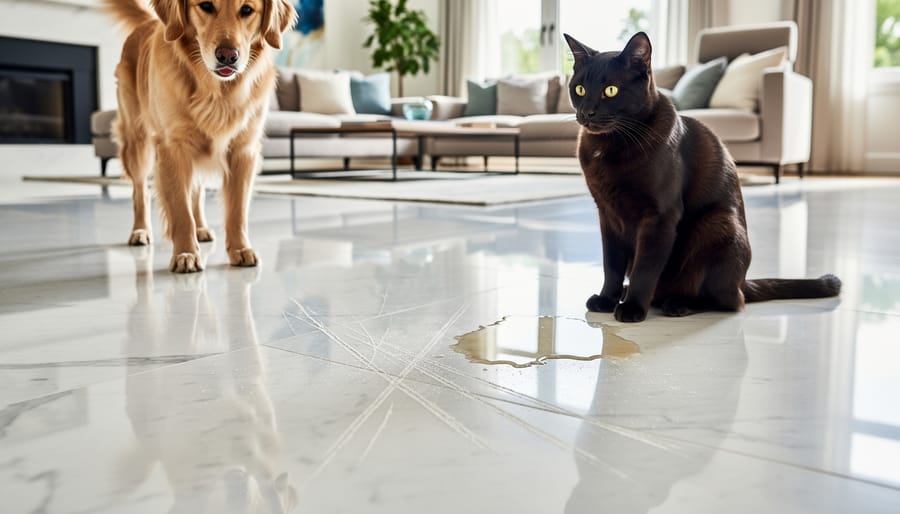
Marble floors and active households rarely make a harmonious combination. Pet claws pose a particularly persistent threat to marble’s polished surface. Dogs walking across marble rooms gradually etch fine scratches into the finish, creating dull traffic patterns that become increasingly noticeable over time. Cats, though lighter, can still leave their mark through repeated contact.
Pet accidents present another significant challenge. Urine is acidic enough to etch marble within minutes if not immediately cleaned, often leaving permanent dull spots that require professional restoration. Even water bowls create problems, as constant splashing and moisture contribute to surface degradation around feeding areas.
Children introduce their own set of risks. Dropped toys, building blocks, and other hard objects easily chip marble edges and create divots in the surface. Spilled juice boxes and snacks can stain if not addressed instantly. The reality for most parents is that constant vigilance becomes exhausting.
This combination creates ongoing stress for homeowners who find themselves constantly monitoring floors and intervening to prevent damage. Many families ultimately discover that marble flooring conflicts with their lifestyle, transforming what should be an enjoyable living space into a source of anxiety and restriction.
High-Traffic and Kitchen Areas
Marble flooring in high-traffic areas shows wear patterns much faster than in less frequented spaces. Entryways, hallways, and living areas gradually develop visible traffic paths where the stone’s polish dulls and surface etching becomes more apparent. The soft calcium carbonate composition that gives marble its workability also makes it susceptible to microscopic scratching from everyday foot traffic, dirt particles, and grit tracked indoors.
Kitchens present particularly challenging conditions for marble floors. Acidic ingredients like lemon juice, vinegar, tomato sauce, and wine cause immediate etching on contact, leaving dull spots that accumulate over time. Cooking oils penetrate the porous surface, creating stubborn stains that resist standard cleaning methods. Dropped utensils and cookware can chip or crack the stone, and the constant activity in food preparation zones accelerates surface degradation.
Homeowners should anticipate a gradual shift in appearance rather than expecting marble to maintain its showroom finish indefinitely. High-use areas may require professional refinishing every few years to restore their original luster, adding to long-term maintenance costs. Understanding these realities helps set appropriate expectations and informs decisions about where marble installations make practical sense versus where more durable alternatives might better serve daily functional needs.
Environmental and Practical Considerations
Quarrying and Transportation Impact
Marble extraction creates substantial environmental consequences that extend far beyond the quarry itself. The process begins with energy-intensive cutting and drilling operations that release significant carbon emissions. Large blocks weighing several tons must be transported from quarries, often located in remote mountainous regions of countries like Italy, Greece, Turkey, and India, to processing facilities where they’re sliced into tiles using diamond-tipped saws and water-cooled machinery.
The environmental impact multiplies during international shipping, as marble travels thousands of miles by truck, rail, and cargo ship before reaching distribution centers and eventually your home. This transportation network consumes considerable fossil fuels and contributes to your flooring’s overall carbon footprint. Additionally, quarrying operations can disrupt local ecosystems, create noise pollution, and generate substantial waste, as only a portion of extracted stone meets quality standards for residential flooring. These factors make marble one of the least sustainable flooring options available, particularly when compared to locally sourced or recycled materials.
Difficulty with Repairs and Matching
Repairing damaged marble presents unique challenges that many homeowners discover too late. Unlike manufactured flooring with consistent production runs, marble is a natural stone with inherent color and pattern variations between quarry batches. When a tile cracks or chips, finding an exact match becomes nearly impossible, even if you know the original source. Quarries extract from different veins over time, and the specific slab that yielded your flooring may be depleted. This reality means repairs often result in noticeable patchwork, with replacement tiles displaying different veining patterns, color tones, or mineral content. Professional installers recommend purchasing extra tiles during initial installation and storing them for future repairs, but even tiles from the same lot can age differently based on foot traffic and exposure to light. For visible areas in living rooms or entryways, mismatched repairs can significantly detract from the aesthetic appeal that made marble attractive initially, forcing homeowners to choose between living with obvious patches or undertaking costly, extensive replacement of entire sections to achieve visual continuity.
Marble flooring represents a significant investment that shouldn’t be made lightly. While this article has focused on the material’s drawbacks—from high costs and intensive maintenance to susceptibility to damage and safety concerns—marble continues to captivate homeowners with its timeless elegance and natural beauty. The key lies in understanding whether its advantages align with your specific circumstances.
Before committing to marble floors, ask yourself these essential questions: Does your household include young children or elderly family members who might be at risk from slippery surfaces? Are you prepared for the ongoing expense and effort of professional maintenance? Can your budget accommodate both installation and long-term care? Do you have pets whose claws might scratch the surface? Are you willing to accept that etching and staining are likely occurrences rather than possibilities?
Your lifestyle should ultimately guide this decision. If you’re drawn to marble’s aesthetic but concerned about practical challenges, consider comparing natural stone alternatives like granite or engineered materials that offer similar visual appeal with improved durability. For those who value marble’s authenticity and are prepared to maintain it properly, the investment can deliver decades of sophisticated beauty.
Making an informed choice means weighing honest drawbacks against personal priorities. Understanding marble’s limitations doesn’t diminish its appeal—it simply ensures your expectations align with reality, leading to greater satisfaction with your flooring investment.