Spolia refers to the architectural practice of repurposing building materials, decorative elements, or stone components from earlier structures into new constructions. This centuries-old tradition transformed columns from Roman temples into medieval church pillars, incorporated ancient marble reliefs into Renaissance palaces, and created visual dialogues between past and present civilizations. The term derives from the Latin word for “spoils,” originally describing materials taken from conquered territories, but evolved to encompass any deliberate reuse of historic architectural elements.
Throughout history, builders practiced spolia for practical, economic, and symbolic reasons. Quarrying and transporting stone required enormous resources, making salvaged materials an attractive alternative. Beyond economics, incorporating fragments of prestigious earlier buildings conveyed legitimacy, displayed cultural continuity, or demonstrated triumph over previous regimes. Byzantine churches featured Roman columns, Islamic mosques integrated Visigothic capitals, and medieval Italian builders embedded ancient inscriptions into new facades.
Understanding spolia illuminates how societies valued materials across time periods and provides crucial context for modern stone conservation and restoration practices. Today’s architects and designers draw inspiration from this tradition when integrating reclaimed stone elements into contemporary projects, creating sustainable designs that honor material heritage. Recognizing spolia in historic buildings helps professionals identify different stone types, understand construction sequences, and appreciate how past civilizations approached resource management. This knowledge remains relevant for anyone working with natural stone, whether sourcing materials for restoration projects or designing new structures that reference historical precedents.
What Is Spolia? The Art History Definition Explained
Spolia refers to the intentional reuse of architectural elements, sculptures, or decorative features from earlier buildings in new construction. The term comes from the Latin word meaning “spoils” or “plunder,” originally describing materials taken from conquered territories or demolished structures. Unlike simple salvage or recycling driven purely by practical necessity, spolia represents a deliberate artistic and cultural choice with symbolic significance.
What distinguishes spolia from ordinary material reuse is its purposeful nature. When ancient builders incorporated columns, capitals, or carved stones from older structures into new buildings, they weren’t just being economical—they were making a statement. These repurposed elements often carried visible marks of their previous use, remaining recognizable as fragments from an earlier era. This visibility was precisely the point.
The practice involved selecting and displaying materials in ways that created visual contrast, invoked historical continuity, or demonstrated power over previous civilizations. A Roman column might appear in a medieval church not because stonemasons lacked resources, but because its presence connected the new building to imperial grandeur or demonstrated Christianity’s triumph over paganism.
Understanding spolia requires recognizing it as both a practical and symbolic act. While ancient stone recycling practices certainly addressed material shortages and reduced labor costs, spolia transcended mere economy. The choice of which elements to reuse, where to place them, and how prominently to display them reflected complex cultural meanings.
Today, architects and designers recognize spolia as an early form of architectural dialogue across time—a conversation between past and present conducted through stone, marble, and carved ornament. This understanding enriches contemporary approaches to historic preservation, adaptive reuse, and the integration of natural stone elements that honor architectural heritage while serving modern needs.
The Historical Origins of Spolia in Architecture
Roman Imperial Precedents
The Romans pioneered the systematic use of spolia as a deliberate political statement, transforming architectural recycling into a powerful expression of military dominance and cultural superiority. When Roman armies conquered new territories, they often dismantled monuments from defeated civilizations and transported prized stone elements back to Rome, where these fragments were prominently displayed in triumphal arches, forums, and public buildings.
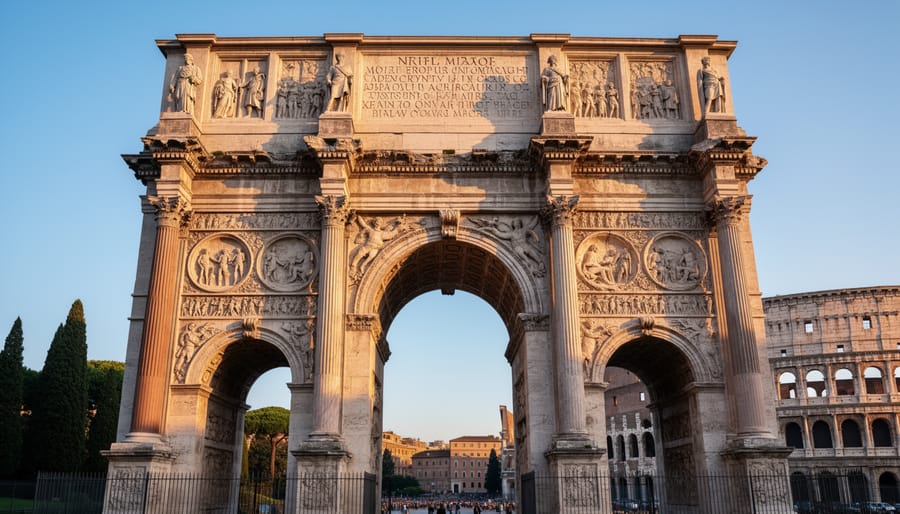
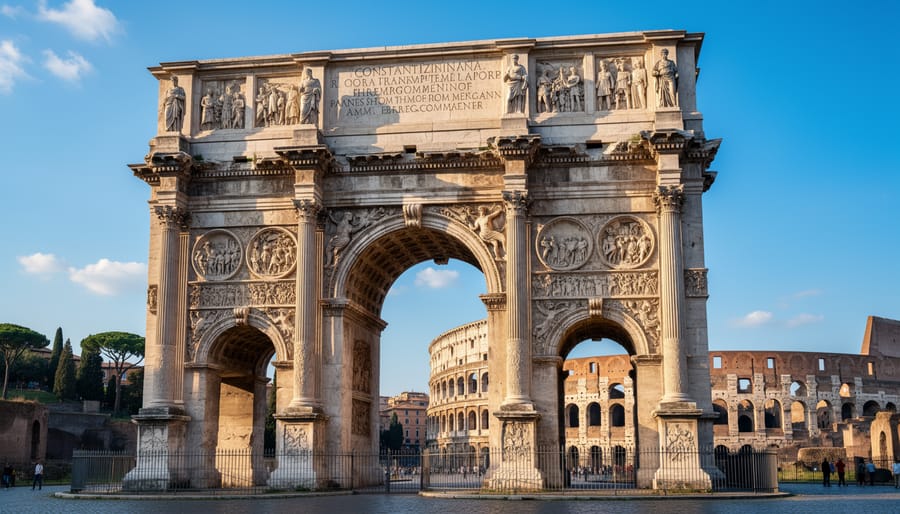
The Arch of Constantine, completed in 315 CE, stands as perhaps the most famous example of Roman spolia integration. This monument incorporated sculptural reliefs and columns salvaged from earlier structures built under Trajan, Hadrian, and Marcus Aurelius. Rather than representing a decline in Roman stone craftsmanship, this deliberate reuse served multiple purposes: it connected Constantine to respected predecessors, demonstrated Rome’s accumulated power across generations, and showcased the empire’s ability to command resources from throughout its territories.
The practice extended beyond triumphal architecture. Romans embedded Egyptian granite obelisks, Greek marble columns, and ornamental stonework from across the Mediterranean into their civic spaces. Each imported element functioned as a tangible trophy, reminding citizens and visitors alike of Rome’s extensive reach and military prowess. This strategic deployment of appropriated materials established spolia as a visual language of conquest that would influence architectural practices for centuries, fundamentally shaping how subsequent civilizations would approach the reuse of historical stonework in their own monuments.
Late Antiquity and the Rise of Christian Architecture
Between the 4th and 6th centuries, the Roman Empire underwent profound transformation as Christianity emerged as the dominant religion. This period witnessed an unprecedented surge in spolia use, particularly as builders constructed grand basilicas and churches across former imperial territories. The practice became so widespread that nearly every major early Christian structure incorporated salvaged materials from pagan temples, civic buildings, and monuments.
The motivations for this extensive reuse were both practical and symbolic. Economically, quarrying and carving new stone columns, capitals, and decorative elements required substantial resources that newly Christian communities often lacked. Repurposing existing architectural members from abandoned pagan temples provided immediate access to high-quality marble, granite, and limestone already shaped to monumental scale. This practical efficiency accelerated the rapid building program needed to accommodate growing Christian congregations.
Beyond economics, spolia carried powerful symbolic meaning. Incorporating columns from dismantled pagan temples into Christian churches represented Christianity’s triumph over older religions. The deliberate placement of classical elements within new sacred contexts transformed their meaning—what once supported pagan worship now literally upheld the Christian faith. This visual statement reinforced the new religious order while maintaining physical connections to Roman architectural grandeur.
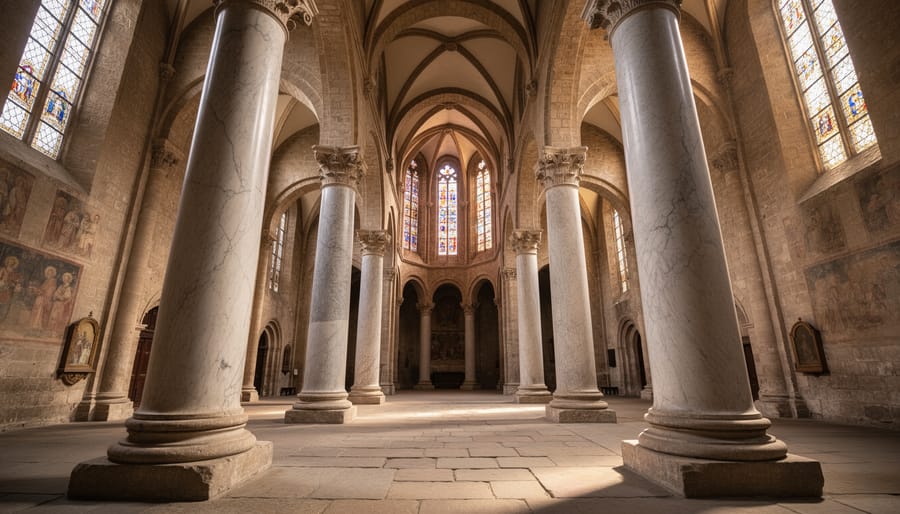
The Basilica of Santa Sabina in Rome exemplifies this approach, featuring twenty-four matching Corinthian columns salvaged from an earlier structure. Similarly, medieval church construction continued these spolia traditions, establishing practices that would influence European architecture for centuries. This period fundamentally shaped how builders understood material reuse—not merely as recycling, but as meaningful architectural dialogue between past and present.
Medieval and Renaissance Applications
Medieval builders enthusiastically embraced spolia, viewing ancient Roman columns, capitals, and marble as symbols of imperial power and legitimacy. Churches throughout Europe incorporated classical fragments into new construction, with Charlemagne notably transporting columns from Rome and Ravenna to his palace chapel in Aachen around 800 CE. This practice reinforced connections to early Christianity and classical authority. During the Renaissance, architects like Bramante and Michelangelo studied ancient Roman structures, sometimes reusing materials while other times simply drawing inspiration from classical proportions and forms. Venetian builders incorporated Byzantine spolia into facades, creating the distinctive architectural character still visible today. The practice demonstrated both practical economy and cultural aspirations, as reused marble and granite conveyed prestige that newly quarried local stone could not match. These materials physically linked medieval and Renaissance structures to the grandeur of antiquity, establishing visual continuity across centuries.
Why Builders Chose to Reuse Stone: Practical and Symbolic Motivations
Economic and Material Advantages
Beyond their symbolic and aesthetic value, spolia offered significant economic advantages that drove their widespread adoption throughout history. The decision to reuse architectural elements was often as much about practical necessity as artistic choice.
Pre-cut stone provided immediate cost savings by eliminating quarrying and initial shaping expenses. Rather than extracting raw material and employing skilled stonemasons for months of labor-intensive carving, builders could salvage finished columns, capitals, and decorated blocks from abandoned or ruined structures. This efficiency was particularly valuable during periods of economic decline or political instability when resources and skilled labor were scarce.
High-quality building materials represented a premium resource that wasn’t always readily available. Ancient Roman builders had access to diverse stone varieties from across their empire, including prized marbles, granites, and porphyries transported from distant quarries. When those supply chains collapsed after Rome’s fall, existing monuments became valuable stone repositories. The effort required to quarry, transport, and finish new materials often far exceeded the cost of salvaging existing pieces.
Transportation expenses amplified these economic considerations. Moving massive stone blocks required specialized equipment, labor, and infrastructure. A single marble column could weigh several tons, making local salvage operations dramatically more economical than importing fresh materials from distant quarries.
These practical considerations resonate today as sustainable building practices gain prominence. Modern architects increasingly recognize the economic and environmental benefits of reclaiming architectural stone elements, echoing the pragmatic wisdom that made spolia such an enduring practice throughout history. The circular economy principles driving contemporary stone reuse mirror the resource-conscious strategies of our predecessors.
Symbolic and Political Messaging
Reusing architectural elements was rarely just practical—it was a deliberate visual statement. Throughout history, rulers and religious leaders understood that stone carried meaning, and spolia became a powerful tool for conveying messages about authority, legitimacy, and cultural identity.
The most common symbolic use of spolia was to demonstrate conquest and triumph. When Roman emperors incorporated stones from defeated cities into new monuments, they weren’t simply recycling materials—they were displaying trophies. Similarly, Christian churches built with columns from pagan temples sent a clear message about the triumph of Christianity over older belief systems. The physical presence of these repurposed elements served as constant reminders of power shifts.
Spolia also conveyed legitimacy by creating visual connections to prestigious predecessors. Medieval European rulers deliberately incorporated Roman columns and capitals into their buildings to associate themselves with imperial authority. This practice suggested continuity with Rome’s grandeur, even centuries after the empire’s fall. Byzantine emperors similarly reused ancient Greek and Roman materials to position themselves as rightful heirs to classical civilization.
The strategic placement of spolia often amplified its symbolic impact. Particularly impressive pieces—elaborately carved capitals or rare marble columns—were positioned prominently at entrances or around altars, ensuring maximum visibility. The contrast between old and new materials could be deliberately highlighted or carefully integrated, depending on the intended message.
This symbolic dimension transforms spolia from simple recycling into sophisticated political communication, making it a fascinating study in how physical materials shape cultural narratives across generations.
Aesthetic and Design Considerations
The aesthetic power of spolia extended far beyond mere practicality. Ancient architects recognized the visual magnetism of weathered marble, carved reliefs, and monumental columns that carried the patina of centuries. This aged quality lent immediate gravitas and historical depth to new structures, creating a dialogue between past and present that purely new construction could never achieve.
The deliberate incorporation of contrasting elements became a sophisticated design strategy. Builders juxtaposed smooth, pristine stonework against heavily carved ancient fragments, creating visual tension that drew the eye and conveyed cultural narratives. A gleaming white medieval church wall might feature dark porphyry columns salvaged from a Roman temple, the color contrast emphasizing both materials while signaling the building’s connection to imperial legacy.
Beyond aesthetics, spolia carried immense prestige value. Rare stones like porphyry, serpentine, and certain marbles were no longer quarried or accessible by medieval times, making salvaged pieces irreplaceable treasures. Displaying these materials demonstrated wealth, power, and cultural sophistication. The visual statement was clear: this building incorporated stones once reserved for emperors and gods, transferring that authority to new patrons and purposes while celebrating the enduring beauty of exceptional natural stone.
Famous Examples of Spolia in Architecture
The Arch of Constantine, Rome
The Arch of Constantine, completed in 315 CE near the Colosseum in Rome, stands as perhaps the most celebrated example of spolia in architectural history. Emperor Constantine commissioned this triumphal arch to commemorate his victory at the Battle of Milvian Bridge, but rather than creating entirely new sculptural programs, his builders incorporated extensive decorative elements from earlier monuments dating to the reigns of Trajan, Hadrian, and Marcus Aurelius.
The arch features eight large relief panels removed from a monument to Marcus Aurelius, roundels depicting hunting scenes from Hadrian’s time, and frieze panels from Trajan’s forum. Marble columns in yellow Numidian stone were also salvaged from earlier structures. This strategic reuse served multiple purposes: it accelerated construction timelines while reducing costs, but more importantly, it created a visual lineage connecting Constantine to Rome’s most respected emperors.
The contrast between the refined, classical sculptural style of the second-century spolia and the simpler fourth-century carvings created specifically for Constantine reveals changing artistic conventions. This juxtaposition wasn’t seen as problematic but rather as a deliberate statement of political legitimacy and cultural continuity. The Arch of Constantine demonstrates how spolia functioned as both practical building material and sophisticated political propaganda, establishing visual authority through association with Rome’s golden age.
Hagia Sophia, Istanbul
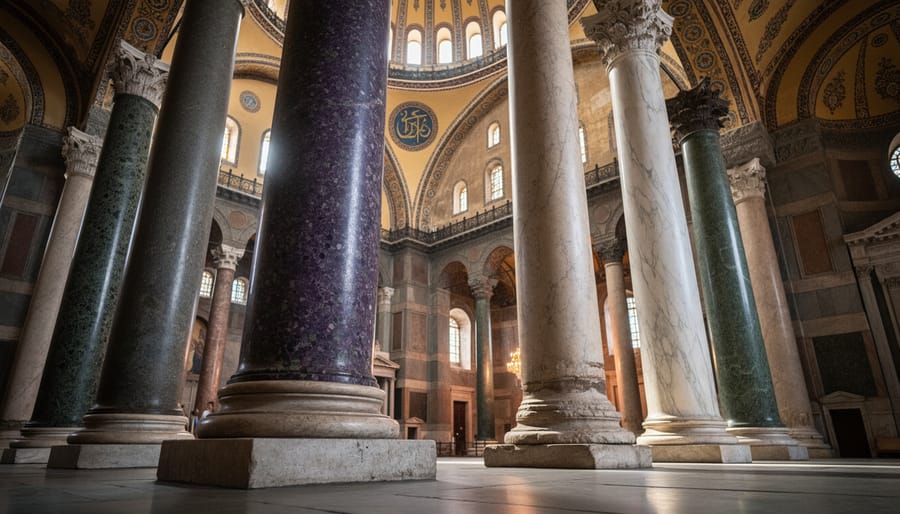
The Hagia Sophia represents one of history’s most ambitious spolia projects, demonstrating the Byzantine Empire’s remarkable capacity for material procurement and reuse. Completed in 537 CE under Emperor Justinian I, this architectural masterpiece incorporated columns, capitals, and marble panels salvaged from ancient temples and structures throughout the Mediterranean world.
The building’s interior features over 100 columns, many of which were transported from sites across the empire. Eight massive porphyry columns came from the Temple of Artemis at Ephesus, while green marble columns originated from the Temple of Artemis at Ephesus. White marble was quarried from the island of Marmara, and yellow stone arrived from North Africa. This diverse material palette created a visually stunning interior while symbolizing the geographic reach and power of Byzantium.
The scale of this endeavor reveals sophisticated logistical networks for transporting heavy stone materials across vast distances. Each column required careful extraction, maritime shipping, and precise installation—a testament to Byzantine engineering prowess. The strategic reuse of these prestigious materials served dual purposes: practical resource management and symbolic appropriation of classical authority, reinforcing the empire’s connection to Rome’s imperial legacy.
Medieval Churches and Cathedrals
Medieval church builders enthusiastically embraced spolia, incorporating salvaged Roman materials into their sacred architecture throughout Europe. This practice served both practical and symbolic purposes—reusing durable stone reduced construction costs while visually connecting Christian structures to the grandeur of ancient Rome.
Romanesque churches from the 11th and 12th centuries frequently feature Roman columns in their naves and cloisters. The Cathedral of Pisa, for instance, displays dozens of ancient Roman marble columns throughout its interior, each with distinct classical capitals that predate the medieval structure by centuries. Similarly, the Church of San Lorenzo fuori le mura in Rome incorporates 22 Roman Ionic columns within its basilica, creating a striking visual dialogue between pagan antiquity and Christian worship.
Gothic cathedrals continued this tradition, though often with more selective integration. Notre-Dame de Paris includes Roman stone foundations, while numerous English churches used Roman carved stones from nearby villa sites and military settlements. The practice was particularly common in Rome itself, where the Church of Santa Maria in Trastevere features granite columns taken from the Baths of Caracalla.
Architects chose specific pieces deliberately—polished marble columns, intricately carved capitals, and decorative friezes—positioning them prominently to maximize visual impact. The varied colors and textures of these Roman stones added aesthetic richness while demonstrating the Church’s authority as heir to imperial Rome’s power and prestige.
Spolia and Modern Natural Stone Practices
Sustainability Lessons from Ancient Reuse
The practice of spolia offers profound lessons in sustainability that resonate strongly with contemporary environmental concerns. Ancient builders recognized what modern architects are rediscovering: natural stone possesses exceptional durability that allows it to serve multiple lifetimes across different structures and purposes. When Roman builders incorporated Greek marble columns into their forums or Byzantine craftsmen repurposed Roman architectural elements into churches, they weren’t just making practical choices—they were demonstrating stone’s remarkable capacity to transcend its original context while maintaining structural and aesthetic integrity.
This ancient architectural influence directly parallels today’s architectural salvage movement and sustainable building practices. Modern designers increasingly seek reclaimed stone from demolished buildings, recognizing both its environmental benefits and unique character. Unlike manufactured materials that degrade or become obsolete, natural stone actually gains patina and historical depth over time, making salvaged pieces more valuable rather than less.
The environmental calculus is compelling: reusing existing stone eliminates the energy costs of quarrying, processing, and transportation associated with new material. Ancient spolia practitioners understood this intuitively, though their motivations differed from our climate concerns. Today’s green building standards, including LEED certification, award points for material reuse, validating what Roman engineers knew two millennia ago.
Contemporary examples abound in adaptive reuse projects where granite facades, limestone details, and marble flooring find new life in renovated structures, demonstrating that sustainability principles rooted in ancient practice remain profoundly relevant to modern construction challenges.
Contemporary Design Applications
Today’s architects and designers are rediscovering the practice of spolia, incorporating reclaimed stone, antique marble, and heritage materials into contemporary projects. This revival transcends simple historical reference, offering tangible aesthetic and environmental advantages that align with modern sustainable building practices.
Prominent examples include the Bloomberg European Headquarters in London, where architects salvaged Yorkshire stone from the building’s Victorian predecessor, integrating these weathered fragments into the new structure’s facade. Similarly, David Chipperfield’s Neues Museum restoration in Berlin deliberately preserved war-damaged Roman brickwork alongside reconstructed sections, creating a layered narrative that honors the building’s complex history.
Designer Piet Boon has championed reclaimed limestone and marble in luxury residential projects, where century-old flooring brings instant patina and character impossible to replicate with new materials. These antique stones often feature superior craftsmanship and density compared to contemporary quarried equivalents, offering both visual richness and exceptional durability.
The environmental case for architectural spolia is compelling. Reusing existing stone eliminates quarrying impacts, reduces transportation emissions, and diverts material from landfills. A single salvaged marble panel represents thousands of years of geological formation and significant embodied energy already invested in extraction and fabrication.
Museums and cultural institutions increasingly specify heritage materials for expansion projects, creating physical connections between old and new construction. The approach has gained particular traction in adaptive reuse projects, where fragments from demolished structures find new purpose in adjacent developments.
This contemporary interpretation of spolia demonstrates how ancient practices inform modern sustainability strategies, proving that historical stone materials remain relevant and valuable in twenty-first century architecture. The technique offers designers a unique palette while supporting circular economy principles in the building industry.

What Spolia Teaches Us About Natural Stone’s Enduring Value
The ancient practice of spolia offers compelling lessons about natural stone’s longevity and value that remain remarkably relevant for today’s building and design professionals. When Roman builders repurposed columns and marble panels from earlier structures, they weren’t simply recycling materials—they were recognizing qualities that continue to make natural stone an intelligent investment centuries later.
Perhaps the most significant insight from spolia is stone’s exceptional durability. Materials that survived the fall of empires, earthquakes, and weathering over millennia demonstrated a performance track record no modern material can match. This same durability translates directly to contemporary projects, where properly specified natural stone can last generations with minimal maintenance, reducing lifecycle costs and environmental impact through longevity rather than replacement cycles.
Spolia also reveals stone’s enduring value beyond mere function. Ancient builders specifically chose aesthetically superior pieces for reuse, recognizing that certain marbles, granites, and limestones possessed timeless visual appeal that transcended changing architectural styles. Today’s designers can apply this principle by selecting stone with classic color palettes and veining patterns that won’t appear dated as trends evolve.
For architects and designers, spolia demonstrates that quality natural stone represents genuine value retention. Historic examples show stones actually increasing in worth over time, both materially and culturally. Buildings featuring premium natural stone command higher resale values and rental rates than those with synthetic alternatives—a pattern documented across commercial and residential markets.
Practical takeaways include prioritizing durability specifications over initial cost savings, selecting stones with proven historical performance in similar climates, and considering the long-term aesthetic and financial implications of material choices. The spolia tradition teaches us that investing in authentic natural stone isn’t simply purchasing a building material—it’s acquiring an asset with centuries-proven performance credentials and transgenerational appeal that synthetic materials cannot replicate.
The ancient practice of spolia reveals a profound truth about natural stone that remains just as relevant today: quality materials transcend their original purpose and context. Just as Roman builders recognized the enduring value of marble columns salvaged from earlier structures, today’s architects and designers continue to appreciate natural stone for its exceptional longevity and timeless appeal. This historical perspective offers more than an academic curiosity—it provides a compelling framework for understanding sustainable material choices in contemporary construction.
When you select natural stone for a project today, you’re participating in a tradition that spans millennia. The same qualities that made marble, granite, and limestone valuable enough to repurpose in medieval churches and Renaissance palaces—durability, beauty, and structural integrity—make these materials excellent investments for modern applications. Unlike synthetic alternatives that degrade and require replacement, properly installed natural stone can perform admirably for centuries, potentially becoming the heritage material that future generations might preserve or repurpose.
This long-term perspective shifts how we evaluate building materials. Rather than viewing stone selection purely through the lens of immediate aesthetics or initial cost, spolia encourages us to consider the full lifecycle value. The countertop, flooring, or facade you install today could easily outlast the building itself, maintaining its beauty and functionality through multiple renovations or even finding new life in future structures. By choosing natural stone, you’re not just completing a project—you’re creating tomorrow’s architectural heritage, continuing an unbroken chain of material stewardship that connects us directly to the builders of antiquity.