Natural stone facades are experiencing a technological renaissance in contemporary architecture, transforming from traditional cladding into dynamic building systems that rival—and often surpass—modern synthetic materials. Today’s architects are rediscovering stone not as a nostalgic material, but as a high-performance solution that addresses pressing demands for sustainability, durability, and aesthetic distinction in increasingly complex building envelopes.
The innovation lies not in stone itself, but in revolutionary installation systems, digital fabrication techniques, and engineering approaches that unlock unprecedented design possibilities. Ventilated rainscreen systems now allow stone panels as thin as 20mm to clad skyscrapers, while CNC milling produces intricate three-dimensional patterns impossible to achieve through manual craftsmanship. These advances enable stone to perform as a lightweight, thermally efficient, and structurally sophisticated component in buildings that demand LEED certification and net-zero energy performance.
From parametrically designed facades that optimize solar shading to seismically-rated anchoring systems for supertall towers, stone technology has evolved dramatically over the past decade. Leading architecture firms are specifying natural stone for projects where engineers once insisted on metal, glass, or composite panels—proof that ancient materials can meet cutting-edge requirements when paired with innovative thinking.
This exploration examines the specific technologies, engineering systems, and real-world applications that position natural stone as a genuinely forward-looking choice for contemporary high-performance buildings. The evidence demonstrates that innovative stone facades represent not a return to traditional methods, but a leap into architecture’s sustainable, technologically advanced future.
The Evolution of Stone in High-Tech Architecture
From Structural to Skin: The Technological Shift
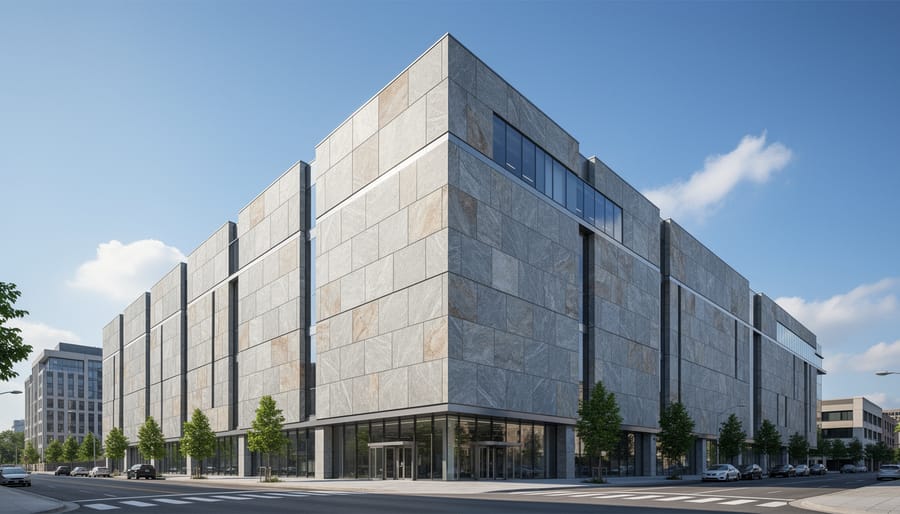
Stone’s transformation from a primary load-bearing material to a sophisticated cladding system represents one of contemporary architecture’s most significant material evolutions. This shift began accelerating in the mid-20th century as steel and concrete frames liberated exterior walls from their structural duties, allowing architects to reimagine stone as an expressive skin rather than a supporting skeleton.
Modern fabrication technologies have been instrumental in this redefinition. Computer numerical control (CNC) machines now cut stone with millimeter precision, enabling complex geometries that would have been impossible or prohibitively expensive with traditional methods. Digital modeling software allows designers to test installation sequences virtually, optimizing panel layouts and minimizing waste before a single block is quarried.
Advanced anchoring systems have similarly revolutionized how stone attaches to buildings. Mechanical fasteners, concealed clips, and engineered support rails now secure thinner stone panels—often just 30mm thick compared to historical thicknesses of 100mm or more—to building structures with exceptional reliability. These systems accommodate thermal movement, seismic activity, and building tolerances while maintaining the appearance of solid masonry.
Prefabrication has further streamlined installation. Stone panels arrive on-site pre-cut, finished, and sometimes pre-assembled into larger units, dramatically reducing construction time and improving quality control. What once required specialized masons working for months can now be accomplished by trained installers in weeks, making stone facades increasingly competitive with alternative cladding materials in both cost and schedule.
Why Architects Are Choosing Stone for Modern Buildings
Today’s architects face a challenging trifecta: meeting stringent sustainability mandates, delivering striking aesthetic impact, and ensuring long-term performance in increasingly demanding environmental conditions. Stone has emerged as the material that uniquely addresses all three requirements simultaneously.
From a sustainability perspective, natural stone offers inherent advantages that align with green building certifications. Its durability means fewer replacements over a building’s lifespan, reducing embodied carbon impacts. Many quarries now operate with responsible extraction practices, and stone’s thermal mass properties contribute to energy-efficient building envelopes. Unlike synthetic materials that degrade, stone often improves visually with age, eliminating the need for energy-intensive maintenance or replacement cycles.
Aesthetically, modern stone facades deliver the visual gravitas and authenticity that clients increasingly demand. Advanced fabrication technologies enable architects to achieve virtually any design vision, from ultra-thin cladding panels to complex three-dimensional geometries. Stone provides texture, depth, and natural variation that renders and synthetic materials simply cannot replicate.
Performance-wise, stone excels in fire resistance, weatherability, and structural integrity. It withstands extreme temperature fluctuations, resists UV degradation, and maintains its properties across decades of exposure. These characteristics make stone particularly valuable for high-profile projects where long-term performance and minimal lifecycle costs are paramount considerations.
Innovative Stone Facade Systems Reshaping Architecture
Ventilated Rainscreen Systems
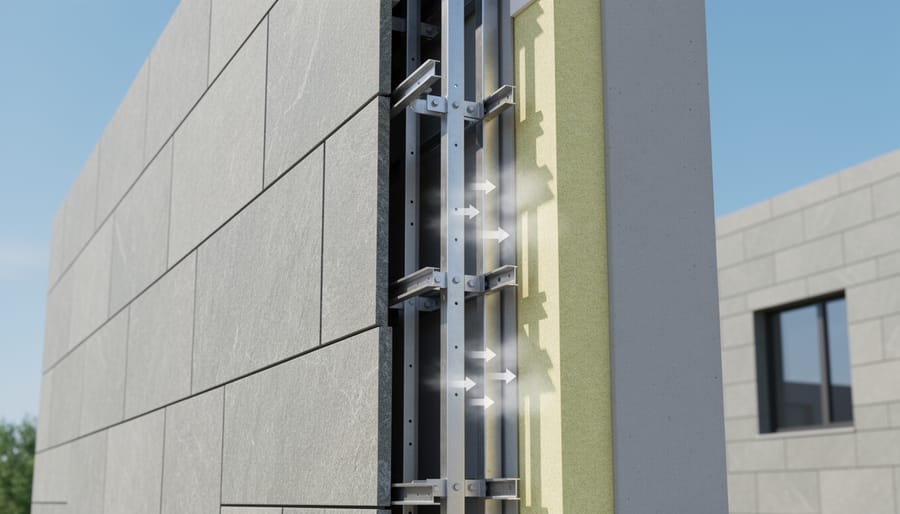
Ventilated rainscreen systems represent a sophisticated mounting technique that positions stone panels several inches away from the building’s structural wall, creating a continuous air cavity. This airspace serves multiple critical functions that enhance both building performance and longevity.
The primary benefit lies in thermal regulation. The air gap acts as a buffer zone, reducing heat transfer between the exterior stone surface and the building interior. During summer months, hot air naturally rises through the cavity, carrying away heat before it penetrates the insulation layer. In winter, this same principle prevents cold from directly impacting the building envelope, significantly reducing energy costs for heating and cooling.
Moisture management is equally important. When rainwater penetrates the outer stone layer or condensation forms, the ventilated cavity allows water to drain freely downward while air circulation promotes rapid drying. This prevents water accumulation that could compromise insulation effectiveness or lead to structural damage over time.
The mechanical attachment systems supporting these panels typically employ stainless steel brackets or aluminum rails anchored to the building structure. Each stone panel is individually secured, allowing for thermal expansion and contraction without stress fracturing. This flexibility also simplifies maintenance, as damaged panels can be replaced without disturbing adjacent sections.
Real-world applications demonstrate impressive results. The One Bryant Park tower in New York City utilizes a ventilated limestone rainscreen that contributed to its LEED Platinum certification, achieving 50% greater energy efficiency than conventional buildings. Similarly, the Vancouver Convention Centre features locally-sourced granite in a rainscreen assembly that helps maintain consistent interior temperatures despite the coastal climate’s humidity challenges.
Ultra-Thin Stone Panels and Composite Technology
One of the most significant breakthroughs in contemporary stone facades is the development of ultra-thin stone panels, typically measuring between 3 and 6 millimeters in thickness. This technology transforms natural stone from a heavy, load-bearing material into a lightweight architectural skin that can be applied to high-rise buildings with minimal structural impact.
The innovation lies in bonding these thin stone veneers to composite backing materials such as aluminum honeycomb cores, fiberglass reinforcement, or polymer resins. This lamination process creates panels that weigh up to 80 percent less than traditional stone slabs while maintaining the authentic appearance and surface characteristics of natural stone. The composite backing provides structural stability, preventing cracking and ensuring the thin stone layer performs reliably over decades.
These engineered panels typically measure up to 1.5 by 3 meters, allowing for dramatic expanses of stone with fewer visible joints. The reduced weight means less demanding structural support requirements, lower transportation costs, and faster installation times. Modern adhesive technologies and mechanical fastening systems ensure these lightweight panels can withstand wind loads, thermal cycling, and seismic forces.
Leading manufacturers have refined production techniques to preserve the stone’s natural veining and texture through the slicing process, ensuring that ultra-thin panels deliver the same visual richness as full-thickness stone. This technology has opened new possibilities for applying natural stone to curtain wall systems and locations previously considered impractical due to weight constraints.
Digital Fabrication and CNC Precision
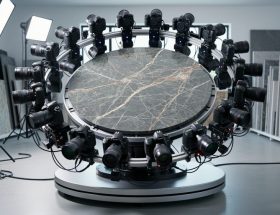
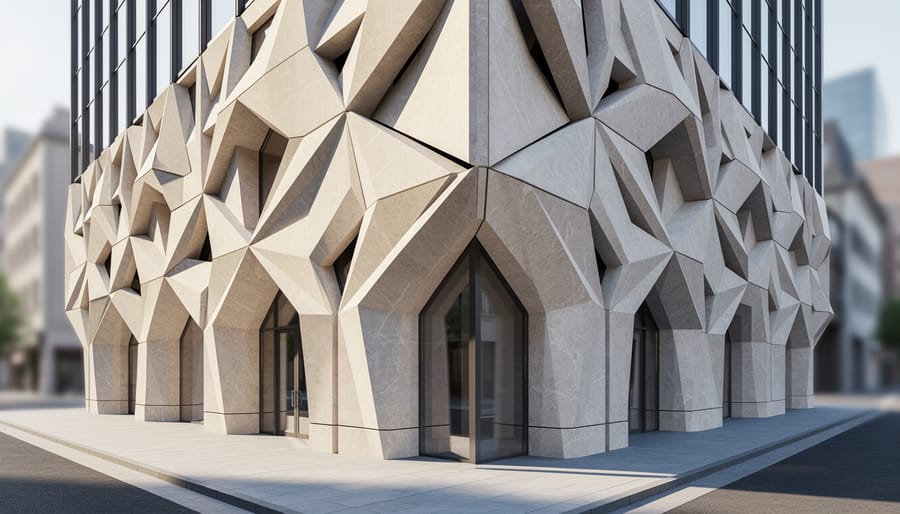
Computer numerical control (CNC) technology has revolutionized how natural stone transforms from quarry block to architectural masterpiece. Modern advanced fabrication technology enables architects to specify intricate patterns, three-dimensional reliefs, and organic geometries that would be impossible to achieve through traditional hand-cutting methods.
Five-axis CNC machines cut stone with millimeter precision, creating complex curved panels that fit together seamlessly on building facades. This precision extends beyond aesthetics—CNC cutting ensures accurate slots, channels, and mounting points that integrate directly with support systems, ventilation components, and building management sensors. The result is a facade that functions as a complete building system rather than merely decorative cladding.
Digital modeling software allows architects to visualize entire stone installations before fabrication begins, identifying potential issues and optimizing material usage. This reduces waste significantly while ensuring each panel fits perfectly during installation. Robotic arms now assist with positioning heavy stone elements, improving safety and accuracy on construction sites.
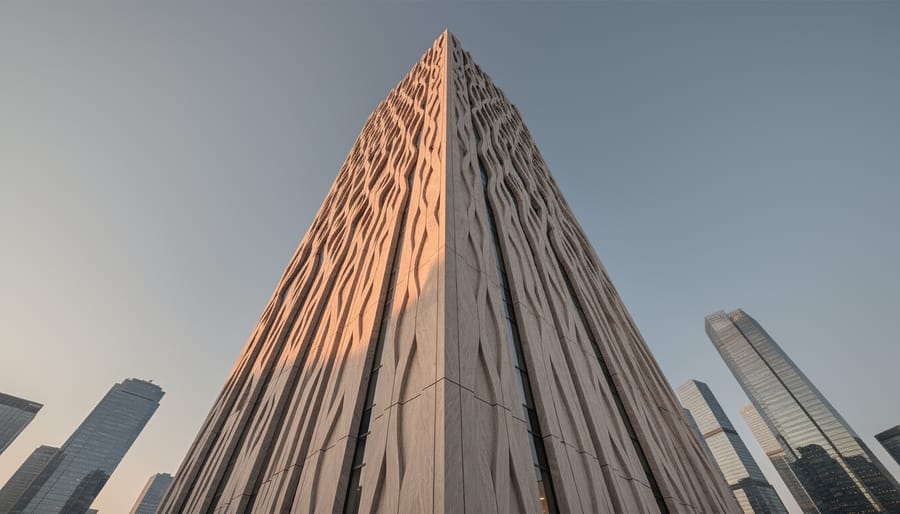
The technology particularly excels at creating parametric designs, where patterns gradually shift across a facade based on mathematical formulas. These dynamic compositions maintain stone’s timeless appeal while achieving distinctly contemporary expressions that define today’s architectural landscape.
Integrated Building Systems
Today’s stone facades have evolved far beyond aesthetic cladding to become active components of building intelligence systems. Modern fabrication techniques allow direct integration of photovoltaic cells into stone panels, transforming exterior surfaces into energy-generating elements without compromising the material’s natural beauty. These solar-integrated stone systems typically embed thin-film cells between stone layers or within specially engineered cavities, maintaining the authentic appearance of solid stone while contributing to a building’s renewable energy portfolio.
Sensor technology embedded within stone cladding systems now monitors structural performance, environmental conditions, and maintenance needs in real time. These sensors track temperature fluctuations, moisture levels, and stress points, transmitting data to building management systems that optimize HVAC performance and predict maintenance requirements before problems develop. LED lighting systems integrated into stone facades create dynamic nighttime displays while providing wayfinding and safety illumination.
The control infrastructure behind these technologies connects stone facades to comprehensive smart building platforms, enabling responsive adjustments based on occupancy patterns, weather conditions, and energy demands. This integration represents a fundamental shift in how we conceive building envelopes—from passive barriers to active, intelligent systems that enhance both performance and occupant experience while preserving stone’s timeless architectural character.
Real-World Examples: Stone Facades That Push Boundaries
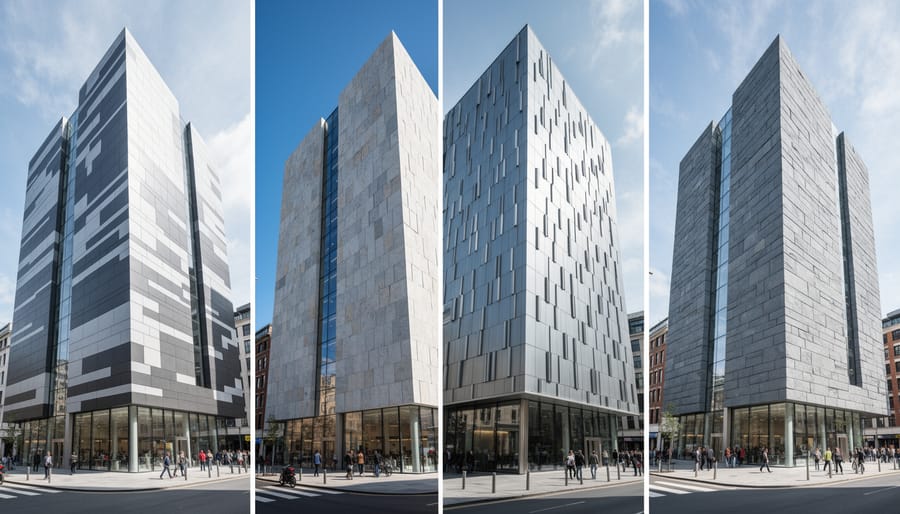
The Bloomberg European Headquarters in London, designed by Foster + Partners and completed in 2017, exemplifies how traditional materials can integrate seamlessly with cutting-edge technology. This 1.1 million square foot building features an innovative ventilated stone facade system that showcases the versatility of natural stone in contemporary architecture.
The exterior employs Indian sandstone in a sophisticated double-skin rainscreen system. This configuration creates a ventilated cavity between the stone panels and the building’s structural envelope, allowing air circulation that regulates temperature and manages moisture. The system significantly improves thermal performance while protecting the building from the elements.
What makes this application particularly innovative is the precision-cut stone panels mounted on adjustable brackets, creating subtle variations in depth across the facade. This technique adds visual interest through shadow play while maintaining the structural benefits of a ventilated system. Each panel was digitally templated and custom-fabricated to exact specifications, demonstrating how traditional stone craftsmanship merges with modern fabrication technology.
The building achieved an outstanding BREEAM rating of 99.1 percent, partly attributed to the facade’s energy efficiency. The ventilated stone system reduces cooling loads during summer months and provides additional insulation during winter, proving that natural stone remains relevant in sustainable, high-performance architecture.
The Museum Tower in Dallas demonstrates how ultra-thin stone technology transforms high-rise design possibilities. Rising 42 stories, this luxury residential building features an innovative facade system using porcelain panels backed with natural stone veneers just 3mm thick—approximately one-tenth the thickness of traditional stone cladding. This technological breakthrough, achieved through advanced lamination processes, reduced the building’s structural load by nearly 70% compared to conventional stone installation while maintaining the authentic appearance and texture of natural stone.
The technical achievement lies in the precision engineering required to mount these delicate panels on a rainscreen system that accommodates thermal movement across 600 feet of vertical height. Each panel underwent rigorous testing for wind load resistance, freeze-thaw durability, and seismic performance before installation. The result is a seamlessly uniform facade that weighs significantly less than traditional masonry, allowing architects to specify natural stone without compromising structural efficiency.
Visually, the tower’s sleek limestone-toned exterior creates a sophisticated presence on the Dallas skyline. The ultra-thin technology enabled larger panel sizes with minimal visible joints, producing a monolithic appearance that would be cost-prohibitive with full-thickness stone. This project proves that innovative fabrication methods can expand stone’s architectural possibilities while addressing the practical constraints of modern high-rise construction.
The Edge Olympic in Amsterdam represents a breakthrough in combining centuries-old stone craftsmanship with cutting-edge building intelligence. This mixed-use development features a limestone facade integrated with sensors, climate-responsive shading systems, and data collection points that monitor building performance in real-time.
The facade system incorporates over 15,000 individual limestone panels, each precision-cut and mounted on an adaptive bracket system that allows for thermal expansion while housing embedded sensors. These monitors track temperature fluctuations, moisture levels, and air quality, feeding data to the building management system that optimizes energy consumption throughout the day.
Performance metrics demonstrate the tangible benefits of this integration. The smart stone facade contributes to a 42% reduction in heating costs compared to conventional curtain wall systems, thanks to limestone’s natural thermal mass properties enhanced by automated climate control. Solar gain is managed through strategically positioned stone fins that adjust based on sensor feedback, reducing cooling demands by 38% during peak summer months.
The building achieved LEED Platinum certification, with the intelligent stone facade system accounting for 18 points toward overall certification. Energy monitoring over the first two years of operation shows the facade maintains consistent R-values while requiring 60% less maintenance than predicted, as sensors identify potential issues before they become visible problems.
This project joins other stone architecture success stories proving that traditional materials can lead technological innovation when paired with smart design thinking and integrated building systems.
Performance Benefits of Modern Stone Facade Systems
Thermal Performance and Energy Efficiency
Modern stone facade systems deliver measurable energy benefits through strategic design integration. Ventilated rainscreen systems create a cavity between the stone cladding and building envelope, typically 2-4 inches wide, which promotes natural air circulation. This thermal buffer reduces heat gain by up to 40% compared to traditional wall assemblies, significantly lowering cooling loads during summer months.
The thermal mass properties of natural stone provide additional performance advantages. Dense materials like granite and limestone absorb heat slowly, moderating interior temperature swings and reducing HVAC demands. Buildings incorporating stone facades with proper insulation have demonstrated 15-25% energy savings in documented case studies.
When combined with high-performance glazing and integrated shading systems, ventilated stone facades contribute to net-zero energy goals. The durability of natural stone eliminates replacement cycles associated with alternative cladding materials, reducing embodied energy over the building’s lifespan. These quantifiable benefits make stone facades an economically sound choice for high-performance architecture, delivering long-term operational savings while maintaining aesthetic excellence.
Durability and Low Maintenance Requirements
Natural stone cladding offers exceptional lifecycle advantages that make it a smart investment for high-tech architecture. Unlike synthetic materials that degrade, fade, or require frequent replacement, stone’s durability extends for decades with minimal intervention. Modern stone facades withstand harsh weather conditions, from extreme temperatures to heavy precipitation and UV exposure, without compromising structural integrity or aesthetic appeal.
Maintenance requirements are significantly lower compared to metal panels, glass, or composite materials. Stone resists moisture penetration, doesn’t rust or corrode, and maintains its natural color without needing repainting or refinishing. Periodic cleaning with water or mild detergents typically suffices to preserve appearance. Advanced surface treatments and sealants further enhance weather resistance while reducing maintenance frequency. This translates to lower long-term ownership costs and reduced environmental impact from replacement materials. For architects and developers prioritizing sustainable building practices, stone’s longevity and minimal upkeep align perfectly with lifecycle cost analysis and green building objectives.
Sustainability and Environmental Impact
Natural stone facades represent one of architecture’s most sustainable material choices, combining longevity with minimal environmental impact. Unlike synthetic alternatives requiring energy-intensive manufacturing, stone is extracted and processed with relatively low carbon emissions. Most quarrying operations today employ efficient techniques that minimize waste, with cut-offs often repurposed for smaller applications or aggregate.
The inherent durability of stone eliminates frequent replacement cycles, significantly reducing lifecycle environmental costs. Stone facades typically last 100+ years with minimal maintenance, compared to 20-30 years for many manufactured cladding systems. At end-of-life, stone is completely recyclable—crushed for aggregate or repurposed in new construction projects.
Local sourcing opportunities further enhance sustainability profiles. North American quarries provide domestic stone options that reduce transportation emissions while supporting regional economies. This proximity simplifies supply chains and enables projects to meet stringent local material requirements.
Stone facades contribute substantially to LEED, BREEAM, and other green building certifications through multiple pathways: recycled content credits, regional materials points, heat island reduction, and durable materials documentation. Modern sustainable stone design integrates these environmental advantages with cutting-edge installation systems, proving that natural materials align perfectly with contemporary sustainability goals while delivering unmatched aesthetic appeal.
Selecting Stone for High-Tech Facade Applications
Stone Types Best Suited for Modern Facades
Selecting the right stone type is crucial for modern facade performance and longevity. Granite stands out as the premier choice for high-traffic urban environments, offering exceptional compressive strength, minimal water absorption (typically under 0.4%), and superior resistance to freeze-thaw cycles. Its dense crystalline structure maintains color stability even under harsh UV exposure, making it ideal for facades facing extreme weather conditions.
Limestone presents an excellent option for contemporary designs requiring softer, more uniform aesthetics. Modern sealant technologies have significantly improved its weather resistance, though it performs best in moderate climates. Its natural thermal mass properties contribute to building energy efficiency, while its workability allows for precise cuts and innovative panel designs.
Marble, traditionally reserved for interiors, now appears in protected facade applications where its luminous quality enhances architectural expression. However, limit its use to areas with minimal acid rain exposure and consider honed or textured finishes to reduce maintenance.
Quartzite offers a compelling alternative, combining marble-like aesthetics with granite’s durability. Its resistance to scratching and etching makes it particularly suitable for mixed-use buildings requiring both beauty and resilience. When specifying stone for modern facades, prioritize varieties with proven freeze-thaw resistance, low porosity ratings, and documented performance in similar climate zones to ensure long-term success.
Key Considerations for System Selection
Selecting the appropriate facade system requires careful evaluation of several interconnected factors that will determine both performance and aesthetic success. Building height plays a fundamental role, as structures exceeding certain thresholds demand enhanced wind load resistance and specialized anchoring systems. Taller buildings typically require lighter-weight stone panels or innovative mounting solutions that distribute loads effectively across the structural frame.
Climate conditions significantly influence material selection and installation methods. Regions with freeze-thaw cycles demand stone varieties with low water absorption rates and drainage systems that prevent moisture accumulation. Hot, arid climates benefit from lighter-colored stones that reflect solar radiation, while humid environments require ventilated cavity designs to manage condensation and thermal expansion.
Structural capacity directly impacts system feasibility. The building’s framework must support not only the stone’s weight but also the mounting hardware and potential dynamic loads. Existing structures being retrofitted may need reinforcement, while new construction can integrate facade loads into initial structural calculations.
Budget considerations extend beyond material costs to include installation complexity, maintenance requirements, and lifecycle performance. While natural stone represents a premium investment, its durability often provides superior long-term value compared to alternatives requiring frequent replacement.
Aesthetic goals ultimately guide stone selection, finish specifications, panel sizing, and joint detailing. The facade must harmonize with architectural intent while meeting all technical requirements, creating a balanced solution that satisfies both functional demands and design vision.
The evolution of stone facade technology represents a remarkable convergence of ancient craftsmanship and contemporary innovation. What was once considered a traditional, heavy building material has been transformed through engineering advances into a high-performance solution for modern architecture. Ultra-thin panels, advanced anchoring systems, and digital fabrication have unlocked stone’s potential in ways previous generations could never imagine, enabling dramatic cantilevers, complex geometries, and seamless integration with glass and metal systems.
As sustainability becomes non-negotiable in building design, stone’s durability, low maintenance requirements, and natural thermal properties position it as an increasingly relevant choice for high-performance buildings. The material that built civilizations continues to prove its worth in achieving both aesthetic excellence and LEED certification goals.
For architects, designers, and specifiers ready to explore stone’s possibilities, the path forward requires informed material selection and understanding of installation systems. The Marble Guide offers comprehensive resources, technical specifications, and supplier connections to support your next project. Whether you’re designing a corporate headquarters, cultural institution, or residential tower, innovative stone facades deserve consideration as a solution that honors architectural heritage while embracing the future of building technology.