

Divert up to 90% of construction and demolition waste from landfills by implementing a systematic sorting protocol on-site. Designate separate containers for concrete, masonry, metals, and natural stone materials immediately upon project commencement, ensuring each waste stream remains uncontaminated and suitable for processing. This approach transforms disposal costs into revenue opportunities, as crushed concrete becomes aggregate base material, dimensional stone pieces convert to landscape features, and metal components generate scrap value.
Establish partnerships with specialized recycling facilities and stone fabricators before breaking ground. Regional concrete crushers can process 50-100 tons of material per day, converting demolished foundations into road base or new concrete aggregate. Stone yards actively purchase large format remnants for resale, while smaller pieces serve as decorative mulch, gabion fill, or riprap for erosion control. Document the chain of custody for recycled materials to qualify for LEED certification credits and demonstrate compliance with local waste diversion mandates.
Calculate the economic impact before selecting disposal methods. Landfill tipping fees range from $35-$100 per ton depending on location, while recycled aggregate sells for $8-$15 per ton. A typical 50,000 square foot demolition project generates 4,000-6,000 tons of debris—representing potential savings of $140,000-$600,000 through strategic recycling. These figures exclude additional benefits from reduced transportation distances and accelerated project timelines.
Integrate sustainable stone practices throughout the project lifecycle. Pre-demolition audits identify salvageable materials worth preserving, while deconstruction techniques—rather than explosive demolition—maximize material recovery rates. This methodology preserves the inherent value of natural stone while meeting increasingly stringent environmental regulations and stakeholder expectations for responsible resource management.
Understanding Construction and Demolition Waste in Stone Projects
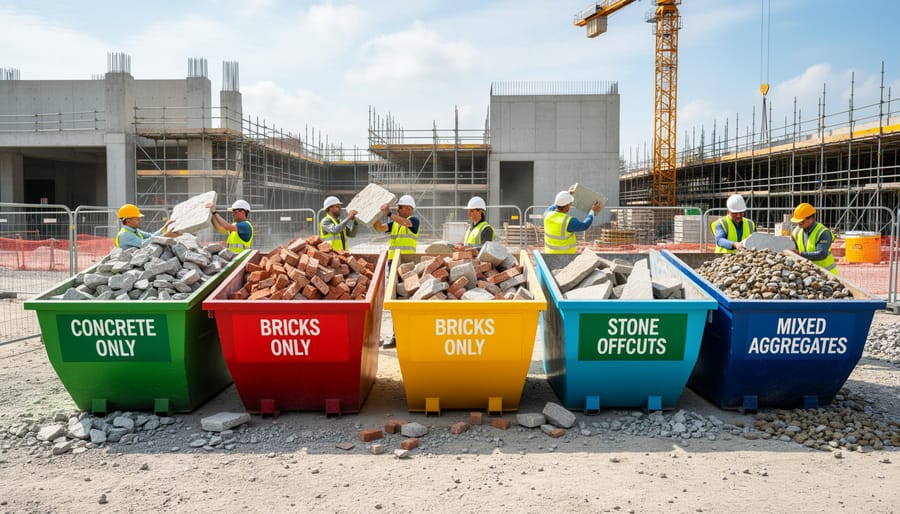
Types of Stone Waste Generated During Projects
Construction and demolition projects generate several distinct categories of stone waste, each requiring different handling approaches. Understanding these waste streams helps project managers develop targeted recycling strategies and reduce disposal costs.
Fabrication remnants represent the largest waste category in new construction projects. When slabs are cut for countertops, tiles, or architectural features, approximately 20-30% becomes scrap material. These pieces range from large cutoffs suitable for smaller projects to stone dust and slurry from cutting operations. The waste percentage varies by project complexity—simple rectangular cuts generate less waste than intricate designs with curves or edge profiles.
Installation debris includes broken tiles, chipped corners, and damaged pieces that occur during transportation and placement. Typically accounting for 5-10% of ordered materials, this waste stream consists mostly of smaller fragments. Professional installers working with experienced crews generate less installation waste than less experienced teams.
Demolition stone comes from building renovations and teardowns. This material often includes intact slabs, tiles, and architectural elements that can be salvaged for reuse. However, demolition generates 15-25% waste from materials too damaged or contaminated for direct reuse.
The critical distinction between clean and contaminated waste significantly impacts recycling options. Clean stone waste—free from adhesives, sealants, paint, or other construction materials—commands higher recycling value and offers more reuse possibilities. Contaminated stone requires additional processing or may only be suitable for aggregate applications. Residential remodels typically generate more contaminated waste due to existing adhesives and finishes, while new construction projects produce cleaner waste streams more amenable to recycling.
The True Cost of Stone Waste Disposal
When disposing of stone waste, project costs extend far beyond simply hauling debris away. Understanding the true expense requires examining multiple financial factors that directly impact long-term project costs.
Landfill tipping fees represent the most obvious expense, ranging from $30 to $100 per ton depending on location. Metropolitan areas like New York and San Francisco command premium rates exceeding $80 per ton, while rural regions may charge $40 or less. For a typical residential stone project generating 5-10 tons of waste, landfill fees alone can reach $500 to $1,000.
Transportation costs add another significant layer. Hauling contractors typically charge $150 to $300 per load, with prices escalating based on distance to disposal facilities. Projects in remote locations may face double these rates.
Labor expenses for waste handling, loading, and site cleanup frequently go overlooked but can add $500 to $2,000 to project budgets. This includes time spent segregating materials and coordinating multiple pickups.
The hidden costs prove equally substantial. Discarded stone represents lost material value—quality granite or marble scraps worth $20 to $50 per square foot simply vanish into landfills. Many jurisdictions now impose environmental impact fees or require special permits for construction waste disposal, adding $100 to $500 per project.
Additionally, some regions mandate waste diversion percentages, triggering penalties for non-compliance. These regulatory requirements make understanding disposal economics essential for accurate project budgeting and identifying opportunities where recycling becomes financially advantageous.
Planning for Waste Reduction Before Your Project Begins
Design Strategies That Minimize Stone Waste
Smart design planning represents the most effective way to minimize stone waste before material ever reaches the job site. Architects and designers who align their specifications with standard slab sizes—typically 120 inches by 75 inches for most natural stone varieties—can dramatically reduce offcuts and remnants. This approach begins during the initial design phase, where design planning tools help professionals visualize how standard slabs translate into finished elements.
Modular design strategies offer another powerful waste-reduction method. By creating repeating elements at standardized dimensions, such as 24-inch or 12-inch modules, designers ensure efficient material utilization across countertops, flooring, and wall cladding. This modularity also simplifies fabrication and installation while maintaining aesthetic cohesion throughout a project.
Forward-thinking designers now intentionally incorporate remnant pieces into their specifications. Smaller stone offcuts become accent walls, decorative inlays, bathroom vanities, or custom furniture pieces. Some projects feature remnant galleries or mosaic installations that celebrate these smaller pieces rather than treating them as waste. This approach requires early collaboration between designers, fabricators, and clients to identify opportunities for creative reuse.
Communication between all project stakeholders proves essential. When fabricators understand design intent early, they can optimize slab selection and cutting patterns. Similarly, maintaining an inventory of available remnants allows designers to specify existing materials for smaller elements, closing the loop on waste reduction while potentially reducing project costs.
Accurate Material Estimation and Ordering
Reducing waste in stone projects begins long before the first cut is made. Accurate material estimation is foundational to minimizing excess while ensuring adequate supply. Start by working with detailed architectural plans and measurements, then add a realistic waste factor—typically 10-15% for standard installations and up to 20% for complex patterns or book-matched designs.
The key is understanding where waste naturally occurs. Inside corners, cut-outs for fixtures, and edge profiles all generate scrap. By collaborating with fabricators early in the design phase, you can develop cutting plans that maximize usable material from each slab. Digital templating and CNC technology have revolutionized this process, allowing fabricators to nest multiple pieces efficiently and identify opportunities to use remnants.
Effective material procurement strategies involve more than simple square footage calculations. Consider the actual dimensions of available slabs—ordering material that aligns with standard slab sizes reduces cutting waste significantly. For example, if your design requires 8-foot lengths, sourcing slabs that accommodate this measurement without excessive trimming prevents unnecessary scrap generation.
Maintain clear communication channels between designers, fabricators, and installers throughout the project. Share detailed shop drawings and approve cutting layouts before fabrication begins. This collaborative approach not only minimizes waste but also identifies opportunities to repurpose offcuts for smaller applications like backsplashes, shelving, or accent pieces within the same project, ensuring maximum material utilization while maintaining design cohesion.
Recycling and Reuse Options for Stone Waste
On-Site Reuse and Repurposing
One of the most economically and environmentally efficient ways to handle construction and demolition waste is incorporating leftover stone materials directly into the same project. This approach eliminates transportation costs, reduces landfill burden, and can add unique character to your design.
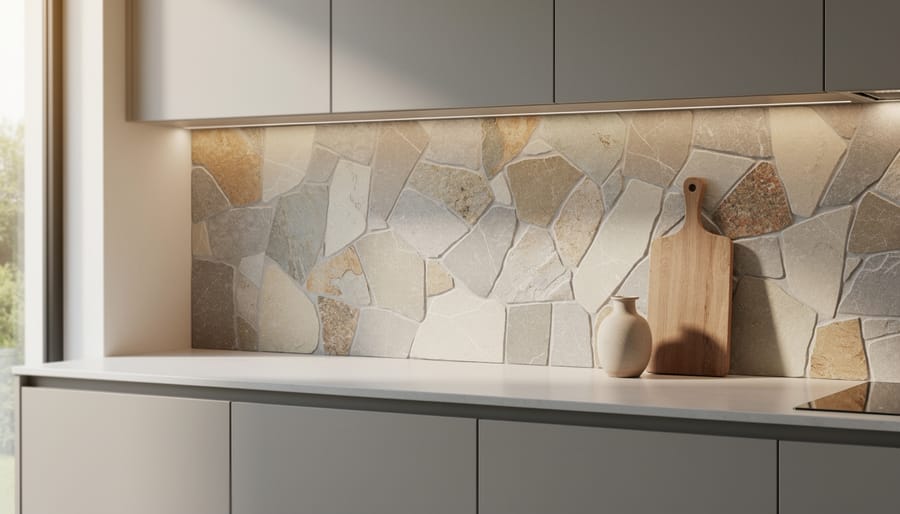
Accent pieces represent an excellent starting point for on-site reuse. Leftover marble or granite slabs can be cut into custom backsplash insets, windowsills, or decorative wall panels. A residential project in Portland transformed excess travertine into custom fireplace surrounds and bathroom accent walls, saving approximately 30% on material costs while creating cohesive design elements throughout the home.
Mosaic work offers exceptional creative potential for smaller stone remnants. Irregular pieces and offcuts can be arranged into striking floor medallions, shower floors, or outdoor patio designs. One landscape architecture firm in Arizona regularly incorporates crushed stone waste into decorative mosaic pathways, creating distinctive patterns that celebrate the material’s natural beauty rather than discarding it.
Landscaping applications provide versatile solutions for larger quantities of stone waste. Remnants work exceptionally well as retaining wall materials, garden borders, stepping stones, or water feature components. A commercial development in Colorado successfully repurposed over 15 tons of limestone rubble into an artistic courtyard feature wall, combining functionality with aesthetic appeal.
Even the smallest fragments have value when crushed for use as decorative mulch, drainage layers, or base materials for pathways. By viewing waste as a design resource rather than a disposal challenge, projects can achieve both sustainability goals and distinctive aesthetic outcomes while significantly reducing overall material costs.
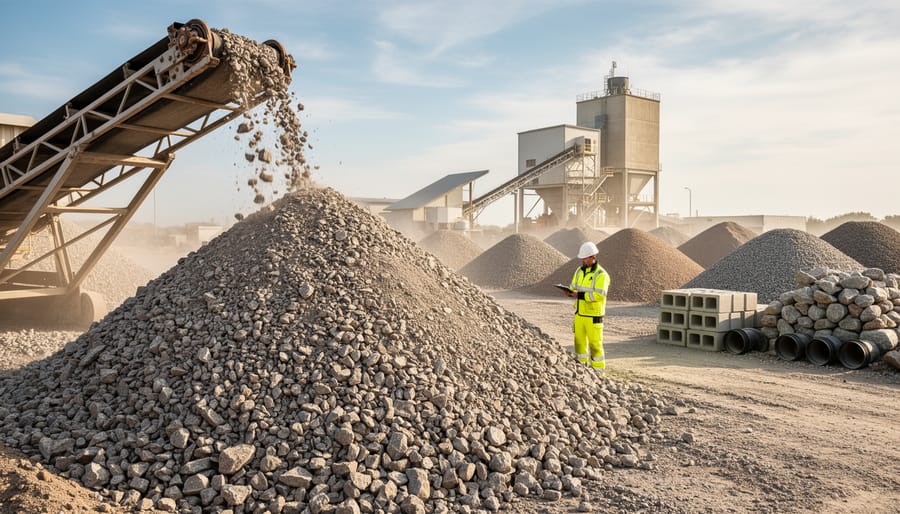
Crushing and Aggregate Production
Stone waste from construction and demolition projects can be transformed into valuable aggregate through mechanical crushing, offering an economical and environmentally responsible alternative to quarrying new materials. The crushing process begins with sorting debris to remove contaminants like metal reinforcements, wood, and non-stone materials that could compromise the final product quality.
Primary jaw crushers or impact crushers break large stone pieces into smaller fragments, followed by secondary crushers that produce specific aggregate sizes. Modern crushing operations typically employ mobile crushing units that can be deployed directly at demolition sites, significantly reducing transportation costs and carbon emissions. These units can process marble, granite, limestone, and concrete rubble into consistent gradations suitable for various applications.
The resulting recycled aggregate serves multiple purposes depending on size and quality. Coarser materials work well as base course for roadways and parking areas, while medium-sized crushed stone provides excellent drainage applications in landscaping and retaining wall backfill. Finer particles can be incorporated into new concrete mixes, though typically as partial replacement for virgin aggregate to maintain structural integrity. High-quality stone fragments with attractive colors can be processed into decorative landscaping rock, maintaining aesthetic value while reducing waste.
Quality standards require regular testing for gradation, angularity, and crushing strength to ensure recycled aggregates meet specifications for their intended use. Most jurisdictions follow ASTM or local building codes that define acceptable properties for recycled aggregates in construction applications, ensuring performance matches conventional materials.
Secondary Markets for Stone Remnants
Stone remnants that are too small for typical construction projects hold significant value in secondary markets. Smaller fabricators often purchase these pieces at reduced costs for residential projects like bathroom vanities, fireplace hearths, or custom tabletops. The DIY home improvement market has grown substantially, with homeowners seeking affordable stone for weekend projects such as cutting boards, decorative accents, and garden features.
Artists and sculptors represent another viable market, as they frequently work with smaller stone dimensions for sculptures, mosaics, and mixed-media installations. Educational institutions with stoneworking programs often welcome donated remnants for student training. Additionally, specialty applications like stone coasters, bookends, jewelry displays, and architectural samples create consistent demand. Establishing relationships with local art schools, maker spaces, and online marketplaces can transform disposal costs into revenue streams while extending the lifecycle of quality materials that would otherwise reach landfills.
Implementing a Stone Waste Management System
Creating a Waste Management Plan
A comprehensive waste management plan forms the foundation of successful construction and demolition waste recycling. Start by conducting a thorough waste audit before your stone project begins. This assessment identifies the types and volumes of materials you’ll generate, from granite offcuts to marble dust, enabling you to set realistic recycling targets and identify potential markets for recovered materials.
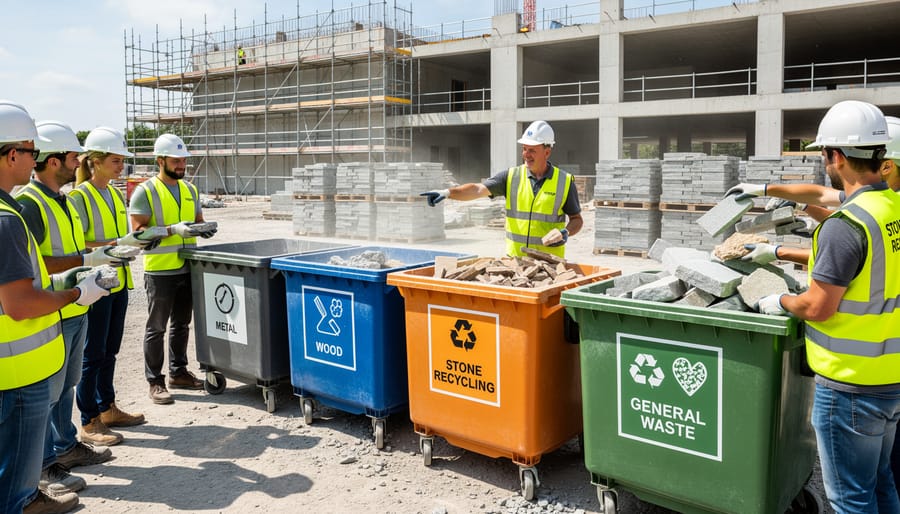
Develop clear separation protocols that specify how workers should sort materials on-site. Designate separate areas for reusable stone pieces, recyclable aggregates, contaminated materials, and general waste. Color-coded bins or clearly labeled containers minimize cross-contamination, which can render otherwise recyclable materials unusable. Train your crew on these protocols from day one to establish good habits.
Storage requirements vary based on project scale and duration. Allocate adequate space for collecting sorted materials, ensuring containers remain covered to prevent weather damage and debris mixing. Position storage areas strategically to maintain site safety while facilitating easy loading for transport to recycling facilities.
Implement a tracking system to monitor waste generation and diversion rates throughout the project. This can range from simple spreadsheets documenting tonnage sent to various destinations, to digital platforms that provide real-time analytics. Regular tracking helps you identify bottlenecks, measure progress toward diversion goals, and demonstrate compliance with green building standards or local regulations.
Document your plan in writing and share it with all stakeholders, including subcontractors and suppliers. This ensures everyone understands their role in minimizing waste and maximizing material recovery, transforming recycling from an afterthought into an integral project component.
Working with Recycling Partners and Facilities
Establishing relationships with recycling partners begins with identifying facilities that accept construction and demolition materials in your region. Start by contacting local aggregate producers, who often welcome clean concrete and masonry rubble for crushing into base material. Stone recyclers specialize in salvaging dimensional stone pieces for reuse in new projects, particularly valuable materials like marble, granite, and limestone. Reach out to these facilities before your project begins to understand their acceptance criteria and processing capabilities.
Most recycling facilities have specific requirements for material quality. They typically require contaminants like wood, metal, and plastic to be removed before delivery. Concrete and stone should be separated from asphalt, and many facilities refuse materials containing hazardous substances like asbestos or lead-based paint. Some specialty recyclers accept mixed loads but charge premium sorting fees, reducing your cost savings.
Request documentation from potential partners about their certifications, processing methods, and end-use applications for recycled materials. Reputable facilities should provide weight tickets and recycling certificates for your project records. Building these relationships early allows you to coordinate logistics efficiently, negotiate favorable rates for larger volumes, and ensure your waste management plan meets both environmental goals and project budget constraints.
Training Your Team on Waste Separation
Successful waste separation begins with comprehensive team training before demolition or construction starts. Conduct hands-on workshops that clearly demonstrate the difference between recyclable stone materials, mixed concrete waste, metals, wood, and non-recyclable debris. Provide visual guides and color-coded bins at strategic locations throughout the job site to simplify sorting decisions in real-time.
Designate a waste management coordinator responsible for monitoring compliance and answering questions as they arise. This person should conduct brief daily briefings to reinforce proper procedures and address any confusion. Create simple documentation protocols, including photo logs of sorted materials and weight tickets from recycling facilities, which help track progress and identify areas for improvement.
Incentivize proper sorting by celebrating milestones, such as achieving specific diversion rates or successfully salvaging high-value stone remnants. Share recycling metrics with the entire crew to demonstrate their collective impact. Remember that consistent enforcement matters as much as initial training—regular site inspections ensure standards remain high throughout the project lifecycle, maximizing both environmental benefits and potential cost savings from recovered materials.
Regulatory Requirements and Certification Programs
Navigating the regulatory landscape for construction and demolition waste recycling requires understanding both mandatory requirements and voluntary certification opportunities that can benefit your stone project. Federal regulations under the Resource Conservation and Recovery Act establish baseline standards for C&D waste management, though specific requirements vary significantly by state and municipality.
Most jurisdictions now require waste management plans for projects exceeding certain thresholds, typically ranging from 5,000 to 50,000 square feet. These plans must document anticipated waste streams, recycling strategies, and disposal methods. Many regions mandate minimum diversion rates—often between 50 and 75 percent—for C&D materials, with stone and masonry waste specifically tracked. Permits for on-site crushing or processing operations may be necessary, depending on equipment type and processing volume.
Green building certification programs offer compelling incentives for robust C&D waste recycling. LEED (Leadership in Energy and Environmental Design) awards points under the Materials and Resources category for waste diversion, with projects achieving 50 percent diversion earning one point and 75 percent earning two points. Additional credits are available for salvaging materials and using recycled content in new construction. The Living Building Challenge sets even higher standards, requiring net-positive waste programs.
State-level initiatives increasingly drive recycling requirements. California’s CalGreen code mandates 65 percent diversion for most projects, while Massachusetts bans asphalt, brick, concrete, and metal from landfills entirely. Several states offer tax incentives or reduced tipping fees for documented recycling efforts.
Integrating these requirements early through comprehensive environmental safety planning ensures compliance and maximizes certification benefits. Professional certifications like LEED AP with specialty credentials demonstrate expertise in sustainable waste management practices. Third-party verification through organizations like the U.S. Green Building Council provides credibility and documentation for achieved diversion rates, supporting both regulatory compliance and marketing value for completed stone projects.
Real-World Success: Stone Waste Recycling Case Studies
Successful stone waste recycling programs demonstrate that environmental responsibility and economic benefits can go hand-in-hand. These real-world examples provide valuable insights for anyone planning construction or demolition projects involving natural stone.
A residential renovation project in Portland, Oregon exemplifies small-scale success. When dismantling a 1920s home’s marble fireplace and granite countertops, the contractor partnered with a local stone fabricator specializing in reclaimed materials. The result: 2.3 tons of stone diverted from landfills, generating $4,200 in material credits that offset demolition costs by 35 percent. The homeowner purchased back crushed marble aggregate for landscaping paths, creating a circular economy within a single project. Key lesson: establishing relationships with stone recyclers before demolition begins maximizes material recovery and financial returns.
On a commercial scale, the renovation of Chicago’s historic Merchandise Mart recovered over 150 tons of Indiana limestone facade elements during a 2019 restoration. Rather than disposing of damaged stone, the project team crushed 60 percent for use as base material in parking areas and sold 40 percent to terrazzo manufacturers. This approach achieved an 89 percent waste diversion rate while saving approximately $78,000 in disposal fees and material procurement costs. The project demonstrated that even weathered stone retains significant value when properly processed.
A large infrastructure project in Austin, Texas showcased industrial-scale recycling when demolishing concrete and granite structures. The contractor invested in mobile crushing equipment, processing 800 tons of mixed stone waste on-site. The recycled aggregate replaced 70 percent of virgin materials needed for road base construction, reducing transportation emissions and cutting material costs by $125,000. This case proves that equipment investment pays off on projects exceeding 500 tons of recoverable stone.
These examples share common success factors: early planning, identifying end markets for recycled materials, and collaboration between contractors, recyclers, and fabricators. Projects that integrate recycling from the design phase consistently achieve higher diversion rates and greater cost savings than those treating waste management as an afterthought.
Recycling construction and demolition waste isn’t just an environmental imperative—it’s a strategic business decision that delivers measurable financial returns while reducing your project’s ecological footprint. Throughout this guide, we’ve explored how proper stone waste management transforms what many consider debris into valuable resources, from crushed aggregate for new construction to architectural features that showcase natural stone’s enduring beauty.
The numbers speak for themselves. Projects that implement comprehensive C&D waste recycling programs consistently reduce disposal costs by 30-50%, recover materials worth thousands of dollars, and often qualify for LEED credits and green building certifications that increase property values. Meanwhile, diverting waste from landfills conserves natural resources, reduces carbon emissions from material extraction and transportation, and demonstrates corporate responsibility that resonates with environmentally conscious clients.
The competitive advantage is clear: contractors and designers who prioritize stone waste management position themselves as industry leaders while improving their bottom line. Whether you’re planning a small residential renovation or a large commercial development, the strategies outlined here—from pre-project waste audits to partnerships with specialized recyclers—are scalable and proven effective.
As you embark on your next stone project, challenge yourself to view every piece of material as an asset rather than waste. Start by conducting a simple waste assessment, research local recycling facilities, and explore creative reuse opportunities. The investment in proper waste management pays dividends immediately through reduced costs and positions your projects at the forefront of sustainable construction practices.