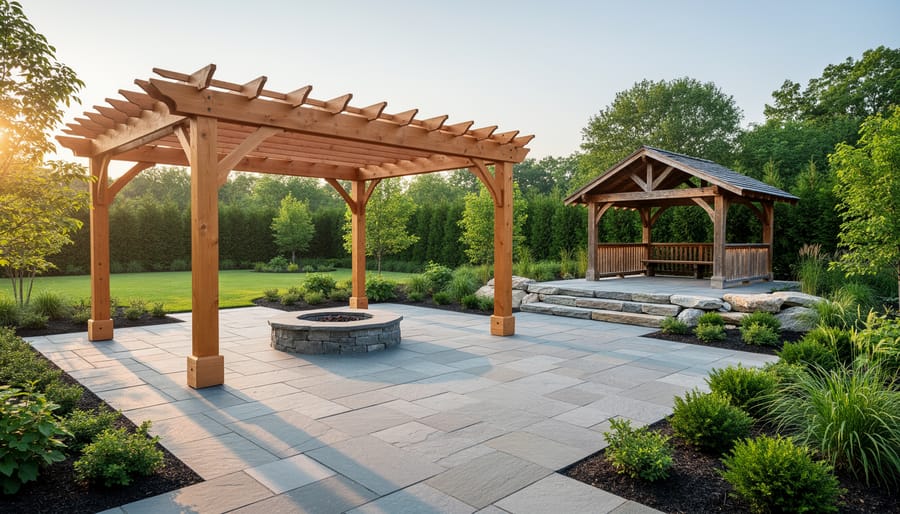
Natural stone patios form the foundational element that ties together outdoor living spaces, particularly when integrated with pergolas and gazebos. The stone you select establishes the aesthetic language for your entire outdoor environment while determining long-term durability, maintenance requirements, and overall project costs.
Match your stone selection to the structural characteristics of your overhead features. Bluestone and limestone offer the clean lines and neutral tones that complement modern pergola designs, while irregular flagstone creates rustic charm beneath traditional wooden gazebos. Consider thermal properties carefully—lighter-colored stones like travertine reflect heat and remain cooler underfoot in sunny areas, while darker granite and slate absorb warmth but may become uncomfortably hot in full sun exposure.
Plan your patio dimensions to extend beyond the footprint of your pergola or gazebo by at least 2-3 feet on all sides. This creates visual balance and provides functional transition space between covered and open areas. The stone pattern should flow directionally toward focal points like seating areas or fire features rather than competing with architectural elements above.
Evaluate drainage integration during the planning phase. Natural stone patios under pergolas require proper slope—typically one-quarter inch per foot—directing water away from the structure’s posts and foundations. This prevents water pooling that accelerates stone degradation and compromises structural stability.
Understanding how different stone types perform in covered versus exposed conditions, along with their compatibility with various architectural styles, ensures your investment delivers both immediate visual impact and decades of functional beauty.
The Foundation Connection: Why Your Pergola or Gazebo Needs the Right Patio
When you invest in a pergola or gazebo, you’re making a significant commitment to your outdoor space. These structures demand a foundation that matches their permanence and structural requirements—and natural stone delivers on both fronts in ways that alternatives simply cannot.
From a structural perspective, pergolas and gazebos create concentrated load points where posts or columns meet the ground. Natural stone patios excel at distributing these loads across a stable surface. Unlike concrete, which can crack under point loads, or pavers that may shift over time, natural stone slabs provide exceptional compressive strength. Flagstone, limestone, and granite varieties can support thousands of pounds per square foot, ensuring your structure remains level and secure for decades.
Water management becomes particularly critical under covered structures. Rain runoff from pergola roofs concentrates water flow, while gazebo perimeters channel drainage to specific points. Natural stone’s inherent texture and irregular surface naturally facilitate water movement, preventing pooling that could undermine structural supports. When properly installed with appropriate grading and joint spacing, stone patios create effective drainage patterns that protect both the surface and the structure above it.
The aesthetic connection between natural stone and outdoor structures runs deeper than simple coordination. Pergolas and gazebos represent architectural investments meant to last generations. Natural stone matches this longevity with surfaces that develop character rather than showing wear. A concrete patio may crack and stain over twenty years, while pavers can fade and separate. Natural stone, conversely, weathers gracefully, its color variations and texture deepening with age to complement the natural patina of wooden beams or weathered metal framework.
This visual harmony extends to design flexibility. The organic shapes and varied dimensions of natural stone allow for custom patterning around structural posts, creating seamless transitions between covered and open areas. Whether you choose the rustic appeal of irregular flagstone or the refined elegance of cut bluestone, natural stone provides a foundation that enhances rather than competes with your outdoor structure’s architectural presence.
Best Natural Stone Types for Pergola and Gazebo Patios
Flagstone: The Versatile Classic
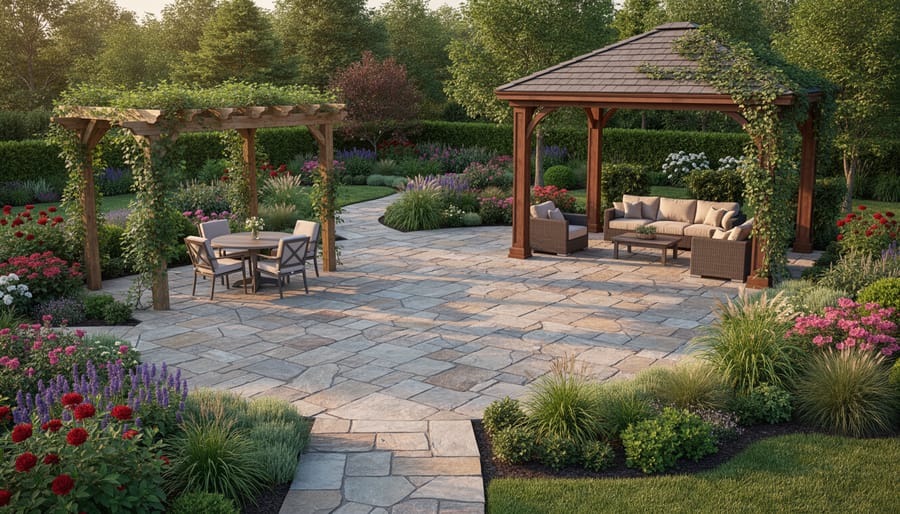
Flagstone stands as one of the most beloved natural stone exterior options for patio installations, prized for its distinctive irregular shapes and organic aesthetic. These flat, naturally cleaved stones—typically sourced from sedimentary rocks like sandstone, quartzite, or limestone—create surfaces that feel both timeless and effortlessly integrated with surrounding landscapes.
The inherent texture of flagstone provides excellent slip-resistance, making it particularly suitable for areas around pergolas and gazebos where shade and moisture can create slippery conditions. Each stone’s unique shape allows for creative laying patterns, from tight-fitted designs with minimal grout lines to more rustic presentations with wider joints filled with moss or groundcover.
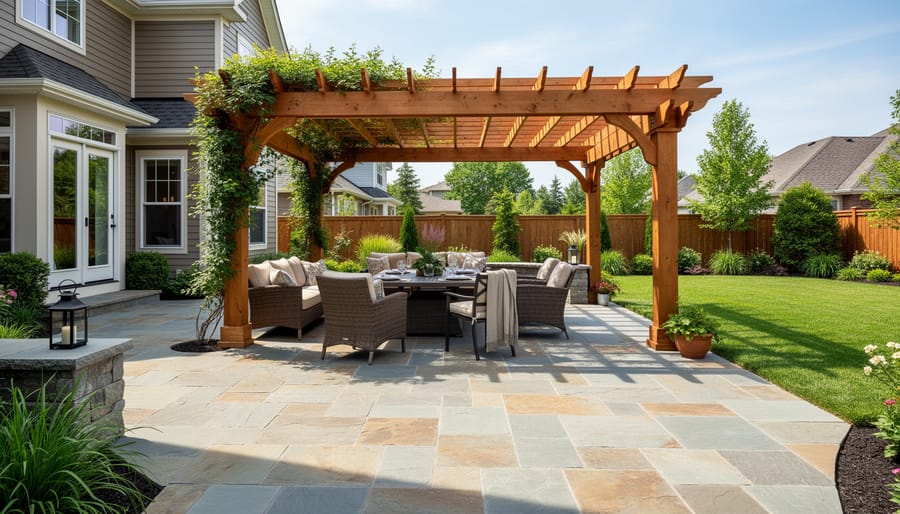
Flagstone excels at creating casual, flowing transitions between covered structures and open garden spaces. Its natural color variations—ranging from warm golds and russets to cool grays and blues—complement wooden pergola posts and gazebo frames beautifully. Installation flexibility allows designers to work around existing plantings and architectural features, following curved pathways or creating irregular patio shapes that enhance rather than fight natural topography. This adaptability makes flagstone ideal for homeowners seeking an organic, lived-in appearance that improves with age.
Bluestone: Elegant Uniformity
Bluestone delivers sophisticated visual consistency that appeals to homeowners seeking a refined aesthetic for their outdoor living spaces. This dense, fine-grained stone typically exhibits uniform blue-gray tones with minimal variation, creating a clean, contemporary appearance that complements formal gazebo and pergola designs. The stone’s naturally flat cleavage planes allow for smooth surface preparation, making it an excellent choice for areas where even footing matters most.
Beyond its attractive appearance, bluestone excels in challenging climates. Its low porosity and dense composition provide exceptional resistance to freeze-thaw cycles, preventing the cracking and spalling that compromise lesser materials in cold-weather regions. This durability makes bluestone particularly valuable for covered patio areas where moisture accumulation from roof runoff could otherwise accelerate deterioration.
For gazebo settings where elegance meets function, bluestone offers versatility through various stone finishes. Thermal finishing creates slip-resistant texture while preserving the stone’s natural color, ideal for high-traffic entertainment areas. Natural cleft surfaces provide rustic charm with enhanced grip, while honed finishes deliver contemporary smoothness for more formal applications. The stone’s ability to maintain color stability over decades ensures your investment retains its visual appeal with minimal maintenance requirements.
Travertine: Mediterranean Warmth
Travertine brings the warm, sun-soaked aesthetic of the Mediterranean to patio spaces beneath pergolas and gazebos. This sedimentary stone forms near mineral springs, creating distinctive pitted surfaces and natural earth tones ranging from creamy ivory to warm walnut browns. One of travertine’s most valued characteristics is its cool-to-touch property—even under direct sunlight, the stone remains comfortable underfoot, making it ideal for barefoot traffic during summer months.
The stone’s naturally textured surface provides excellent slip resistance when finished with a tumbled or brushed treatment, essential for shaded patio areas where morning dew accumulates. Travertine pairs exceptionally well with Mediterranean or Tuscan-style pergolas featuring stucco columns, terra-cotta accents, and climbing vines. The stone’s inherent earth tones complement aged wood beams and wrought iron details commonly found in these architectural styles.
Available in various formats including pavers, tiles, and large-format slabs, travertine offers design flexibility for different pergola footprints. The stone does require sealing to protect against staining and moisture absorption, particularly in regions with freeze-thaw cycles. When properly maintained, travertine patios develop a rich patina over time, enhancing their Mediterranean character and creating outdoor living spaces with timeless, Old-World charm.
Slate: Modern Sophistication
Slate brings an understated elegance to patio spaces beneath pergolas and gazebos, making it a premier choice for homeowners seeking a contemporary outdoor aesthetic. This metamorphic stone features a fine-grained, smooth texture that creates clean, sophisticated lines perfect for modern architectural designs. Its naturally flat surfaces and ability to be split into thin, uniform sheets allow for precise installation with minimal grout lines, enhancing the sleek appearance that complements angular pergola structures and minimalist outdoor furniture.
The color palette of slate typically ranges from deep charcoal and blue-gray to soft greens and purples, offering versatile design options that work exceptionally well with metal, glass, and wood pergola materials. The subtle variation within each tile adds visual interest without overwhelming the space, creating a refined backdrop that allows other design elements to shine. Slate’s low-profile appearance makes covered patios feel more spacious and open, an important consideration when working within defined overhead structures.
Beyond aesthetics, slate offers practical benefits for pergola patios. Its dense composition provides excellent durability and natural slip resistance when textured, making it functional for areas that may collect rainwater or morning dew. The stone’s neutral tones also resist showing dirt and weathering, maintaining its polished appearance with minimal maintenance over time.
Design Principles: Creating Visual Harmony Between Stone and Structure
Matching Stone to Pergola Materials
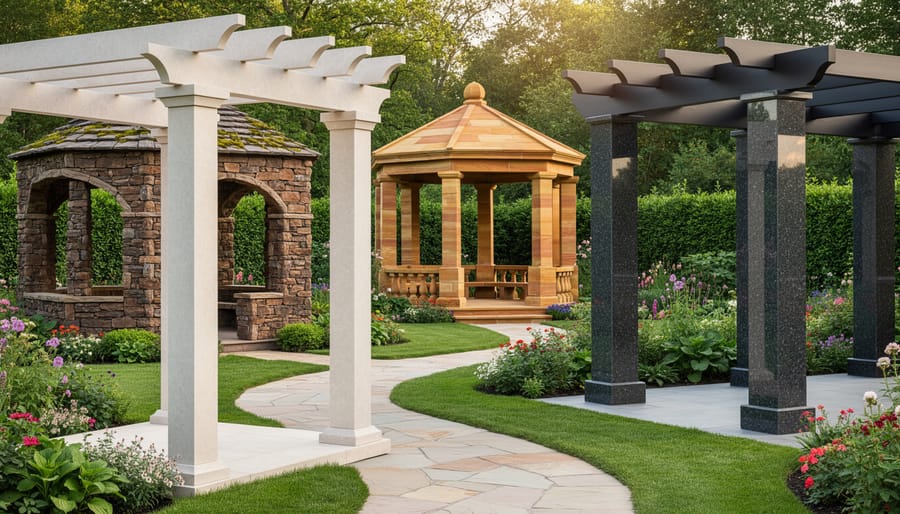
Creating a harmonious outdoor space requires thoughtful coordination between your patio stone and pergola materials. When pairing natural stone with wooden pergolas, consider the undertones in both materials. Warm-toned stones like buff sandstone or golden limestone complement cedar and redwood beautifully, while cooler gray granite or bluestone pairs elegantly with weathered teak or dark-stained timber.
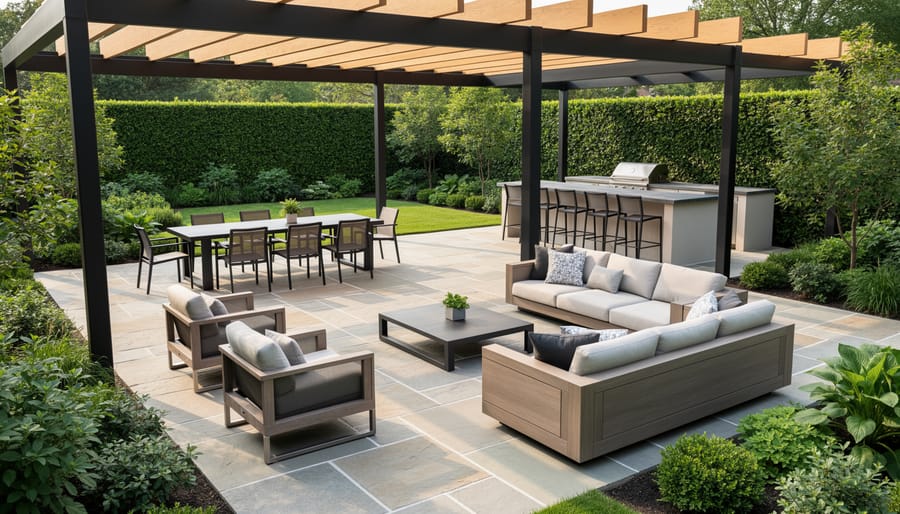
For metal pergolas with powder-coated finishes, select stones that either match or intentionally contrast the metal’s color temperature. Black or bronze metal frames work stunning with charcoal slate or darker travertine, creating a sophisticated modern aesthetic. Lighter metals like aluminum harmonize with pale limestone or cream-colored sandstone for an airy, contemporary feel.
Vinyl pergola structures offer flexibility since they typically come in neutral tones. These pair well with most stone types, though medium-toned options like tan flagstone or beige travertine create the most balanced compositions. The key is ensuring your stone choice doesn’t visually overpower the pergola or vice versa. Consider the weight and texture contrast as well—rustic, heavily textured stone provides excellent counterbalance to sleek metal or smooth vinyl, while refined, honed stone complements ornate wooden structures without competing for attention.
Sizing Your Stone Patio for Optimal Function
Proper sizing ensures your stone patio functions as intended while maintaining visual proportion with your home and landscape. A general guideline suggests patios should measure at least 12×12 feet for basic seating, though 16×18 feet or larger accommodates dining and entertaining more comfortably.
When planning dimensions beneath a pergola or gazebo, allow the patio to extend 2-3 feet beyond the structure’s footprint on all sides. This creates a graceful transition between covered and open space while preventing a cramped appearance. For freestanding patios adjacent to these structures, maintain clear pathways of at least 3-4 feet wide to facilitate smooth traffic flow.
Designate functional zones during the planning phase. Allocate approximately 3×3 feet per dining chair with adequate pull-back space, and 7×7 feet minimum for conversation groupings. Consider how furniture arrangements will work with your pergola’s support posts or gazebo’s perimeter, ensuring columns don’t obstruct movement or sight lines.
Scale matters significantly: a 200-square-foot patio paired with a 3,500-square-foot home appears undersized, while a modest cottage benefits from more intimate proportions. Calculate roughly 20-30 percent of your home’s ground floor square footage as a starting point for balanced patio sizing.
Pattern and Layout Considerations
The pattern you choose for your stone patio dramatically influences how visitors experience the space around pergolas and gazebos. Random or irregular patterns create organic, naturalistic movement that draws the eye outward toward garden features, making them ideal for rustic or cottage-style settings. Running bond patterns, with stones laid in offset rows, generate directional flow that can guide guests along a specific path or toward focal points like seating areas beneath a structure. Circular or radial patterns emanate from a central point, perfect for positioning directly under a gazebo to emphasize its architectural importance as the outdoor room’s centerpiece. These designs complement various outdoor landscaping designs and can incorporate elements from stone pathway designs to create seamless transitions between covered and open areas.
Installation Essentials: Building a Patio That Lasts
A successful natural stone patio supporting a pergola or gazebo begins beneath the surface. The foundation determines whether your outdoor living space will endure for decades or develop costly problems within a few seasons.
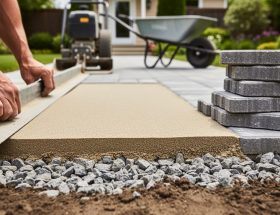
Start with proper excavation, removing soil to a depth of 8-12 inches below your finished patio grade. This depth accommodates the layered base system essential for stability. The excavated area should extend at least 6 inches beyond your planned patio perimeter to prevent edge settling.
The base layer consists of 4-6 inches of crushed stone aggregate, typically three-quarter-inch minus material that compacts tightly while allowing water infiltration. Compact this layer in two-inch lifts using a plate compactor, achieving 95 percent compaction density. This creates the load-bearing foundation that prevents settling under the combined weight of stone pavers and structural posts.
Drainage planning proves critical when integrating pergolas and gazebos. Slope your patio surface at a minimum grade of one-quarter inch per foot, directing water away from structures and building foundations. Install a perimeter drainage system using perforated pipe surrounded by gravel in areas with heavy rainfall or clay soils. This prevents water accumulation that causes frost heave and undermines structural footings.
For structure footings, coordinate placement before laying pavers. Pergola and gazebo posts require concrete footings extending below the frost line, typically 36-48 inches deep depending on your climate zone. Position these footings during base preparation, ensuring they sit on undisturbed soil or engineered fill. The patio base system can then integrate around footings, creating a unified surface.
Apply a one-inch bedding layer of coarse sand or stone dust over your compacted base. This layer allows for precise paver positioning and accommodates minor surface irregularities. Avoid fine sand, which washes away and creates voids.
When setting natural stone pavers, maintain consistent joint spacing of one-quarter to three-eighths inch. This provides room for polymeric sand or mortar that locks pavers together while allowing slight movement during freeze-thaw cycles. For mortared installations on concrete slabs, ensure the slab includes proper reinforcement and control joints to prevent cracking that telegraphs through stone.
Around structure posts, cut pavers precisely or design joints that accommodate post dimensions while maintaining pattern integrity. Seal joints thoroughly to prevent water infiltration near footings. This attention to detail where patio meets structure prevents the differential settling that creates trip hazards and structural stress.
Maintenance and Longevity: Protecting Your Investment
Natural stone patios beneath pergolas and gazebos require consistent maintenance to preserve their beauty and structural integrity. Understanding the specific needs of your stone type ensures your outdoor living space remains stunning for decades.
Sealing stands as the first line of defense against moisture, stains, and weathering. Most natural stones benefit from sealing every 1-3 years, though frequency varies by stone porosity and exposure. Granite and slate require less frequent sealing than limestone or sandstone. Apply proper sealing techniques before placing outdoor furniture and reapply when water no longer beads on the surface.
For routine cleaning, use pH-neutral cleaners specifically formulated for natural stone. Avoid acidic solutions like vinegar or harsh chemicals that can etch softer stones. Sweep debris regularly to prevent scratching, and hose down the patio monthly to remove accumulated dirt. For stubborn stains from outdoor furniture, food, or organic matter, create a poultice using baking soda and water, apply to the affected area, and let dry before removing.
Different stones demand tailored approaches. Travertine’s porous nature requires more frequent attention to prevent moisture absorption. Bluestone handles freeze-thaw cycles well but benefits from proper drainage. Limestone needs gentler cleaning methods to avoid surface damage.
Seasonal maintenance proves particularly important in covered areas. Spring cleaning should address winter debris and check for any damage from ice formation. Summer maintenance focuses on removing organic stains from gatherings. Fall preparation includes clearing leaves promptly to prevent tannin staining. Winter care involves ensuring proper drainage to prevent ice buildup under pergola edges.
Inspect joints and pointing annually, addressing any deterioration promptly to prevent water infiltration. This proactive approach protects your investment and maintains the seamless integration between your natural stone patio and overhead structures.
Real-World Applications: Stone Patios That Elevate Outdoor Living
Natural stone patios paired with pergolas and gazebos have transformed outdoor spaces across diverse settings, demonstrating their versatility and problem-solving capabilities. These real-world applications illustrate how thoughtful material selection and design integration create functional, beautiful environments.
In a residential backyard in Arizona’s desert climate, a bluestone patio addressed the dual challenge of extreme heat and limited shade. The homeowner installed a white cedar pergola over a 400-square-foot bluestone surface, which was chosen for its lower heat retention compared to darker stones. The pergola’s latticed roof provided dappled shade while allowing air circulation, and the bluestone’s natural slip resistance proved essential around an adjacent pool area. This combination reduced surface temperatures by approximately 15 degrees while creating a comfortable entertainment zone that functions year-round.
A coastal New England property showcased how granite patios withstand harsh weather conditions. The homeowner selected thermal-finished granite for its exceptional durability against freeze-thaw cycles and salt exposure. Paired with a custom timber-frame gazebo, the 600-square-foot patio features integrated drainage solutions that prevent water pooling during heavy rains. The granite’s low porosity eliminated concerns about moisture damage, while its textured surface maintained traction even when wet.
In a commercial setting, a restaurant in the Pacific Northwest created an all-season dining area using travertine pavers beneath a louvered pergola system. The travertine’s warm tones complemented the modern architecture, while its naturally non-slip surface met safety requirements. Strategic heating elements embedded within the patio extended usability into cooler months, demonstrating how natural stone accommodates additional functional features without compromising aesthetic appeal.
These examples highlight how proper stone selection and structural pairing address specific environmental challenges while achieving design excellence.
Choosing natural stone for your patio foundation beneath pergolas and gazebos represents a genuine investment in your property’s functionality, beauty, and value. While initial costs may exceed alternatives like concrete or pavers, stone’s exceptional durability, minimal maintenance requirements, and timeless aesthetic deliver returns that compound over decades. The right stone selection balances your climate considerations, design preferences, and budget constraints while providing the structural stability these overhead structures demand.
As you evaluate options, prioritize three key decision factors: the stone’s slip resistance and drainage capabilities for safety, its compatibility with your architectural style for visual cohesion, and its ability to withstand your local weather patterns without excessive maintenance. Limestone offers affordable elegance for covered areas, while granite and bluestone excel in full-exposure applications requiring maximum weather resistance.
Rather than viewing natural stone as a mere expense, recognize it as a foundation for outdoor living quality that enhances daily enjoyment and increases property resale value. The combination of a professionally installed stone patio with a well-designed pergola or gazebo creates an outdoor room that functions beautifully across seasons, requiring minimal intervention while maintaining its character for generations.