
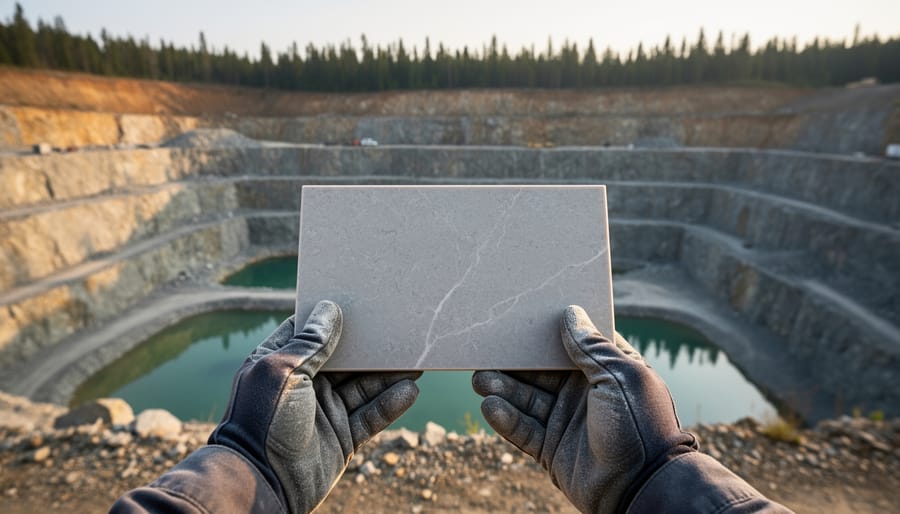
Sustainable sourcing means extracting, processing, and distributing natural stone products in ways that minimize environmental harm, support fair labor practices, and ensure economic viability for mining communities. The term has become ubiquitous in marketing materials, yet remains poorly understood by most consumers and even some industry professionals who specify these materials daily.
At its core, sustainable sourcing in the natural stone industry requires three verifiable components: environmental stewardship through responsible quarrying that preserves ecosystems and manages water usage, social responsibility that guarantees safe working conditions and fair wages for miners, and economic sustainability that supports local communities long after extraction ends. Without measurable standards across all three areas, sustainability claims remain empty promises.
The challenge lies in verification. Unlike organic food certification or fair-trade coffee labels, the natural stone industry lacks universal sustainable sourcing standards. Some quarries operate with rigorous environmental monitoring and worker safety protocols, while others use “sustainable” as a marketing term without substantive practice changes. This creates confusion for architects specifying materials, homeowners investing in kitchen renovations, and designers seeking ethically sourced products.
Understanding what sustainable sourcing actually entails empowers better decision-making. Concrete criteria exist to evaluate quarry operations, from rehabilitation plans and carbon footprint assessments to third-party labor audits and community investment programs. Recognizing these markers transforms sustainable sourcing from an abstract concept into a practical purchasing framework, ensuring your natural stone selections reflect genuine ethical commitments rather than superficial greenwashing.
Defining Sustainable Sourcing in the Natural Stone Industry

Environmental Responsibility in Stone Extraction
Environmental responsibility in stone extraction requires quarry operators to minimize ecological impact through comprehensive management practices. Modern sustainable quarrying begins with detailed environmental impact assessments before any extraction occurs, identifying sensitive habitats and establishing protection zones.
Land rehabilitation stands as a cornerstone of responsible extraction. Progressive quarry operators implement concurrent rehabilitation, restoring sections of the quarry even while active extraction continues elsewhere. This approach includes topsoil preservation, native vegetation replanting, and careful landscape contouring to support natural drainage patterns. Many rehabilitated quarries have successfully transformed into wetlands, nature reserves, or recreational spaces that enhance local biodiversity.
Water management presents critical challenges in quarrying operations. Sustainable operators implement closed-loop water systems that recycle process water, install sediment control measures to prevent contamination of nearby waterways, and monitor groundwater levels to avoid depleting local aquifers. These practices protect both surface and underground water resources essential to surrounding ecosystems and communities.
Biodiversity protection requires active habitat monitoring and species management. Responsible quarries conduct regular wildlife surveys, create buffer zones around sensitive areas, and time extraction activities to avoid disrupting breeding seasons. Some operations have partnered with conservation organizations to establish protected corridors connecting fragmented habitats.
Carbon footprint reduction efforts focus on energy efficiency and transportation optimization. Leading quarries invest in electric or hybrid machinery, utilize renewable energy sources for processing facilities, and establish regional distribution centers to minimize transport distances. These measures collectively reduce greenhouse gas emissions while demonstrating commitment to climate action within the natural stone industry.
Social and Economic Dimensions
Sustainable sourcing extends beyond environmental considerations to encompass the human element of stone extraction and processing. Fair labor practices form the foundation of socially responsible sourcing, ensuring workers receive living wages, reasonable working hours, and the right to organize. This means quarry operators must provide employment contracts, overtime compensation, and freedom from forced or child labor—standards verified through third-party audits and certifications.
Worker safety represents a critical dimension often overlooked in traditional sourcing models. Sustainable stone suppliers invest in protective equipment, implement safety protocols for heavy machinery operation, and provide regular training on hazard prevention. This includes dust control measures to prevent silicosis, proper ventilation in cutting facilities, and emergency response systems. Companies committed to sustainable practices maintain transparent safety records and continuously improve workplace conditions.
Community impact assessment evaluates how quarrying activities affect surrounding populations. Responsible sourcing involves consulting with local communities before operations begin, respecting indigenous land rights, and ensuring that extraction doesn’t disrupt access to water or other essential resources. Leading suppliers establish grievance mechanisms where community members can voice concerns and expect timely resolution.
Local economic development creates lasting value beyond the quarry gates. Sustainable sourcing prioritizes hiring from nearby communities, investing in local infrastructure like roads and schools, and supporting small businesses through supply chain partnerships. This approach transforms stone extraction from an extractive industry into a catalyst for regional prosperity, ensuring that the communities where natural stone originates benefit directly from its commercialization.
Why Culinary Stones Demand Higher Sourcing Standards
The Connection Between Stone Purity and Ethical Mining
Sustainable mining practices directly influence stone purity through reduced chemical exposure and careful extraction methods. When quarries prioritize environmental responsibility, they typically avoid aggressive chemical treatments and harmful processing agents that can leave residues in the stone matrix. This results in cleaner, more natural material particularly important for culinary applications.
Ethical mining operations maintain strict protocols for handling stone destined for food-contact purposes. These protocols include regular testing for heavy metals, avoiding contaminated water sources during processing, and implementing quality controls throughout extraction. Traditional marble and granite used in stone cooking tools benefit significantly from these rigorous standards.
The connection extends beyond chemical purity to structural integrity. Sustainable extraction techniques minimize fracturing and stress damage, producing denser stone with fewer microscopic fissures where bacteria or contaminants could accumulate. This superior quality makes sustainably sourced stone inherently safer for kitchen environments.
Furthermore, responsible quarries invest in advanced processing equipment that reduces dust and particle contamination during finishing. This attention to cleanliness throughout the production chain ensures the final product meets both safety standards and performance expectations for culinary use.
Consumer Awareness and Kitchen Material Choices
Today’s consumers are increasingly conscious about the materials that come into direct contact with their food, driving unprecedented demand for transparency in sourcing practices. When selecting natural stone surfaces for kitchens, discerning buyers now look beyond aesthetics to understand the entire supply chain journey. Questions about quarry locations, labor conditions, environmental impact, and chemical treatments have become standard considerations in kitchen countertop choices.
This awareness extends to understanding whether stone suppliers can provide documentation about their extraction methods, worker safety standards, and environmental restoration efforts. Consumers recognize that sustainably sourced materials not only align with personal values but often indicate superior quality and durability. Stone sourced through ethical practices typically undergoes more rigorous quality controls and comes with verifiable certifications that trace its origin. By demanding this transparency, consumers directly influence industry standards, encouraging more suppliers to adopt responsible practices. This shift represents a fundamental change in how we evaluate kitchen materials, moving from purely aesthetic or functional considerations to a holistic assessment that includes social and environmental responsibility.
Key Components of Sustainable Stone Sourcing
Quarry Site Selection and Assessment
Before a single stone is extracted, responsible quarry operators conduct comprehensive site assessments that go far beyond simply locating quality material. This evaluation process examines three critical dimensions that determine whether sustainable sourcing is truly achievable.
Geologically, companies analyze rock formations to understand extraction efficiency and minimize waste. By mapping stone quality throughout potential sites, operators can plan extraction patterns that maximize usable material while reducing the volume of unusable byproduct. This planning prevents the common practice of opening multiple quarries when one well-assessed site could suffice.
Environmental assessments examine local ecosystems, water tables, air quality, and biodiversity. Responsible companies identify protected species, migration patterns, and water sources that could be affected by operations. They evaluate how dust, noise, and runoff might impact surrounding areas and develop mitigation strategies before breaking ground. Distance to processing facilities also factors in, as shorter transportation reduces carbon emissions.
The social dimension considers how quarrying affects local communities. Ethical operators engage residents early, addressing concerns about noise, traffic, and visual impact. They assess employment opportunities for local workers and evaluate whether operations might disrupt cultural sites or traditional land uses. This stakeholder engagement often reveals community priorities that shape operational decisions, ensuring quarries become economic assets rather than unwelcome intrusions that erode social trust and community wellbeing.
Extraction Methods That Minimize Impact
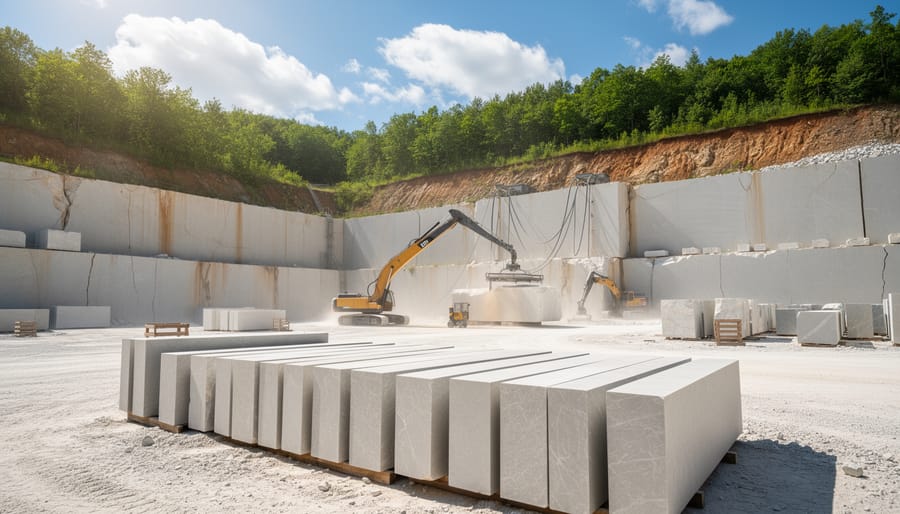
Modern extraction technology has revolutionized how natural stone reaches the market while significantly reducing environmental impact. Wire sawing, one of the most advanced methods, uses diamond-embedded cables to cut through stone with remarkable precision. This technique generates minimal waste compared to traditional methods, often recovering 85-90% of usable material from each quarry block.
Controlled blasting represents another leap forward in sustainable extraction. Rather than crude explosives that fracture stone unpredictably, modern controlled blasting uses carefully calculated charges placed at specific depths and intervals. This approach preserves the integrity of stone blocks while minimizing vibration damage to surrounding ecosystems and nearby communities.
Precision cutting equipment, including chainsaw-style quarrying machines and water jet technology, allows operators to follow natural veining patterns in the stone. By working with the material’s inherent structure rather than against it, these methods reduce breakage and maximize yield from each quarry site.
Water recycling systems integrated into extraction operations further minimize environmental impact. These closed-loop systems filter and reuse water for cooling cutting equipment and suppressing dust, reducing freshwater consumption by up to 70%. When combined with solar-powered quarrying equipment, these techniques demonstrate how technology can align industrial stone extraction with genuine sustainability principles.
Water and Energy Management
Water and energy consumption in stone processing significantly impacts environmental sustainability. Progressive quarries and fabricators implement comprehensive management systems to minimize resource depletion and reduce carbon footprints throughout production cycles.
Modern facilities increasingly adopt closed-loop water recycling systems that capture, filter, and reuse water from cutting and polishing operations. These systems can reduce freshwater consumption by up to 90%, preventing both resource depletion and wastewater discharge into local ecosystems. Advanced filtration removes stone particles and contaminants, allowing the same water to circulate multiple times before requiring treatment or disposal.
Renewable energy integration represents another critical component of sustainable stone sourcing. Leading operations install solar panels, wind turbines, or purchase renewable energy credits to offset electricity demands from heavy machinery and processing equipment. Some quarries achieve carbon-neutral status by combining renewable energy sources with energy-efficient LED lighting, optimized equipment scheduling, and variable-speed motors that adjust power consumption based on operational needs.
Resource efficiency extends beyond water and energy to encompass waste heat recovery, compressed air system optimization, and preventive maintenance programs that maximize equipment lifespan. These practices demonstrate that sustainable sourcing involves measurable commitments to environmental stewardship rather than superficial marketing claims, providing consumers and specifiers with tangible criteria for evaluating stone suppliers.
Ethical Mining Practices: Beyond Environmental Concerns
Fair Labor and Safe Working Conditions
Sustainable sourcing in the natural stone industry must address the human cost of extraction. Stone quarries, particularly in developing nations, have historically been sites of worker exploitation, unsafe conditions, and unfair compensation. True sustainability demands that the people who extract granite, marble, and other materials receive dignified treatment and safe working environments.
Fair labor standards begin with living wages that exceed local minimum requirements and provide workers with financial security. This includes regulated working hours, overtime compensation, and benefits such as health insurance and retirement contributions. Equally important is the prohibition of child labor and forced labor practices, which remain persistent problems in some quarrying regions.
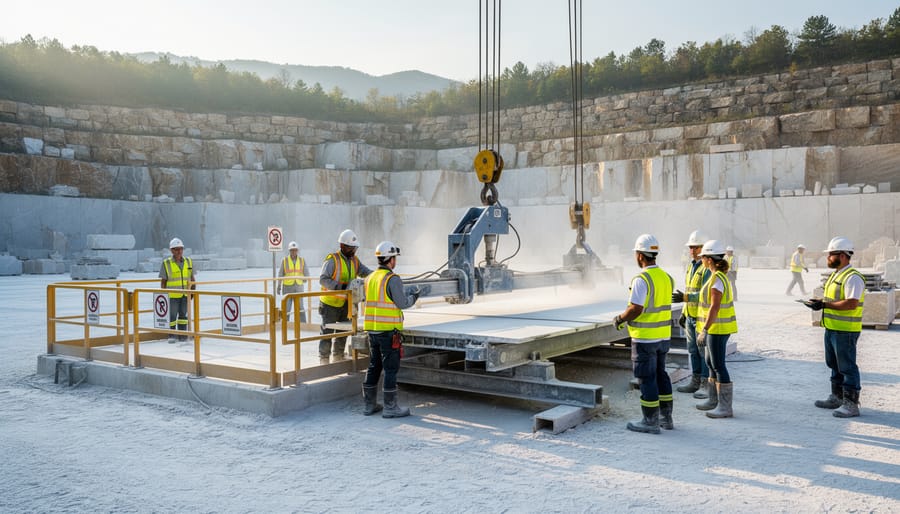
Worker safety requires rigorous protocols including proper equipment, protective gear, training programs, and regular safety audits. Quarries should implement dust suppression systems to prevent silicosis, secure machinery operation procedures, and emergency response protocols. Independent third-party certifications like SA8000 or Fair Trade verification help consumers identify stones sourced from ethical operations.
Transparency is essential—responsible suppliers should willingly share information about their labor practices and allow facility inspections. When specifying natural stone for culinary applications or architectural projects, asking suppliers about their labor certifications and worker welfare programs ensures your purchase supports ethical practices. This accountability drives industry-wide improvements and protects vulnerable workers in global supply chains.
Community Impact and Benefit Sharing
Sustainable sourcing extends beyond environmental protection to encompass meaningful contributions to the communities where stone is extracted. Ethical quarrying operations create stable employment opportunities with fair wages and safe working conditions, directly improving the livelihoods of local workers and their families. These jobs often provide skill development and training programs that have lasting value beyond individual quarries.
Infrastructure improvements represent another significant benefit. Responsible companies frequently invest in local roads, schools, and healthcare facilities that serve entire communities. In regions like rural India and Brazil, quarry operators have funded water systems and educational programs that benefit thousands of residents who may never work directly in the industry.
Revenue sharing mechanisms ensure communities receive tangible benefits from their natural resources. This can take the form of direct payments, royalties, or community development funds allocated for local priorities. Transparent agreements between operators and community representatives help prevent exploitation and ensure equitable distribution of economic benefits. When evaluating stone suppliers, look for evidence of community partnerships, documented social investment programs, and third-party certifications that verify these commitments. These indicators distinguish companies genuinely committed to positive social impact from those offering empty promises.
Supply Chain Transparency
Genuine supply chain transparency requires documented evidence at every stage of a stone’s journey. Responsible suppliers provide complete traceability from the specific quarry location through processing facilities to final delivery, creating an unbroken chain of custody. This documentation should include quarry permits, worker safety records, environmental impact assessments, and transportation logs.
Third-party certifications offer independent verification of ethical mining practices. Look for standards like Natural Stone Institute certifications, ISO 14001 for environmental management, or SA8000 for social accountability. These credentials confirm that suppliers meet rigorous sustainability benchmarks beyond self-reported claims.
Request detailed sourcing reports when purchasing culinary stones. Legitimate suppliers willingly share quarry coordinates, extraction methods, and labor practices. Photography, GPS data, and facility audits provide tangible proof. If a vendor cannot produce comprehensive documentation or resists transparency questions, consider this a significant red flag warranting further investigation before making purchasing decisions.
Certifications and Standards to Look For
Navigating sustainability claims can be overwhelming, but recognized certifications and standards provide reliable frameworks for evaluating sourcing practices. These third-party verification systems offer transparency and accountability, helping you distinguish genuine commitment from greenwashing.
The NSF/ANSI 373 certification stands as a comprehensive standard for sustainable products, evaluating environmental, social, and economic factors throughout the product lifecycle. For natural stone, this certification assesses extraction methods, worker safety, and environmental impact. Similarly, the Natural Stone Council’s Genuine Stone Certification provides industry-specific verification that quarries meet rigorous sustainability benchmarks.
ISO 14001 certification demonstrates a company’s commitment to environmental management systems, ensuring continuous improvement in reducing ecological footprints. This internationally recognized standard applies across industries but holds particular relevance for stone extraction and processing operations. Companies with ISO 14001 certification have documented procedures for monitoring environmental impacts and implementing corrective measures.
Regional eco-labels offer geographically specific validation. The EU Ecolabel certifies products meeting strict environmental criteria across their lifecycle, while the Cradle to Cradle certification evaluates material health, recyclability, renewable energy use, and social fairness. In North America, the USGBC’s LEED certification program awards points to projects incorporating sustainably sourced materials, incentivizing verified procurement.
Look for Fair Trade certification, which guarantees ethical labor practices and fair compensation for quarry workers, particularly important in developing regions. The Responsible Jewellery Council’s Code of Practices, while jewelry-focused, sets standards increasingly adopted by decorative stone suppliers regarding ethical mining.
When evaluating suppliers, request documentation proving current certifications rather than accepting claims at face value. Legitimate certifications require regular audits and renewal, so verify certificates are up-to-date. Additionally, consider membership in industry organizations like the Ethical Trading Initiative or adherence to the UN Global Compact principles as supplementary indicators of sustainable commitment.
These certifications transform abstract sustainability concepts into measurable, verifiable standards, empowering you to make informed decisions aligned with your values and project requirements.

Real-World Examples: Sustainable Sourcing in Action
Several leading stone suppliers and quarry operations have demonstrated that sustainable sourcing can be both economically viable and environmentally responsible, particularly in the culinary stone sector.
Vermont Soapstone Company in Vermont, USA, stands as a notable example of quarry-level sustainability. Their operation implements water reclamation systems that recycle 95% of water used in cutting and processing, while their quarry rehabilitation program converts exhausted sites into wildlife habitats. For their culinary stone products, including pizza stones and grilling planks, the company maintains full chain-of-custody documentation and uses solar power for 40% of their processing facility’s energy needs. The quarry employs precision extraction techniques that minimize waste, achieving an 85% yield rate compared to industry averages of 60-70%.
In Europe, Henraux quarry in Tuscany has supplied marble for culinary applications while maintaining ISO 14001 environmental certification since 2005. Their sustainable practices include electric-powered extraction equipment, elimination of diesel machinery in sensitive areas, and comprehensive dust control systems. For a recent high-end restaurant project in Milan, Henraux provided marble countertops and serving boards with complete transparency documentation, including carbon footprint calculations showing 30% lower emissions than conventional sourcing.
Indian granite supplier Pokarna Limited demonstrates sustainable sourcing in emerging markets. Their quarries serving the culinary stone market utilize rainwater harvesting systems capturing over 100,000 cubic meters annually, renewable energy for processing facilities, and community development programs providing education and healthcare to 5,000 workers and families. Their hot stone cooking products carry third-party verification from Intertek, confirming ethical labor practices and environmental compliance.
Canadian company Cambrian Stone implemented blockchain technology to track their slate cheese boards and serving platters from extraction through final sale. This transparency initiative allows customers to scan QR codes and view the complete sourcing history, including quarry location, worker safety records, environmental impact assessments, and transportation methods. The system has increased consumer confidence and justified premium pricing for verified sustainable products.
These examples demonstrate that sustainable sourcing extends beyond environmental concerns to encompass worker welfare, community impact, and supply chain transparency. Companies achieving these standards typically see enhanced market positioning and customer loyalty, proving that sustainability and profitability can coexist in the natural stone industry.
How to Verify Sustainable Sourcing Claims as a Consumer or Professional
Verifying sustainable sourcing claims requires due diligence, whether you’re a homeowner selecting kitchen countertops or an architect specifying materials for a commercial project. Start by requesting specific documentation from suppliers. Look for third-party certifications such as the Natural Stone Sustainability Standard (NSC 373), which evaluates environmental impact, worker safety, and community engagement. Other credible certifications include ISO 14001 for environmental management systems and certificates from the Responsible Mica Initiative for mica-containing stones.
Ask suppliers pointed questions about their supply chain. Where exactly was the stone quarried? What extraction methods were used? How far did the material travel, and what transportation methods were employed? Legitimate suppliers of natural stone products should provide transparent answers with supporting documentation, including quarry location details and carbon footprint assessments.
Request photographs or videos of the quarry operations. Sustainable quarries demonstrate responsible land management, water recycling systems, and dust control measures. They should also show evidence of worker safety protocols and fair labor practices. If a supplier hesitates to share this information, consider it a red flag.
Watch for vague marketing language like “eco-friendly” or “green” without substantiation. Genuine sustainability claims include specific data: percentage of recycled water used, emissions reductions achieved, or certifications earned. Be skeptical of suppliers who cannot provide chain-of-custody documentation tracing the stone from quarry to your project.
For professionals, conduct site visits when possible or work with importers who maintain direct quarry relationships. Establish ongoing partnerships with suppliers who demonstrate consistent transparency. Request annual sustainability reports and updated certifications to ensure continued compliance with environmental and social standards. Remember that verification is an ongoing process, not a one-time checkbox, as sustainability practices evolve and improve over time.
Understanding sustainable sourcing in the context of culinary stones is essential for making decisions that extend far beyond aesthetics. This comprehensive approach directly impacts the quality of the products you bring into your kitchen, the working conditions of those who extract and process these materials, and the long-term availability of natural stone resources for future generations.
When you choose sustainably sourced cooking stones, pizza stones, or serving platters, you’re selecting products backed by transparent supply chains, verified environmental practices, and ethical labor standards. This commitment translates into tangible benefits: superior product quality due to careful extraction methods, assurance that workers receive fair wages and safe conditions, and reduced environmental degradation in quarrying regions.
For consumers, the next step is straightforward. Look for third-party certifications, ask suppliers specific questions about their sourcing practices, and prioritize companies that provide detailed information about quarry locations and extraction methods. Designers and architects should integrate sustainability criteria into their specification processes, requesting documentation that verifies claims and favoring suppliers with established track records.
The culinary stone industry stands at a critical juncture where market demand can drive meaningful change. Your purchasing decisions send powerful signals to manufacturers and quarry operators about the values that matter. By choosing sustainably sourced products and holding suppliers accountable for their claims, you contribute to an industry transformation that protects both people and planet while ensuring access to these remarkable natural materials for years to come.