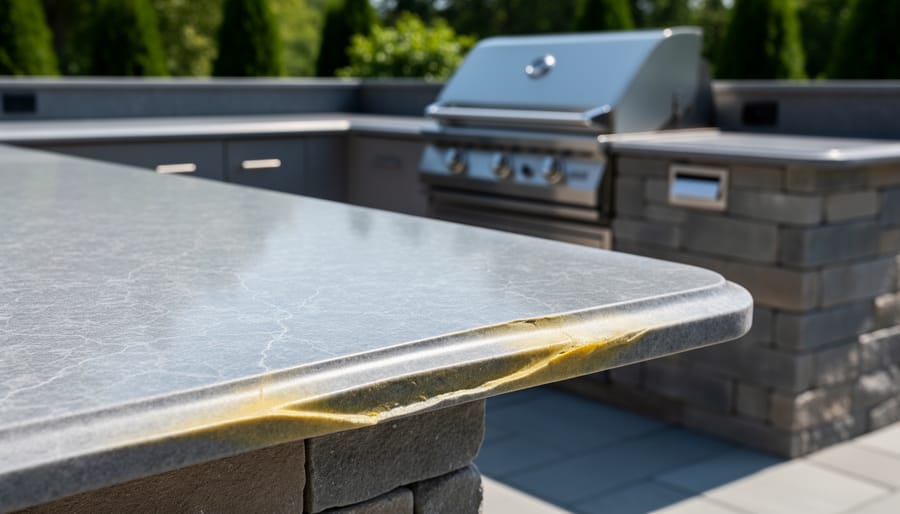
Reconsider quartz for your outdoor kitchen before making a costly mistake. While quartz countertops dominate indoor spaces with their durability and low maintenance, they fundamentally fail in outdoor environments due to UV sensitivity. Direct sunlight causes quartz resin binders to break down, leading to discoloration, warping, and structural weakness within months—damage that manufacturers explicitly exclude from warranties.
The problem lies in quartz’s engineered composition. Approximately 90-95% ground quartz combines with 5-10% polymer resins and pigments, creating a non-porous surface ideal for interior applications. However, these same resins deteriorate rapidly under UV exposure, causing irreversible yellowing in white quartz and fading in darker colors. Temperature fluctuations compound the issue, as quartz lacks the thermal stability required for outdoor conditions where surface temperatures can exceed 150°F.
Exceptions exist only in extremely limited scenarios: fully covered outdoor kitchens with zero direct sunlight exposure and controlled temperatures. Even then, risk remains significant, and resale value suffers when buyers discover non-warranted materials.
Natural stone alternatives deliver superior outdoor performance. Granite withstands UV radiation and temperature extremes without degradation, offering timeless aesthetics and manufacturer-backed outdoor warranties. Quartzite provides similar durability with distinctive veining patterns. Soapstone naturally resists weather damage while developing character over time. These materials cost comparably to premium quartz but offer genuine outdoor longevity—making them the intelligent choice for permanent outdoor installations that maintain beauty and structural integrity for decades.
The Science Behind Quartz and UV Exposure
How UV Rays Damage Resin Binders
The resins that bind quartz particles together in engineered quartz composition are particularly vulnerable to ultraviolet radiation. These polyester and epoxy-based binders typically comprise 7-10% of the material, yet they determine the countertop’s overall durability when exposed to sunlight.
UV rays initiate a process called photodegradation, which breaks down the molecular structure of these synthetic resins. When UV photons penetrate the surface, they rupture the chemical bonds holding the polymer chains together. This degradation manifests in several visible ways that compromise both aesthetics and structural integrity.
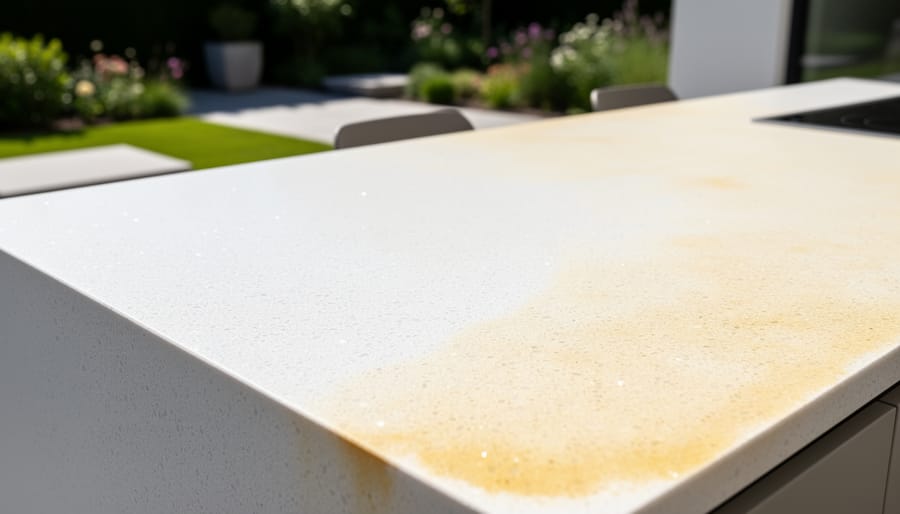
Yellowing occurs first, especially in lighter-colored quartz surfaces. The resin undergoes oxidation when exposed to UV light, creating chromophores—chemical groups that absorb visible light and produce the characteristic yellow or brown discoloration. This process is irreversible and typically becomes noticeable within 6-18 months of continuous sun exposure.
Fading follows a similar chemical pathway but affects pigmented resins differently. The colorants mixed into the binder to create various quartz hues break down under UV bombardment, causing the vibrant appearance to diminish over time. Dark colors often show white or gray patches as the underlying quartz particles become more visible through degraded resin.
Surface deterioration represents the final stage, where weakened binders lose their adhesive properties. The resin becomes chalky and brittle, allowing moisture penetration and creating microcracks. Eventually, quartz particles may loosen at the surface, producing a rough, deteriorated texture that cannot be restored through polishing or sealing.
Temperature Fluctuations and Thermal Shock
Quartz countertops face significant challenges outdoors due to temperature fluctuations that natural stone handles far more effectively. Unlike granite or quartzite, quartz contains 7-10% polymer resins that bind the crushed stone particles together. These resins react poorly to thermal cycling, expanding and contracting at different rates than the quartz particles during temperature swings.
In outdoor environments, surface temperatures can range from below freezing to 150°F or higher in direct sunlight. This constant expansion and contraction creates internal stress within the material. Over time, you may notice hairline cracks forming, particularly along seams and edges where the material is most vulnerable. The resins can also degrade under repeated thermal stress, causing the surface to warp or develop a wavy appearance.
Darker quartz colors absorb more heat and experience more dramatic temperature changes, accelerating this deterioration. Even in mild climates, daily temperature variations between day and night create cumulative damage. Once cracking begins, moisture infiltration exacerbates the problem, especially in freeze-thaw cycles where trapped water expands and widens existing fissures. These structural issues compromise both the aesthetic appeal and functional integrity of the countertop, making quartz an impractical choice for most outdoor installations.
What Manufacturers Actually Say (And Don’t Say)
When researching outdoor quartz countertops, the most revealing information often comes from what manufacturers include in their warranty documentation. The reality is stark: virtually every major quartz manufacturer explicitly voids warranties when their products are installed outdoors.
Caesarstone, one of the industry’s leading brands, clearly states in their warranty that coverage does not extend to outdoor installations or areas exposed to direct sunlight and UV rays. Similarly, Cambria specifies that their warranty applies only to indoor residential applications, with outdoor use resulting in automatic warranty voidance. Silestone follows suit, limiting coverage to interior installations and explicitly excluding outdoor kitchens, patios, and any exterior applications.
This universal stance among manufacturers speaks volumes. While these companies tout the durability and performance of quartz for indoor applications, emphasizing quartz longevity indoors, they consistently refuse to back their product outdoors. This isn’t a matter of legal caution or conservative business practices. It reflects genuine technical limitations related to the resin binders used in quartz manufacturing.
Some manufacturers acknowledge that limited outdoor exposure in covered areas with minimal direct sunlight might not cause immediate damage, but they still won’t warranty such installations. A few brands mention that their products might work in completely shaded outdoor kitchens or covered patios in mild climates, yet even these vague allowances come without any warranty protection.
What manufacturers don’t prominently advertise is equally telling. Marketing materials showcase stunning quartz installations but rarely feature outdoor applications. When outdoor settings appear in promotional content, they typically show fully enclosed outdoor rooms with windows rather than truly exposed exterior spaces.
The message from manufacturers is consistent and clear: quartz is engineered and warranted exclusively for indoor use. Any outdoor installation means proceeding entirely at your own risk, without manufacturer support if problems arise. This industry-wide position should be the primary consideration for anyone contemplating outdoor quartz countertops.
Real-World Performance: When Outdoor Quartz Might Work
Covered Outdoor Spaces and Shade Protection
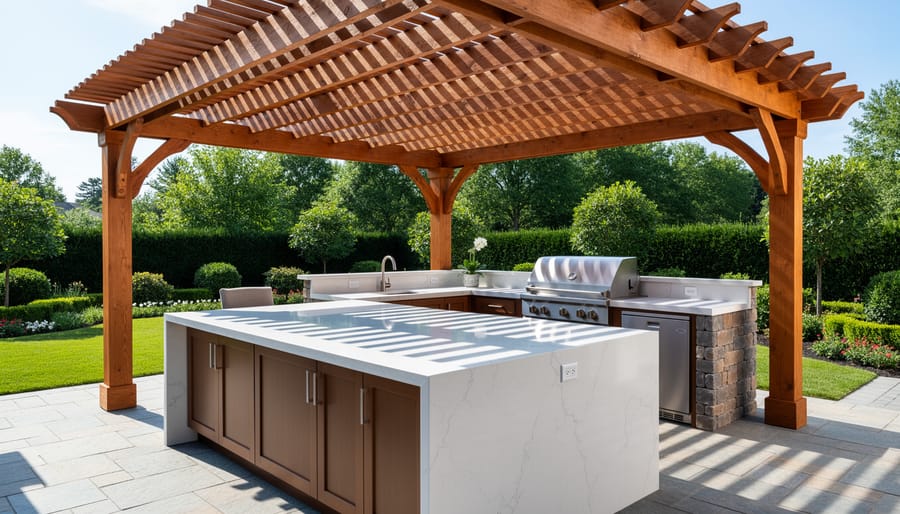
While quartz generally performs poorly in direct sunlight, strategically designed covered outdoor spaces can provide sufficient UV protection to extend its viability in certain installations. Pergolas with solid roofing materials, permanent roof structures, and substantial shade coverings can block the majority of harmful ultraviolet radiation that causes discoloration and degradation in quartz surfaces.
The key to successful quartz installations in protected outdoor areas lies in the consistency and extent of shade coverage. A fully enclosed outdoor kitchen with a solid roof can effectively shield countertops from direct sun exposure throughout the day. Similarly, deep covered patios that prevent sunlight penetration during peak hours may offer adequate protection, particularly in climates with less intense UV radiation.
Several documented installations demonstrate this principle. A covered outdoor bar in Seattle, Washington, featuring a dark quartz surface under a solid pergola roof, has maintained its appearance for over five years with minimal fading. The Pacific Northwest’s frequent cloud cover and the structure’s complete overhead protection created favorable conditions. Another successful example includes a screened-in porch kitchen in North Carolina, where architectural elements combined with shade fabric reduced UV exposure by approximately ninety percent.
However, even with substantial shade structures, morning or evening sun angles can still reach countertops, and reflected UV radiation from surrounding surfaces remains a concern. For truly permanent outdoor installations requiring absolute durability and color stability, natural stone options like granite, soapstone, and quartzite offer superior long-term performance without the need for meticulous shade engineering or ongoing monitoring for UV-related damage.
Climate Considerations That Matter
While quartz manufacturers universally recommend against outdoor installations, climate does play a role in determining risk levels. Understanding these environmental factors helps explain why some installations fail quickly while others may last longer before showing damage.
Mild, temperate climates with minimal temperature fluctuations create the least hostile conditions for outdoor quartz. Regions that rarely experience freezing temperatures or extreme heat reduce the thermal shock that causes warping and cracking. Coastal areas with moderate year-round temperatures present lower risk than locations with dramatic seasonal swings or daily temperature variations exceeding 40-50 degrees.
Sun exposure represents another critical factor. Installations under permanent shade structures—such as covered patios or pergolas with solid roofing—experience significantly less UV degradation than surfaces in direct sunlight. The polymers and resins in quartz break down when exposed to sustained ultraviolet radiation, causing discoloration that ranges from yellowing to uneven fading. North-facing installations in shaded outdoor kitchens fare better than south or west-facing counters receiving intense afternoon sun.
Even in ideal climates, outdoor quartz remains a compromise. A covered installation in San Diego or coastal California may survive several years without catastrophic failure, but gradual degradation still occurs. In contrast, installations in Phoenix, Chicago, or other cities with temperature extremes typically show damage within months.
If your climate seems favorable, consider whether the limited lifespan and warranty void justify the installation when superior natural stone alternatives like granite or quartzite offer genuine outdoor durability without climate-dependent performance.
Superior Natural Stone Alternatives for Outdoor Kitchens
Granite: The Outdoor Workhorse
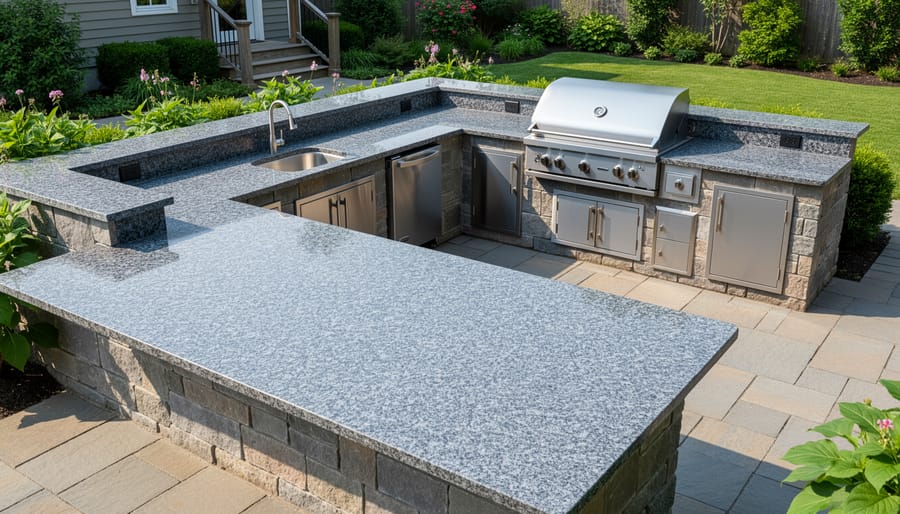
When quartz falls short for outdoor applications, granite emerges as the proven natural alternative. This igneous rock has weathered extreme conditions for millions of years, making it inherently suited for outdoor kitchen countertops and bar areas.
Granite’s crystalline structure provides exceptional UV resistance, meaning it won’t fade, discolor, or degrade under constant sun exposure. Unlike resin-based materials, granite contains zero polymers that can break down from ultraviolet radiation. This natural stability ensures your outdoor countertops maintain their appearance for decades without protective measures.
Temperature fluctuations pose no threat to properly installed granite surfaces. The stone tolerates freezing winters and scorching summers without cracking or structural damage. However, proper sealing remains essential in freeze-thaw climates to prevent moisture infiltration that could lead to surface spalling.
The aesthetic versatility of granite rivals any manufactured material. From dramatic blacks and deep blues to warm earth tones and speckled patterns, granite offers genuine variety found nowhere else in nature. Each slab presents unique veining and mineral compositions, ensuring your outdoor space features one-of-a-kind character.
Maintenance requirements for outdoor granite differ slightly from indoor applications. Plan to reseal surfaces annually or bi-annually depending on your climate and the specific granite variety selected. Routine cleaning with pH-neutral cleaners keeps surfaces pristine, while the non-porous nature of sealed granite resists staining from outdoor cooking activities.
For outdoor countertop projects where durability and natural beauty converge, granite delivers time-tested performance that synthetic alternatives simply cannot match.
Soapstone and Quartzite: Premium Alternatives
When quartz proves unsuitable for outdoor applications, two natural stone alternatives stand out for their exceptional outdoor performance: soapstone and quartzite.
Soapstone offers unmatched heat resistance, making it ideal for outdoor kitchens where hot pots and pans are frequently placed directly on surfaces. Unlike quartz, soapstone is completely UV-stable and develops a rich, distinctive patina over time that many homeowners find aesthetically appealing. This natural darkening process creates character rather than damage, with the stone’s inherent density providing excellent resistance to staining and weathering. Soapstone requires minimal maintenance beyond occasional mineral oil application to enhance its appearance, though this step is purely cosmetic.
Quartzite countertops deliver the elegant, marble-like aesthetics many homeowners desire while providing significantly superior durability for outdoor environments. As a natural metamorphic stone, quartzite withstands UV exposure without fading or degradation, endures freeze-thaw cycles in cold climates, and resists heat damage. Its hardness surpasses granite, offering excellent scratch and chip resistance for high-traffic outdoor entertaining areas.
Both materials require professional sealing to optimize stain resistance, but their natural composition eliminates the resin-related vulnerabilities that plague outdoor quartz installations. For architects and designers specifying outdoor countertops, these premium alternatives provide long-term performance without the warranty concerns and premature failure risks associated with quartz in exterior applications.
Porcelain Slabs: The Modern Contender
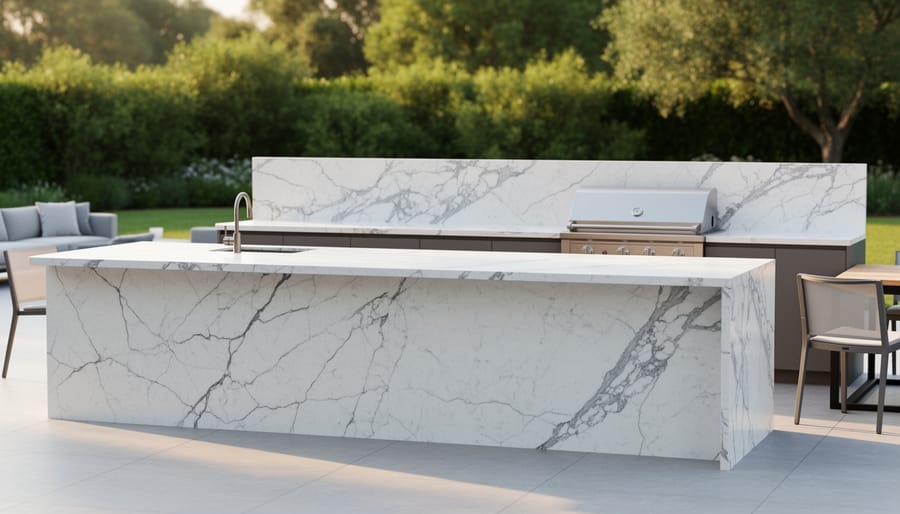
While quartz falls short outdoors, porcelain slabs have emerged as a compelling engineered alternative that bridges natural and manufactured materials. Unlike resin-bound quartz, porcelain slabs achieve their durability through extreme heat processing that creates a completely non-porous, UV-stable surface resistant to temperature fluctuations and weathering.
These large-format slabs can convincingly mimic marble, granite, and other natural stones while eliminating many maintenance concerns. Porcelain won’t fade, stain, or harbor bacteria, and requires minimal upkeep compared to some natural options. The material handles freeze-thaw cycles exceptionally well, making it viable across diverse climates.
However, porcelain lacks the authentic character and depth of genuine stone. While aesthetically sophisticated, close inspection reveals the manufactured uniformity that natural materials inherently avoid. For outdoor projects where performance takes priority over natural beauty, porcelain deserves serious consideration alongside granite, soapstone, and quartzite as practical solutions for exterior countertop installations.
Making the Right Choice for Your Outdoor Space
Selecting the right countertop material for your outdoor space requires careful evaluation of multiple factors. While quartz may seem appealing due to its indoor performance, most outdoor applications demand different solutions.
Start by assessing your climate and sun exposure. If your outdoor kitchen receives direct sunlight for more than four hours daily, quartz should be eliminated from consideration regardless of other factors. The UV damage risk is simply too high. For covered areas with minimal sun exposure in temperate climates, you have more options, though natural stone still outperforms quartz in durability.
Budget considerations extend beyond initial installation costs. While quartz may appear competitively priced upfront, factor in potential replacement costs if UV damage occurs. Natural stones like granite offer superior longevity outdoors, making them more cost-effective over a 10-15 year timeframe despite potentially higher initial investment.
Aesthetic preferences matter, but they shouldn’t override practical concerns. If you’re drawn to quartz for its consistent patterning, consider granites with uniform coloration or quartzite, which offers similar visual appeal with genuine outdoor durability. Many granite varieties provide the contemporary look homeowners associate with quartz while withstanding environmental challenges.
For design professionals, client education is essential. Present realistic expectations about material performance rather than simply accommodating aesthetic requests. Document sun exposure conditions, provide written disclaimers about quartz limitations, and steer clients toward proven outdoor materials. Your professional reputation depends on installations that perform well long-term.
Consider maintenance expectations honestly. While quartz requires minimal upkeep indoors, outdoor installations demand vigilant monitoring for early degradation signs. Natural stones like granite need periodic sealing but offer predictable maintenance routines without the uncertainty of UV-related damage.
Temperature extremes in your region also influence material choice. Areas experiencing significant freeze-thaw cycles need materials with proven thermal stability. Granite and soapstone have centuries-long track records in harsh climates, while quartz outdoor performance data remains limited and problematic.
Ultimately, the right choice prioritizes long-term performance over short-term aesthetic trends. For the vast majority of outdoor applications, natural stone alternatives deliver superior value, durability, and peace of mind. Reserve quartz for indoor spaces where it truly excels, and embrace materials specifically engineered by nature to withstand outdoor conditions.
While quartz countertops have revolutionized indoor kitchen applications with their durability and low maintenance, the evidence clearly shows they aren’t designed to withstand outdoor elements. UV exposure, temperature fluctuations, and weather conditions can cause irreversible damage including discoloration, warping, and voiding of warranties. For outdoor kitchens, bars, and entertainment spaces, natural stone materials like granite, soapstone, and quartzite deliver superior performance and longevity.
These time-tested materials offer natural UV resistance, exceptional heat tolerance, and proven durability across diverse climates. Making an informed decision about outdoor countertops requires understanding the fundamental differences between engineered and natural stone products. Before finalizing your outdoor project, consult with experienced stone professionals who can assess your specific environment, usage patterns, and aesthetic preferences. They’ll guide you toward materials that not only enhance your outdoor living space but also provide decades of reliable performance. Investing in the right material from the start ensures your outdoor countertops remain beautiful and functional for years to come.