Showing 39 Result(s)
Artistic depiction of ancient stone structures like Mesopotamian ziggurats, Egyptian pyramids, and the Great Wall of China, illustrating their role as cultural hearths that shaped human civilization.
Historical and Cultural Context

Ancient Stone Hearths That Shaped Human Civilization

Throughout human history, certain regions have emerged as crucibles of civilization, shaping the cultural landscape we know today. These historic culture hearths – the birthplaces of major civilizations – fundamentally transformed how humans organized societies, developed technologies, and built lasting monuments in stone. From the fertile valleys of Mesopotamia to the banks of the Yellow River in China, these centers of innovation spawned the first cities, writing systems, and monumental architecture that would influence countless generations.
The strategic placement of these cultural hearths along rivers and resource-…

Ancient Greek temple constructed from white marble, with surrounding greenery and ceremonial rituals being performed by priests, illustrating the religious and cultural significance of marble in the construction of Greek sacred sites.
Historical and Cultural Context

Sacred Stone: How Ancient Greeks Built Their Religious Legacy in Marble

In the sun-bleached temples and sacred groves of ancient Greece, rituals weren’t merely religious ceremonies—they were the vital threads that wove together the fabric of Greek society. From the majestic ancient Greek marble monuments to the humble household altars, every sacred space served as a stage where mortals sought connection with the divine. These carefully choreographed ceremonies, ranging from grand state-sponsored festivals to intimate family offerings, reflected a sophisticated …

A collage of iconic stone structures including the Great Pyramids of Giza, Parthenon, and Petra, representing the historical journey and cultural significance of natural stone in architecture.
Historical and Cultural Context

Why Natural Stone Has Shaped Human History (And Still Matters Today)

From ancient monuments to modern architectural masterpieces, the journey of natural stone stands as testament to humanity’s enduring relationship with Earth’s most resilient building material. For millennia, natural stone has shaped our civilizations, offering unmatched durability, timeless beauty, and sustainable benefits that modern alternatives struggle to replicate.
Beyond its striking aesthetic appeal, natural stone delivers remarkable practical advantages. Its thermal mass …

A polished emerald stone set amidst a juxtaposition of ancient Egyptian artifacts and a modern luxury interior, symbolizing the blend of historical significance and contemporary elegance.
Historical and Cultural Context

Emerald Stone: Ancient Power Meets Modern Luxury in Home Design

Throughout human history, the emerald has reigned as one of the most revered gemstones, embodying the sacred meanings of stones across diverse civilizations. From ancient Egyptian pharaohs to modern luxury designers, this verdant crystal has maintained its position as a powerful symbol of rebirth, wisdom, and abundance. Beyond its striking aesthetic appeal, the emerald’s deep green hue has become synonymous with growth and vitality in both architectural applications and spiritual practices.
In…

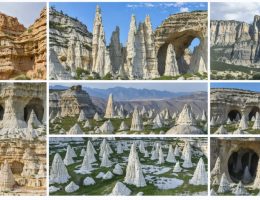
A captivating collection of diverse natural stone formations, including wind-carved arches, limestone caves, basalt columns, and wave-shaped cliffs, illustrating the grandeur of Earth's artistic geological processes.
Historical and Cultural Context

Ancient Earth’s Natural Stone Masterpieces: Art Before Artists

Nature’s artistry reaches its pinnacle in natural stone formations, where millions of years of geological forces sculpt raw earth into masterpieces that dwarf human creation. From the wind-carved arches of Utah’s desert landscape to the crystalline chambers of limestone caves, these stone sculptures stand as testament to Earth’s patient craftsmanship. Unlike man-made monuments, these formations emerge through an intricate dance of erosion, pressure, and time—each unique piece …

Illustration of an ancient Zoroastrian fire temple showcasing intricate stone architecture with celestial carvings, emphasizing harmonious integration with natural surroundings.
Historical and Cultural Context

How Ancient Zoroastrian Stone Temples Shaped Modern Architecture

Towering fire temples and ancient stone monuments stand as enduring testaments to Zoroastrian architectural brilliance, reflecting humanity’s earliest attempts to bridge the physical and spiritual realms through masterful stonework. From the magnificent Persepolis complex to the austere simplicity of Towers of Silence, Zoroastrian architecture represents a unique fusion of religious symbolism and practical engineering that has influenced sacred building design for over three millennia.
These remarkable structures embody core Zoroastrian principles – the sanctity of natural elements, particularly fire and stone, and the …

A montage of iconic stone structures including the Great Pyramid of Giza, the Parthenon, and a modern sustainable building, illustrating the timeless and sustainable legacy of stone architecture.
Historical and Cultural Context

Stone Foundations That Shaped Civilization: Ancient Wisdom in Modern Architecture

Stone architecture stands as humanity’s most enduring testament to architectural ingenuity, spanning millennia from the pyramids of Egypt to modern sustainable buildings. For over 12,000 years, builders have harnessed stone’s remarkable properties – durability, thermal mass, and natural beauty – to create structures that define civilizations and withstand the test of time.
Beyond mere construction material, stone architecture represents the perfect fusion of engineering precision and artistic expression. Ancient craftsmen developed sophisticated techniques to quarry, cut, and position massive stone blocks …

A sacred Iwakura stone wrapped in shimenawa rope placed in a modern Japanese Zen garden, with raked gravel and subtle dragon sculptures in the background.
Historical and Cultural Context

Sacred Stones in Japanese Mythology: Ancient Power Meets Modern Design

Japanese mythology’s intricate symbols carry profound sacred meanings of stone and natural elements that continue to influence modern design and cultural practices. From the commanding presence of torii gates marking sacred boundaries to the serene power of stone gardens in Zen Buddhism, these ancient symbols bridge the physical and spiritual realms. The mythological elements—dragons symbolizing water and wisdom, sacred mountains representing divine dwelling places, and stone lanterns guiding …

Interior view of a modern gemstone museum gallery with illuminated display cases showcasing a variety of precious gemstones. Interactive exhibits and visitors are visible, emphasizing the intersection of natural stone and human history.
Historical and Cultural Context

Inside Earth’s Treasure Vault: Where Natural Stone Meets Human History

Step into a world where Earth’s most dazzling treasures tell the remarkable journey of natural stone through time. Natural history museums house not just gemstones, but billions of years of geological wonder, crystallized into specimens that capture both scientific significance and human imagination. From the iconic Hope Diamond at the Smithsonian to the pristine mineral collections of London’s Natural History Museum, these institutions serve as guardians of Earth’s mineral heritage…

Diverse cultural stone craftsmen from the ancient Silk Road working together, illustrating the blend of Persian, Chinese, and Central Asian architectural techniques.
Historical and Cultural Context

How Ancient Silk Road Stone Masters Shaped Modern Architecture

The ancient Silk Road, stretching over 4,000 miles across continents, revolutionized more than just commerce—it fundamentally transformed the way civilizations worked with stone. From the marble-clad temples of Persepolis to the granite fortresses of Xi’an, these trade routes fostered the exchange of ancient stone trading practices that still influence modern architecture. Master craftsmen traveled alongside precious cargo, sharing techniques for quarrying, cutting, and finishing stone that …