Choose pH-neutral cleaners specifically formulated for stone to prevent irreversible etching and discoloration on granite, marble, or limestone monuments. Test any solution on an inconspicuous area first, waiting 24-48 hours to observe potential adverse reactions before proceeding with full application.
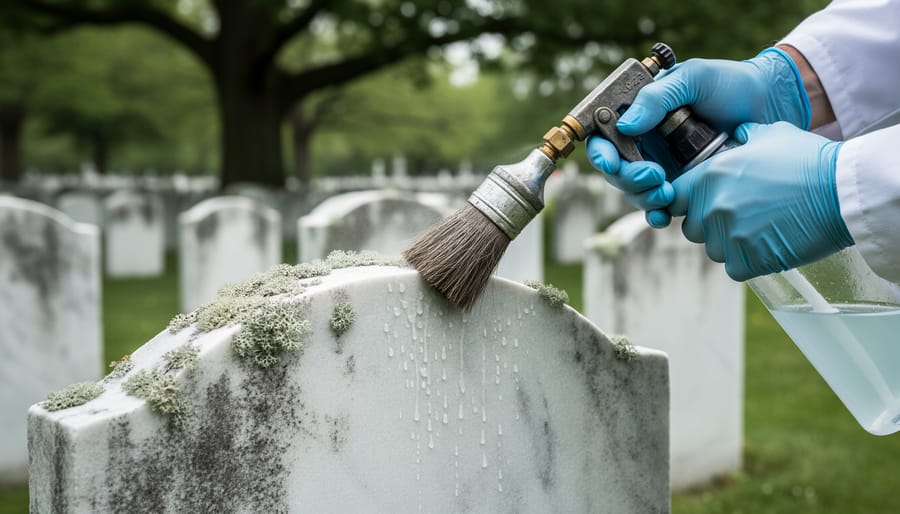
Apply biological growth removers containing quaternary ammonium compounds or hydrogen peroxide for algae, lichen, and moss removal, allowing 15-20 minutes of dwell time before gentle agitation with natural bristle brushes. Avoid pressure washers exceeding 500 PSI, which can erode softer stones and drive contaminants deeper into porous surfaces.
Mix a solution of one part D/2 Biological Solution or similar product with four parts water for routine maintenance cleaning, working from bottom to top to prevent streaking. For heavily soiled gravestones, poultice applications using absorbent materials like kaolin clay combined with appropriate cleaning agents draw out deep-seated stains over 24-72 hour periods.
Document stone type and existing condition before cleaning, as different materials require distinct approaches—sandstone demands gentler methods than polished granite, while bronze or composite markers need specialized non-abrasive formulations. Professional conservators recommend annual maintenance cleaning rather than aggressive restoration attempts that compromise stone integrity.
Modern gravestone cleaning technology balances effective restoration with preservation ethics, ensuring these memorial markers maintain their dignity and legibility for future generations. Understanding proper solution selection, application techniques, and stone-specific requirements protects both historical significance and structural stability of cemetery monuments.
The Challenge of Cleaning Memorial Stones

Common Types of Stone Used in Gravestones
Understanding the stone type is essential before selecting any cleaning solution, as each material has distinct characteristics and vulnerabilities. Granite, the most durable gravestone material, features a dense crystalline structure that resists weathering and tolerates most cleaning methods, though acidic solutions should still be avoided. Marble, composed of calcium carbonate, presents significantly greater challenges due to its susceptibility to acid damage, staining, and surface etching from improper cleaners. Limestone shares marble’s calcium carbonate composition, making it equally vulnerable to acidic products while being more porous and prone to biological growth accumulation. Sandstone’s high porosity and layered structure make it particularly fragile, requiring only the gentlest cleaning approaches as aggressive methods can cause surface delamination. Slate, while relatively durable, can split along its natural planes when exposed to freezing water or harsh mechanical cleaning. Each stone type demands specific cleaning protocols, and misidentification can lead to irreversible damage, including surface dissolution, discoloration, or structural weakening that compromises the memorial’s integrity and historical value.
What Damages Historic Gravestones
Historic gravestones face numerous threats that compromise their structural integrity and readability over time. Among the most common culprits are biological organisms—lichens, algae, and moss colonize stone surfaces, particularly in damp, shaded cemetery environments. While these growths may appear harmless or even aesthetically pleasing to some, biological growth damages stone by producing acids that etch surfaces and penetrating root systems that create microfractures within the material.
Environmental pollutants present another significant challenge. Acid rain, industrial emissions, and airborne particulates chemically react with stone surfaces, particularly affecting marble and limestone monuments. These reactions cause surface erosion, discoloration, and the formation of harmful crusts that trap moisture and accelerate decay.
Ironically, well-intentioned cleaning efforts have often caused more harm than the deterioration they aimed to prevent. Traditional methods employing wire brushes, power washers, and harsh chemical cleaners have stripped away protective patinas, damaged delicate carved details, and compromised stone structural integrity. High-pressure washing, once standard practice, drives water deep into porous stone, leading to spalling and irreversible damage. Understanding these threats is essential for selecting appropriate cleaning solutions that effectively address contamination without contributing to long-term deterioration.
Traditional Cleaning Methods and Their Limitations
For decades, well-meaning individuals have approached gravestone cleaning with household tools and products, often causing irreversible damage to these irreplaceable monuments. Understanding why these traditional methods fall short is essential for anyone tasked with memorial preservation.
Wire brushing was once a common approach for removing biological growth and surface soiling from gravestones. However, this abrasive technique scratches and weakens the stone surface, accelerating erosion and creating microscopic channels where moisture and organisms can penetrate. These scratches are particularly damaging to softer stones like marble and sandstone, permanently altering their texture and appearance.
Pressure washing gained popularity as a seemingly efficient cleaning method, but conservation professionals now strongly advise against its use. The forceful water stream can blast away the stone’s protective patina—a natural weathered layer that actually shields the monument from further deterioration. Pressure washing also drives water deep into the stone’s porous structure, potentially causing freeze-thaw damage and salt crystallization that leads to spalling and surface loss.
Bleach and household cleaners represent perhaps the most problematic traditional approach. While bleach effectively kills biological growth, it leaves behind salt deposits that crystallize within the stone, causing structural damage over time. The chemical reactions between bleach and certain stone types can also cause permanent discoloration and surface pitting. Similarly, ammonia-based cleaners and acidic products like vinegar can chemically attack stone composition, particularly calcium-based materials like marble and limestone.
These outdated methods persist because they appear to produce immediate visible results. However, conservators emphasize that apparent cleanliness often comes at the cost of long-term monument integrity, making proper cleaning solutions and techniques essential for responsible gravestone care.
Modern Bio-Based Cleaning Solutions
D/2 Biological Solution and Similar Products
Biological cleaning solutions represent a significant advancement in gravestone conservation, leveraging enzyme-based formulas and microbial action to safely remove organic staining without damaging stone surfaces. These products work by breaking down biological matter at the molecular level, making them particularly effective against lichen, algae, moss, and atmospheric pollutants that accumulate over decades.
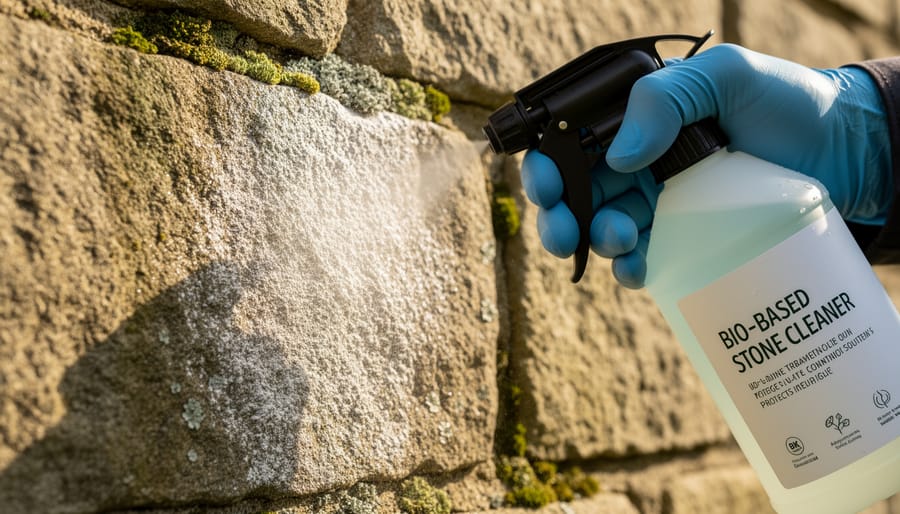
Industry-leading bio-based cleaners typically contain a blend of biodegradable surfactants, beneficial bacteria, and specialized enzymes. Unlike harsh chemical alternatives, these solutions don’t etch or discolor stone surfaces. Products like D/2 Biological Solution have become the standard in professional monument conservation due to their proven effectiveness and gentle action. The formula works through a two-stage process: immediate cleaning followed by continued biological activity that prevents regrowth for extended periods.
Application methods vary by stone type and condition. For porous materials like limestone and sandstone, diluted solutions applied with soft bristle brushes yield optimal results. Harder stones such as granite and marble can tolerate slightly stronger concentrations. The typical process involves saturating the stone surface, allowing 15-30 minutes of dwell time for enzymatic action, then gentle agitation and thorough rinsing with low-pressure water.
Effectiveness studies demonstrate that biological solutions achieve comparable or superior results to traditional chemical cleaners while minimizing environmental impact and stone degradation. They’re particularly valuable for historic monuments where preservation of original surface patina is paramount. Most formulations are non-toxic, requiring minimal personal protective equipment during application, making them suitable for both professional conservators and careful DIY maintenance projects.
How Biological Cleaners Work
Biological cleaners harness the power of naturally-occurring enzymes and beneficial bacteria to break down organic matter on gravestones without harming the underlying stone. Unlike harsh chemical solutions that can etch surfaces or accelerate weathering, these cleaners work through a process called biodeterioration reversal. The enzymes target specific organic compounds—lichens, algae, moss, and biological staining—by breaking down their cellular structures at a molecular level.
When applied to a gravestone, the biological solution introduces colonies of safe microorganisms that produce enzymes tailored to digest organic growth. These enzymes act as catalysts, accelerating the natural decomposition process that would otherwise take years. The bacteria consume the broken-down matter as a food source, leaving behind only water and carbon dioxide as byproducts.
The key advantage for stone preservation is selectivity. Biological cleaners distinguish between organic contamination and the mineral composition of marble, granite, limestone, or sandstone. They penetrate porous surfaces to remove deeply embedded growth without mechanical abrasion or chemical erosion. This makes them particularly valuable for fragile historic monuments where traditional cleaning methods might compromise inscriptions or decorative details. The process typically requires longer dwell times than chemical cleaners—often several days—but results in thorough cleaning with minimal risk to stone integrity.
pH-Neutral Chemical Formulations
pH-neutral cleaning solutions represent a significant advancement in gravestone preservation, offering effective cleaning power while maintaining a safe chemical balance that won’t harm delicate stone surfaces. These formulations typically maintain a pH level between 6.5 and 7.5, closely mimicking the neutral range that prevents both acidic erosion and alkaline damage to monuments.
The chemical composition of pH-neutral cleaners centers around carefully balanced surfactants and chelating agents that break down organic matter, biological growth, and atmospheric pollutants without aggressive acidic or alkaline compounds. Modern formulations often incorporate biodegradable ingredients such as nonionic surfactants, which lift dirt through molecular attraction rather than chemical reaction, and sequestering agents that bind to mineral deposits for easy removal.
These solutions prove most appropriate for soft, porous, or already compromised stone materials including marble, limestone, sandstone, and weathered granite. Cemetery managers and conservators particularly value pH-neutral products when working with historic monuments where previous cleaning attempts, environmental damage, or natural aging have weakened the stone’s integrity. They’re also the preferred choice for routine maintenance cleaning, where gentle action prevents the cumulative damage that harsher chemicals might cause over repeated applications.
Professional-grade pH-neutral cleaners often include buffering systems that resist pH drift during application, ensuring consistent safety throughout the cleaning process. Some advanced formulations incorporate specialized polymers that create a temporary protective barrier, allowing the cleaning agents to work effectively while preventing them from penetrating too deeply into porous stone structures. When selecting a pH-neutral solution, verify that it’s specifically labeled for natural stone use and check manufacturer specifications for compatibility with your particular stone type, as even neutral formulations can vary in their additional active ingredients and intended applications.
Controlled Application Technologies
Poultice Systems for Deep Cleaning
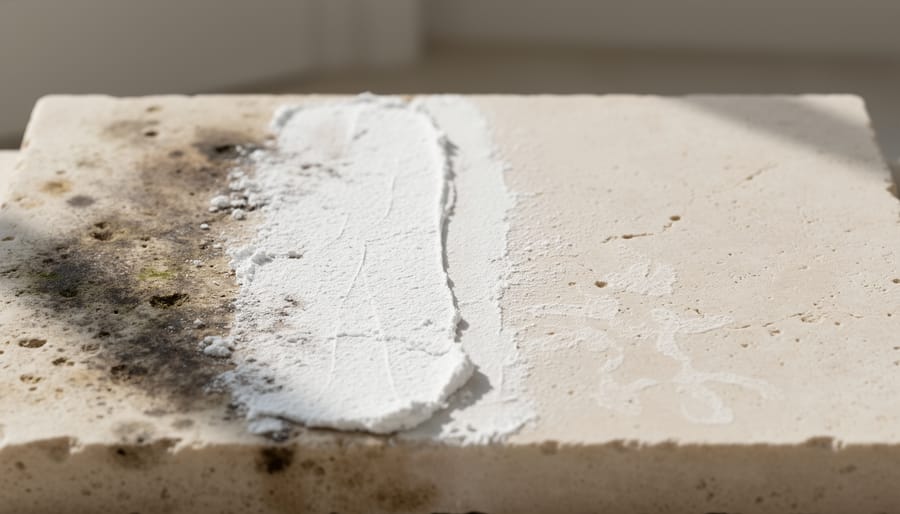
Poultice systems represent one of the most effective methods for deep-cleaning gravestones, particularly when dealing with stubborn biological staining or embedded contaminants. A poultice works through capillary action, where an absorbent material mixed with a cleaning solution is applied to the stone surface as a thick paste. As the mixture slowly dries over 24 to 48 hours, it draws out deep-seated stains, oils, and organic matter from within the porous stone structure.
The poultice material itself can vary depending on the stain type. Common bases include kaolin clay, sepiolite, bentonite, or even simple paper pulp. These are combined with appropriate cleaning agents—water for light cleaning, or specialized solutions for specific contaminants like biological growth or metal staining. The beauty of this method lies in its gentleness; unlike pressure washing or abrasive scrubbing, poultices require no physical force that might damage delicate carvings or weathered surfaces.
For optimal results, the poultice should be applied at approximately one-quarter to one-half inch thickness, covered with plastic to control drying time, and removed carefully once dry. Multiple applications may be necessary for particularly stubborn staining, but the process preserves the stone’s integrity while achieving remarkable cleaning results.
Steam Cleaning for Delicate Stones
Low-pressure steam cleaning has emerged as a revolutionary technology for preserving delicate and deteriorated gravestones without harsh chemicals or abrasive techniques. This method uses superheated steam at temperatures between 250-300°F, delivered at controlled pressure levels typically below 100 psi, to gently lift dirt, biological growth, and soiling from fragile stone surfaces.
The effectiveness of steam cleaning lies in its dual action: the heat breaks down organic matter and stubborn deposits, while the moisture loosens particles without mechanical stress. This makes it particularly valuable for soft stones like sandstone, limestone, and weathered marble that cannot withstand traditional scrubbing or high-pressure washing. The technology also penetrates deeply into porous surfaces, eliminating embedded contaminants that contribute to ongoing deterioration.
Professional conservators favor steam cleaning for historic monuments because it requires no chemical residues that might accelerate future decay. The process is also environmentally responsible, using only water and minimal energy. However, proper training is essential, as incorrect temperature or pressure settings can cause thermal shock in certain stone types. For severely compromised monuments, conservators often combine steam cleaning with careful hand-picking of biological growth to achieve optimal results while maintaining structural integrity.
Laser Cleaning Technology for Historic Monuments
Laser ablation technology represents the most advanced method for cleaning historic gravestones, offering unprecedented precision for irreplaceable monuments where traditional methods pose too great a risk. This sophisticated technique uses controlled pulses of laser light to remove contaminants, biological growth, and weathering crusts from stone surfaces without physical contact or chemical intervention.
The process works by directing short laser pulses at the stone surface, where they interact with dirt, algae, and pollutants. These contaminants absorb the laser energy and vaporize instantly, while the underlying stone remains unaffected due to its different absorption properties. The operator controls intensity, pulse duration, and frequency to match specific stone types and contamination levels, making it remarkably selective and safe for delicate carved details.
Laser cleaning excels where chemical solutions and mechanical methods fail. It can remove black gypsum crusts from marble monuments, stubborn biological growths from porous limestone, and surface soiling from intricate Victorian carvings without abrading original surfaces or introducing moisture. The technology also allows conservators to clean deeply undercut letters and decorative elements that brushes and poultices cannot reach effectively.
However, the investment required makes laser technology practical primarily for high-value historic monuments and cemetery sections. Equipment costs range from 50,000 to 150,000 dollars, with professional conservation services charging 200 to 500 dollars per square meter. Training requirements and safety protocols add further expense, as operators need certification to handle Class 4 lasers safely.
For most cemetery maintenance situations, chemical cleaning solutions remain the practical choice. Reserve laser technology for nationally significant monuments, sculptural masterworks, or gravestones where conventional methods have proven inadequate or potentially harmful to the stone’s integrity.
Selecting the Right Solution for Different Stone Types
Matching the appropriate cleaning solution to gravestone materials requires careful assessment and a systematic approach. Different stone types exhibit varying porosity levels, mineral compositions, and susceptibility to chemical reactions, making a one-size-fits-all approach potentially damaging.
For marble and limestone gravestones, which are calcium carbonate-based stones, acidic cleaners must be avoided entirely. These materials react adversely to low pH solutions, causing surface etching and irreversible pitting. Instead, use pH-neutral cleaners specifically formulated for calcareous stones, typically with pH levels between 7 and 8.5. Apply solutions with soft natural bristle brushes and rinse thoroughly with clean water.
Granite monuments, being significantly harder and less porous, tolerate a broader range of cleaning products. Non-ionic detergents diluted with water work effectively for routine maintenance. For stubborn biological growth like lichen or algae, biocide solutions designed for granite can be applied, though adequate dwell time is essential for effectiveness. Always test products on inconspicuous areas first.
Sandstone presents unique challenges due to its high porosity and friable nature. Use only the gentlest cleaning methods, prioritizing water-based approaches with minimal mechanical agitation. Avoid pressure washing entirely, as it can erode the stone surface and dislodge mineral grains.
Bronze markers require specialized metal cleaners rather than stone-focused products. Never use abrasive materials that might scratch protective patinas.
When selecting solutions, implement this decision-making framework: First, positively identify the stone type through visual examination or professional assessment. Second, evaluate the condition, noting any existing damage, cracks, or delamination. Third, determine the soiling type—biological growth, atmospheric deposits, or mineral staining. Fourth, select the mildest effective solution appropriate for the identified stone. Fifth, conduct small-scale testing before proceeding with full treatment.
Cemetery caretakers should maintain detailed records of stone types, cleaning products used, and observed results. This documentation builds institutional knowledge and prevents repeated mistakes. When uncertainty exists regarding stone identification or appropriate treatment methods, consulting conservation professionals ensures preservation rather than inadvertent damage to irreplaceable memorial stones.
Best Practices and Safety Protocols
Before applying any cleaning solution to a gravestone, conduct a small test patch in an inconspicuous area, preferably along the base or back edge. Wait 24-48 hours to observe any adverse reactions such as discoloration, surface deterioration, or salt efflorescence. This simple precaution can prevent irreversible damage to irreplaceable monuments.
Personal protective equipment is essential when working with cleaning solutions. Wear chemical-resistant gloves, safety goggles, and appropriate clothing to protect skin from splashes. When working with biocidal products or stronger cleaners, use respiratory protection in well-ventilated areas. Keep cleaning agents away from children and pets, and never mix different products, as chemical reactions can produce harmful fumes.
Environmental responsibility extends beyond the gravestone itself. Avoid cleaning during nesting season to protect wildlife, and never allow runoff to enter storm drains or waterways. Biodegradable, pH-neutral solutions minimize environmental impact while effectively removing soiling. Consider using water collection systems for containing runoff, especially when working with biological growth removers or specialty cleaners.
Understanding conservation ethics is fundamental to responsible gravestone maintenance. The principle of “do no harm” should guide every cleaning decision. Recognize that some stones, particularly those over 100 years old or showing significant weathering, may be too fragile for cleaning. Heavily eroded inscriptions cannot be restored through cleaning and may be better left undisturbed or professionally documented through photography and rubbings.
When in doubt, consult with professional conservators or local preservation societies before proceeding. Historic cemeteries often have specific guidelines or restrictions, and some gravestones may be protected under heritage conservation laws. Document the stone’s condition before and after cleaning through detailed photographs to maintain historical records and evaluate treatment effectiveness.
Real-World Applications and Results
Historic cemetery restoration projects demonstrate the transformative power of modern gravestone cleaning solutions when applied correctly. At Boston’s Mount Auburn Cemetery, conservators tackled decades of biological growth on 150 marble monuments using D/2 Biological Solution. The six-month project revealed remarkable results: heavily obscured inscriptions became legible again, and the natural white luster of the marble returned without surface damage. The gentle, non-ionic formula proved particularly effective on the cemetery’s 19th-century Italian Carrara marble monuments, which required special care due to their age and delicate surface conditions.
In Charleston’s historic Magnolia Cemetery, preservation specialists confronted a different challenge: stubborn metallic staining on granite headstones from bronze fixtures. After testing multiple products, they selected a pH-neutral poultice system specifically formulated for granite. Applied over three treatment cycles, the solution drew out copper and iron deposits that had penetrated the stone over decades. Before-and-after documentation showed a 90 percent reduction in staining, with no etching or discoloration. The project restored visual clarity to 200 monuments while maintaining their historical integrity.
The restoration of limestone markers at Philadelphia’s Laurel Hill Cemetery showcased the importance of stone-specific approaches. Conservation teams used a combination of gentle surfactants and controlled water pressure, avoiding harsh chemicals that could dissolve the calcium carbonate structure. Treatment of 75 sandstone and limestone monuments revealed crisp Victorian-era lettering previously hidden under layers of pollution and biological matter. The project took eight months, with each stone receiving customized treatment based on its condition and composition.
These case studies confirm that successful gravestone cleaning requires matching the right solution to specific stone types and contamination issues. Professional conservators consistently emphasize that patience, proper product selection, and adherence to established conservation standards produce superior outcomes compared to aggressive or one-size-fits-all approaches. Documentation from these projects now guides cemetery managers and preservation professionals in developing effective maintenance programs for their historic collections.

Selecting the right gravestone cleaning solution requires careful consideration of both immediate aesthetic goals and long-term preservation needs. As this guide demonstrates, modern cleaning technologies offer increasingly sophisticated options that can effectively remove decades of biological growth, pollution stains, and weathering effects while safeguarding the stone’s structural integrity. The key lies in understanding that what appears clean to the eye must also preserve the monument’s surface at a microscopic level.
Cemetery managers and conservators should prioritize gentle, pH-neutral formulations specifically designed for natural stone, avoiding the temptation of harsh chemicals that promise quick results but risk irreversible damage. Different stone types demand different approaches—what works safely on granite may prove harmful to marble or sandstone. Professional assessment remains invaluable when dealing with historically significant monuments or severely deteriorated stones.
The field of stone conservation continues to evolve, with new bio-based cleaners, nano-technology applications, and environmentally responsible restoration methods emerging regularly. Staying informed through professional conservation organizations, industry publications, and manufacturer technical data ensures access to the latest safe cleaning technologies. Regular maintenance using appropriate solutions prevents the accumulation of harmful deposits that require more aggressive intervention later.
Ultimately, successful gravestone preservation balances honoring the past with protecting the future, ensuring these important cultural markers remain legible and intact for generations to come. When in doubt, consulting with certified stone conservators provides the expertise necessary to make informed decisions about cleaning methodologies and products.