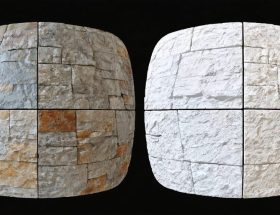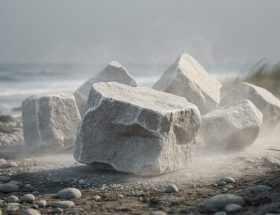

Natural stone manufacturing stands at the intersection of ancient craftsmanship and technological innovation, transforming raw geological treasures into refined architectural elements. Through modern stone production techniques, what once took months of manual labor now emerges as precisely crafted materials within days. This evolution has revolutionized how we extract, process, and finish natural stone, making it more accessible while preserving its inherent beauty and durability.
Today’s manufacturing processes combine advanced robotics, computer-aided design, and sustainable practices to maximize efficiency without compromising the material’s natural characteristics. From quarry to countertop, each step is carefully orchestrated using state-of-the-art technology that ensures consistent quality while reducing waste. This precision-driven approach has transformed natural stone from a luxury material into a versatile building component that meets contemporary architectural demands.
The industry’s commitment to innovation continues to expand the possibilities of natural stone applications, offering customized solutions that were previously unimaginable. As sustainability becomes increasingly crucial, manufacturers are developing methods that minimize environmental impact while maximizing the stone’s potential, ensuring this timeless material remains relevant in modern construction and design.
Advanced Extraction Technologies
Diamond Wire Cutting Systems
Diamond wire cutting systems represent a revolutionary advancement in natural stone processing, offering unprecedented precision and efficiency in both quarrying and fabrication operations. These systems utilize a continuous loop of steel cable embedded with industrial-grade diamond beads to slice through stone with remarkable accuracy.
The technology operates by running the diamond-studded wire through a series of pulleys, creating a precise cutting plane that can be adjusted for various cutting angles and depths. This versatility allows fabricators to execute complex cuts while minimizing waste material, a significant advantage over traditional cutting methods.
Modern diamond wire systems feature computer-controlled operations that maintain optimal cutting speeds and wire tension, resulting in smoother surfaces that require less finishing work. The cooling system continuously sprays water to prevent overheating and reduce dust, making the process more environmentally friendly and safer for operators.
These cutting systems excel in both horizontal and vertical cuts, enabling the creation of precise blocks in quarries and intricate shapes in processing facilities. The technology’s efficiency has significantly reduced production time while improving cut quality, making it indispensable in contemporary stone manufacturing operations. The minimal kerf width and reduced vibration also help preserve the stone’s structural integrity during cutting.
Computer-Guided Extraction
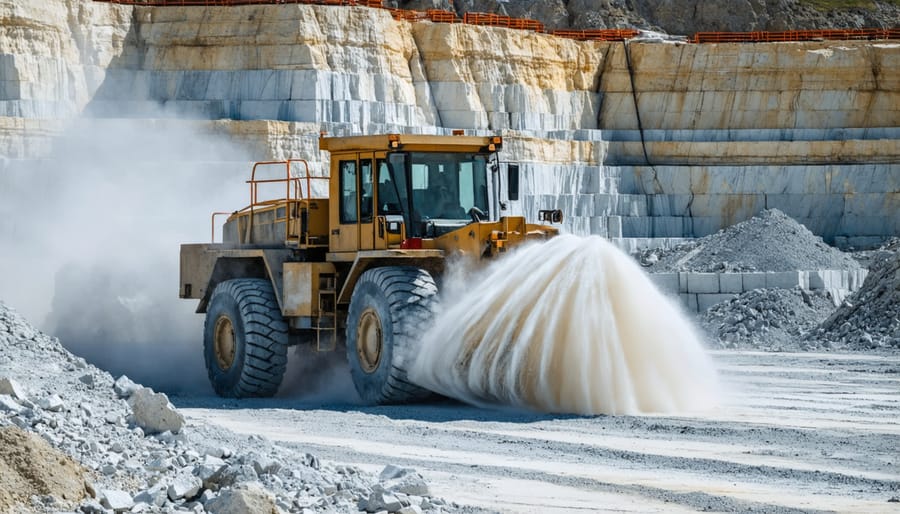
Modern quarrying operations leverage sophisticated computer-guided systems to maximize efficiency and precision in stone extraction. These automated processes utilize advanced technologies like 3D laser scanning and GPS-guided machinery to map deposits and plan optimal cutting patterns. Diamond wire saws and chain saws, controlled by computerized systems, execute precise cuts based on digital blueprints, significantly reducing waste and improving yield.
The technology begins with geological surveys using ground-penetrating radar and digital imaging to create detailed maps of stone deposits. Computer algorithms then analyze this data to determine the most efficient extraction patterns, considering factors like natural fissures, color variations, and block sizes. Robotic drilling systems mark cutting lines with pinpoint accuracy, while automated wire saws execute cuts according to predetermined coordinates.
These computer-guided systems also monitor operational parameters in real-time, including cutting speed, wire tension, and water consumption. Safety features are integrated throughout the process, automatically adjusting or stopping operations when conditions exceed specified parameters. This technological integration has revolutionized quarrying, making it safer, more sustainable, and significantly more productive than traditional methods, while ensuring consistent quality in extracted blocks.
Precision Manufacturing Processes
CNC Technology in Stone Fabrication
Computer Numerical Control (CNC) technology has revolutionized the natural stone industry, representing one of the most significant innovative stone manufacturing solutions in recent decades. These advanced machines utilize precision programming to execute complex cutting, shaping, and finishing operations with remarkable accuracy.
Modern CNC equipment can perform multiple functions, including sawing, routing, polishing, and edge profiling, all controlled by sophisticated software. This technology allows fabricators to create intricate designs and patterns that would be nearly impossible to achieve through manual methods. The computer-guided systems can maintain consistent quality across large production runs while minimizing material waste.
The integration of CAD (Computer-Aided Design) with CNC machinery enables manufacturers to transform digital designs directly into finished stone products. This seamless workflow reduces human error and dramatically increases production efficiency. Manufacturers can now create everything from simple countertops to complex architectural elements with exceptional precision.
Water-jet cutting, a key CNC application, uses high-pressure water mixed with abrasive particles to cut stone with remarkable accuracy. This technique can create detailed inlays, logos, and decorative patterns while maintaining the stone’s structural integrity. The technology also allows for optimal material usage through nested cutting patterns, reducing waste and improving cost-effectiveness.
For fabricators, CNC technology has significantly reduced production time while enhancing workplace safety and product consistency. The automated processes require minimal human intervention during cutting and shaping operations, creating a safer work environment and ensuring repeatable quality in every project.

Surface Finishing Innovations
Modern surface finishing techniques have revolutionized how natural stone surfaces can be customized to achieve specific aesthetic and functional requirements. Today’s manufacturers employ a range of innovative methods that go far beyond traditional polishing.
The latest computer-controlled finishing systems can create multiple surface textures on a single stone piece. Flaming, for instance, uses high-temperature torches to create a rough, non-slip surface ideal for outdoor applications. This process causes the stone’s crystals to burst, resulting in a textured finish that maintains the material’s natural beauty while improving its practical functionality.
Bush hammering has evolved with automated systems that can precisely control impact patterns, creating everything from subtle textures to dramatic relief effects. Meanwhile, water jet technology allows for intricate surface patterns and designs previously impossible to achieve through manual methods.
Honing techniques have also advanced, offering various levels of sheen from matte to semi-gloss. These finishes are particularly popular in contemporary design, providing elegant alternatives to high-polish surfaces while being more forgiving with maintenance.
Chemical treatments have become more sophisticated and environmentally friendly. Modern sealants and enhancers can now penetrate deeper into the stone while maintaining its ability to breathe, offering superior protection without altering the stone’s natural characteristics.
Manufacturers are also experimenting with hybrid finishing techniques, combining different methods to create unique surface effects. For example, combining leather finishing with subtle brush marks can produce distinctive tactile experiences while maintaining the stone’s durability.
Quality Control and Testing
Digital Quality Assessment
Modern natural stone manufacturing facilities employ sophisticated digital tools to ensure consistent quality throughout the production process. AI-powered quality control systems use high-resolution cameras and advanced sensors to detect imperfections, variations in color, and structural irregularities that might be missed by human inspection alone.
These digital assessment tools analyze surface characteristics, measure dimensional accuracy, and evaluate material density with remarkable precision. Using machine learning algorithms, the systems can identify patterns and potential defects across thousands of stone slabs, maintaining strict quality standards while increasing production efficiency.
Digital mapping technology creates detailed surface profiles of each stone piece, ensuring precise matching for book-matched installations and complex architectural projects. Real-time data collection allows manufacturers to adjust processing parameters immediately when variations are detected, reducing waste and maintaining consistent quality.
The integration of digital quality assessment has revolutionized the industry’s ability to deliver premium stone products while meeting increasingly stringent architectural specifications and customer expectations.
Strength and Durability Testing
Natural stone undergoes rigorous testing procedures to ensure it meets industry standards for construction and architectural applications. The most common tests include compressive strength measurement, which determines how much pressure the stone can withstand before failing. This is particularly crucial for load-bearing applications and structural elements.
Abrasion resistance testing evaluates the stone’s durability against wear and tear, making it essential for flooring and high-traffic areas. Using specialized equipment, technicians measure material loss under controlled conditions, providing a measurable indicator of the stone’s longevity.
Flexural strength tests assess the stone’s ability to resist bending forces, while water absorption tests determine its porosity and resistance to moisture penetration. Modern testing facilities also conduct freeze-thaw cycling tests, particularly important for exterior applications in cold climates.
These standardized tests, often conducted according to ASTM International guidelines, help manufacturers classify stones and recommend appropriate applications. Results are typically documented in technical data sheets, enabling architects and designers to make informed decisions about material selection based on specific project requirements and environmental conditions.
Sustainable Manufacturing Practices
Water Recycling Systems
Water recycling systems play a crucial role in modern natural stone manufacturing, significantly reducing environmental impact while maximizing resource efficiency. These advanced systems capture, filter, and recirculate water used during cutting, polishing, and finishing processes, creating a closed-loop system that conserves this precious resource.
A typical stone manufacturing facility can recycle up to 98% of its process water through a combination of settling tanks, filtration systems, and water treatment processes. The collected water passes through multiple stages of filtration to remove stone particles, sediment, and other impurities before being reintroduced into the manufacturing process.
This sustainable approach not only reduces water consumption but also prevents contaminated water from entering local water systems. The filtered stone particles and sediment are often repurposed for other industrial applications, such as construction aggregate or soil amendment.
Many manufacturers have implemented automated monitoring systems that continuously assess water quality and adjust filtration parameters accordingly, ensuring optimal performance while maintaining strict environmental compliance standards. This investment in water recycling technology demonstrates the industry’s commitment to sustainable manufacturing practices.

Stone Waste Repurposing
In modern stone manufacturing, sustainability has become a key focus, with innovative solutions emerging for repurposing stone waste materials. Stone slurry, a byproduct of cutting and polishing processes, can be transformed into eco-friendly building materials like bricks and tiles. These recycled products often demonstrate comparable strength and durability to traditional materials while reducing environmental impact.
Crushed stone waste finds new life in landscaping applications, serving as decorative aggregate or base material for pathways. Larger stone fragments are increasingly utilized in gabion walls and architectural features, creating striking visual elements while minimizing waste. Some manufacturers have developed processes to incorporate stone powder into concrete mixtures, enhancing strength and reducing the need for raw materials.
The stone industry has also partnered with other sectors to repurpose waste creatively. Stone dust is being used in agriculture as a soil amendment, while larger stone remnants are finding applications in art installations and custom furniture pieces. These sustainable practices not only reduce landfill waste but also create additional revenue streams for manufacturers while supporting environmental conservation efforts.
Modern stone manufacturing technologies have revolutionized the natural stone industry, transforming traditional processes into highly efficient, precise, and sustainable operations. The integration of computer-controlled machinery, advanced cutting systems, and automated finishing lines has significantly improved production capabilities while maintaining the inherent beauty of natural stone materials.
These technological advancements have made natural stone more accessible and versatile than ever before. Manufacturers can now produce custom-cut pieces with unprecedented accuracy, reduce material waste, and offer a wider range of finishes to meet diverse design requirements. The ability to create thinner, lighter stone slabs has opened new possibilities in architecture and interior design, while maintaining the material’s durability and aesthetic appeal.
The impact extends beyond production efficiency. Modern manufacturing methods have improved workplace safety, reduced environmental impact through better waste management, and enabled water recycling systems that minimize resource consumption. Digital templating and quality control systems ensure consistent results, building greater confidence among designers and contractors.
Looking ahead, the natural stone industry continues to evolve with emerging technologies like 3D printing applications and sustainable practices. These innovations not only preserve the timeless appeal of natural stone but also position it as a forward-thinking, environmentally conscious choice for contemporary construction and design projects. The marriage of traditional craftsmanship with modern manufacturing capabilities ensures that natural stone remains a relevant and valuable material in the built environment.