
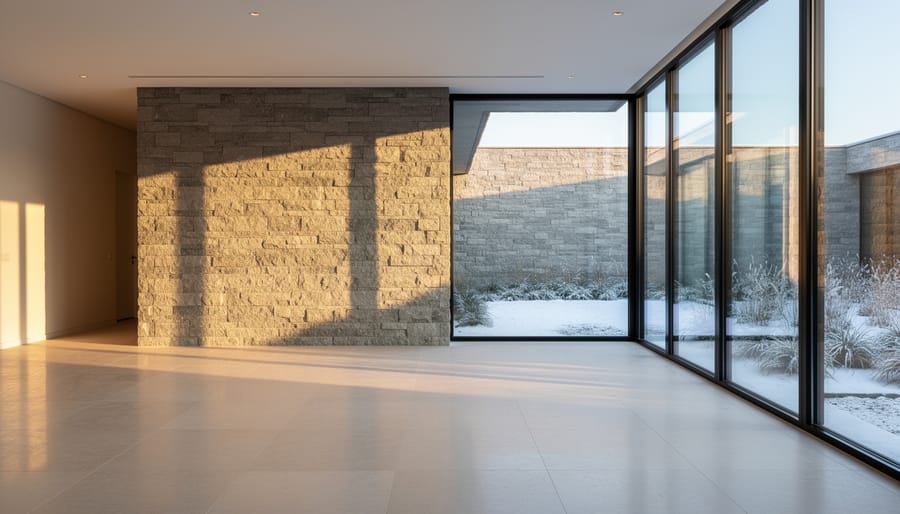
Maximize thermal mass by selecting dense stone materials like granite, limestone, or marble that absorb heat during warm periods and release it gradually when temperatures drop, reducing HVAC demands by up to 30% in well-designed applications. Position stone flooring, accent walls, or interior cladding on south-facing exposures to capture passive solar gains during winter months while providing natural cooling effects in summer through their inherent temperature-regulating properties.
Specify locally quarried stone to slash embodied energy from transportation—a often-overlooked factor that can account for 40% of a material’s total carbon footprint. Stone sourced within 500 miles of your project site significantly reduces fuel consumption while supporting regional economies and ensuring material traceability. Combine this approach with sustainable stone practices that prioritize water recycling during fabrication and minimal chemical treatments during installation.
Integrate stone with high-performance insulation systems rather than viewing it as a standalone solution. When properly detailed with continuous insulation layers and thermal breaks, stone cladding systems achieve R-values exceeding code minimums while providing century-long durability that eliminates replacement cycles common with synthetic alternatives. This longevity translates to genuine lifecycle energy savings, as manufacturing and disposal impacts are amortized over generations rather than decades.
Calculate whole-building energy performance using stone’s reflectance values and thermal properties in energy modeling software during the design phase. Light-colored limestone or marble surfaces can reflect up to 80% of solar radiation, reducing urban heat island effects and lowering cooling loads in commercial applications. Document these specifications to qualify for LEED credits and utility rebate programs that recognize passive design strategies.
Why Natural Stone Outperforms Conventional Materials in Energy Efficiency
Thermal Mass: Stone’s Secret Weapon
Stone’s remarkable thermal mass capabilities make it one of nature’s most effective passive climate control systems. Unlike lightweight materials that rapidly absorb and release heat, dense stone materials like granite, limestone, and marble act as thermal batteries, moderating indoor temperatures throughout the day and night.
The science behind thermal mass is straightforward: stone’s high density and specific heat capacity allow it to absorb significant amounts of thermal energy without dramatic temperature changes. During warm days, stone floors, walls, and countertops soak up excess heat from sunlight and ambient air. As evening temperatures drop, this stored energy slowly radiates back into living spaces, maintaining comfortable conditions without constant HVAC intervention.
This thermal lag effect proves especially valuable in climates with significant temperature swings between day and night. A study by the National Institute of Building Sciences found that buildings incorporating substantial stone thermal mass can reduce heating and cooling loads by 25-30% compared to conventional lightweight construction.
The positioning of stone elements significantly impacts their thermal performance. South-facing stone floors in passive solar designs maximize heat absorption during winter months, while strategic placement of stone walls can buffer temperature fluctuations in any climate zone. Darker stones absorb heat more readily, though all natural stone provides superior thermal mass compared to synthetic alternatives.
For architects and designers, integrating thermal mass principles means considering stone not merely as a finish material but as an active component of the building’s energy management strategy, reducing long-term operational costs while enhancing occupant comfort.
Temperature Regulation Without the Energy Bill
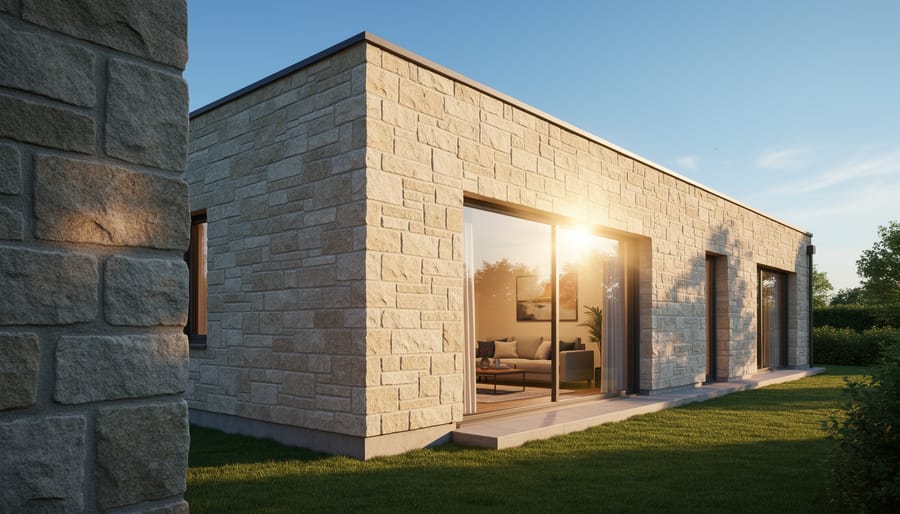
Natural stone’s thermal mass properties make it an exceptional passive climate control system. Dense materials like granite, limestone, and marble absorb heat during warm periods and release it gradually when temperatures drop, creating a natural buffer against temperature extremes. This thermal lag effect means stone walls and floors can reduce interior temperature fluctuations by several degrees without consuming any energy.
In practice, a stone-clad building in a temperate climate can reduce HVAC runtime by 15-30% compared to conventional construction. A residential project in Colorado documented a 25% decrease in heating costs after installing limestone flooring and granite accent walls, with indoor temperatures remaining stable within a 4-degree range throughout the day despite outdoor swings of 20 degrees or more.
Commercial buildings see even more impressive returns. A office complex in Arizona featuring thick stone walls reduced cooling energy consumption by 35%, translating to approximately $18,000 in annual savings. The stone absorbed daytime heat, preventing it from penetrating interior spaces, then released that stored warmth during cooler evening hours when natural ventilation could expel it.
The thermal mass advantage works best when paired with proper orientation and strategic placement. South-facing stone walls in northern climates capture and store solar heat, while shaded stone surfaces in hot regions prevent heat absorption. This passive regulation doesn’t replace mechanical systems entirely but significantly reduces their workload, delivering measurable energy savings year after year without maintenance requirements or system upgrades.
Strategic Stone Selection for Maximum Energy Performance
Best Stone Types for Thermal Efficiency
Understanding the thermal properties of different stone types is essential for maximizing energy efficiency in green building projects. Each stone variety offers distinct thermal conductivity characteristics that influence a building’s heating and cooling requirements.
Granite stands as one of the most thermally efficient options, with thermal conductivity ranging from 2.0 to 4.0 W/mK. Its dense crystalline structure provides excellent thermal mass, making it ideal for exterior cladding in climates with significant temperature fluctuations. When properly installed, granite can reduce HVAC loads by absorbing heat during the day and releasing it gradually at night.
Limestone offers moderate thermal conductivity between 1.3 and 2.5 W/mK, depending on density and porosity. This sedimentary stone works particularly well for interior applications where steady temperature regulation matters most. Its softer composition allows for easier installation while still providing substantial thermal benefits in floor systems and interior walls.
Slate delivers thermal conductivity values from 1.5 to 3.0 W/mK, with denser varieties performing better for energy efficiency applications. Its naturally layered structure creates slight air pockets that enhance insulating properties, making it effective for roofing systems in both hot and cold climates.
Marble typically registers between 2.5 and 3.5 W/mK thermal conductivity. While beautiful, its performance depends heavily on composition and quality. Reliable stone testing methods help verify thermal properties before specification.
For optimal results, select denser stones with lower porosity for exterior applications requiring maximum thermal mass. Interior installations benefit from stones with moderate conductivity that balance heat retention with comfort. Always consider regional climate patterns, building orientation, and intended use when specifying stone types for thermal efficiency goals.
Matching Stone to Climate Zones
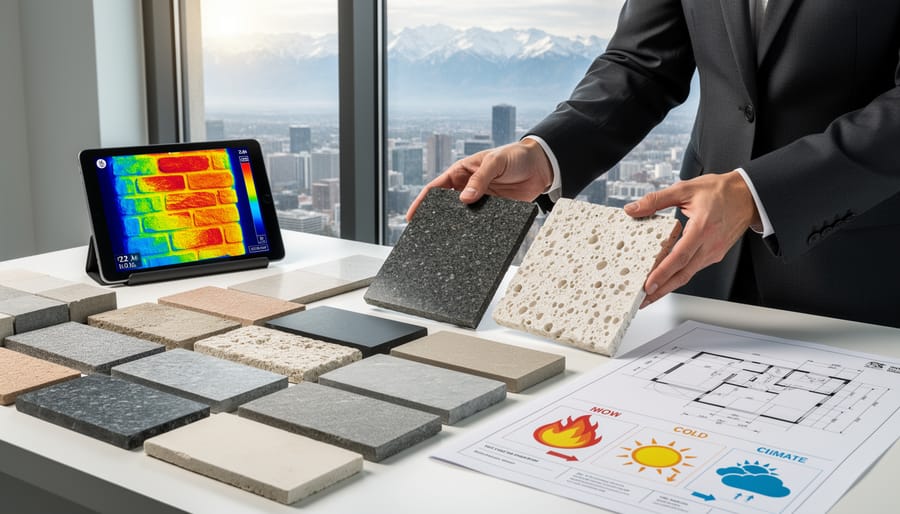
Selecting the right stone for your climate zone significantly impacts a building’s energy performance. The key lies in understanding thermal mass behavior in different temperature conditions and matching stone properties to your region’s dominant heating or cooling needs.
In heating-dominant climates—those with long, cold winters and moderate summers—dense, dark-colored stones like granite, basalt, and soapstone excel. These materials absorb and store solar heat during the day, then slowly release it during cooler evening hours, reducing heating demands. Interior stone floors and south-facing walls maximize this passive solar benefit. Thermal mass works best when paired with adequate insulation to prevent heat loss through exterior walls.
For cooling-dominant environments experiencing hot summers and mild winters, lighter-colored limestone, marble, and travertine offer advantages. Their reflective surfaces reduce heat absorption, while their thermal mass moderates temperature swings by absorbing excess daytime heat and releasing it during cooler nights. In these regions, stone works effectively on shaded exterior facades and interior floors with proper ventilation strategies to purge stored heat.
Mixed climates benefit from strategic stone placement. Use high-thermal-mass materials in areas receiving direct solar exposure during winter months, while specifying lighter stones with moderate density for spaces requiring year-round temperature stability.
Consider local stone varieties when possible. Regional materials are naturally adapted to local conditions and reduce transportation-related energy consumption. Consult thermal performance data sheets and work with experienced designers to optimize stone selection for your specific climate zone, ensuring your material choices actively contribute to energy efficiency rather than working against your building’s performance goals.
Energy-Smart Installation Techniques for Stone Projects
Optimizing Stone Placement for Passive Solar Gain
Stone’s thermal mass capabilities reach their full potential when strategically positioned to interact with the sun’s path throughout the day and across seasons. The key is placing high-mass stone elements where they receive direct sunlight during heating seasons while minimizing unwanted heat gain during cooling periods.
South-facing stone floors in northern hemisphere buildings serve as excellent thermal batteries. When winter sunlight streams through windows, these surfaces absorb heat during the day and radiate it back into living spaces after sunset. Position dark-colored stone such as slate or granite in these high-exposure areas to maximize absorption. Thickness matters—specify at least 2 inches for flooring to optimize heat storage capacity.
Interior stone walls perpendicular to south-facing glazing extend the thermal mass effect deeper into floor plans. These features capture reflected and radiated heat that would otherwise be lost. Designers can use modern design tools to model sun angles and predict thermal performance before installation.
Avoid placing stone thermal mass behind furniture, rugs, or wall coverings that block solar exposure or trap absorbed heat. Similarly, keep significant thermal mass away from north walls in cold climates, as these surfaces may actually cool interior spaces.
Consider seasonal sun angles when planning overhangs and shading devices. Summer sun should be blocked from hitting thermal mass floors, while lower winter sun penetrates fully. This optimization typically requires overhangs extending 2-3 feet beyond south-facing windows, though exact dimensions depend on latitude and local climate conditions.
Insulation Integration with Stone Systems
Maximizing stone’s thermal mass benefits requires strategic insulation placement that works with, not against, natural material properties. The key is positioning insulation on the exterior side of stone walls whenever possible, allowing the stone’s thermal mass to remain in contact with interior conditioned spaces. This configuration enables stone to absorb and release heat gradually, moderating indoor temperature fluctuations throughout the day.
Continuous insulation systems have proven particularly effective with stone cladding applications. Installing rigid foam boards or mineral wool outside the structural wall, then attaching stone veneer through appropriate anchoring systems, maintains the thermal envelope’s integrity while preserving the stone’s aesthetic and performance characteristics. This approach prevents thermal bridging and ensures consistent R-values across the wall assembly.
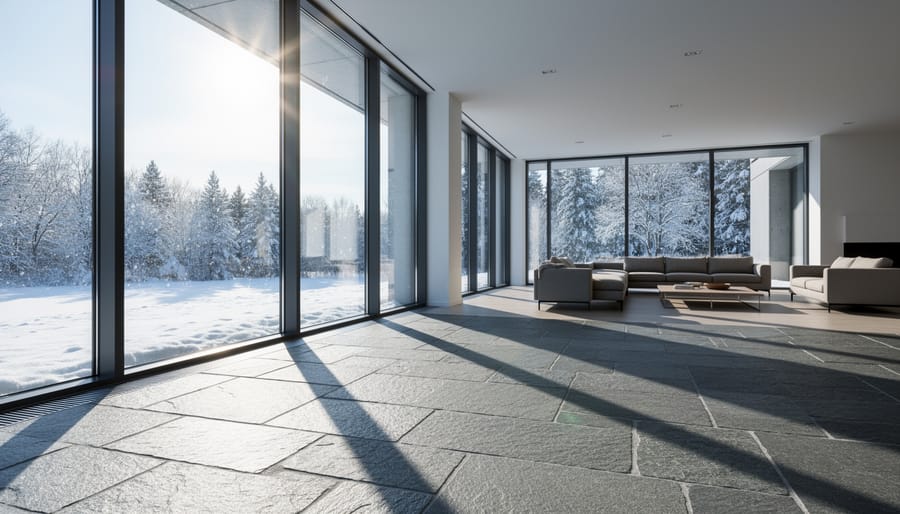
For interior stone applications like feature walls or flooring, consider the stone’s role in passive solar design. South-facing stone floors can absorb winter sunlight during the day and radiate warmth during evening hours, reducing heating demands. In these scenarios, insulation should focus on the building envelope rather than isolating the stone from occupied spaces.
Retrofitting historic stone buildings presents unique challenges. Interior insulation may be necessary when exterior modifications aren’t feasible, but vapor management becomes critical. Breathable insulation materials like wood fiber or hemp allow moisture movement through the wall assembly, preventing condensation damage while improving energy performance. Always consult with building science professionals to ensure compatibility between traditional stone construction and modern insulation techniques, particularly regarding moisture dynamics and structural loading considerations.
Minimizing Thermal Bridging in Stone Construction
Thermal bridging occurs when heat transfers through materials that conduct energy more readily than surrounding insulation, creating pathways for energy loss. In stone construction, these thermal bridges typically develop at connection points between stone cladding and structural frameworks, window perimeters, corners, and floor-to-wall junctions. Without proper detailing, these weak points can significantly compromise a building’s overall energy performance.
To minimize thermal bridging, incorporate continuous insulation layers that completely wrap the building envelope, ensuring no gaps at attachment points. When anchoring stone cladding, use thermally broken stainless steel or composite fastening systems rather than solid metal ties that conduct heat directly through the insulation layer. Consider positioning insulation on the exterior side of the structural wall, which helps maintain consistent interior temperatures and prevents condensation issues.
At window and door openings, extend insulation around frames and use insulated spacers between stone reveals and rough openings. Design corner details with insulation continuity in mind, avoiding situations where structural elements penetrate the thermal barrier. For stone flooring transitions, install insulated subfloor systems and thermal breaks at slab edges. Proper detailing at these critical junctions can reduce heat loss by 15-30 percent compared to conventional installations, directly improving energy efficiency while maintaining the aesthetic and performance benefits of natural stone construction.
Green Building Certifications and Stone’s Contribution
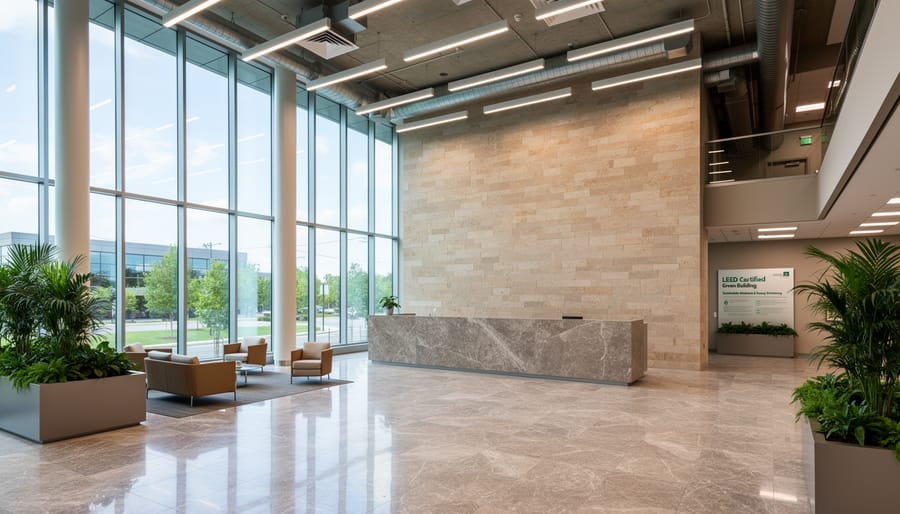
LEED Credits Stone Projects Can Earn
Natural stone contributes to LEED certification across three primary credit categories, making it a strategic choice for projects pursuing green building credentials.
Under Energy & Atmosphere, stone’s thermal mass properties directly support credits related to optimizing energy performance. Dense stone materials absorb and slowly release heat, reducing HVAC cycling and overall energy consumption. Projects can earn points by demonstrating improved energy modeling results when incorporating stone’s thermal properties into building envelopes or interior applications. Stone flooring in passive solar designs, for instance, helps capture and distribute heat naturally, reducing mechanical system demands.
The Materials & Resources category offers substantial opportunities for stone projects. Regional materials credits reward sourcing stone from quarries within 500 miles of the project site, reducing transportation impacts. Many natural stone products also qualify for recycled content credits when salvaged or reclaimed materials are used. Since stone is extracted rather than manufactured, it typically has lower embodied energy compared to synthetic alternatives. Projects can document stone’s contribution to construction waste management through precise cutting that minimizes jobsite waste.
Indoor Environmental Quality credits recognize stone’s role in healthier interior spaces. Natural stone emits no volatile organic compounds, contributing to low-emitting materials credits. Its durability eliminates the need for chemical treatments, sealants, or frequent replacement associated with other finishes. Stone surfaces are also non-allergenic and easy to clean without harsh chemicals, supporting enhanced indoor air quality strategies that protect occupant health and well-being throughout the building’s lifecycle.
Documenting Stone’s Energy Performance
Tracking energy performance metrics for natural stone installations is essential for achieving LEED, WELL, or other green building certifications. Begin documentation during the design phase by recording baseline energy calculations and thermal modeling data that justify stone selection. Your architect or energy consultant should provide heat transfer coefficients, thermal mass calculations, and anticipated cooling/heating load reductions specific to your stone application.
During construction, maintain detailed records of stone sourcing distances, transportation methods, and installation practices that minimize energy consumption. Photograph thermal breaks, proper insulation integration, and reflective stone surfaces that contribute to energy goals. These visual records support certification submissions and demonstrate commitment to environmental responsibility.
Post-occupancy monitoring provides the most valuable data. Install temperature sensors near stone surfaces to measure thermal regulation effects. Compare actual HVAC runtime and energy bills against pre-construction projections. Many certification programs require one to three years of energy use data, so establish a consistent tracking system from day one.
Work with your certification consultant to format this data according to program requirements. Include Environmental Product Declarations (EPDs) from stone suppliers, energy models showing stone’s contribution to overall building performance, and utility bills demonstrating achieved savings. Comprehensive documentation transforms your stone project into a verified case study for future sustainable building efforts.
Real Projects, Real Energy Savings: Stone Success Stories
Residential Retrofit: 40% Heating Cost Reduction
A 1970s ranch-style home in Colorado demonstrates the tangible benefits of incorporating natural stone into energy-efficient renovations. The homeowners replaced carpet and vinyl flooring with limestone tiles throughout the main living areas and added an interior stone accent wall behind their wood-burning stove. These changes contributed to a documented 40% reduction in annual heating costs.
The limestone flooring serves as thermal mass, absorbing heat from southern-facing windows during winter days and releasing it gradually throughout the evening. This passive solar strategy reduced the home’s reliance on forced-air heating by maintaining more stable indoor temperatures. The stone accent wall behind the heating source similarly captured and radiated warmth long after the fire diminished.
Energy monitoring over two heating seasons revealed the home maintained comfortable temperatures with significantly less furnace runtime. The thermal properties of stone created a natural heat battery effect, particularly noticeable during Colorado’s cold nights when exterior temperatures dropped sharply.
Beyond energy savings, the homeowners reported improved indoor air quality compared to their previous carpeted floors, and the stone surfaces required minimal maintenance. The project’s success illustrates how strategic stone placement in residential retrofits delivers measurable performance improvements alongside aesthetic upgrades, making it an attractive option for homeowners pursuing both sustainability and design excellence.
Commercial Stone Installation Cuts HVAC Runtime
A mid-sized commercial office building in Portland, Oregon demonstrates how stone thermal mass significantly reduces HVAC energy consumption. The 12,000-square-foot professional office space incorporated 4-inch thick limestone flooring throughout common areas and perimeter offices, creating substantial thermal mass that moderates indoor temperatures naturally.
Before renovation, the building’s HVAC system ran approximately 14 hours daily to maintain comfort levels. After installing the limestone flooring and complementary granite wall features in the lobby, mechanical runtime dropped to just 9 hours per day, representing a 36% reduction in heating and cooling cycles.
The building’s facilities manager tracked energy usage for 18 months post-installation. During summer months, the stone absorbed heat throughout the day, reducing air conditioning demand during peak afternoon hours. In winter, radiant floor heating warmed the limestone mass overnight using off-peak electricity rates. The stone then released stored heat gradually during business hours, minimizing furnace operation.
Annual energy costs decreased by $8,400, while occupant comfort surveys showed improved satisfaction with temperature stability. The stone eliminated the temperature swings common in lightweight construction, where HVAC systems constantly cycle on and off. This real-world application proves that strategic stone installation in commercial environments delivers measurable operational savings while creating elegant, durable interior spaces that require minimal maintenance over decades of service.
Cost-Benefit Analysis: Stone’s Long-Term Energy ROI
Calculating Payback Periods
Understanding when energy savings offset your initial investment requires a straightforward calculation framework. The basic payback period formula divides the additional upfront cost of energy-efficient stone installation by the annual energy savings it generates.
For example, consider a thermal mass stone floor installation. If the stone component adds $5,000 to your project cost compared to standard flooring, and your energy bills decrease by $400 annually through reduced heating and cooling needs, your simple payback period is 12.5 years. Given that quality stone installations last 50-100 years, you’ll benefit from decades of net savings.
A more comprehensive long-term cost analysis should factor in rising energy costs. If utility rates increase 3% annually, that same $400 first-year savings grows substantially over time, shortening your effective payback period to approximately 10 years.
Regional climate significantly impacts these calculations. A thermally massive granite installation in Arizona might achieve payback in 8-10 years due to extreme temperature swings, while the same application in mild coastal climates could take 15-18 years. Similarly, buildings with high occupancy and intensive HVAC usage see faster returns than occasionally used structures. Request energy modeling from your design team to establish realistic projections specific to your location and building type.
Beyond Energy: Additional Value Factors
Energy efficiency delivers immediate utility savings, but natural stone’s true financial value extends far beyond monthly bills. The exceptional durability of materials like granite, marble, and slate translates to decades of maintenance-free performance, eliminating costly replacement cycles common with synthetic alternatives. Stone facades and flooring withstand weathering, UV exposure, and daily wear without degrading, preserving both function and appearance over 50-100 year lifespans.
This longevity directly impacts property valuation. Buildings featuring quality stone command premium resale values and attract tenants willing to pay higher rents for lasting quality and reduced operational disruptions. Insurance costs often decrease due to stone’s fire resistance and structural integrity. When calculating total cost of ownership, the initial investment in stone materials amortizes across extended service life, yielding superior returns compared to products requiring periodic replacement. For developers and property owners, these combined factors—durability, minimal maintenance, enhanced market value, and operational savings—create compelling financial justification beyond energy performance alone.
Integrating natural stone into green building projects represents a strategic convergence of timeless beauty and measurable energy performance. As we’ve explored throughout this guide, stone’s thermal mass properties, durability, and low-maintenance requirements position it as a high-performance material that actively contributes to reduced energy consumption over a building’s lifecycle. From passive solar design applications to advanced hybrid wall systems, natural stone offers architects and designers versatile solutions that meet both aesthetic aspirations and sustainability mandates.
The evidence is clear: when properly specified and installed, natural stone can significantly enhance a building’s energy profile while delivering the permanence and visual impact clients demand. The key lies in understanding regional climate considerations, selecting appropriate stone types for specific applications, and working with knowledgeable suppliers who can guide material selection based on performance criteria rather than appearance alone.
For professionals planning their next sustainable construction project, natural stone deserves serious consideration not as a luxury upgrade, but as a functional building component that pays dividends in energy savings, reduced maintenance costs, and enduring value. The combination of ancient material science and modern building technology creates opportunities to design structures that are simultaneously beautiful, efficient, and built to last generations.