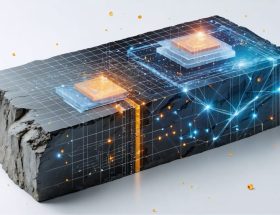

Biotite mica, the dark crystalline mineral speckled throughout granite, stands at an unexpected intersection of ancient geology and emerging technology. This iron-magnesium silicate, responsible for granite’s distinctive salt-and-pepper appearance, possesses layered molecular structures and electrical properties that researchers are now investigating for bio-computing interfaces—systems where biological materials facilitate information processing.
Within granite’s igneous matrix, biotite forms during slow magnesium-rich magma crystallization at temperatures between 700-900°C. Its perfect basal cleavage creates atom-thin sheets with exceptional surface-area-to-volume ratios, while its iron content enables electron transfer capabilities. These same geological characteristics that make biotite identifiable in countertops and building facades now attract materials scientists exploring organic semiconductors and biomimetic computing substrates.
The convergence seems improbable: a mineral formed millions of years ago beneath Earth’s crust potentially enabling next-generation computing. Yet biotite’s naturally occurring nanolaminar architecture mirrors engineered materials in experimental neuromorphic devices. Its presence in granite—already valued for durability, aesthetic appeal, and sustainability—positions this igneous rock as more than decorative stone. Understanding biotite’s dual role as both geological indicator and functional material requires examining its crystallographic structure, its behavior within granite’s mineralogical ecosystem, and the emerging research translating natural properties into technological applications.
This exploration bridges traditional stone knowledge with cutting-edge materials science, revealing how ancient minerals may shape computing’s sustainable future.
What Makes Biotite Unique in Granite Composition
The Mineral Structure of Biotite
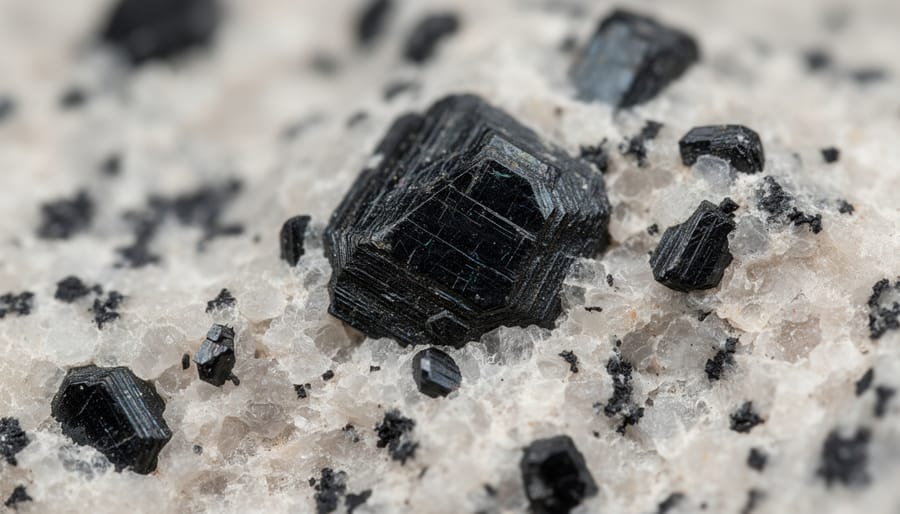
Biotite distinguishes itself from other granite minerals through its unique layered silicate structure. Unlike the three-dimensional framework of quartz or the blocky crystalline arrangement of feldspar, biotite forms in thin, flexible sheets that stack upon one another. This sheet-like configuration, characteristic of mica minerals, consists of aluminum, silicon, and oxygen atoms arranged in repeating layers, with potassium ions binding these sheets together.
What truly sets biotite apart is its iron and magnesium content. These elements occupy specific positions within the layered structure, giving biotite its characteristic dark brown to black coloration. The iron content particularly influences the mineral’s properties, including its electrical conductivity and magnetic response—features that make biotite especially relevant in advanced material applications.
In contrast, feldspar contains primarily aluminum, silicon, oxygen, and elements like potassium, sodium, or calcium, appearing in lighter shades of white, pink, or gray. Quartz, composed solely of silicon and oxygen, forms clear to milky crystals. While feldspar provides granite’s overall framework and quartz contributes hardness, biotite’s iron-rich composition and layered structure offer distinct functional properties. These structural differences become crucial when considering biotite’s role in bio-computing interfaces, where the mineral’s ability to interact with biological systems and conduct signals emerges from its unique atomic arrangement and elemental composition.
Biotite’s Electrical and Conductive Properties
Biotite’s unique crystal structure gives it naturally occurring electrical properties that have captured the attention of researchers exploring bio-computing interfaces. As a phyllosilicate mineral, biotite contains layers of iron and magnesium that create pathways for electron movement, making it inherently conductive compared to other minerals commonly found in granite. This layered arrangement allows biotite to store and transfer electrical charges, functioning as a natural semiconductor.
The mineral’s ability to conduct electricity stems from its iron content and the spacing between its atomic layers. When exposed to electrical fields, biotite can respond predictably, maintaining charge stability across its surface. These semiconductive qualities position biotite as a material of interest for developing bio-computing applications, where natural materials interface with biological systems.
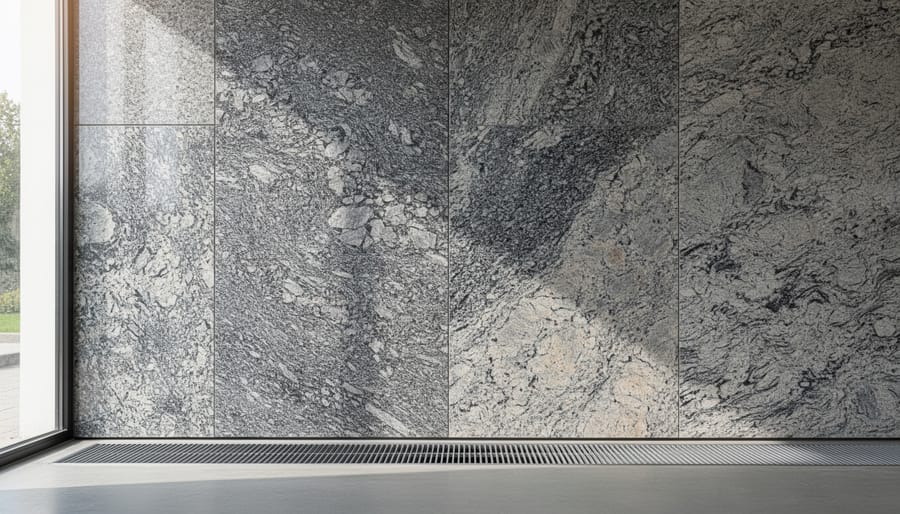
Recent research has explored how biotite’s charge storage capabilities could support low-energy computing processes. The mineral’s natural abundance in granite makes it an accessible material for experimental applications in green technology. While still in early research phases, biotite’s electrical properties demonstrate how traditional building materials might serve dual purposes in future architectural designs that integrate computing elements directly into stone surfaces, merging aesthetics with functionality.
Understanding Bio-Computing Interfaces
The Role of Natural Materials in Bio-Computing
The intersection of natural materials and cutting-edge technology has opened unexpected pathways in bio-computing research. Scientists are increasingly turning to minerals like biotite in granite as potential interfaces for biological computing systems, driven by three compelling factors: biocompatibility, environmental sustainability, and distinctive electrical characteristics.
Natural stone materials offer inherent biocompatibility that synthetic alternatives struggle to replicate. Biotite’s layered crystal structure and mineral composition interact favorably with biological systems, reducing rejection risks when interfacing with living cells or tissues. This compatibility is crucial for developing computing systems that merge biological and electronic components.
Sustainability concerns further motivate this exploration. As the technology sector grapples with electronic waste and resource depletion, naturally occurring minerals present renewable alternatives. Granite, one of Earth’s most abundant igneous rocks, provides readily available material without requiring energy-intensive manufacturing processes. The biotite within granite exists in stable, accessible forms that minimize environmental extraction impacts.
Perhaps most intriguing are biotite’s unique electrical properties. Its layered silicate structure creates natural semiconducting pathways, while iron and magnesium content enables electron transfer mechanisms similar to those found in biological systems. These characteristics allow biotite to potentially bridge the gap between organic neural networks and electronic circuits, facilitating signal transmission in ways traditional silicon-based systems cannot achieve.
This convergence of natural abundance, biological harmony, and functional electrical behavior positions biotite as a promising candidate for next-generation computing platforms that blend nature with technology.
How Biotite in Granite Interfaces with Biological Systems

Surface Topology and Cellular Interaction
Biotite’s distinctive layered crystalline structure creates unique surface properties that make it particularly interesting for biological interactions. Unlike other minerals in granite, biotite exhibits a sheet-like architecture with exposed surfaces that can facilitate molecular adhesion and cellular attachment. These naturally occurring layers, formed through millions of years of geological processes, create microscopic grooves and plateaus that provide textured surfaces at the nanoscale level.
The mineral’s chemical composition, rich in iron and magnesium, contributes to its surface reactivity with biological molecules. When biotite surfaces are exposed through natural weathering or polishing processes, they present sites where proteins and cellular membranes can form stable connections. This interaction potential stems from the mineral’s slight electrical charge distribution across its layered surfaces, which can attract and orient biomolecules in specific patterns.
For bio-computing applications, these surface characteristics offer promising avenues for creating interfaces between traditional stone materials and biological components. The platelets within biotite can potentially support cell cultures or provide substrates for biosensor applications, bridging the gap between natural stone architecture and emerging biotechnology. This unique property positions biotite-bearing granite as more than just an aesthetic building material, opening possibilities for responsive surfaces in next-generation architectural design.
Ion Exchange and Signal Transmission
Biotite’s layered crystalline structure creates unique opportunities for ion exchange, a property that researchers are now exploring for bio-computing applications. The mineral’s ability to exchange potassium, magnesium, and iron ions within its lattice structure allows it to interact with both biological molecules and electronic signals. When integrated into specialized interfaces, biotite can facilitate communication between living cells and digital systems by converting biochemical signals into measurable electrical responses.
The ion exchange process works through biotite’s negatively charged layers, which attract and hold positively charged ions. In bio-computing contexts, these exchangeable sites can bind with organic molecules or proteins, creating a bridge between biological activity and electronic detection systems. This capability positions biotite-containing granite as a potential substrate material for natural stone sensors and bioelectronic devices.
Current research focuses on optimizing biotite’s ion exchange rate and selectivity for specific applications. The mineral’s natural abundance in granite, combined with its chemical stability and conductivity properties, makes it an economically viable option for developing sustainable computing interfaces that could revolutionize how we integrate technology into built environments.
Current Research and Real-World Applications
Recent research into biotite-containing granite has revealed promising applications in emerging bio-computing technologies, where natural materials interface with biological systems. Scientists at the Massachusetts Institute of Technology’s Materials Science Laboratory conducted groundbreaking studies in 2023 examining how biotite’s layered crystalline structure can facilitate electron transfer in bioelectronic devices. Their findings demonstrated that biotite’s iron content and sheet-like molecular arrangement create natural pathways for electrical conductivity when paired with engineered biological components.
A notable case study from the Technical University of Munich explored biotite-rich granite surfaces as substrates for biosensor development. Researchers discovered that biotite’s natural piezoelectric properties—its ability to generate electrical charge under mechanical stress—made it exceptionally suitable for pressure-sensitive biological monitoring systems. The project successfully created prototype medical sensors using polished granite slabs, where biotite crystals acted as natural transducers converting biological signals into measurable electrical outputs.
In architectural applications, a 2024 collaborative project between Stanford University and several Silicon Valley technology firms investigated biotite granite panels as integrated building materials for smart structures. These panels, embedded with microscale biocomputing elements, leverage biotite’s semiconducting properties to create responsive building envelopes that monitor air quality and environmental conditions. The project represents a significant advancement in mineral computing applications, demonstrating how traditional building materials can evolve into functional technological components.
Laboratory testing at Japan’s National Institute of Advanced Industrial Science and Technology has shown that biotite’s potassium and aluminum composition creates stable interfaces with organic molecules, essential for bio-hybrid computing systems. Early prototypes suggest potential applications in sustainable data storage systems, where biotite substrates could support biological computing matrices while maintaining the durability and longevity expected from granite installations. These developments signal an exciting convergence of natural stone craftsmanship and cutting-edge technological innovation.
Practical Implications for Architecture and Design
Selecting Biotite-Rich Granite Varieties
When sourcing granite with elevated biotite content for bio-computing interfaces or smart stone applications, focus on varieties displaying prominent dark mineral concentrations. Steel Grey granite from India typically contains 15-20% biotite, making it an excellent candidate for technological applications requiring conductive properties. Similarly, Impala Black from South Africa and Cambrian Black from Canada exhibit high biotite concentrations with uniform distribution patterns ideal for precision applications.
When selecting slabs, examine the crystal size and biotite distribution under proper lighting. Well-formed biotite crystals measuring 2-5mm provide optimal electrical properties while maintaining structural integrity. Request mineralogical analysis reports from quarries to verify biotite percentages and purity levels, as contamination with other micas can affect performance characteristics.
Work with specialized stone suppliers familiar with technological applications rather than traditional decorative stone vendors. These suppliers understand the importance of consistent mineral composition across batches and can provide documentation on electrical conductivity measurements. Geographic origin matters significantly, as biotite composition varies between geological formations, affecting its suitability for bio-computing interfaces.
Sustainability and Future Potential
The integration of biotite-rich granite into technological applications presents compelling environmental advantages that align with contemporary sustainability goals. Unlike synthetic materials that require energy-intensive manufacturing processes, natural stone exists as a ready-made resource requiring minimal processing for specialized applications. This inherent availability reduces the carbon footprint associated with material production, positioning granite as an eco-conscious choice for emerging bio-computing technologies.
Granite sourcing for specialized technological purposes differs significantly from traditional quarrying practices. When biotite extraction focuses on specific mineral compositions, selective mining techniques can minimize waste and environmental disruption. Modern quarrying operations increasingly adopt responsible practices, including land restoration and water conservation measures, ensuring that material extraction for innovative applications maintains ecological balance. The longevity and durability of granite-based components further enhance sustainability by reducing replacement frequency and associated resource consumption.
Looking forward, the convergence of natural stone properties with bio-computing materials holds remarkable promise. Research into biotite’s semiconductor-like behaviors suggests potential applications in low-power computing systems and biosensors that could revolutionize medical diagnostics and environmental monitoring. As explored in sustainable energy solutions, natural materials increasingly demonstrate capabilities once thought exclusive to synthetic alternatives.
The next decade may witness biotite-enhanced interfaces becoming standard in specialized computing applications, particularly where biocompatibility and environmental stability prove critical. As material science advances, the humble minerals within granite could emerge as foundational elements in sustainable technology infrastructure, bridging ancient geological processes with cutting-edge innovation. This evolution represents not merely technological advancement but a philosophical shift toward harmonizing human innovation with Earth’s natural resources.
Biotite in granite stands at a remarkable intersection between ancient geological processes and tomorrow’s technological innovations. What begins as a mineral component formed millions of years ago deep within the earth now emerges as a promising candidate for bio-computing interfaces, demonstrating how natural stone continues to evolve beyond traditional architectural applications. This convergence highlights granite’s enduring relevance in an increasingly technology-driven world.
For consumers and design professionals alike, understanding biotite’s dual nature offers valuable perspective. Its aesthetic contribution to granite’s distinctive appearance remains unchanged, providing the speckling and depth that makes each slab unique for countertops, flooring, and facades. Simultaneously, its electrical properties and layered structure position it as a material of interest for researchers developing sustainable computing solutions that merge biological systems with mineral substrates.
This unexpected versatility reinforces why natural stone deserves continued exploration and investment. As architects and designers consider materials for future projects, granite exemplifies how traditional choices can align with cutting-edge innovation. Whether specified for its proven durability and timeless beauty or appreciated for its potential role in emerging technologies, biotite-bearing granite represents the kind of material intelligence that bridges heritage craftsmanship with forward-thinking design. The story of biotite reminds us that natural stone remains as dynamic and relevant today as ever before.