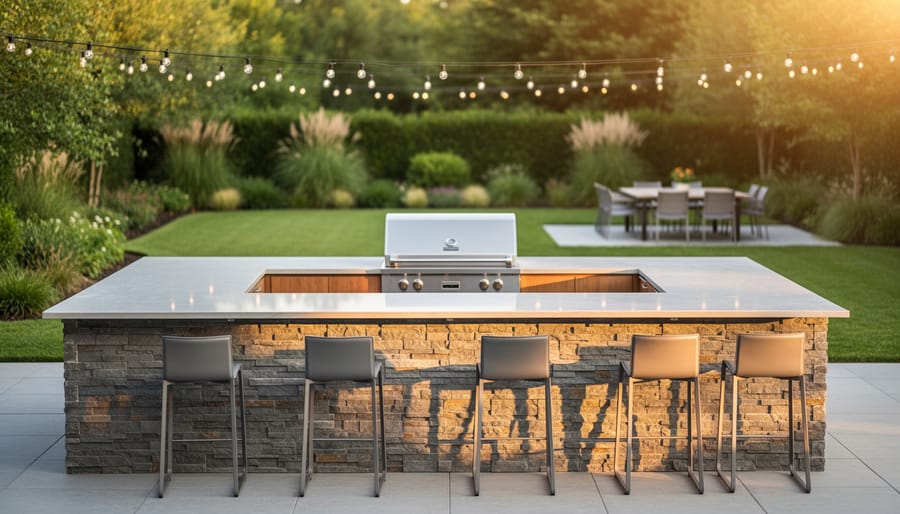
Veneer stone delivers the luxurious appearance of natural stone at a fraction of the weight and cost, making it an increasingly popular choice for outdoor kitchen construction. This engineered product consists of thin stone slices—typically one to two inches thick—that adhere directly to prepared surfaces, eliminating the need for extensive structural reinforcement required by full-thickness stone installations.
The material offers exceptional versatility for outdoor kitchen and dining spaces, where homeowners seek premium aesthetics without premium price tags. Unlike traditional stone masonry that demands specialized skills and significant labor hours, veneer stone installation follows a straightforward process that reduces project timelines by 40-60 percent while maintaining authentic visual appeal.
Weather resistance remains a primary concern for any outdoor application. Quality veneer stone products undergo rigorous testing for freeze-thaw cycles, moisture penetration, and UV exposure, with properly installed systems lasting 25-50 years in most climates. The reduced weight—approximately 10-15 pounds per square foot compared to 30-40 pounds for full-thickness stone—also minimizes structural stress on existing foundations and framework.
Cost considerations typically show veneer stone installations running $20-40 per square foot installed, while comparable full-thickness stone projects range from $50-100 per square foot. This significant price differential allows homeowners to allocate budget toward other outdoor kitchen features like premium appliances, extended counter space, or enhanced lighting systems without sacrificing the sophisticated stone aesthetic that defines high-end outdoor living spaces.
What Is Veneer Stone and How Does It Differ from Full-Thickness Stone?
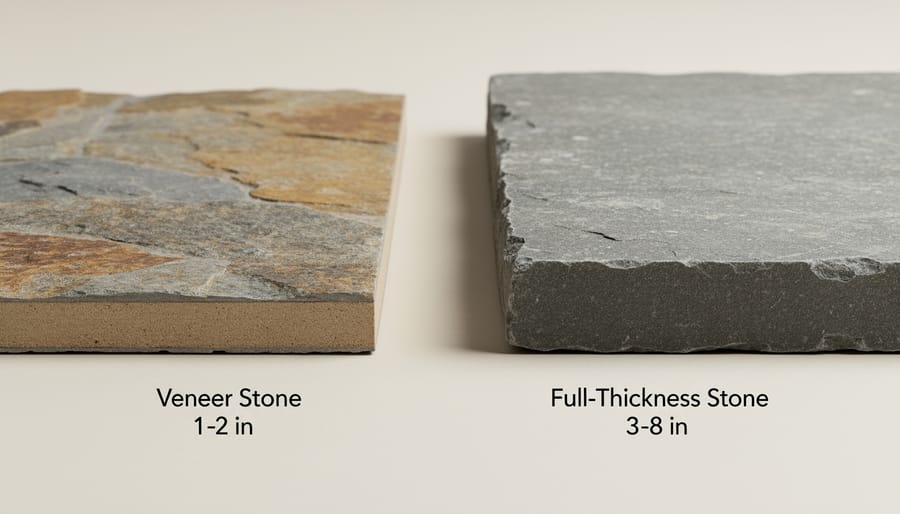
Veneer stone is a thinner version of natural stone specifically engineered for vertical applications like outdoor kitchen facades, fireplace surrounds, and accent walls. Unlike full-thickness stone that ranges from 3 to 8 inches deep, veneer stone typically measures just 1 to 2 inches thick, making it significantly lighter and more versatile for a variety of installation scenarios.
The manufacturing process for natural stone veneer begins with quarrying full-size blocks of stone, which are then cut into thin slices using specialized diamond-blade saws. This process preserves the authentic texture, color variations, and natural beauty of the original stone because veneer pieces are actual stone—not synthetic replicas. Each piece retains the same geological characteristics and mineral composition as its full-thickness counterpart, ensuring genuine natural stone aesthetics.
The primary difference between veneer and full-thickness stone lies in weight and installation requirements. A full-thickness stone wall can weigh hundreds of pounds per square foot, often requiring substantial structural support, deep foundations, and specialized masonry skills. Veneer stone, by contrast, weighs approximately 12 to 15 pounds per square foot, allowing it to be installed on standard wood-framed walls, existing structures, or concrete block without extensive reinforcement.
This weight reduction dramatically simplifies installation complexity. Veneer stone can be applied using mortar or modern adhesive systems, similar to setting tile, making it accessible to skilled DIYers and reducing professional installation time and costs. Full-thickness stone typically requires experienced stonemasons who build up the wall stone by stone, ensuring proper weight distribution and structural integrity.
Despite its reduced thickness, quality veneer stone maintains complete authenticity in appearance. When properly installed, the exposed face is indistinguishable from full-thickness stone since what you see is genuine natural stone. The thinner profile simply means less material extends behind the visible surface, creating an efficient solution that delivers natural beauty without unnecessary bulk or expense.
The Practical Advantages of Veneer Stone for Outdoor Kitchens
Structural Requirements and Weight Considerations
One of the most practical advantages of veneer stone for outdoor kitchens is its significantly reduced weight compared to full-thickness natural stone. Traditional stone masonry can weigh 12-15 pounds per square foot or more, while manufactured and natural stone veneer typically weighs just 3-8 pounds per square foot. This dramatic weight reduction has important implications for both new construction and retrofit projects.
For existing patios and outdoor structures, veneer stone often eliminates the need for costly foundation reinforcement. Many homeowners discover that their current concrete slab or deck can support a veneer stone outdoor kitchen without additional structural work, whereas full-thickness stone would require engineering assessments and potentially expensive upgrades to footings and support systems.
This lighter profile makes veneer stone particularly valuable for second-story installations, rooftop kitchens, or applications over living spaces where load-bearing capacity is limited. The reduced structural demands translate directly into cost savings, as you avoid the expenses associated with strengthened foundations, additional support columns, or upgraded framing.
Installation is also more efficient since the lighter material requires fewer workers and less specialized equipment. Masons can work more quickly without the physical demands of handling heavy stone blocks, further reducing labor costs. For DIY enthusiasts, veneer stone presents a more manageable option, though professional installation is still recommended for optimal results and longevity in outdoor cooking environments where proper moisture barriers and drainage are critical to long-term performance.
Cost Efficiency Without Compromising Aesthetics
One of the most compelling advantages of veneer stone for outdoor kitchens is the significant cost savings it delivers while maintaining the same visual appeal as full-thickness stone. The price difference becomes apparent across multiple aspects of your project.
Material costs for veneer stone typically run 30-50% less than full-thickness stone of comparable appearance. A natural stone veneer might cost between $6-15 per square foot, while full-thickness stone ranges from $15-30 per square foot or more, depending on the stone type and origin. This difference alone can translate to savings of several thousand dollars on a typical outdoor kitchen project.
Labor expenses also favor veneer stone. Because the material is lighter and easier to handle, installation often requires 25-40% less time than full-thickness stone. Masons can work more efficiently, and the reduced weight means fewer workers are needed for positioning and placement. This efficiency directly impacts your bottom line through reduced labor hours.
Foundation requirements present another cost-saving opportunity. Full-thickness stone demands robust structural support to bear its considerable weight, often requiring reinforced footings and heavy-duty framing. Veneer stone’s lighter profile allows for standard foundations without extensive reinforcement, potentially saving hundreds to thousands of dollars in structural work.
The remarkable aspect of these savings is that they come with zero compromise in exterior appearance. Once installed, veneer stone is virtually indistinguishable from full-thickness stone when viewed from the outside, delivering authentic stone aesthetics at a fraction of the total project cost.
Installation Speed and Complexity
One of the most compelling advantages of veneer stone for outdoor kitchens is the significantly streamlined installation process compared to full-thickness natural stone. Because veneer stones are thinner and lighter—typically weighing 75% less than solid stone—they can be applied directly to existing concrete, masonry, or specially prepared wood-framed walls without requiring substantial structural reinforcement.
The installation process moves considerably faster since veneer stones don’t demand the extensive prep work and specialized masonry techniques that full-thickness stone requires. Most veneer stone products use a mortar-based adhesion system that professional installers can apply efficiently, with many projects completing in days rather than weeks. This reduced timeline directly translates to lower labor costs, as fewer worker-hours are needed to achieve professional results.
Additionally, veneer stone installation requires less specialized equipment. There’s no need for heavy-duty machinery to move and position bulky stones, and the cutting and fitting process uses standard masonry tools. This accessibility means you have more contractor options and aren’t limited to specialists who command premium rates.
For homeowners working within budget constraints or tight timelines, these factors make veneer stone particularly attractive. The faster installation also means less disruption to your property and daily routine. However, proper installation remains critical for durability and performance, so selecting experienced contractors familiar with veneer stone application techniques ensures your outdoor kitchen will withstand the elements and maintain its appearance for years to come.
Best Stone Types and Finishes for Outdoor Kitchen Veneer Applications
Weather-Resistant Stone Options
Selecting the right stone veneer for your outdoor kitchen requires understanding how different natural stone varieties perform in exterior conditions. Four popular options stand out for their weather resistance and durability.
Granite veneer offers exceptional weather resistance across all climates. With a porosity level below 0.5%, granite naturally repels water and withstands freeze-thaw cycles without cracking. This makes it ideal for regions experiencing harsh winters. Granite’s density and low absorption rate also prevent staining from cooking oils and outdoor elements.
Quartzite rivals granite in durability while providing unique aesthetic appeal. This metamorphic stone typically has porosity levels between 0.5% and 1%, offering excellent frost resistance. Quartzite’s natural hardness protects against scratches and chips, making it well-suited for high-use outdoor kitchen surfaces in both hot and cold climates.
Slate veneer brings distinctive texture and layered beauty to outdoor kitchens. While slightly more porous than granite at 1-3%, quality slate still provides good weather resistance when properly sealed. It performs best in moderate climates but can handle freeze-thaw conditions when sourced from reputable suppliers who provide dense, low-porosity varieties.
Limestone veneer offers warm, earthy tones but requires more consideration. With porosity levels ranging from 5-20%, limestone needs regular sealing to prevent water absorption and staining. It works best in dry, warm climates with minimal freeze-thaw exposure. However, dense limestone varieties can perform adequately in temperate regions when maintained properly with quality sealants applied annually.
Surface Finishes That Balance Beauty and Functionality
The surface finish you select for your veneer stone outdoor kitchen directly impacts both safety and long-term appearance. Understanding the characteristics of different finishes helps you choose options that perform well in outdoor environments while maintaining visual appeal.
Natural cleft finishes showcase the stone’s inherent texture as it splits along natural planes. This irregular surface provides excellent slip resistance when wet, making it ideal for outdoor kitchen flooring and horizontal surfaces exposed to moisture. The textured profile also effectively conceals minor weathering, dirt accumulation, and water spots that naturally occur in outdoor settings. Natural cleft works particularly well with slate, quartzite, and certain sandstone varieties, offering an organic, rustic aesthetic that complements casual outdoor living spaces.
Honed finishes deliver a smooth, matte surface without the high gloss of polished stone. This finish strikes a balance between refined elegance and practical functionality. While smoother than natural cleft, properly honed surfaces still offer adequate traction for most outdoor applications. The matte appearance minimizes visible water spots and weathering patterns better than polished finishes, which can show wear more readily in exterior conditions.
Textured finishes, including thermal and brushed treatments, combine visual interest with enhanced grip. Thermal finishing creates a slightly rough surface through high-heat application, ideal for granite and similar dense stones. These finishes prove especially valuable for countertops, backsplashes, and seating areas where you want durability without sacrificing the sophisticated appearance veneer stone provides.
Consider your climate, expected foot traffic, and design vision when selecting finishes, as each offers distinct advantages for different outdoor kitchen applications.
Design Applications: Where to Use Veneer Stone in Your Outdoor Kitchen
Island and Counter Bases
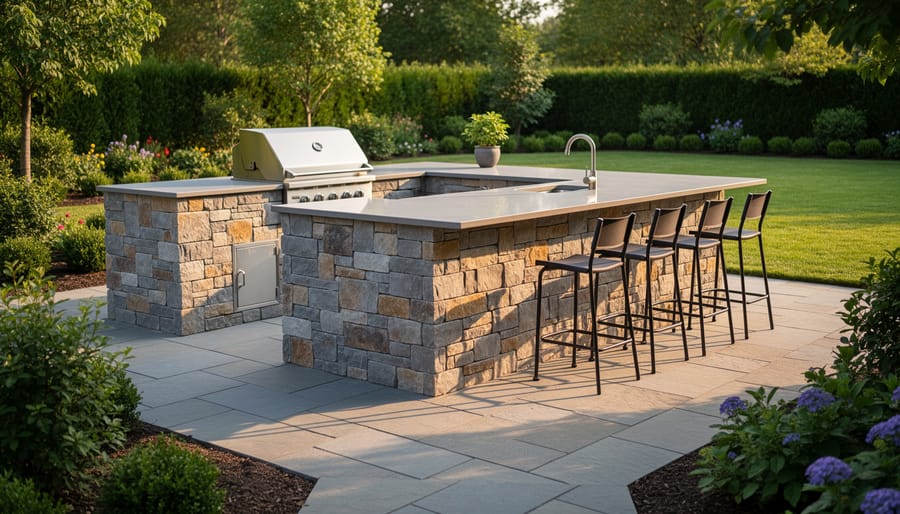
Veneer stone transforms cooking islands and counter bases into commanding architectural features without the structural challenges of full-thickness stone. These central elements benefit tremendously from the 40-60% weight reduction that veneer provides, allowing builders to create substantial-looking islands on standard concrete slabs or reinforced wooden frames rather than requiring costly foundation upgrades.
The continuous stone pattern wrapping around island bases creates visual cohesion that draws guests naturally toward these social hubs. Popular configurations include waterfall edges where veneer extends seamlessly from countertop to floor, L-shaped islands with differentiated stone patterns to define cooking versus dining zones, and bar-height sections that showcase stacked ledgestone or textured profiles at eye level.
Installation flexibility allows veneer application over various substrates including concrete board, exterior-grade plywood, or masonry block. This versatility enables homeowners to retrofit existing islands or build custom shapes without masonry expertise. The lightweight nature also simplifies electrical and plumbing access, as modifications require less structural disruption than solid stone alternatives. Properly sealed veneer withstands heat exposure from adjacent grills and moisture from prep areas while maintaining its dramatic visual presence season after season.
Backsplashes and Accent Walls
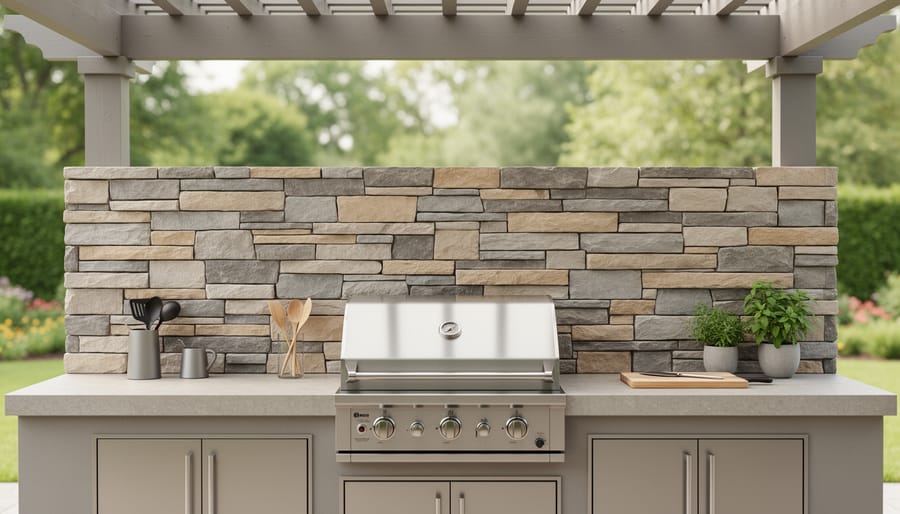
Veneer stone excels as both a protective surface and design feature for outdoor kitchen backsplashes. Installing veneer behind grills, cooktops, and prep areas shields walls from heat, grease, and moisture while creating a polished focal point. The material’s thin profile makes it ideal for vertical applications, requiring less structural support than full-thickness stone.
When planning backsplashes, extend veneer at least 18 inches beyond cooking surfaces on each side for adequate protection. Height should reach a minimum of 24 inches above countertops, though many designers extend coverage to create dramatic full-height accent walls. This approach unifies the cooking zone and adds architectural dimension to the space.
Stone veneer offers flexibility in pattern design. Ledgestone creates horizontal texture that emphasizes width, while stacked stone provides clean, contemporary lines. For accent walls, consider using contrasting colors or textures to differentiate functional zones within your outdoor kitchen while maintaining visual cohesion with surrounding stonework.
Pizza Oven and Fireplace Surrounds
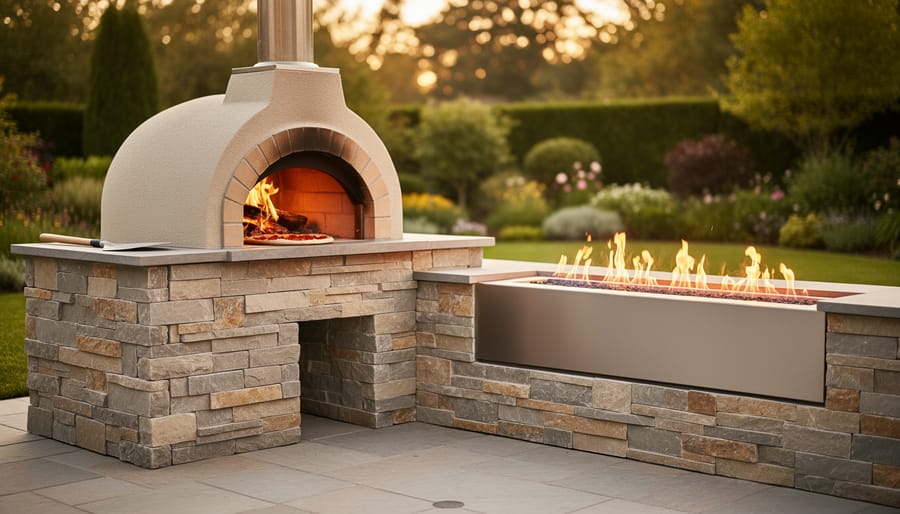
When incorporating veneer stone around pizza ovens and outdoor fireplace surrounds, heat resistance becomes paramount. Not all veneer products perform equally under extreme temperatures. Natural stone veneers like granite, slate, and quartzite offer superior heat tolerance compared to manufactured alternatives, making them ideal choices for high-temperature zones.
Install heat-resistant mortar and leave adequate clearance between the veneer and heating elements according to manufacturer specifications and local building codes. The veneer should begin at least 18 inches from direct flame exposure. Consider applying a heat-resistant barrier membrane behind the stone for added protection. Proper installation prevents cracking, discoloration, and adhesive failure that can occur when standard materials encounter temperatures exceeding 500 degrees Fahrenheit. Consult with your installer about specific product ratings and ensure your chosen veneer stone is certified for high-heat applications to maintain both safety and aesthetics.
Installation Considerations and Requirements
Substrate and Water Management
The longevity of your veneer stone outdoor kitchen depends heavily on what lies beneath the visible surface. Proper substrate preparation and water management systems are essential for preventing moisture infiltration, which can cause veneer detachment, efflorescence, and structural damage.
Start with a suitable substrate—concrete, concrete block, or cement board are ideal foundations for outdoor veneer applications. Wood sheathing alone is inadequate; it requires covering with metal lath and a scratch coat of mortar to create a stable bonding surface. The substrate must be structurally sound, properly cured, and free from contaminants that could interfere with adhesion.
Installing a weather-resistant barrier is non-negotiable for exterior applications. This waterproof membrane protects the substrate and building structure from moisture that penetrates through mortar joints. The barrier should overlap properly at seams and integrate with your overall building envelope system.
Equally important is establishing a drainage plane behind the veneer. This air gap, typically created with a drainage mat or weep screed system, allows moisture that penetrates the veneer to escape rather than becoming trapped. Weep holes at the bottom of installations provide exit points for accumulated water.
Proper substrate preparation might add to upfront costs, but it’s far less expensive than repairing failed installations. These hidden systems ensure your outdoor kitchen withstands years of weather exposure while maintaining its beautiful appearance.
Mortar and Adhesive Selection for Outdoor Environments
Selecting the right mortar and adhesive is critical for ensuring your veneer stone outdoor kitchen withstands temperature fluctuations and moisture exposure. Standard indoor products simply won’t perform in demanding outdoor conditions where freeze-thaw cycles and thermal expansion can compromise installations.
For outdoor applications, specify polymer-modified thinset mortars rated for freeze-thaw resistance. These mortars contain additives that provide flexibility and prevent cracking when moisture freezes and expands within the mortar bed. Look for products meeting ANSI A118.4 or A118.15 standards, which indicate suitable performance for exterior use.
The adhesive layer behind your veneer stone must accommodate thermal movement as materials expand and contract with temperature changes. Flexible polymer-modified mortars create a resilient bond that moves slightly without failing. This flexibility is particularly important when installing veneer over concrete or cement board substrates, which expand at different rates than natural stone.
Consider using mortars with water-resistant properties to prevent moisture infiltration behind the veneer. Products labeled as suitable for wet or exterior environments typically include hydrophobic additives that repel water while maintaining breathability.
For joint filling, choose sanded grouts designed for outdoor use with similar freeze-thaw resistance. Ensure all products come from the same manufacturer when possible, as compatibility between mortar, adhesive, and grout systems optimizes long-term performance and maintains warranty coverage.
Maintenance and Longevity: Protecting Your Investment
Proper maintenance of your veneer stone outdoor kitchen ensures it remains beautiful and functional for decades. While veneer stone is inherently durable and weather-resistant, following a strategic care routine protects your investment and maintains its natural appearance.
Start with proper sealing, which creates a protective barrier against moisture, stains, and freeze-thaw damage. Apply a high-quality, breathable stone sealer immediately after installation and grout curing. Most veneer stone installations require resealing every 1-3 years, though frequency depends on climate exposure and product type. Water-based sealers typically need more frequent application than solvent-based alternatives. Test sealer effectiveness by sprinkling water on the surface—if it beads up, protection is adequate; if it absorbs, resealing is needed.
For routine cleaning, use gentle methods that preserve the stone’s integrity. Rinse surfaces with water and scrub with a soft-bristle brush and pH-neutral stone cleaner. Avoid acidic cleaners like vinegar or citrus-based products, which can etch the stone surface and deteriorate mortar joints. For stubborn stains, create a poultice using baking soda and water, apply to the affected area, cover with plastic wrap, and let sit for 24 hours before rinsing.
Seasonal maintenance is particularly important in regions with temperature extremes. Before winter, inspect and repair any cracked mortar joints to prevent water infiltration and freeze-thaw damage. Clear debris from horizontal surfaces and ensure proper drainage away from stone features. In spring, power wash surfaces at low pressure (1,500 PSI maximum) to remove winter buildup without damaging the stone or mortar.
Pay special attention to high-use areas around grills and sinks. Remove grease spatters promptly to prevent permanent staining, and check sealant integrity in these zones more frequently. Inspect mortar joints annually and repoint as needed to maintain structural integrity and weather resistance. With this straightforward maintenance schedule, your veneer stone outdoor kitchen will deliver decades of reliable performance and enduring beauty.
Common Concerns About Veneer Stone Addressed
Many homeowners hesitate to choose veneer stone for outdoor kitchens due to misconceptions about its performance and authenticity. Let’s address the most common concerns with factual information.
One frequent worry is that veneer stone lacks the durability of full-thickness stone. In reality, quality veneer stone products perform exceptionally well in outdoor environments when properly installed. The thinner profile doesn’t compromise structural integrity for vertical applications like backsplashes, columns, and walls. Manufactured stone veneers undergo rigorous testing to meet ASTM standards for freeze-thaw resistance, moisture absorption, and structural performance. Natural stone veneers maintain all the inherent properties of their full-thickness counterparts since they’re cut from the same quarried blocks.
Another concern involves authenticity and visual appeal. High-quality veneer stone is virtually indistinguishable from full-thickness stone when installed. Natural stone veneer displays the same color variations, texture, and character because it is genuine stone, just thinner. Even experienced designers often cannot identify veneer installations from full-thickness applications without close inspection of edges.
Weather resistance also raises questions. Properly sealed and maintained veneer stone withstands rain, snow, temperature fluctuations, and UV exposure as effectively as traditional stone. The key lies in professional installation with appropriate weather barriers, drainage planes, and quality mortar systems designed for exterior use.
Cost concerns sometimes lead buyers to assume veneer stone represents inferior quality. The lower price point actually reflects reduced material weight, easier transportation, and simplified installation rather than compromised quality. This makes veneer stone a smart value choice that delivers authentic stone aesthetics and durability at a more accessible price point for most outdoor kitchen projects.
Veneer stone represents a smart, sophisticated solution for outdoor kitchen projects that delivers authentic natural stone beauty without the structural demands or expense of full-thickness stone. Throughout this guide, we’ve explored how modern manufacturing techniques produce veneer stone that captures the genuine texture, color variation, and character of natural stone while offering practical advantages in installation, weight management, and cost efficiency. The durability of quality veneer stone in outdoor applications is well-documented, with proper installation and maintenance ensuring decades of performance against weather, temperature fluctuations, and the rigors of active cooking spaces.
Whether you’re designing an intimate patio kitchen or an expansive outdoor entertaining area complete with natural stone landscaping, veneer stone provides the design flexibility and authentic aesthetics that make outdoor living spaces truly exceptional. The combination of reduced installation complexity, lower material costs, and proven longevity makes veneer stone an intelligent choice for homeowners, designers, and contractors alike. As you plan your outdoor kitchen project, consider how veneer stone can deliver the timeless appeal of natural stone while addressing practical concerns about budget, structural capacity, and construction timelines.