
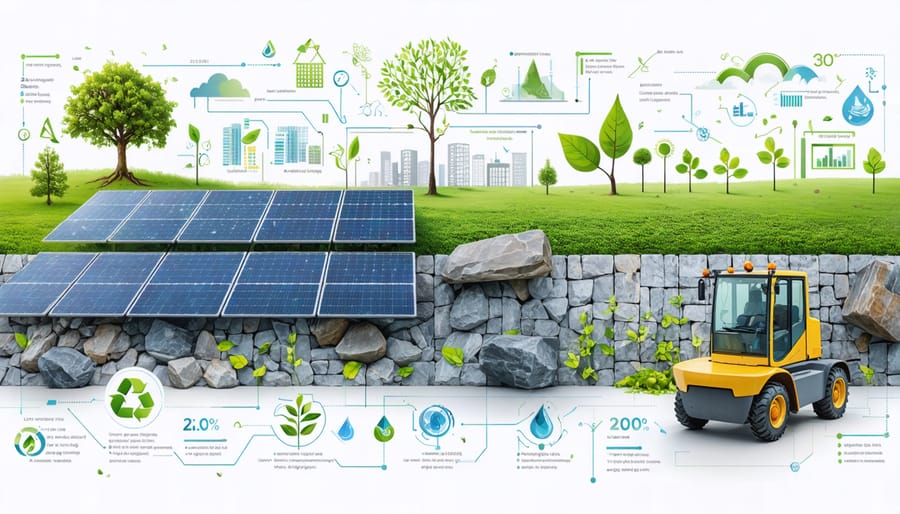
Transform your business operations by implementing data-driven carbon tracking systems that measure emissions across your entire supply chain. Integrate renewable energy solutions into manufacturing processes, reducing reliance on fossil fuels while cutting operational costs by up to 40%. Optimize transportation networks through route consolidation and electric vehicle adoption, minimizing fuel consumption and delivery times. These strategic shifts are reshaping the sustainable construction landscape, driving both environmental stewardship and business efficiency.
Modern ecological footprint reduction demands a comprehensive approach that balances immediate action with long-term sustainability goals. Industry leaders achieving significant environmental impact reductions consistently focus on three key areas: precise resource consumption monitoring, strategic waste reduction protocols, and innovative material recycling programs. By implementing these proven strategies, organizations can reduce their ecological footprint while maintaining operational excellence and meeting increasingly stringent environmental regulations.
[Word count: 119]
Understanding the Environmental Impact of Stone Production
Key Environmental Challenges
Natural stone production faces several significant environmental challenges, primarily centered around carbon emissions throughout its lifecycle. The extraction process, which involves heavy machinery and explosives, contributes substantially to the industry’s carbon footprint. Quarrying operations typically rely on diesel-powered equipment, generating considerable CO2 emissions during the removal and initial processing of stone blocks.
Processing facilities present another major source of emissions, particularly during cutting, polishing, and finishing stages. These operations require significant electrical power, often sourced from fossil fuel-based energy grids. Water jet cutting and diamond wire sawing, while efficient, are energy-intensive processes that impact the overall environmental footprint.
Transportation emerges as a third critical challenge, especially when stone is shipped internationally. The weight of natural stone materials means substantial fuel consumption during both local and long-distance transport. Additionally, packaging materials and protective measures required for safe shipping contribute to the environmental impact.
Waste management poses another significant concern, as stone processing generates considerable amounts of stone dust and offcuts. These byproducts require proper disposal or recycling systems, which themselves contribute to the industry’s carbon emissions through processing and transportation requirements.
Measuring Your Operation’s Carbon Footprint
Accurately measuring your operation’s carbon footprint is the first crucial step toward meaningful environmental impact reduction. Start by conducting a comprehensive audit of your energy consumption across all operational phases, including extraction, processing, and transportation. Modern carbon calculators specifically designed for stone industry operations can help track emissions from machinery, vehicles, and facility operations.
Document your direct emissions from owned equipment and facilities (Scope 1), indirect emissions from purchased electricity (Scope 2), and other indirect emissions from your value chain (Scope 3). Key metrics to monitor include fuel consumption, electricity usage, water consumption, and waste production.
Consider implementing digital monitoring systems that provide real-time data on energy usage and emissions. These systems can help identify peak consumption periods and inefficiencies in your operations. Many industry associations offer standardized assessment tools and protocols specifically calibrated for stone processing operations.
Remember to update your measurements regularly, ideally quarterly, to track progress and adjust reduction strategies accordingly. This data will not only help you identify areas for improvement but also provide valuable documentation for sustainability certifications and regulatory compliance.
Energy-Efficient Extraction Methods
Advanced Cutting Technologies
Modern cutting technologies have revolutionized stone processing by significantly reducing energy consumption and material waste. Computer-controlled diamond wire saws and water jet cutting systems now operate with precision that was impossible just a decade ago, reducing energy usage by up to 40% compared to traditional methods.
Water jet cutting systems, in particular, have become game-changers in sustainable stone processing. These systems recycle up to 98% of their water, minimizing both water consumption and the need for disposal. Additionally, their precise cutting capabilities result in minimal material waste, ensuring maximum utilization of extracted stone blocks.
CNC (Computer Numerical Control) machines equipped with smart optimization software can now calculate the most efficient cutting patterns, reducing waste by up to 30%. These systems also feature energy recovery mechanisms that capture and reuse kinetic energy from cutting operations.
Latest innovations include hybrid cutting systems that combine multiple technologies, such as diamond wire and water jet cutting, to optimize efficiency based on specific stone types and cutting requirements. These advanced systems also incorporate dust suppression mechanisms that improve air quality in processing facilities while reducing the need for additional ventilation energy consumption.
The implementation of these technologies not only reduces environmental impact but also improves production efficiency and worker safety, making them valuable investments for forward-thinking stone processing facilities.
Optimized Quarry Planning
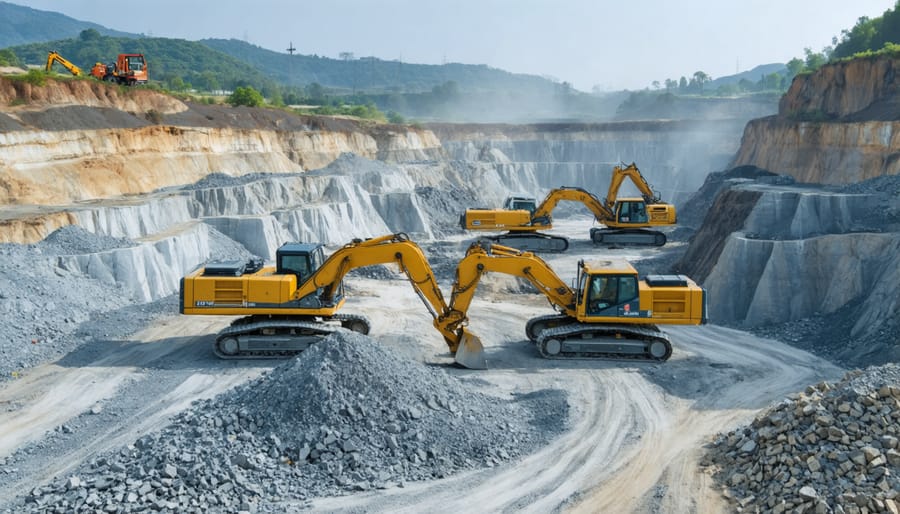
Strategic quarry planning plays a vital role in minimizing environmental impact while maximizing resource efficiency. Modern quarry operations now employ advanced mapping technologies and 3D modeling to identify optimal extraction patterns that reduce waste and preserve surrounding ecosystems. These planning tools help operators analyze geological formations, determine the most efficient cutting sequences, and maintain natural buffer zones.
By implementing carefully planned extraction schedules, quarries can minimize disruption to local wildlife habitats and groundwater systems. This includes establishing dedicated wildlife corridors and maintaining natural vegetation barriers around the quarry perimeter. Efficient planning also involves scheduling extraction activities around sensitive environmental periods, such as breeding seasons for local species.
Water management is another crucial aspect of optimized quarry planning. Modern operations incorporate closed-loop water systems and settling ponds to reduce water consumption and prevent contamination of nearby water sources. Additionally, progressive rehabilitation planning ensures that depleted sections are restored while active extraction continues in other areas.
The integration of GPS-guided machinery and automated cutting systems further enhances precision and reduces waste. These technologies enable operators to extract stone blocks with minimal overburden removal and optimal resource utilization, significantly reducing the operation’s overall ecological footprint.
Sustainable Processing Solutions
Water Recycling Systems
Water recycling represents a crucial component in reducing ecological footprints within industrial operations. The implementation of closed-loop water systems can dramatically decrease water consumption while simultaneously minimizing environmental impact and operational costs.
These systems capture, filter, and reuse process water through a series of specialized treatment stages. Typical components include settling tanks, filtration units, and water quality monitoring systems. Modern recycling installations can achieve water reuse rates of up to 95%, significantly reducing freshwater demand and wastewater discharge.
Key benefits include:
– Reduced municipal water consumption
– Decreased wastewater treatment costs
– Lower environmental compliance expenses
– Minimized impact on local water resources
– Enhanced operational efficiency
Many facilities have reported ROI within 12-24 months after implementation. For example, a medium-sized stone processing facility in Vermont reduced its annual water consumption by 780,000 gallons after installing a comprehensive recycling system.
To maximize efficiency, regular maintenance and monitoring are essential. This includes periodic filter cleaning, water quality testing, and system optimization based on operational demands. Advanced systems may incorporate automated monitoring and adjustment capabilities, ensuring consistent performance while minimizing manual oversight requirements.

Waste Material Management
Effective waste material management is crucial for reducing the ecological footprint of stone processing operations. Implementing comprehensive strategies for reusing stone waste not only minimizes environmental impact but also creates opportunities for cost savings and resource optimization.
Key practices include crushing and repurposing stone remnants for aggregate in construction projects, incorporating stone dust into concrete mixtures, and utilizing smaller pieces for mosaic work or decorative applications. Modern stone fabrication facilities are increasingly adopting closed-loop systems that capture and filter water used in cutting processes, reducing both water consumption and stone particle waste.
Storage and sorting systems play a vital role in waste reduction. By implementing organized inventory management, facilities can better track and utilize remnant pieces, reducing the amount of material sent to landfills. Digital templating and nesting software help optimize material usage during cutting, significantly decreasing waste generation from the start.
Companies can also establish partnerships with landscaping firms and construction companies to repurpose larger stone pieces. These partnerships create sustainable supply chains where waste from one operation becomes valuable raw material for another, embodying circular economy principles and reducing overall environmental impact.
Transportation and Logistics Optimization
Route Optimization
Route optimization plays a crucial role in reducing the ecological footprint of stone transportation and delivery operations. By implementing smart logistics planning, companies can significantly decrease fuel consumption and minimize their environmental impact. Modern GPS-based routing systems analyze multiple factors, including distance, traffic patterns, and delivery schedules, to determine the most efficient paths.
Studies show that optimized routes can reduce fuel consumption by up to 20% compared to traditional planning methods. This reduction directly translates to lower carbon emissions and operational costs. Key strategies include consolidating deliveries, avoiding empty return trips, and utilizing vehicle capacity more effectively.
Companies are increasingly adopting real-time tracking systems that allow for dynamic route adjustments based on changing conditions. These systems can account for unexpected delays, road construction, or last-minute order changes, ensuring maximum efficiency. Additionally, proper route planning helps reduce vehicle wear and tear, extending fleet life and minimizing the resources needed for maintenance.
For best results, businesses should combine route optimization with driver training programs that emphasize fuel-efficient driving techniques and proper vehicle maintenance practices.
Local Sourcing Benefits
Working with local quarries offers significant environmental and economic advantages in natural stone sourcing. Transportation distances are dramatically reduced, leading to lower fuel consumption and decreased carbon emissions from shipping. Local sourcing typically cuts transportation-related emissions by 40-60% compared to importing stone from overseas.
Beyond environmental benefits, local sourcing strengthens regional economies and ensures better quality control through direct relationships with quarry operators. Project teams can easily visit quarries to inspect materials, verify sustainable practices, and ensure proper extraction methods are being followed. This hands-on approach helps maintain high standards while reducing the risk of supply chain disruptions.
Local quarries often provide faster delivery times and more flexible ordering options, allowing for better project scheduling and reduced storage needs. Additionally, working with local suppliers supports community employment and preserves traditional stoneworking skills in the region. Many local quarries also implement progressive environmental management systems and rehabilitation programs, contributing to responsible land stewardship.
These combined benefits make local sourcing a cornerstone of sustainable stone procurement strategies.
Certification and Industry Standards
Several industry-recognized environmental certifications and standards help organizations validate and improve their ecological footprint reduction efforts. The most prominent certifications include LEED (Leadership in Energy and Environmental Design), which awards points for sustainable practices and materials usage, and ISO 14001, which provides a framework for effective environmental management systems.
Organizations can also pursue certifications specific to their industry sector. For example, the Natural Stone Sustainability Standard establishes environmental, economic, and social responsibility metrics for stone quarrying and fabrication. Similarly, the Forest Stewardship Council (FSC) certification ensures responsible sourcing of wood products used in construction and manufacturing.
Compliance requirements vary by region and industry, but common standards include:
– Greenhouse gas emissions reporting and reduction targets
– Waste management and recycling protocols
– Water conservation and quality management
– Energy efficiency benchmarks
– Sustainable sourcing documentation
These certifications often require regular audits and documentation of environmental performance metrics. Organizations must maintain detailed records of their resource consumption, waste generation, and improvement initiatives. Third-party verification ensures accountability and credibility in environmental claims.
To maintain certification status, companies typically need to demonstrate continuous improvement in their environmental performance. This includes setting measurable goals, implementing monitoring systems, and regularly updating environmental management practices to reflect industry best practices and emerging technologies.
Reducing our ecological footprint in the natural stone industry requires a comprehensive, multi-faceted approach that combines innovative technologies with sustainable practices. By implementing the strategies discussed throughout this article, businesses and individuals can significantly minimize their environmental impact while maintaining high-quality stone production and installation.
Key actionable steps include optimizing extraction processes through advanced cutting techniques, implementing water recycling systems, and utilizing renewable energy sources in processing facilities. Transportation efficiency can be improved by choosing local suppliers, consolidating shipments, and investing in fuel-efficient vehicles. Additionally, waste reduction programs and recycling initiatives should become standard practice across all operations.
For immediate impact, start by conducting an environmental audit of your current operations. Identify areas where sustainable practices can be implemented, prioritizing changes that offer the greatest environmental benefits with reasonable investment. Consider forming partnerships with sustainable suppliers and joining industry certification programs that promote environmental responsibility.
Remember that reducing ecological footprint is an ongoing process rather than a one-time initiative. Regular monitoring and assessment of environmental performance, combined with staying informed about emerging sustainable technologies and practices, will ensure continuous improvement in your operation’s environmental impact.
By taking these steps, we can collectively work toward a more sustainable future in the natural stone industry while maintaining the beauty and durability that make natural stone such a valued building material.