# Is Carbon Footprint Good or Bad? The Truth About Natural Stone’s Environmental Impact
**The carbon footprint of natural stone isn’t inherently good or bad—it’s a spectrum that depends entirely on how, where, and by whom the stone is quarried, processed, and transported.**
When you’re selecting materials for your next project, the carbon question matters more than ever. Natural stone occupies a complicated middle ground in sustainability discussions. Unlike synthetic materials that require energy-intensive manufacturing processes, stone exists ready-made in nature. Yet extraction, cutting, polishing, and shipping create environmental impacts that vary dramatically between suppliers and stone types.
The reality defies simple categorization. A locally-sourced limestone with minimal processing can have a remarkably low carbon footprint—sometimes lower than “eco-friendly” alternatives that require complex manufacturing. Conversely, exotic marble shipped across continents and processed with outdated equipment can generate substantial emissions.
What makes natural stone uniquely positioned in environmental discussions is its longevity. While the upfront carbon cost might seem significant, stone installations often last centuries with minimal maintenance, avoiding the repeated manufacturing cycles and replacement emissions associated with shorter-lived materials. This durability factor fundamentally changes the carbon calculation when viewed across a building’s lifetime.
Understanding this nuanced reality empowers you to make informed decisions that balance aesthetic goals with environmental responsibility. The question isn’t whether carbon footprint is good or bad—it’s about identifying which production methods, transportation distances, and stone varieties align with your sustainability priorities while meeting your project’s design requirements.
Understanding Carbon Footprint in Natural Stone Production
What Creates the Carbon Footprint
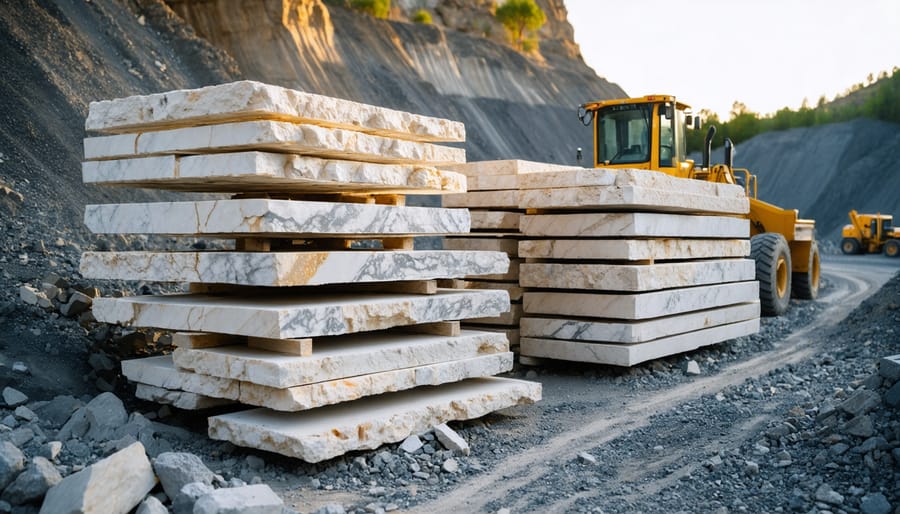
Natural stone’s carbon footprint stems from several distinct stages of production, each contributing varying amounts of emissions. **Quarrying operations** account for the initial environmental impact, as heavy machinery extracts blocks from the earth using diesel-powered equipment and sometimes explosives. The **cutting and finishing processes** follow, where specialized saws, polishers, and water jets shape raw stone into usable slabs and tiles—energy-intensive activities that rely heavily on electricity.
**Transportation distances** often represent the largest carbon contributor, especially when stone travels internationally from quarries in countries like India, Brazil, or Italy to distant markets. A single container ship journey can add substantial emissions to the product’s overall footprint. The **energy sources** powering these operations make a critical difference: facilities using renewable electricity or hydropower generate significantly lower emissions than those dependent on coal or fossil fuels.
Understanding these factors helps you identify lower-impact stone options. Locally sourced materials dramatically reduce transportation emissions, while suppliers investing in renewable energy and efficient machinery offer more sustainable choices without compromising quality or aesthetic appeal.
How Stone Production Compares to Alternatives
Natural stone generally has a lower carbon footprint than many manufactured alternatives, though the comparison depends on several factors including extraction methods, processing intensity, and transportation distances.
Concrete production generates approximately 0.9 kg of CO2 per kilogram of material, primarily from cement manufacturing which requires extreme heat and releases carbon during chemical reactions. Porcelain tiles involve energy-intensive firing processes at temperatures exceeding 1,200°C, resulting in emissions of 1.2-1.5 kg CO2 per kilogram. Engineered stone, which combines crushed stone with petroleum-based resins, carries a carbon footprint roughly 2-3 times higher than natural stone due to manufacturing processes and synthetic binding agents.
In contrast, natural stone requires no chemical processing or high-temperature firing. Extraction and cutting account for most emissions, typically ranging from 0.3-0.7 kg CO2 per kilogram depending on quarry practices and stone type. When comparing natural stone versus manufactured materials, locally sourced stone offers particular advantages by minimizing transportation emissions while avoiding the energy-intensive manufacturing processes required for alternatives.
The Case Against: Where Natural Stone Production Falls Short
Energy-Intensive Extraction Methods
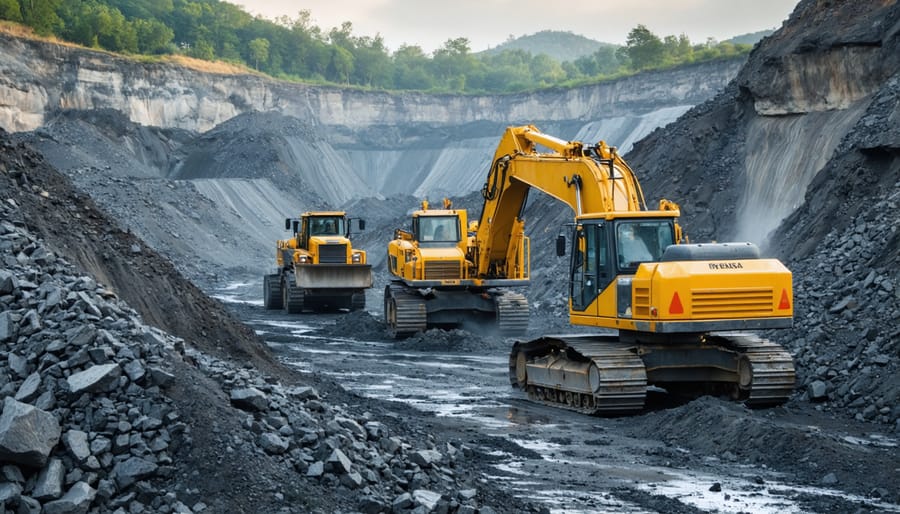
The extraction phase represents the most energy-intensive stage of natural stone production, directly impacting its carbon footprint. Quarries typically rely on diesel-powered excavators, loaders, and haul trucks that run continuously throughout operations, generating substantial emissions. These heavy machines consume thousands of gallons of fuel annually just to access stone deposits and transport raw blocks within quarry sites.
Explosive charges used to fracture large rock formations add another emissions layer, releasing carbon dioxide from both the combustion process and the diesel required to drill blast holes. Meanwhile, diamond wire saws and chainsaw-style cutting equipment—essential for precise extraction—demand significant electrical power, often sourced from fossil fuel grids in many regions.
The carbon intensity varies dramatically between quarries. Operations using renewable energy sources, modern fuel-efficient equipment, and optimized extraction techniques can reduce emissions by 30-40% compared to older facilities. Some progressive quarries have introduced electric machinery and solar power systems, demonstrating that extraction doesn’t inherently mean excessive emissions. Understanding these differences helps consumers and professionals identify stone suppliers committed to minimizing environmental impact through responsible extraction practices.
Long-Distance Transportation Impact
Transportation represents one of the most significant contributors to natural stone’s carbon footprint, particularly when materials travel thousands of miles from quarry to project site. Importing stone from overseas quarries in Asia or Europe can dramatically inflate emissions through ocean freight and subsequent trucking. A container of granite shipped from India to North America generates approximately 1.5 to 2 tons of CO2 during transit alone—before any domestic transportation occurs.
Ocean shipping, while more efficient per ton-mile than air freight, still accounts for substantial emissions when moving heavy materials across continents. The carbon impact multiplies further when stone reaches port and requires trucking to interior destinations. A single truckload traveling 2,000 miles can add another 1.6 tons of CO2 to the product’s footprint.
For environmentally conscious buyers, sourcing locally quarried stone can reduce transportation emissions by 60-80% compared to imported alternatives. North American quarries producing limestone, granite, and marble offer viable options that minimize shipping distances. When imported stone is necessary for specific aesthetic requirements, consolidating shipments and choosing suppliers with optimized logistics networks can help mitigate transportation impacts. Understanding these distance-related emissions empowers architects and consumers to make informed decisions that balance design preferences with environmental responsibility.
Wasteful Processing Practices
Inefficient processing methods significantly amplify natural stone’s environmental impact. Outdated cutting equipment often removes more material than necessary, converting valuable stone into unusable dust and debris. Traditional blade technology can waste up to 40% of quarried material through imprecise cuts and excessive kerf loss—the material lost during the cutting process itself.
Energy-intensive polishing techniques compound this problem. Older grinding machines require multiple passes to achieve desired finishes, consuming considerably more electricity than modern alternatives. Similarly, water-jet cutting systems without recirculation capabilities waste thousands of gallons daily while demanding substantial power to operate high-pressure pumps.
The finishing stage presents additional concerns. Conventional surface treatments frequently use chemical sealers with high volatile organic compound content, contributing to air pollution during application and curing. These wasteful practices aren’t inherent to stone production—they’re simply outdated methods that forward-thinking fabricators are actively replacing with precision equipment, water recycling systems, and eco-friendly finishing products that deliver superior results with minimal environmental impact.
The Case For: Why Responsible Stone Production Can Be Better
Longevity Means Fewer Replacements
Natural stone’s exceptional longevity fundamentally changes the carbon footprint equation over time. While the initial extraction and processing create emissions, materials like granite, marble, and slate routinely last 100+ years—often outliving the buildings they’re installed in. This durability means the carbon cost is amortized over a century or more of service life.
Consider the alternative: synthetic materials and certain natural products requiring replacement every 10-20 years generate repeated carbon emissions throughout a building’s lifetime. Each replacement cycle involves manufacturing new materials, transportation, installation labor, and disposing of the old product. A countertop replaced five times over 100 years multiplies its carbon impact by five.
The math is compelling. Even if natural stone’s initial carbon footprint appears higher than some alternatives, its per-year environmental cost becomes dramatically lower when calculated over its actual lifespan. A granite countertop used for 100 years has roughly one-tenth the annual carbon impact of a material replaced every decade. This “lifetime carbon accounting” reveals why durability matters as much as initial emissions when evaluating true environmental impact. For architects and designers prioritizing long-term sustainability, choosing materials that last generations rather than years represents a practical climate-conscious decision.
Local Sourcing Eliminates Transport Emissions
Transportation represents a significant portion of natural stone’s carbon footprint, often accounting for 20-40% of total emissions depending on distance traveled. Choosing domestically quarried stone dramatically reduces these environmental costs while delivering additional benefits to your local economy.
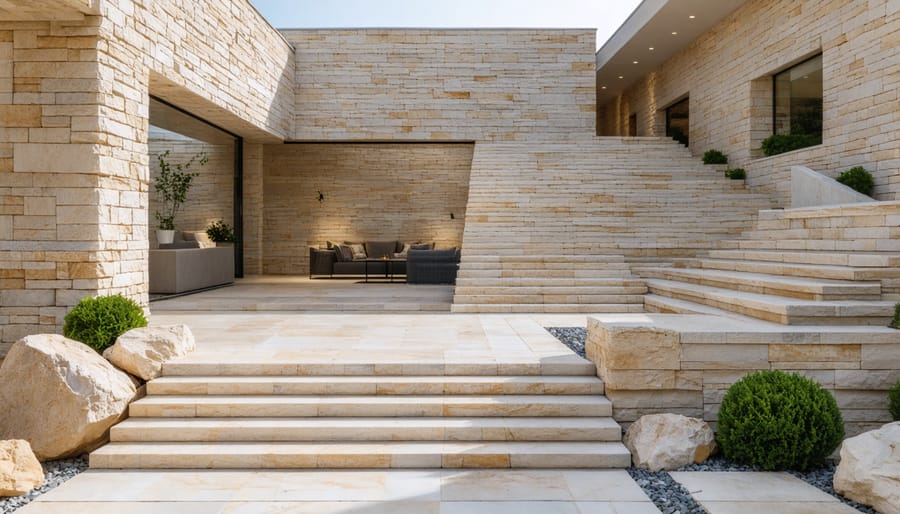
When you source stone from regional quarries, you’re eliminating thousands of miles of truck, rail, or ship transport. A granite slab shipped from India or China travels approximately 8,000-12,000 miles before reaching North American consumers, generating substantial CO2 emissions throughout its journey. In contrast, selecting limestone from a quarry 200 miles away reduces transportation emissions by up to 95%.
Beyond environmental advantages, local sourcing supports regional jobs, ensures faster delivery times, and provides greater traceability for your materials. Many North American quarries operate under stricter environmental regulations than international competitors, offering additional sustainability assurances.
When evaluating stone options, ask suppliers about quarry locations and request documentation of transportation distances. Many reputable stone companies now provide environmental product declarations that detail their carbon footprint. Architects and designers increasingly specify locally sourced materials in green building projects, recognizing that proximity matters as much as the material itself in achieving sustainability goals.
Modern Quarries Using Cleaner Technology
Leading quarries worldwide are transforming natural stone extraction through sustainable innovations that dramatically reduce environmental impact. These progressive operations now utilize solar panels and wind turbines to power machinery, significantly cutting reliance on fossil fuels. Electric excavators and loaders have replaced diesel equipment, eliminating on-site emissions while reducing noise pollution in surrounding communities.
Water management systems represent another critical advancement. Modern quarries implement closed-loop recycling that captures, filters, and reuses water for cutting and dust suppression—some facilities recycle up to 95% of water used. This cleaner technology and efficient cutting minimizes waste while preserving local water resources.
Advanced wire saws and diamond-tipped cutting tools optimize material extraction, yielding more usable stone from each block while generating less scrap. Digital mapping technology helps quarry operators identify optimal extraction points, reducing unnecessary removal. These combined innovations demonstrate that natural stone production can align with environmental responsibility—transforming an ancient industry into a model for sustainable resource management that benefits both manufacturers and environmentally conscious consumers making material choices.
Zero Chemical Processing Required
Natural stone emerges from the earth ready to use, requiring no chemical additives, synthetic resins, or bonding agents during production. This fundamental advantage distinguishes it from engineered alternatives like quartz countertops or porcelain tiles, which depend heavily on polymers, epoxies, and industrial adhesives. These chemical processes consume additional energy and introduce petroleum-based materials that significantly increase manufacturing emissions. By contrast, natural stone’s inherent beauty and structural integrity eliminate these carbon-intensive steps entirely, making it an authentically low-impact choice for environmentally conscious projects.
How to Choose Low-Carbon Natural Stone
Questions to Ask Your Supplier
When evaluating natural stone suppliers, asking the right questions can reveal the true environmental impact of their products. Start by inquiring about quarry location—locally sourced stone significantly reduces transportation emissions compared to imports from overseas. Ask specifically: “How far does this stone travel from quarry to my location?”
Next, investigate extraction methods. Modern quarrying techniques like wire sawing and water jet cutting consume far less energy than traditional blasting methods. Request details about their operational practices and whether they recycle water used during cutting processes.
Energy sources matter tremendously. Ask: “What percentage of your operations uses renewable energy?” Suppliers investing in solar panels or wind power demonstrate genuine commitment to reducing carbon emissions. Also inquire about their fuel efficiency initiatives for equipment and transportation fleets.
Certification provides third-party verification of sustainability claims. Specifically ask if their products meet NSC 373 sustainability standards, the industry’s most comprehensive environmental certification. This standard evaluates everything from land management to worker welfare.
Don’t hesitate to request Environmental Product Declarations (EPDs), which provide transparent, standardized data about a product’s environmental impact throughout its lifecycle. Reputable suppliers will readily share this documentation. Finally, ask about their quarry restoration plans—responsible operators have clear strategies for rehabilitating sites after extraction concludes, often transforming them into wildlife habitats or recreational spaces.
Prioritize Domestic and Regional Stone
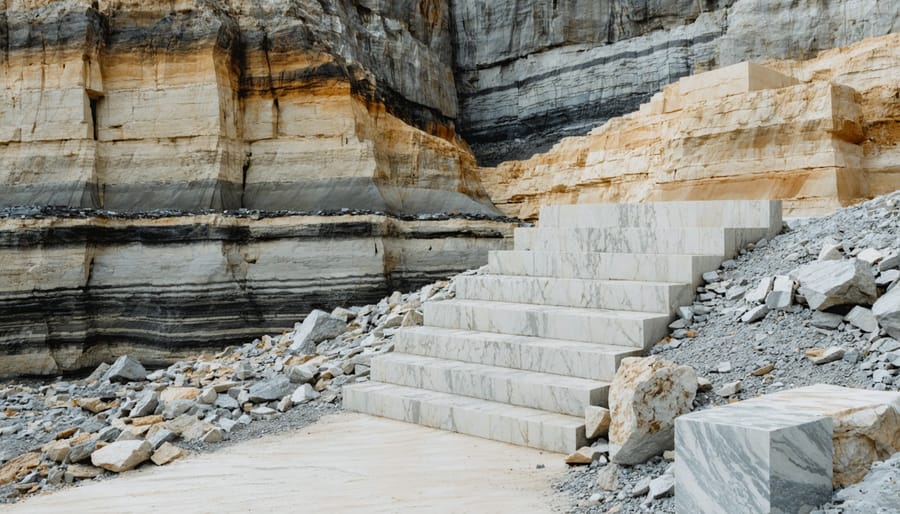
Choosing stone from domestic or regional quarries represents one of the most effective strategies for reducing transportation-related emissions. Before importing materials from overseas, explore local options—many regions have exceptional stone varieties that designers overlook simply due to unfamiliarity.
Start by researching quarries within your country or state. Organizations like the Natural Stone Institute maintain directories that help identify nearby sources. When evaluating options, request information about quarry locations and typical transportation routes to your project site.
The benefits extend well beyond carbon reduction. Sourcing locally supports your regional economy, creating jobs and tax revenue in your community. Proximity also enables convenient site visits, allowing you to inspect blocks, verify quality, and build relationships with suppliers—advantages impossible with distant sources. Transportation timelines shrink dramatically, reducing project delays and storage costs.
Regional sourcing also simplifies the process of choosing ethically sourced natural stone, as domestic quarries typically operate under stricter environmental and labor regulations than some international alternatives.
Many architects discover that regional stone varieties offer distinctive character that imported materials cannot match, creating designs with authentic sense of place while minimizing environmental impact.
Consider Reclaimed and Salvaged Stone
Reclaimed and salvaged stone represents perhaps the most environmentally friendly option available. By sourcing stone from demolition projects, historic buildings, or previous installations, you essentially eliminate quarrying, cutting, and transportation emissions associated with new extraction. Each piece carries unique patina and character developed over decades or centuries—wear patterns, weathering, and historical marks that new stone cannot replicate. These materials offer near-zero carbon footprint while preserving architectural heritage. Salvaged stone often comes at competitive prices and provides immediate availability without manufacturing delays. Designers appreciate the authenticity and storytelling potential these materials bring to projects. When selecting reclaimed stone, verify structural integrity and ensure proper cleaning and preparation. This approach transforms waste into valuable design elements while making the lowest-impact choice possible.
Real-World Example: High-Carbon vs. Low-Carbon Stone Projects
To understand the real impact of sourcing decisions, consider these two commercial lobby projects completed in 2023, each requiring 5,000 square feet of granite flooring.
**Project A: High-Carbon Approach**
A hotel chain imported Brazilian granite tiles to their property in Denver, Colorado. The stone traveled 5,200 miles by ship and truck. Processing occurred at an overseas facility using diesel-powered equipment and older machinery. The carbon footprint totaled approximately 87 tons of CO2 equivalent—roughly equal to driving a passenger vehicle for 217,000 miles.
The breakdown included:
– Extraction and processing: 22 tons CO2e
– International shipping: 58 tons CO2e
– Domestic transportation: 7 tons CO2e
**Project B: Low-Carbon Approach**
A similar hotel selected granite from a quarry 150 miles away in the same state. The supplier used electric-powered cutting equipment, implemented water recycling systems, and optimized loading to reduce transportation trips. Total carbon footprint: 18 tons CO2e—an 79% reduction compared to Project A.
The breakdown included:
– Extraction and processing: 12 tons CO2e
– Regional transportation: 6 tons CO2e
Both projects achieved identical aesthetic results with comparable material quality and durability. The deciding factor wasn’t the stone itself—it was the sourcing strategy.
This comparison demonstrates that carbon footprint differences in natural stone projects stem primarily from transportation distances and production practices rather than the material’s inherent properties. When designers and architects prioritize regional sourcing and inquire about suppliers’ sustainability practices, they can dramatically reduce environmental impact without compromising quality or appearance. The key is asking the right questions before specifying materials.
The carbon footprint of natural stone production isn’t inherently good or bad—it’s a spectrum determined by the choices made throughout the supply chain. While extraction and transportation do generate emissions, natural stone offers distinct environmental advantages that synthetic materials cannot match: exceptional durability, minimal processing requirements, and complete recyclability. The key lies in understanding that two identical granite countertops can have vastly different carbon footprints depending on whether they were quarried locally or shipped across continents, whether the facility uses renewable energy, and whether modern, efficient equipment was employed.
As consumers, architects, and designers, you hold significant power to influence this equation. By prioritizing domestically sourced stone, asking suppliers about their sustainability practices, and selecting materials from quarries committed to reducing emissions, you can enjoy natural stone’s timeless beauty and longevity while minimizing environmental impact. Consider the full lifecycle: a locally quarried stone countertop that lasts 50 years will ultimately have a far smaller footprint than multiple replacements of less durable materials.
The path forward isn’t abandoning natural stone—it’s making informed decisions that leverage its inherent sustainability advantages. Request transparency from suppliers about quarrying practices, transportation distances, and energy sources. Choose longevity over trends. By doing so, you contribute to a market that rewards responsible production while benefiting from a material that has served humanity sustainably for millennia.