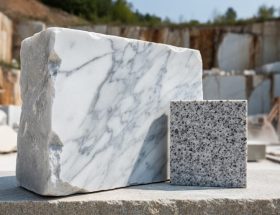
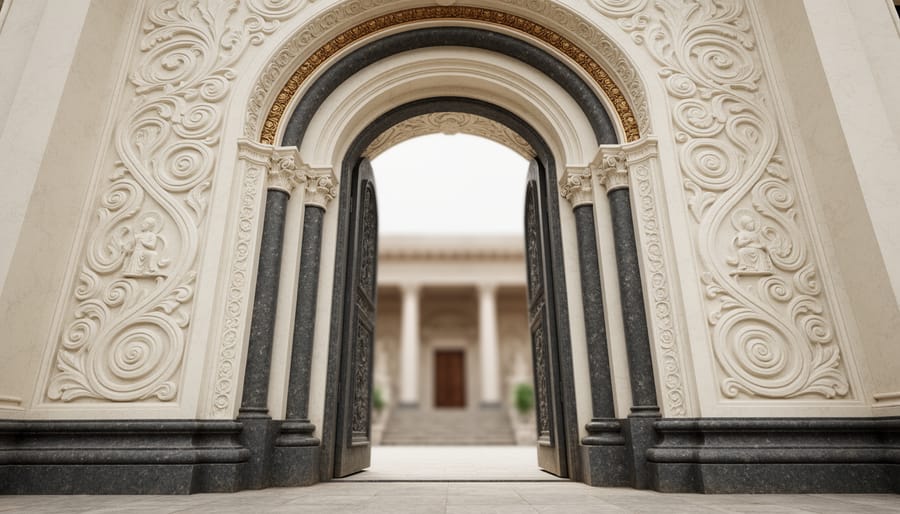
Religious symbolism in art refers to the use of visual elements, forms, colors, and materials to represent spiritual beliefs, sacred narratives, and divine concepts across faith traditions. These symbols transform physical spaces and objects into vessels of meaning, bridging the gap between the material world and the transcendent.
For architects, designers, and consumers selecting natural stone for sacred or spiritually-inspired projects, understanding this visual language matters deeply. Stone has served as humanity’s most enduring medium for religious expression, from the carved temples of ancient civilizations to contemporary worship spaces. The material’s permanence mirrors the eternal nature of faith itself, which explains why marble, granite, limestone, and other natural stones remain central to religious architecture today.
This article examines how stone functions as both canvas and symbol in religious edifices across cultures. We’ll explore the specific meanings encoded in different stone types, the architectural techniques that amplify spiritual messages, and how these ancient traditions inform modern design. From the white marble that has symbolized purity in countless cathedrals to the black granite representing the divine void in Eastern temples, natural stone carries layered spiritual significance that has survived time.
Whether you’re designing a house of worship, incorporating contemplative elements into secular spaces, or simply seeking to understand the deeper resonance of stone in built environments, recognizing these symbolic patterns reveals how material choices shape spiritual experience. The stones beneath our feet and above our heads have always spoken in a language older than words.
What Religious Symbolism in Art Means
Religious symbolism in art is the practice of using visual forms, images, materials, colors, shapes, and structures, to represent abstract spiritual truths, divine attributes, and sacred narratives. Rather than depicting faith through words alone, religious communities throughout history have relied on symbolic art to make the invisible visible, translating complex theological ideas into tangible forms that worshippers can see, touch, and experience.
This approach emerged from practical necessity. For centuries, most people couldn’t read sacred texts. A carved stone relief showing Christ’s crucifixion or a marble statue of a bodhisattva communicated doctrine more effectively than any sermon. Even today, when literacy is widespread, symbolic art serves purposes beyond education. It creates emotional resonance, establishes sacred atmosphere, and provides focal points for prayer and meditation.
Stone, specifically, became a favored medium because its permanence mirrors the eternal nature of divine truth. When a builder chose white marble for a temple altar or granite for a cathedral foundation, that wasn’t arbitrary. The material itself carried meaning, marble’s luminous purity suggested holiness, granite’s strength evoked divine stability.
- Iconography
- The standardized visual language used to depict religious figures, events, and concepts so they’re immediately recognizable to believers. A halo indicates sanctity; specific hand gestures convey blessing or teaching.
- Sacred Geometry
- Geometric patterns and proportions believed to reflect divine order and cosmic harmony. Stone structures incorporating these ratios, circles representing eternity, the golden ratio suggesting perfection, physically embody spiritual principles.
- Materiality
- The symbolic significance of physical substances themselves, where a material’s inherent qualities communicate meaning. Natural stone’s weight, texture, and origin from the earth make it particularly suited to expressing permanence and divine foundation.
- Devotional Art
- Artwork created specifically to inspire worship, contemplation, or spiritual transformation rather than mere aesthetic appreciation. Stone carvings of saints or deities serve as focus points for prayer and channels for divine presence.
Understanding these foundational concepts reveals why religious builders invested enormous resources in quarrying, transporting, and carving stone. They weren’t just constructing buildings, they were creating three-dimensional theology, where every material choice reinforced the faith they practiced within those walls.
How Religious Symbolism Works in Stone Edifices
Material as Metaphor
Stone’s physical properties have made it the natural language of the divine across civilizations. When ancient builders chose granite for temple foundations or marble for altars, they weren’t simply selecting durable materials, they were creating theological statements in substance.
The weight and density of stone communicate immovability, mirroring religious concepts of unchanging divine law and eternal truth. A limestone block that has endured centuries becomes proof of faith’s permanence, outlasting generations of worshippers. This durability transforms stone into a physical promise: what is carved in stone endures, just as sacred covenants and divine presence persist beyond mortal lifespans.
Stone’s origin from the earth itself carries symbolic weight. Extracted from the ground, it represents creation’s raw substance shaped by divine or human will, the formless given form, chaos ordered into meaning. Polished marble’s transformation from rough quarry block to gleaming surface parallels spiritual refinement, while uncut standing stones preserve creation’s primal power.
The very coldness and hardness that make stone difficult to work also elevate its spiritual value. What requires great effort to shape becomes worthy of housing the sacred, and what resists decay becomes fit to hold eternal meaning.
Color and Type as Sacred Code
Religious traditions have long recognized that stone’s natural palette speaks a spiritual language. White marble, prized across Christianity, Islam, and Hinduism, represents purity, holiness, and divine light, its crystalline structure allows translucence that architects exploit through strategic interior lighting to create ethereal worship spaces. Black granite conveys divine mystery and eternity in Hindu temples, where polished Shiva lingams embody cosmic darkness and creation, while Christian traditions associate it with penitence and humility. Red sandstone or porphyry carries royal and sacrificial connotations, Egyptian temples used it for pharaonic monuments, Islamic architecture employed it for strength, and Byzantine churches reserved porphyry for imperial tombs. Green serpentine symbolizes renewal and paradise in Islamic decoration, appearing in mihrab surrounds and tomb chambers. Creamy limestone, particularly Jerusalem’s golden Meleke, connects Jewish and Christian sacred architecture to the Holy Land’s physical landscape, making material itself a pilgrimage connection. Translucent alabaster, carved into window panels in medieval churches and Islamic monuments, filters light to suggest divine presence entering earthly space. These color associations aren’t arbitrary, they emerge from stone’s geological origins, rarity, workability, and how its surface responds to touch and light within sacred contexts.
Major Categories of Stone Symbolism in Religious Art
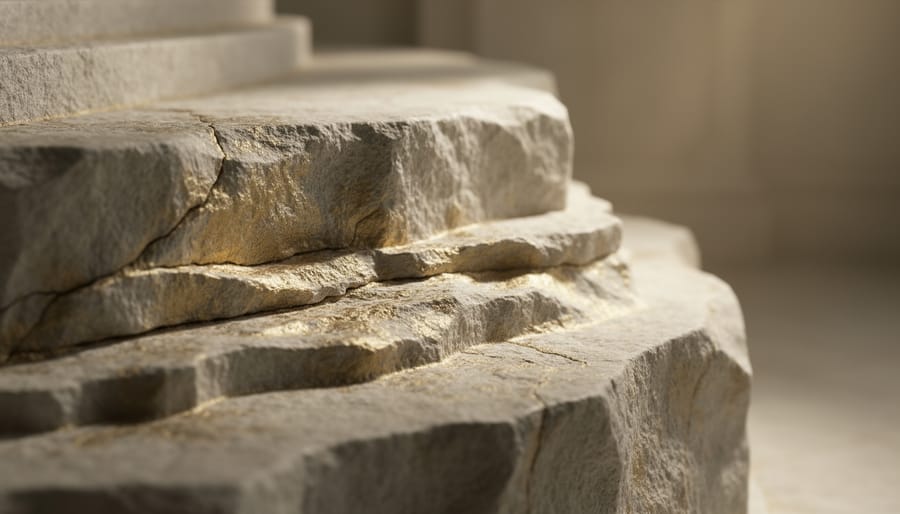
Foundation Stones and Cornerstones
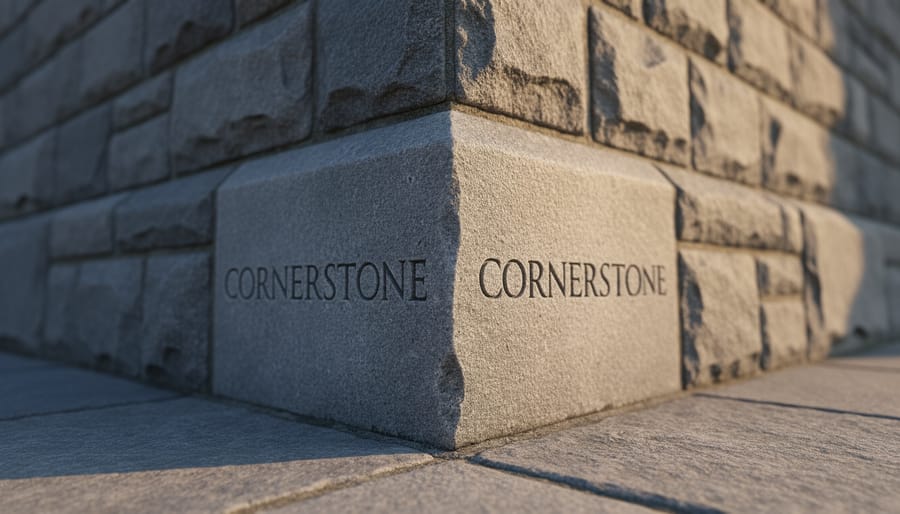
Foundation stones and cornerstones occupy a uniquely charged position in religious architecture, they anchor the physical structure while simultaneously declaring spiritual intent. When builders consecrate a cornerstone, they’re performing an act that transcends construction logistics. This single stone, often inscribed with dedication dates or scriptural passages, transforms an ordinary building site into sacred ground.
The symbolism runs deep across traditions. In Solomon’s Temple, the foundation stone (Even Shetiyah in Jewish tradition) marked the creation point of the world itself, the spot where divine and earthly realms met. Christian churches adopted this practice enthusiastically, with cornerstone ceremonies invoking Ephesians 2:20, which identifies Christ as “the chief cornerstone.” Islamic mosques likewise designate foundation stones during construction, often oriented precisely toward Mecca, embedding directional sacredness into the building’s DNA.
These stones rarely boast aesthetic distinction, a rough-hewn granite block or modest limestone cube suffices. What matters is placement and intention. The cornerstone sits at the junction of two walls, bearing weight from multiple directions, a perfect metaphor for divine support holding a community’s faith structure together. Many remain deliberately visible in finished buildings, reminding worshippers that their gathering place rests on something both literally and figuratively solid.
Altar Stones and Sacred Tables
Altars and sacred tables occupy the spiritual and physical center of worship in many religious traditions, and the choice of stone for these surfaces carries profound symbolic weight. Marble emerged as the preferred material for Christian altars not merely for its beauty but for theological reasons: its white varieties symbolize purity, the spotless sacrifice of Christ, and the resurrection. Catholic tradition requires consecrated altars to contain a stone element, often marble, embedded with relics of saints, linking the permanent material to eternal communion.
Granite’s impermeable nature made it suitable for Jewish sacrificial platforms in ancient temples, where blood offerings required a surface that wouldn’t absorb impurities. Hindu temples select black granite for Shiva worship and white marble for Vishnu shrines, the stone choice reflecting specific divine attributes. Islamic mosques occasionally feature marble ablution fountains and prayer platforms, the polished surface representing spiritual cleanliness.
The permanence of stone matters here: unlike wood or fabric, stone endures through centuries of ritual use, becoming saturated with prayers and devotion. Architects specifying altar stones today balance these symbolic requirements with practical concerns, surface finish for ritual objects, edge treatments for safety, and quarry sourcing that respects both tradition and ethical standards.
Memorial and Commemorative Stones
Standing stones and memorial tablets represent humanity’s oldest attempts to mark sacred moments in permanent form. From the biblical Jacob’s pillar at Bethel to Celtic high crosses and Islamic cemetery markers, cultures worldwide have chosen stone to anchor divine encounters in physical reality.
These monuments serve dual purposes: commemorating specific events while establishing ongoing pilgrimage destinations. The Western Wall in Jerusalem stands as perhaps the most visited stone memorial, its massive limestone blocks representing both catastrophic loss and enduring covenant. Similarly, the Kaaba’s Black Stone draws millions annually to touch a meteoritic fragment Muslims believe descended from paradise.
Memorial stones function as three-dimensional scripture. Medieval Christian crosses carved narrative panels into granite, teaching illiterate congregations through durable imagery. Hindu linga stones mark sites where Shiva manifested. Buddhist stupas encase relics within stone cairns, transforming burial mounds into pilgrimage centers.
Natural stone’s resistance to decay makes it ideal for transgenerational witness. A marble headstone or granite obelisk outlasts wood, metal, and human memory, anchoring communities to their spiritual origins across centuries. This permanence transforms personal memorials into collective heritage, ensuring that sacred moments remain touchable and real.
Decorative and Narrative Stone Elements
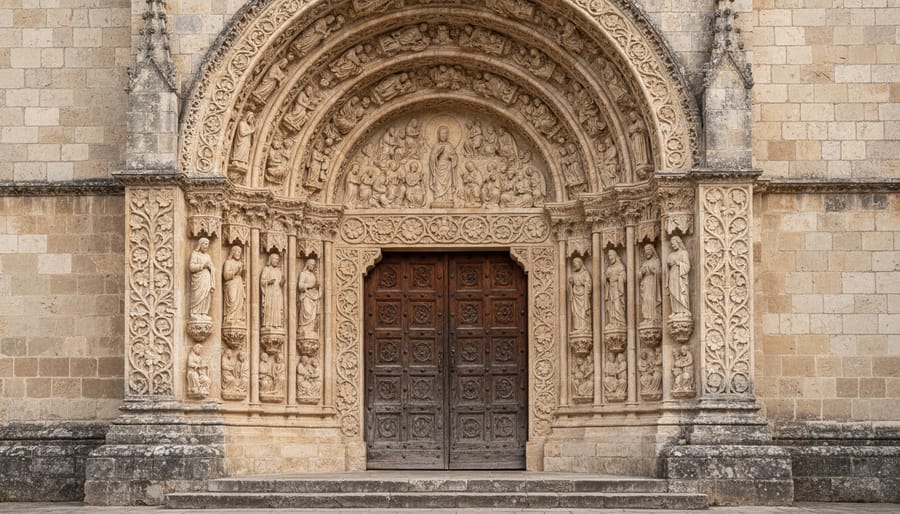
Religious architecture transforms stone into scripture through decorative elements that communicate faith to both literate and illiterate worshippers. Medieval cathedrals employed stone carvings on tympanums above doorways to illustrate biblical scenes like the Last Judgment, ensuring theological messages reached every visitor before they entered. The workability of limestone and sandstone allowed artisans to render complex narratives in relief, while marble’s luminosity made statuary appear almost ethereal under candlelight.
Common decorative stone elements found across religious traditions include:
- Carved tympanums depicting judgment scenes, creation narratives, or sacred events above church entrances
- Column capitals illustrating biblical stories, saints’ lives, or moral lessons in compact visual form
- Narrative friezes wrapping temple walls with continuous religious epics like the Ramayana or Christ’s Passion
- Iconostases in Orthodox churches, marble screens separating the sanctuary while displaying sacred imagery
- Jali screens in Islamic and Hindu architecture, intricate stone lattices filtering light while maintaining sacred privacy
Stone’s permanence ensured these devotional images would endure for generations, creating a physical theology that outlasted painted alternatives. Granite statuary in Hindu temples maintains crisp details after centuries of ritual washing, while alabaster’s translucence in Christian contexts symbolizes divine light penetrating earthly matter.
Stone Symbolism Across Major Religious Traditions
Christian Stone Symbolism
Christian stone symbolism developed distinct theological meanings through centuries of cathedral building and devotional art. Marble, with its pristine white veining and luminous surface, became the preferred material for baptismal fonts, altar tables, and tomb sculptures, its capacity to take high polish symbolizing spiritual purification and Christ’s resurrection into glory. Renaissance sculptors like Michelangelo deliberately chose Carrara marble for Pietà figures, the translucent stone evoking the divine light believed to emanate from Christ’s perfected body.
Granite served different symbolic purposes, representing apostolic foundation and unshakeable faith. Medieval builders laid granite cornerstones while invoking Ephesians 2:20, establishing Christ as the cornerstone upon which the church stood. This wasn’t mere metaphor, choosing dense, nearly indestructible stone physically manifested theological claims about eternal truth.
Gothic cathedrals transformed entire façades into narrative scripture, their limestone reliefs depicting biblical stories for largely illiterate congregations. These “sermons in stone” taught salvation history through carved tympanums, capitals, and column statues, the stone’s permanence ensuring the gospel message would outlast any spoken homily. Even the progression from darker foundation stones to lighter upper masonry illustrated the soul’s journey from earthly shadow toward heavenly illumination.
Islamic Stone Traditions
Islamic architecture employs stone to create spaces that guide worshippers toward divine contemplation and proper orientation. The tradition begins with the Kaaba’s Black Stone, set in the eastern corner of Islam’s holiest structure, a meteorite fragment believed to date from the time of Adam and Eve, its dark surface polished smooth by centuries of pilgrims’ hands. This single stone anchors the direction of prayer for over a billion Muslims worldwide.
Marble becomes the canvas for mihrab niches, those prayer-directing alcoves carved into mosque walls to indicate qibla, the direction of Mecca. Artisans inlay white and colored marble in intricate geometric patterns that represent divine order and infinity, creating visual meditation aids that avoid figurative imagery. The precision of stone cutting allows for complex interlocking designs where mathematics meets spirituality.
Mosques from Córdoba to Isfahan demonstrate how granite columns, marble floors, and limestone walls work together to create sacred geometry, patterns that reflect the mathematical principles believed to underlie creation itself, transforming functional architecture into physical expressions of tawhid, the oneness of God.
Hindu and Buddhist Stone Art
Hindu and Buddhist traditions employ stone with profound symbolic intent, rooted in cosmological beliefs about the earth’s sacred energy. Granite foundations anchor temples to the physical and spiritual realm, representing stability and the eternal nature of dharma. The Shiva lingam, carved from polished black stone, embodies divine creative power, its smooth surface and upright form symbolizing both transcendence and the formless absolute.
Marble appears in Hindu architecture as a representation of purity and divine radiance, most notably in temple sanctuaries where deities reside. The white stone reflects light, creating luminous spaces that elevate devotional experience. Sandstone’s workability made it the preferred medium for narrative temple carvings, with entire exteriors of structures like Khajuraho and Konark telling religious stories through detailed relief work, a technique that influenced sacred art globally, from Aztec sculptures to Angkor Wat.
Buddhist traditions employed stone for stupas and rock-cut monasteries, where the permanence of stone mirrors the timeless nature of Buddha’s teachings. Cave temples carved directly from living rock, such as Ajanta and Ellora, transform entire cliff faces into sacred spaces where stone itself becomes the boundary between worldly and spiritual realms.
Jewish Stone Heritage
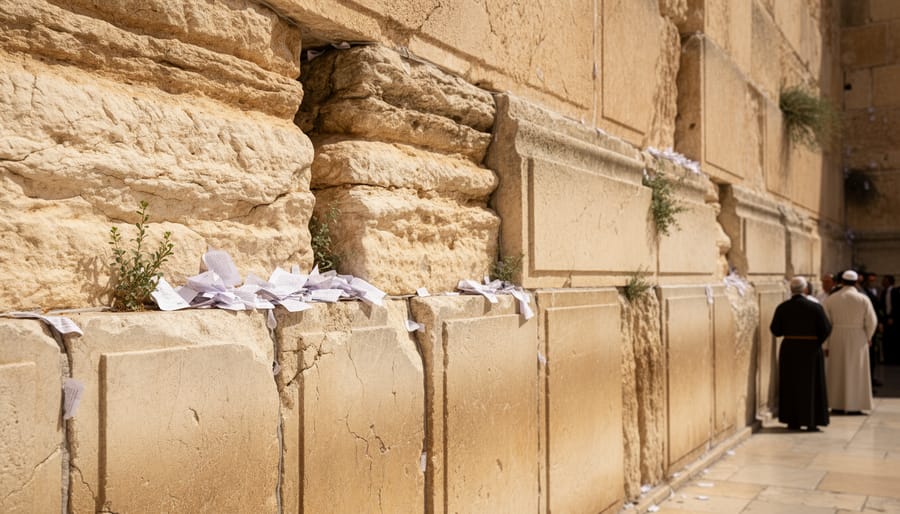
Jerusalem limestone holds unparalleled significance in Jewish tradition, beginning with Solomon’s Temple and continuing through the Western Wall, the remaining retaining wall of the Second Temple complex. This honey-colored stone connects contemporary Jewish practice to ancient biblical sites, with Israeli building codes still requiring its use in Jerusalem to maintain visual and spiritual continuity.
Memorial stones, or matzevahs, mark Jewish graves with permanent markers that transcend decorative purpose. The custom of placing small stones atop these monuments during visits creates a physical, participatory act of remembrance, the weight and permanence of each stone symbolizing an enduring bond between the living and the dead.
Synagogue design frequently incorporates marble in Torah ark surrounds, particularly white Carrara or richly veined varieties. The stone’s purity and durability frame the most sacred object in Jewish worship, while its polished surface reflects light, a visual echo of divine presence. Granite appears in Holocaust memorials worldwide, chosen for its resistance to weathering as a promise that memory will endure against erasure.
Contemporary Applications and Uses
Today’s religious architecture balances centuries-old symbolic traditions with contemporary values of sustainability, inclusivity, and accessibility. Architects and designers working on sacred spaces in 2026 draw on the symbolic language of stone while addressing modern community needs and environmental responsibilities. The material choices that once conveyed theological absolutes now must also reflect commitments to ethical sourcing and interfaith dialogue.
Restoration projects demonstrate how natural stone maintains its symbolic power across generations. Teams working to preserve historic stone buildings often discover that original material selections carried layered religious meanings, a specific marble chosen for its purity associations, granite positioned to suggest apostolic strength, limestone connecting worshippers to biblical landscapes. Modern restoration honors these symbolic intentions while meeting current structural and conservation standards, ensuring that the material language remains legible to new generations of visitors.
Contemporary applications of religious stone symbolism include:
- Restoration of historic cathedrals, temples, and mosques using quarries that match original stone types and symbolic significance
- Design of interfaith chapels incorporating symbolic elements from multiple traditions through thoughtful material selection and placement
- Memorial gardens and columbaria using natural stone to create contemplative spaces with permanence and earth-connection
- Meditation rooms and prayer spaces in hospitals, airports, and universities where stone provides quiet dignity without denominational specificity
- Sustainable stone sourcing programs that verify ethical quarrying practices for religious construction projects
- Adaptive reuse of former religious buildings where original stonework preservation maintains symbolic and historical continuity
New interfaith spaces present particular opportunities for symbolic stone use. Designers select materials that speak to shared values, foundation stones representing common ground, altar tables in neutral tones accommodating multiple rituals, entrance thresholds in durable granite welcoming diverse communities. These projects often incorporate stone from quarries with historical religious significance while ensuring extraction methods align with environmental stewardship principles that transcend individual faith traditions.
Communities planning sacred spaces can work with stone suppliers who understand both symbolic requirements and practical considerations like accessibility, acoustics, and maintenance. The goal remains unchanged from ancient temple builders: choosing materials that elevate the spiritual experience while standing as permanent witnesses to faith and values.
Case Studies: Stone Symbolism in Iconic Religious Edifices
The Vatican’s centuries-long devotion to Carrara marble demonstrates how material choice reinforces theological messaging. When Renaissance architects and sculptors selected this luminous white stone for St. Peter’s Basilica and countless devotional works, they weren’t making merely aesthetic decisions, they were encoding doctrinal truth into physical form.
Carrara marble’s pure white color, fine grain, and ability to take high polish made it the perfect medium for expressing concepts of divine light, spiritual refinement, and the incorruptible nature of sacred truth. Michelangelo’s Pietà, carved from a single Carrara block between 1498-1499, transforms stone into a meditation on sacrifice and redemption. The marble’s translucent quality allows light to penetrate its surface, creating an ethereal glow that elevates the sculpture beyond human suffering toward resurrection hope.
St. Peter’s Basilica itself incorporates over 100,000 tons of Carrara marble in floors, columns, altars, and decorative elements. This consistent material language creates visual unity while continuously reinforcing themes of purity, permanence, and the unchanging nature of faith across the massive structure.
The Temple Mount in Jerusalem demonstrates how a single stone type, creamy white to golden limestone quarried locally for millennia, becomes inseparable from religious narrative itself. This Meleke limestone, used in Solomon’s Temple, the Second Temple, and the Herodian expansion, carries physical continuity across three thousand years of Jewish sacred history. The Western Wall’s massive limestone blocks, some weighing hundreds of tons, represent the sole remaining structure from the Second Temple period, transforming geological material into the most venerated site in Judaism.
Biblical accounts specifically mention hewn stone in temple construction, and this limestone’s warm color photography beautifully in Jerusalem’s distinctive light has made it synonymous with the city’s spiritual identity. Modern Israeli building codes actually mandate Jerusalem stone cladding for all construction within the city, preserving visual and material continuity between ancient holy sites and contemporary buildings. This regulatory requirement ensures that even secular structures participate in the stone vocabulary established by religious architecture, maintaining an unbroken limestone aesthetic that reinforces Jerusalem’s sacred character across its entire urban landscape.
The United States Air Force Academy’s Cadet Interfaith Center, completed in 2011 and serving as a model for 2020s projects, demonstrates how natural stone bridges diverse faith traditions in a single structure. Architect Skidmore, Owings & Merrill chose Colorado buff sandstone for the exterior, grounding the building in its regional landscape while providing a neutral foundation that honors Christianity, Judaism, Islam, Buddhism, and other traditions housed within.
Inside, each worship space employs stone with tradition-specific meaning. The Muslim prayer hall features polished gray granite for the mihrab niche, directing worshippers toward Mecca. The Jewish chapel incorporates Jerusalem limestone for the ark wall, connecting contemporary worship to ancient Temple heritage. The Buddhist meditation room uses river stones in water features, emphasizing natural cycles and mindfulness.
The architects specified domestically quarried materials to reduce transportation impacts and selected stones meeting modern accessibility standards, polished finishes in high-traffic areas prevent slipping, while matte surfaces reduce glare for visitors with visual sensitivities. This approach shows that symbolic stone choices need not conflict with sustainability goals or universal design principles.
Frequently Asked Questions
Religious stone symbolism raises practical questions for anyone planning, maintaining, or appreciating sacred spaces. Here are answers to the most common concerns.
Why is marble so commonly used in churches and temples?
Marble’s white or light-colored varieties symbolize purity, divine light, and spiritual transformation across multiple religious traditions. Its ability to be polished to a reflective surface represents heavenly radiance, while its durability ensures monuments and sacred spaces endure for generations.
How do I choose the right stone for a meditation or prayer space?
Consider both the symbolic associations within your tradition and the practical qualities you need. Smooth, polished stone like marble or granite provides visual calm and easy maintenance, while rough-hewn limestone or sandstone can create an earthier, more grounded atmosphere that some find conducive to contemplation.
Do synthetic stone alternatives diminish the symbolic meaning?
Many religious communities value the authenticity and natural origin of stone as part of its sacred character, the material’s formation over millennia connects human construction to divine creation timescales. Engineered alternatives may serve functional needs but typically lack the historical and theological resonance of quarried natural stone.
What special considerations apply when maintaining historic religious stonework?
Historic preservation requires balancing reverence for original materials with necessary conservation. Use only approved gentle cleaning methods, avoid harsh chemicals or abrasive tools, and consult conservation specialists before any intervention, many historic religious stones have developed patinas that hold their own historical and spiritual significance.
Budget remains a practical concern for communities planning sacred stone installations. Natural stone represents a significant upfront investment, but its longevity often makes it more cost-effective than repeated replacements of less durable materials. For smaller projects or limited budgets, consider using symbolic stone elements strategically, an altar top, cornerstone, or threshold in meaningful natural stone can anchor a space spiritually even when other materials handle structural roles.
When renovation or new construction involves choice between stone types, remember that symbolic meaning often matters more than expense. A locally sourced limestone with historical ties to your community may carry deeper resonance than imported exotic marble, while also reducing costs and environmental impact. The goal is not ostentation but authentic expression of the values your sacred space embodies.
Throughout history, natural stone has served as humanity’s most enduring medium for expressing the ineffable, transforming theological concepts into touchable reality. The weight of granite foundations, the luminous translucency of alabaster, the cool permanence of marble, these physical qualities become metaphors for divine attributes that words alone cannot capture. Stone’s inherent durability creates a bridge between generations of worshippers, allowing ancient intentions to speak directly to modern observers.
For architects, designers, and communities planning sacred spaces today, this legacy offers both inspiration and responsibility. Thoughtful stone selection honors tradition while addressing contemporary values. Locally sourced materials reduce environmental impact without sacrificing symbolic power. Granite from regional quarries can anchor a foundation with the same metaphorical strength as imported varieties. Salvaged marble from decommissioned buildings carries layers of meaning, both material permanence and adaptive reuse aligned with stewardship principles.
Whether you’re restoring a historic cathedral, designing an interfaith meditation space, or simply deepening your appreciation for religious architecture, consider how stone choices communicate values beyond aesthetics. The material beneath your feet and surrounding your sight lines speaks a language older than any liturgy, one that will continue conveying sacred meaning long after our generation has passed. Choose materials that honor this profound conversation between earth, faith, and human craft.