

Fire safety on construction sites demands rigorous adherence to specific extinguisher requirements, with potentially catastrophic consequences for non-compliance. Every construction site must maintain a minimum of one 4A:60B:C rated fire extinguisher within 50 feet of all working areas, with additional units required for every 3,000 square feet of protected building area. Hot work operations, including welding and cutting, require dedicated extinguishers positioned within 30 feet of the activity.
Construction site managers must strategically position fire extinguishers at clearly marked, easily accessible locations, ensuring they remain unobstructed and visible from all approaches. Monthly inspections are mandatory, with documentation recording the date, inspector’s name, and unit condition. Special attention must focus on areas with increased fire risks, such as fuel storage, electrical installations, and temporary heating equipment.
These requirements align with OSHA standards and NFPA 241 guidelines, providing essential protection for workers, equipment, and structures during the vulnerable construction phase. Proper implementation of these fire safety measures significantly reduces the risk of fire-related incidents and ensures regulatory compliance.
Legal Requirements for Construction Site Fire Extinguishers
OSHA Standards and Local Building Codes
Construction sites must adhere to OSHA fire safety requirements and local building codes to maintain a safe working environment. OSHA standard 1926.150 mandates that fire extinguishers must be present for each 3,000 square feet of protected building area and positioned within 100 feet of any work location. For multi-story construction, at least one fire extinguisher must be located adjacent to stairways.
Local fire safety compliance standards may impose additional requirements, often varying by jurisdiction. These typically include specifications for extinguisher placement near fuel storage areas, electrical equipment, and hot work zones. Most codes require Type ABC fire extinguishers rated at a minimum of 2A:10B:C for general construction areas, with higher ratings necessary for specific hazard zones.
Regular inspections are mandatory, with monthly visual checks and annual maintenance by certified professionals. All fire extinguishers must be clearly marked, easily accessible, and protected from damage. Construction site supervisors must maintain detailed records of all inspections and maintenance activities to demonstrate ongoing compliance.
Minimum Number of Fire Extinguishers Required
Construction sites require a minimum of one 4A-rated fire extinguisher for every 3,000 square feet of protected building area. These must be placed so that the travel distance to reach any extinguisher does not exceed 75 feet from any point within the protected space.
For multi-story buildings, at least one fire extinguisher should be available on each floor. Additional units are required near hazardous areas such as painting operations, fuel storage, or hot work stations. Place extinguishers near exit routes and stairways for quick access during emergencies.
Areas where flammable liquids are stored or used require at least one 20-B rated extinguisher within 50 feet. For outdoor construction areas, maintain one extinguisher rated not less than 2A for each 5,000 square feet.
Regular inspection of fire extinguisher placement is essential to ensure compliance. As construction progresses and site layout changes, extinguisher locations should be adjusted to maintain proper coverage and accessibility. Always consider work crew size and specific fire hazards when determining the final number of required units.
Types of Fire Extinguishers for Stone Construction
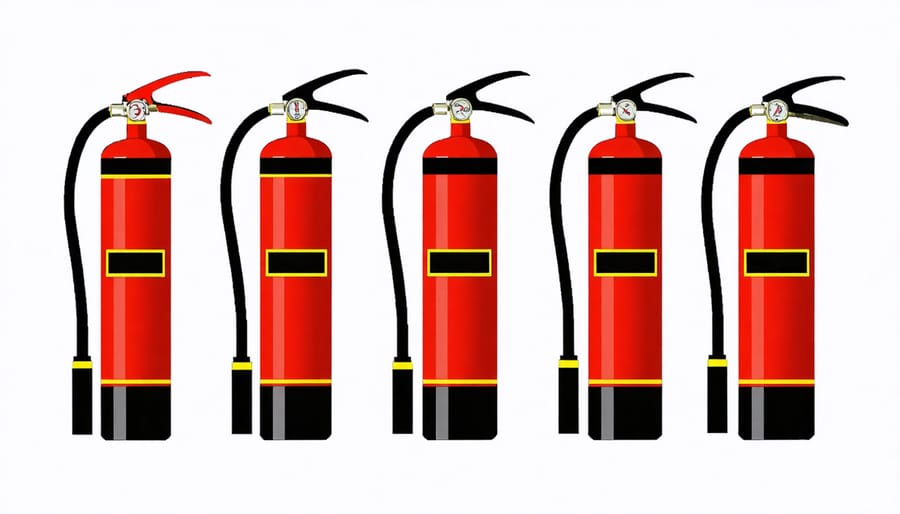
Class Selection Based on Fire Risks
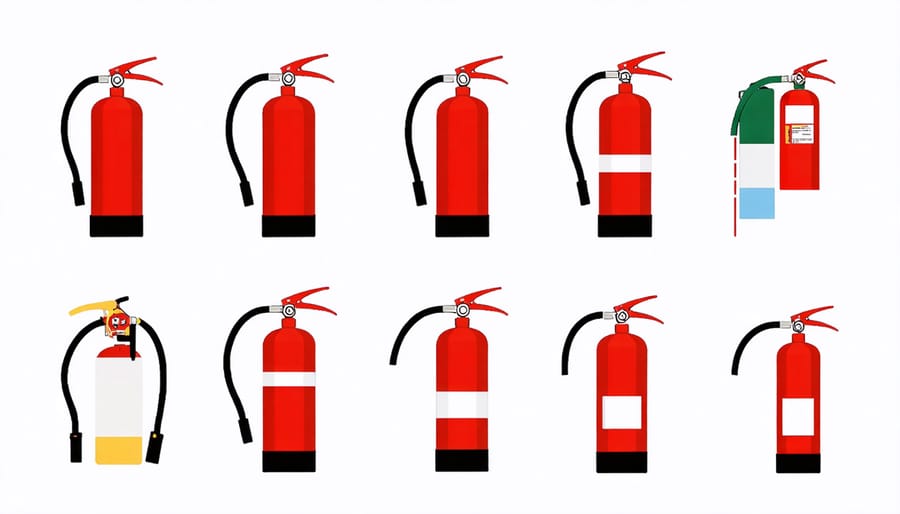
Different construction activities present varying fire risks, requiring specific types of fire extinguishers for effective response. For wood framing and general construction, Class A extinguishers are essential as they combat ordinary combustible materials. When working with electrical equipment or power tools, Class C extinguishers must be readily available to address electrical fires safely.
Areas involving flammable liquids, such as fuel storage or painting operations, require Class B extinguishers. For construction sites using cutting torches or welding equipment, combination ABC or BC extinguishers should be positioned within 30 feet of the work area.
The placement of extinguishers should align with the specific hazards present in each work zone. Multiple-story construction projects need at least one extinguisher per floor, with additional units near high-risk activities. Storage areas for flammable materials require dedicated extinguishers rated for the specific hazards present.
For stone construction specifically, cutting and grinding operations often generate heat and sparks, necessitating ABC-rated extinguishers nearby. When using adhesives or sealants, which may be flammable, keep BC-rated extinguishers in the immediate vicinity. Regular inspection of these extinguishers ensures they remain in proper working condition and are appropriate for the evolving risks as construction progresses.
Special Considerations for Stone Work
Stone work presents unique fire safety challenges on construction sites due to the specific tools and processes involved. While natural stone itself contributes to fire protection in stone buildings, the cutting and fabrication processes require special fire safety considerations.
Hot work activities like cutting, grinding, and polishing stone generate significant heat and sparks, necessitating Class A and B fire extinguishers nearby. These processes can also create fine stone dust, which may become combustible when concentrated in enclosed spaces. Keep a Class D fire extinguisher accessible when working with metal anchoring systems or reinforcements.
For areas where wet cutting is performed, ensure electrical safety by using GFCI protection and keeping Class C fire extinguishers within reach. Position extinguishers no more than 75 feet from any stone working station, ensuring clear visibility and access.
When using adhesives or sealants during stone installation, maintain Class B extinguishers nearby as these materials often contain flammable compounds. Store these products in fire-resistant cabinets when not in use.
Regular inspection of fire extinguishers becomes particularly important in stone work areas due to exposure to dust and water. Clean extinguisher cases regularly and protect them from debris accumulation to ensure reliable operation when needed.
Strategic Placement and Access
Distance and Location Requirements
Fire extinguishers must be readily accessible and strategically placed throughout construction sites according to specific distance requirements. Class A fire extinguishers should be positioned so that the travel distance from any point to the nearest extinguisher does not exceed 75 feet. For Class B fires, this distance reduces to 50 feet due to the rapid spread potential of flammable liquid fires.
Mount extinguishers at heights between 4 and 5 feet from the floor, ensuring clear visibility and easy access. In multi-story construction, place extinguishers near stairways and exits on each level. For every 3,000 square feet of protected building area, provide at least one fire extinguisher.
Ensure extinguishers are not blocked by equipment, materials, or debris. Post clear signage above each extinguisher location using standardized fire safety symbols. In areas where stone cutting or welding occurs, position additional extinguishers within 30 feet of the work area. During winter construction, protect extinguishers from freezing by using heated storage cabinets when temperatures may drop below 40°F.
Visibility and Signage
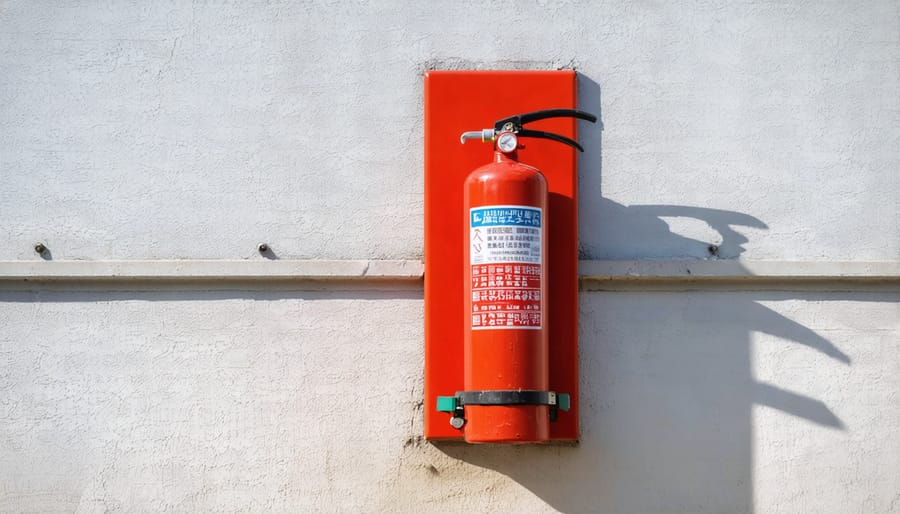
Fire extinguishers must be clearly visible and easily accessible to workers at all times on construction sites. Signs indicating extinguisher locations should be mounted high enough to be seen over equipment and materials, typically at least 7 feet above the floor. Use standardized fire safety signs featuring white pictograms on red backgrounds, as these are instantly recognizable even in low-light conditions.
Install photoluminescent or reflective markers to ensure visibility during power outages or in dark conditions. Place directional arrows at key intersections and corridors to guide workers to the nearest extinguisher. The maximum travel distance to reach any fire extinguisher should not exceed 75 feet from any point on the construction site.
Maintain clear paths to all fire extinguishers, keeping a minimum 3-foot clearance zone free from materials and equipment. Regular inspections should verify that signs remain unobstructed and in good condition. Replace damaged or faded signs immediately to maintain safety compliance. Consider installing additional temporary signage during special operations or when site layouts change significantly.
For multi-story construction, ensure each level has clearly marked extinguisher locations visible from main access points and work areas.
Maintenance and Inspection Protocols
Regular maintenance and inspection of fire extinguishers on construction sites is crucial for ensuring their reliability during emergencies. All fire extinguishers must undergo monthly visual inspections by a designated site safety officer or qualified personnel. These inspections should verify that extinguishers are in their designated locations, readily accessible, and not blocked by construction materials or debris.
During monthly checks, inspectors must ensure the pressure gauge reads within the optimal range, the safety seal remains intact, and there are no signs of physical damage, corrosion, or leakage. The inspection tag should be updated with the date and inspector’s initials after each check.
Annual maintenance requires a more thorough examination by a certified professional. This comprehensive inspection includes:
– Testing the pressure levels
– Examining all parts for wear or damage
– Checking the condition of the hose and nozzle
– Verifying the weight and fullness of the extinguisher
– Ensuring all safety pins and seals are intact
– Reviewing maintenance records and certification tags
Construction sites must maintain detailed records of all inspections and maintenance activities. These records should include the inspection dates, findings, any repairs made, and the name of the person conducting the inspection.
Hydrostatic testing is required every 5-12 years, depending on the extinguisher type. This test checks the cylinder’s integrity under pressure. Any extinguisher that fails inspection or shows signs of damage must be immediately removed from service and replaced.
After discharge or use, extinguishers must be professionally serviced and recharged before being returned to their designated locations. This ensures continuous fire protection coverage throughout the construction site.
Proper fire extinguisher placement and maintenance on construction sites is crucial for ensuring workplace safety and regulatory compliance. Remember that different areas of your site may require specific types of extinguishers based on potential fire hazards. Regular inspections, clear signage, and unobstructed access to fire extinguishers are non-negotiable requirements. Training your workforce on proper fire extinguisher use and maintaining detailed documentation of all fire safety measures will help protect your workers, property, and business interests. By following these guidelines and staying current with local regulations, you create a safer work environment while avoiding costly penalties and potential liability issues. Make fire safety a cornerstone of your construction site management, and ensure all team members understand their role in maintaining these critical safety standards.