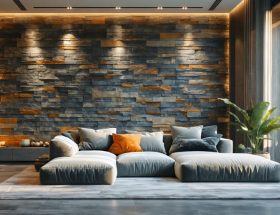
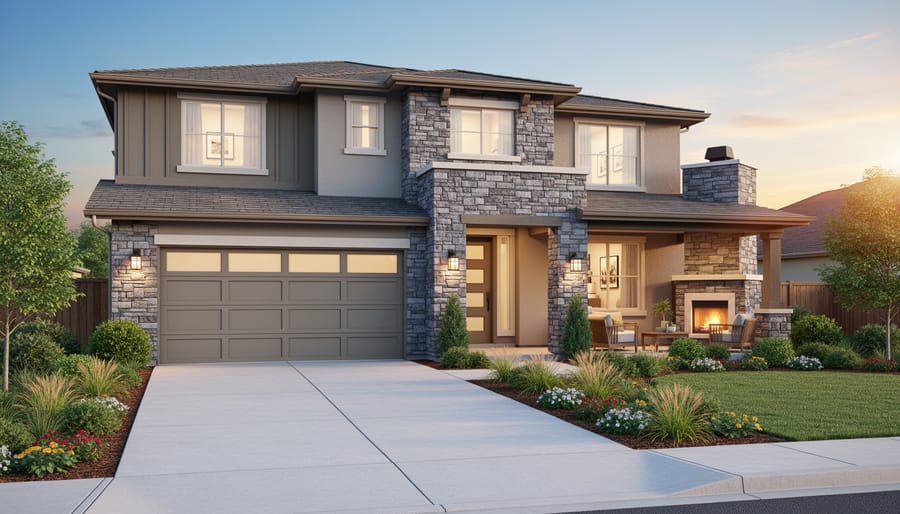
Transform your home’s exterior with stone accent walls that create dramatic focal points and elevate curb appeal instantly. Position strategically behind outdoor fireplaces, along entryways, or flanking garage doors to maximize architectural impact. Choose from ledgestone for contemporary horizontal lines, fieldstone for rustic charm, or limestone for refined elegance—each offering distinct textures and color palettes that complement different architectural styles.
Select installation locations that draw the eye upward on two-story facades or frame specific features like covered patios and outdoor kitchens. Contrast smooth stucco or siding with textured stone surfaces to establish visual depth and dimensionality. Consider how natural light plays across stone surfaces throughout the day, as shadows accentuate texture and create dynamic visual interest.
Match stone selection to your climate zone and maintenance preferences. Dense granite and quartzite withstand freeze-thaw cycles in northern regions, while sandstone and travertine excel in dry, temperate climates. Ensure proper mortar selection and weatherproofing details prevent moisture infiltration behind stone veneer installations.
Extend stone applications beyond vertical walls to incorporate retaining walls, columns, and garden boundaries that create cohesive outdoor design narratives. Blend multiple stone types or vary installation patterns—stacked, dry-laid, or mortared—to achieve custom looks that reflect personal style while honoring your home’s architectural character. Professional installation ensures structural integrity and longevity, transforming exterior spaces into distinguished environments that command attention and appreciation.
Why Choose Natural Stone for Exterior Accent Walls
Natural stone stands as an exceptional choice for exterior accent walls, offering a compelling combination of practical benefits and aesthetic excellence that few other materials can match. When you invest in stone for your outdoor spaces, you’re choosing a material that has proven its worth across centuries of architectural history.
Durability ranks among stone’s most significant advantages. Unlike manufactured alternatives that may fade, crack, or deteriorate within years, natural stone withstands the harshest weather conditions while maintaining its structural integrity. From freezing winters to scorching summers, stone endures temperature fluctuations, moisture, and UV exposure without compromising its appearance or performance. This resilience translates directly into long-term value for your property.
Weather resistance goes hand-in-hand with durability. Natural stone naturally repels water when properly sealed, resisting damage from rain, snow, and humidity. Many stone varieties, particularly granite and slate, possess inherent water-resistant properties that make them ideal for exterior applications. This built-in protection means fewer concerns about moisture infiltration, mold growth, or freeze-thaw damage that plagues less suitable materials.
The low maintenance requirements of stone accent walls present another practical advantage. Once installed and properly sealed, stone demands minimal upkeep beyond occasional cleaning. There’s no need for frequent painting, staining, or replacement of deteriorating sections. A simple rinse with water and mild cleaning solution typically suffices to keep your stone wall looking pristine year after year.
From a sustainability perspective, natural stone represents an environmentally responsible choice. As a naturally occurring material requiring minimal processing, stone carries a smaller carbon footprint compared to manufactured alternatives. Its longevity means fewer replacements over time, reducing waste and resource consumption.
Perhaps most compelling is stone’s timeless aesthetic appeal. While design trends come and go, natural stone maintains its elegance and relevance across architectural styles and eras. This enduring beauty, combined with the unique character of each stone piece, creates accent walls that enhance property value while making distinctive visual statements that never go out of style.
Popular Natural Stone Types for Exterior Accent Walls
Limestone: Classic Elegance
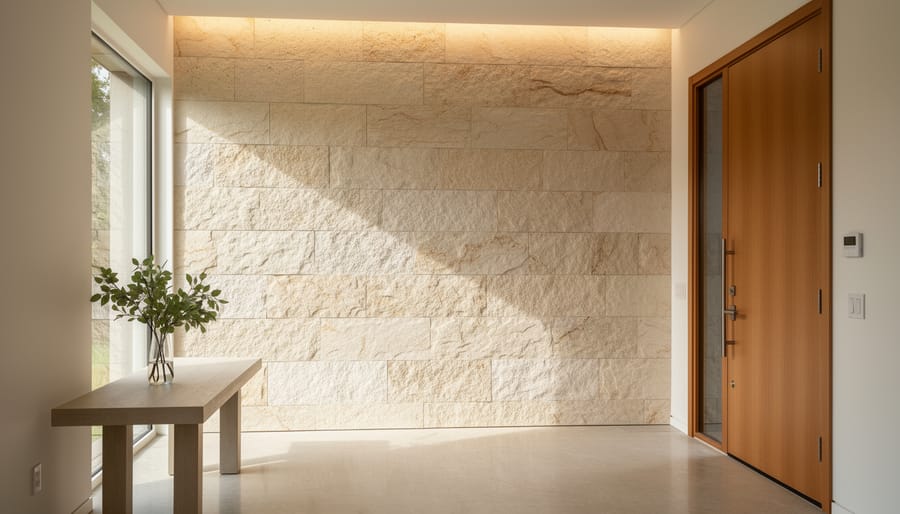
Limestone brings timeless sophistication to exterior spaces with its naturally soft, sedimentary composition and subtle elegance. This versatile stone typically ranges from warm creams and beiges to cooler grays, offering gentle color variations that complement both traditional and contemporary architecture. The stone’s fine-grained texture creates a smooth, refined appearance while maintaining excellent durability for outdoor applications.
Limestone excels in creating welcoming entryways, courtyard feature walls, and garden focal points where its understated beauty enhances rather than overwhelms the surrounding landscape. The stone weathers gracefully, developing a distinguished patina over time that adds character to exterior installations. Similar to limestone accent walls used indoors, exterior applications benefit from the material’s natural warmth and organic texture. Consider limestone for projects requiring a classic aesthetic with lasting appeal, particularly in residential settings, luxury hospitality venues, or historic renovations where authenticity matters.
Granite: Unmatched Durability
Granite stands as the premier choice for exterior accent walls in high-traffic areas or regions experiencing harsh weather conditions. This igneous rock’s exceptional density and low porosity make it highly resistant to freeze-thaw cycles, heavy rain, and temperature extremuations that would compromise lesser materials. Granite wall cladding maintains its structural integrity and appearance for decades with minimal maintenance, making it ideal for coastal properties, mountain retreats, or urban environments with pollution exposure.
The texture options available in granite range from polished mirror-like finishes that create dramatic contemporary statements to flamed or thermal surfaces offering enhanced grip and rustic appeal. Leathered finishes provide subtle dimension while maintaining easy cleanability. Color variations span from classic blacks and grays to warm beiges, dramatic blues, and striking reds, each with distinctive crystalline patterns that catch and reflect light throughout the day, creating dynamic visual interest that evolves with changing conditions.
Slate: Contemporary Texture
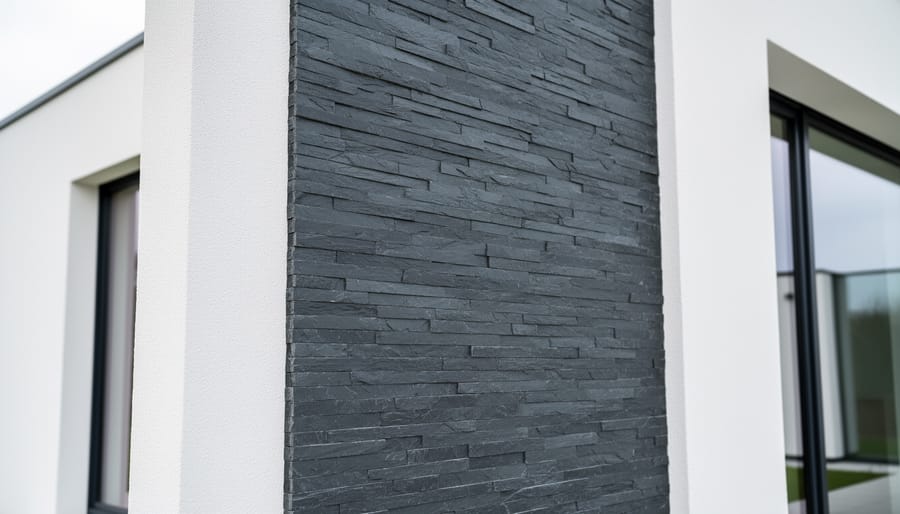
Slate brings a distinctly contemporary edge to exterior accent walls through its naturally textured surface and sophisticated color palette. The stone’s characteristic cleft finish—created when layers are split apart during quarrying—produces an organic, dimensional surface that catches light beautifully throughout the day. This inherent texture eliminates the need for additional surface treatments while providing visual interest and depth.
Available in an elegant spectrum ranging from charcoal and silver-gray to warm rust, purple, and green earth tones, slate offers remarkable versatility for modern design schemes. The color variations often appear within individual pieces, creating subtle movement across the wall surface. This natural variegation allows slate to complement both monochromatic contemporary exteriors and more colorful design palettes. The stone’s durability and low water absorption rate make it particularly well-suited for exterior applications in various climates, while its slim profile keeps installations relatively lightweight compared to thicker stone options.
Sandstone: Warm and Inviting
Sandstone brings an inherently warm and welcoming quality to exterior accent walls, with its rich earth tones ranging from soft beiges and honey golds to deeper russets and terracotta hues. This natural color palette creates an inviting atmosphere that complements both traditional and contemporary architectural styles. The stone’s layered sedimentary structure adds subtle texture and visual interest without overwhelming other design elements. Sandstone works particularly well in Mediterranean, Southwestern, and Craftsman-style homes, where its warm tones enhance the connection between indoor and outdoor living spaces. The material’s natural porosity gives it a slightly matte finish that softens harsh sunlight, creating gentle shadows throughout the day. For modern applications, choose sandstone with more uniform color and minimal variation, while rustic designs benefit from pieces displaying dramatic banding and weathered characteristics. Its versatility extends to various installation patterns, from traditional running bond to contemporary stacked arrangements, making sandstone an excellent choice for homeowners seeking timeless appeal with distinctive character.
Quartzite: Stunning Visual Impact
Quartzite delivers extraordinary visual drama to exterior accent walls with its distinctive veining patterns that rival marble’s elegance while offering superior durability for outdoor applications. Formed from sandstone under intense heat and pressure, this metamorphic stone displays stunning color variations ranging from soft whites and grays to warm golds, rustic browns, and even dramatic blues or greens. The stone’s natural sparkle, created by quartz crystal formations, catches sunlight beautifully throughout the day, creating dynamic surface interest that changes with lighting conditions. With a hardness rating of 7 on the Mohs scale, quartzite stands up exceptionally well to weathering, scratching, and UV exposure, making it ideal for high-impact exterior installations. Its premium aesthetic works particularly well in contemporary designs where bold geometric patterns showcase the stone’s natural artistry, or in traditional settings where book-matched slabs create symmetrical focal points. While quartzite represents a higher investment than many alternatives, its combination of marble-like beauty and granite-level performance delivers lasting value for discerning property owners seeking showstopping exterior features.
Inspiring Exterior Stone Accent Wall Ideas
Entrance and Entryway Features
Your home’s entrance sets the tone for the entire property, making it the ideal location for a strategic stone accent wall. A full-height stone feature flanking your front door creates architectural drama and establishes a welcoming focal point. Consider extending stone veneer from the ground up through the roofline on one or both sides of your entryway to frame the entrance with natural elegance.
Entry columns wrapped in stacked ledgestone or dimensional cut stone transform standard porch supports into substantial design elements. This application works particularly well with limestone, granite, or slate, which provide durability against constant foot traffic and weather exposure. For covered porticos, a stone accent wall behind the door adds depth and texture while protecting the entry from wind-driven rain.
Partial stone walls extending from the doorframe create visual interest without overwhelming smaller facades. This approach works especially well when the stone coordinates with other exterior materials like brick or stucco. The textural contrast draws the eye naturally toward your entrance, enhancing curb appeal while adding lasting value through premium natural materials that age gracefully over decades.
Outdoor Living Space Focal Points
Stone accent walls transform outdoor living areas into architectural destinations that blend functionality with natural beauty. When defining a patio space, a floor-to-ceiling stone wall creates an immediate sense of enclosure and intimacy, turning an open yard into a purposeful gathering spot. The thermal mass of stone also provides natural temperature regulation, keeping these spaces comfortable during temperature fluctuations.
For outdoor kitchens, stone accent walls serve as both backdrop and functional element. Installing stone behind a grill station or bar area protects against heat and moisture while establishing a sophisticated focal point. Ledgestone and stacked stone profiles work particularly well in these applications, offering texture and dimension that complement stainless steel appliances and countertops.
Seating areas benefit from strategically placed stone walls that provide wind protection and visual privacy without completely closing off the space. A partial-height wall behind built-in benches or a freestanding fire feature creates definition while maintaining sight lines to surrounding landscape elements. The vertical stone element draws the eye upward, making compact outdoor spaces feel more expansive and thoughtfully designed.
Fireplace and Fire Pit Surrounds
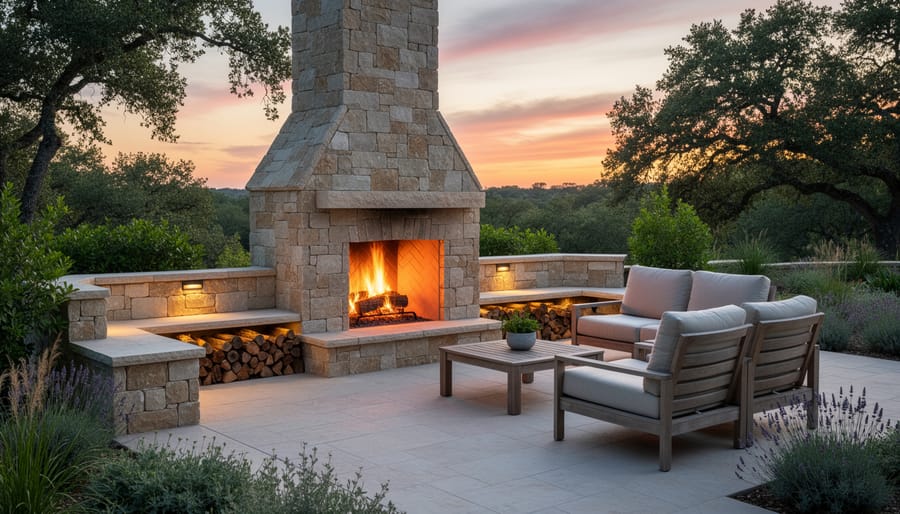
Stone-clad fireplaces and fire pits create natural focal points that transform outdoor spaces into year-round destinations. Natural stone fireplaces add architectural presence to patios and courtyards, with stacked ledgestone and fieldstone being popular choices for their textured, rustic appeal. For contemporary settings, large-format limestone or bluestone slabs deliver clean lines and sophisticated aesthetics.
Fire pit surrounds benefit from heat-resistant stones like granite, which withstand thermal cycling without cracking. Consider creating tiered seating walls using matching stone to establish cohesive gathering areas. Full-height outdoor fireplace installations work beautifully with mixed stone patterns, combining smooth cut stone for mantels and hearths with stacked veneer on vertical surfaces.
When planning stone fireplace designs, extend the stonework beyond the immediate fire feature to nearby walls or columns for visual continuity. This approach creates dramatic backdrops while maximizing your investment in premium natural stone materials.
Water Feature Backdrops
Natural stone accent walls create stunning backdrops for water features, enhancing their visual impact while establishing continuity between architectural and landscape elements. The textural contrast between flowing water and solid stone produces a dynamic focal point that engages multiple senses.
For fountain installations, consider stacked ledgestone or split-face stone panels that add dimension and create interesting shadow patterns. These surfaces amplify the sound of cascading water while providing a neutral canvas that highlights the fountain’s form. Darker stones like charcoal granite or slate offer dramatic contrast against white water streams.
Waterfall features benefit from irregular stone arrangements that mimic natural rock formations. Fieldstone or weathered limestone walls integrated behind waterfalls create authentic appearances, especially when plants are incorporated into crevices. The stone’s natural porosity allows moisture to enhance color depth, intensifying visual appeal.
Around pond perimerias, low profile stone walls in sandstone or travertine help define boundaries while maintaining sight lines. These walls provide seating opportunities and transition spaces between water and surrounding gardens. Combining complementary stone types ensures cohesive design that elevates the entire water feature installation.
Architectural Highlighting
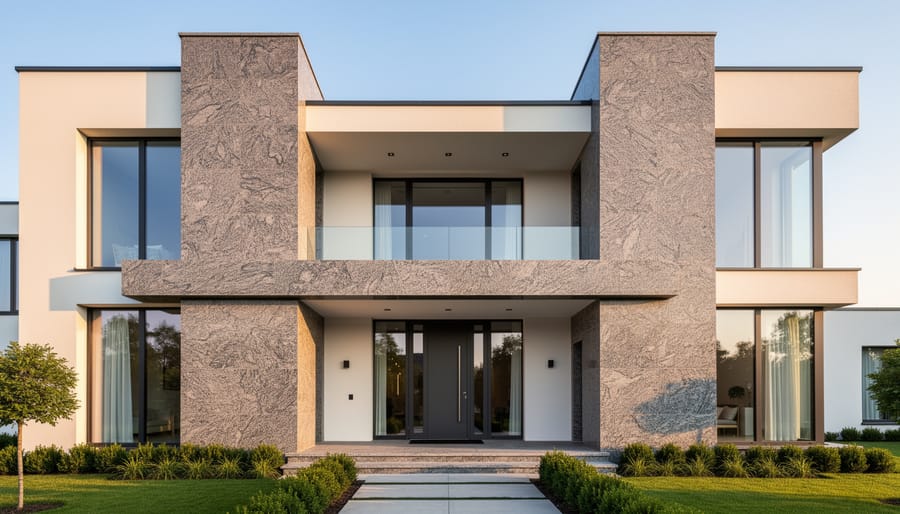
Partial stone facades offer a strategic approach to exterior design by drawing attention to key architectural features without overwhelming the entire structure. Consider wrapping stone around entry columns or pillars to create a distinguished welcome that anchors your home’s facade. This technique works exceptionally well with limestone or granite, which provide structural presence and timeless appeal.
Frame your entrance by extending stone accent walls on either side of doorways, establishing a defined transition between outdoor and indoor spaces. This application naturally guides visitors while adding dimensional texture that catches light throughout the day.
Window surrounds present another opportunity for architectural emphasis. Installing stone borders around prominent windows creates visual weight and balance, particularly effective on second-story features or bay windows that deserve special attention.
For contemporary homes, vertical stone strips running from foundation to roofline can accentuate height and create modern rhythm. Select contrasting stone colors or textures against your primary siding material to maximize impact. These targeted applications demonstrate restraint while delivering sophisticated results that elevate your home’s architectural character without the expense of full-facade stone installation.
Design Considerations for Exterior Stone Accent Walls
Creating a successful exterior stone accent wall requires thoughtful planning that balances aesthetics with architectural harmony. The key is to enhance your home’s character rather than overwhelm it.
Start by considering proportion and scale. An accent wall should typically cover between 15-30% of a visible facade to create impact without dominating the entire structure. For two-story homes, extending stone from the foundation to the roofline on a single section creates dramatic vertical interest, while horizontal applications work well for ranch-style architecture. The wall’s dimensions should relate to other architectural elements like windows, doors, and roof lines to maintain visual balance.
Placement determines both aesthetic impact and practical performance. Popular locations include entryway surrounds, where stone creates an impressive focal point that frames the main entrance, and chimney facades, which naturally accommodate the material’s weight and heat resistance. Corner wraps extending 3-4 feet along adjacent walls add depth and dimension, while feature walls on primary viewing angles maximize curb appeal. Consider sun exposure and weather patterns, as south and west-facing walls receive more intense UV exposure and temperature fluctuations.
Color coordination requires evaluating your home’s existing palette. Stone should complement rather than match perfectly. If your home features warm-toned siding or brick, select stones with similar undertones in limestone, sandstone, or earth-toned granite. Cool gray homes pair beautifully with slate, bluestone, or silver-gray granite. Sample stones in actual daylight conditions at different times of day, as natural stone appears dramatically different in morning versus afternoon light.
Architectural integration ensures cohesive design. Study your home’s style: contemporary architecture suits clean-lined stone panels with minimal grout lines, while traditional homes accommodate rougher textures and varied stone sizes. Pay attention to existing materials and transitions. Where stone meets siding, stucco, or brick, proper flashing and trim details prevent moisture issues while creating clean visual boundaries.
Finally, consider practical factors like structural support requirements, drainage patterns, and maintenance access. Stone adds significant weight, potentially requiring foundation reinforcement. Working with experienced professionals during the planning phase prevents costly modifications later and ensures your accent wall delivers lasting beauty and performance.
Installation and Maintenance Best Practices
Creating a stunning exterior stone accent wall requires careful planning and execution to ensure lasting beauty and structural integrity. Professional installation is strongly recommended, as proper technique directly impacts the wall’s durability and appearance.
Substrate preparation forms the foundation of successful installation. The underlying wall surface must be structurally sound, clean, and properly waterproofed. Most exterior applications require a moisture barrier and metal lath to create a suitable bonding surface. The substrate should be inspected for any damage, cracks, or water infiltration issues before stone installation begins. For veneer applications, ensure the wall can support the additional weight, typically requiring engineered calculations for larger installations.
Stone selection impacts installation methods. Full-thickness stone may require mechanical anchoring systems, while thin veneer typically uses mortar adhesion. Work with experienced stone masons who understand proper mortar mixing ratios, joint spacing, and weather considerations during installation. Temperature and humidity significantly affect curing times and bond strength.
Sealing represents a critical step in protecting your investment. Apply a breathable, penetrating sealer specifically formulated for exterior natural stone after installation and initial curing. Sealing frequency depends on stone porosity and local climate conditions, generally ranging from every one to three years. Test sealers on sample pieces to ensure they don’t alter the stone’s desired appearance.
Regular maintenance preserves your wall’s beauty for decades. Inspect annually for any loose stones, cracked mortar joints, or signs of water damage. Clean with pH-neutral stone cleaners and soft brushes, avoiding pressure washers that can damage mortar joints. Following these practices will help you maintain your stone features and protect your exterior investment for years to come.
Natural stone exterior accent walls represent a timeless investment that enhances your property’s aesthetic appeal while delivering unmatched durability. From the rustic charm of fieldstone to the contemporary elegance of limestone panels, these versatile features adapt to virtually any architectural style and design vision. The inherent strength of natural stone withstands harsh weather conditions, requires minimal maintenance, and develops a unique patina over time that synthetic materials simply cannot replicate. Whether you’re creating an inviting entryway focal point, defining outdoor living spaces, or adding visual interest to plain facades, natural stone offers endless possibilities for customization. As you plan your project, consider consulting with stone specialists who can guide you toward materials that align with your climate, budget, and design goals. The upfront investment in quality natural stone pays dividends through decades of lasting beauty, increased property value, and the satisfaction of owning a truly distinctive architectural feature that stands the test of time.