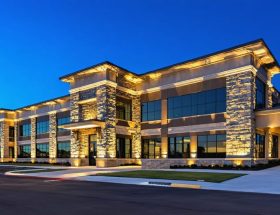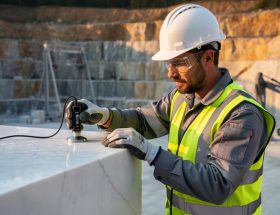
Natural stone has evolved far beyond decorative countertops and lobby floors. Today’s stone technology encompasses precision-cut thin panels, digitally mapped surface treatments, advanced sealing systems, and engineered mounting solutions that solve real commercial challenges. When a Seattle tech campus needed durable, low-maintenance facades that would age gracefully in constant rain, architects specified granite with hydrophobic nanotechnology treatments. When a hospital system required antimicrobial surfaces for high-traffic areas, designers turned to honed limestone with silver-ion infusions. These aren’t your grandfather’s stone installations.
Modern stone technology addresses the three concerns that historically limited natural stone in commercial projects: installation complexity, long-term maintenance costs, and performance predictability. Digital fabrication now produces panels as thin as 6mm that weigh 80% less than traditional slabs, reducing structural loads and installation time by half. Penetrating sealers have advanced from annual reapplication requirements to 10-year protection cycles. Surface scanning technology maps every slab’s unique characteristics before cutting, eliminating onsite surprises and reducing material waste by up to 30%.
The question isn’t whether natural stone can perform in demanding commercial environments. Airports, hospitals, retail centers, and corporate headquarters worldwide prove it does. The question is whether you understand which stone technologies match your specific performance requirements, budget constraints, and aesthetic goals. This guide provides that framework.
What Stone Technology Actually Means in Commercial Design
From Quarry to Building: The Tech Behind Modern Stone Processing
Modern stone processing has evolved far beyond the chisel and hammer. Today’s digital fabrication technologies transform raw quarry blocks into precisely engineered architectural elements ready for installation.
Diamond wire sawing has revolutionized primary cutting, using steel cables embedded with diamond beads to slice through massive stone blocks with millimeter accuracy. This method produces minimal waste compared to traditional sawing and enables curved cuts that were once impossible. The result is cleaner edges and more efficient material utilization, reducing both cost and environmental impact.
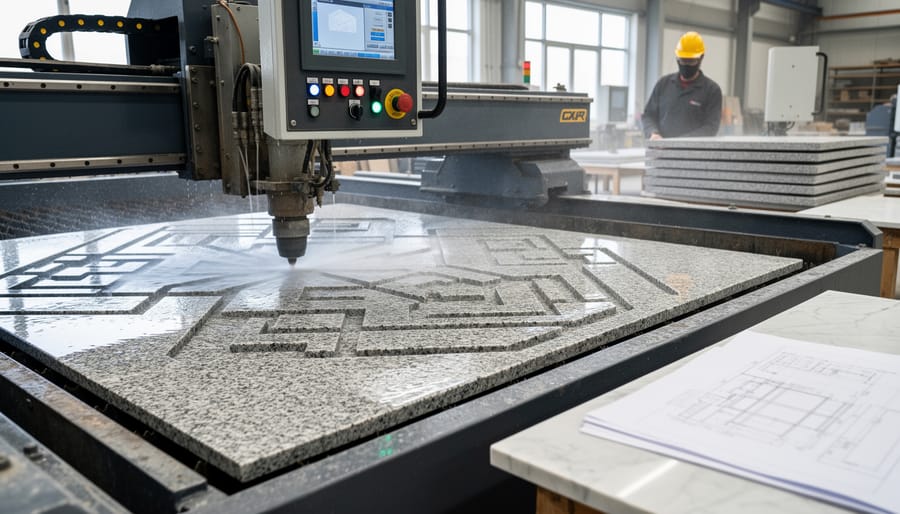
Waterjet cutting employs ultra-high-pressure water streams mixed with abrasive garnet particles to cut intricate patterns, logos, and custom designs into stone surfaces. Operating at pressures up to 90,000 PSI, waterjet technology creates zero heat during cutting, preventing thermal stress that could damage delicate stone varieties. This cold-cutting process allows for detailed inlays, medallions, and decorative borders with tolerances within 0.005 inches.
Computer Numerically Controlled (CNC) machining represents perhaps the most significant advancement in stone fabrication. Five-axis CNC machines can shape three-dimensional forms, mill custom profiles, and create complex architectural details with repeatability and precision that manual craftsmanship cannot match. These machines execute digital designs directly from CAD files, ensuring perfect consistency across large projects and enabling architects to specify intricate details confidently.
Together, these technologies make previously unattainable designs feasible while maintaining the natural beauty that makes stone timeless.
Surface Treatment Innovations That Extend Stone Performance
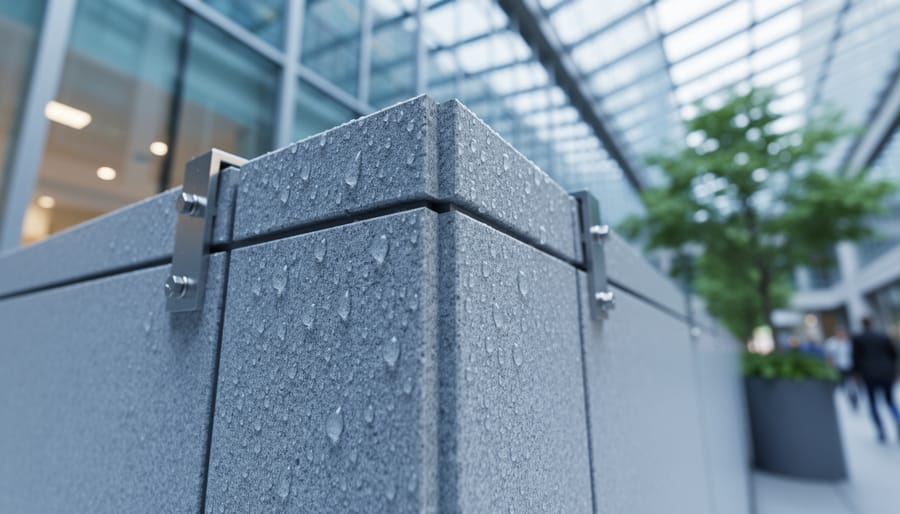
Modern surface treatments have revolutionized stone performance in demanding commercial environments, addressing historical concerns about maintenance and durability. Today’s protective technologies work at the molecular level to enhance natural stone without compromising its aesthetic appeal.
Advanced penetrating sealants represent the foundation of stone protection. Unlike older topical coatings that created visible surface films, contemporary impregnating sealers penetrate deep into the stone’s porous structure, filling microscopic voids while maintaining breathability. These formulations use nanotechnology to create an invisible barrier that repels water, oils, and common contaminants. For high-traffic areas like hotel lobbies and retail spaces, these sealants significantly reduce staining incidents and simplify daily maintenance protocols.
Anti-slip treatments have become essential for commercial safety compliance. Modern solutions employ chemical etching or specialized coatings that increase surface friction without altering the stone’s appearance. These treatments are particularly valuable for polished marble and granite installations in entryways and wet areas, where slip resistance must meet stringent building codes while preserving the stone’s visual appeal.
Stain resistance technology has advanced considerably, with hydrophobic and oleophobic treatments now capable of protecting against both water-based and oil-based substances. This dual protection proves critical in restaurant settings, food courts, and hospitality environments where spills are inevitable.
Color-enhancing sealers offer another innovation, deepening stone’s natural hues and maintaining consistent appearance across large installations. When properly specified and professionally applied, these surface treatments can extend stone service life by decades while dramatically reducing lifecycle maintenance costs, making natural stone increasingly competitive with synthetic alternatives in commercial applications.
Why Commercial Spaces Are Choosing Stone Technology Over Traditional Materials
The Real Cost Analysis: Initial Investment vs. Lifetime Value
When evaluating stone technology for commercial applications, understanding the complete financial picture extends far beyond the initial price per square foot. Natural stone typically carries a higher upfront cost, ranging from $15-50 per square foot installed, compared to porcelain tile at $8-25 or polished concrete at $5-15. However, this surface-level comparison misses the crucial lifetime value equation.
Natural stone’s durability fundamentally changes the cost analysis. High-quality granite, marble, and quartzite flooring can last 50-100 years with proper maintenance, while porcelain averages 20-30 years and composite materials often require replacement within 15-25 years. When amortized over their lifespan, stone’s cost per year frequently undercuts alternatives. A $30 per square foot stone installation lasting 75 years costs $0.40 annually, while $15 porcelain replaced after 25 years costs $0.60 per year.
Maintenance expenses also favor stone technology. Modern sealant systems reduce treatment frequency to once every 3-5 years, costing approximately $2-4 per square foot. Stone surfaces resist scratching and wear that damage softer materials, eliminating costly refinishing. Energy efficiency considerations matter too: stone’s thermal mass can reduce HVAC loads by 10-15% in appropriately designed spaces, generating measurable utility savings.
Replacement cycles create hidden costs that commercial operators often overlook. Removing and replacing flooring disrupts operations, creates tenant dissatisfaction, and generates waste disposal expenses. Stone’s longevity eliminates multiple replacement cycles that alternatives require, preserving capital for other investments.
The depreciation factor completes the picture. Buildings with quality stone installations maintain higher property values and attract premium tenants. Appraisers consistently value natural stone finishes above synthetic alternatives, creating equity that offsets initial investment while providing decades of performance without compromise.
Meeting Modern Building Standards and Certifications
Modern stone technology aligns remarkably well with today’s stringent building standards and certification programs. For projects pursuing LEED certification, natural stone contributes points across multiple categories, including locally sourced materials when quarried regionally, recycled content when incorporating reclaimed stone, and low-emitting materials due to stone’s absence of VOCs. Advanced water-jet cutting and CNC fabrication technologies minimize material waste during production, supporting LEED’s waste management credits.
Fire safety requirements are naturally addressed through stone’s inherent non-combustible properties. Natural stone receives Class A fire ratings and doesn’t release toxic fumes when exposed to heat, making it ideal for exit corridors, atriums, and high-occupancy spaces where fire codes are most stringent. Modern installation systems further enhance fire performance through proper substrate specifications and fire-rated assemblies.
Accessibility standards are met through precision fabrication capabilities that create uniform, slip-resistant surfaces. Contemporary finishing techniques produce textured surfaces with appropriate coefficient of friction values for ADA compliance, while thermal treatments and honed finishes ensure safe foot traffic in wet areas. Thin stone veneers also facilitate accessible transitions and threshold details that meet dimensional requirements without compromising design aesthetics.
Key Stone Technology Applications Changing Commercial Interiors
High-Traffic Flooring Systems That Last Decades
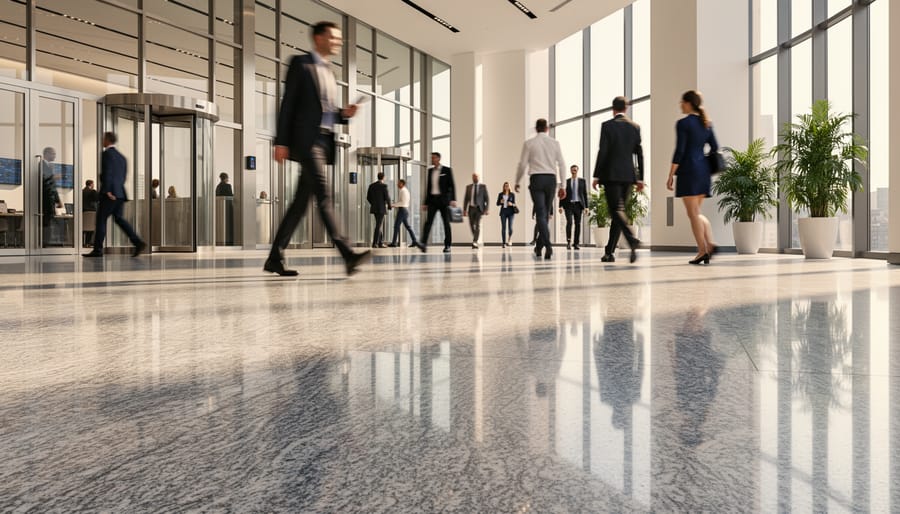
Modern engineered stone flooring systems deliver the timeless appeal of natural stone while meeting the rigorous demands of commercial environments. These advanced installations combine traditional materials with contemporary construction methods, creating surfaces that withstand decades of heavy foot traffic without compromising aesthetic quality.
Engineered stone flooring typically features thinner stone layers, ranging from 6mm to 20mm, mounted on lightweight backing systems. This construction reduces weight loads by up to 70% compared to traditional stone installations, making them ideal for retrofit projects and upper floors in existing buildings. The modular panels install quickly, minimizing business disruption during renovations. Major hotel chains have successfully deployed these systems in lobby areas experiencing millions of annual visitors, with surfaces maintaining their appearance for 20+ years with basic maintenance.
Thin stone panel technology represents a significant advancement in commercial applications. These panels, often just 3-6mm thick, bond directly to substrates using advanced adhesives and grid systems. Retailers favor this approach for its design flexibility and durability. Shopping centers report that properly installed thin stone flooring maintains its visual integrity even in entrance zones where moisture, temperature fluctuations, and constant traffic create challenging conditions.
Integration with underfloor heating and cooling systems adds functionality without sacrificing performance. Stone’s natural thermal conductivity makes it exceptionally efficient for radiant systems, reducing energy costs by 15-25% in climate-controlled office buildings. Modern installation methods accommodate building movement and thermal expansion, preventing the cracking issues that plagued earlier installations. Specialty adhesives and joint systems ensure long-term stability while maintaining the seamless appearance clients expect.
Lightweight Stone Cladding for Vertical Surfaces
Modern lightweight stone veneer technology has revolutionized vertical surface applications by reducing material thickness to 1/2 inch to 1-1/4 inches while maintaining the authentic appearance of full-thickness stone. This innovation dramatically decreases weight per square foot, typically ranging from 5 to 15 pounds compared to traditional 50-100 pound installations.
Advanced mounting systems now include mechanical anchoring, adhesive bonding, and engineered track systems that accommodate this reduced weight without sacrificing structural integrity. These systems allow installation on surfaces previously unsuitable for stone, including drywall, existing facades, and lightweight commercial structures.
The weight reduction opens remarkable design possibilities for high-rise applications, interior feature walls, and retrofit projects where structural loading was once prohibitive. Architects can now specify natural stone in lobbies, elevator cabs, and upper-story exteriors without expensive structural reinforcement. Transportation and installation costs decrease significantly, while the authentic texture, color variation, and visual depth of natural stone remain uncompromised. This technology makes premium stone aesthetics accessible for projects with budget or structural constraints, expanding natural stone’s viability across diverse commercial applications.
Hygienic Stone Solutions for Healthcare and Food Service
Healthcare facilities and commercial kitchens demand surfaces that actively resist bacterial growth while maintaining easy cleanability. Modern stone technology addresses these requirements through specialized treatments and careful material selection that meet stringent hygiene codes.
Antimicrobial stone treatments incorporate silver ion technology or nano-coatings that inhibit bacterial proliferation on surface contact. These treatments are particularly valuable for high-touch areas like reception desks, nurse stations, and food preparation surfaces. When combined with dense, non-porous stone varieties like engineered quartz or properly sealed granite, these surfaces create barriers that prevent microbial penetration.
Seamless installation techniques eliminate grout lines and joints where bacteria typically accumulate. Thermal bonding methods and invisible seaming create continuous surfaces that simplify sanitation protocols while maintaining aesthetic appeal. These techniques prove essential in operating rooms, food processing areas, and pharmaceutical clean rooms where contamination risks must be minimized.
Optimal stone selections for hygienic environments include engineered quartz with certified antimicrobial properties, dense porcelain slabs with extremely low absorption rates, and highly polished natural stones like granite that offer minimal surface porosity. Each material type undergoes rigorous testing to meet NSF/ANSI standards for food contact surfaces or healthcare environmental requirements, ensuring compliance with industry regulations while delivering the durability and visual impact that stone uniquely provides.
Real-World Case Studies: Stone Technology in Action
Luxury Hotel Lobby: Combining Aesthetics with Durability
The Grand Meridian Hotel’s renovation project demonstrates how modern stone technology meets the demanding requirements of high-traffic hospitality environments. The design team specified 24×48-inch porcelain-backed marble slabs for the 3,000-square-foot lobby, utilizing thin stone technology that reduced structural load while maintaining visual impact.
Professional stone installation techniques included precision CNC cutting for seamless book-matched patterns and hydrophobic surface treatments that repel liquids without altering the stone’s natural appearance. The lobby floors feature honed Carrara marble with nano-sealed surfaces, significantly improving stain resistance compared to traditional finishes.
After three years of continuous use averaging 2,000 daily foot traffic counts, the installation shows minimal wear. Monthly maintenance requires only neutral pH cleaners and periodic resealing every 18 months. The hotel reports 40 percent lower maintenance costs compared to their previous porcelain tile lobby, with guest satisfaction scores increasing due to the perceived luxury. This project proves that properly specified and installed natural stone delivers both aesthetic excellence and practical durability in demanding commercial hospitality settings.
Corporate Headquarters: Sustainable Stone Integration
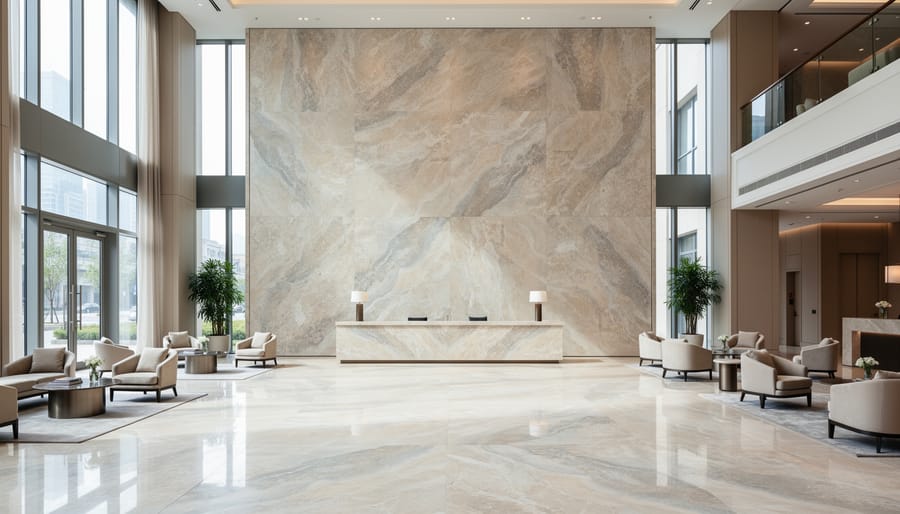
The Acme Corporation headquarters in Portland demonstrates how thoughtfully integrated stone can support both aesthetic and sustainability goals in commercial construction. This five-story office building, completed in 2022, earned LEED Gold certification while showcasing regional stone as a central design element.
The project team selected basalt quarried within 150 miles of the construction site, reducing transportation emissions by 60 percent compared to imported alternatives. The dark, textured stone provides thermal mass benefits, helping regulate interior temperatures and reducing HVAC demands by approximately 18 percent annually.
Installation methods prioritized efficiency and waste reduction. Digital templating eliminated physical templates, while waterjet cutting maximized yield from each stone slab, achieving 92 percent material utilization. Low-VOC sealants and adhesives contributed to superior indoor air quality ratings.
The building’s lobby features floor-to-ceiling basalt panels installed with adjustable anchoring systems that accommodate structural movement without cracking. Exterior cladding combines stone with high-performance glazing, creating a facade that meets strict energy codes while maintaining visual warmth.
This project proves that environmental responsibility and natural stone specification aren’t mutually exclusive. By prioritizing local sourcing, precision fabrication, and performance-driven design, the development team created a workspace that reduces operational costs while providing the durability and timeless appeal that stone uniquely offers.
Retail Space: High-Traffic Performance Testing
A major retail chain recently conducted a three-year performance study across 12 high-traffic locations featuring engineered stone flooring in their entrance zones, averaging 8,000-12,000 daily foot impressions. The results demonstrated exceptional durability with less than 0.2mm surface wear over the testing period, compared to 1.8mm in ceramic tile control areas. Maintenance requirements decreased by 43% as the honed stone finish required only quarterly professional deep cleaning versus monthly treatments for alternative materials.
Customer perception surveys revealed a 27% increase in positive brand association when shoppers entered through natural stone environments versus standard commercial flooring. The stone’s perceived luxury translated to longer average visit durations—an additional 4.3 minutes per customer—and a 12% uptick in transactions.
Slip resistance testing under wet conditions consistently met ADA standards with coefficient values between 0.60-0.65, even after three years of continuous use. Chemical resistance testing showed no etching or discoloration after exposure to common retail contaminants including soft drinks, coffee, and cleaning agents. Total lifecycle costs calculated at 38% lower than predicted, with no replacement needs during the study period and minimal repair interventions required.
Choosing the Right Stone Technology for Your Commercial Project
Matching Stone Type to Function and Traffic Patterns
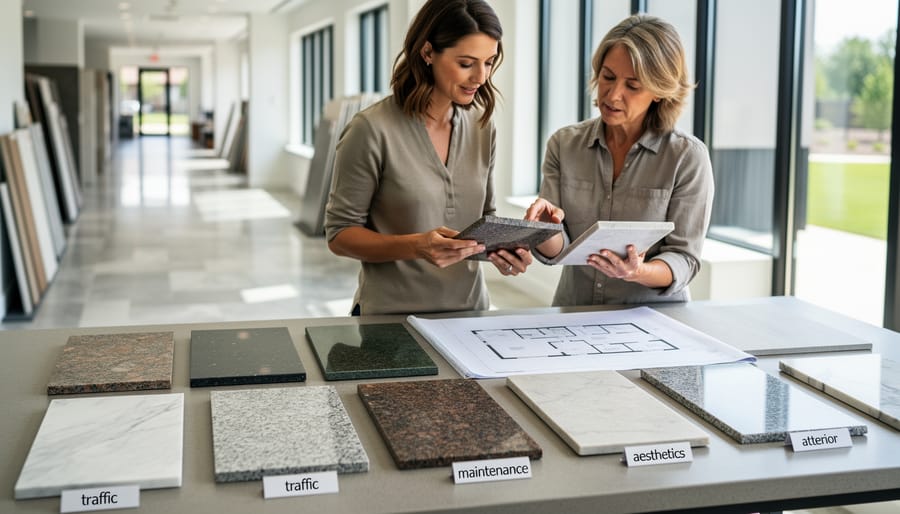
Selecting the right stone involves matching material properties to specific performance requirements. Start by evaluating traffic intensity: high-traffic commercial entrances and lobbies demand dense, scratch-resistant options like granite or quartzite, while lower-traffic areas can accommodate softer stones like marble or limestone.
For flooring applications, granite excels in retail corridors and public spaces due to its exceptional durability and resistance to abrasion. Marble works beautifully in hotel lobbies and executive offices where elegance matters more than extreme durability, though polished finishes can become slippery when wet. Limestone offers warmth for hospitality settings but requires sealing and more frequent maintenance in moisture-prone areas.
Countertops and food preparation surfaces require non-porous materials that resist staining and bacterial growth. Granite and quartzite are ideal for commercial kitchens, while marble remains popular for pastry stations where its cool surface benefits dough preparation. Consider how different stone finishes affect both aesthetics and functionality—honed surfaces hide scratches better than polished ones but may require more frequent sealing.
Exterior applications face additional challenges including freeze-thaw cycles, UV exposure, and pollution. Dense granites and certain limestones prove most weather-resistant, while some marbles may deteriorate faster outdoors.
Budget constraints matter too. Granite generally offers the best value for high-traffic areas due to minimal maintenance requirements. Marble costs more initially and demands regular professional care. Calculate total cost of ownership over ten years rather than focusing solely on installation expenses. This comprehensive approach ensures your stone selection delivers both aesthetic appeal and long-term performance.
Questions to Ask Your Stone Technology Supplier
Before committing to a stone technology supplier, conduct thorough due diligence by asking targeted questions that reveal their true capabilities. Start with fabrication expertise: What CNC machinery and waterjet cutting systems do they operate? Can they provide samples of edge profiles, custom finishes, and complex geometries relevant to your project? Request references from similar commercial installations and ask to visit their facility to assess quality control processes.
Inquire about their installation team’s certifications and experience with large-format panels, weight-bearing applications, and your specific stone type. What moisture barriers, sealants, and anchoring systems do they recommend for your environment? Understanding their approach to thermal expansion, seismic considerations, and substrate preparation is essential for commercial durability.
Warranty coverage deserves careful attention. Ask what’s included beyond basic material defects—does coverage extend to fabrication errors, installation workmanship, and stain resistance? What’s the duration and claims process?
Finally, clarify ongoing support arrangements. Do they offer maintenance training for your facilities team? What cleaning products do they recommend, and can they provide periodic resealing services? A supplier’s commitment to post-installation support often distinguishes exceptional partners from merely adequate vendors, ensuring your stone investment performs beautifully for decades.
Natural stone technology represents far more than a nod to tradition—it’s a sophisticated solution that delivers measurable performance advantages for today’s most demanding commercial environments. The convergence of advanced extraction techniques, precision fabrication, and innovative surface treatments has transformed stone into a high-tech material that meets contemporary standards for durability, sustainability, and design flexibility while maintaining the irreplaceable aesthetic qualities that synthetic alternatives cannot replicate.
For commercial spaces, the competitive advantages are substantial. Stone’s lifecycle cost efficiency, minimal maintenance requirements, and proven longevity translate directly to bottom-line benefits. The thermal mass properties reduce energy consumption, while the material’s inherent durability eliminates frequent replacement cycles that plague other surfacing options. These performance metrics, combined with the design impact that elevates brand perception and occupant experience, create compelling value propositions across hospitality, corporate, retail, and institutional sectors.
The evidence from real-world installations demonstrates that natural stone consistently outperforms expectations when properly specified and installed. Modern stone technology has addressed historical limitations through enhanced stain resistance, slip ratings suitable for high-traffic areas, and installation systems that reduce project timelines.
Whether you’re an architect seeking materials that balance aesthetics with specifications, a designer creating memorable spaces, or a facility manager evaluating long-term investments, natural stone deserves consideration as a technological solution. Engage with stone suppliers who understand contemporary performance requirements, request samples that demonstrate current capabilities, and evaluate projects where stone technology has delivered documented results. The material that built civilizations continues to define exceptional commercial spaces.