
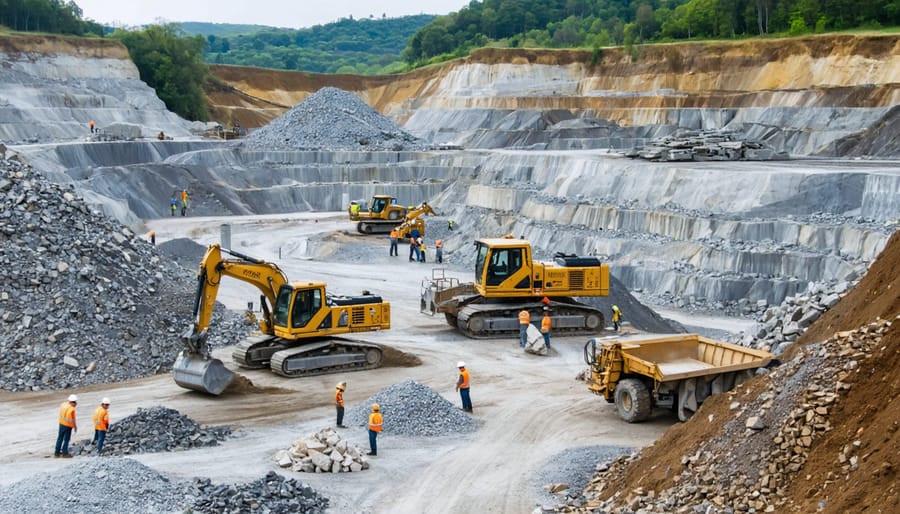
Natural resources form the bedrock of global economic systems, driving industries, shaping international trade, and influencing market dynamics across continents. From the oil fields of the Middle East to the rare earth deposits of China, these fundamental assets determine the economic trajectory of nations and enterprises alike. Their distribution, accessibility, and management critically impact everything from manufacturing costs to geopolitical relationships.
Understanding economic natural resources requires a dual perspective: recognizing their finite nature while appreciating their role as dynamic economic catalysts. These resources don’t merely exist as raw materials; they represent strategic assets that influence currency values, drive investment decisions, and shape international policies. The modern global economy increasingly focuses on sustainable resource management, balancing immediate economic benefits with long-term environmental considerations.
As markets evolve and technology advances, the economic value of natural resources continues to shift. Traditional resources like coal and timber now compete with emerging priorities such as lithium for batteries and silicon for semiconductors. This transformation challenges conventional resource economics while opening new opportunities for countries and businesses that can adapt to changing market demands and environmental imperatives.
This complex interplay between natural resources, economic systems, and sustainability defines the modern resource economy, making it essential for decision-makers to understand these relationships when developing long-term strategies.
The Global Natural Stone Supply Chain
Major Stone Producing Regions
The global stone industry centers around several key regions that significantly influence how global markets shape project costs. Italy’s Carrara region remains the world’s premier marble production hub, famous for its pristine white marble and centuries-old quarrying expertise. Brazil has emerged as a powerhouse in granite production, particularly in the states of Espírito Santo and Minas Gerais, offering an extensive range of colored granites.
China dominates the global stone market through both extraction and processing, with major quarrying operations in Fujian and Shandong provinces. India’s Rajasthan state is renowned for its sandstone and marble deposits, while Turkey’s Afyon region produces some of the finest travertine and marble varieties.
In North America, Vermont leads U.S. marble production, while Georgia and Minnesota are significant granite sources. Spain’s Macael region and Greece’s Macedonia area contribute high-quality marble to the international market, maintaining Europe’s strong presence in the industry.
These regions’ economic influence extends beyond mere production capacity. Their quarrying techniques, labor costs, and transportation infrastructure directly impact market prices and availability. Local environmental regulations, worker safety standards, and sustainable practices in these regions increasingly affect both production costs and market access, creating a complex interplay between geography and economics in the natural stone industry.
Transportation and Trade Routes
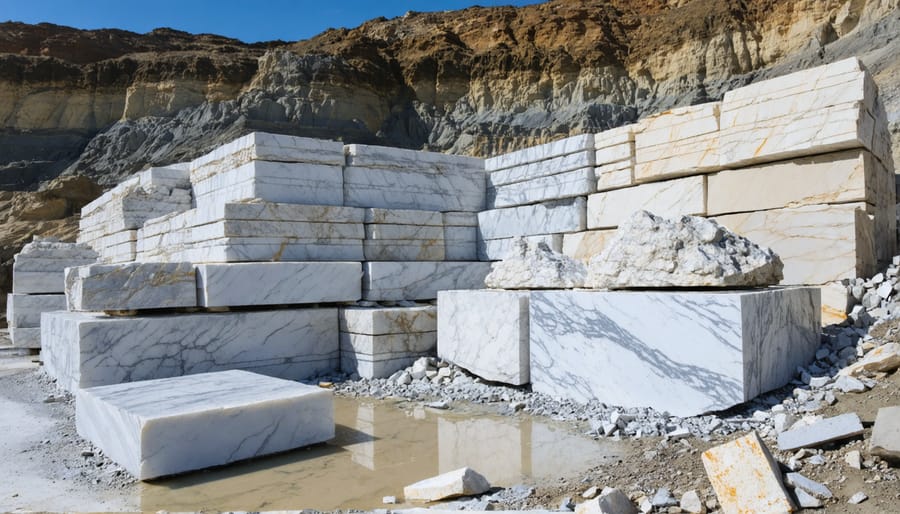
Transportation and logistics play a crucial role in determining the final cost and availability of natural stone materials. The distance between quarries and construction sites significantly impacts pricing, with longer routes generally resulting in higher costs. Modern shipping containers and specialized handling equipment have streamlined the process, but transportation expenses still typically account for 15-30% of the total cost.
Maritime shipping routes remain the primary method for international stone transportation, with major ports in Italy, Brazil, and India serving as key distribution hubs. These established routes influence regional pricing variations, while local trucking networks affect last-mile delivery costs. Understanding import taxes and regulations is essential for accurate cost estimation in international stone procurement.
Supply chain optimization has become increasingly important, with many suppliers establishing regional distribution centers to reduce delivery times and costs. Weather conditions, fuel prices, and seasonal demand fluctuations can all affect transportation expenses. Some suppliers now offer consolidated shipping options, allowing customers to combine orders with other buyers to share transportation costs.
Digital tracking systems and improved logistics management have helped reduce delays and damage during transit, though careful packaging and handling remain critical for preserving stone quality. Companies often factor in insurance costs to protect against potential damage during transportation, which can affect the final pricing structure.

Labor Market Dynamics in Stone Industry

Skilled Labor Requirements
The extraction and processing of natural stone resources demand highly specialized labor, significantly impacting overall project costs. Skilled stonemasons, quarry workers, and stone fabricators require extensive training and experience to properly handle these materials. Their expertise encompasses understanding geological formations, operating sophisticated cutting equipment, and implementing precise installation techniques.
In developed markets, certified stone workers often command premium wages due to their specialized knowledge and the physical demands of the work. Current industry standards indicate that experienced stonemasons can earn between $25 to $45 per hour, while master craftsmen may command even higher rates. These labor costs typically represent 20-30% of a stone project’s total budget.
Training requirements for stone workers have become increasingly rigorous as technology advances. Modern stone fabrication involves operating computerized cutting machines, understanding digital templating systems, and maintaining strict safety protocols. This technological evolution has created a need for workers who combine traditional craftsmanship with contemporary technical skills.
The availability of skilled labor varies significantly by region, affecting both project timelines and costs. Urban areas generally offer a larger pool of qualified workers but at higher rates, while rural locations may face skilled labor shortages. Many companies invest in apprenticeship programs to maintain a skilled workforce, though this represents a significant long-term investment that ultimately factors into project costs.
Regional Labor Cost Variations
Labor costs in natural stone processing and installation vary significantly across regions, directly impacting final product pricing. In North America, skilled stone workers typically command higher wages, particularly in urban centers where living costs are elevated. For instance, labor rates in New York or San Francisco can be 30-40% higher than in smaller metropolitan areas.
Developing economies often offer more competitive labor rates, which has led to the establishment of major stone processing centers in countries like India, China, and Brazil. These regions combine lower wage structures with significant investments in modern equipment and skilled workforce development, enabling them to offer finished stone products at competitive prices despite shipping costs.
However, regional labor costs extend beyond basic wages. Worker benefits, insurance requirements, and local regulations all factor into the total labor expense. European stone processing centers, particularly in Italy and Spain, maintain higher labor costs but offset this with advanced automation and centuries of expertise in stone craftsmanship.
Local availability of skilled workers also influences costs. Areas with established stone industry presence typically have better access to experienced craftspeople, potentially reducing overall project costs despite higher hourly rates. Conversely, regions with limited stone working tradition may require importing skilled labor, adding significant expense to projects.
Understanding these regional variations helps project planners make informed decisions about stone sourcing and fabrication locations, ultimately impacting the final cost of stone applications.
Training and Certification Costs
Training and maintaining a skilled workforce in the natural stone industry represents a significant investment for companies and organizations. Workers must receive comprehensive instruction in stone cutting, fabrication, installation techniques, and safety protocols, with initial training costs ranging from $2,000 to $5,000 per employee.
Industry certifications, such as those offered by the Natural Stone Institute, typically cost between $500 and $1,500 per certification. These credentials require regular renewal and continuing education, adding approximately $300-500 annually per worker to maintain professional standards.
Companies must also invest in specialized safety training programs, which average $800-1,200 per employee annually. This includes OSHA compliance training, equipment operation certification, and workplace safety protocols specific to stone handling and fabrication.
Advanced technical training for specialized equipment and new technologies can range from $3,000 to $7,000 per worker, depending on the complexity of the machinery and software systems involved. Many manufacturers offer training packages with equipment purchases, though supplemental training may be necessary.
These investments, while substantial, are essential for maintaining quality standards, ensuring workplace safety, and meeting industry regulations. Companies often offset these costs through increased productivity, reduced errors, and enhanced project outcomes, making skilled workforce development a crucial component of sustainable business operations in the natural stone sector.
Economic Factors Affecting Stone Projects
Currency Exchange Rates
Currency exchange rates play a significant role in determining natural stone costs, particularly in the international market. When the U.S. dollar strengthens against currencies of major stone-producing countries like Italy, Spain, or Brazil, importers can purchase more material for the same amount of money, potentially leading to lower prices for consumers. Conversely, a weaker dollar can result in higher costs for imported stones.
For example, fluctuations in the Euro-to-Dollar exchange rate directly impact the cost of premium marble from Carrara, Italy. A 10% change in exchange rates can translate to substantial price differences in large commercial projects, affecting everything from initial quotes to final delivery costs.
These currency dynamics also influence sourcing decisions. When certain currencies weaken, buyers might shift their purchases to those regions to take advantage of favorable exchange rates. This practice has become increasingly common with the rise of global stone trading and improved logistics networks.
Industry professionals often hedge against currency risks by establishing long-term contracts with fixed exchange rates or maintaining relationships with suppliers in multiple countries. Some larger companies even maintain stone inventories purchased during favorable exchange rate periods, helping to stabilize prices for their customers despite market fluctuations.
For project planning purposes, it’s essential to consider potential currency movements when budgeting for natural stone materials, especially for long-term projects where costs may change significantly between initial planning and final procurement.
Market Demand and Supply
The dynamics of natural stone markets are primarily driven by the interplay between demand and supply forces. As construction and renovation activities fluctuate globally, these forces create market price fluctuations that directly impact material costs and availability.
Supply is influenced by several key factors, including quarry production capacity, extraction regulations, and transportation infrastructure. When demand increases, quarries may increase production, but this response is often constrained by physical limitations and environmental regulations. Additionally, the finite nature of natural stone deposits means that as premium sources become depleted, prices typically rise for specific varieties.
On the demand side, architectural trends, construction sector growth, and consumer preferences play crucial roles. When certain stone types become popular in architectural design, increased demand can lead to temporary shortages and price increases. For example, the growing preference for sustainable building materials has boosted demand for locally-sourced stone options.
Market equilibrium is also affected by global economic conditions, currency exchange rates, and international trade policies. These factors can create regional price disparities and influence the competitive position of different stone-producing regions. Understanding these market mechanisms helps industry professionals and consumers make informed decisions about material selection and project timing.
Economic Cycles
The natural stone industry experiences significant fluctuations that closely mirror broader economic cycles. During economic booms, increased construction activity and higher disposable incomes drive demand for natural stone products, leading to expanded quarrying operations and enhanced product offerings. This surge typically results in more competitive stone pricing considerations as suppliers scale up production to meet market demands.
Conversely, economic downturns can substantially impact the stone industry. During recessions, construction projects often slow down, reducing demand for natural stone products. This decrease can lead to inventory surpluses, pricing pressure, and consolidation among suppliers. However, these periods also tend to drive innovation, with manufacturers developing more efficient extraction and processing methods to maintain competitiveness.
Market data shows that recovery periods typically bring renewed interest in premium natural stone products, particularly in luxury residential and commercial projects. This pattern reflects the material’s enduring value proposition and its status as a premium building material. Industry stakeholders often use these cyclical patterns to inform inventory management, pricing strategies, and investment decisions in new technologies or quarry expansions.
Understanding these economic cycles helps buyers and specifiers make informed decisions about timing their natural stone purchases and project planning, potentially leading to significant cost savings while maintaining quality standards.
Natural stone remains a valuable economic resource that requires careful consideration of multiple market factors for successful project implementation. Throughout this analysis, we’ve explored how global supply chains, market dynamics, and regional variations significantly impact natural stone costs and availability. Understanding these economic influences is crucial for making informed decisions in construction and design projects.
Key takeaways for project planning include monitoring market trends, establishing relationships with reliable suppliers, and maintaining flexibility in material selection. Consider developing contingency plans that account for potential supply chain disruptions or price fluctuations. When budgeting for natural stone projects, factor in not just the immediate material costs but also long-term considerations like maintenance requirements and durability.
For optimal results, we recommend:
– Conducting thorough market research before committing to specific materials
– Building relationships with multiple suppliers to ensure competitive pricing
– Planning projects during off-peak seasons when possible
– Including buffer time in project schedules to account for potential delays
– Investing in quality materials that offer better long-term value
By taking these factors into account and maintaining a balanced approach to resource allocation, professionals can better navigate the complex landscape of natural stone economics while achieving their design and construction goals. Remember that successful project outcomes often result from careful planning that considers both immediate costs and long-term value proposition.