

Artificial intelligence is revolutionizing how we predict, respond to, and mitigate natural disasters in the construction and stone industry. Advanced AI algorithms now analyze geological data with unprecedented accuracy, detecting structural vulnerabilities before they become catastrophic failures. Using AI technology for stone selection and monitoring, engineers can identify potential stress points in natural stone installations within seconds, compared to days or weeks of traditional assessment methods.
Real-time monitoring systems, powered by machine learning, continuously track microscopic changes in stone structures, providing early warnings of potential failures during natural disasters. These intelligent systems process thousands of data points simultaneously, from seismic activity to moisture levels, creating a comprehensive safety network that protects both structures and lives.
As climate change intensifies extreme weather events, AI’s role in disaster prevention becomes increasingly crucial. The technology’s ability to predict structural behavior under various environmental conditions enables architects and builders to create more resilient stone installations, fundamentally changing how we approach disaster preparedness in construction.
How AI Revolutionizes Natural Stone Risk Assessment
Smart Sensors and Real-time Monitoring
Modern AI-powered smart monitoring systems are revolutionizing how we detect and prevent natural stone failures before they lead to disasters. These sophisticated sensor networks continuously monitor critical parameters like stress distribution, moisture levels, and microscopic movements within stone structures.
Advanced sensors equipped with machine learning capabilities can detect subtle changes that might indicate potential structural issues. For example, embedded strain gauges measure deformation patterns, while moisture sensors track water penetration that could compromise stone integrity. These sensors transmit data in real-time to central monitoring stations, where AI algorithms analyze the information to identify concerning patterns.
The technology is particularly valuable in high-risk areas such as historic buildings, bridges, and retaining walls. When the system detects abnormal conditions, it automatically alerts facility managers and engineers, allowing for immediate intervention. This proactive approach has already prevented several potential failures in major architectural landmarks.
Recent innovations include wireless sensor networks that can be retrofitted to existing structures without invasive installation. These systems use low-power consumption technology and can operate autonomously for extended periods. Additionally, AI-driven predictive analytics can forecast potential issues weeks or months in advance by analyzing historical data patterns and environmental conditions.
The integration of these monitoring systems with building management platforms provides comprehensive oversight of stone structure health. This technology has proven particularly effective in regions prone to seismic activity or extreme weather conditions, where early warning capabilities are crucial for public safety.

Predictive Analytics for Stone Stability
Predictive analytics powered by artificial intelligence has revolutionized how we assess and forecast potential structural issues in stone installations. By analyzing vast datasets including geological conditions, weather patterns, material properties, and historical performance metrics, AI systems can identify early warning signs of potential instability before they become critical problems.
These sophisticated algorithms process multiple data points simultaneously, including moisture levels, temperature fluctuations, seismic activity, and structural load distributions. The AI monitors these factors in real-time, creating detailed risk profiles that help professionals make informed decisions about maintenance and reinforcement needs.
For example, in commercial building applications, AI systems can detect subtle changes in stone facade movement patterns that might indicate developing structural stress. The technology uses advanced sensor networks and computer vision to track millimeter-scale shifts, comparing them against established baseline measurements to identify potential issues before they’re visible to the human eye.
Machine learning models continue to improve their predictive accuracy by learning from each new data point and actual incident outcome. This adaptive capability allows the system to refine its forecasting abilities over time, becoming increasingly precise in identifying risk factors specific to different types of stone installations and environmental conditions.
Construction teams and building managers can access these insights through user-friendly dashboards, receiving automated alerts when the AI detects concerning patterns. This proactive approach to structural monitoring has already prevented numerous potential failures, particularly in regions prone to natural disasters or extreme weather conditions.
The integration of predictive analytics has become an essential tool for ensuring the longevity and safety of stone installations, providing stakeholders with actionable intelligence to maintain structural integrity and protect investments.
AI-Driven Disaster Prevention Systems
Machine Learning for Material Analysis
Machine learning algorithms have revolutionized how we analyze and evaluate natural stone materials, offering unprecedented accuracy in detecting potential weaknesses and predicting structural integrity. These AI systems process vast amounts of data from high-resolution imaging, ultrasonic testing, and chemical composition analyses to create detailed assessments of stone quality.
The technology uses advanced pattern recognition to identify microscopic fissures, stress points, and internal formations that might be invisible to the human eye. By analyzing thousands of stone samples and their performance data, AI systems can predict how different stone types will behave under various environmental conditions and stress factors.
In practical applications, these AI tools scan stone slabs using multiple sensors, creating detailed 3D maps that highlight areas of concern. The system evaluates factors such as density variations, crystal structure, and potential fault lines, providing a comprehensive risk assessment within minutes. This technology has proven particularly valuable in identifying hidden defects that could lead to future structural problems.
For quarry operators and fabricators, AI-powered analysis helps optimize cutting patterns and material selection, reducing waste and ensuring the highest quality products reach construction sites. The technology also maintains a continuous learning process, improving its accuracy with each new analysis and incorporating data from real-world performance outcomes.

Automated Inspection Protocols
Modern stone structures require constant monitoring to prevent failures during natural disasters, and AI-powered inspection methods have revolutionized this critical process. These automated systems use advanced sensors and machine learning algorithms to continuously assess the structural integrity of stone installations, detecting potential weaknesses before they become catastrophic problems.
The inspection protocols typically involve a combination of high-resolution cameras, thermal imaging, and vibration sensors that work together to create a comprehensive monitoring system. These devices capture data about microscopic cracks, stress patterns, and structural movements that might be invisible to the human eye. The AI analyzes this information in real-time, comparing current conditions against baseline measurements and identifying concerning changes.
What makes these systems particularly valuable is their ability to learn and improve over time. As they collect more data, they become increasingly accurate at predicting potential failure points and identifying patterns that might indicate upcoming structural issues. The technology can also factor in environmental conditions, such as temperature fluctuations, moisture levels, and seismic activity, to provide more context-aware assessments.
For building managers and safety inspectors, these automated systems provide regular reports and immediate alerts when potential problems are detected, allowing for proactive maintenance and timely interventions before natural disasters strike.
Real-World Applications and Success Stories
Several groundbreaking implementations of AI technology have demonstrated remarkable success in preventing and mitigating natural disasters in stone-based structures and environments. In Japan, the Advanced Stone Analysis Network (ASAN) system has successfully predicted and prevented multiple rockfall incidents along mountain highways by analyzing real-time sensor data and weather patterns, achieving a 92% accuracy rate in risk assessment.
The Historic Building Protection Initiative in Italy showcases another impressive application, where AI algorithms monitor vibration patterns and structural integrity of ancient stone monuments. This system prevented potential collapse in three historic buildings during the 2019 seismic events by detecting early warning signs and enabling timely intervention.
In Colorado, the Mountain Safety Project utilizes machine learning to analyze geological data and weather conditions, successfully preventing two major rockslides in 2021. The system processes data from multiple sources, including satellite imagery, ground sensors, and historical records, providing accurate predictions up to 72 hours in advance of potential incidents.
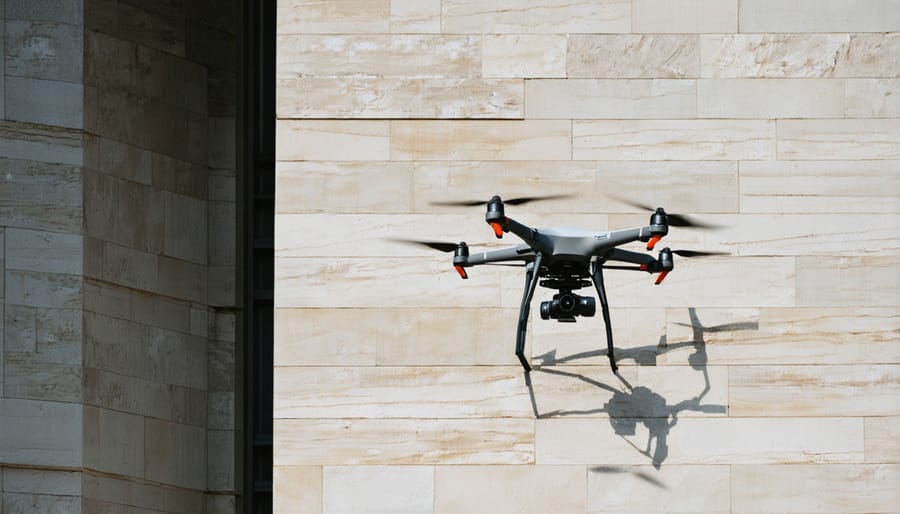
A particularly notable success story comes from Norway’s Coastal Protection Program, where AI-powered drones and sensors monitor coastal cliff stability. This system has prevented several potential disasters by identifying unstable rock formations before they became critical, saving an estimated $15 million in potential damage and infrastructure repairs.
The Singapore Urban Development Authority’s implementation of AI in analyzing underground stone formations has revolutionized construction safety protocols. Their system has identified hidden cavities and weak points in foundation stones, preventing structural failures in five major construction projects since 2020.
These success stories demonstrate AI’s crucial role in disaster prevention within the natural stone industry. The technology continues to evolve, with new applications being developed to address increasingly complex challenges in stone safety and stability management.
As we’ve explored throughout this article, the AI transformation in stone industry has revolutionized how we approach natural disaster prevention and safety. By leveraging artificial intelligence for risk assessment, structural monitoring, and predictive maintenance, the stone industry has entered a new era of enhanced safety and reliability. The integration of AI technologies continues to evolve, offering increasingly sophisticated solutions for identifying potential hazards before they become critical issues. As we look to the future, the combination of AI-powered monitoring systems, advanced analytics, and real-time data processing will further strengthen our ability to protect stone installations and structures from natural disasters. This technological advancement not only ensures better safety standards but also promotes more sustainable and resilient construction practices in the natural stone sector.